
President Ilham Aliyev thankы his colleagues for supporting … Trend News Agency
Day: October 13, 2023
Решение Конституционного суда относительно импичмента президента Грузии будет оглашено 16 октября. Об этом Netgzeti сообщили в Конституционном суде. Как заявил сегодня председатель Конституционного суда Мераб Турава, помимо публикации на сайте и отправке в парламент документа о постановлении суда, было бы целесообразно, чтобы Конституционный суд решение огласил по делу на открытом заседании. «Сегодня мы будем работать […]
«Югоосетинская сторона считает участие в Женевских дискуссиях полезным и выступает за продолжение диалога и поиск новых путей для повышения эффективности и продвижения работы в этом формате», — говорится в заявлении де-факто МИД по случаю 15-летия работы формата. Женевские дискуссии проходят с 2008 года, после августовской войны. Переговоры проходят под сопредседательством Евросоюза, ООН и ОБСЕ. В […]
His recent rhetoric targeting Jews suggests that his grip on power may be loosening.
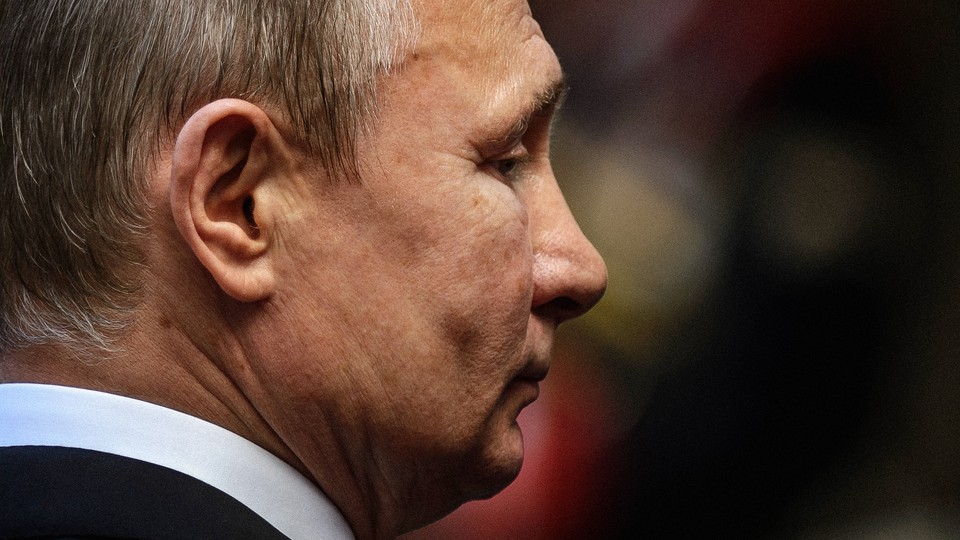
Antonio Masiello / Getty
After Joseph Stalin died in 1953, an underground joke from my Moscow youth declared, the Politburo found three envelopes on the Soviet dictator’s desk. The first, inscribed “Open after my death,” contained a letter telling his successors to place his body next to Lenin’s in the Red Square Mausoleum. “Open when things get bad,” read the second envelope, and the note inside said, “Blame everything on me!” The third envelope, marked “Open when things get really bad,” commanded, “Do as I did!”
Things must be really bad for Russian President Vladimir Putin, because he is resorting to one of Stalin’s preferred ways of holding on to power: appealing to anti-Semitism. Recently, Putin has made a series of remarks dwelling on the fact that Ukrainian President Volodymyr Zelensky is Jewish. And in a discussion at an economic forum earlier this month, Putin mocked Anatoly Chubais, a half-Jewish former Kremlin adviser who fled Russia after its invasion of Ukraine last year and is reportedly living in Israel. “He is no longer Anatoly Borisovich Chubais,” Putin said, using his former aide’s first name and patronymic. “He is Moshe Izrayilevich, or some such.”
As a scholar who has been studying Soviet and Russian politics for decades; who discusses that subject regularly with friends, family members, and professional colleagues; and who keeps tabs on what Putin’s critics say about him, I cannot remember him publicly trafficking in anti-Semitism before now. Indeed, his seemingly benevolent attitude toward his Jewish subjects made him unusual among Russian leaders. For more than a century until 1917, Jews in the Russian empire were confined to the Pale of Settlement, mostly in what today is Ukraine, Belarus, Moldova, and Lithuania, and were terrorized by periodic pogroms. Early in the 20th century, the czar’s secret police propagated (and are widely suspected of sponsoring) The Protocols of the Elders of Zion, a vicious anti-Semitic forgery that purported to expose a Jewish conspiracy to take over the world and has inspired generations of violent anti-Semites.
Gal Beckerman: What Putin’s treatment of Jews reveals about Russia
Stalin capitalized on that history to consolidate his own control of the Soviet Union. Beginning in the late 1940s, after 20 million Soviet citizens had died in World War II and millions more were starving and homeless, he unleashed a national anti-Semitic campaign, complete with the frenzied unmasking of “rootless cosmopolitans”—whom everyone understood to be Jews—in newspapers. Well-known members of the Jewish Anti-fascist Committee, formed during the war to organize international support for the Soviet military effort, were arrested, tortured, and executed. In what became known as the “Doctors’ Plot,” a predominantly Jewish group of physicians ministering to the Kremlin leadership was accused of poisoning or deliberately mistreating patients; the medics were tortured, some to death, to extract “confessions.” During that period, tens of thousands of Jews were fired from their jobs, and even graduates of prominent educational institutions became unemployable. (My mother, just out of the Moscow Medical Institute No. 2, was among them.)
Putin’s recent rhetoric has been jarring because, despite everything else he has done, he has not tried to whip up public sentiment against Jews. During his 2005 visit to Israel—the first ever to the Jewish state by a Soviet or Russian leader—Putin had an emotional reunion with Mina Yuditskaya-Berliner, his high-school German teacher, and bought her an apartment in central Tel Aviv. He made Arkady and Boris Rotenberg—two brothers of Jewish heritage who have been among Putin’s judo sparring partners—into billionaire oligarchs.
Although he spoke at the unveiling of two monuments to Russia’s penultimate czar, Alexander III—a notorious anti-Semite who encouraged pogroms—Putin not only refrained from wielding Judeophobia as a political tool but upbraided those who did. He ordered the head of Russia’s Security Council, Nikolai Patrushev, to retract a statement by an agency aide who had described the Chabad-Lubavitch ultra-Orthodox movement as a “sect” whose adherents believed in their “supremacy over all nations and peoples.” (The offending official was fired a few months later.) The Russian president apologized in a phone call with then–Israeli Prime Minister Naftali Bennett after Foreign Minister Sergei Lavrov opined that some Jews were notoriously anti-Semitic. And even as Russian television and social-media outlets have abounded with mad-dog chauvinists and warmongering propagandists since Russia invaded Ukraine, the Kremlin appears to have embargoed anti-Semitic themes.
At every turn, Putin seeks to legitimize his war in Ukraine by linking it with Russia’s triumph over the perpetrators of the Holocaust. That Zelensky is Jewish obviously complicates that story. In a discussion at the St. Petersburg International Economic Forum in June, the moderator Dimitri Simes invited Putin to explain the issue away.
Putin replied that many of his childhood friends are Jewish, and that they all think Zelensky is not a Jew but a disgrace to the Jewish people. He then recounted, from notes, the details of the execution of a Jewish Ukrainian family during World War II, and showed video clips alleging massacres of Jews and ethnic Poles by Ukrainian nationalists of that era.
Yair Rosenberg: Russia is not the first to blame Jews for their own Holocaust
Earlier this month, though, Putin’s allusions to Zelensky’s Jewishness grew sharper. The “Western sponsors” of the Ukrainian government, he told an interviewer, had deliberately chosen a Jewish president of Ukraine to camouflage the “antihuman” essence of the Kyiv regime. It’s “utterly despicable,” Putin concluded, to see a Jew covering up the “glorification of Nazism and those who led the Holocaust in Ukraine.” While still purporting to be ridding Ukraine of Nazis, Putin is zeroing in on a flesh-and-blood culprit: The Russians and the Ukrainians are killing one another because of a Jewish schemer.
Last week, Putin found another target: Chubais, his former special envoy to international organizations, who walked off his job a month after the invasion of Ukraine. After some meandering, Chubais, whose mother is Jewish, landed in Israel (which does not require entry visas for Russian citizens), along with tens of thousands of other Russian immigrants. Initially, his departure caused nary a ripple. Yes, Chubais quit on his own accord, the Kremlin spokesperson Dmitry Peskov said in March 2022, adding, “As to whether he left Russia or not, that’s his personal business.”
Not anymore. Why did Chubais run off to Israel? Putin mused last week, employing a derisive word, udral, that translates to something like “absconded.” Why is he “hiding” there? And by the way, Putin went on: Although no criminal charges have been brought against Chubais, “a huge financial hole” has been uncovered in the state nanotechnology corporation, Rusnano, which Chubais headed until 2020.
Russians steeped in anti-Semitic tropes could effortlessly read between the lines: A cowardly and probably thieving Jewish bureaucrat had bolted, abandoning the motherland in its hour of tribulation.
Political anti-Semitism—that is, the kind promulgated and encouraged by the authorities—is never just about Jews. It portends rot and insecurity at the top of a government, signifying the need to distract, obfuscate, shift the blame. By twisting Zelensky’s Jewishness into a cause of war and portraying Chubais as a craven deserter, Putin is also revealing the Kremlin’s growing anxiety about its grip on power.
He keeps sinking deeper into the quagmire of a war he cannot win and cannot walk away from. The Wagner mutiny debunked the official myth of national unity in the face of the alleged “Western aggression” against the motherland. To the extent that Putin has a genuine personal aversion to stirring up anti-Semitism, his political needs are now urgent enough for him to overcome it.
In the mosaic of militaristic tyranny that Putin has been assembling, one major tile had been notably missing. He has now begun putting it in place—reviving not only a defining feature of the Stalinist state but also a distinctly ugly part of Russian history.
His recent rhetoric targeting Jews suggests that his grip on power may be loosening.
Antonio Masiello / Getty
After Joseph Stalin died in 1953, an underground joke from my Moscow youth declared, the Politburo found three envelopes on the Soviet dictator’s desk. The first, inscribed “Open after my death,” contained a letter telling his successors to place his body next to Lenin’s in the Red Square Mausoleum. “Open when things get bad,” read the second envelope, and the note inside said, “Blame everything on me!” The third envelope, marked “Open when things get really bad,” commanded, “Do as I did!”
Things must be really bad for Russian President Vladimir Putin, because he is resorting to one of Stalin’s preferred ways of holding on to power: appealing to anti-Semitism. Recently, Putin has made a series of remarks dwelling on the fact that Ukrainian President Volodymyr Zelensky is Jewish. And in a discussion at an economic forum earlier this month, Putin mocked Anatoly Chubais, a half-Jewish former Kremlin adviser who fled Russia after its invasion of Ukraine last year and is reportedly living in Israel. “He is no longer Anatoly Borisovich Chubais,” Putin said, using his former aide’s first name and patronymic. “He is Moshe Izrayilevich, or some such.”
As a scholar who has been studying Soviet and Russian politics for decades; who discusses that subject regularly with friends, family members, and professional colleagues; and who keeps tabs on what Putin’s critics say about him, I cannot remember him publicly trafficking in anti-Semitism before now. Indeed, his seemingly benevolent attitude toward his Jewish subjects made him unusual among Russian leaders. For more than a century until 1917, Jews in the Russian empire were confined to the Pale of Settlement, mostly in what today is Ukraine, Belarus, Moldova, and Lithuania, and were terrorized by periodic pogroms. Early in the 20th century, the czar’s secret police propagated (and are widely suspected of sponsoring) The Protocols of the Elders of Zion, a vicious anti-Semitic forgery that purported to expose a Jewish conspiracy to take over the world and has inspired generations of violent anti-Semites.
Gal Beckerman: What Putin’s treatment of Jews reveals about Russia
Stalin capitalized on that history to consolidate his own control of the Soviet Union. Beginning in the late 1940s, after 20 million Soviet citizens had died in World War II and millions more were starving and homeless, he unleashed a national anti-Semitic campaign, complete with the frenzied unmasking of “rootless cosmopolitans”—whom everyone understood to be Jews—in newspapers. Well-known members of the Jewish Anti-fascist Committee, formed during the war to organize international support for the Soviet military effort, were arrested, tortured, and executed. In what became known as the “Doctors’ Plot,” a predominantly Jewish group of physicians ministering to the Kremlin leadership was accused of poisoning or deliberately mistreating patients; the medics were tortured, some to death, to extract “confessions.” During that period, tens of thousands of Jews were fired from their jobs, and even graduates of prominent educational institutions became unemployable. (My mother, just out of the Moscow Medical Institute No. 2, was among them.)
Putin’s recent rhetoric has been jarring because, despite everything else he has done, he has not tried to whip up public sentiment against Jews. During his 2005 visit to Israel—the first ever to the Jewish state by a Soviet or Russian leader—Putin had an emotional reunion with Mina Yuditskaya-Berliner, his high-school German teacher, and bought her an apartment in central Tel Aviv. He made Arkady and Boris Rotenberg—two brothers of Jewish heritage who have been among Putin’s judo sparring partners—into billionaire oligarchs.
Although he spoke at the unveiling of two monuments to Russia’s penultimate czar, Alexander III—a notorious anti-Semite who encouraged pogroms—Putin not only refrained from wielding Judeophobia as a political tool but upbraided those who did. He ordered the head of Russia’s Security Council, Nikolai Patrushev, to retract a statement by an agency aide who had described the Chabad-Lubavitch ultra-Orthodox movement as a “sect” whose adherents believed in their “supremacy over all nations and peoples.” (The offending official was fired a few months later.) The Russian president apologized in a phone call with then–Israeli Prime Minister Naftali Bennett after Foreign Minister Sergei Lavrov opined that some Jews were notoriously anti-Semitic. And even as Russian television and social-media outlets have abounded with mad-dog chauvinists and warmongering propagandists since Russia invaded Ukraine, the Kremlin appears to have embargoed anti-Semitic themes.
At every turn, Putin seeks to legitimize his war in Ukraine by linking it with Russia’s triumph over the perpetrators of the Holocaust. That Zelensky is Jewish obviously complicates that story. In a discussion at the St. Petersburg International Economic Forum in June, the moderator Dimitri Simes invited Putin to explain the issue away.
Putin replied that many of his childhood friends are Jewish, and that they all think Zelensky is not a Jew but a disgrace to the Jewish people. He then recounted, from notes, the details of the execution of a Jewish Ukrainian family during World War II, and showed video clips alleging massacres of Jews and ethnic Poles by Ukrainian nationalists of that era.
Yair Rosenberg: Russia is not the first to blame Jews for their own Holocaust
Earlier this month, though, Putin’s allusions to Zelensky’s Jewishness grew sharper. The “Western sponsors” of the Ukrainian government, he told an interviewer, had deliberately chosen a Jewish president of Ukraine to camouflage the “antihuman” essence of the Kyiv regime. It’s “utterly despicable,” Putin concluded, to see a Jew covering up the “glorification of Nazism and those who led the Holocaust in Ukraine.” While still purporting to be ridding Ukraine of Nazis, Putin is zeroing in on a flesh-and-blood culprit: The Russians and the Ukrainians are killing one another because of a Jewish schemer.
Last week, Putin found another target: Chubais, his former special envoy to international organizations, who walked off his job a month after the invasion of Ukraine. After some meandering, Chubais, whose mother is Jewish, landed in Israel (which does not require entry visas for Russian citizens), along with tens of thousands of other Russian immigrants. Initially, his departure caused nary a ripple. Yes, Chubais quit on his own accord, the Kremlin spokesperson Dmitry Peskov said in March 2022, adding, “As to whether he left Russia or not, that’s his personal business.”
Not anymore. Why did Chubais run off to Israel? Putin mused last week, employing a derisive word, udral, that translates to something like “absconded.” Why is he “hiding” there? And by the way, Putin went on: Although no criminal charges have been brought against Chubais, “a huge financial hole” has been uncovered in the state nanotechnology corporation, Rusnano, which Chubais headed until 2020.
Russians steeped in anti-Semitic tropes could effortlessly read between the lines: A cowardly and probably thieving Jewish bureaucrat had bolted, abandoning the motherland in its hour of tribulation.
Political anti-Semitism—that is, the kind promulgated and encouraged by the authorities—is never just about Jews. It portends rot and insecurity at the top of a government, signifying the need to distract, obfuscate, shift the blame. By twisting Zelensky’s Jewishness into a cause of war and portraying Chubais as a craven deserter, Putin is also revealing the Kremlin’s growing anxiety about its grip on power.
He keeps sinking deeper into the quagmire of a war he cannot win and cannot walk away from. The Wagner mutiny debunked the official myth of national unity in the face of the alleged “Western aggression” against the motherland. To the extent that Putin has a genuine personal aversion to stirring up anti-Semitism, his political needs are now urgent enough for him to overcome it.
In the mosaic of militaristic tyranny that Putin has been assembling, one major tile had been notably missing. He has now begun putting it in place—reviving not only a defining feature of the Stalinist state but also a distinctly ugly part of Russian history.
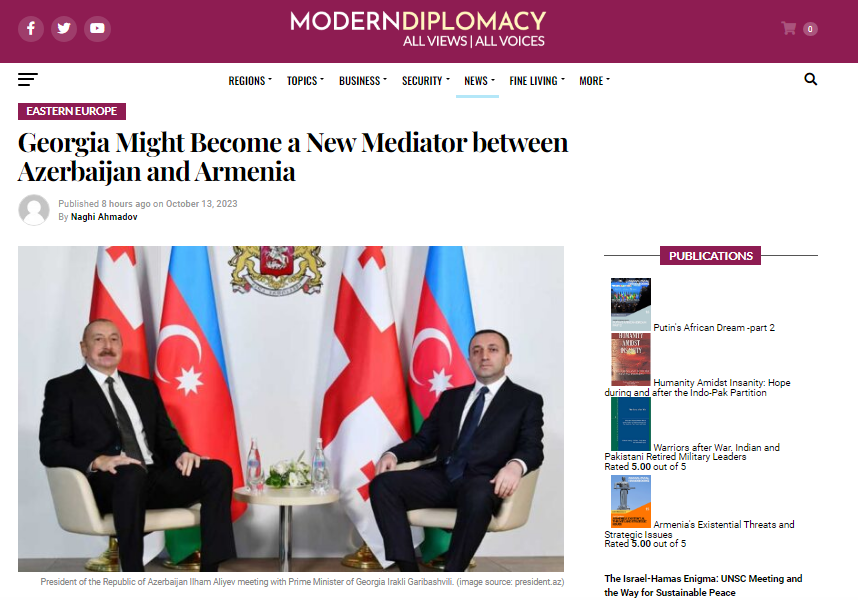
On October 8, President of Azerbaijan Ilham Aliyev paid a working visit to Georgia and met with the Prime Minister Irakli Garibashvili. During the meeting various issues relating to the strategic cooperation between the two countries were discussed. Cooperation in the areas of energy, transport, and logistics was among them. Following the one-on-one meeting, the leaders made joint statements for the press. Commenting on the results of President Aliyev’s visit PM Garibashvili noted that Azerbaijan and Georgia are exploring joint opportunities in trade, energy, sustainable and infrastructure development.
One of the important points that the leaders touched on was the normalization between Azerbaijan and Armenia and Georgia’s possible role in the mediation process. “Georgia has always held a neutral, unbiased position in this process and we stand ready to make our humble contribution through mediation or facilitation – establishment of a friendly format in general,” said by the Prime Minister of Georgia, Irakli Garibashvili adding that “Tbilisi is always ready to take part in this process. Our future should be peaceful, stable and we – all three countries of the South Caucasus – should be able to decide on our own about the regional affairs and our development ahead.”
In response to this issue, President Aliyev stated: “We must work hard on the peace treaty to be signed between Armenia and Azerbaijan. If we succeed in that, and I hope we will, then a completely new political situation will emerge in the South Caucasus”. He further claimed that the South Caucasus countries can start cooperating in a trilateral format in many fields – transport, energy security, trade, mutual investment. Ilham Aliyev, in his speech, reminded that several countries and international organizations are in the role of facilitators in the process of normalization. However, according to President Aliyev, Georgia should participate in the normalization of relations between Baku and Yerevan as it holds an unbiased position regarding the territorial integrity of the countries. He also emphasized that if Armenia expresses consent, then bilateral and trilateral meetings will immediately can begin in Georgia.
During the last 30 years, Armenia-Azerbaijan conflict has sadly turned the region into a hostage of the interests of great powers. Now the fact is that the main problem of the South Caucasus has already been resolved. Azerbaijan has managed to completely restore its territorial integrity and sovereign rights over the Karabakh region. Thus, the major element of Armenia-Azerbaijan conflict – “Nagorno-Karabakh” issue which prevented the signing of the peace agreement no longer exists.
It is worth mentioning that until now, the negotiation process has taken place in different places through the mediation of Russia and the West. The later one is called the “Brussels format” and mainly involves meetings mediated by EU Council President Charles Michel. It is true that, at different times, within that format quadrilateral meetings were also held in the United States personally with the mediation of State Secretary Antony Blinken, as well as five-party meetings with the participation of France and Germany. Unfortunately, all these formats have practically failed in achieving a peace deal mainly owing to geopolitical competition among the major mediators that want to dictate their interests in the South Caucasus.
Such platforms, where Russia and the West, which have belligerent relations, are jointly represented, cannot play any role other than the function of geopolitical division. The past proved it. Therefore, it should be noted that due to the France’s destructive position, recently President Aliyev had canceled his visit to Granada, Spain, where a meeting with Armenian Prime Minister Nikol Pashinyan was to be held with the participation of leaders of the European Union, France, and Germany.
However, Georgia is relatively a small country that does not involve geopolitical ambitions. Both historical-cultural and geographical proximity should be specially evaluated too. Moreover, Tbilisi is no stranger to the negotiation process. Some time ago, the meeting of the foreign ministers of Azerbaijan and Armenia, Jeyhun Bayramov and Ararat Mirzoyan took place in Georgia.
In this regard, the continuation of the negotiation process in Georgia and the organization of discussions around the peace agreement will definitely change the landscape in the South Caucasus. Unlike the parties that focus on their foreign policy interests rather than solving the problem, Georgia can host thematic negotiations and substantive discussions more effectively.
Georgian Vice Parliament Speaker Gia Volski also said that Tbilisi could “successfully facilitate” talks for peace between Azerbaijan and Armenia due to its “very high reputation”.
Another point that should be regarded in favor of Georgia as a mediator is the fact that many people of Armenian and Azerbaijani origins live in harmony in Georgia. This is an important factor makes Georgia the best venue for negotiations between the parties.
As well known that Azerbaijanis are the single largest ethnic minority in Georgia and they live compactly in five districts in Georgia. Also, ethnic Georgians living in Azerbaijan preserve their identity like other ethnic groups. This itself plays a big role in successfully establishing bilateral relations. To some extent, this model can be applied between Azerbaijan and Armenia after ethnically cleansed Azerbaijani people’s right to return ensured.
To conclude, the South Caucasus is about to enter a new stage. Now the region has got a chance to start a period of peace and stability. If the parties succeed in this endeavour, it will pave the way for the development prospects of the South Caucasus. And as a result, the entire region will become a different geo-economic space. In this regard, Baku sees the current situation as a real opportunity and a decisive moment not only for Azerbaijan, but also for the whole region to establish a new regional order.
In brief, considering the fact that the physical proximity to the conflict zone is a crucial factor affecting Georgia’s genuine interest in peace and urging it to take on specific responsibilities, its mediation initiative must be supported by the international community. As Azerbaijan has already positively responded to this offer, the ball is now in Armenia’s court.
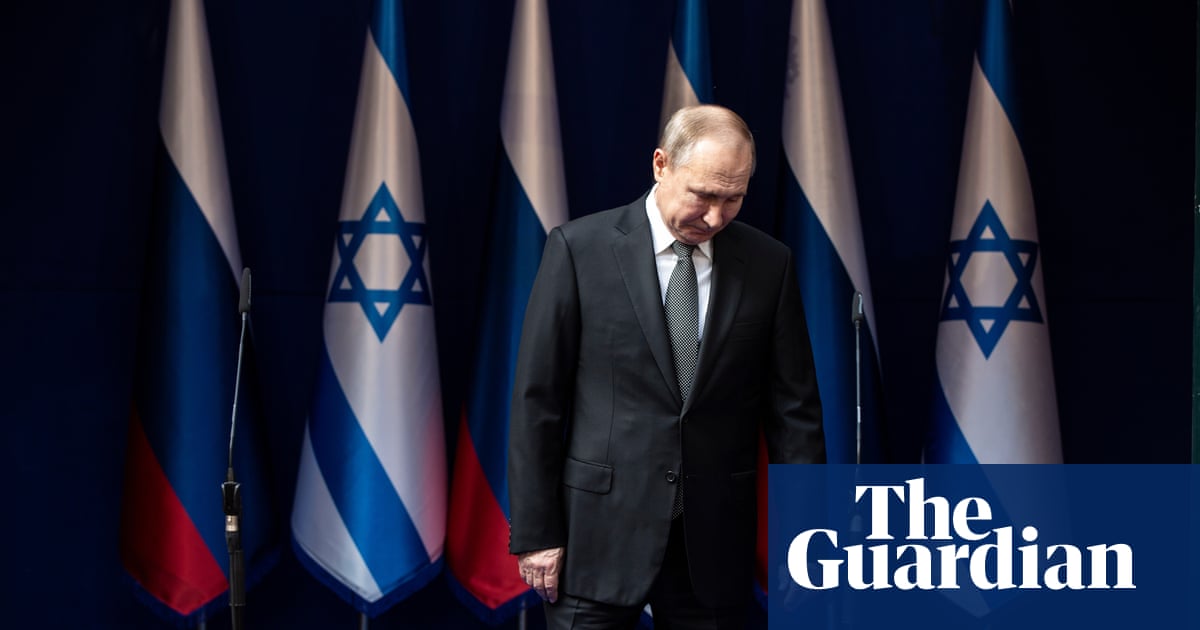
Israel’s prime minister, Benjamin Netanyahu, has long portrayed himself as a friend of Vladimir Putin. In a memoir published during Russia’s war on Ukraine, Netanyahu repeatedly lauded the Russian leader for his intellect and his “particularly friendly attitude” toward the Jewish people.
Putin, too, has over the years cast himself as a loyal ally of the Israeli state, promoting cultural ties and visa-free travel between the two countries.
But after the worst attack on Israel in decades, the much-touted friendship appears to have vanished.
Four days after the start of Hamas’s surprise attack, Putin is yet to call Netanyahu, while the Kremlin has not published a message of condolence to the country, a diplomatic gesture of goodwill that Russia routinely sends out to global leaders following deadly incidents on their soil.
On Tuesday, in his first comments about the Hamas incursion, Putin said the explosion of violence between Israel and the Palestinians showed that US policy had failed in the Middle East and had taken no account of the needs of the Palestinians.
“I think that many people will agree with me that this is a vivid example of the failure of United States policy in the Middle East,” Putin said, without acknowledging the gruesome deaths in Israel.
The shift in tone appears to point to a larger rift between the two countries that has taken place since the start of the war in Ukraine.
For years, Putin has sought to cultivate strong ties with Israel while also backing the Palestinian cause, an alliance which stems from the Soviet area.
Russia’s delicate diplomacy with Israel appeared to bear fruit when the country refused to participate in western sanctions against Russia, much to the chagrin of Kyiv, which accused Israel of ignoring the suffering of Ukrainian Jews.
But below the surface, there had been signs that the relationship between Russia and Israel was deteriorating over Putin’s claims that he was fighting “neo-Nazism” in Ukraine, while shifting his country into the orbit of Iran, an arch-enemy of Israel.
“The warm relationship [between Russia and Israel] that we have seen for years under Putin has cooled down. We are in a different world now,” said Pinchas Goldschmidt, who served as the chief rabbi of Moscow for nearly 30 years until fleeing the country over his opposition to the Ukraine war.
“Israel has always been careful to maintain a good relationship with Moscow given Russia’s large Jewish community and its influence over Syria,” Goldschmidt said, speaking to the Guardian by phone from Israel. On Saturday he attended the funeral of Yuval Ben Yaakov, an Israeli soldier killed in the fighting, who was the son of another former Moscow rabbi.
Goldschmidt said many in the Jewish community have been left deeply uncomfortable with Putin’s framing of the war, comparing Ukraine’s government to Nazi Germany to justify his invasion of the country.
Last summer, these tensions first spilled over into the public, when Russian officials accused Israel of supporting the “neo-Nazi regime” in Kyiv. The spat was ignited after Russia’s foreign minister, Sergei Lavrov, recycled an antisemitic conspiracy theory claiming that Adolf Hitler “had Jewish blood” – comments that Israel described as “unforgivable and outrageous”.
The Kremlin also cracked down on the Russian branch of the Jewish Agency, a private charity closely affiliated with the Israeli government that helped tens of thousands of highly skilled Jewish Russians to immigrate to Israel.
Perhaps more worryingly for Israel was Moscow’s growing reliance on Iran. Russia, isolated from western markets, has invested heavily in buying Iranian suicide drones to attack Ukrainian cities and civilian infrastructure, while the US has warned that Iran was seeking to acquire large numbers of Russian attack helicopters, warplanes and air defence systems.
As the US pledged to send its own military aid to Israel following the Hamas assault, some pro-Kremlin commentators expressed hope that the Israeli-Hamas war would drain western resources away from Ukraine.
Sergey Mardan, a Russian propagandist and television presenter, wrote: “This mess is beneficial for Russia, because the globalist toad will be distracted from Ukraine and will get busy trying to put out the eternal Middle Eastern fire.”
There was also a sense of glee in Moscow over Israeli military and intelligence blunders, which were presented as a testament of western weakness.
“Apparently, the IDF leadership … is resting on the laurels of long-past victories,” military expert Boris Rozhin, who is close to the Russian forces fighting in Ukraine, wrote on Telegram.
Andrei Soldatov, an expert on Russia’s security services, said such comments “unmasked the acute psychological trauma suffered by the Russian military after its disastrous offensive against Ukraine in the early months of 2022.”
“That loss of global respect is hard to bear for a nation with a proud military tradition. So, the relief offered by Hamas has triggered an avalanche of schadenfreude. Did you laugh at our incompetence? Now it’s our turn,” Soldatov said.
On Russian state television, commentators also ridiculed the tens of thousands of Russian Jews who left for Israel following Russia’s invasion of Ukraine in order to avoid mobilisation.
Addressing the Russian parliament on Wednesday, Vyacheslav Volodin, the speaker of the Duma, said that Russians who fled the country to side with Ukraine should be charged with treason and sent to work in mines.
“We’re probably … talking about mines and we need to find territories where the weather is more constant, where there’s no summer,” Volodin said.
Meanwhile, Ukraine appears to have cast aside its previous grievances with Israel, eager to fill the friendship vacuum left behind by Russia.
In a speech made alongside Nato secretary general, Jens Stoltenberg, Ukraine’s president, Volodymyr Zelenskiy, likened Hamas’s assault on Israel this weekend to Russia’s invasion of Ukraine and said his people stood with Israel because they understood what it meant to suffer terror attacks.
“The only difference is that there is a terrorist organisation that attacked Israel, and here is a terrorist state that attacked Ukraine,” Zelenskiy said.

Categories

