NPR News: 10-03-2023 7AM EDT
Categories
 The South Caucasus News - SouthCaucasusNews.com
Back in Armenia, five months after my first visit, French Foreign Minister Catherine Colonna posted on X (formerly Twitter) as she landed in Armenia.
“Friendship, support and solidarity,” she added.
De retour en #Arménie, 5 mois après ma première visite
Amitié, soutien et solidarité. pic.twitter.com/AOkBZYrKAi
— Catherine Colonna (@MinColonna) October 3, 2023
Ona visit to Armenia, Mrs Colonna is expected to meet with Armenian Foreign Minister Ararat Mirzoyan. The Ministers will make statements to the press after the meeting.
Catherine Colonna will also meet with Armenian Prime Minister Nikol Pashinyan.
Law on assemblies and demonstrations
A year before the parliamentary elections, the ruling Georgian Dream party is coming up with an initiative to toughen the law on assemblies and demonstrations.
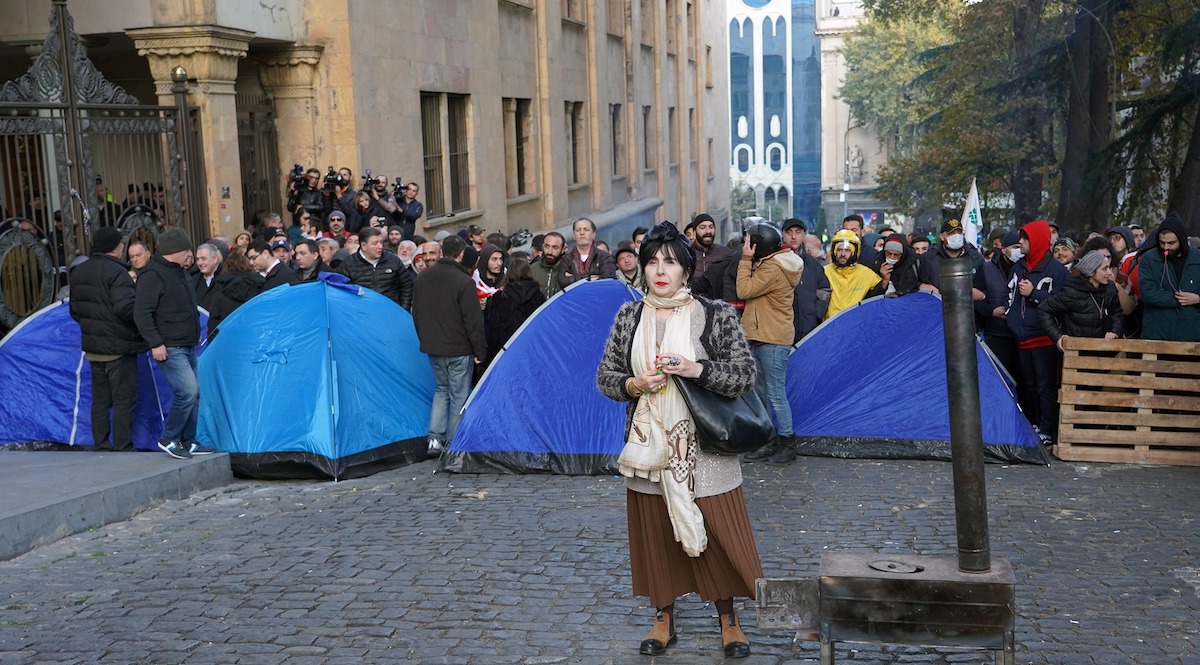
According to the new amendments, the forms of protests will be restricted – setting up a tent and possibly setting up a stage for speakers will be declared a violation of the law.
A group of seven Georgian Dream MPs – Henri Ohanashvili, Irakli Beraya, Givi Mikanadze, Rati Ionatamishvili, Irakli Shatakishvili, Tengiz Sharmanashvili, Alexander Tabatadze – came to the Parliament with the initiative of these amendments.
Voting in the parliament is planned to be held in an accelerated order.
The Dream deputies claim that the need for such changes is information disseminated by the Georgian State Security Service on September 18, according to which “destabilization and revolutionary processes” are planned to take place in the country in October-December.
Georgian Dream Chairman Irakli Kobakhidze explained the rush to pass the bill to journalists as follows:
“There is direct information that revolutionary processes, about which we have heard detailed information, are planned from October, including November-December. So the acceleration, of course, has its logical basis. Naturally, the opposition is weak, but in the conditions of this weakness, the risk of provocations, of course, increases. We need to take preventive measures, and this bill serves to do just that.”
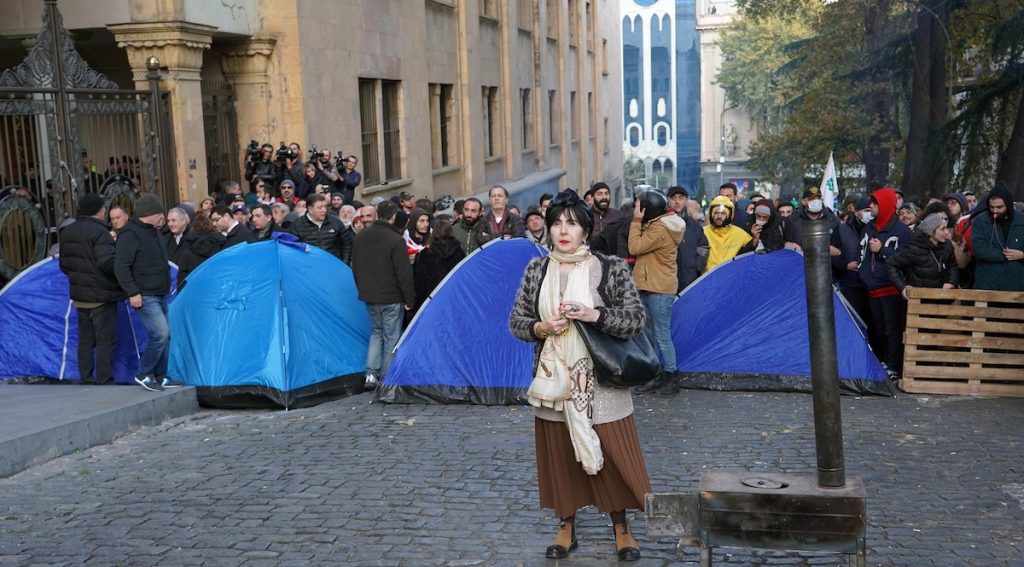 Protesters on Rustaveli Avenue in November 2019 – against the failure of constitutional amendments on proportional representation elections. Photo: David Pipia/JAMnews
If the changes are approved, demonstrators will be prohibited from setting up “temporary structures.” This could be a tent or a stage where speakers speak at rallies. While up until now setting up a tent was one of the allowed forms of protest, once the amendments are passed, it will be considered a violation of the law. The police have the right to confiscate the tent and dismantle the stage. The violator faces a fine of 500 to 5,000 GEL [about $185-1850] or imprisonment for up to 15 days.
The installation of temporary structures is prohibited if they:
Representatives of non-governmental organizations are critical of the tightening of the law on assemblies and demonstrations. Experts say that these changes jeopardize freedom of expression.
“Democratic Initiative of Georgia” (GDI) believes that “the toughening of the law does not really serve any public interest, but creates an additional lever to punish the participants of the rally, which will weaken the realization of the right to freedom of assembly.”
The organization stresses that according to international standards, the area protected by the right to freedom of assembly includes the choice of time, place and form of protest assembly, including the installation of a tent/temporary structure.
Opposition representatives have already called the new version of the law on assemblies and demonstrations a dangerous project. According to politicians, Garibashvili’s team is acting in Putin’s style.
“The amendments to the Georgian law on assemblies and demonstrations represent another variation of the Russian law and are aimed at limiting freedom of speech and assembly,” said Tina Bokuchava, chairwoman of the faction of the opposition National Movement party.
Setting up tents is a popular form of protest in Georgia. In the history of independent Georgia, tents have been erected in front of the parliament building as a sign of protest more than once.
Setting up tents by protesters generally causes great inconvenience to the authorities. For example, on June 1, 2023, Beka Grigoridias, father of Lazare Grigoridias, who was arrested on charges of “using a Molotov cocktail” during the March protests, was fined 2,000 GEL [about $745] for erecting a tent. He wanted to set up the tent in the square outside parliament.
Parents of children with the rare disease achondroplasia, who demanded expensive medication for their children, were not allowed to set up tents at all.
Tents were also set up by protesters and then forcibly removed by police during the 2019 and 2020 protests.
Zaza Saralidze and Malkhaz Machalikashvili, fathers demanding a fair investigation into the murders of their children, also pitched tents.
Law on assemblies and demonstrations
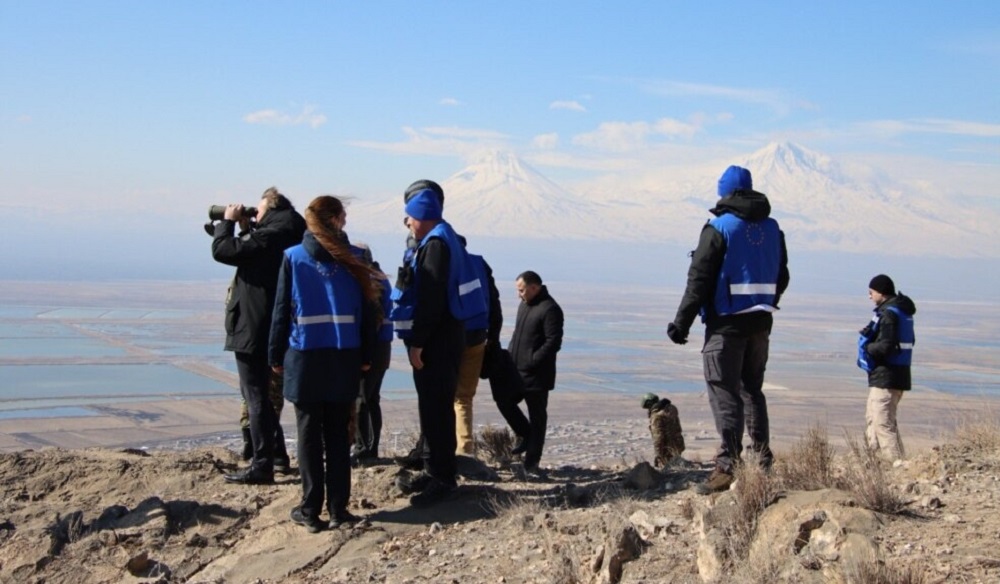
On Western policy in the South Caucasus
“The Armenian-backed displacement of Armenians from Karabakh has put the West in a quandary. If they continue to bend the pro-Armenian line and call what happened ‘ethnic cleansing,’ they will put themselves in a narrow framework of unilateral condemnation of Azerbaijan,” the South Caucasus Analytical Center says in an article.
“Pashinyan‘s support in Armenia is realistic only through reaching an agreement with Baku, and the West must realize this inevitability. Otherwise, another and much bigger collapse of its regional policy awaits it.”
Experts of the South Caucasus Analytical Center (CSSC) analyzed the regional policy of the United States and the European Union in the light of recent developments in the Azerbaijani-Armenian conflict.
“After Azerbaijan’s counter-terrorist operation in Karabakh, the Western media characterizes the activities of Washington and Brussels in the South Caucasus with such formulae as “the collapse of US and EU policy”, “defeat of Western diplomacy”, “inactivity”.
Usually, two kinds of conclusions are drawn after defeats:
Will the West admit its mistakes, or will it insist that it is acting correctly?
A lot has been said about the West’s mistakes: pro-Armenian approaches, ignoring the expectations of the Azerbaijani side and creating conditions for Russian intervention – all this has led to the West’s current position in our region.
Karabakh’s Armenian population is leaving the region en masse and heading to Armenia
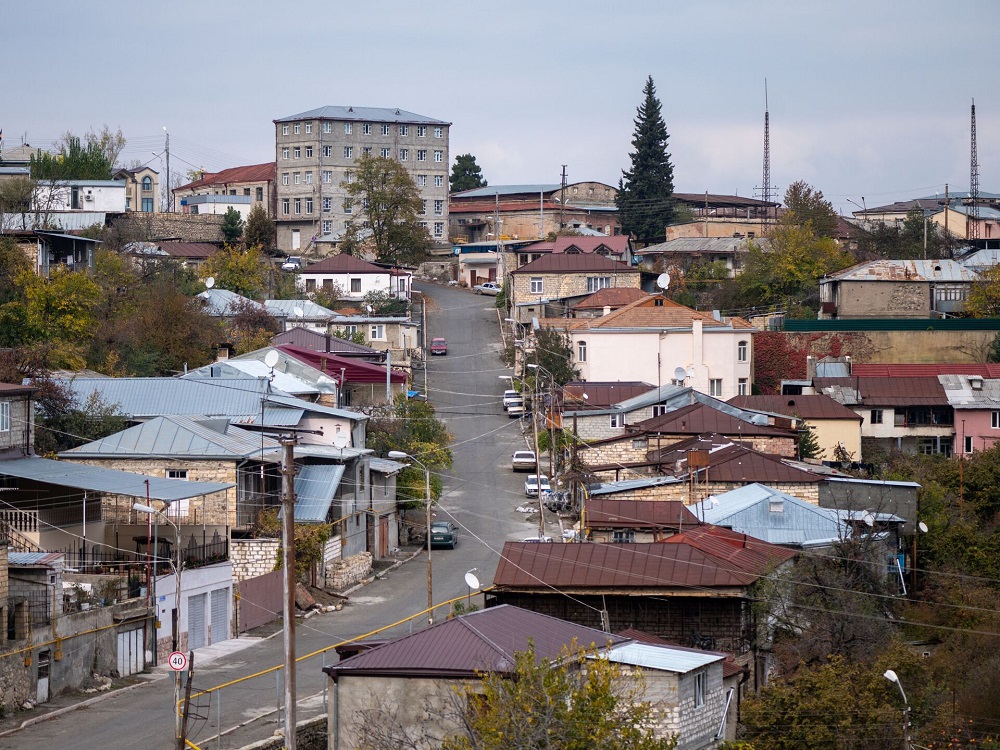
“The Armenian-backed displacement of Armenians from Karabakh has put the West in a difficult position. If they continue to pursue a pro-Armenian line and call what happened “ethnic cleansing”, they will put themselves in a narrow frame of unilateral condemnation of Azerbaijan.
So what does the West want from the South Caucasus, and how can it achieve something positive in the current situation?
If we briefly describe the West’s interests in our region, and the countries involved under these interests, we will get the following picture:
From a geo-economic point of view, Western interests in the region stem from mutual relations with Azerbaijan and Georgia. From the geopolitical point of view, the West’s confrontation with Russia takes place in Armenia, and the confrontation with Iran in the perimeter of Azerbaijan and Armenia. In the Iranian issue, the interests of the US and Azerbaijan coincide, but Yerevan has a different view – for Armenia, relations with Iran and the West are almost equally important.”
“And how should the West be effective in the region?
The statements and actions of the U.S. and the European Union have created a situation of time pressure. If they continue in the same vein, problems with Azerbaijan and loss of positions in the region are inevitable. Therefore, there is a need for evolution of regional policy of Washington and Brussels.
Now the collapse of the unilateral position should force the West to reconsider its approaches. Otherwise, continuation of a defeated policy will lead to even greater losses.
In the current situation, the priority for the West is to support the Pashinyan regime and to preserve Armenia’s security.
Based on this logic, if pro-Russian forces take over power in Armenia, Western support will not be as active.
If support for Armenia will be realized through pressure on Azerbaijan, then in this case Baku in the current situation will be interested in overthrowing Pashinyan’s power. And this is not a pro-Russian line of Azerbaijan, simply in this context the interests of Baku and Moscow actually coincide. Because only in such a confluence of circumstances Baku can target Western interests in the region.
If the West takes a critical view of its regional policy and makes operational changes, Baku may be interested in preserving the Pashinyan regime in Armenia.
The meeting between Aliyev and Pashinyan in Granada will demonstrate what path the U.S. and EU will choose. Baku offers the sides a chance to become more constructive. Baku has brought closer the moment that all stakeholders have long warned about: Azerbaijan has fully restored its sovereignty over the entire territory of the country, and achieved this without signing a peace treaty.
Pashinyan’s support in Armenia is realistic only through reaching an agreement with Baku, and the West must realize this inevitability. Otherwise, another and much larger collapse of its regional policy awaits it.”