
Security forces have detained more than 80 people amid anti-government protests in the Armenian capital of Yerevan. Hundreds of demonstrators called for the embattled Armenian Prime Minister Nikol Pashinian to be ousted for what they call inadequate government support for ethnic Armenians in Nagorno-Karabakh, an Azerbaijani territory that has a large ethnic Armenian population. They are seeking protection and possible transit to Armenia following two days of fighting in the disputed region and the apparent surrender of separatist forces after a decades-long struggle.
Day: September 22, 2023
In July this year, Georgian experts and the political community were surprised when, during the visit of Georgian Prime Minister Irakli Garibashvili to China, the two sides issued a joint statement on the establishment of a Strategic Partnership. The document has been criticised by experts for its perceived imbalance between Chinese and Georgian interests and concerns.
This month, Prime Minister Garibashvili announced visa-free travel for Chinese citizens and the government’s intention to increase the number of direct flights to China to “further facilitate tourism.” This was followed by statements from Georgian officials that they would welcome Chinese investment in the strategically important infrastructure project for Georgia, the Anaklia deep-sea port. Indeed, today the Minister of Economy and Sustainable Development, Levan Davitashvili, revealed that the Sino-Singaporean consortium has been selected as one of the two finalists in the selection process for the Anaklia port private partnership.
Against the backdrop of ambivalent relations with Georgia’s strategic partners – the EU and the US – these developments raise concerns and question marks. What does it all mean, and what are the implications for Georgia’s established foreign policy priorities?
Armed with these questions, we turned to Tinatin (Tina) Khidasheli, chair of the Georgian think-tank Civic Idea, which studies Sino-Georgian relations. Tina Khidasheli is a former Georgian Defense Minister and former Member of Parliament.
Civil.ge: Georgia recently announced a visa-free regime for Chinese citizens “to boost trade, investment, and tourism” alongside the establishment of a “Strategic Partnership” with China. While this move has been met with both praise and criticism, what is your assessment? What potential benefits and risks do you see for Georgia in this decision, especially considering the country’s aspirations for NATO and EU integration?
For a country like Georgia, which has a very flexible visa policy, the “boosting trade, investment and tourism” argument is pure speculation. The visa regime has never prevented Chinese investors from coming to Georgia, as the process is very easy, cheap and hassle-free. It is more of a political statement than a practical step.
After issuing a statement on strategic cooperation, the Georgian government felt the need to act and, without looking at the actual consequences of the action, came up with this idea as a first step with a political flavor, almost similar to the announcement of the first Chinese-run World Trade Expo on 23-25 September. We will see many initiatives in the coming weeks leading up to the Silk Road Forum at the end of October.
The bigger problem with all these decisions, including the establishment of a visa-free regime, is that even in dealing with a country like China, the Georgian government has no concrete medium- or long-term plan, development strategy or risk assessment documents. We do not see any planning for medium- or long-term goals and outcomes that the government wants to achieve, but a very concrete domestic agenda goal to sell increased Sino-Georgian cooperation as a counterbalance to the government’s total failure on the Western front, be it with the EU or the US.
Civil.ge: Given the commitment made by the government of Georgia in its agreement with China, particularly regarding adherence to the ‘one-China principle,’ support for initiatives like the Belt and Road Initiative (BRI), Global Development Initiative (GDI), Global Security Initiative (GSI), and Global Civilization Initiative (GCI) and considering other European countries’ decisions to withdraw from initiatives like the BRI what is your perspective on the potential implications of such a commitment?
Again, these are all political decisions so far, without any particular substance or understanding of what the actual results will be for Georgia. I do not expect these principles to have any immediate practical effect on the Sino-Georgian affair, nor do I expect any immediate reactions from the West. The fact that the Georgian government, without any consultation with the Parliament or the Commander-in-Chief (President of Georgia), took the liberty of joining the GSI, which was created and delivered as an anti-US and anti-NATO strategic statement, says a lot.
The GSI recognizes, approves and promotes the idea of the UN as the one and only institution guaranteeing world peace and prosperity. It denies the importance of other institutions and recognizes the legitimate interests of countries in self-defense in cases and decisions that are absolutely outside the jurisdiction, territory or legitimacy of any particular country. To make the case easier, we need to remember simple facts. The GSI was launched and presented after Russia’s brutal invasion of Ukraine. Accordingly, it is seen as the PRC’s response to the invasion. It accepts the legitimacy of Russia’s claim that NATO’s enlargement threatens Russia and declares it a strategic concern in Russia’s case. It does not explicitly legitimize Russia’s aggression, but it declares these legitimate concerns to be grounds for serious consideration. Georgia has unilaterally recognized the GSI and pledged to abide by its principles, notwithstanding its clear confrontation with our most important long-term strategic partner in defense and security.
It is difficult now to predict exactly what the consequences for Georgia will be, but it is fair to say that the language of the strategic declaration, as well as its release so close to a historic decision on EU candidate status, is a pure provocation by the government. It fits in perfectly with the rhetoric we have recently heard from the mayor of Tbilisi, Kaladze, about NATO.
Civil.ge: The term “strategic partnership” often implies the possibility of military cooperation and intelligence-sharing. How do you view the potential for such cooperation between Georgia and China, and what implications might this have for the region and Georgia’s Western alliances?
So far, there is no visible sign of any planned military/defence cooperation. We have only had two attempts to bring the Chinese into the defense sector: the Motor Sich case and a promise of a military training exchange that never materialized, mainly due to the intervention of Covid.
To some extent, as long as Georgia sticks to the NATO agenda (also for PR purposes), I do not really see the possibility of official Sino-Georgian military cooperation. China does not usually start by moving its military officers or personnel around. Another obstacle is Sino-Russian defense cooperation and joint military training, where again it would be absolutely suicidal for the Georgian government to participate.
As for intelligence sharing, in a sense, we are already doing it by keeping Chinese Nuchtech on our borders. So, making it official in treaties will depend totally on the turn Georgia will make after the 2024 elections.
Civil.ge: It has been suggested that China uses strategic partnerships with small states to exert influence and secure support for its global initiatives. What role do you see Georgia playing in the broader context of China’s Initiatives and its ambitions in the South Caucasus and Central Asia?
It is absolutely clear that the main interests of the PRC lie in Central Asia and the resources of the Caspian Sea. Georgia, by virtue of its geographical and political position, is an integral part of the whole scheme. As I see it, the July 2023 statement on strategic partnership was not so much about the materialization of the huge amount of concrete plans as it was about locking in Georgia as a sphere of interest. I call it the PRC’s master plan to replace “Russki Mir” with Confucius World for the time when all the above principles and plans will be activated.
It should also be mentioned that the statement on strategic partnership goes even deeper and provides that Georgia will coordinate its activities with the PRC at the level of an international organization. Therefore, we should not be surprised if one day Georgia will start voting with the Chinese voice instead of the EU or the US in the UN or other organizations.
Civil.ge: As Civic IDEA closely monitors the ongoing developments in Georgia’s cooperation with China and continues to investigate potential risks and misconduct in various sectors, including infrastructure, economics, and education, could you elaborate on the specific concerns and irregularities that your organization has uncovered during its five years of research? Additionally, what recommendations or measures do you propose for Georgia to address these concerns, enhance transparency, and promote accountability in its relationship with China?
This is a very big question, and you can find all the answers in our reports. Each report has a summary of problems demonstrating the magnitude of misconduct or risks to the country, including corruption risks.
Civil.ge: Given the evolving dynamic in which Russia and China appear to be united in challenging the Western liberal democratic world order, especially as evidenced by Russia’s invasion of Ukraine and their joint efforts to forge multilateral institutions, and given China’s role in financing Russia’s actions and blocking sanctions against Russia, what strategies or safeguards can Georgia implement to protect its interests and maintain its relations with both China and the West?
We believe in cooperation, so there is nothing in our policy paper recommendations against Sino-Georgian cooperation. There’s always room to do more, and the Georgian government could have successfully worked on mutually beneficial treaties and agreements. The problem with the 31 July statement is that it is absolutely one-sided, and represents the whole spectrum of issues that the PRC is concerned about, but none of them reflect the interests of Georgia. So our recommendation is simple: at least work with the principles of reciprocity in mind when drafting these documents.
But if we look at the bigger picture, it is absolutely clear that Georgia has a chance to become stronger and have more influence with the major regional players only if and when it is supported by the Western alliances and allies. Close cooperation with the EU and the Americans has always helped Georgia to get maximum results from all cooperation agreements with third countries, and this is no different in the case of the PRC. Obviously, we are slowly but surely losing the power and influence that we have steadily gained through our firm commitment to EU and NATO membership and the transformation of the country into a European-style liberal democracy.
Georgia’s only competitive advantage in this volatile region is its firm European aspirations, its democratisation and its setting an example of democratic success for the region, and I do not mean just the post-Soviet space. This is what makes transit through Georgia attractive and an obvious choice from Russia or Iran. We seem to be losing this competitive advantage.
Civil.ge: And finally, how would you comment to the today’s announcement by the Minister of Economy and Sustainable Development Levan Davitashvili who revealed that one of the two finalists in the Anaklia Deep Sea Port private partnership selection competition is a Chinese-Singaporean consortium, without naming it though?
The Sino-Singaporean consortium, or even the Swiss-Luxembourg consortium, does not tell us much because where the company is registered does not tell us much about it. The biggest problem at the moment is that the information is completely classified. There is no reason why the government should not publish a list of companies interested in the bid, or why it should talk to citizens in riddles, but unfortunately this has become a very common practice. In the meantime, it prevents us from doing due diligence, and until that happens, there should be public scrutiny.
In July this year, Georgian experts and the political community were surprised when, during the visit of Georgian Prime Minister Irakli Garibashvili to China, the two sides issued a joint statement on the establishment of a Strategic Partnership. The document has been criticised by experts for its perceived imbalance between Chinese and Georgian interests and concerns.
This month, Prime Minister Garibashvili announced visa-free travel for Chinese citizens and the government’s intention to increase the number of direct flights to China to “further facilitate tourism.” This was followed by statements from Georgian officials that they would welcome Chinese investment in the strategically important infrastructure project for Georgia, the Anaklia deep-sea port. Indeed, today the Minister of Economy and Sustainable Development, Levan Davitashvili, revealed that the Sino-Singaporean consortium has been selected as one of the two finalists in the selection process for the Anaklia port private partnership.
Against the backdrop of ambivalent relations with Georgia’s strategic partners – the EU and the US – these developments raise concerns and question marks. What does it all mean, and what are the implications for Georgia’s established foreign policy priorities?
Armed with these questions, we turned to Tinatin (Tina) Khidasheli, chair of the Georgian think-tank Civic Idea, which studies Sino-Georgian relations. Tina Khidasheli is a former Georgian Defense Minister and former Member of Parliament.
Civil.ge: Georgia recently announced a visa-free regime for Chinese citizens “to boost trade, investment, and tourism” alongside the establishment of a “Strategic Partnership” with China. While this move has been met with both praise and criticism, what is your assessment? What potential benefits and risks do you see for Georgia in this decision, especially considering the country’s aspirations for NATO and EU integration?
For a country like Georgia, which has a very flexible visa policy, the “boosting trade, investment and tourism” argument is pure speculation. The visa regime has never prevented Chinese investors from coming to Georgia, as the process is very easy, cheap and hassle-free. It is more of a political statement than a practical step.
After issuing a statement on strategic cooperation, the Georgian government felt the need to act and, without looking at the actual consequences of the action, came up with this idea as a first step with a political flavor, almost similar to the announcement of the first Chinese-run World Trade Expo on 23-25 September. We will see many initiatives in the coming weeks leading up to the Silk Road Forum at the end of October.
The bigger problem with all these decisions, including the establishment of a visa-free regime, is that even in dealing with a country like China, the Georgian government has no concrete medium- or long-term plan, development strategy or risk assessment documents. We do not see any planning for medium- or long-term goals and outcomes that the government wants to achieve, but a very concrete domestic agenda goal to sell increased Sino-Georgian cooperation as a counterbalance to the government’s total failure on the Western front, be it with the EU or the US.
Civil.ge: Given the commitment made by the government of Georgia in its agreement with China, particularly regarding adherence to the ‘one-China principle,’ support for initiatives like the Belt and Road Initiative (BRI), Global Development Initiative (GDI), Global Security Initiative (GSI), and Global Civilization Initiative (GCI) and considering other European countries’ decisions to withdraw from initiatives like the BRI what is your perspective on the potential implications of such a commitment?
Again, these are all political decisions so far, without any particular substance or understanding of what the actual results will be for Georgia. I do not expect these principles to have any immediate practical effect on the Sino-Georgian affair, nor do I expect any immediate reactions from the West. The fact that the Georgian government, without any consultation with the Parliament or the Commander-in-Chief (President of Georgia), took the liberty of joining the GSI, which was created and delivered as an anti-US and anti-NATO strategic statement, says a lot.
The GSI recognizes, approves and promotes the idea of the UN as the one and only institution guaranteeing world peace and prosperity. It denies the importance of other institutions and recognizes the legitimate interests of countries in self-defense in cases and decisions that are absolutely outside the jurisdiction, territory or legitimacy of any particular country. To make the case easier, we need to remember simple facts. The GSI was launched and presented after Russia’s brutal invasion of Ukraine. Accordingly, it is seen as the PRC’s response to the invasion. It accepts the legitimacy of Russia’s claim that NATO’s enlargement threatens Russia and declares it a strategic concern in Russia’s case. It does not explicitly legitimize Russia’s aggression, but it declares these legitimate concerns to be grounds for serious consideration. Georgia has unilaterally recognized the GSI and pledged to abide by its principles, notwithstanding its clear confrontation with our most important long-term strategic partner in defense and security.
It is difficult now to predict exactly what the consequences for Georgia will be, but it is fair to say that the language of the strategic declaration, as well as its release so close to a historic decision on EU candidate status, is a pure provocation by the government. It fits in perfectly with the rhetoric we have recently heard from the mayor of Tbilisi, Kaladze, about NATO.
Civil.ge: The term “strategic partnership” often implies the possibility of military cooperation and intelligence-sharing. How do you view the potential for such cooperation between Georgia and China, and what implications might this have for the region and Georgia’s Western alliances?
So far, there is no visible sign of any planned military/defence cooperation. We have only had two attempts to bring the Chinese into the defense sector: the Motor Sich case and a promise of a military training exchange that never materialized, mainly due to the intervention of Covid.
To some extent, as long as Georgia sticks to the NATO agenda (also for PR purposes), I do not really see the possibility of official Sino-Georgian military cooperation. China does not usually start by moving its military officers or personnel around. Another obstacle is Sino-Russian defense cooperation and joint military training, where again it would be absolutely suicidal for the Georgian government to participate.
As for intelligence sharing, in a sense, we are already doing it by keeping Chinese Nuchtech on our borders. So, making it official in treaties will depend totally on the turn Georgia will make after the 2024 elections.
Civil.ge: It has been suggested that China uses strategic partnerships with small states to exert influence and secure support for its global initiatives. What role do you see Georgia playing in the broader context of China’s Initiatives and its ambitions in the South Caucasus and Central Asia?
It is absolutely clear that the main interests of the PRC lie in Central Asia and the resources of the Caspian Sea. Georgia, by virtue of its geographical and political position, is an integral part of the whole scheme. As I see it, the July 2023 statement on strategic partnership was not so much about the materialization of the huge amount of concrete plans as it was about locking in Georgia as a sphere of interest. I call it the PRC’s master plan to replace “Russki Mir” with Confucius World for the time when all the above principles and plans will be activated.
It should also be mentioned that the statement on strategic partnership goes even deeper and provides that Georgia will coordinate its activities with the PRC at the level of an international organization. Therefore, we should not be surprised if one day Georgia will start voting with the Chinese voice instead of the EU or the US in the UN or other organizations.
Civil.ge: As Civic IDEA closely monitors the ongoing developments in Georgia’s cooperation with China and continues to investigate potential risks and misconduct in various sectors, including infrastructure, economics, and education, could you elaborate on the specific concerns and irregularities that your organization has uncovered during its five years of research? Additionally, what recommendations or measures do you propose for Georgia to address these concerns, enhance transparency, and promote accountability in its relationship with China?
This is a very big question, and you can find all the answers in our reports. Each report has a summary of problems demonstrating the magnitude of misconduct or risks to the country, including corruption risks.
Civil.ge: Given the evolving dynamic in which Russia and China appear to be united in challenging the Western liberal democratic world order, especially as evidenced by Russia’s invasion of Ukraine and their joint efforts to forge multilateral institutions, and given China’s role in financing Russia’s actions and blocking sanctions against Russia, what strategies or safeguards can Georgia implement to protect its interests and maintain its relations with both China and the West?
We believe in cooperation, so there is nothing in our policy paper recommendations against Sino-Georgian cooperation. There’s always room to do more, and the Georgian government could have successfully worked on mutually beneficial treaties and agreements. The problem with the 31 July statement is that it is absolutely one-sided, and represents the whole spectrum of issues that the PRC is concerned about, but none of them reflect the interests of Georgia. So our recommendation is simple: at least work with the principles of reciprocity in mind when drafting these documents.
But if we look at the bigger picture, it is absolutely clear that Georgia has a chance to become stronger and have more influence with the major regional players only if and when it is supported by the Western alliances and allies. Close cooperation with the EU and the Americans has always helped Georgia to get maximum results from all cooperation agreements with third countries, and this is no different in the case of the PRC. Obviously, we are slowly but surely losing the power and influence that we have steadily gained through our firm commitment to EU and NATO membership and the transformation of the country into a European-style liberal democracy.
Georgia’s only competitive advantage in this volatile region is its firm European aspirations, its democratisation and its setting an example of democratic success for the region, and I do not mean just the post-Soviet space. This is what makes transit through Georgia attractive and an obvious choice from Russia or Iran. We seem to be losing this competitive advantage.
Civil.ge: And finally, how would you comment to the today’s announcement by the Minister of Economy and Sustainable Development Levan Davitashvili who revealed that one of the two finalists in the Anaklia Deep Sea Port private partnership selection competition is a Chinese-Singaporean consortium, without naming it though?
The Sino-Singaporean consortium, or even the Swiss-Luxembourg consortium, does not tell us much because where the company is registered does not tell us much about it. The biggest problem at the moment is that the information is completely classified. There is no reason why the government should not publish a list of companies interested in the bid, or why it should talk to citizens in riddles, but unfortunately this has become a very common practice. In the meantime, it prevents us from doing due diligence, and until that happens, there should be public scrutiny.
With Victory Assured, Azerbaijan Now Seeks ‘Reintegration’ Of Karabakh Armenians Radio Free Europe / Radio Liberty
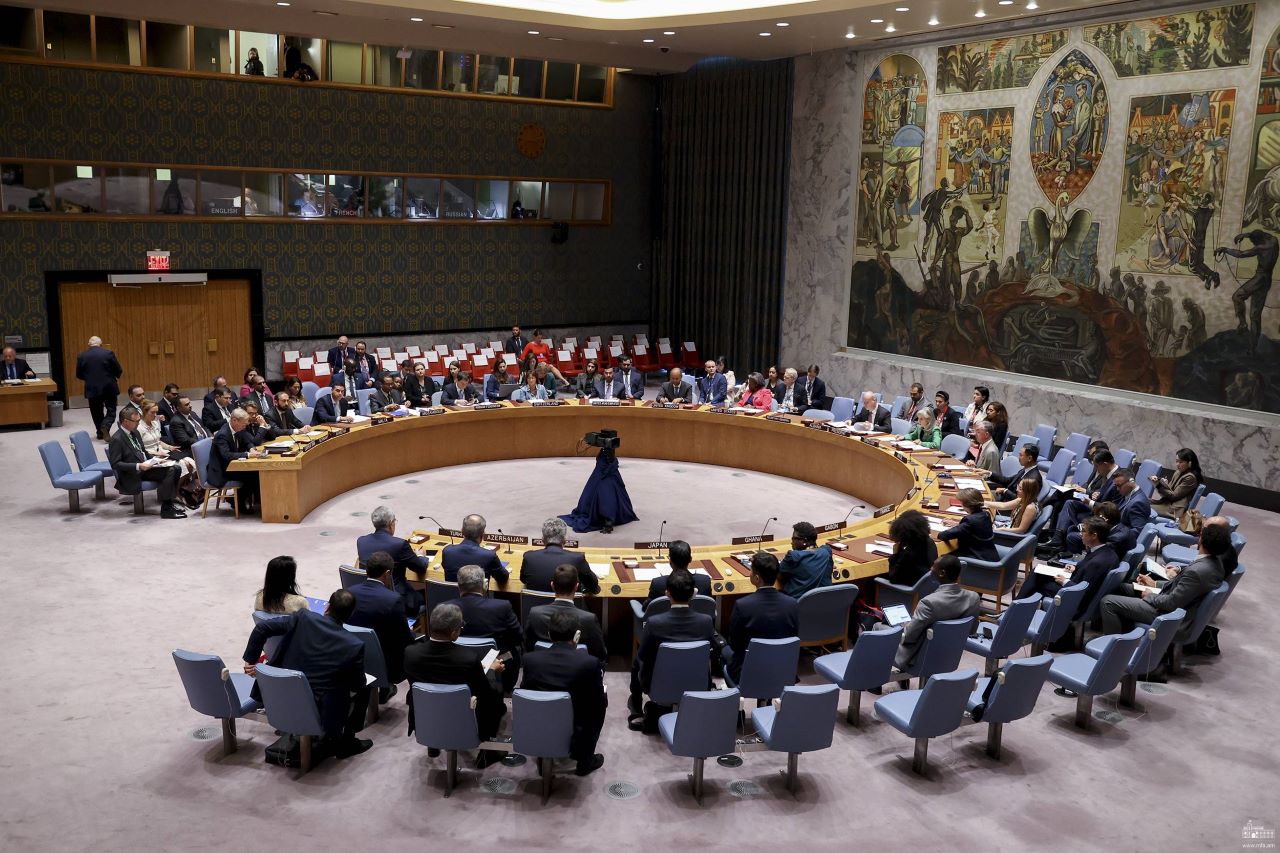
UN Security Council meeting at the initiative of France
“No one can believe that the operation was not pre-planned,” French Foreign Minister Catherine Colonna said of the recent military actions on the territory of Nagorno-Karabakh. She said they began after Azerbaijan had been accumulating “a large volume of troops and military equipment” for several weeks.
The statement of the French Foreign Minister was made during an emergency meeting of the UN Security Council, which was initiated by Paris. Representatives of Germany and the European Union also condemned Baku’s actions and position in their speeches. The US believes that the presence of an international mission is necessary in NK, while Russia continues to believe that “there is no alternative to the Russian peacekeeping mission”.
The EU High Representative for International Relations and Security Policy Josep Borrel in his speech stressed the necessity of unblocking the Lachin corridor connecting the unrecognized NKR with Armenia. He also spoke about the importance of realizing the right of NK Armenians to live in dignity in their homes.
The Azerbaijani Foreign Minister again declared the military actions an “anti-terrorist operation”, laying all the blame on the Armenian side. He accused Armenia of mining the territories under Azerbaijani control and the death of Azerbaijani citizens. At the same time, the UN International Court of Justice rejected Azerbaijan’s suit against Armenia on this issue back in February.
At the meeting, only speeches of representatives of different countries were made, the Security Council did not adopt any statement or resolution on the issue under discussion.
Commenting on the results of the session, political observer Hakob Badalyan urged not to discuss the issue according to the logic of “fans”, how “good or bad the speeches sounded”. He is convinced that even those “who make good speeches have their own interests, which at the moment do not motivate them to take any action against Azerbaijan”.
Theses of the Armenian Foreign Minister’s speech, assessments of the UN Security Council members, the European Union’s appeal to Azerbaijan, commentary by an Armenian analyst.
“Baku’s goal is to bring the ethnic cleansing of NK’s Armenian population to an end”
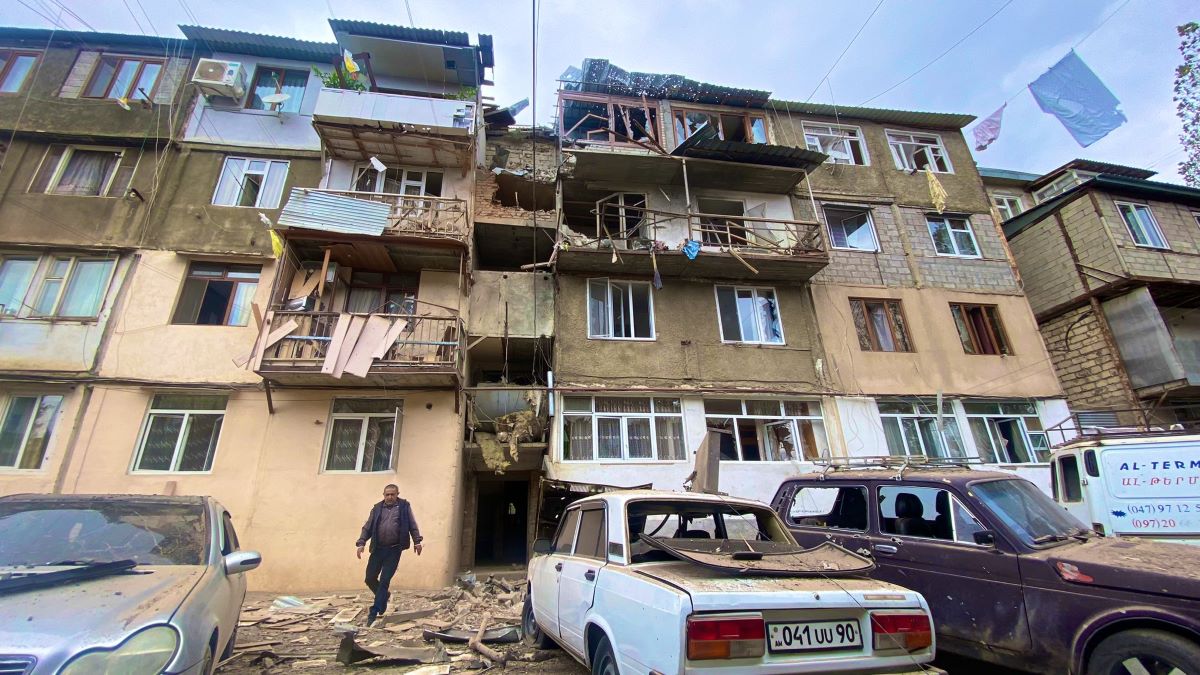
Armenian Foreign Minister Ararat Mirzoyan announced that “taking into account the intensity and brutality of Azerbaijan’s military actions, Baku’s goal was obvious – to bring the ethnic cleansing of the Armenian population of NK to an end”. He said Azerbaijan used missiles, heavy artillery, attack drones and combat aviation, prohibited cluster munitions. As a result, more than 200 people were killed on the Armenian side in two days, more than 400 wounded, with women and children among the victims.
According to Mirzoyan, the military actions were predictable and there were clear signs of preparation. He emphasized that Armenia has repeatedly warned of Azerbaijan’s intentions, but the international community did not take those statements seriously enough.
The Armenian Foreign Minister appealed to the members of the Security Council to take urgent measures, in particular,
- deploy a UN interdepartmental mission in NK,
- to ensure unimpeded access of UN agencies and other international structures to the territory of NK,
- not to allow punitive actions against NK politicians and military men.
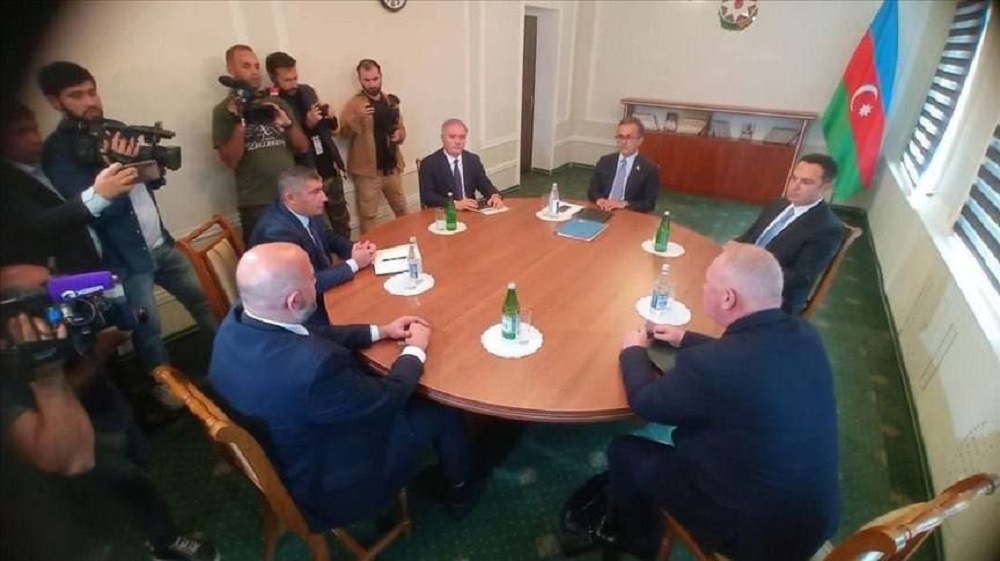
“Azerbaijan is responsible for the fate of the population of NK”
According to the French Foreign Minister, Baku has taken responsibility for the fate of Armenians. This is evidenced by Aliyev’s statement about his intention to “live in peace with the Armenians of Nagorno-Karabakh and protect their rights”.
Catherine Colonna said, in case Azerbaijan really intends to reach a peaceful solution through negotiations,
- the use of force or threat of force must be ruled out,
- it is necessary to start a peaceful dialog on the rights and guarantees of the population with the support of the international community,
- amnesty should be granted to the military, the forces that have taken the decision on ceasefire, and also
- The Lachin corridor should be restored without delay,
- accept an international humanitarian presence in Nagorno-Karabakh.
“We cannot remain passive observers of the events taking place in Nagorno-Karabakh, because in this case we will become accomplices of the mass eviction of local residents,” she emphasized.
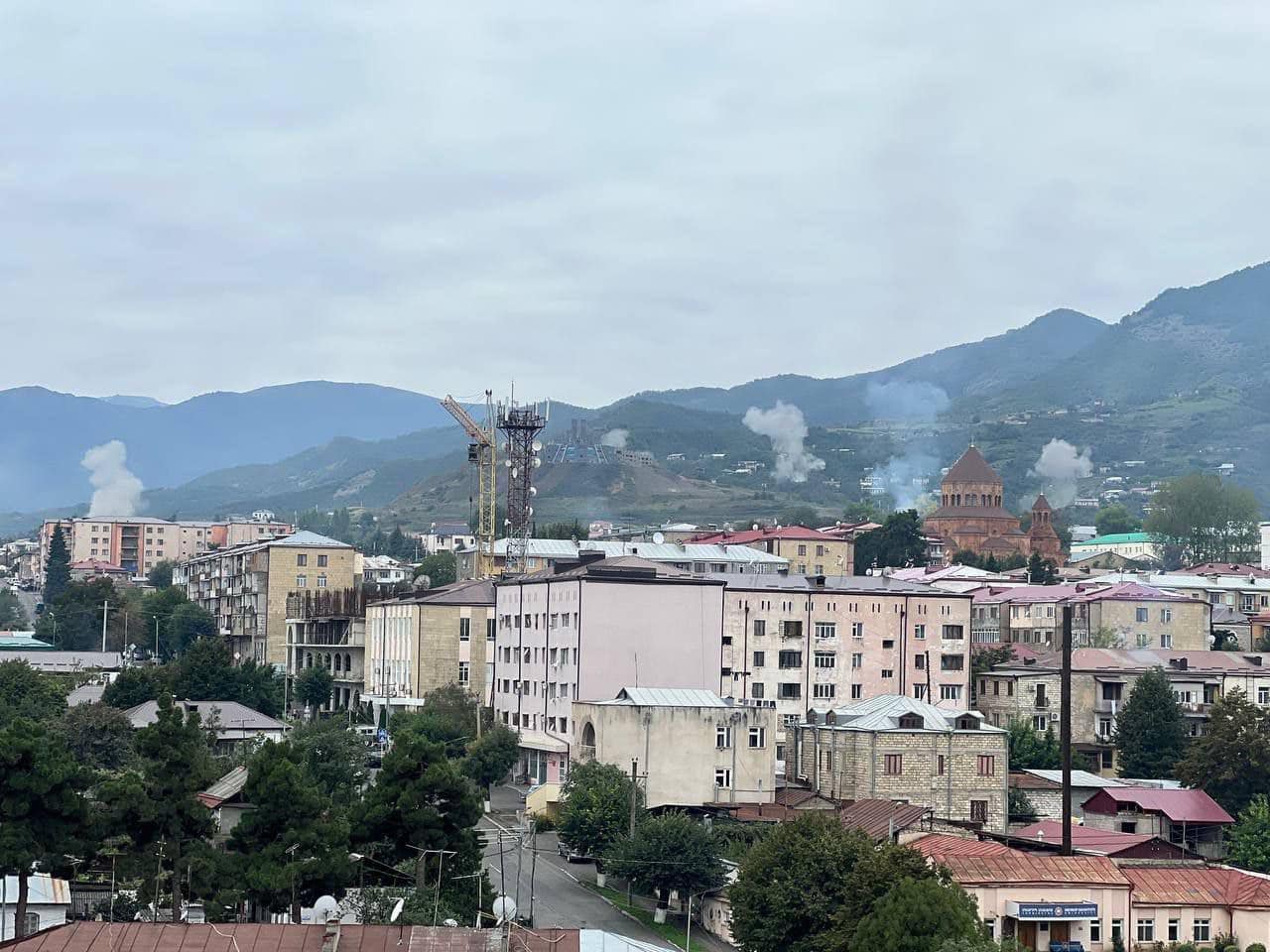
“It is important to send an international mission that will instill confidence in the people of NK”
According to U.S. Representative Linda Thomas-Greenfield, confidence is needed that the rights and security of residents will be protected in accordance with Azerbaijan’s public statements.
She emphasized that despite the announcement of a ceasefire, the situation on the ground remains difficult:
“The U.S. is deeply concerned about reports of violence against civilians. Azerbaijan has a responsibility to ensure that the actions of its armed forces are in full compliance with international law.”
Speaking about the humanitarian situation in Nagorno-Karabakh, the U.S. representative called on the sides to ensure that food, medicine and other necessary attributes are delivered by humanitarian organizations “without any roadblocks.”
“There is no alternative to the Russian peacekeeping mission”
This was stated by First Deputy Russian Permanent Representative Dmitry Polyansky. He assured that since the beginning of hostilities, the command of the Russian peacekeeping forces has been in contact with representatives of Nagorno-Karabakh and Azerbaijan in order to “stop the bloodshed.”
“About 5,000 citizens have been evacuated from the most dangerous regions, including about 1,000 people provided with accommodation in a tent camp,” he said.
Polyansky said Russia was interested “more than anyone else” in resolving the situation as soon as possible.
He said that Moscow counts on contacts between Baku and Stepanakert, as a result of which it will be possible to alleviate the humanitarian situation in the region.
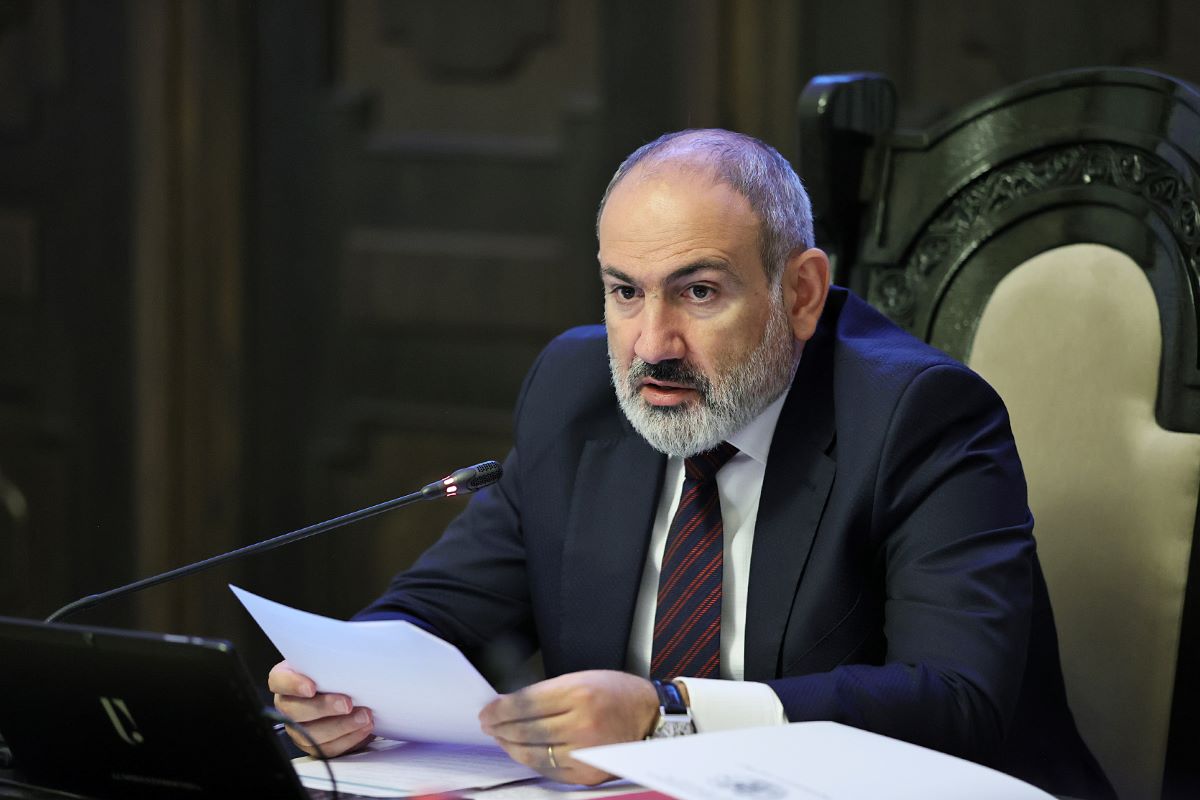
“Deportation of Armenians from NK is unacceptable”
German Foreign Minister Annalena Berbock spoke more forcefully and emotionally than others. She emphasized that in just two days of military actions in Karabakh hundreds of people were killed, thousands were forced to leave their homes.
“Deportation, forced eviction of Armenians from NK is unacceptable. Azerbaijan has chosen the path of changing the situation on the ground through military force. We strongly condemn Baku’s military attack and call for a permanent and definitive end to its military actions.”
Berbok said Azerbaijan is responsible for the full and complete protection of local civilians, especially children.
She said the functioning of the Lachin corridor is vital as a “cultural and humanitarian bridge for Armenians” living in Karabakh.
“The women, men and children of Nagorno-Karabakh and the people of the region in general deserve to live without fear of violence, without fear of being forcibly expelled from their homes, without fear of being deprived of their rights, language and religion. They deserve to live in security. They deserve to live in peace, as we all do,” the German Foreign Minister said.
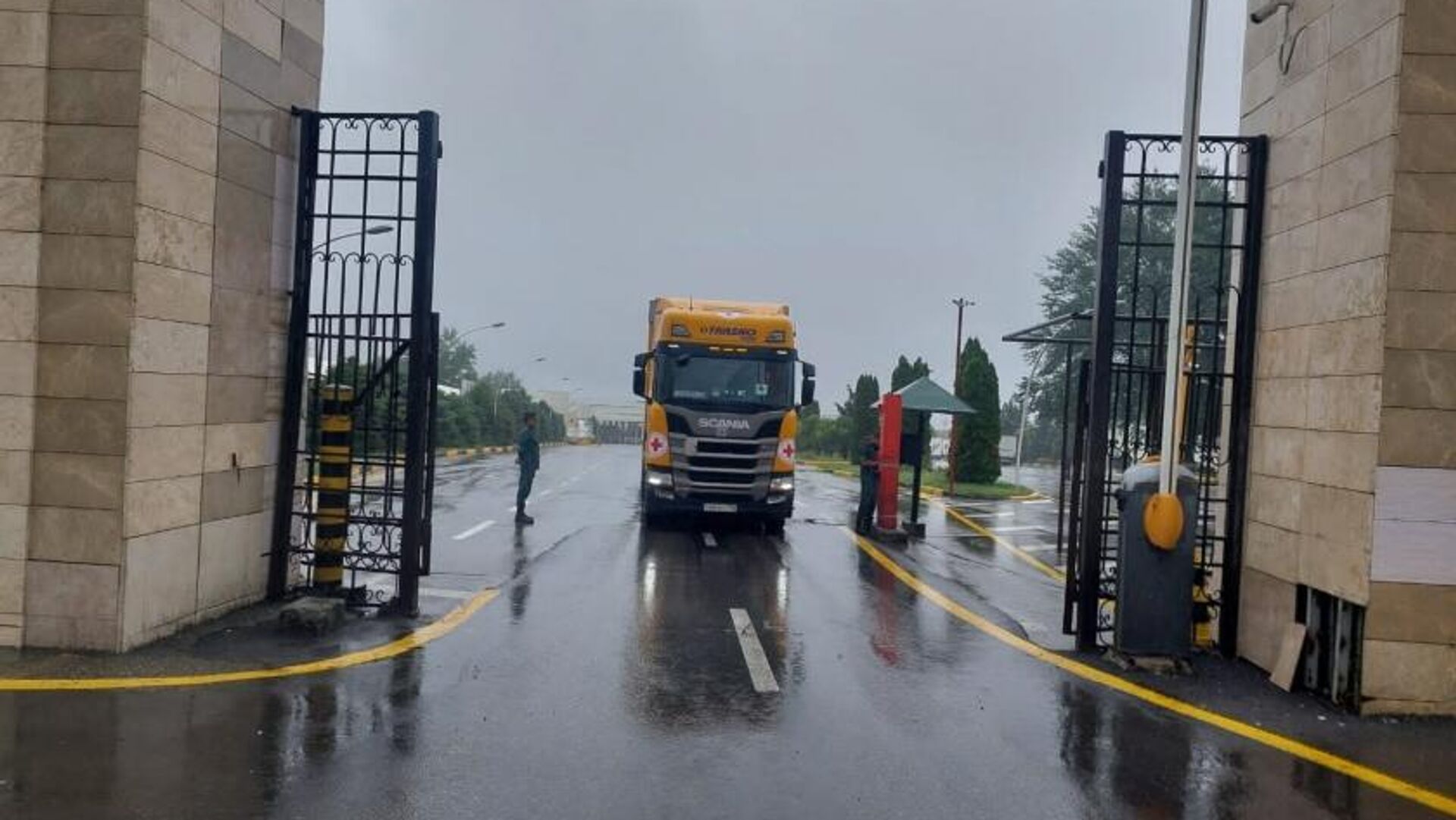
EU expects Azerbaijan to take concrete steps
EU High Representative for Foreign Affairs and Security Policy Josep Borrell recalled that the European Union condemned Azerbaijan for the military operation and loss of life in Nagorno-Karabakh.
He emphasized that the population of Karabakh now urgently needs humanitarian aid and guarantees of their rights and security. In this regard, Azerbaijan should take concrete steps, in particular,
- ensure unimpeded access of humanitarian aid to civilians, including by fully unblocking the Lachin corridor;
- engage in a comprehensive and transparent dialog with the Armenians of Nagorno-Karabakh to ensure their rights and security, including the right to live in dignity in their homes.
Commentary
Political observer Hakob Badalyan notes that Armenian residents react to the UN Security Council meeting like “fans, fans – this one spoke well, the other one spoke badly”.
In his opinion, the speeches at the meeting do not at all indicate that these countries will act against Azerbaijan:
“We see that none of the good speakers have bad steps for Azerbaijan. Why? Because the task of those who speak well on our issue is to act badly not towards Azerbaijan, but towards Russia”.
In the current situation Badalyan finds it unacceptable that politicians also show themselves as “fans”, which is “evidence of political illiteracy or some personal calculations”.
According to the analyst, those countries that have “an opportunity to act well for Armenia have no motive to do so” based on their own interests and relations with Azerbaijan.
“We should work intensively with everyone, but not to be in an infantile political trap of good and evil, but to be based as much as possible on the analysis of the situation on the ground,” Badalyan concluded.
Follow us – Twitter | Facebook | Instagram
UN Security Council meeting at the initiative of France
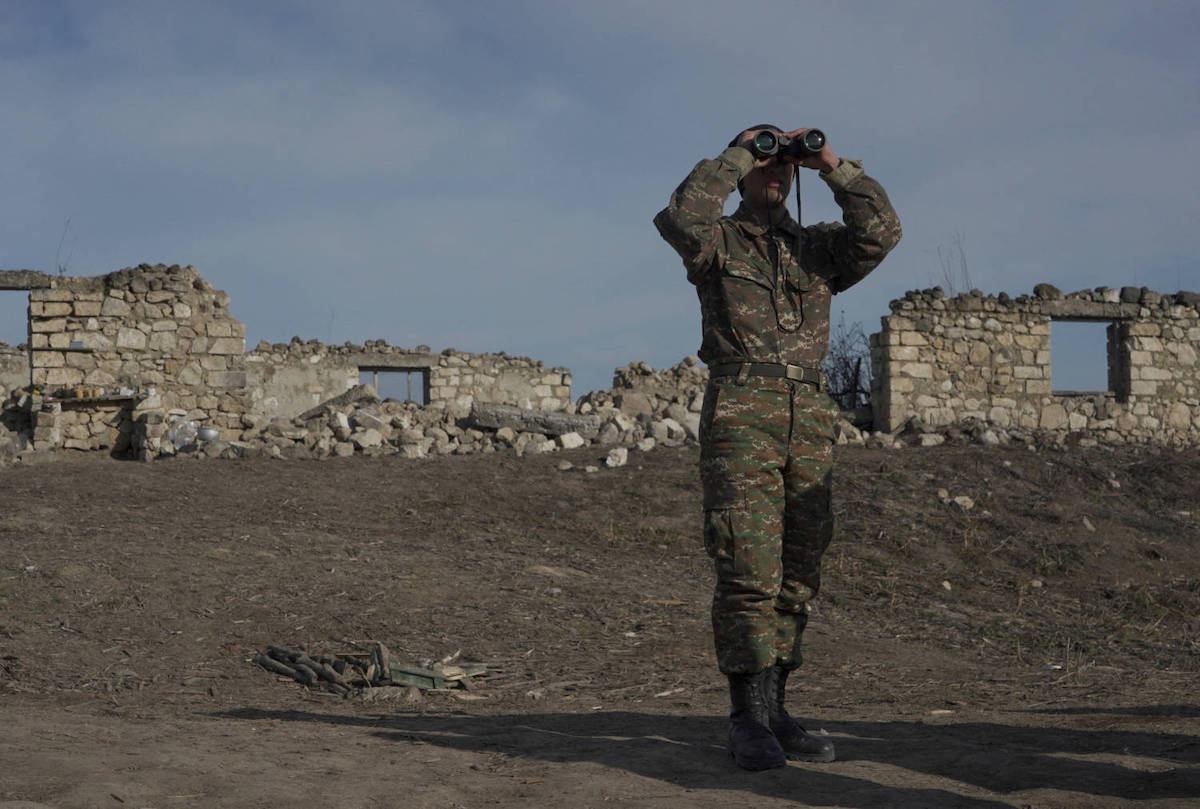
How do you assess the processes in Karabakh, what does it mean for Georgia and the Caucasus region as a whole?
JAMnews asked Georgian experts with this question.
-
On September 19-20, the Azerbaijani army conducted a military operation in Karabakh, which it called an anti-terrorist operation. The Azerbaijani Defense Ministry stated that the purpose of the operation was to ensure the safety of Azerbaijani servicemen and restore constitutional order in the country’s region. The authorities of the unrecognized NKR were given conditions for complete disarmament and withdrawal of military equipment. Baku announced security guarantees for the Armenian population in case “if they do not take up arms and put on military uniforms”.
In Yerevan, the events were assessed as “genocide of Karabakh Armenians”.
On the morning of September 20, the authorities of the unrecognized NKR decided on a ceasefire and complete disarmament. On September 21, the first meeting of their delegation with representatives of the Azerbaijani authorities took place. The main topic of this and planned subsequent meetings is the conditions of integration of the Armenian community into Azerbaijani society.

Conflictologist Paata Zakareishvili:
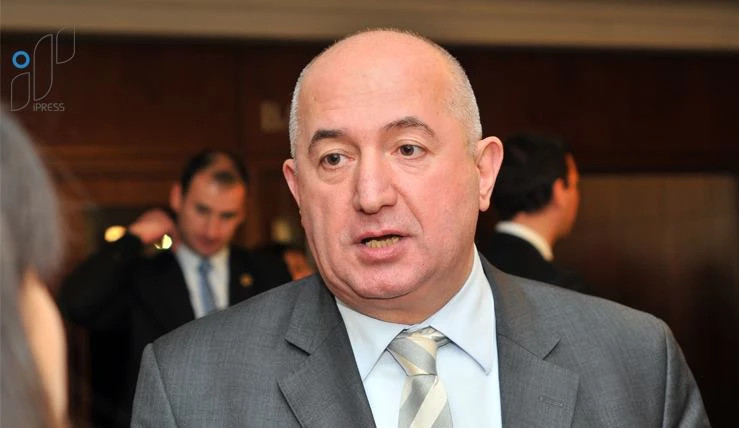
The events in Karabakh are Russia’s expulsion from the Caucasus
What happened was an absolutely expected result. Marquez has a famous novel “Chronicle of Death Revealed” and this is exactly what happened in Karabakh.
Just a few hours before these events I arrived from Baku, and before that I was in Yerevan for a week, where I met with many experts.
And everyone was talking about the fact that there will be a war in Karabakh.
What is important here is that four players have been identified. And, unfortunately, Georgia is not meant here. Georgia is disconnected from these events, even its pulse is not felt.
The first player is Turkey. It is in the shadow and is a guarantor of Azerbaijan’s security, as if telling the whole world: if you oppose Azerbaijan, you will have to deal with me.
The main player, of course, is Azerbaijan. It implements its policy in agreement with Turkey, with the hope of Turkey and with the support of Turkey.
The third player is Russia. It has been turned into a laborer by Turkey and Azerbaijan. Russia has been told: if you want to stay in the Caucasus for a while, do the dirty work. For example, give up Armenia. In other words, Turkey and Azerbaijan imposed on Russia the rules of the Turkish-Azerbaijani game, Russia accepted this rule and fulfilled it with regard to Armenia.
And the fourth player is Armenia. It is forced to accept the rules of the game developed by Turkey and Azerbaijan and taken into account by Russia. Armenia has practically no allies.
Armenia’s mistake is that it did not realize that Russia is a traitor.
Who Russia is became clear in 2016 and 2020, when the first and second escalation took place and Azerbaijan made some progress on the Karabakh track. Then Russia silenced Armenia, and Armenia did not realize then that Russia is a traitor.
▇ But now Armenia knows for sure that where Russia is, there are problems, betrayal, humiliation and cynicism.
In my opinion, Armenia’s position will be the most important. Armenia should make a clear decision on where it is going: whether it will remain a part of Russian policy or become one of the important players in the South Caucasus.
Its negotiations with Baku and Ankara must begin. It must begin relations with Brussels.
There should be a complete expulsion of Russia from the South Caucasus.
- “Baku and Moscow are not interested in an exodus of all Armenians from NK”. Opinions from Yerevan
- “This is far from ethnic cleansing”: Experts from Baku on the counter-terrorist operation
- Arestovich on Karabakh war: “Russia betrayed Armenia after 30 years of relations”
Today Armenia is under attack, I sympathize with the Armenian people, they have been through a lot. But it should look inside itself and realize where it has made a mistake. The problem is that everyone in Armenia realizes this, but no one speaks about it out loud.
As for Azerbaijan, geopolitics is changing significantly, and everything depends on what strategy Azerbaijan will have. The main question is whether Azerbaijan really intends to integrate the Armenian population or actually wants to stimulate the exodus of the Armenian population from Karabakh?
Initially it was clear that Azerbaijan would return Karabakh. But the question was whether Azerbaijan would create conditions. If it does, it is clear that part of the population will return there.
Whether Azerbaijan really wants to integrate the Armenian people, as Baku openly declares today, will be clear in three or four months, maximum in six months. Let’s see where Azerbaijan’s strategy leads.
If there is real integration, Azerbaijan does not need Russia in the region at all. And if there is no integration, Azerbaijan plans to cooperate with Russia as it did before.
Russia will agree to this. It wants to stay in the Caucasus and is ready to serve Turkish-Azerbaijani interests for that.
Turkey’s position in the Caucasus is very important. Turkey is a NATO member state, Georgia aspires to join NATO, and therefore Turkey should be our strategic ally in security issues.
Azerbaijan and Turkey have signed 16 agreements in the security and military sphere. And it is not Azerbaijan that does not declare its desire to join NATO, but Georgia.
We should sign the same documents with Turkey to protect ourselves from Russia.
Georgia today keeps saying that it has been left alone with Russia. But this is nonsense. We are not alone, Turkey is next to us and we should take advantage of that.
- Seven facts “about Armenia’s departure from Russia”
- Georgia has fully implemented one EU recommendation and seven partially implemented. Non-governmental sector assessment
- “They always talk about civil unrest when the authorities lose their influence.” Georgian political analyst’s opinion
Zurab Batiashvili, Research Fellow at the Foundation for Research on Strategy and International Relations of Georgia:
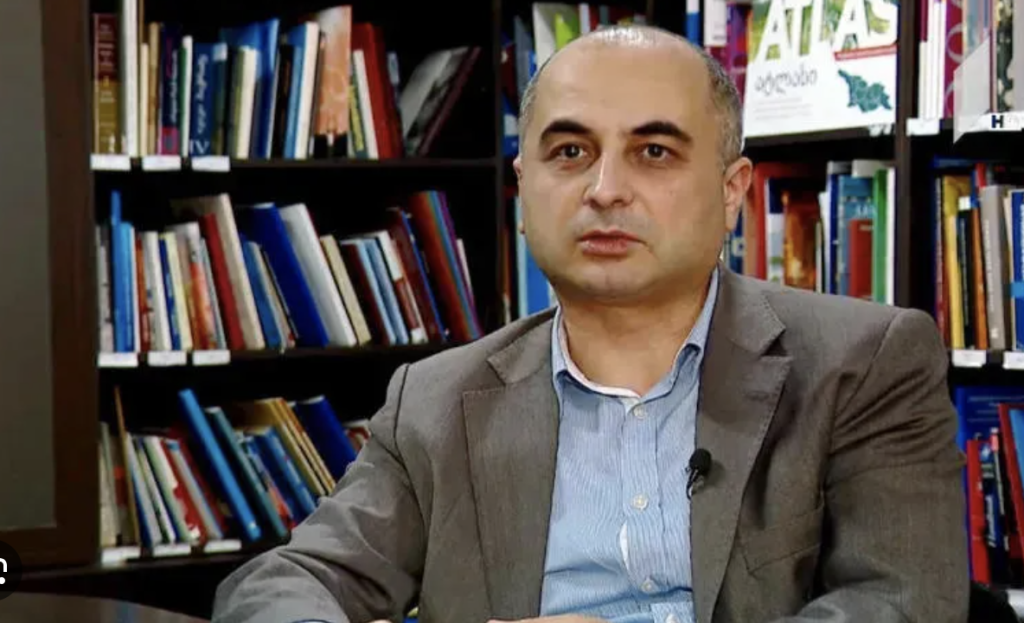
What happened in Karabakh is related to the weakening of Russia globally. The Russian army is now embroiled in the war in Ukraine, and it has no opportunity to open a second front anywhere. Azerbaijan took advantage of this situation and restored its territorial integrity.
Aliyev completed the work started in 2020 and became the first in the post-Soviet space to restore the territorial integrity of his country.
This is a precedent, and it means that the balance of power in the former Soviet space is changing. But that is not all.
The consequence of the war Russia is waging in Ukraine is a new wave of EU enlargement. And this is also a big geopolitical change.
Previously, Georgia’s European perspective was not even recognized. Now they not only recognize it, but actually beg us to fulfill the conditions and become a candidate for EU membership.
▇ It is a pity that during such important geopolitical processes the Georgian authorities are pursuing such a weak and inadequate foreign policy.
The Pashinyan government is now facing a very serious challenge. Pro-Russian forces are trying and will try in the future to use the wave of public discontent to remove Pashinyan from power. So far it has not succeeded, and let’s hope it won’t.
Then, perhaps, the issue of whether Armenia will remain in the CIS will be raised, as well as the issue of the Russian base in Gyumri.
As for Georgia, unfortunately, we are moving very quickly towards Russia. This is directly related to the topic of sanctions, as well as to the fact that the Georgian authorities do not fulfill the 12-point plan. And these recent statements about some kind of conspiracy, and so on.
The authorities are preparing to start repressions after Georgia is denied the status of candidate for EU accession and people take to the streets.
As for the geopolitical situation, we see that changes have begun. Armenia is trying to change its political orientation with great speed. If until now it was dependent only on Russia, now it is trying to establish itself in the West at a rapid pace – because Russia has not become a guarantor of security for them.
The Armenian community in Karabakh is in a difficult situation. But when Pashinyan was re-elected prime minister after the second Karabakh war, it meant that society in Armenia had come to terms with the loss of Karabakh.
And in general, the fact that Pashinyan is still in power is a sign that the society in Armenia is very eager to move towards the West.
And the fact that Pashinyan made anti-Russian statements is also, of course, an order of the society.
However, Armenia has a long way to go, including in terms of rapprochement with NATO. Armenia is still a member of the CSTO, which prevents it from receiving weapons from the West, and the West is in no hurry to give these weapons to the still pro-Russian country.
In other words, Armenia still has a long way to go to become at least formally equal to Georgia in terms of European integration.
However, it is not excluded that events will develop very quickly and such a prospect will appear very soon.
The most important thing is that as a result of what happened in Karabakh Armenia got rid of a huge burden. It may be very painful for them now, but in fact the Karabakh problem was the burden that kept Armenia in Russia’s grip for a long time.
Giorgi Bilanishvili, foreign policy specialist, professor at Ilyauni University:
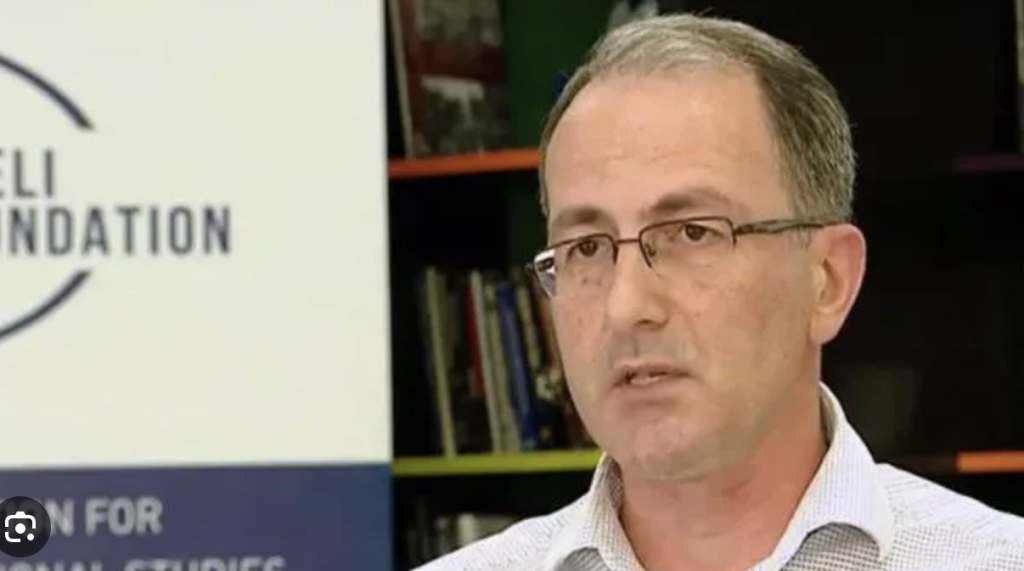
In the post-Soviet space, Russia has always played a major role in conflict regions, whether as a mediator or a manipulator to fuel conflicts.
The current events in Karabakh are the first time when another state, influential in the region, has played a more important role than Russia.
Azerbaijan, on the one hand, has benefited from the fact that Russia is busy with the war in Ukraine.
On the other hand, it is a fact that a big deal was struck between Azerbaijan and Russia.
In any case, Azerbaijan expected Russia not to intervene. Pashinyan seems to have expected the same, which is why he has been making anti-Russian statements lately.
All of this points to a decline in Russian influence in the region. What is happening is in no way in Russia’s interests.
Russia has always believed that it should have exclusive control over the Caucasus region. It has used the Karabakh conflict for this purpose, to maintain its influence over both Azerbaijan and Armenia, and to prevent Turkey or Iran from penetrating deeper.
For Russia, Karabakh was leverage. But after the war of 2020 it partially lost this lever, because even then Turkey’s role in favor of Azerbaijan was obvious. And this role remains so today.
Turkey’s position in the region will be further strengthened. Which means that the situation in the region is completely changing.
Even if we assume that there was a deal between Russia and Azerbaijan, this deal will in any case have only tactical significance. From a strategic point of view, in my opinion, Russia has lost. It is a failure for her. And Moscow was probably forced to accept all this, to start getting used to this new reality.
There was a precedent. Russia abstained, and the West did not participate at all. And regional actors turned out to be the most important in solving the problem.
▇ For the first time Armenia was able to realize its own foreign policy more freely, it is no longer dependent on Russia. If Armenians really want to go to the West, they now have a chance to do so. This is a really positive moment for the region.
As for Georgia, if the relations between Armenia and Azerbaijan, Armenia and Turkey are settled, it will create a new environment in the region, and it will be only good for Georgia.
At the same time, Russia’s position in the region is weakening, which is also good for Georgia. The only question is whether the current Georgian government will want to use this situation.
The problem is that they do not want to use it. Therefore, nothing much is changing for Georgians at the moment, because opportunities have appeared, but no one is going to use them.
Tornike Sharashenidze, Doctor of International Relations, Professor at GIPA
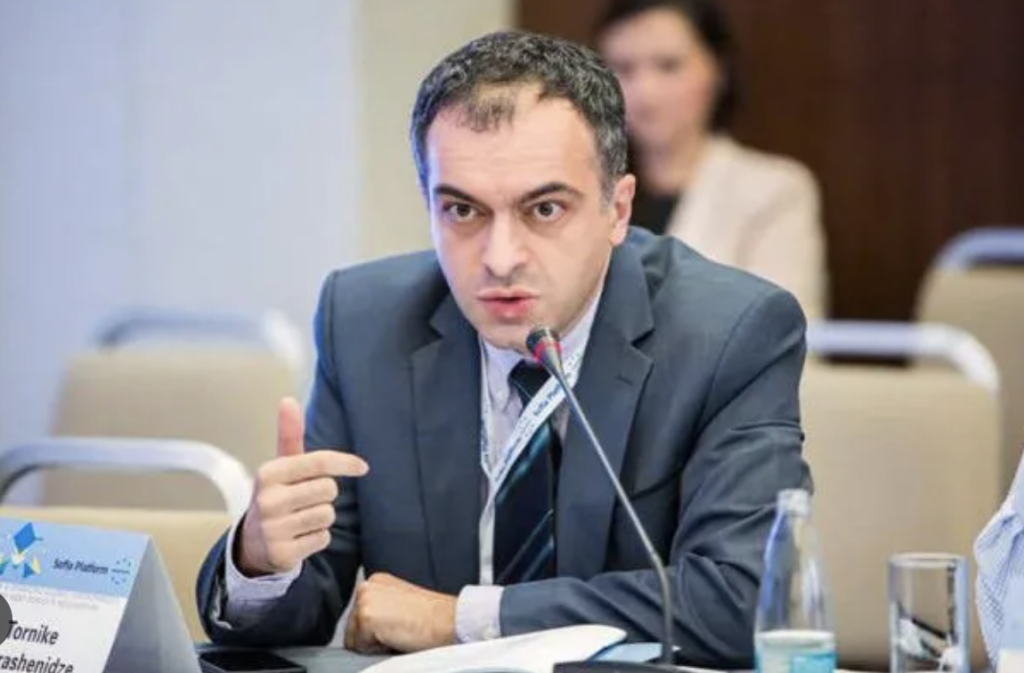
What happened in Karabakh was inevitable. The return of Karabakh to Azerbaijan had to happen, especially since it is a good time for Azerbaijan. Russia is busy with Ukraine, it doesn’t care about Karabakh at all.
And after Azerbaijan regained control of 3/4 of Karabakh in 2020, it was already clear that neither Armenia nor Russia would be able to stop it.
Three years ago, during the second Karabakh war, Russia did not actually intervene. And if it did not intervene then, it will not intervene now.
Therefore, what happened is the best scenario, it could have been worse.
I absolutely do not welcome war and violence in the region. But it is not excluded that Azerbaijan would have gone straight to the territory of Armenia.
This scenario would have ended with the overthrow of Pashinyan, in which case pro-Russian forces would have definitely come to power in Armenia.
It is very good that Azerbaijan did not take such a step, because it could have easily done it, I do not think that in this case anyone would have protected Armenia.
The Azerbaijani leadership used the moment well, and most importantly, it met this moment well prepared. No one can oppose Azerbaijan now – first of all, because it is its internationally recognized territory and it has restored its territorial integrity.
There is another argument – Europe needs Azerbaijan as a corridor.
Everyone saw that there was no significant reaction from the West. And this was expected, because it would be complete madness to make harsh statements and confront Azerbaijan, which has only regained its territories.
As for Armenia, three years ago Armenia received such a shock that now they do not want a new war and are not going to do it.
Also the young generation in Armenia, as well as in Georgia, is of course pro-Western. And they realize that the overthrow of Pashinyan will lead to the domination of pro-Russian forces, and they clearly don’t want that.
I don’t consider Pashinyan an ideal ruler, and I have many critical questions and comments about him. But overthrowing him would be a victory for the pro-Russian forces. And this is probably understood in Armenia, first of all, by the youth.
And without the active participation of the youth I can’t imagine the overthrow of the government – unless, of course, there is a military coup. I hope it won’t come to that.
If we consider the general context, the precedent is very important. And I would like the residents of Sukhumi and Tskhinvali to wake up as well.
▇ Let us hope that the Georgian population is so inclined that it will not agree to the start of war. But have the Abkhazians and Ossetians realized that they cannot rely on Russia?
Russia had no formal obligation to go to war over Karabakh. But when a Russian base is on the territory of another country and that country is at war, one would expect Russia to intervene.
But Moscow has abandoned its ally. And that should worry the Abkhazians and Ossetians. I am far from the opinion that Armenia will be freed from Russia instantly. But in the long run it will definitely happen.