
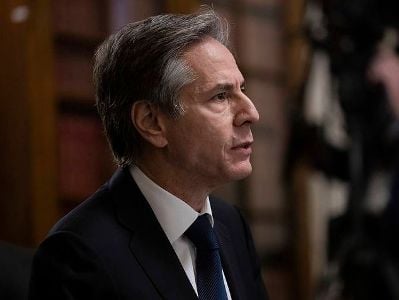
Day: September 11, 2023


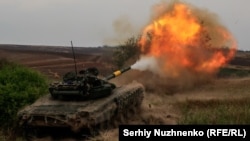
A sniper of Ukraine’s 3rd Separate Assault Brigade takes a position during a reconnaissance mission near the eastern city of Bakhmut.
The final declaration of the Group of 20 (G20) major economies in India left Kyiv angry over its refusal to condemn Moscow for its aggression against Ukraine, as new fragments of projectiles appeared to have landed on NATO-member Romania’s territory on September 9.
“We are grateful to the partners who tried to include strong wording in the text,” Ukrainian Foreign Ministry spokesman Oleh Nikolenko posted on Facebook.
“However, in terms of Russia’s aggression against Ukraine, [the] G20 has nothing to be proud of,” he wrote.
RFE/RL’s Live Briefing gives you all of the latest developments on Russia’s full-scale invasion, Kyiv’s counteroffensive, Western military aid, global reaction, and the plight of civilians. For all of RFE/RL’s coverage of the war in Ukraine, click here.
The final declaration revealed the sharp divisions over Russia’s invasion of Ukraine, with host India able to get attendees to agree to a final statement only after softening language on Moscow’s war on its neighbor.
The statement underlined the “human suffering and negative added impacts of the war in Ukraine,” but did not mention Russia’s invasion.
“All states must refrain from the threat or use of force to seek territorial acquisition against the territorial integrity and sovereignty or political independence of any state. The use or threat of use of nuclear weapons is inadmissible,” it said, referencing the UN Charter.
A senior EU diplomat told AP that the bloc had not given up any of its position and said the fact that Moscow had signed on to the agreement was important.
“The option we have is text or no text, and I think it is better [to have a] text. At least if they [the Russians] don’t implement, we know once more that we cannot rely on them,” the diplomat said.
Meanwhile, Kyiv said the toll of the wounded from a Russian missile strike on the Ukrainian city of Kryviy Rih rose to 74, as Ukrainian forces pressed their slow counteroffensive against Russian forces in southern and eastern regions.
Elsewhere, Romanian officials said they had found new drone fragments on the NATO member’s territory near the Ukrainian border for the second time this week. The Defense Ministry said they were “similar to those used by the Russian Army.”
President Klaus Iohannis said in a statement that the fragments indicated “an absolutely unacceptable violation of the sovereign airspace of Romania, a NATO ally, with real risks to the security of Romanian citizens in the area.”
Iohannis added that he had a phone call with NATO Secretary-General Jens Stoltenberg to inform him of the new finding and that he had received assurances of the alliance’s support.
Moscow did not comment on the report.
Photo Gallery:
Eighteen months into Russia’s full-scale invasion, Ukraine is struggling to build momentum in the counteroffensive taking place over three fronts, with the primary push coming south of Orikhiv, in the southern Zaporizhzhya region.
While some Western allies have expressed frustration with the slow pace of the effort, now in its third month, Ukrainian troops have shown glimpses of success in breaching the Russian defensive lines.
Kyiv also claimed “partial success” in the east, near the obliterated Donetsk region city of Bakhmut, which Russia captured earlier this year.
And in Crimea, Russian-installed authorities in the city of Simferopol called a blaze at a military post a “domestic fire” and not the result of an attack by Ukrainian drones.
Full details of the blaze were not immediately available. Kyiv has not commented.
A main goal of Ukraine’s southern counteroffensive is to drive toward the peninsula and eventually retake the region, which was illegally annexed by Russia in 2014.
Kyiv estimates that Russia has deployed more than 420,000 soldiers in areas it controls in the east and south of Ukraine, deputy intelligence chief Vadym Skibitskiy said on September 9.
“The Russian Federation has concentrated more than 420,000 servicemen in our territories that are temporarily occupied, including Crimea,” Skibitskiy said at a conference in Kyiv. The figure “does not include the Russian National Guard and other special units that maintain occupation authorities on our territories.”
Ukraine is almost entirely dependent on Western military aid and equipment to wage its defense against the Russian invasion. Kyiv has repeatedly pressed the United States and other allies for more powerful weaponry, such as F-16 fighter jets, which could be put into service next year.
Kyiv has also sought supplies of long-range, U.S.-designed Army Tactical Missile Systems, which have a greater distance for striking at Russian targets.
The United States has been reluctant to send the weapons, but unnamed U.S. officials told ABC News that the systems, known as ATACMS, or “attack-ems,” were likely to be supplied in the end.
“They are coming,” one anonymous official told ABC News on September 8. A second official said the missiles were “on the table” and likely to be included in an upcoming weapons package.
Japan’s foreign minister arrived in Kyiv on September 9 in an unannounced visit aimed at showing support for Ukraine.
Yoshimasa Hayashi met with Ukrainian President Volodymyr Zelenskiy and agreed to begin talks on potential security guarantees and to cooperate on reconstructing Ukraine’s economy, Japan’s Foreign Ministry said.
Japan has joined the West in supporting Ukraine and imposing sanctions on Russia. However, it does not allow the supply of weapons, under long-standing pacifist government policies.
It’s the first visit by a Japanese foreign minister to Ukraine since Russia’s full-scale invasion in February 2022.
Ukrainian Foreign Minister Dmytro Kuleba in a joint news conference thanked Hayashi for his country’s support and that he wanted the foreign minister “and the entire Japanese people to know that the Ukrainian people remember and will never forget the humanitarian aid.”
With reporting by Reuters and AP
On Georgia burning its past *before* reading it, historians opening pandora boxes, and younger generations stuck in history limbo
On the evening of September 8, as Georgia was dealing with yet another wave of natural disasters, something went up in flames in Tbilisi. A building of the Georgian National Archive, storing what appears to be a large number of inflammable film tapes, had caught fire. Despite the assurances of archive management that the digital copies of the tapes – potentially including valuable cinematographic works – were safely stored, the blaze and potential damage it might have inflicted angered professional circles and revived a debate on how carefully the country was handling its memory.
The fire hit an existential nerve: as the present seems to be stretching indefinitely and the future is being buried in landslides, the past, too, is now slipping away.
And to think that we were finally preparing to face it…
Here is the Dispatch, and Nini, from Georgia’s attempt to travel into the past and, who knows, maybe release a skeleton or two from firmly locked closets.
Skeletons in the closet
Big historical controversies rarely emerge from some continuous debate in Georgia. More often, they explode out of unpredictable events, spring from tangential debates, and take their most destructive form as a discourse marked by myths, wanton ignorance, and Mahichean narratives.
Utter a disrespectful word about a much-admired king, or be indulgent towards the one less beloved? Before you know it, you are attacked in the street or assassinated on social media as a traitor – to say nothing about suddenly falling into the government’s grand strategy to stifle dissent.
And just like that, the recent months saw the country jumping from a row about the true scale of a 12th-century battle. to the moral standards of a fictional female character from the iconic medieval epic poem (Nestan-Darejan from The Knight in the Panthers’ Skin, if you want to look it up) and then to a debate on whether the female monarch to whom that poem was dedicated (that’d be Queen Tamar) was a goodie (Girlboss?!) or a baddie.
And then suddenly, the unchained and surreal pseudo-historical debate touched the third rail – Georgian-Abkhaz relations. The trigger was a small social media discussion about the future of that conflict, an issue curiously under-discussed in a country cheerfully (or glumly, pick you camp) awaiting the collapse of Russia – a key stakeholder in that conflict – let us see – any day now.
Turns out, part of the reason why we were avoiding that discussion may lay dormant – or be quite purposefully buried – in the past.
But the time had come. The man chosen by destiny (or grasping Fortuna it by his own two hands) was Dr. Beka Kobakhidze, a historian who has long called to give due attention to historical research. (He, incidentally, wrote about the perils of Georgian fascination with myth-building in his recent op-eds for this magazine.)
In a series of lengthy posts about Georgian-Abkhaz relations, Dr. Kobakhidze reached into the conflicting narratives from various stages of inter-ethnic relations, pointing out key contradictions in historiography, cataloging some of the open questions, and suggesting ways of how the past can be handled to indicate the solutions for the future.
One of such contradictions, the historian argued, was the avid embrace of questionable Soviet-era historiographic legacies by the fiercely anti-Soviet national liberation movement in the late 1980s and early 1990s. Dr. Kobakhidze argued that the ethnicity and settlement policies of the ardently Soviet and unashamedly imperialistic, but also ethnically Georgian, leaders – Joseph Stalin and his KGB henchman Lavrenti Beria – have fed into Abkhaz portrayals of their trauma being induced by Georgians, rather than, say, Russian or Soviet empires. If Georgians defend those policies and repeat the repressive narratives that undergird them to this day, argued Dr. Kobakhidze, this could render those perceptions in Abkhaz society true (“We are not responsible for their actions until we start to justify them”).
The blogs, predictably, attracted all kinds of curious groups, including Dr. Kobakhidze’s sworn friends and enemies from the history department, activists engaging with the topic, and party-linked activists. Some of them, taking a more professional approach, fiddled with details. Others, inevitably, chased the spectrum of the Kremlin (or, alternatively, Washington) in the blogger’s motivation. The ends of the political spectrums met and mated; unlikely ideological rivals rallied against their new, common enemy.
Those less professionally familiar with the topic came for the show, forming an enthusiastic chorus, Greek tragedy (or comedy?!) style. Some were lauding the historian’s courage regardless of whether it was 100 percent true (which the author never claimed it was). Others were condemning his unpatriotic narrative.
But the largest (and calmest) audience, we assume, rushed there for something else, namely…
Overdue therapy sessions
Discussions like these can be a deeply therapeutic experience. Regardless of how quick they are at finding the answers (if they manage to do that at all), it is the long-repressed questions, now asked out loud, that do the healing.
This is because, in Georgian society, the fixation on the past strangely coexists with its denial. So it is hard to tell which is worse – being a historian committed to truth who finds herself silenced? Or not being one, thus never knowing the truth and never finding that voice?
That particularly concerns the “90s kids”, born after the restoration of Georgian independence, straight into the dark but weighty absence left in the wake of the trauma of the violent transition. The ‘kids of independence’ were lucky not to experience the turbulence themselves, unlike their slightly older siblings, whose intellectual and creative products (if they manage to emerge) are soaked with the trauma.
But the 90s kids were unlucky enough to inherit the dire consequences of the recent past and the responsibility to handle them while having only fragmented knowledge of what exactly happened, let alone why it did.
Over the past decades, little effort has been made to fill those lacunae. Public education has largely failed to teach how to work with the past – even as it continuously stressed the significance of learning history and hectored students about the role this knowledge has in forming one’s personality.
In one of his famous essays, included in the high school program, Ilia Chavchavadze, Georgia’s probably most-revered public figure, compared a person unable to tell the rights from wrongs in the deeds of their ancestors to an “elephant without a trunk.” He borrowed the metaphor from another revered poet – Davit Guramishvili, a didacticist author from an earlier period, who used it to define a “smart man without education.”
It might not have been specifically about a trunk (or its absence), but a nagging sense of missing pieces has lingered. With or without its trunk, the elephant waited in the room for years to be noticed, named, and addressed.
The history, particularly the more recent one, has reached younger generations as a hodge-podge of claims, mutual accusations, name-callings, and a chaotic set of events or statements that make little sense.
The stories of earlier centuries, on the other hand, seemed to have as their sole purpose to induce the worship of the designated heroes and the hatred of the designated traitors – an approach easily scalable (to use the modern jargon), widely applicable, and thus repeatedly applied to current events as well.
Small, individual attempts to figure out the past can lead to a strange kind of amnesia: with no systematic frame of analysis, the facts often leave the memory shortly after reaching it. The dominant discourse, preoccupied with suggesting the right answers rather than asking the correct questions, discourages greater efforts at finding the facts. Those supposed to share their knowledge seem suddenly less willing to do so but eminently ready to show up and prove wrong those who still try.
All this might be responsible for the aggressive and toxic environment based on false confidence and fake(d) knowledge.
The lingering suspicion – which sometimes becomes an explicit assertion – that “everyone knows everything” bleeds out into the fear of asking questions. But without questions, there is little chance of ever establishing factual truths.
In a society governed by the conspirational winks of those (supposedly) “in the know,” reopening discussions on taboo subjects may well be the single biggest act of courage, as well as a somewhat scary undertaking. Yet it may pay off – in so many ways.
Categories

