Categories
Featured Posts Selected Articles

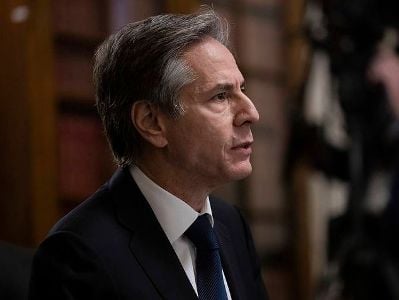
Blinken: US is deeply concerned about rapidly deteriorating humanitarian situation in Karabakh


default.jpg

The United States is deeply concerned about the rapidly deteriorating humanitarian situation in Nagorno-Karabakh. This is noted in a press statement by US Secretary of State Antony Blinken.

“We note that humanitarian supplies are positioned near both the Lachin and Aghdam routes, and we repeat our call for the immediate and simultaneous opening of both corridors to allow passage of desperately needed humanitarian supplies to the men, women, and children in Nagorno-Karabakh. We also urge leaders against taking any actions that raise tensions or distract from this goal. The use of force to resolve disputes is unacceptable.

“In light of the recent increase in tensions in the South Caucasus, the United States will continue to strongly support efforts by Armenia and Azerbaijan to resolve outstanding issues through direct dialogue, with the aim of achieving a dignified and enduring peace. We reiterate that any peace agreement between Armenia and Azerbaijan must protect the rights and security of the residents of Nagorno-Karabakh. We also encourage dialogue between Baku and residents of Nagorno-Karabakh.

“The United States further reaffirms the only way forward is peace, dialogue, and the normalization of relations between Armenia and Azerbaijan on the basis of mutual respect for each other’s sovereignty and territorial integrity,” the aforesaid press statement added.

!

This text available in   Հայերեն and Русский

Print


Categories
South Caucasus News

Brief recap of 9/11 terror attacks, global fallout


US forces remain embroiled in global operations to end threats posed by terror groups

Twenty-two years ago, Americans across the country found themselves in varying states of shock, disbelief, horror and anger.

For many, the early-morning news that a plane had crashed into the World Trade Center dealt a blow not felt in their lifetimes. The attack on American soil was the first since Japan launched a surprise strike on Pearl Harbor 60 years prior.

But then came news of another passenger plane hitting a second World Trade Center skyscraper. And then another struck the Pentagon. The attacks unfolded in rapid succession as panic filled the nation.

Shortly after the Defense Department was struck, the US moved to close all airspace in a bid to curtail further strikes.

Just minutes later, passengers aboard United Airlines Flight 93 rushed toward the cockpit of their aircraft in an effort to wrest control of the plane from al-Qaeda hijackers. About five minutes thereafter the plane would jackknife into an empty field in Shanksville, Pennsylvania, killing all onboard.

In New York City, hundreds would jump or fall to their deaths from the North Tower, the first World Trade Center building that was struck. The images remain a stark reminder of the desperation and loss felt that day.

The chaos was compounded as the two World Trade Center towers collapsed in lower Manhattan, sending an ashen poisonous dust cloud across the borough and into neighboring Brooklyn with long-term health effects for first responders and those trying to escape the tragedy.

Nearly 3,000 victims would lose their in the attack with thousands more injured. About 400,000 others were exposed to the carcinogenic dust cloud, particularly firefighters and police who worked tirelessly to rescue as many survivors as possible.

The Global War on Terror

The US would go on the march to stamp out al-Qaeda and all nations who provided terror groups with safe harbor as then-President George W. Bush boldly proclaimed nine days after the attacks: “Either you are with us, or you are with the terrorists.”

“From this day forward, any nation that continues to harbor or support terrorism will be regarded by the United States as a hostile regime,” Bush said during a joint address to Congress, putting the US squarely on a war footing.

“The only way to defeat terrorism as a threat to our way of life is to stop it, eliminate it, and destroy it where it grows,” he added.

Roughly three weeks later, the US would launch the opening salvo against the Taliban after the hardline group refused to hand over al-Qaeda leader Osama bin Laden, the self-professed 9/11 mastermind, and other al-Qaeda operatives.

The Global War on Terror had officially begun.

It would take the US and allied forces just two months to bring the Taliban’s control of Afghanistan to an end, but bin Laden would elude capture.

Roughly two-and-a-half years after the invasion began, Defense Secretary Donald Rumsfeld would declare an end to “major combat” operations in Afghanistan, but the US would not formally withdraw from the war-torn nation for an additional 18 years amid the relentless bloody conflict that could not secure the future of the internationally-recognized government in Kabul.

The Taliban would rapidly close in on the Afghan capital in August 2021 as US and international forces hastily withdrew, marking their return to control in the impoverished nation.

War in Iraq

While the war in Afghanistan would ultimately prove to be the longest in US history, the Iraq war and its fallout would result in active hostilities that continue to this day.

The war began in March 2003, less than two years after the US invaded Afghanistan.

Washington led yet another international coalition in its effort to oust Iraqi strongman Saddam Hussein on allegations that he was developing an illicit weapons of mass destruction program. But those charges, made before the UN Security Council by then-Secretary of State Colin Powell, proved false.

“My colleagues, every statement I make today is backed up by sources, solid sources. These are not assertions,” Powell told the Council one month before the invasion. “What we’re giving you are facts and conclusions based on solid intelligence.”

No chemical or biological weapons were ever found despite robust investigative efforts after Saddam and his military were eliminated. Powell later reflected that the speech was his singular greatest regret during his decades of public service.

But even with the longtime Iraqi leader removed from power, there was no reprieve from hostilities. A post-war insurgency would form against the international coalition, bringing with it sporadic, bloody fighting that largely came to define the US occupation, which did not end until 2011.

But war’s legacy would not conclude with the US exit.

Guantanamo and torture

As the wars in Afghanistan and Iraq flared, another battle was being waged beneath the surface — a shadow war that included secretive renditions of terror suspects, torture, CIA black sites and the now infamous military prison at Guantanamo Bay, Cuba.

Hundreds would be swept up in the intelligence effort, many of whom were subject to what was colloquially referred to as “enhanced interrogation” — a euphemism for what many, including the US Senate, have concluded was torture.

The Senate Intelligence Committee’s more than 500-page report on the CIA’s actions, released in redacted form in 2014, was nothing short of a full-scale indictment that lambasted the intelligence agency for its actions, as well as its efforts to minimize the extent of the abuses by lying about the program’s effectiveness.

“CIA personnel, aided by two outside contractors, decided to initiate a program of indefinite secret detention and the use of brutal interrogation techniques in violation of U.S. law, treaty obligations, and our values,” Committee Chairwoman Dianne Feinstein wrote in the report.

“It is my personal conclusion that, under any common meaning of the term, CIA detainees were tortured. I also believe that the conditions of confinement and the use of authorized and unauthorized interrogation and conditioning techniques were cruel, inhuman, and degrading. I believe the evidence of this is overwhelming and incontrovertible,” she added.

The report brought to light systemic, widespread abuses perpetrated by CIA officers, including the now infamous practice of waterboarding, placing detainees in extended periods of stress positions, sleep deprivation and punitive forced rectal feeding and rehydration.

It further said the CIA’s justifications for the program, based on its alleged effectiveness, were “inaccurate.” A review of 20 cases used by the agency to justify the enhanced interrogation techniques found that there was either no link between torture that was used and counterterrorism successes, or found that the CIA falsely claimed a correlation between the intelligence it gained and the methods used.

The report determined that in such cases the intelligence was either gained from a detainee prior to interrogation or was already available to the CIA from other sources.

Bin Laden killed a decade after Afghanistan war begins

Nearly 10 years after the US began its invasion of Afghanistan in the hopes of killing the 9/11 mastermind, it would finally catch up to bin Laden. Ultimately, the al-Qaeda leader was not found in Afghanistan where he had been holed up in the aftermath of the September 11, 2001 terror attacks.

He was discovered across the border in the Pakistani city of Abbottabad, residing in a sprawling compound less than 1 mile from the country’s premier military academy.

The raid was largely based on intelligence gleaned from a CIA operation set up at a neighboring safe house where the agency was able to identify an al-Qaeda courier who proved pivotal to ascertaining bin Laden’s location.

On May 2, 2011, a pair of previously unknown modified Black Hawk stealth helicopters crossed the Pakistani border, flying fast and low as they closed in on bin Laden’s safe house. As soon as they reached their target, US special operations forces rapidly disembarked, entered the compound and killed the al-Qaeda leader, and took his body for confirmation.

He was subsequently buried at sea after a positive identification was made in what marked the most significant US victory in the war on terror.

ISIS and the forever war

But the milestone proved short-lived with the rise of a new terror threat in Iraq that far surpassed the dangers posed by al-Qaeda.

The Daesh/ISIS terror group grew to global prominence in 2014 when it declared its self-styled caliphate, drawing adherents from around the globe who traveled to Iraq and Syria as its territorial control grew.

At its height, Daesh/ISIS controlled one-third of Syria and 40% of Iraq amid widespread instability, claiming major cities including Mosul and Raqqa and bringing with it an iron-fisted fundamentalist rule that attracted people from around the world.

While it no longer lays formal claim to any territory in either country following an international military campaign led by the US, the terror group maintains cells in the region and has grown to include affiliates as far afield as West Africa and Afghanistan.

To this day, American forces are engaged in efforts around the world aimed at ending threats posed by Daesh/ISIS, and al-Qaeda.

There is no end in sight.


This article was originally published by Anadolu Agency on September 10, 2023. 

The post Brief recap of 9/11 terror attacks, global fallout appeared first on Azerbaijan In Focus.

Categories
Featured Posts South Caucasus News

Blinken calls for simultaneous opening of Lachin and Aghdam routes


The U.S. Secretary of State Antony Blinken Sunday morning issued a statement on Nagorno-Karabakh urging the leaders against taking any actions that raise tensions or distract from this goal, according to Azerbaijan in Focus, reporting Turan.

“The use of force to resolve disputes is unacceptable,” Blinken said in a statement.

The United States is ‘deeply concerned’ about the rapidly deteriorating humanitarian situation in Nagorno-Karabakh.

“We note that humanitarian supplies are positioned near both the Lachin and Aghdam routes, and we repeat our call for the immediate and simultaneous opening of both corridors to allow passage of desperately needed humanitarian supplies to the men, women, and children in Nagorno-Karabakh,” the Secretary noted.

He went on to add, “In light of the recent increase in tensions in the South Caucasus, the United States will continue to strongly support efforts by Armenia and Azerbaijan to resolve outstanding issues through direct dialogue, with the aim of achieving a dignified and enduring peace. We reiterate that any peace agreement between Armenia and Azerbaijan must protect the rights and security of the residents of Nagorno-Karabakh. We also encourage dialogue between Baku and residents of Nagorno-Karabakh.”

The statement concludes:  “The United States further reaffirms the only way forward is peace, dialogue, and the normalization of relations between Armenia and Azerbaijan on the basis of mutual respect for each other’s sovereignty and territorial integrity.”

The post Blinken calls for simultaneous opening of Lachin and Aghdam routes appeared first on Azerbaijan In Focus.


Categories
South Caucasus News

Armenians in Azerbaijan’s Karabakh refuse Russian food truck, which stands still in Barda


A truck from Russia, which was supposed to deliver food cargo along the Aghdam-Khankendi road to Armenian residents of Azerbaijan’s Karabakh, has been standing in Barda (the city in Azerbaijan) for the second day already, according to Azerbaijan in Focus, reporting Trend.

The delay in the passage of the truck is due to the refusal of the separatists in Karabakh to accept this cargo.

At the same time, a truck of the International Committee of the Red Cross (ICRC) stands ready on the territory of Armenia near the Lachin border crossing point. Although the Azerbaijani side is ready to ensure its passage across the border in accordance with the legislation of Azerbaijan, the separatists don’t accept this cargo either, since in this case an ICRC truck would have to drive parallel to the Aghdam road towards Askeran (a settlement near Khankendi), and they don’t want this.

This indicates a completely inadequate behavior of the separatists. They don’t accept cargo from either Russia or the ICRC.

Besides, the Azerbaijani Red Crescent Society organized the delivery of food on August 29 to meet the needs of people of Armenian origin living in the Karabakh Economic Region of Azerbaijan.

A food convoy sent from Baku has been waiting for 14 days on the Aghdam-Khankendi road. Two trucks with 40 tons of flour are waiting in front of the post of Russian peacekeepers [temporarily stationed in Azerbaijan under the trilateral statement signed by Azerbaijani, Armenian and Russian leaders following the 2020 second Karabakh war] on the Aghdam-Khankendi road.

Employees and volunteers of the Azerbaijani Red Crescent Society spend the night in tents set up on the territory.

The post Armenians in Azerbaijan’s Karabakh refuse Russian food truck, which stands still in Barda appeared first on Azerbaijan In Focus.


Categories
Selected Articles

Florida’s surgeon general Joseph Ladapo tells people to “stay clear” of COVID-19 booster shot


With the new COVID-19 boosters set to be greenlighted for use this week by the Centers for Disease Control and Prevention (CDC), Florida’s right-wing surgeon general Dr. Joseph Ladapo advised Floridians to stay clear of the updated mRNA vaccines tailored against the most recent variant to be dominant, Omicron XBB.1.5.

Appointed surgeon general two years ago by Florida’s fascistic Governor Ron DeSantis, Ladapo has continuously spread flagrant disinformation on virtually every aspect of the pandemic.

At a press conference Thursday in Jacksonville alongside DeSantis, Ladapo falsely stated:

There’s a new vaccine that’s coming around the corner, a new mRNA COVID-19 vaccine, and there’s essentially no evidence for it. There has been no clinical trial done in human beings showing it benefits people. There’s been no clinical trial showing that it is a safe product for people—and not only that, but then there are a lot of red flags.

Reiterating a common trope of the far right, Ladapo insisted that the vaccines “actually cause cardiac injury in many people.” 

Rather than provide any evidence to substantiate his unproven and misguided claims, Ladapo then urged Floridians not to accept the words of experts in the field but to make their own decisions based on their particular “resonance of truth.”

He summed up by asserting, “When they try to convince you to be comfortable and agree with things that don’t feel comfortable, that don’t feel like things you should agree with, that is a sign, right? That’s a gift.” Such platitudes to subjective irrationalism are utterly dangerous and worse from a public figure who has a medical degree.

Firstly, Ladapo’s comments are those of a con artist and a second-rate shyster with Harvard credentials who is motivated by political interests. He is fully conscious that his recommendation as a physician is harmful and will lead to the certain death of his constituents.

There is no objective basis for Ladapo’s claims, which are in keeping with the rightward trajectory of the entire political apparatus in the US. His position is only a more extreme variation of the anti-public health and anti-scientific approach in the response to the pandemic by the ruling elites that want to ensure nothing encroaches on their ability to amass profits off the backs of workers.

The current summer surge that is continuing into the autumn months has seen rates of COVID-19 infection quadruple since late June, while hospitalizations have tripled without any measure being taken by the Biden administration or the Centers for Disease Control and Prevention (CDC) to warn the public or call for implementing any measures to mitigate the rising tide of evolving variants. More recently, COVID-19 deaths have also seen an uptick.

252e831a-552d-483f-829c-00d200b4187f?ima4d9496be-65db-4d0a-ab14-e1a932c138ef?ima

Ladapo knows full well that his state has been particularly impacted throughout the pandemic and that vulnerable patients in nursing homes are seeing cases climbing again.

The current iteration of the COVID-19 boosters was tested on the latest variants and ready for delivery last month, just waiting for authorization by the FDA and the CDC. Both Moderna and Pfizer’s latest monovalent COVID-19 boosters were reconfigured for the Omicron XBB.1.5 variant and have shown a significant antibody response against the Eris and FLip subvariants that are growing as a percent of sequenced lineages.

More recently, Moderna reported that the immune response against the Pirola (BA.2.86) subvariant, which has more than 30 mutations on its spike protein, saw a significant 8.7-fold increase in neutralizing antibodies.

Given the present surge, one must ask why has there been a delay in delivering these life-saving treatments?

As took place with the bivalent COVID-19 vaccines one year ago, once these vaccines have undergone initial safety trials in humans, additional clinical trials are not required. This is consistent with how the FDA modifies vaccines for influenza each year. Safety events are documented and accrued regardless of the iteration of the vaccine and published by the CDC.

During the first seven weeks of the rollout of the bivalent boosters last year, from August 31 to October 23, 2022, among persons aged 12 or greater, data were collected on 22.6 million booster doses administered in the United States. The safety data were consistent with safety data they obtained on “preauthorization clinical trials of a BA.1 Omicron bivalent booster vaccination.” 

As of July 23, 2023, according to the CDC’s “Reported Adverse Events,” with hundreds of millions of COVID-19 vaccines administered, anaphylaxis occurred in about five cases per one million vaccine doses given. Multiple studies have yet to demonstrate any unusual patterns in cause of death after vaccination [See Link 1, Link 2, Link 3, and Link 4]. In fact, for those taking vaccinations, all-cause mortality was lower than the expected all-cause mortality rates. 

As for vaccines causing inflammation of the heart, among persons 5 to 17 years old within 98 days of vaccination, one study found there were potentially 320 such cases out of nearly 7 million vaccine doses. Regarding young people, although the rates with mRNA are higher, they amount to 22.4 excess cases per million with Pfizer and 31.2 excess cases per million with Moderna. Most of these were reported to be transient in nature and were cleared by their physicians for all physical activity. 

What Ladapo fails to note is that people infected with COVID-19 before receiving the vaccines were on the order of 7 to 11 times more at risk of developing myocarditis within one month. However, after one dose of the COVID-19 vaccines, that rate dropped by half.

Meanwhile, a report published in Politico in April found that Ladapo had “personally altered” the results of a state-driven study about COVID-19 vaccines to indicate they posed a significantly higher health risk for young men when in fact the actual results countered his claim.

Matt Hitchings, an assistant professor of biostatistics at the University of Florida, explained, “What’s clear from the previous analysis, and even more clear from Dr. Lapado’s edits, is that absolutely there was a political motivation behind the final analysis that was produced. Key information was withheld from the public that would have allowed them or other experts to interpret this in context.”  

Another fact that Ladapo fails to mention is that in the first two years of the pandemic, there were approximately 90,000 more deaths in the US due to cardiovascular disease than expected. Although most of these were in people over 65, heart-related deaths among young people have risen by almost 25 percent during the pandemic.

Meanwhile, evidence from an Israeli study has shown that the bivalent COVID-19 boosters demonstrated high effectiveness against hospitalization and death due to COVID-19 compared to the monovalent booster in the elderly.

The lead author Dr. Ronen Arbel of Clalit Health Services in Tel Aviv told CIDRAP, “Infection data since Omicron started is underreported and incomplete. Many infections are asymptomatic. Moreover, even patients with light symptoms may not test for COVID. Therefore, all our studies since 2022 are focused on hospitalizations and mortality outcomes, which are measurable and clinically significant.”

He concluded, “Bivalent mRNA booster vaccination in adults aged 65 or older is an effective and essential tool to reduce their risk of hospitalization and death due to COVID-19. Vaccination remains the primary tool for avoiding severe COVID-19.”

Florida is home to the second highest number of adults aged 65 and older in the United States, with 4.6 million, representing 21.1 percent of their population, who face the highest risk of complications from COVID-19 infection. Ladapo telling them to forget the vaccines and eat healthier amounts to criminal negligence amid a pandemic that is gaining more momentum each day. High community rates also mean higher hospital-acquired rates of infection, with nearly one in 10 rates of death among this most vulnerable section of the population.

In reviewing the anti-vaccine panel convened by Governor DeSantis and headed by Ladapo, the WSWS wrote in December 2022:

The anti-vaccine movement that DeSantis [and company] has been courting is based on an anti-scientific perspective hostile to public health. It rejects the understanding of health as a deeply social issue, in which individual health is inseparably connected to community health.

The admonishment is equally applicable to the Biden administration and the entire strategy being employed by the ruling elites. While vaccines play a significant role in public health programs, the vaccine-only strategy towards SARS-CoV-2 has proven to be totally bankrupt, as viral evolution continues apace amid ongoing mass infection. It is increasingly clear to principled scientists, workers and anti-COVID advocates that SARS-CoV-2 must be eliminated as a public health threat and is not something that society can or should “live with” or tolerate.

The rapid waning of immunity barely buys sufficient time before the next iteration of the virus finds even more elusive mechanisms that threaten the few defenses that are available in our arsenal. The vaccine-only strategy also injects a pessimism into public consciousness, inculcating the false idea that infections are inevitable and therefore attempting to protect oneself is a lost cause.

It is to this effort that the enforcement of the forever COVID policy and rejection of all scientific and sound public health principles is aimed. It raises to the fore the revolutionary implications of calling for the global elimination of the coronavirus and the ending of all human-to-human transmission of this and many other preventable illnesses.

Join the fight to end the COVID-19 pandemic

Someone from the Socialist Equality Party or the WSWS in your region will contact you promptly.


Categories
Selected Articles

Florida’s surgeon general Joseph Ladapo tells people to “stay clear” of COVID-19 booster shot – WSWS


Florida’s surgeon general Joseph Ladapo tells people to “stay clear” of COVID-19 booster shot  WSWS

Categories
South Caucasus News

Azerbaijan’s experience with e-gov’t could be beneficial to Tajikistan … – Trend News Agency


Azerbaijan’s experience with e-gov’t could be beneficial to Tajikistan …  Trend News Agency

Categories
South Caucasus News

Protocol N. 13 Concerning the Abolition of Death Penalty in All Circumstances presented to parliament for ratification


Categories
Selected Articles

West must prepare for a splintering Russia


%2Fmethode%2Ftimes%2Fprod%2Fweb%2Fbin%2F

Buryatia. Idel-Ural. Komi. Sakha. Tyva. The names sound exotic to western ears. But these are not fictional Ruritanias. They are real places which may yet, their champions say, become real countries. Next month supporters of around 41 bits of what is currently the Russian Federation will meet in London. Their organisation, the Free Nations of Post-Russia Forum, was founded in response to the war in Ukraine. Some of their ranks are fighting there as foreign volunteers against Putin’s forces. Defeat for the Kremlin is inevitable, they believe, followed by Russia’s disintegration. That spells freedom for their long-forgotten homelands. They want outside help in economic stabilisation, safeguarding Russia’s vast nuclear arsenal, and building democratic institutions.

The rhetoric is anti-imperialist. The Russian authorities for centuries treated their peoples the way other countries treat their overseas colonies: looting natural resources, crushing dissent and imposing ruthless Russification. In the kaleidoscope of survivors, some have Turkic roots, such as the Tatars, Bashkirs and Chuvash. Others — Mari, Komi and Karelians — are ethnic cousins of the Finns and Estonians. There are the Buddhist Kalmyks and Buryats, plus Cossacks (descended from Russian warrior tribes), the Circassians of the Caucasus, Siberians and dozens of others.

The faultlines are not only ethnic and linguistic. Paul Goble, who as a US government official in the 1980s was a lone voice predicting the Soviet collapse of 1991, now thinks that a far messier, 1918-style disintegration is more likely. “Regionalism is going to be the nationalism of the next Russian revolution,” he told a post-Russia meeting in Washington DC, earlier this year. Other Russia-watchers think economic interests and territorial divisions could be a potent combination in some far-flung regions, as central power wanes.

The failed mutiny by Wagner mercenaries in June has highlighted the fragility of Putin’s grip on power. But the vaulting ambition of the “free nations” is not yet matched by reality. I spoke at a meeting at the European Parliament in Brussels. Official western support, or indeed serious interest from almost any quarter, was conspicuously absent. I could see why. Flags, maps, faded photographs and long speeches were in plentiful supply. Money, strategy, leadership and clout were not.

I was reminded of Cold War exiles, squabbling and seemingly pointless, in the 1980s. Yet these governments-in-exile and diplomats without countries had the last laugh as communism collapsed. Their western connections and historical legitimacy became prized.

Inside Russia, the forum is officially proscribed as an “undesirable organisation”. Its members operate underground or not at all. Yet the spectre of separatism haunts the Kremlin. Propagandists lambast the exiles. Putin’s security chief, Nikolai Patrushev, claims (without evidence) to have uncovered ten western-backed plots in Karelia, a region neighbouring Finland. The allergic reaction has deep roots. Russian nationalists believe western plots destroyed the Soviet Union and that our mischief is continuing.

Outside countries, notably Poland, did back such interwar efforts. But these days western governments steer clear. One reason is ignorance. We have pitifully few diplomats or experts who know the languages, cultures and history of Russia’s regions. Even countries with deep knowledge, such as Estonia, worry about giving the kiss of death to those they help. Quite innocuous efforts prompt repression (a small-circulation book of fairytales for the tiny Pomor minority, paid for by the Norwegian government, was treated as high treason).

Determined outsiders would have little to work with. The leaders of the old Soviet republics were political heavyweights, buoyed by five years of liberalisation under Mikhail Gorbachev. Regional elites in Russia now are stuffed with nonentities. Ethnic Russians are a majority almost everywhere, non-Russian languages marginalised. Although the war has largely spared Moscow and St Petersburg, casualties and economic woes have hit the provinces disproportionately hard. Yet so far that has stoked, not corroded, patriotic sentiment. The most cohesive non-Russian entity is Chechnya, which fought two wars for independence. But it is now in fervent alliance with the Kremlin and run, under strict Sharia law, by a particularly nasty warlord, Ramzan Kadyrov.

But the biggest reason for hesitation is that, to many outside eyes, a collapse is neither likely nor desirable. Some bits of the evil empire leapt to freedom in 1991 but others became dictatorships. Inside Russia it heralded a decade remembered for chaos and misery. Few want to risk a repeat. A leading expert in regional politics, Alexander Kynev, says the post-Russia movement is a counterproductive distraction. “The collapse of large countries almost inevitably gives rise to wars, territorial disputes and ethnic cleansing. Internal borders are usually as controversial as external ones. There is nothing good in getting 20 smaller dictatorships fighting each other,” he wrote recently. The priority, he argues, is not to “destroy the state and create chaos” but to rebuild institutions hollowed out by Putin.

For those under Moscow’s yoke, along with Ukrainians, Georgians and others, only disintegration can exorcise the demon of Russian imperialism. They would rather take their chances with a fragmented, disorderly Russia than face some future Putin. Western governments shudder at the prospect of that: a “time of troubles”, or smuta in Russian. They prefer stability to a smorgasbord of new countries. But that may not be on the menu.


Categories
South Caucasus News

FACTBOX – Netanyahu Judicial Overhaul Faces Showdown in Israeli Supreme Court


Israel’s Supreme Court will hear petitions on Tuesday to quash an amendment by Prime Minister Benjamin Netanyahu’s governing coalition that curbs its very own power, in a historic session that has already inflamed the country’s judicial crisis.

It is one in a series of appeals that the court will hear throughout September and which go straight to the core of the judicial row that has rocked the country for months, pitting the bench against a government that says it is too interventionist.

Reasonableness clause

On Sept. 12 for the first time in Israeli history, the entire 15-judge Supreme Court bench will convene to hear appeals by watchdog groups and lawmakers against a Basic Law amendment that curbs some of its own power. The legislation, ratified on July 24, removes one, but not all, of the tools the court has for voiding government and cabinet ministers’ decisions or appointments. That tool empowers the court to rule an action is unreasonable. The legislation caused an uproar in Israel with opponents saying it violates Israel’s democratic checks and balances and invites abuses of power. Netanyahu says it is a minor fix meant to restore balance between the branches of government by reining in a court that has become over- reaching.

Constitutional quagmire

The reasonableness amendment is part of Israel’s so-called “Basic Laws” that the court so far has refrained from quashing. Striking down a basic law or an amendment to one has been described in Israel as the Supreme Court using a legal doomsday weapon. As Israel has no written constitution, it relies instead on these Basic Laws which enshrine some rights and liberties and establish rules of governance. Their stature exceeds those of regular laws. But Basic Laws can easily be added or amended by a majority in Israel’s unicameral parliament, the Knesset, which is largely dominated by coalition governments. For this reason, some legal experts say judicial oversight over Basic Laws is important for preventing abuses of power even if the precise scope of judicial review is ambiguous.

What Netanyahu says

When asked whether he would abide by a court ruling that quashes the new legislation, Netanyahu has not given the clearest answer, saying that Israeli governments have always respected court rulings, and that the court has always respected the basic laws. In its legal response ahead of Tuesday’s hearing, the government argued that the Supreme Court does not have legal authority to review basic laws. Its intervention would breach separation of powers and the rule of law by violating the legislature’s authority, the government said, which could lead to anarchy. The court, on its part, has laid some legal groundwork for such judicial review in what it would deem extreme cases.

What’s next?

The judges’ ruling could come in weeks or even months. They have more options than just upholding the new legislation or striking it down. The bench could quash part of the law, delay its coming into effect until after the next parliamentary election or find fault in the relatively rushed legislation process and send it back to parliament to fix. Meanwhile, more volatile appeals are scheduled.

Judges panel

On Sept. 19 the court will hear a request to compel Justice Minister Yariv Levin to convene the committee which selects Israel’s judges. The panel has been at the heart of the battle over the judiciary since January when Levin announced the judicial overhaul. His proposal included a change to the makeup of the committee that would give the governing coalition decisive sway in picking the judges. A bill to that effect was promoted in parliament but has not yet been ratified. Meanwhile, Levin, who wants conservative judges appointed to a bench he says is too left-leaning and elitist, has held off on convening the committee. As its fate remains unclear, bench vacancies are not being filled. From mid-October those vacancies will include the chief justice and another Supreme Court justice.

Incapacity amendment

On Sept. 28 the court will hear challenges to an amendment to a “basic law” that limits conditions for a prime minister to be deemed unfit, or incapacitated, and removed from office. The attorney general has said that Israel’s parliament abused its authority by personally tailoring the law to suit Netanyahu, who is on trial for corruption he denies and that it should therefore be quashed. The law’s proponents say it is meant to safeguard any democratically elected leader from a wrongful ouster.