Categories
South Caucasus News

Favorable Trend or Scary Precedent? – Georgia Divided Over Venezuela Events


The U.S. swift military attack and the capture of Venezuelan leader Nicolás Maduro have divided opinion in Georgia.

While ruling party figures interpreted the events as confirmation of their worldview about the dismantling of the international order, government critics were divided over the implications for countries like Georgia, with some welcoming U.S. dominance and pressure on autocrats, and others fearing what they see as a dangerous precedent for smaller countries threatened by greater powers.

The initial reaction from the official Tbilisi was somewhat delayed, preceded by statements by de facto officials in Russia-occupied Abkhazia and Tskhinvali/South Ossetia, who had voiced concerns and condemned the U.S. actions. Venezuela has been among the few countries that have recognized the two regions as independent states.

The Georgian Foreign Ministry issued a short statement on January 4, saying Tbilisi is “closely following” developments in Venezuela and expressed hope that recent events could lead Caracas to reverse its recognition of Georgia’s Russian-occupied regions.

Georgian Dream: Order Is Dead

After an initial period of silence, members of the ruling Georgian Dream party argued that developments in Venezuela merely reaffirmed their vision and the necessity of pursuing a peace-oriented policy grounded in national interests.

Shalva Papuashvili, speaker of the disputed parliament, issued a statement, saying that through the developments in Venezuela, “it was ultimately confirmed what we have been saying – the order established after the Second World War exists no more.”

In an apparent reference to Venezuela’s recognition of Abkhazia and Tskhinvali/South Ossetia, Papuashvili said that “a state and a government that do not recognize Georgia’s territorial integrity can never be a friend of the Georgian people.”

“For the states like Georgia, the international law has always been the main weapon and shield, but the reality is also that its place and influence are irreversibly waning,” Papuashvili said. “Today, again, our objective remains unchanged – in the storm unleashed by great powers, not to damage the state and carry it harmlessly into the safe haven.”

According to Papuashvili, the events also confirmed that the EU has ceased to exist “as a guarantor of the international order and as a global geopolitical player.” He added that Brussels even “won’t shy away from benefiting and taking advantage of the collapse of the world order.”

Similar arguments were echoed by Georgian Dream MP Levan Makhashvili, who noted that Georgia needs to go through “this dangerous, painful process” by pursuing its national interests “until this international order is stabilized, a new one emerges, and this geopolitical chaos ends.”

Some Government Critics Welcome Maduro’s Removal

Some in opposition circles welcomed the developments in Venezuela as proof of U.S. dominance – Georgia’s traditional ally – and as an unfavorable trend for authoritarian leaders. Maduro’s removal comes as Georgia itself has faced an authoritarian turn under Georgian Dream rule.

Tamar Chergoleishvili, leader of the opposition Federalist party, has been among the most vocal in portraying U.S. intervention as a positive development for Georgia. “In geopolitics, the power vacuum never stays empty. What is not filled by America is filled by Russia – for us it’s better that our enemy is weakened and that our friend is getting stronger,” she wrote on Facebook on January 3.

The politician, however, warned that for Georgians this “automatically means nothing, potentially – much,” arguing that Georgia cannot benefit from these developments “without changing the Russian regime.” She noted: “Let no one think that it is possible to import such a scenario into Georgia.”

Georgia’s fifth president, Salome Zurabishvili, also appeared to welcome Maduro’s ousting. “Nero, Caligula, Domitian, Tamerlane, Stalin, Hitler, Mussolini, Ceaușescu, Pol Pot, Gaddafi, Saddam Hussein, Bashar al-Assad, Maduro… Nothing is permanent. No matter how powerful a dictator is, or how ruthless his rule, the end is inevitable. And their end is almost always a very harsh one,” she wrote on her personal Facebook account on January 4, without making an explicit reference to Venezuela.

Georgian political analyst Ghia Nodia said that while it’s hard to “unequivocally assess” Maduro’s abduction, it is still “rather good than bad.”

Nodia agreed that, in terms of international law, the event “constitutes a serious violation,” and that “small countries would prefer a liberal world order where a country’s sovereignty (even that of authoritarian countries) is protected.” The analyst, however, argued that even coming close to such an order “is practically possible only under the global domination of liberal countries (or the West and, first of all, America).”

“Is there a hundred-percent guarantee that the U.S. will always use its dominant position in a right and good way? Of course, not,” Nodia argued. “But for our planet, it’s still the best option for the U.S. to be the strongest and the one to be feared, rather than Russia or China,” he added, concluding that, ultimately, the events “are not bad” for Georgia either.

Others Fear Broader Geopolitical Fallout

Maduro’s toppling seems “only secondary” in the story, according to Giorgi Maisuradze, a Georgian left-wing intellectual and professor at Tbilisi’s Ilia State University.

“Trump openly says that America is taking control and possession over Venezuela’s oil, imposes America’s ‘provisional rule,’ which only means an occupation regime,” Maisuradze warned, calling “disturbing” the prospect that every great or superpower has the right to take control of smaller, weaker countries through a military intervention.

He called the hope that the U.S. intervention and Maduro’s toppling will be any good for Georgia “naive,” comparing the attitude to a Freudian dream about a “superpowerful dad” who will “punish everyone who will upset and oppress us.” Such moves will only encourage similar interventions by other superpowers in their “Grossraums,” Maisuradze argues.


Early on January 3, U.S. forces under President Donald Trump launched a series of targeted strikes in Venezuela’s capital, Caracas, and took President Nicolás Maduro and his wife into U.S. custody. They were flown to New York City, where they face drug trafficking and weapons charges. Trump said the U.S would temporarily “run” Venezuela until a permanent successor to Maduro is put in place.

Nicolás Maduro, who has ruled oil-rich Venezuela since 2013, has long faced accusations of repressing opposition groups and silencing dissent. Since Venezuela’s 2024 elections, he has been widely viewed as illegitimate by the country’s opposition and many foreign governments.

Following Georgia’s widely disputed October 26, 2024, parliamentary elections, Maduro was also among the few leaders to congratulate the ruling Georgian Dream party on what he described as its “exemplary, stellar victory.”


Categories
South Caucasus News

President Aliyev’s post-war calculus and remaking of South Caucasus


2025 can be considered a new chapter in the history of Azerbaijan, a year alive with profits and achievements. The dividends of the profound and decisive policies pursued by the Azerbaijani government extend beyond the country, shaping the entire South Caucasus.

Categories
South Caucasus News

Орбан заявил, что визит Путина в Венгрию сейчас не имеет смысла


Categories
South Caucasus News

Pashinyan leads “religious procession” amid escalating tensions with Armenian Apostolic Church


A march led by Armenian Prime Minister Nikol Pashinyan has begun in Yerevan, following the Christmas liturgy at the Surb Grigor Illuminator Cathedral. The prime minister, accompanied by his wife Anna Hakobyan and other government officials, described the event as a “religious procession,” Azernews reports via Sputnik Armenia.

Categories
South Caucasus News

Экс-президент Венесуэлы оспорит законность своего ареста американскими властями


Categories
South Caucasus News

Opinion: ‘Georgian government devoted long statement to events in Venezuela without even mentioning US’


Georgian Dream’s statement on Maduro – opinion

Georgian Dream’s statement on Maduro – opinion

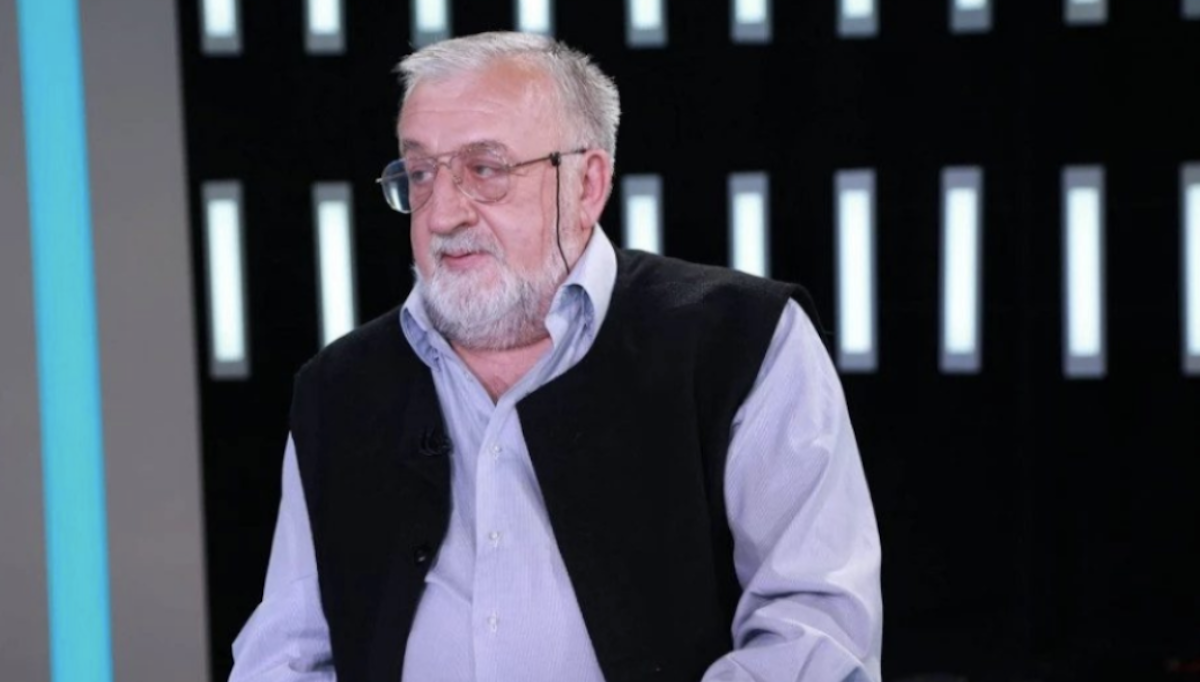
Political analyst David Zurabishvili commented on a statement by Shalva Papuashvili, the speaker of the Georgian Dream parliamentary faction, in which he said that the “European Union no longer exists as a guarantor of international order or as a global geopolitical player.”

On 3 January 2026, US President Donald Trump announced that, following an air strike on Caracas, American military and law enforcement personnel had detained Venezuelan President Nicolás Maduro and his wife.

According to Zurabishvili, Papuashvili’s comments on the events in Venezuela suggest that Georgian Dream is, at least to some extent, concerned about the Maduro precedent but is trying to maintain a stance of silence.

Georgian Dream’s statement on Maduro – opinion by David Zurabishvili

David Zurabishvili: “At last, we have an official comment from the Georgian government on the US special operation in Venezuela. This honorable task was assigned to the main promoter of anti-European messages, parliament speaker Papuashvili.

Since I do not, in principle, share anti-European propaganda, I am deliberately refraining from quoting Papuashvili’s text and will limit myself to commentary. <…>

So, what did we learn from Mr Papuashvili?

‘Anyone who does not recognize Georgia’s territorial integrity cannot be a friend of Georgia.’

This basically reflects his stance on the Maduro regime. In itself, it is the correct approach, although the text does not explain it. However, Russia is also among these countries, which is certainly worth noting.

‘The international legal order established after the Second World War no longer exists.’

It does exist. The main thing is what we actually do.

‘In this situation, we must be guided by the interests of our state.’

Yes, no one disputes that, but the problem is deciding what counts as the state’s interests. When Papuashvili says ‘country’ or ‘state,’ he is actually referring to Bidzina Ivanishvili.

‘In the new world order, the European Union decides nothing and has no say. Brussels’ policy towards Georgia is hostile because we are guided by national interests and are not puppets of European bureaucracy, like Ukraine.’”

Essentially, this is the main point: the Georgian government intends to continue its confrontational policy towards Europe. The European Union is declared the primary enemy and threat. To me, this is less about malice than about a combination of stupidity and ignorance, but in any case, it is harmful and amounts to a betrayal of national interests.

If the EU really decides nothing in today’s world, such overt anti-European rhetoric from the Georgian Dream government is puzzling from the standpoint of political pragmatism. But on a purely human level, it’s understandable — they simply attack what conflicts with their values.

Papuashvili described the government’s opponents as “stateless, corrupt Georgians.”

Attempting to dehumanise opponents when a significant portion of the population (in my view, even the majority) holds a negative view of the government is politically misguided. Any government in this situation would start maneuvering and seeking compromises, but here we again see stupidity combined with ignorance, as the Dream government tries to convince us that its opponent is just thirty bad actors funded by European bureaucracy.

Finally, I am personally struck by the fact that the government devoted a fairly long statement to news from Venezuela without even mentioning the United States. Shouldn’t they have done so? On the other hand, it also suggests that they are at least somewhat concerned about the Maduro precedent, yet are trying to maintain silence.

P.S. By the way, the “deep state” is not mentioned even once.

Georgian Dream’s statement on Maduro – opinion


Categories
South Caucasus News

World Bank highlights limited spillovers of FDI in Azerbaijan, urges broader investment focus


The World Bank has identified key challenges related to foreign direct investment (FDI) in Azerbaijan, noting that the positive impact of these investments on the wider economy remains limited.

Categories
South Caucasus News

Leyla Aliyeva meets with Chairperson of Small and Medium Enterprises Development Authority of Oman in Muscat


Leyla Aliyeva met with Chairperson of the Small and Medium Enterprises Development Authority of the Sultanate of Oman Halimat bint Rashid al-Zari.

Categories
South Caucasus News

Country to host major int’l boxing tournaments


The Azerbaijan Boxing Federation has announced that in 2026, the country will host three major international boxing tournaments, Azernews reports.

Categories
South Caucasus News

Министр обороны США высмеял российские системы ПВО в Венесуэле