
Underground schools in Ukraine
Based on reporting by Novosti Donbassa
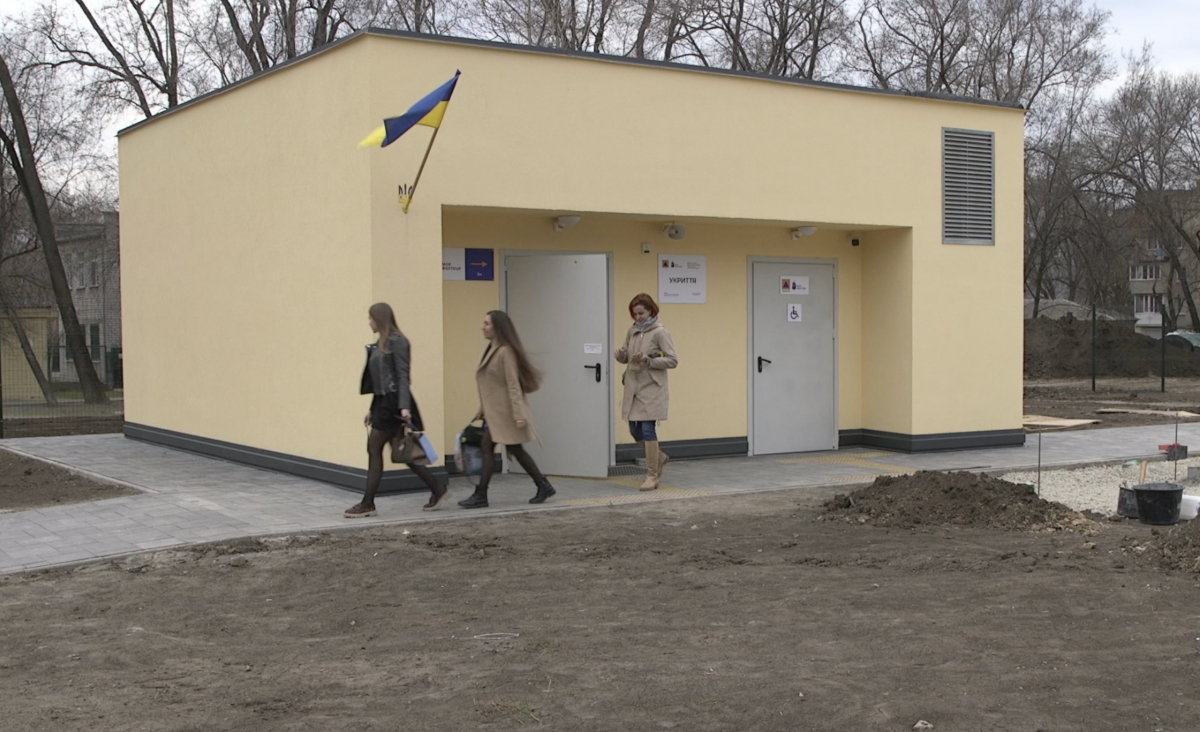
Ukraine plans to build 221 underground schools in frontline areas. Education minister Oksen Lisovyi announced this in early November. He did not give a deadline. He said 40 facilities have already opened in different regions. Earlier officials promised to launch 139 schools by 1 September 2025.
These schools now operate in eastern, northern and southern regions, where studying in a normal format is unsafe. If Ukraine completes the underground-school project, children will regain access to offline education.
Teachers and pupils share their views on the initiative in the report on Novosti Donbassa.
‘This school feels a lot like mine. There’s real interaction here’
Ukraine’s first underground school opened in Kharkiv back in 2023, when lessons were held directly on metro platforms. In December 2024, Zaporizhzhia also moved classes underground as Russian air-dropped bombs continued to hit the city, just as they do in Kharkiv.
A school in the city centre was built in six months under a UNICEF project. It includes a radiation-protection shelter set seven metres below ground. Around 800 children study there in two shifts.

Classrooms from the destroyed Suzirya gymnasium — which relocated from Orikhiv — were also moved here. The town now lies about ten kilometres from the frontline. Of the gymnasium’s 597 pupils, 397 left for Zaporizhzhia. More than 150 now attend the underground school.
One of the pupils who left Orikhiv early in the war, in spring 2022, is Suzirya student Illya Orena.

“I really liked my school in Orikhiv. The walls were covered in drawings, and it was very comfortable to study there. I missed school a lot — you could say my heart ached. This school feels very similar. There’s real interaction. It’s much better than online learning,” says Illya.
Both pupils and teachers of the Suzirya gymnasium remember their school fondly. The Orikhiv school was once among Ukraine’s top 100 educational institutions, with a modern computer lab and a physics classroom — all destroyed by Russian missiles. The staff managed to save only a few items. Currently, Suzirya has two classrooms in the underground school, with four more planned soon.
“We started classes on 11 February 2025. At first, it was more of a consultative approach. Immediately assessing the children didn’t feel right. They needed time to get used to coming in, interacting, and seeing their teachers. We created a flexible schedule to reach all our pupils. We have 29 classes, and each class comes roughly once every two weeks,” said the gymnasium’s principal, Natalia Kudrina.

According to her, the children were missing real interaction. Pupils in the first grades didn’t even understand what school was. Teachers say the children’s reactions are the clearest sign that offline education is essential.
“I get goosebumps when I think about our school. The children love it, and it’s wonderful that there’s an underground school where they can interact with classmates and friends. During lessons, just seeing their eyes is amazing,” said geography teacher Elena Burdina.
At break times, pupils at the underground school can play table tennis and football. They chat, hug, and have fun — and for a while, they may even forget about the war and the fact that their school in Orikhiv was destroyed.

School for a thousand children
As of now, 15 underground schools operate in Zaporizhzhia region, including in frontline villages such as Balabyne. The school there opened in early 2025. It serves children from the entire community, including the nearby villages of Malokaterinivka and Kushuhum, which are even closer to the frontline. Pupils are brought to the school by bus.
At first, the school offered only online lessons. Later, children began attending consultations in a small shelter designed for 50 pupils. Construction of the underground school began in May last year.
“The school is truly safe. We don’t call it underground — it’s our school. It’s bright and cosy. We were so happy that our children would have a safe place to learn,” said Balabyne school principal Zhanna Vynnychenko.
Five hundred children attend the first shift and another 500 the second. Like other large underground schools in Zaporizhzhia, it has a conference hall and an activity area with air hockey, table tennis, basketball and foosball. Classrooms are equipped with multimedia boards, interactive panels and modern furniture.

Just a week ago, another underground school opened in the Khortytskyi district of Zaporizhzhia. Around 600 local gymnasium pupils have started attending classes offline. The school has 13 classrooms and is equipped with modern furniture and ventilation. Previously, children studied in a shelter, but had to take turns because there wasn’t enough space.
“In the shelter, there were no separate rooms like here. We couldn’t make sure every class came in every day — it was every other day or a few times a week. Here, we have individual classrooms. Children can study in person, and we can provide a proper education,” said Tatiana Kolupaeva, the school principal in Khortytskyi district.
Children say they were eagerly waiting for the school to open, as studying in a shelter had been difficult. The local administration promises that nine more underground schools will be ready in Zaporizhzhia region by the end of the year.
‘We managed to keep the whole staff’
Underground schools are also being built in southern Ukraine. In Kherson region, according to Education Minister Oksen Lisovyi, three schools are already ready, and seven are in the final stages of construction. In September this year, schools began operating in Vysokopillia and Orlove — villages far from the frontline, near the border with Dnipropetrovsk region. Meanwhile, construction of underground schools in Kherson city itself is on hold. Last winter, local residents actively opposed the idea. Kherson faces constant shelling, and enemy drones hunt people. Parents feared that a concentration of construction equipment could become a target for the Russian army. As a result, projects stalled, and children continue to study online.
In Mykolaiv region, projects for five underground schools have already been completed, with work ongoing at 12 more sites. Children from the village of Lupareve have moved to a mixed learning format. The local bomb shelter there was converted into an underground school. Lupareve lies right on the border with Kherson region. About 23 kilometres away, across the estuary, is occupied territory, so drones and other weapons occasionally reach the village. In 2022, Lupareve was almost completely destroyed, including the local lyceum.
“Two hundred square metres of the roof were destroyed, and some classrooms were damaged — the situation was critical. But within six months, everything was restored: the roof was rebuilt and classrooms received cosmetic repairs. Everything was done quickly and efficiently with one goal — to save the school building,” said Valentina Kondratiuk, principal of the Lupareve lyceum.

Teachers recall that local male volunteers were the first to start fixing the school. They cleared out household waste, and later, with the help of donors, windows were installed and the building began to be restored.

‘Life has started buzzing in the school’
Teachers say the most important thing is that children can finally interact with each other and with their teachers in person, not just online. During the pandemic and after the full-scale invasion, when schools operated only remotely, children, they say, became more withdrawn.
“Their psychological state is not what it should be for children. Teachers do a lot of work to address this. I focus on socialisation, improving psycho-emotional well-being, and developing educational skills. For example, with younger children, this includes motor functions and sensory development, because even these basic processes have lagged behind,” says Alexandra, a social pedagogue with the mobile team of SOS Children’s Villages.

She and her team, which also includes a speech therapist, visit Lupareve once a week, working with full classes. Svetlana Yevdokimova also points to the effectiveness of in-person learning compared with remote classes. She recalls that when lessons began face-to-face, the children’s eyes lit up and their academic performance improved.
“Life started buzzing here. At first, it was small steps — club activities held in the shelter, then project work. Later, charitable organisations came to help make up for lost learning, and we began to notice that socialisation is exactly what the children had been missing,” says Svetlana Yevdokimova.

Children in the primary grades study entirely in person. Even though there are only five pupils in the first grade at the Lupareve school, teachers and parents agree that technology cannot replace real lessons. Young children need to be taught how to make friends and interact fully. Every week, in addition to regular lessons, the underground school hosts sessions with psychologists, art therapy, and masterclasses organised by charitable organisations and foundations. The lyceum also runs a pottery workshop, open to both children and adults.
According to Education Minister Oksen Lisovyi, more than 11 billion hryvnias have been allocated from the state budget this year for the construction of underground schools and shelters, compared with 7.5 billion last year. Some of the costs are covered by international donors, while others come from local budgets. However, in Donetsk region, where fighting is most intense, there are still no underground schools.
Supported by Mediaset
Underground schools in Ukraine
Underground schools in Ukraine