Categories
Selected Articles

Armenia Angry Over Moscow’s Inaction As Nagorny Karabakh Blockade Continues – Analysis


c-87.jpg?fit=800%2C450&ssl=1

By Giorgi Lomsadze

As Azerbaijan keeps a chokehold on supplies to Nagorny Karabakh in a months-long blockade driving food and fuel shortages in the Armenian-populated territory, Russia’s reluctance in intervening to unlock the situation has soured relations between Yerevan and Moscow.

Russia has long been Armenia’s security guarantor, but in an interview released on September 3, Armenian Prime Minister Nikol Pashinyan said that depending solely on Moscow was “a strategic mistake” because it has been unable to deliver. Russian media labelled Pashinyan’s statement as “unacceptable in tone”. 

On September 5, Armenia recalled Viktor Biyakov, its ambassador to the Collective Security Organisation Treaty (CSTO), the Russia-led security alliance of post-Soviet countries. He was then appointed ambassador to the Netherlands and experts noted that he was unlikely to be replaced.

In addition, on September 6, Yerevan announced joint military exercises with the US on its territory from September 11 to 20, as part of preparation for participation in international peacekeeping missions. 

Stretched in Ukraine, the Kremlin has avoided getting entangled in the blockade of the Lachin corridor. Russian peacekeepers, tasked with enforcing the 2020 ceasefire between Yerevan and Baku, did little to prevent Azerbaijan from setting up checkpoints along Lachin and shutting down traffic of goods. The Azerbaijani side claims Armenia was first to violate the terms of truce and that Baku had to take measures in response.  

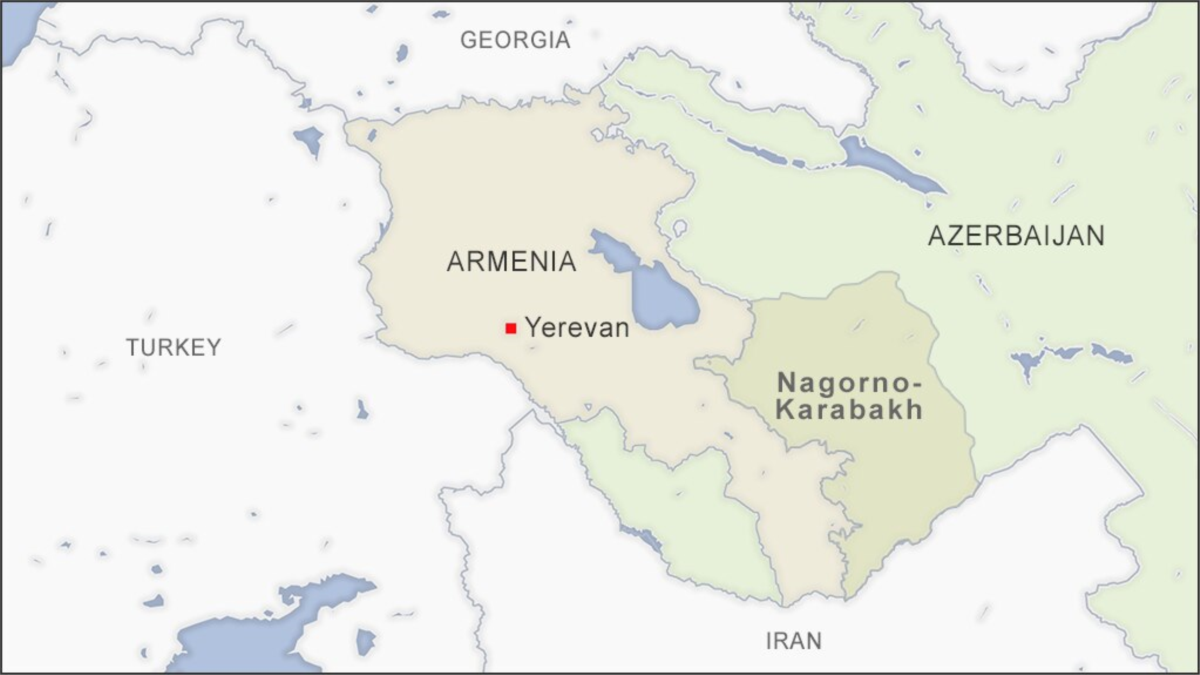
Baku’s victory in 2020 in the latest war over the Armenian-populated enclave, which is inside Azerbaijan’s internationally recognised territory, left the region with Lachin as the only link to the outside world: since December 2022, Baku has gradually restricted movement through the road, until it effectively sealed it off mid-June. Trucks with aid and supplies were left stranded on the Armenian side. 

Dismissing these reports as exaggerations, Baku claimed that Armenia was using the route to send ammunition into Karabakh and to otherwise sabotage Azerbaijan’s push to enforce its jurisdiction over the enclave. But closing this key passage has led to mounting tensions and reduced the room for dialogue between the sides to the conflict. 

“It seems that Baku’s blockade is driven by vindictiveness,” Hans Gutbrod, associate professor at Ilia State University in Tbilisi, told IWPR. “It’s hard to see this as a calculated policy since the more constructive and conciliatory approach would be much more likely to result in a last solution.” 

Armenia and Azerbaijan fought two major wars over Karabakh, an Armenian-dominated autonomous region of Azerbaijan during the Soviet era. These conflicts, one from 1988–1994 and another in late 2020,  claimed tens of thousands of lives and displaced hundreds of thousands of people. 

In between these wars there were almost 30 years of chronic exchanges of fire and state-sponsored mutual threats amid futile international efforts to broker peace.  

Home to around 120,000 ethnic Armenians, the region has been de facto independent since a ceasefire was signed in 1994. Armenian troops occupied swathes of surrounding Azerbaijani lands, forming a buffer zone around the region. 

In 2020, Azerbaijan reclaimed all of the occupied territories and part of Karabakh itself, and effectively encircled it from all sides. Under a Moscow-brokered armistice, Russian peacekeepers were to guarantee free and safe passage between Karabakh and Armenia through the five kilometre-wide Lachin mountain pass. 

In late 2022, however, Baku effectively severed this lifeline. Supplies soon began to dwindleand shops’ shelves began to empty in the region’s main city Stepanakert, Khenkendi in Azerbaijani Aid organisations called for lifting the blockade, warning of a looming humanitarian crisis. Authorities in Karabakh, which Armenians call Artsakh, claim that Azerbaijan’s goal is to starve Armenians out of the region. On August 15, authorities reported the region’s first death from starvation. 

Armenia has called for an emergency meeting of a UN Security Council to discuss the plight of its protectorate. 

“The people of Karabakh are on the verge of a full-fledged humanitarian catastrophe,” Armenia’s representative to the UN, Mher Margaryan, wrote on August 11. 

Azerbaijan has accused Armenia of manipulating international opinion with tales of a humanitarian crisis so as to stall the process of Karabakh’s reintegration into Azerbaijan. Yashar Aliyev, Margaryan’s Azerbaijani counterpart, said that if the situation was that bad Armenia and Karabakh would have agreed to opening up an alternative, Azerbaijan-controlled supply route.

Azerbaijan has been offering to provide essential goods to Karabakh through the Aghdam road, which would link link Karabakh to mainland Azerbaijan. 

While the EU backed Baku’s proposal, Karabakh residents refused it as marking the effective legitimation of Azerbaijan’s rule over the region. 

“Aghdam road is a road to ethnic cleansing,” said placards held by protesters from Karabakh on July 18, as they barricaded the entry from Aghdam.

Azerbaijani border guards’ treatment of Karabakh citizens at the Lachin checkpoint, most notably the arrest of a 65-year-old Karabakh resident on allegations of committing war crimes 30 years ago, has also hampered building trust between the sides.   

Humanitarian organisations, international observers and diplomats, including EU High Commissioner Josep Borrell, said that the Aghdam road cannot serve as a substitute to Lachin road, and not just because of the mistrust between the warring sides. 

“Aghdam road is not an alternative,” Olesya Vartanyan, a South Caucasus analyst with the International Crisis Group, a Brussels-headquartered think-tank, told IWPR. “After you had been using one road for 30 years, get all of your supplies through that road and have an infrastructure set up, you can’t just switch away from it overnight.”     

Convened at the behest of Armenia, UN Security Council members called on August 17 for the reopening of the Lachin corridor. The Russian representative suggested using both Lachin and Aghdam for supplies. 

Baku has insisted all along that the Lachin corridor is open, at least to the movement of civilians. In August Azerbaijani television aired reports showing Armenians going through the checkpoint and Baku stated that this disproved the Armenian claims of a blockade. 

Reached by IWPR, Karabakh’s de-facto authorities confirmed that there “no free exit or entry to Artsakh”.  

“No goods, supplies and even medication are allowed through,” the de-facto foreign ministry said in a written response to IWPR’s query. “Sometimes Azerbaijan allows the transportation of seriously ill patients to Armenia. Two days ago [in late August] it was possible to arrange the departure of a group of students, who study in higher education institutions of Armenia or other countries. But in general the situation hasn’t changed.” 

International pressure has been mounting on Azerbaijan, but Baku remains defiant, at least in its public statements. 

“Internationally, the situation is so liquid that it’s no guarantee that international attention alone with be enough to lift the blockade, in whole or part,” said Gutbrod. “The West does have some leverage, but it is also facing multiple crises at the same time.”

This publication was published by IWPR and prepared under the “Amplify, Verify, Engage (AVE) Project” implemented with the financial support of the Ministry of Foreign Affairs, Norway.

Categories
Selected Articles

US Says North Korea Will ‘Pay a Price’ for Any Weapons Supplies to Russia


Arms negotiations between Russia and North Korea are actively advancing, a U.S. official said on Tuesday and warned leader Kim Jong Un that his country would pay a price for supplying Russia with weapons to use in Ukraine.

Providing weapons to Russia “is not going to reflect well on North Korea, and they will pay a price for this in the international community,” U.S. national security adviser Jake Sullivan told reporters at the White House.

The Kremlin said earlier on Tuesday it had “nothing to say” about statements by U.S. officials that Kim planned to travel to Russia this month to meet President Vladimir Putin and discuss weapons supplies to Moscow.

Kim expects discussions about weapons to continue, Sullivan said, including at leader level and “perhaps even in person.”

“We have continued to squeeze Russia’s defense industrial base,” Sullivan said, and Moscow is now “looking to whatever source they can find” for goods like ammunition.

“We will continue to call on North Korea to abide by its public commitments not to supply weapons to Russia that will end up killing Ukrainians,” Sullivan said.

On Monday, U.S. National Security Council spokesperson Adrienne Watson said Kim and Putin could be planning to meet, and The New York Times cited unnamed U.S. and allied officials as saying Kim plans to travel to Russia as soon as next week to meet Putin. Asked if he could confirm the talks, Kremlin spokesman Dmitry Peskov said, “No, I can’t. There’s nothing to say.”

As Russia’s isolation over its war in Ukraine has grown, it has seen increasing value in North Korea, according to political analysts. For North Korea’s part, relations with Russia have not always been as warm as they were at the height of the Soviet Union, but now the country is reaping clear benefits from Moscow’s need for friends.

Moscow-Pyongyang defense cooperation

A North Korean Defense Ministry official in November said Pyongyang has “never had ‘arms dealings’ with Russia” and has “no plan to do so in the future.”

Moscow and Pyongyang have promised to boost defense cooperation.

Russia’s Defense Minister Sergei Shoigu, who visited Pyongyang in July to attend weapons displays that included North Korea’s banned ballistic missiles, said on Monday the two countries are discussing the possibility of joint military exercises.

“Just as you can tell a person by their friends, you can tell a country by the company it keeps,” said Keir Giles, senior consulting fellow with Chatham House’s Russia and Eurasia program. “In Russia’s case, that company now consists largely of fellow rogue states.”

The trip would be Kim’s first visit abroad in more than four years, and the first since the coronavirus pandemic.

While he made more trips abroad than his father as leader, Kim’s travel is often shrouded in secrecy and heavy security. Unlike his father, who was said to be averse to flying, Kim has flown his personal Russian-made jet for some of his trips. But U.S. officials told The New York Times that he may take an armored train across the land border that North Korea shares with Russia.

Kim is likely to want to emphasize a sense of Russian backing, and may seek deals on arms sales, aid and sending laborers to Russia, said Andrei Lankov, a North Korea expert at Seoul’s Kookmin University.

The United States in August imposed sanctions on three entities it accused of being tied to arms deals between North Korea and Russia.

North Korea has conducted six nuclear tests since 2006 and had been testing various missiles over recent years.

Russia has joined China in opposing new sanctions on North Korea, blocking a U.S.-led push and publicly splitting the U.N. Security Council for the first time since it started punishing Pyongyang in 2006.


Categories
Selected Articles

Western Officials Plan to Warn UAE Over Trade with Russia


U.S., British and European Union officials are planning to jointly press the United Arab Emirates this week to halt shipments of goods to Russia that could help Moscow in its war against Ukraine, the Wall Street Journal reported on Monday, citing U.S. and European officials.

A UAE official, in response to Reuters’ request for comment, said the country “strictly abides by UN sanctions and has clear and robust processes in place to deal with sanctioned entities.”

The UAE “is continuously monitoring the export of dual-use products,” which have both civilian and military applications, under its export control legal framework, the official added.

Officials from Washington and European capitals were visiting the UAE from Monday as part of a collective global push to keep computer chips, electronic components and other so-called dual-use products out of Russian hands, the WSJ report said.

The UAE, a member of the OPEC+ oil alliance that includes Russia, has maintained good ties with Moscow despite Western pressure to help to isolate Russia over the invasion of Ukraine that began in February 2022. It has not matched global sanctions imposed on Moscow.

The U.S. State Department declined to comment when asked about the WSJ report.

The UAE official added the UAE remained in close dialogue with international partners including the U.S. and European Union about the conflict in Ukraine and its implications for the global economy.

“UAE banks, under the supervision of the Central Bank and other relevant authorities, monitor compliance with sanctions imposed on Russia to prevent violations of international law,” the UAE official said.


Categories
Selected Articles

Deal Reached to Open Roads Through Azerbaijan to Nagorno-Karabakh


a3a8689a-e37d-4b7a-91fd-e9e500a8d177_w12

TBILISI, georgia — 

Ethnic Armenian authorities in Nagorno-Karabakh agreed on Saturday to let in aid shipments from Azerbaijan-held territory for the first time in decades, in return for the restoration of road links to Armenia.

The moves, initially reported by Armenia’s Armenpress state news agency and confirmed by Baku, appear at least partly to grant Azerbaijan’s decades-old demand to restore transportation links between Azeri government-held territory and the province, which broke free of Baku’s rule in the 1990s.

Armenpress cited Karabakh authorities as saying that they had “decided to allow access of the Russian goods to our republic through the town of Askeran,” referring to a Karabakh town close to the front-line with Azerbaijan.

“At the same time, an agreement has been reached to restore humanitarian shipments by the Russian peacekeepers and the International Committee of the Red Cross along the Lachin Corridor,” the Armenpress report said, referring to the area through which the road linking Karabakh to Armenia passes.

It said the move was driven by “severe humanitarian problems” in the blockaded region.

Hikmet Hajiyev, a foreign policy adviser to Azerbaijani President Ilham Aliyev, confirmed to Reuters that both routes would be opened simultaneously, while an Azerbaijani checkpoint on the road to Armenia would stay in place. He restated Baku’s longtime position that the Karabakh separatist authorities must dissolve and disarm.

Karabakh is recognized as part of Azerbaijan but has been controlled by its population of around 120,000 ethnic Armenians since a war that coincided with the breakup of the Soviet Union.

Azerbaijan recaptured large swaths of territory in a second major war in 2020, and for the past nine months has exerted new pressure on the region by restricting its access to Armenia through the Lachin Corridor. The road has been cut off except for urgent medical cases, leading to shortages of basic supplies, including bread.

Azerbaijan has accused Armenia of using the corridor to smuggle weapons, and of rejecting an offer to reopen the road simultaneously with another route into Karabakh.

The apparent deal came on a day Karabakh’s parliament chose a new president of its self-proclaimed independent republic, a move Azerbaijan has denounced as illegal, amid days of escalating tensions between Baku and Yerevan.

Azerbaijan said on Saturday that Armenian forces had fired on its troops overnight, and that Azerbaijan army units took “retaliatory measures.” Armenia denied the incident.

The Armenian government said Prime Minister Nikol Pashinyan held phone conversations on Saturday with the leaders of France, Germany, Iran and Georgia, and with U.S. Secretary of State Antony Blinken. Azerbaijan said its foreign minister discussed the situation with a senior U.S. State Department official, Yuri Kim.

Baku has a close relationship with Turkey, while Yerevan has historically held close ties with Russia, which sent peacekeepers to the area and promised to keep the Lachin Corridor open as part of a peace deal that ended the 2020 war. Pashinyan has lately complained that Moscow failed to live up to its assurances, leading him to seek wider international support.

According to Armenia’s government, Pashinyan told the foreign leaders that tensions were rising on the border, and that Azerbaijan was concentrating troops there and around Nagorno-Karabakh. Baku has denied this, while accusing Armenia of similar steps.

Pashinyan said he was ready to hold an urgent meeting with Azerbaijani President Ilham Aliyev to defuse tensions, according to the Armenian government. Hajiyev, Aliyev’s foreign policy adviser, told Reuters Baku had received no such offer.

Earlier on Saturday, Karabakh’s separatist parliament elected Samvel Shakhramanyan, a military officer and former head of the territory’s security service, as its new president, replacing an incumbent who resigned a week ago.

In a speech to parliament, Shakhramanyan called for direct negotiations with Azerbaijan, and for transport links to Armenia to be restored.

Azerbaijan’s foreign ministry called the ethnic Armenian leadership of Karabakh a “puppet separatist regime” and said the vote was illegal.

“The only way to achieve peace and stability in the region is the unconditional and complete withdrawal of the Armenian armed forces from the Karabakh region of Azerbaijan and the disbandment of the puppet regime,” it said in a statement.

In the capitals of both Armenia and Azerbaijan, residents told Reuters they feared a new war between the two countries.


Categories
Selected Articles

Tehran Sources Say Iran Sent Warning To Azerbaijan


5b382328b2e596cb9ce52f859a601e647748d782

As tensions escalate between Armenia and Azerbaijan, Iranian sources on social media have claimed that Tehran has sent a serious warning to Baku not to launch an attack.

One analytical news account on social media, alleged that Iran has cautioned Azerbaijan against any potential aggression in the southern Syunik region of Armenia, through diplomatic contacts and various meetings.

After a long blockade of the Armenian-populated Nagorno Karabakh region inside Azerbaijan, reports in recent days indicated that Baku might be preparing for military action against the enclave and Armenia. Tehran has traditionally opposed any Azerbaijani encroachment on Armenian territory.

The source added, “Azerbaijan has taken actions, in coordination with Israel and Turkey, to formulate Plan B in case of military intervention by Tehran against Baku.”

The Islamic Republic of Iran has previously cautioned against any alterations to the political geography of the Caucasus region and the adjustment of international borders. Iran declared that if either side seeks to change the geopolitical landscape of the Caucasus or international borders in the Karabakh region, Iran will set aside its neutrality and respond directly.

Recently, Armenian Prime Minister Nikol Pashinyan issued a warning regarding Azerbaijan’s provocative military movements along the border and in the Karabakh region. Pashinyan expressed concerns over the possibility of heightened tensions, urging the international community to take preemptive measures to prevent what he referred to as a new explosion in the Caucasus.

It should be noted that Armenian authorities in Yerevan previously confirmed that the country would host a joint exercise with US forces next week to enhance cooperation in international peacekeeping missions.


Categories
Selected Articles

Georgian PM  send condolences over deadly earthquake in Morocco


geopm-5.jpg


Categories
Selected Articles

Georgian PM highlights “productive meeting” with EU High Representative in Tbilisi


pm-borell-govtadmin.jpg


Categories
Selected Articles

PM, British Parliamentary delegation review strategic partnership, cooperation prospects


pmgeo-1.jpeg

“Main directions” of the strategic partnership between Georgia and the United Kingdom, and prospects for future cooperation were discussed on Wednesday in a meeting between Prime Minister Irakli Garibashvili and a British Parliamentary delegation led by Jonathan Djanogly, the Chair of the All-Party Parliamentary Group on Georgia in the British legislative body.

In his comments at the meeting, Garibashvili noted the two countries were cooperating “fruitfully” in bilateral and multilateral formats, the Government Administration said. The Government head stressed the visit of the delegation was “another clear proof” of the existing strategic partnership. 

The meeting also reviewed the current economic situation in Georgia, with Garibashvili providing information to the delegation about the “positive trends” of economic growth.

The officials also highlighted the need to “further strengthen” the trade and economic cooperation between the two states.

The meeting also focused on the security environment and challenges in the Black Sea region and the world, with the Georgian official noting the close security cooperation between the UK and Georgia was “of utmost importance”.

Garibashvili thanked Djanogly for his “firm and unwavering” support for Georgia’s sovereignty and territorial integrity, and for the non-recognition policy of the Russian-occupied territories of the country.


Categories
Selected Articles

European Council Says Rights and Security of Karabakh Armenians Must be Guaranteed


l-0HVP9dqSqn.jpg

The European Council (EC) has again called on Azerbaijan to reopen the Lachin Corridor given the “rapidly humanitarian crisis on the ground.”

A statement today released by EC President Charles Michel’s spokesperson notes that Michel and Toivo Klaar, EU Special Representative for the South Caucasus, have prioritized a resolution of the humanitarian situation of Karabakh Armenians.

Michel, according to the statement, “has proposed a step-by-step approach which would reflect a sequencing in the full-fledged operation of the Lachin Corridor and the opening of the Ağdam route.”

Artsakh Armenians and the local government have rejected any humanitarian aid shipment via Aghdam, describing such efforts by Baku as a “ploy” to deviate international attention from the Lachin Corridor issue.

The statement says the EU has also stressed the need for Baku to provide clarity to Karabakh Armenians in terms of procedures for their movements through Lachin corridor to and from Armenia.

It goes on to say dialog between Baku and the former Nagorno-Karabakh Autonomous Oblast” is essential to resolve the conflict and “the rights and security of Karabakh Armenians must be guaranteed and discussions on specific modalities should start as soon as possible.”

Given that the EC regards Karabakh as a part of Azerbaijan, the EC is most likely talking about cultural/minority rights.

“Dialogue between Baku and representatives of Armenians living in twill be essential in this regard.  the statement reads.  

Describing today’s fighting along the Armenian-Azerbaijani border as an “escalation”, the statement says these efforts are aimed at ensuring the irreversible normalization of relations between Baku and Yerevan for the benefit of all populations on the ground.

“It is now time for courageous compromise solutions, also in light of today’s escalation,” the statement reads.

Klaar and Michel’s team, according to the statement have been in frequent contact with Baku, Yerevan and representatives of Karabakh Armenians to work out a solution for unblocking access.

“In parallel, exchanges have also focused on restoring electricity and gas supplies to Karabakh Armenians as soon as possible,” the statement reads.


If you found a typo you can notify us by selecting the text area and pressing CTRL+Enter


Categories
Selected Articles

Restore free movement along Lachin Corridor and ensure rapid and unimpeded delivery of humanitarian assistance to Nagorno-Karabakh – Portal


Back Restore free movement along Lachin Corridor and ensure rapid and unimpeded delivery of humanitarian assistance to Nagorno-Karabakh

COMMISSIONER FOR HUMAN RIGHTS
STRASBOURG
28 August 2023
Restore free movement along Lachin Corridor and ensure rapid and unimpeded delivery of humanitarian assistance to Nagorno-Karabakh

“I remain seriously concerned about the humanitarian situation in Nagorno-Karabakh and the human rights of its population following the blocking of the road running through the Lachin Corridor since December 2022. I reiterate the call I made at that time to restore free movement along that road” said Council of Europe Commissioner for Human Rights, Dunja Mijatović. 

“Despite my calls and those of numerous other international stakeholders, the humanitarian and human rights situation in the area has reportedly further deteriorated, affecting particularly the most vulnerable, due to the prolonged disruption in the movement of people and access to food supplies and urgent medical care. The International Committee of the Red Cross (ICRC), which is for the moment the only international humanitarian organisation operating across the Lachin Corridor, indicated that the population was facing a lack of life-saving medication and essentials.

The relevant stakeholders should immediately find a solution to avoid any further deterioration of the very dangerous situation the local population is facing and guarantee safe and free passage to those providing humanitarian assistance and those ensuring human rights protection. As indicated in my 2021 Memorandum, efforts should be made by Armenia and Azerbaijan to move forward on the path towards reconciliation and ensure lasting peace for all people.

I confirm my commitment and readiness to engage with all the relevant interlocutors and to travel to Nagorno Karabakh to assist in overcoming the existing human rights challenges.”

2023-08-28T11:41:00