Categories
Selected Articles

Hikmet Hajiyev: A new dramatic misinformation and manipulation campaign was launched


Assistant to the President of Azerbaijan, Head of Foreign Policy Affairs Department of the Presidential Administration Hikmat Hajiyev has made the following statement on X:

“From the money talks series! Apparently, on the eve of the “anniversary” of the most terrible, bloody and criminal separatist entity in Europe so-called “Nagorno-Karabakh Rep”, a new dramatic misinformation and manipulation campaign was launched by the order of the Armenian Government and armenian lobby groups. At least, but disgracefully, the former NATO Secretary General does not deny that he is paid by the Government of Armenia for propaganda campaign. Copy of income sheet is attached. Hypocritically, some politicians divide the world between “good and bad separatists and criminals”. Old habits die hard! But disturbing is that the BBC in its Charter declaring that “is committed to achieving due impartiality in all its output. This commitment is fundamental to our reputation, our values and the trust of audiences” is engaged in one-sided and biased aggressive manipulation and promotion of lies as well in “Context” program. BBC should serve as a platform for all voices, particularly on sensitive topics.”


The post Hikmet Hajiyev: A new dramatic misinformation and manipulation campaign was launched appeared first on Azerbaijan In Focus.


Categories
Selected Articles

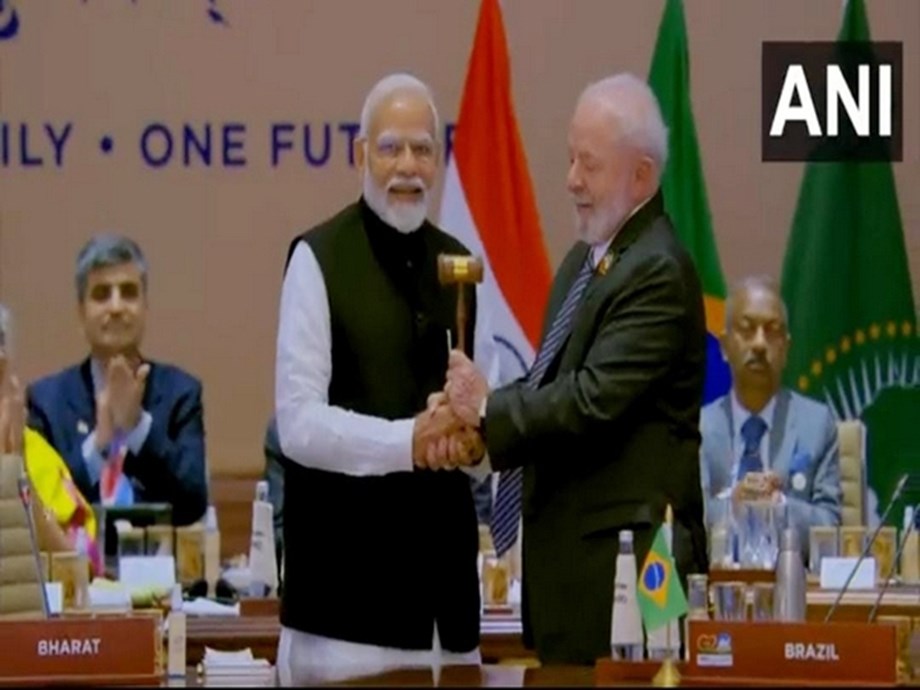
PM Modi hands over gavel of G20 presidency to Brazil President Lula da Silva | International


10_09_2023_08_02_09_9120564.jpg?width=92

ANI | Updated: 10-09-2023 13:32 IST | Created: 10-09-2023 13:32 IST

Prime Minister Narendra Modi on Sunday handed over the ceremonial gavel of the Group of 20 presidency to Brazil President Luiz Inacio Lula da Silva at the G20 summit here. “I congratulate Brazilian President and my friend Lula da Silva and hand over the gavel of Presidency,” PM Modi said minutes before the New Delhi G20 Summit concluded.

Earlier Indonesian President Joko Widodo and Luiz Inacio Lula da Silva handed over saplings to Prime Minister Narendra Modi ahead of Session 3 of the G20 Summit. While Indonesia held the G20 presidency last year, Brazil will hold the presidency after India.

India took over the G20 presidency on December 1 last year at the G20 Summit at Bali in Indonesia and will continue to hold it till the end of November. The New Delhi Declaration was adopted by G20 leaders on Saturday, the first day of the Summit.

The G20 leaders visited Rajghat on Sunday morning to pay tributes to Mahatma Gandhi.  (ANI)

(This story has not been edited by Devdiscourse staff and is auto-generated from a syndicated feed.)


Categories
Selected Articles

Azerbaijan denies deal reached to reopen Karabakh-Armenia road – Devdiscourse


Azerbaijan denies deal reached to reopen Karabakh-Armenia road  Devdiscourse

Categories
Selected Articles

Robert Reich: Why Have So Many Americans Succumbed To Trumpism? – OpEd


Robert Reich: Why Have So Many Americans Succumbed To Trumpism? – OpEd

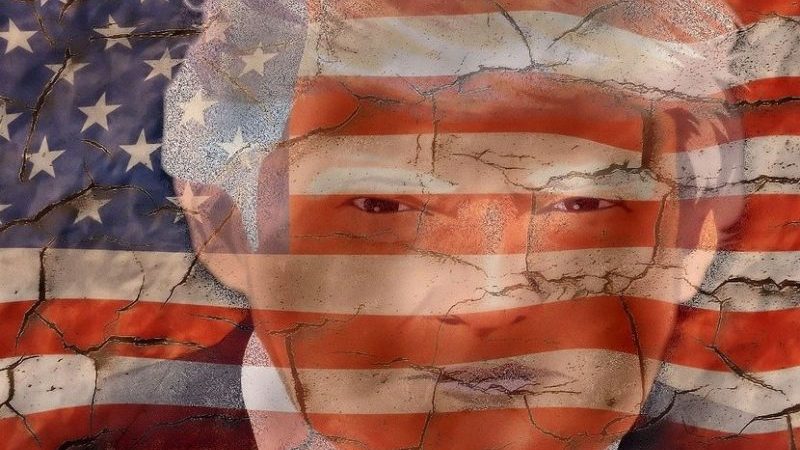
donald trump poster

Today in the sixth essay about the loss of America’s sense of common good, I want to summarize where we’ve come by focusing on one of the worst consequences of the loss: The emergence of Trumpism, and of the despair that has led so many Americans to give up on democracy. 

Starting next week, in the seventh essay of this series, I’ll talk about what I believe we can and should do to resurrect the common good.

It is easy for many of us to condemn fellow Americans who have succumbed to the lies and thuggery of Donald Trump. It’s convenient for us to assume they’re ignorant, or racist, or gullible fools. 

But what if their willingness to believe and support Trump is understandable, given what has happened to them? I’m not suggesting it’s justifiable, only that it may be explicable. 

As we have seen, many of the key political and economic institutions of our society have abandoned their commitments to the common good — and along the way, abandoned the bottom half of the adult population, especially those without college degrees. 

The consequence has been a catastrophe, especially for the bottom half. The erosion began 40 years ago. By 2016, when Trump was elected president, the typical American household had a net worth 14 percent lower than the typical household in 1984, while the richest one-tenth of 1 percent owned more wealth than the bottom 90 percent put together. 

Income has become almost as unequal as wealth: Between 1972 and Trump’s election in 2016, the pay of the typical American worker dropped 2 percent, adjusted for inflation, although the American economy nearly doubled in size. 

Most of the income gains have gone to the top. The 2016 Wall Street bonus pool was larger than the annual year-round earnings of all 3.3 million Americans working full-time at the federal minimum wage of $7.25 an hour.

Whereas 90 percent of American adults born in the early 1940s were earning more than their parents by the time they reached their prime earning years, this proportion steadily declined. Only half of adults born in the mid-1980s are now earning more than their parents by their prime earning years.

Average weekly nonsupervisory wages, a measure of blue-collar earnings, were higher in 1969 (adjusted for inflation) than they are now.

Most Americans without college degrees are working longer hours than they worked decades ago and taking fewer sick days or vacations, and they have less economic security.

Nearly one out of every five American workers is in a part-time job. Two-thirds are living paycheck to paycheck. Along with pay, employment benefits have been shriveling. The gap in life expectancy between the nation’s most affluent and everyone else is widening, as well. 

Increasing numbers of working Americans have been succumbing to opioids. Death rates have been rising for Americans with no more than high school degrees, due to suicides, chronic liver cirrhosis, and poisonings, including drug overdoses.

Americans who for decades have been on a downward economic escalator have become easy prey for demagogues peddling the politics of hate. 

THE STANDARD EXPLANATION for why America has become so economically lopsided is that most Americans are no longer “worth” as much as they were before digital technologies and globalization, and therefore must now settle for lower wages and less security. If they want better jobs, they need more education and better skills.

But this account doesn’t explain why other advanced economies facing similar forces haven’t succumbed to them nearly as dramatically as has the United States. 

Or why America’s U-turn from broadly shared prosperity to stagnant wages for most and great riches for a few occurred so quickly in the late 1970s and 1980s. 

It doesn’t clarify why the pay of top executives at big companies has risen so dramatically since then, or why the denizens of Wall Street are now paid tens or hundreds of millions annually.

To attribute all this to the impersonal workings of the “free market” is to be blind to the political power America’s economic elites have gained over the rules of the market — and their failure to use their power to deliver rising or even stable incomes and jobs to most of the rest of the nation. 

Since 1971, when Lewis Powell urged the leaders of American corporations to devote a portion of their profits to politics, America has witnessed the largest and most entrenched system of legalized bribery in its history. 

This money — supplemented by additional money from the super-wealthy — has rigged the “free market” for the benefit of large corporations and the rich. 

And what have they gotten for their money? 

— Lower trade barriers have enabled corporations to outsource abroad, making more stuff in low-wage nations and then selling it back to Americans, who get the benefit of cheaper goods but also lose higher-paying and more secure jobs. As a result, entire sections of America have been denuded of manufacturing jobs. 

— The deregulation of Wall Street has enabled corporate raiders (now dubbed shareholder activists and private-equity managers) to force CEOs to abandon all other stakeholders except shareholders. 

— Deregulation of finance also allowed high-paid bankers to pocket huge sums while exposing most Americans to extraordinary economic risks, culminating in the Wall Street crisis and the taxpayer-funded bailout of large Wall Street firms. Americans who subsequently lost their jobs, savings, and homes were understandably outraged — especially after these same bankers were never held accountable. Within a few years of the financial crisis, most bankers returned to pocketing vast fortunes, but most other Americans were still living with the consequences. 

— Weakened unions, causing the unionized portion of the workforce to drop from 35 percent of all private-sector workers in the 1960s to just 6 percent today, and wages to stagnate. 

— Laws against monopolies have been weakened. 

— Laws that prevent corporate insiders from getting rich in the stock market by using confidential information have been negated.

— Laws that prevent the wealthy and big corporations from bribing politicians with campaign donations have been weakened or repealed. 

IT HAS BEEN A VICIOUS CYCLE. Each change in laws has ratcheted wealth and power upward, making it easier for the wealthy and powerful to gain further legal changes that ratchet even more wealth and power upward. 

All of this has taken a profound toll on public trust. Much of the public no longer believes that the major institutions of America are working for the many; they are vessels for the few.

When the game is widely seen as rigged in favor of those at the top, society shifts from a system of mutual obligations to a system of private deals. Rather than be founded in the common good, political and social relationships increasingly are viewed as contracts whose participants seek to do as well as possible, often at the expense of others (workers, consumers, the community, the public) who are not at the table. 

When it’s all about making deals, one “gets ahead” by getting ahead of others. Duty is replaced by self-aggrandizement and self-promotion. Calls for sacrifice or self-denial are replaced by personal demands for better deals.

SOME CONSERVATIVE COMMENTATORS seeking an explanation for the decline of the working class and the rise of Trumpism have turned to social Darwinism. They assume that struggling white people, like poor Black people, are simply losing the race to survive. 

In his 2012 book Coming Apart, sociologist Charles Murray, the darling of conservative intellectuals, attributed the demise of America’s white working class to what Murray described as their loss of traditional values of diligence and hard work. 

He argued they brought their problems on themselves by becoming addicted to drugs, failing to marry, giving birth out of wedlock, dropping out of high school, and remaining jobless for long periods of time. Government has aided and abetted their decline, he argued, by providing help that encourages these social pathologies.

Murray and others of his stripe — such as J.D. Vance, author of Hillbilly Elegy(and now a Republican senator from Ohio) — seem not to have noticed that the wages of the white working class have stagnated or declined for the past 40 years, steady jobs once available to them have disappeared, the economic base of their communities has deteriorated, and their share of the nation’s income and wealth has dramatically shrunk. 

These are the underlying source of the social pathologies Murray chronicles. The drug addiction, out-of-wedlock births, lack of education, and unemployment are its symptoms, not its cause. 

AS BERNIE SANDERS CHARGED in the 2016 Democratic primaries, “This type of rigged economy is not what America is supposed to be about.” Hillary Clinton noted at the start of her 2016 campaign that the “deck is still stacked in favor of those at the top.” 

Donald Trump proclaimed that “the system is rigged against the citizens.” Trump added that he was the only candidate “who cannot be bought”— a refrain he repeated all the way to the White House. And in his inaugural speech in January 2017, he charged:

“The establishment protected itself, but not the citizens of our country. Their victories have not been your victories; their triumphs have not been your triumphs; and while they celebrated in our nation’s Capital, there was little to celebrate for struggling families all across our land.”

Trump’s attempted coup could not have gotten as far as it did — and it continues to this day — without the deepening anger, despair, and suspicions that have subsumed a substantial portion of the American population. 

This is especially true of Americans without college degrees, without good jobs, whose pay has stagnated, who have little or no job security, and whose adult children are no longer doing better than they did — in places that have been hollowed out and economically abandoned.

It’s a mistake to assume that their anger and despair are rooted mainly in racism or xenophobia. America has harbored white supremacist and anti-immigrant sentiments since its founding. The anger and despair come as the consequence of four decades of widening inequalities and political corruption. 

Trump has responded to this by portraying himself as a strongman who would fight for the “forgotten Americans.” He has responded to their suspicions by giving them a set of villains who, he claims, have conspired to keep them down — the so-called “Deep State,” the cultural elites supporting it, and the political establishment guarding it.

And now, in his third run for the presidency, he is casting himself as a martyr on their behalf — fusing his identity with theirs. When he announced his candidacy in March 2023, he told supporters, “In 2016, I declared: I am your voice. Today, I add: I am your warrior. I am your justice. And for those who have been wronged and betrayed, I am your retribution.”

Last June, after being charged with retaining government secrets, he told a Republican gathering in Michigan: “I’m being indicted for you.” On August 3, the day of his indictment for seeking to overturn the 2020 election, he posted, in all caps, “I AM BEING ARRESTED FOR YOU.” A week later, at a campaign event in New Hampshire, he said, “They want to take away my freedom because I will never let them take away your freedom. They want to silence me because I will never let them silence you.”

In his 2024 campaign, Trump is using the criminal proceedings against him as a means of fusing his own identity with that of millions of Americans who have felt mistreated and bullied by the system. He is them. This fusion is a hallmark of authoritarian fascism.

Hopefully, democracy will survive the 2024 election. The longer-term challenge for America will be to respond to the anger, despair, and suspicions of those who have been left behind, with hope rather than neofascism. We must assert a common good based on democracy, the rule of law, and a system that works for the good of all. 

How and where do we begin? In the chapters ahead, I will offer some ideas. Thanks, once again, for joining me on this journey. 

These weekly essays are based on chapters from my book THE COMMON GOOD, in which I apply the framework of the book to recent events and to the upcoming election. (Should you wish to read the book, here’s a link). This article was published at Robert Reich’s Substack


Categories
Selected Articles

G-20 Summit In New Delhi: Can India Shape Global Policy Discourse? – Analysis


G-20 Summit In New Delhi: Can India Shape Global Policy Discourse? – Analysis

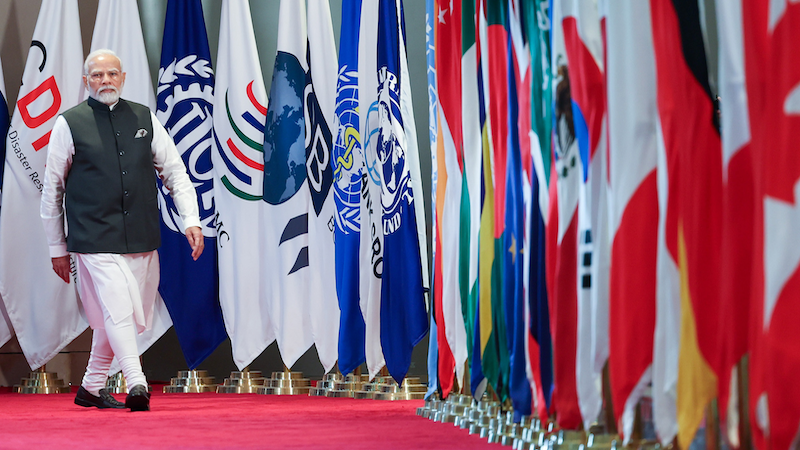
India's Prime Minister Narendra Modi at G20 Summit in New Delhi. Photo Credit: India PM Office

The G20 Summit 2023 is underway in New Delhi, India, at a time when the country is making major strides in space exploration, technology, and economy. Recently, India has become the fourth nation in the world to soft-land a rover on the Moon-Chandrayaan-3. This week, it launched its first spacecraft to explore the Sun- Aditya-L1. It also passed China to become the world’s most populous nation this year, and it passed the United Kingdom to become the fifth-largest economy.

These achievements are a testament to India’s growing scientific and technological capabilities. They also demonstrate India’s rising economic power and its increasing influence in the world. This summit represents a diplomatic milestone for New Delhi as it endeavours to bring together a fragmented world amidst the backdrop of the ongoing Russia-Ukraine conflict. Its theme– “One Earth, One Family, One Future”–suggests a broad agenda for collaboration.  Experts believe that this summit will serve as India’s moment to shine, marking its emergence as an independent and influential voice on the global stage.

Here are some specific ways in which India can use the G20 summit to extend its leadership and polish its credentials on the world stage: 

The 18th G20 Summit is a major opportunity for India to showcase its leadership on the world stage. As the host of this year’s summit, India has a chance to set the agenda and shape the discussions on key global issues. Indeed, this is a chance for India to demonstrate its commitment to multilateralism and its willingness to work with other countries to address common challenges. The summit is also an opportunity for India to strengthen its ties with other G20 members. These countries are major economic and political players, and India needs to build strong relationships with them to promote global peace and security. The summit is a major opportunity for India to raise its profile on the world stage. By seizing this opportunity, India can strengthen its leadership and play a more active role in shaping the global agenda. India may use the summit as a forum to debate on trade, investments, climate change, and other topics of shared concern. India can showcase its geopolitical strength during the summit. India is becoming more and more influential in the world as a growing power. India may use the summit to demonstrate to the rest of the world that it is a serious and significant actor in global politics.

India can propose initiatives to address global challenges such as climate change, food security, and poverty. The G20 is the most important forum to achieve this. India can hold the sensitive task of ensuring that even in a carnival-like atmosphere, issues like the Ukraine war do not derail its ambitions, as was deeply felt during the G20 summit in Bali, Indonesia, last year. Although differences are visible. India would hope that the focus should be on consensual issues rather than discussing divisive issues like Ukraine. India has not been able to do this till now, but now it would like to look better.

It has to work with other countries to find common ground and build consensus. After assuming the presidency of the G20, India said that it wanted to put on the agenda of the summit the issues that disproportionately affect developing countries, such as climate change, the increasing debt burden of developing countries, digital transformation, rising inflation, and food and energy security. This summit is taking place at a time when the Global South has succeeded in establishing itself as a major stakeholder in the international system.

Additionally, India can use the summit as a platform to promote India’s economic and social development. As one of the world’s leading economies, India also feels that it has both the capacity and the means to achieve this. But trying to become a bridge between developed and developing countries will not be easy for India, which is in a geopolitically delicate situation. Under the leadership of Prime Minister Narendra Modi, India has invested heavily in organising the G20 summit. He would like to show that he is capable of strengthening India’s position in the world, especially ahead of next year’s general elections.

Moreover, it highlights India’s commitment to multilateralism and its willingness to work with other countries. India has to build strong relationships with other G20 members. This was visible during the Corona epidemic, when India helped even Africa, South Asia, and China, while the Western countries remained absorbed only in their own worries. The message to the population and the Global South is that we are with you. We are ready to lead from the front. The message to the international community is that you cannot ignore the concerns coming from this part of the world under India’s leadership. The proposal to include the African Union in the G20 is a reflection of India’s desire to support developing countries.

Will the Ukraine issue dominate the summit also? Despite the Ukraine conflict taking centre at Bali Summit in Indonesia, India has focused on addressing issues that directly affect developing countries, including food and fuel insecurity, rising inflation, debt concerns, and reforms within multilateral development banks. At the same time, Western countries have realised that their exclusive club alone cannot solve the problems of the entire world. Amid rising inequality, high food and oil prices, and climate change, many countries are now questioning the relevance of a Western-dominated forum like the G-20. They claim that it is based on the old global distribution of power.

Finally, India’s G20 presidency is an opportunity for the country to promote its development model and elevate the voices of emerging economies. The theme of the presidency, “Vasudhaiva Kutumbakam” or “One Earth, One Family, One Future”, reflects India’s commitment to multilateralism and sustainable development. India has traditionally been a non-interventionist country, but under the leadership of Prime Minister Narendra Modi, the country has become more active in global affairs. Modi has made it a priority to strengthen India’s ties with other developing countries, and he sees the G20 as an important platform for promoting South-South cooperation.

India, under the leadership of Narendra Modi, is looking ambitious; the Prime Minister cares about his image at the world level. He has established himself as a global politician. A big and successful G-20 show will further enhance his image. On the other hand, even though this summit has been disturbed by the Ukraine issue, people will see it as an event that will increase India’s international stature. Now it is official: India has proposed the African Union’s membership in the G20 at this meeting. The African Union, comprising 55 nations, would further amplify the voices of emerging countries and the global south in the G20 forum. The G20 summit offers India a valuable opportunity to demonstrate its strong partnership with the Global South, highlighting its dedication to multilateralism and solidifying its position as a key player in international politics.


Categories
Selected Articles

Vietnam Wants It All In Balancing Ties With US And China – Analysis


Vietnam Wants It All In Balancing Ties With US And China – Analysis

By Zachary Abuza

President Joe Biden is heading to Vietnam for a visit that will upgrade bilateral relations to a “strategic comprehensive partnership,” a symbolic step that opens the door to wider cooperation between former Cold War foes who are now grappling with an assertive, powerful China. 

The elevated status is a symbolic gesture that recognizes the developed state of U.S.-Vietnam ties, almost 30 years after they normalized diplomatic relations and a half century since the end of the Vietnam War. 

But it doesn’t reflect a fundamental change in Vietnamese policy. Indeed, it should be seen as a manifestation of what Hanoi calls its omnidirectional and independent foreign policy. The overall growth of the relationship will remain hemmed in by the fact that the communist leaders who run Vietnam share  the same world view as those who control China.

In a partnership hierarchy created by the Vietnamese government, at the very top are neighbors Laos and Cambodia. However, what was once Vietnam’s secure western flank is now a source of concern with China’s surge in influence through investment, lending, development projects, and corruption.

Comprehensive strategic partnerships had been reserved for Vietnam’s friends since the days of the revolution: Russia, China, and India. In 2023, in recognition of their burgeoning economic relationship, Vietnam elevated South Korea to that pantheon, recently followed by Singapore and Australia, and soon Indonesia.

For the U.S., the leapfrog from Vietnam’s comprehensive partner to a comprehensive strategic partner is important for three reasons.

First, for top leaders in Hanoi, symbolism does matter. That a former foe is now on a par with revolutionary era friends is a win. 

Second, this upgrade will not please China, even though Hanoi has worked assiduously to try to convince Beijing that it is maintaining its independent foreign policy. It is inconceivable that Hanoi has not briefed Beijing on this, and Communist Party of Vietnam General Secretary Nguyen Phu Trong has made party-to-party ties stronger than ever. He would not have approved the relationship upgrade if he felt insecure by Beijing’s reaction. 

Five days before Biden’s expected arrival this weekend, Liu Jianchao, the head of the Chinese Communist Party’s  International Liaison Department met with Trong, who no doubt gave him further assurances.

While Washington may want to rankle Beijing, which has overplayed its hand in the region with its aggressive South China Sea behavior and hawkish “Wolf Warrior” diplomacy, its real goal is to see Vietnam be strong enough to assert its vaunted autonomous foreign policy.  

Hanoi will no doubt be sending a politburo-level delegation to assure Beijing that the upgrade is not a lurch towards the United States or in any way anti-Chinese, but a manifestation of Vietnam’s independent and omni-directional foreign policy.

Third, at the bureaucratic level, it’s hoped that the upgrade gives political top cover for the line ministries to increase their cooperation with U.S. counterparts across a range of issues, from countering narcotics and human trafficking to security cooperation. 

The upgrade does not automatically lead to more market access, more trade and investment, more port visits and other military engagements, but it won’t hurt their prospects either.

In short, this upgrade is long overdue, and reflects the fact that the U.S. has far deeper ties than many other states ranked above it. 

An economic imperative 

The upgrade comes as Vietnam’s economy is slowing dramatically. Despite 8.5% growth in 2022, GDP only grew by 3.72% in the first six months of 2023, half the target. The Asian Development Bank and IMF have lowered their annual forecasts to 5.8% and 4.7%, respectively.

While Vietnam has benefitted from corporate supply chain diversification out of China, that trend has also made the economy over-dependent on exports, which have fallen for five consecutive months, the longest slump in 14 years. In July, exports fell 3.5%. Industrial production contracted 1.8% in the first half of 2023, causing a 13% year-on-year increase in industrial layoffs.

While Vietnam enjoys a large trade surplus with the U.S. – $44.3 billion in the first seven months of 2023 – that is down 24% year-on-year. Vietnam runs enormous trade deficits with China, as its manufactured goods are highly dependent on imported Chinese components. Without its exports to the U.S., Vietnam would run chronic trade deficits.

As a direct foreign investor, the U.S. lags behind South Korea, Singapore, China, and Japan. In early 2023, Boeing announced a production facility, while Apple shifted an iPad production line out of China to Vietnam. But there’s plenty of room for growth. We should also not lose sight of portfolio investment from the U.S., where one fund alone has invested $1.5 billion in six projects. 

Corporate Vietnam is trying to make a splash in the U.S.. Electric vehicle maker VinFast broke ground on a $4 billion plant in North Carolina, and has seen wild stock valuations after its recent listing on NASDAQ. VinFast sees the United States as the key to its growth, if not viability, despite a rocky first nine months that saw few sales and a recall.

The tech firm VNG, Vietnam’s first “unicorn,” has filed paperwork for its listing on NASDAQ.

If Vietnam is to escape the middle-income trap, it’s through trade and investment ties with the U.S., not China. To that end, executives from a swath of U.S. semiconductor and other tech industry will be joining Biden’s trip.

What remains missing in U.S. policy towards the Asia-Pacific is an economic architecture. Since the withdrawal from the Trans-Pacific Partnership in January 2017, the United States has abdicated its leadership. States are going along with the Indo-Pacific Economic Framework for Prosperity (IPEF) , but only to keep Washington engaged and prevent heavyweight China from completely dominating the trade agenda. 

What would be far more meaningful to Hanoi than this upgrade would be a bilateral free trade agreement with the U.S. 

People-to-people ties

Beyond the economic relationship, the upgrade in relations is the official recognition of what’s already happening.

There are more than 20,000 Vietnamese students in the U.S., making it the fifth largest source, behind China, India, South Korea, and Canada. 

The U.S. enjoys stratospheric approval and trust in public opinion surveys – often over 90%.

In terms of the security relationship, the U.S. has been respectful of Vietnam’s “Four nos” policy: no partaking in military alliances, no siding with one country to act against another, no foreign military bases in Vietnamese territory or using Vietnam as leverage to counteract other countries, and no using force or threatening to use force in international relations.

Vietnam has reinterpreted its own law to allow more port visits by U.S. Navy ships, and there are more military-to-military exchanges.

Arms sales have started. A U.S firm built Vietnam’s submarine rescue pod, while Bell is hoping to conclude the sale of helicopters to the Vietnamese Ministry of Public Security. U.S. defense titans showed up at Hanoi’s defense expo last December. 

Despite U.S. concerns over Vietnam’s dismal human rights record, U.S. law enforcement enjoys close cooperation with their Vietnamese counterparts. 

World view

Despite the formal upgrade in ties and deepening ties and economic interdependence, Vietnam is still governed by a communist party that brooks no opposition to its rule and is insecure about its hold on power. While the U.S. has repeatedly pledged its acceptance of Vietnam’s political system and put less priority on human rights, many conservatives within the ruling Communist Party of Vietnam still harbor mistrust about U.S. intentions. 

In August, acting Chinese Foreign Minister Wang Yi met with Vietnamese Deputy Prime Minister Tran Luu Quang and reminded him that socialism must remain the foundation of Vietnamese foreign policy. 

Chinese leaders are always quick to play to Vietnamese leadership’s fears of a color revolution. For many in the leadership in Hanoi, China might pose a territorial threat to Vietnam in the South China Sea, but it’s the U.S. that ultimately poses an existential threat to the party’s hold on power.

It is critical to look beyond state-to-state ties to the communist party ties that are Beijing’s real point of leverage. 

Immediately following the Chinese Communist Party’s 20th Congress last October, Trong and a delegation of six politburo members flew to Beijing for four days of high-level talks. Trong was awarded China’s highest honor.

Truong Thi Mai, the standing chief of the Communist Party of Vietnam Secretariat, ranked fifth in the Politburo, recently made a high profile visit to Beijing, where she held meetings with CCP chief Xi Jinping, while Prime Minister Pham Minh Chinh met his counterpart in Beijing in June.

Minister of National Defense Phan Van Giang attended the Moscow International Security Summit, while the New York Times has reported on a major arms deal with Russia, despite the threat of U.S. sanctions.

While Vietnam wants the United States economically integrated in the region, providing security assurances and freedom of navigation operations, the worldview of Hanoi’s leadership is still far more closely aligned with Beijing’s than Washington’s. 

Hanoi doesn’t want to choose. It wants it all. 

Zachary Abuza is a professor at the National War College in Washington and an adjunct at Georgetown University. The views expressed here are his own and do not reflect the position of the U.S. Department of Defense, the National War College, Georgetown University or Radio Free Asia.


Categories
Selected Articles

Armenians Alarmed By Reports Of Azerbaijani Military Buildup


b-367.jpg?fit=800%2C450&ssl=1

By Lilit Shahverdyan 

(Eurasianet) — Over the past few days, footage has circulated across Azerbaijani social media appearing to show increased movement of Azerbaijani troops around Nagorno-Karabakh and along the border with Armenia. 

Military shipments from Israel to Azerbaijan appear to have increased simultaneously, raising fears among Armenians of another impending attack from Azerbaijan. 

At a government session on September 7, Armenian Prime Minister Nikol Pashinyan pointed to these developments and said that “the military and political situation in our region has been significantly aggravated over the past week.”

“The rhetoric of anti-Armenian hatred has intensified in the Azerbaijani press and propaganda platforms. The policy of encroachment on the sovereign territory of Armenia continues,” he added.

The military buildup has triggered particular alarm in Nagorno-Karabakh, an Armenian-populated territory internationally recognized as part of Azerbaijan. The region has effectively been under Azerbaijani blockade since December, and the blockade has been particularly intense since mid-June. 

Armenian and Karabakhi officials have long spoken about Azerbaijani designs to ethnically cleanse the region using force if necessary. 

“It is obvious that Azerbaijan is preparing military operations, and simultaneously trying to exert psychological pressure on the governments and peoples of the Republics of Artsakh and Armenia, as well as to gauge the reaction of the Armenian parties and regional and global actors,” wrote Artak Beglaryan, a former senior Karabakh official. (Artsakh is an alternative Armenian name for Nagorno-Karabakh.)

In case of an offensive in Nagorno-Karabakh, the local forces are unlikely to be able to mount much of a resistance given Azerbaijan’s numerical and power dominance over the roughly 120,000 Karabakhis.

There have been numerous clashes since Azerbaijan’s victory in the 2020 Second Karabakh War, both in and around Nagorno-Karabakh and on the border between Azerbaijan and the Republic of Armenia. Several of the latter have resulted in Azerbaijani troops taking up positions inside Armenia. 

Several previous escalations were preceded by Azerbaijani media reports about “revenge operations” or claims of Armenian forces preparing to stage acts of “provocation.”

This time, Azerbaijani media is mirroring Armenian allegations. State channel AzTV suggested that Armenian reports of Azerbaijani military buildup and the Armenian defense minister’s cancellation of a planned trip abroad are signs that Yerevan is laying the groundwork for its own escalation.

And Azerbaijan’s Foreign Ministry characterized Pashinyan’s warnings as “an integral part of Armenia’s false political manipulation.” 

The EU’s civilian monitoring mission deployed on the Armenian side of the border has reported to Brussels its concerns over “rising tensions and shootings in the border regions of Armenia and Azerbaijan” and stepped up its patrols. It has not sought to blame either side for the current spike in tension, though.

The current reports of Azerbaijani military buildup come on the heels of an Azerbaijani attack on September 1 near the Armenian border town of Sotk that left three Armenian soldiers dead. 

Five days after that, Armenia announced it would hold the Eagle Partner military exercisesjointly with the United States on September 11-20. The Defense Ministry said the purpose of the drills was to prepare Armenian forces for international peacekeeping missions.

The US has become a key player in the Armenian-Azerbaijani peace processes since the 2020 war, overseeing an Azerbaijan-Armenia peace process together with the EU. 

A separate negotiating track is managed by Russia, which has maintained a 2,000-strong peacekeeping presence in Nagorno-Karabakh since the end of the war. 

Russia is also Armenia’s traditional military and economic strategic partner, but Armenian leaders are more and more openly questioning the efficacy of the alliance given Moscow’s refusal to help it against Azerbaijani incursions and the peacekeepers’ alleged failure to protect the Armenians of Karabakh. 

While prospects for peace seem bleaker than ever, the Armenian prime minister reiterated in his September 7 remarks that he was ready to sign a peace treaty with Azerbaijan and end the decades of hostility between the neighboring countries. 

Israel is one of Azerbaijan’s strategic allies and key weapons suppliers.

In March 2023 Israel’s Haaretz newspaper published a report detailing the extent of the Israel-Azerbaijan military partnership. It found that 92 military cargo jet flights took place between Ovda, a military air base in southern Israel, and airports in Azerbaijan between 2016 and the time of publication. 

The Armenian investigative outlet Hetq has been monitoring flights between Ovda and Azerbaijan since then. It recently found that one particular Azerbaijani Silk Road Airlines plane landed at Ovda and returned to Azerbaijan four times between August 15 and September 2. On two of these return flights, it landed in Ganja, a city close to Nagorno-Karabakh. 

Haaretz’s article noted that over the years intensified Ovda-Azerbaijan flights coincided with periods of fighting in Nagorno-Karabakh, including the April 2016 escalation, the 2020 war, and several post-war escalations.

Elsewhere, a post on the site formerly known as Twitter by Turkish nationalist politician Sinan Ogan is being seen by Armenians as another ominous signal from a strategic partner of Baku’s. 

It features an image of Ogan with the words “Khankendi is the Turkish world’s pride” alongside an upside-down A, which is a symbol painted on Azerbaijani military vehicles. (Khankandi is the Azerbaijani name for Nagorno-Karabakh’s de facto capital Stepanakert.)

Ogan, who is of Azerbaijani origin, placed third in the Turkish presidential election in May 23 and threw his support behind the incumbent and ultimate victor Recep Tayyip Erdogan in the second round. 

Heydar Isayev contributed reporting. 

Lilit Shahverdyan is a journalist based in Stepanakert. 


Categories
Selected Articles

Path to Peace in the South Caucasus – Part Two


6320b0a7ed53d6320b0a7ed53e16630867596320

Geopolitical Competition

The momentum in the peace process has been undoubtedly generated by the intensifying geopolitical competition brought about by events in Ukraine.

Recently there has been the 2 October meeting in Geneva between the foreign ministers of Armenia and Azerbaijan, the 5 October meeting in Prague between President Ilham Aliyev of Azerbaijan and Prime Minister Nikol Pashinyan of Armenia, the 14 October 2022 meeting in Astana between the foreign ministers of Armenia and Azerbaijan, and the Sochi meeting between the heads of both states presided over by the Russian President on 31 October.

Significantly, the meetings have taken place under the auspices of international states on both sides of the geopolitical divide, with the President of Russia still mediating the main process but with events facilitated by the President of the European Council, and supported by the US Secretary of State and the U.S. National Security Advisor augmenting (or competing with?) the process.

Before Sochi, the last time the Armenian and Azerbaijani heads of state and Putin had met was on November 26, 2021 to discuss the realisation of the November 10, 2020, and January 11, 2021, Trilateral statements. At that time, Russia was holding a tight grip over the Armenia–Azerbaijan negotiation process, and it seemed that no one could challenge the Russian position which had been gained by Putin’s successful management of the ending of the War in November 2020.

However, since then, came the Russian Special Military Operation in Ukraine and the West has seized its chance to recover influence in the process lost by the years of failure by the OSCE Minsk group. The European Union, and recently the US, have re-engaged in active involvement in the Armenia–Azerbaijan negotiations. European Council President Charles Michel has organised 4 Armenia–Azerbaijan summits in Brussels (December 2021, April, May and August 2022). The next talks in this format are preliminarily scheduled to take place in Brussels later this month.

The U.S. entered the process in mid-September 2022, bringing Armenian and Azerbaijani Foreign Ministers to New York and the Secretary of the Armenian Security Council and top foreign policy aide to President Aliyev to the White House in late September 2022. As a result of the EU and the U.S. mediation efforts, the sides approved the Prague statement on October 6, 2022, which recognised mutual territorial integrity, reinforcing the UN Charter and Alma-Ata declaration of 1991 (The UN Charter established the principle of territorial integrity of states, while the Alma-Ata protocols stated that communist-era administrative boundaries became state borders after the Soviet Union’s collapse).

Simultaneously, the U.S. ambitiously proposed a signing of an Armenia-Azerbaijan peace treaty by the end of 2022. According to the Secretary of the Armenian Security Council, Armenia and Azerbaijan had agreed to sign a peace agreement and finish the border delimitation process by the end of the year during September 27, 2022, meeting in the White House. 

The active re-involvement of the U.S. in Armenia–Azerbaijan negotiations while generating competition that has injected momentum into the process has also the potential to bring the South Caucasus peace process within the framework of the U.S.–Russia geopolitical confrontation.

The renewed U.S. involvement in the South Caucasus has undoubtedly concerned the Kremlin which believes that the primary goal of the U.S. is to use influence over the Armenia–Azerbaijan peace agreement to push Russian peacekeepers out of the remaining Armenian rump of Karabakh as a part of a global strategy against Russian interests. The Russian logic is that if Armenia and Azerbaijan were to sign a peace treaty, Azerbaijan would be influenced not to extend the mandate of the Russian peacekeepers beyond the initial five-year term, which ends in November 2025. Moscow is concerned that an Armenia–Azerbaijan peace treaty and withdrawal of the Russian peacekeepers from Karabakh would be the first step to push Russia out of the region and increase Western influence in the South Caucasus, on the borderlands of the Russian Federation. 

The West would undoubtedly like to encourage the demand for the withdrawal of the Russian military base and border troops from Armenia itself. But to achieve this it would have to bring about the normalisation of relations between Armenia and Turkiye. President Erdogan has reiterated that Turkiye would normalize its relations with Armenia immediately after the signature of an Armenia–Azerbaijan peace treaty.

Within Armenia itself, some political forces and intellectuals are already demanding the withdrawal of the Russian military base at Gyumri from Armenia and argue that Armenia should leave the Collective Security Treaty Organization. The normalization of Armenia–Azerbaijan and Armenia–Turkey relations will undoubtedly strengthen these pro-Western voices in Yerevan. In August, Azerbaijani military action forced the handing back of the Lachin corridor between Armenia and Karabakh to Azerbaijan. This demonstrated to the Armenians that the Russians were not prepared to militarily intervene on their behalf and sounded alarm bells in Yerevan and among the Armenians of Karabakh, who see the Russians as their guarantors of security. These alarm bells rang again in September when Azerbaijani forces crossed the state border between Armenia and Azerbaijan in some places after a military confrontation with Yerevan’s forces.

The most important thing about the September military escalation for Yerevan was who stopped it. The war of 2020 was stopped by Moscow and its ending carefully managed by the Kremlin. But in September the Armenians certainly believe that calls from Washington to Baku were sufficient in rescuing them from defeat while the Russians stood idly by.

The West’s diplomatic offensive in the South Caucasus reached its peak at the European Political Community summit held in Prague in early October, where the Armenian and Azerbaijani leaders met in person and agreed to allow an EU observer mission to the Armenia-Azerbaijan border. This was something that would have been difficult to imagine a few months ago, before the events in Ukraine. Yerevan’s decision to involve the European Union in the border delimitation process on the ground, and the EU’s agreement to do so, was probably the immediate cause of Moscow’s dissatisfaction with what it perceived to be an EU attempt to enhance its role from a facilitator of the peace process to one akin to that of a mediator, like Russia. Azerbaijan has subsequently blocked the EU observers from appearing on its side of the border.

The most striking statement to come out of this summit, however, was the aforementioned declaration that the signing of a peace treaty between Azerbaijan and Armenia was expected by the end of the year.

In late October, Moscow attempted to regain the initiative which was being wrested from it by Washington and the EU. The Russian President hosted the leaders of Armenia and Azerbaijan in Sochi.

The Sochi statement itself tends to suggest this was a kind of holding operation. There was still some momentum in the Russian peace process. But nothing looked like it had changed. The major importance of it was the things that were omitted from the statement. Pashinyan’s wanting a reference to the future “status” or future negotiations on “status” were not in the statement. And certain territorial gains Azerbaijan has made, which Pashinyan wanted the Russians to reverse, were not overturned or even referred to in the statement. So, the most significant thing about the statement is what was not in the statement.

At Sochi, President Aliyev made it clear that the question of special “status” for the Armenian-populated parts of mountainous Karabakh was not on the table. He emphasized to Yerevan that Azerbaijan will only sign a peace treaty with Armenia if that treaty fixes the existence of all of Karabakh as an integral territorial administrative unit of Azerbaijan. Azerbaijan again rejected any ethnic-based Armenian autonomy for Karabakh.

The Armenians were concerned that Washington was ready to support this position if it forced a Russian retreat from the region.

Some Armenian sources have suggested that the primary Moscow goal in the Sochi summit of October 31 was not to achieve a breakthrough in Armenia–Azerbaijan negotiations but to prevent the signature of a potential US-mediated peace agreement. This argument suggests that the Kremlin is satisfied with the current status quo with Karabakh being a de jure part of Azerbaijan but part of it remaining de facto controlled by Russia and its peacekeeping presence. The best case scenario for Russia, it is argued, would be to extend this situation for at least another 5 years after 2025 to maintain leverage over all parties. The Kremlin would then be able to use the absence of a peace settlement as justification for its continued military presence in the region.

On the other hand, a peace agreement would undermine the basis of the Russian military presence. Putin made the remark to Prime Minister Pashinyan that if he wished to sign an agreement with President Aliyev he could – but he would be taking his chances with the West if he did and, in that event, there would no longer be “Russian protection”. That was probably designed to concentrate Armenian minds on the value of the Russian presence.

On 27 October, when asked a question by a journalist at the Valdai Club, Putin answered by saying that there were now two competing peace plans: One was represented by a Washington plan recognising “Azerbaijan’s sovereignty over Karabakh as a whole”. The second was the Russian plan which recognised the complexities of Karabakh, taking account of the Armenian presence as well as Azerbaijan’s sovereignty.

This was undoubtedly Putin’s play to Yerevan in providing a carrot along with the stick, to maintain Armenia’s adherence to the Russian peace plan, lest they be tempted away by Nancy Pelosi, Washington and the EU into a new Promised Land of Western milk and honey. 

A few days before the Sochi summit, Pashinyan said he was ready and willing to sign a document in Sochi that would extend the Russian peacekeepers’ mandate by up to 20 years. However, the Sochi statement did not extend the mandate, currently set to expire in 2025.

Certainly, if Russia’s primary goal during the Sochi summit was to obstruct progress it succeeded. It was shown that Armenia and Azerbaijan could not agree on an extensive joint statement because of disagreements. President Putin was able to present the argument that if Armenia and Azerbaijan could not agree on an extensive statement, how could they ever agree on a final peace agreement? Both Armenia and Azerbaijan confirmed the significant role of the Russian peacekeepers and agreed not to use force or the threat of force in the future. The Sochi summit, therefore, succeeded in obstructing any hopes Washington had in detaching either Armenia or Azerbaijan or both, at present from the Russian process.

After Sochi Edmon Marukyan, Yerevan’s Ambassador-at-large said that Armenia’s negotiators were “satisfied” with the Sochi summit because it showed that two competing peace tracks — a Western one and a Russian one — are not “contradictory.” This was very much in line with Armenia’s policy of riding 4 horses at once – US, France, Russia and Iran – waiting to see which horse delivers the best deal for them. However, the fact that these 4 horses are riding off in different directions will surely make this policy unsustainable and hazardous.

Some pro-Western observers have suggested that Baku should jump at the Western offer and embrace the Washington peace process as an alternative to the Kremlin’s. But Baku is wise to express caution at “Greeks bearing gifts”. For one thing, any such move would drive Yerevan firmly toward Moscow and the protection of Russian power. The Azerbaijan Government would be wary of Western Governments, particularly those of the US and France, with their influential Armenian diasporas and interest groups, presenting themselves as “honest brokers” when they have been pro-Armenian before, during and after the wars over Karabakh.

The Azerbaijani experience of the OSCE from 1994-2020 would not have engendered confidence in Baku in the objectiveness of Western diplomacy. The historical experience of the 1920s, when the Western Governments abandoned the Azerbaijan Republic to the Red Army also could not be forgotten. A year or two earlier Russia was down and out and on its knees, with Britain in control of the South Caucasus. By 1920 Russia was back in the region for a further 70 years. Predictions of Russian disaster should always be treated with a pinch of salt by any statesmen who have to deal with the reality of power in the region!

Another possible platform for the peace process is emerging in the Shanghai Cooperation Organization (SCO), where, as SCO Secretary-General Zhang Ming said in March 2022, the granting of observer status to Azerbaijan and Armenia is now being actively discussed. The 3+3 regional formula proposed by the Azerbaijani and Turkish Presidents remains relevant too. This format could bring Armenia, Azerbaijan, and Georgia together with Iran, Russia, and Türkiye in order to deal with regional issues. At present this proposal is handicapped by Georgia’s reluctance to participate within such a format due to its unresolved territorial disputes with Russia over the two breakaway entities, Abkhazia and South Ossetia, that unilaterally declared their independence from Georgia in 2008.

The hedging Armenian policy, and the West’s toleration of Yerevan’s links with Russia and Iran, which would not be intolerable in relation to other countries, makes Azerbaijan’s position a difficult one. It can only pursue a principled position in relation to Moscow and Washington and react to Yerevan’s opportunistic choice when it comes. All this resembles a game of Chess on the South Caucasus chessboard.

The first part of the Path to Peace in the South Caucasus report was published on November 21, 2022. 


Categories
Selected Articles

Yerevan, Baku agree to reopen Lachin Corridor


Categories
Selected Articles

Iran closely watching South Caucasus region


4657171.jpg?ts=1694261070001

Iran has made it clear that it’s closely watching the situation and won’t accept any geopolitical changes on its doorstep. 

Over the last few days, the authorities of Baku and Yerevan traded accusations of trying to initiate new major military escalations. Videos and photos circulating on social media indicated that the accusations may be rooted in reality as both countries have moved to reinforce their troops along the border. 

In parallel, the leaders of Baku and Yerevan started discrete diplomatic campaigns to win over regional and international heavyweights in apparent anticipation of a major escalation of tensions. 

Iran is closely following the developments as they unfold. 

On Saturday, Iranian President Ebrahim Raisi received a phone call from Armenian Prime Minister Nikol Pashinyan as part of the Armenian premier’s diplomatic push to fend off a potential war with Azerbaijan. 
In what appeared to be a warning to Azerbaijan, President Raisi said Iran is ready to prevent any changes in regional geopolitics. 

For context, the Republic of Azerbaijan has been calling for the establishment of a corridor called “Zangezour” that links the exclave of Nakhchivan to mainland Azerbaijan ever since it won the 2020 Karabakh war. 

The corridor, if established, would cut off Iran’s access to Armenia, potentially depriving Iran of an alternative route to Europe. Iran has made it crystal clear that it won’t accept this geopolitical change all while highlighting the need for maintaining the sovereignty and territorial integrity of Armenia and the Republic of Azerbaijan. 

But it seems that Iran’s continued calls for peace and security have fallen on deaf ears in Baku and Ankara, which are clearly trying to impose new geopolitical realities. 

President Raisi once again reiterated Iran’s firm position regarding the situation in the South Caucasus region. 

Responding to a report about the situation in the region presented by Pashinyan, Raisi reiterated the serious opposition of the Islamic Republic of Iran to any tension and changes in the historical borders of the region, according to a readout by the official website of the Iranian presidency. 

Raisi emphasized the readiness of Iran as a powerful neighbor to play an effective role in preventing new conflicts and any changes in the geopolitics of the region.

Announcing the Islamic Republic of Iran’s support for the territorial integrity of all countries in the region, President Raisi said, “We believe that regional issues should be resolved through dialogue between the countries of the region, and we are seriously opposed to the involvement of foreign countries in the Caucasus region’s issues. Iran is ready to play its role to help resolve issues through diplomatic talks.”

In another part of this telephone conversation, President Raisi expressed his satisfaction with the report of the Prime Minister of Armenia on the favorable progress of economic cooperation and the implementation of the agreements and the readiness of our country to further develop economic and commercial interactions and accelerate the implementation of agreements with Armenia.

In this telephone conversation, Pashinyan, while presenting a detailed report on the latest developments in the South Caucasus region as well as the field developments in the Caucasus, stated, “The Islamic Republic of Iran has always played an effective and constructive role in establishing, maintaining and strengthening peace, stability, and security in the region.”

While appreciating the positions of the Islamic Republic of Iran in the Caucasus region, the Prime Minister of Armenia also presented a report on the latest status of economic cooperation between the two countries, as well as the measures taken to accelerate the implementation of the agreements reached during his visit to Tehran last year.

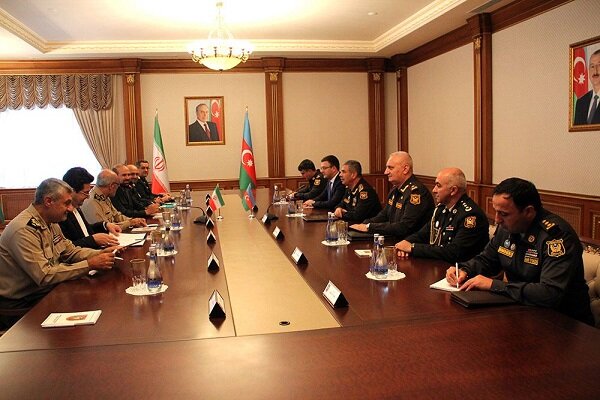
Simultaneously, an Iranian military delegation met on Saturday with Zakir Hasanov, the defense minister of Azerbaijan in Baku. 

The two sides discussed security issues in the region, according to Fars News.

The timing of the meeting suggests that the Iranian delegation might have conveyed a message from Iran regarding the prospect of new escalations between Baku and Yerevan. 

Iran has offered help to achieve peace and security in the South Caucasus region through diplomatic means. But it also said it cannot accept any use of force in the region to dictate new geopolitical realities. It remains to be seen whether Baku and Yerevan heeded the Iranian calls. 

By Sadegh Fereydounabadi

First published in Tehran Times