
Category: Selected Articles
Category Added in a WPeMatico Campaign
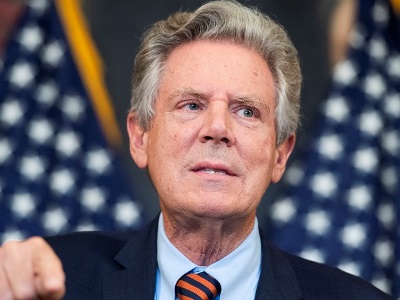
US Congressman Frank Pallone shared on X (formerly Twitter) the appeal of American TV personality of Armenian heritage Kim Kardashian to President Joe Biden to prevent another Armenian Genocide.
“Thank you Kim Kardashian for sharing your story and advocating for the Armenian people. If we don’t hold Aliyev accountable for his illegal blockade of the Lachin Corridor, then countless Armenian lives will remain at risk. The US should act now to end this humanitarian crisis,” he wrote.

11:07, 15 August 2023
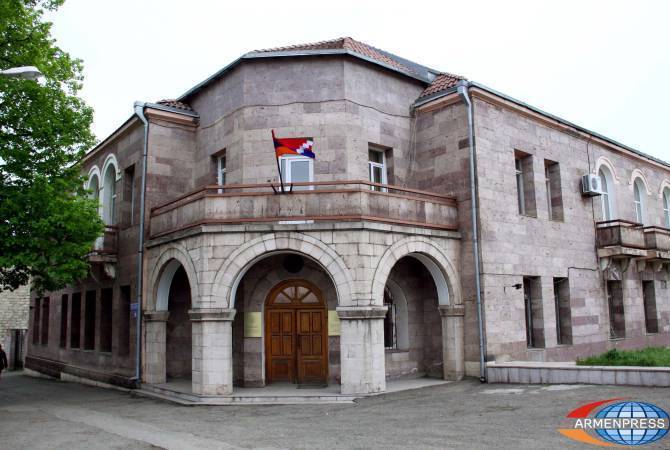
YEREVAN, AUGUST 15, ARMENPRESS. Nagorno-Karabakh has denied and condemned the false accusations made by the Azerbaijani government on troops movements and warned that Baku’s disinformation campaign seeks to pave the way for future provocations.
In a statement, the Nagorno-Karabakh (Artsakh) Ministry of Foreign Affairs urged all international actors, and in particular, the Russian Peacekeeping Contingent, to immediately take appropriate steps to deter the possible provocative actions of Azerbaijan.
Below is the full statement:
“The Ministry of Foreign Affairs of the Republic of Artsakh strongly refutes and condemns the fake news spread by the Azerbaijani mass media that the Defense Army of Artsakh is moving and concentrating various military equipment in different directions of the Line of Contact.“As we have repeatedly made sure, Azerbaijan is paving the way for further provocations by filling the media field with such fake news.“We draw the attention of international actors, and especially the UN Security Council, to the fact that Azerbaijan is escalating the situation just two days after the request of the Republic of Armenia to convene an emergency session of the UN Security Council related to the deteriorating humanitarian situation caused by the complete blockade imposed on the civilian population of Artsakh by Azerbaijani authorities. It is nothing but an attempt to distract the attention of international structures from the humanitarian disaster provoked in the Republic of Artsakh by Azerbaijan’s illegal blocking of the Lachin Corridor.“We reiterate that since December 12, 2022, the Republic of Artsakh has been under total siege, resulted from Azerbaijan’s illegal actions. Moreover, since June 15, 2023, the people of Artsakh has been deprived of the opportunity to import even the least amount of food products, medicines and all other vital goods through the Lachin Corridor via the International Committee of the Red Cross and the Russian Peacekeeping Contingent.
“Thus, due to the lack of efficient steps by the international community, Azerbaijan continues to violate the provisions of the Trilateral Statement of November 9, 2020, universal international legal norms, and specific international legal acts related to the Lachin Corridor, including the legally binding decisions of the International Court of Justice and the European Court of Human Rights on lifting the blockade of the Lachin Corridor.
“We urge all international actors, and in particular, the Russian Peacekeeping Contingent, to immediately take appropriate steps to deter the possible provocative actions of Azerbaijan.
“In the current situation, we consider it imperative to convene an emergency session of the UN Security Council as soon as possible for passing a decision on taking the necessary and efficient measures aimed at the complete and unconditional unblocking of the Lachin Corridor.”
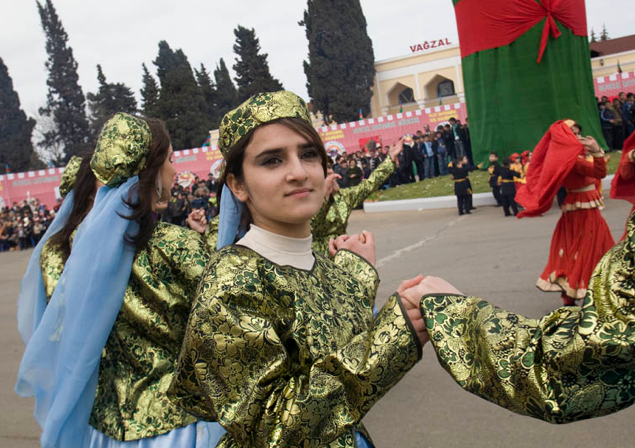
One of the most important trends in the post-Soviet space has been the sharp reduction in the relative size of non-titular nations in the newly independent countries. Yet, while Moscow’s opportunities to exploit these national minorities have declined as a result, the Russian authorities still make use of them. They present Moscow as the chief defender of ethnic Russians and Russian speakers in these states, employing other ethnic minorities as leverage against the governments involved. In recent years, Moscow’s efforts in this regard have centered most prominently on the Karakalpaks of Uzbekistan and the Gagauz of Moldova (see EDM, June 9, 2020, May 9).
The Kremlin has also shown that it has not forgotten those groups it earlier exploited and reserves the right to turn its attention back to them when it feels necessary. Perhaps the most prominent example of this is the Talysh, a Persian-speaking group in Azerbaijan numbering several hundred thousand there and about the same number in adjoining sections of Iran. Three decades ago, some in Moscow supported this group; however, this minority appears to have been largely ignored in the Kremlin since that time. Even so, over the past several weeks, the Talysh have returned to the center of new tensions in Russia’s relationship with Azerbaijan.
The ostensible cause of this conflict was a memorial held on August 9 in the Urals city of Yekterinburg commemorating the 30th anniversary of the formation of the Talysh-Mughan Autonomous Republic. This republic was a short-lived state formation within Azerbaijan that unsuccessfully pursued the creation of an autonomous region for the Talysh living there. That effort attracted relatively little popular support at the time and was suppressed within weeks by Baku. The ringleaders were arrested, sentenced to long prison sentences and, in some cases, ultimately expelled to the Netherlands where they later formed a Talysh independence party. But with rare exceptions over the past 30 years, the group has attracted little attention beyond Azerbaijan (see EDM, February 3, 2015; Kavkaz-uzel.eu; Nakanune.ru, August 28; Forum-msk.org, September 1).
That public neglect might have continued even with the Yekaterinburg meeting save for two key factors. First, tensions between Moscow and Baku are mounting over the future of Karabakh and other issues, which is prompting the Kremlin to employ various means to demonstrate its ability to cause trouble in the South Caucasus for anyone who challenges its authority (News.am, August 28). Second, the attendance of Igor Volodin, chair of the Yekaterinburg city council and a member of the United Russia party, at the Talysh memorial created quite a stir, as it seemed to signal that the event had Moscow’s approval.
These tensions and the appearance of a prominent albeit local Russian official prompted Baku to send a diplomat note to Moscow on August 16 protesting what the Azerbaijani government sees as official Russian support for the Talysh and thus opposition to Baku’s efforts to integrate its national minorities. The note was followed by a statement from Azerbaijan’s ambassador in Moscow denouncing Volodin’s appearance and articles in the Azerbaijani media criticizing Russian interference in Azerbaijan’s internal affairs (Ura.news, August 16; News.ru, August 27; Kavkaz-uzel.eu;Nakanune.ru, August 28).
Volodin may have appeared at the meeting entirely on his own initiative to gain support from members of the Talysh minority now living in his city who are voters there. This may very well have been the case, Moscow officials, on August 27, told the Azerbaijani embassy that Volodin would not remain chair of the city duma after the upcoming elections. They assert that he should have consulted with more senior officials before appearing at such a meeting. And the fact that he did not raises questions about his reliability and current position (Ura.news, August 31). These officials undoubtedly hope that they have “extinguished” the controversy, especially given that many more could lose their jobs if the Kremlin decides they, too, have violated official policy (News.ru; 66.ru, August 30).
However, there are compelling reasons to think that this is hardly the whole story. On the one hand, senior Russian politicians do not attend meetings of foreign opposition groups without either explicit direction from their higher-ups or because they believe that what they are doing is consistent with official policy. On the other hand, growing tensions between Moscow and Baku over the Armenian community in Karabakh and its future within Azerbaijan make the Volodin fiasco seem reminiscent of the Kremlin “playing the Talysh card.” After all, by reminding the Azerbaijani authorities that Moscow can cause trouble for Baku if it does not go along with Russia on negotiations with Yerevan, the Kremlin is clearly hopeful that the Azerbaijani government will decide that it is better not to challenge Russia directly lest it face something like a new Mughan movement.
And the potential for such a movement may be even greater now as Russia and Iran may now be on the same side of the issue. Tehran seems to want to rein in Baku and dispatch Talysh groups from within Iran to the southern part of Azerbaijan to cause trouble. Such a move would give the Azerbaijani government another ethnic issue to handle—something it does not need given the international attention to the closure of the Lachin corridor by which the ethnic Armenians in Karabakh had been receiving supplies from Yerevan.
Hence, a Talysh meeting in a Russian city far from the South Caucasus may be about more than it appears on the surface and have consequences far greater than many are inclined to think. At the very least, these possibilities will be on the mind of policymakers in Moscow and Tehran, on the one hand, and Baku and its allies, on the other. And that will remain true even if the diplomatic back-and-forth over the Yekaterinburg meeting quiets over the next several weeks.

A sniper of Ukraine’s 3rd Separate Assault Brigade takes a position during a reconnaissance mission near the eastern city of Bakhmut.
The final declaration of the Group of 20 (G20) major economies in India left Kyiv angry over its refusal to condemn Moscow for its aggression against Ukraine, as new fragments of projectiles appeared to have landed on NATO-member Romania’s territory on September 9.
“We are grateful to the partners who tried to include strong wording in the text,” Ukrainian Foreign Ministry spokesman Oleh Nikolenko posted on Facebook.
“However, in terms of Russia’s aggression against Ukraine, [the] G20 has nothing to be proud of,” he wrote.
RFE/RL’s Live Briefing gives you all of the latest developments on Russia’s full-scale invasion, Kyiv’s counteroffensive, Western military aid, global reaction, and the plight of civilians. For all of RFE/RL’s coverage of the war in Ukraine, click here.
The final declaration revealed the sharp divisions over Russia’s invasion of Ukraine, with host India able to get attendees to agree to a final statement only after softening language on Moscow’s war on its neighbor.
The statement underlined the “human suffering and negative added impacts of the war in Ukraine,” but did not mention Russia’s invasion.
“All states must refrain from the threat or use of force to seek territorial acquisition against the territorial integrity and sovereignty or political independence of any state. The use or threat of use of nuclear weapons is inadmissible,” it said, referencing the UN Charter.
A senior EU diplomat told AP that the bloc had not given up any of its position and said the fact that Moscow had signed on to the agreement was important.
“The option we have is text or no text, and I think it is better [to have a] text. At least if they [the Russians] don’t implement, we know once more that we cannot rely on them,” the diplomat said.
Meanwhile, Kyiv said the toll of the wounded from a Russian missile strike on the Ukrainian city of Kryviy Rih rose to 74, as Ukrainian forces pressed their slow counteroffensive against Russian forces in southern and eastern regions.
Elsewhere, Romanian officials said they had found new drone fragments on the NATO member’s territory near the Ukrainian border for the second time this week. The Defense Ministry said they were “similar to those used by the Russian Army.”
President Klaus Iohannis said in a statement that the fragments indicated “an absolutely unacceptable violation of the sovereign airspace of Romania, a NATO ally, with real risks to the security of Romanian citizens in the area.”
Iohannis added that he had a phone call with NATO Secretary-General Jens Stoltenberg to inform him of the new finding and that he had received assurances of the alliance’s support.
Moscow did not comment on the report.
Photo Gallery:
Eighteen months into Russia’s full-scale invasion, Ukraine is struggling to build momentum in the counteroffensive taking place over three fronts, with the primary push coming south of Orikhiv, in the southern Zaporizhzhya region.
While some Western allies have expressed frustration with the slow pace of the effort, now in its third month, Ukrainian troops have shown glimpses of success in breaching the Russian defensive lines.
Kyiv also claimed “partial success” in the east, near the obliterated Donetsk region city of Bakhmut, which Russia captured earlier this year.
And in Crimea, Russian-installed authorities in the city of Simferopol called a blaze at a military post a “domestic fire” and not the result of an attack by Ukrainian drones.
Full details of the blaze were not immediately available. Kyiv has not commented.
A main goal of Ukraine’s southern counteroffensive is to drive toward the peninsula and eventually retake the region, which was illegally annexed by Russia in 2014.
Kyiv estimates that Russia has deployed more than 420,000 soldiers in areas it controls in the east and south of Ukraine, deputy intelligence chief Vadym Skibitskiy said on September 9.
“The Russian Federation has concentrated more than 420,000 servicemen in our territories that are temporarily occupied, including Crimea,” Skibitskiy said at a conference in Kyiv. The figure “does not include the Russian National Guard and other special units that maintain occupation authorities on our territories.”
Ukraine is almost entirely dependent on Western military aid and equipment to wage its defense against the Russian invasion. Kyiv has repeatedly pressed the United States and other allies for more powerful weaponry, such as F-16 fighter jets, which could be put into service next year.
Kyiv has also sought supplies of long-range, U.S.-designed Army Tactical Missile Systems, which have a greater distance for striking at Russian targets.
The United States has been reluctant to send the weapons, but unnamed U.S. officials told ABC News that the systems, known as ATACMS, or “attack-ems,” were likely to be supplied in the end.
“They are coming,” one anonymous official told ABC News on September 8. A second official said the missiles were “on the table” and likely to be included in an upcoming weapons package.
Japan’s foreign minister arrived in Kyiv on September 9 in an unannounced visit aimed at showing support for Ukraine.
Yoshimasa Hayashi met with Ukrainian President Volodymyr Zelenskiy and agreed to begin talks on potential security guarantees and to cooperate on reconstructing Ukraine’s economy, Japan’s Foreign Ministry said.
Japan has joined the West in supporting Ukraine and imposing sanctions on Russia. However, it does not allow the supply of weapons, under long-standing pacifist government policies.
It’s the first visit by a Japanese foreign minister to Ukraine since Russia’s full-scale invasion in February 2022.
Ukrainian Foreign Minister Dmytro Kuleba in a joint news conference thanked Hayashi for his country’s support and that he wanted the foreign minister “and the entire Japanese people to know that the Ukrainian people remember and will never forget the humanitarian aid.”
With reporting by Reuters and AP
Categories
The Region in Brief
Armenia
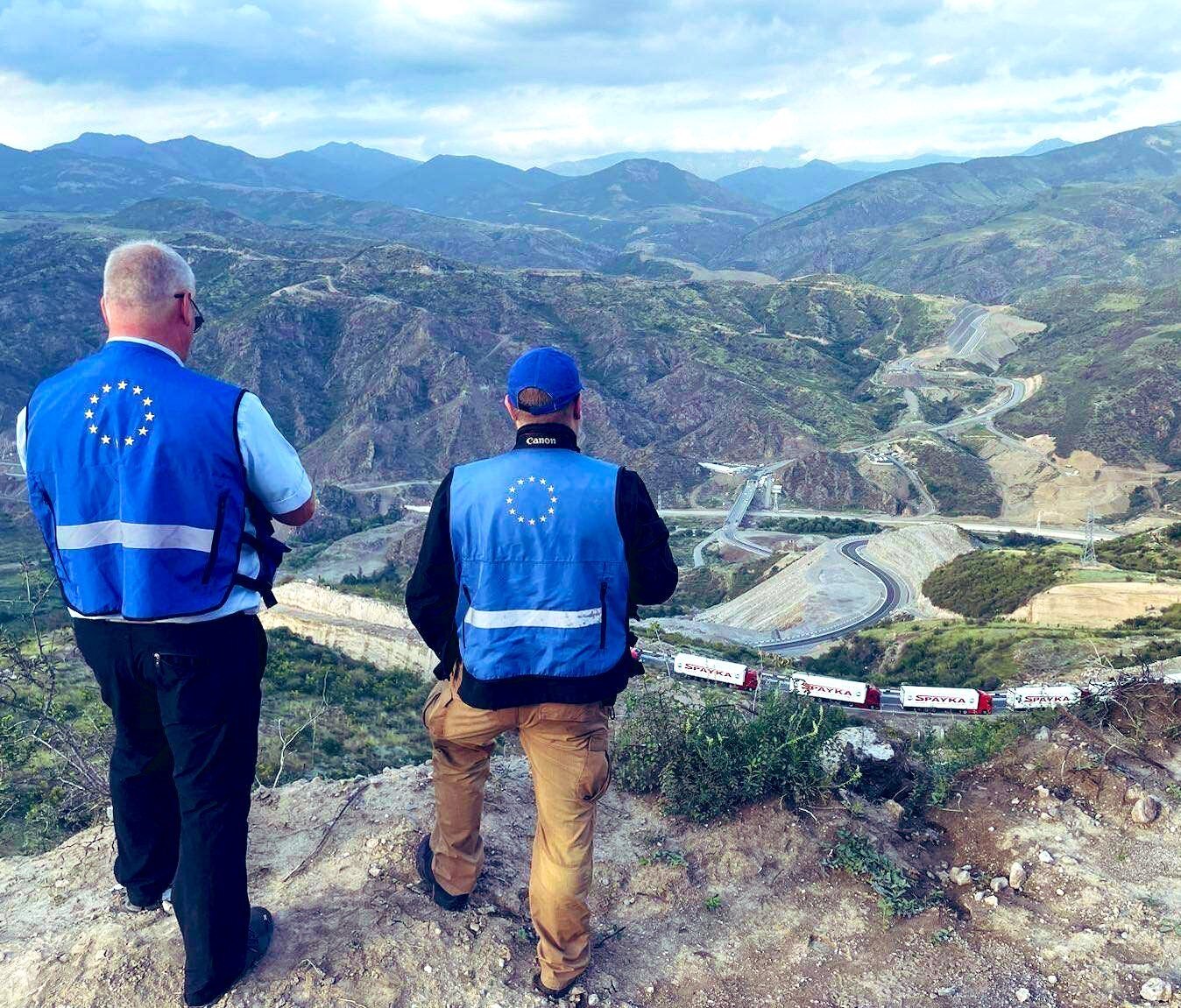
The European Union has confirmed that its monitoring mission in Armenia was targeted by Azerbaijani fire. On August 15, Armenia’s Defense Ministry reported that the Azerbaijani armed forces fired at EU observers near Verin Shorzha village in the Gegharkunik province. The European Union Mission in Armenia (EUMA) denied the report, stating that none of its patrols had been the target of shooting. However, after a video of an EU patrol sheltering in a bunker appeared on social media, the EU released a “Correcting Statement,” stating, “We confirm that EUMA patrol has been present to the shooting incident in our area of responsibility.”
In other EU news, the EUMA has denied Azerbaijani claims of Armenian military buildup along the Armenia-Azerbaijan border. The EUMA said, based on its daily monitors of the security situation along the border, it saw “no unusual military movement or buildup, especially at the entrance to the Lachin Corridor.” On August 14, Azerbaijan’s Foreign Ministry said that a “large amount of weapons, military equipment and personnel of the armed forces of Armenia have been accumulating along the un-demarcated border with Azerbaijan.” Armenian officials called the statement disinformation and reiterated that Armenia has no troops in Artsakh.
Azerbaijan
Journalists and civil society groups have directed mounting criticisms at RFE/RL’s Azerbaijan service, accusing the organization of bullying, financial mismanagement and favoritism. In the past two years, at least six journalists have been fired from the organization, while three have resigned in protest. Former employees have accused Ilkin Mammadov, the head of RFE/RL’s Azerbaijan service, of hiring journalists close to the government. Mammadov has led the organization from Prague since 2015, when Azerbaijan’s government shut down the Baku office. RFE/RL dismissed the accusations, stating it is “deeply concerned about unsubstantiated claims circulating on social media impugning our journalism in Azerbaijan.”
Georgia
The American band The Killers is facing backlash from fans after inviting a Russian fan onstage during a concert in Georgia. Lead singer Brandon Flowers invited the fan onstage to play the drums. Flowers announced that the fan was Russian, and asked the crowd if it was okay to let him play. The crowd booed and whistled, cursing Russia and shouting, “Russia is an occupier!” Some concertgoers left the arena in protest. Flowers said the show should “bring people together” and that he sees the concertgoers as his “brothers and sisters.” The Killers later released an apology statement, stating that its message had not been political and “could be misconstrued.” Georgians overwhelmingly view Russia as the occupier of Abkhazia and South Ossetia and oppose Russia’s invasion of Ukraine.

An Azerbaijani soldier cries “Allahu Akbar” from atop the steeple of an Armenian church after breaking its cross off.
The thousand-year-old genocide of Armenians at the hands of Turkic peoples has reached a new level.
Several watchdog organizations—including the Association of Genocide Scholars, Genocide Watch, and the Lemkin Institute for Genocide Prevention—are accusing Azerbaijan of committing genocide against the 120,000 Armenians living in Nagorno-Karabakh. Historically known as Artsakh, this ancient Armenian region was annexed by and brought under Azerbaijani rule in 2020.
Modern day hostilities between Armenia, an ancient nation and the first to adopt Christianity, and Azerbaijan, a Muslim nation that was created in 1918, began in September 2020, when Azerbaijan launched a war to claim Artsakh (Nagorno-Karabakh). Although it had been Armenian for over two thousand years, and still remains 90% Armenian, after the dissolution of the USSR, the “border makers” granted it to Azerbaijan, hence the constant warring over this region. (See “15 Artsakh War Myths Perpetuated By Mainstream Media.”)
Once the September 2020 war began, Turkey quickly joined its Azerbaijani co-religionists against Armenia, though the dispute clearly did not concern it. It dispatched sharia-enforcing “jihadist groups” from Syria and Libya—including the pro-Muslim Brotherhood Hamza Division, which once kept naked women chained and imprisoned—to terrorize and slaughter the Armenians.
One of these captured mercenaries later confessed that he was “promised a monthly $2,000 payment for fighting against ‘kafirs’ in Artsakh, and an extra 100 dollar[s] for each beheaded kafir.” (Kafir, often translated as “infidel,” is Arabic for any non-Muslim who fails to submit to Islam, which makes them de facto enemies.)
All these Muslim groups committed massive atrocities (see here and here), including by raping an Armenian female soldier and mother of three, before hacking off all four of her limbs, gouging her eyes, and mockingly sticking one of her severed fingers inside her private parts.
The war ended in November 2020, with Azerbaijan claiming a significant portion of Artsakh.
Then, on December 12, 2022, Azerbaijan sealed off the humanitarian Lachin Corridor—the only route between Artsakh and the outside world. A recent report by Dutch journalist, Sonja Dahlmans, summarizes the situation since:
In the extreme southeastern part of Europe, known as the Caucasus, a silent genocide is looming. The Lachin Corridor that connects Armenia to Artsakh, the region in Azerbaijan where mainly Christian Armenians live, has been closed by the government for eight months. Supermarket shelves are empty; there is hardly any food, fuel, or medicines for the 120,000 Armenian Christians who live there, including 30,000 children and 20,000 seniors.
At the time of this writing [Aug. 24, 2023], a convoy of food and medicines has been standing in front of the border since July 25 [a month], but the International Red Cross is not allowed access to the inhabitants of Artsakh. According to journalists living in the area, most residents only get one meal a day. People in Artsakh queue for hours at night for bread, waiting for their daily rations. At the same time, sources within Artsakh report shooting at Armenians trying to harvest the land.
… [I]n all probability bread will also soon be unavailable due to the shortage of fuel… Bakers can no longer heat their ovens. Last week, a 40-year-old Armenian man died of malnutrition. A pregnant woman lost her child because there was no fuel for transport to the hospital.
Separate reports tell of, in one instance, 19 humanitarian trucks “loaded with some 360 tons of medicine and food supplies” that have been parked for weeks and prevented from crossing.
This, of course, would not be the first time Turks starve Armenians to death (as the following picture of a Turkish administrator taunting emaciated Armenian children with a piece of bread in 1915 makes clear).
On August 7, 2023, Luis Moreno Ocampo, the former Chief Prosecutor of the International Criminal Court, framed the situation well:
There is an ongoing Genocide against 120,000 Armenians living in Nagorno-Karabakh, also known as Artsakh.
The blockade of the Lachin Corridor by the Azerbaijani security forces impeding access to any food, medical supplies, and other essentials should be considered a Genocide under Article II, (c) of the Genocide Convention: ‘Deliberately inflicting on the group conditions of life calculated to bring about its physical destruction.’
There are no crematories, and there are no machete attacks. Starvation is the invisible Genocide weapon. Without immediate dramatic change, this group of Armenians will be destroyed in a few weeks.
Starvation as a method to destroy people was neglected by the entire international community when it was used against Armenians in 1915, Jews and Poles in 1939, Russians in Leningrad (now Saint Petersburg) in 1941, and Cambodians in 1975/1976.
Similarly, after going on a fact-finding mission to Armenia, former U.S. Ambassador-at-Large for International Religious Freedom, Sam Brownback referred to the blockade as the latest attempt at “religious cleansing” of Christian Armenia:
Azerbaijan, with Turkey’s backing, is really slowly strangling Nagorno-Karabakh. They’re working to make it unlivable so that the region’s Armenian-Christian population is forced to leave, that’s what’s happening on the ground.
Muslim regimes regularly make life intolerable for Christian minorities in an effort to get them to abandon their properties and leave. Just a few weeks ago, the president of Iraq revoked a decade-old decree that granted Chaldean Patriarch Cardinal Louis Raphael Sako powers over Christian endowment affairs. “This is a political maneuver to seize the remainder of what Christians have left in Iraq and Baghdad and to expel them,” said Diya Butrus Slewa, a human rights activist from Ainkawa. “Unfortunately, this is a blatant targeting of the Christians and a threat to their rights.”
In Artsakh, the situation seems to be worse: just as no one can get in, no one can apparently get out. Azerbaijan is holding those 120,000 Armenians captive, starving and abusing them at will.
In his testimony, Brownback said that this latest genocide is being “perpetrated with U.S.-supplied weaponry and backed by Turkey, a member of NATO.” If the U.S. does not act, “we will see again another ancient Christian population forced out of its homeland.”
Not only has U.S. diplomacy been ineffective for the besieged Armenians; it has actually exacerbated matters. According to one report,
[T]he only thing the Washington-backed talks appear to have produced is the emboldenment of Azerbaijan’s aggression….
For over eight months, the region’s 120,000 Indigenous Armenians—who declared their independence in the early 1990s following escalating violence and ethnic cleansing by Azerbaijan—have been deprived access to food, medicine, fuel, electricity, and water in what is nothing less than genocide by attrition….
The same week peace talks began in Washington, Baku [capital of Azerbaijan] tightened its blockade by establishing a military checkpoint at the Lachin Corridor. And when Washington-based talks resumed in June, Azerbaijan began shelling the region. In the months since, the International Committee of the Red Cross has been denied access to Karabakh—and later reported that an Armenian patient in its care had been abducted by Azerbaijani forces en route to Armenia for treatment.
This is the predictable consequence of Washington’s insistence on negotiations amid Azerbaijan’s blockade of Artsakh and occupation of Armenian territory. This has signaled to Baku that its strategy of coercive diplomacy is working, disincentivizing de-escalation, and forcing Armenia to negotiate with a gun to its head…
Washington has also actively strengthened Azerbaijan’s position by indicating support for Artsakh’s integration into Azerbaijan. Given Azerbaijan’s state-sponsored dehumanization of Armenians, the litany of human rights abuses perpetrated during and since the 2020 war, and its own disastrous domestic human rights record—it is impossible to imagine Armenians could ever live freely under Azerbaijan’s rule.
For Azerbaijan, this disingenuous participation in negotiations has allowed it to uphold the veneer of cooperation while engaging in conduct that has immeasurably set back the prospects of a durable peace.
Clearly, negotiating simply bought the Azerbaijanis more time in which to starve the Armenians, and possibly another way for the United States to pretend it was “doing something” without actually doing anything — apart from allowing more savagery.
Indeed, part of the façade of diplomacy is that Azerbaijan insists that the Christian Armenians of Artsakh are being treated no differently than Muslim Azerbaijanis—since all are citizens of Azerbaijan. One report sheds light on this farce:
Azerbaijani President Ilham Aliyev and other officials have declared that the Armenians of Nagorno-Karabakh are citizens of Azerbaijan, seeming to back prior statements of Azerbaijani authorities pledging to guarantee the rights and security of ethnic Armenians.
But actions speak much louder. The First Nagorno-Karabakh War three decades ago arose following waves of anti-Armenian pogroms. Azerbaijan is now one of the most repressive and autocratic countries in the world, scoring among the lowest in the world on freedom and democracy indexes—in stark contrast to Armenia and Nagorno-Karabakh.
Aliyev (who inherited his post from his father) has confessed to having started the Second Nagorno-Karabakh War in 2020, and proudly admitted that a generation of Azerbaijanis has been brought up to deeply despise Armenians (here and here).
He denies the Armenian Genocide (alongside Turkey) and negates the existence of Armenians as a nation, including their history, culture, and right to be present anywhere in the region.
No Armenian, not even a foreign national of ethnic Armenian descent or anyone with an Armenian sounding name, is allowed to enter Azerbaijan.
The results are clear: nearly every Armenian who fell into Azerbaijani captivity after the [Sept-Nov] 2020 war has been persecuted, imprisoned, tortured, mutilated, decapitated and/or murdered. None of these acts have ever been punished. To the contrary, those who kill Armenians receive medals and are glorified in Azerbaijan. It is no wonder that Armenians are petrified and cannot fathom living under Azerbaijan’s authority.
Aside from the Lachin corridor crisis, a recent 12-page report documents the systematic destruction of ancient churches, crosses, Christian cemeteries, and other cultural landmarks on land—Artsakh—that historically belonged to the world’s oldest Christian nation, Armenia.
One example is the Holy Savior Cathedral in Shushi, Artsakh. First, Azerbaijan bombed the church during the 2020 war, an act Human Rights Watch labeled a “possible war crime.” Then, after Azerbaijan seized the region, officials claimed to be “restoring” the church, when in fact its dome and cross were removed, making the building look less like a church. As one report notes,
The ‘case’ of Shushi is indicative of the well-documented history of Armenian cultural and religious destruction by Azerbaijan. From 1997 to 2006, Azerbaijan systematically obliterated almost all traces of Armenian culture in the Nakhichevan area, which included the destruction of medieval churches, thousands of carved stone crosses (“khachkars”), and historical tombstones.
Dahlmans also reports
on an Armenian church in Artsakh that disappeared after Azerbaijan’s victory in the second Nagorno-Karabakh war (2020). During the victory, Azerbaijani soldiers pose on top of the church shouting “Allahu Akhbar” [image above]… [T]he church has been completely wiped out and only a few stone remains remain as a reminder… The Western press rarely writes about the Nagorno-Karabakh conflict. Most reactions follow the line that it is not a religious conflict, but a claim by two countries over a disputed territory. Given the many examples that exist in which precisely religious buildings, tombs and inscriptions are systematically destroyed, it is difficult to maintain that this is the case.
One of the main reasons that Armenia finds itself standing alone against this genocidal onslaught is due to the West’s “desire to maintain favorable relations with Azerbaijan given its role as a European energy partner [and this] has outweighed any purported commitment to upholding human rights—bolstering Azerbaijan’s aggression.”
It is these same priorities that have made Russia, once the defender of all Orthodox Christian nations in the East, more apathetic than might be expected. According to another report,
Azerbaijan was able to impose this blockade because Russian peacekeepers allow them to do so. The Russians are there as part of a ceasefire agreement ending the Second Nagorno-Karabakh War. The same agreement, inked by Russia, Armenia and Azerbaijan in 2020, guarantees access along that now-blocked road. Although Russia is often portrayed as Armenia’s patron, the reality is more complicated. Russia’s largest oil company owns a 19.99% share of Azerbaijan’s largest natural gas field. It is not so surprising then that Armenians in Artsakh demonstrated against Russian inaction after the killings of their police officials.
Longtime Armenian-activist, Lucine Kasbarian, author of Armenia: A Rugged Land, an Enduring People, sums up the situation:
We who are Armenian, Assyrian, Greek and Coptic bitterly know just how this will end. It’s deja vu all over again. Again and again, we’ve seen the deceit and brutality, received the chilling reports, warnings, graphic videos, open letters and petitions from alarmed genocide scholars. But alas, NATO, Islamic supremacism, gas and oil are going to take precedence over life and liberty once again unless high-powered vigilantism can save the day.
Raymond Ibrahim, author of Defenders of the West and Sword and Scimitar is the Distinguished Senior Shillman Fellow at the Gatestone Institute and the Judith Rosen Friedman Fellow at the Middle East Forum.
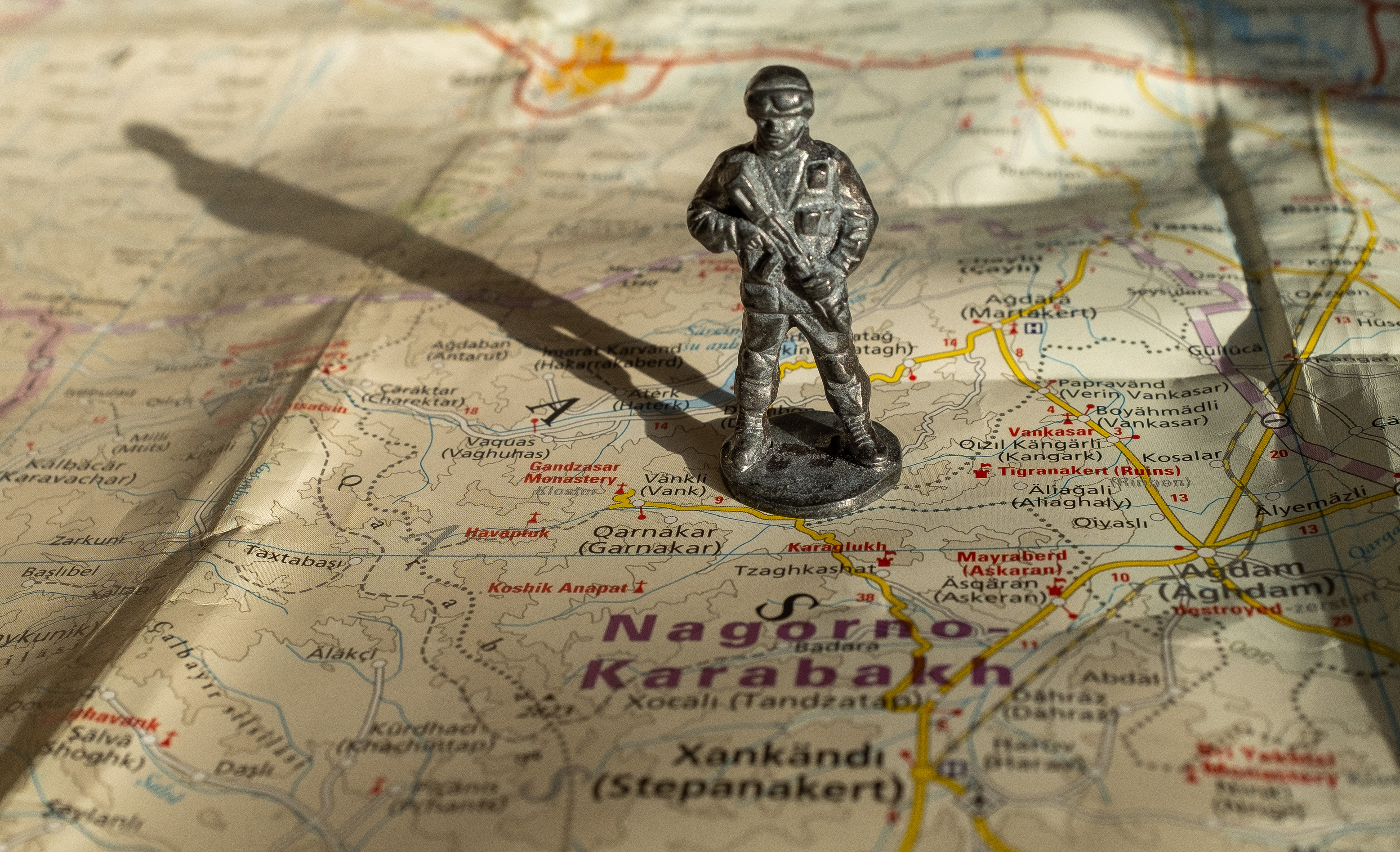
At a juncture where sustainable peace seemed achievable, Armenian prime minister Nikol Pashinyan’s recognition of Karabakh as part of Azerbaijan—arriving finally two years after the end of the Second Karabakh War, with the mediation of Brussels and Washington—appeared to be a positive development. Regrettably, this promising trajectory now faces the risk of unraveling, jeopardizing all progress made after the recent escalation around Lachin Road and claims about humanitarian conditions.
On April 23 of this year, Azerbaijan strategically positioned a checkpoint in Lachin, a pivotal juncture along the internationally recognized border between Azerbaijan and Armenia. This checkpoint held significant importance as it served as the sole road connecting the Armenian-populated enclave in Karabakh to the Republic of Armenia. Initially, the road functioned without major disruptions. However, tensions escalated following an attack on its checkpoint on June 15, prompting Azerbaijan to impose limitations on its operations. Azerbaijan also contended that this road had been exploited for illicit activities such as smuggling mines, weapons, and individuals affiliated with the IRGC (Islamic Revolutionary Guard Corps) into the region.
On July 26, a convoy of nineteen trucks carrying humanitarian aid was dispatched by the Armenian government, but Azerbaijan barred its entry into the region. This provided Armenia with a pretext to instrumentalize humanitarian issues to bring the matter before the UN Security Council for discussion on August 16. It was not coincidental that certain speakers during the Security Council discussion recommended refraining from employing humanitarian concerns as political leverage. Ahead of the UN Security Council session, significant resources were channeled into a global media campaign, involving politicians, celebrities, and even controversial figures like Luis Moreno Ocampo. The intention behind this was to shape a pro-Armenian sentiment within the international audience and to impose psychological and moral pressure on Azerbaijan, the global community, and the members of the UN Security Council.
Matters have only escalated since. On August 29, the Azerbaijan Red Crescent Society, affiliated with the International Red Cross and Red Crescent Movement, dispatched two trucks loaded with flour to aid Armenian residents in Karabakh through the Aghdam Road. This effort was aimed at breaking the ongoing deadlock and addressing concerns of manipulation surrounding the delivery of aid. However, the trucks encountered concrete roadblocks erected by individuals associated with radical groups who staunchly advocate for the sole use of the Lachin Road and vehemently oppose any alternative routes to the region. A few days later, the spokesperson for Charles Michel, president of the European Council, emphasized the importance of a step-by-step approach, which would involve a carefully sequenced operation for the full utilization of the Ağdam and Lachin routes.
Peace Is Achievable Solely via Sincere Negotiations
Rather than engaging in direct and honest dialogue with Azerbaijan without any mediators—as also endorsed and urged by the United States to address any concerns, including humanitarian matters—Armenia is putting significant effort into exploiting humanitarian issues for its global propaganda purposes. Conversely, following the conclusion of the Second Karabakh War, Armenian propaganda has focused on attempting tirelessly to portray Azerbaijan through an “Israelization” lens and positioning Armenia as a victim in a manner reminiscent of the Palestinian situation.
The intent behind this approach is unmistakably clear, evident not just to those in Baku but also conspicuously acknowledged in Yerevan: to establish the notion within the international community that Karabakhi Armenians cannot viably coexist under Azerbaijan’s jurisdiction. This narrative is constructed to morally validate the concept of remedial secession or separatism for Karabakhi Armenians.
As previously articulated within this platform, for Azerbaijan the dark reality of occupation hides behind the glitzy façade of remedial secession or self-determination and efforts to link the claim to liberal values, like in Crimea, Abkhazia, South Ossetia, Donbas, and Luhansk. Additionally, the discussions and promotional efforts aimed at advancing a remedial secession agenda are perceived by Azerbaijan as an endeavor to divert the attention of the international community from the twenty-seven-year-long occupation of Azerbaijani territories, the plights of up to one million internally displaced persons, their inability to return to the liberated lands because of widely planted landmines, and the complete destruction of urban centers and rural communities like Aghdam. Indeed, acknowledging these responsibilities and addressing the complexities arising from this prolonged situation holds the utmost significance in ensuring enduring peace for the times ahead. Disregarding or deflecting focus away from the twenty-seven-year-long occupation could cast a shadow over the prospects of future peace, potentially leading to a less hopeful outlook.
Following their defeat in the 2020 conflict, Armenia lacks the military capability to directly challenge Azerbaijan and assert its claims over Karabakh. Moreover, Armenia’s demands are not substantiated by international law. In light of these constraints, Armenia’s primary recourse remains the pursuit of “moral justification” on the global stage to substantiate its claim over Karabakh.
At the same time, prominent Armenian analysts, including figures like Richard Kirakosyan, advocate for a strategic approach acknowledging Armenia’s military inferiority to Azerbaijan. They propose delaying the peace process between Armenia and Azerbaijan to allocate time for rebuilding and modernizing Armenia’s military capabilities.
Significantly, the program outlined by Pashinyan’s government for the former Nagorno-Karabakh Oblast, endorsed by Armenia’s National Assembly following the 2021 elections, contains a provision obligating Pashinyan’s administration to secure the Karabakhi Armenians’ right to remedial secession. The recent acknowledgment of Karabakh as part of Azerbaijan by Pashinyan’s government is not contradictory to this obligation; instead, it aligns with the commitment made in 2021 to pursue remedial secession. This alignment is evident in the range of actions and policies pursued by the Pashinyan government, including its recent international initiatives related to Lachin.
As a result, the statement made by the U.S ambassador to Armenia, Kristina Kvien, at the beginning of June, asserting the potential for Karabakhi Armenians to coexist securely under Azerbaijani governance, faced considerable backlash—even in the wake of the recognition of Karabakh as part of Azerbaijan. This criticism prompted the ambassador to walk back her comments the following day, stating that the United States “does not presuppose the outcome of negotiations on the future of Nagorno-Karabakh.”
Enough is Enough
Beneath the surface of this intricate political struggle lies the enduring plight of ordinary people from both sides of the conflict. Amidst the Russian military presence and the remnants of Armenia’s armed forces, individual stories such as that of Izaura Balasanyan emerge, encapsulating the persistent suffering endured. Her story also sheds light on the intricate complexities that impede the path to normalcy and reconciliation for two populations separated by a protracted three-decade-long conflict.
In September 2021, faced with mounting needs and an avaricious landlord, Izaura made a fateful decision driven by desperation: escaping the confines of the Armenian enclave. Her goal was to reach the comparatively promising Azerbaijani-controlled territories. However, her journey was abruptly halted when Russian peacekeepers apprehended her and handed her back into the custody of local Armenian security services.
Since then, the fate of this unfortunate woman has remained cloaked in uncertainty, her story fading into obscurity. Remarkably, her plight has failed to attract the attention of any international institution, leaving her ordeal unexamined and her voice unheard. This stark reality underscores the challenges faced by countless individuals akin to Izaura, trapped in the labyrinthine nexus of radical nationalism and a three-decade-long conflict.
The tale of Izaura serves as a clear example of those opposing the reintegration of these two communities and those acting as a barrier between them. In 2022, with the mediation of the United States in Washington, Armenia and Azerbaijan reached an agreement to commence dialogue for the reintegration between Baku and the Karabakhi Armenians. Interestingly, immediately following this accord, Moscow sent a Russian billionaire, Ruben Vardanyan, who lacks native ties to Karabakh, to the region to undermine the reintegration dialogue. He subsequently expelled all proponents of dialogue from the local de-facto administration. Despite his resignation, both he and Russia continue to uphold the trajectory that was established to impede all reintegration efforts.
Nevertheless, accountability extends beyond Russia and the radicals it supports. It encompasses politicians, experts, and journalists who, regrettably, remain detached from the anguish experienced by individuals like Izaura. Their disengagement underscores the urgency of comprehending the broader context enveloping these narratives.
Blame Games
Paradoxically, while politicians silence the cries of desperate individuals like Izaura, who were taken hostage and who are marginalized, they concurrently appeal to the global stage about the existence of humanitarian crises. In a contrasting stance, local leaders such as Human Rights Defender Gegham Stepanyan and others advocate for a balanced approach. Stepanyan advises restraint in sharing social media posts containing videos of uplifting occasions like weddings and other events that radiate inspiration and prosperity. Conversely, he advocates for refraining from disseminating videos depicting lavish lifestyles—a narrative that clashes with the established official stance.
Consequently, the ongoing conflict between Armenia and Azerbaijan has now found its way into the realm of conflicting narratives within the sphere of social media. On these platforms, Armenians are diligently amplifying efforts to underscore the allegedly pressing humanitarian situation on the ground. In a contrasting display, Azerbaijani social media users are sharing recently published videos featuring Armenian counterparts participating in weddings, extravagant restaurant celebrations, and gatherings within Karabakh that radiate joy and prosperity. This clash of narratives reached its peak during a session of the UN Security Council. The Armenian Minister of Foreign Affairs presented images of purportedly distressed children, prompting the Azerbaijani ambassador to counter with joyful and abundant photographs depicting life in Karabakh.
A delegation headed by the chairman of the Independent Permanent Human Rights Commission within the framework of the Organization of Islamic Cooperation (OIC) arrived in Azerbaijan at the invitation of the Commissioner for Human Rights (Ombudsperson) of the Republic of Azerbaijan Sabina Aliyeva to conduct a fact-finding mission in Ganja, Aghdam and Fuzuli districts, according to Azerbaijan in Focus, reporting Trend.
The delegation included Chairman of the Independent Permanent Human Rights Commission of the Organization of Islamic Cooperation (OIC IPHRC) Muhammad Suleiman Lawal (Nigeria), Deputy Chairman of the OIC IPHRC Haci Ali Acikgul (Türkiye), member of the OIC NHRC Hilal bin Said Al Shidhani (Oman), Executive Director of the OIC NHRC Secretariat Noura bint Zaid Al-Rashoud (Saudi Arabia Arabia), Director of the OIC NHRC Secretariat Javed Saglaine (Pakistan), employee of the OIC NHRC Secretariat Ibrahim Saidu Kamara (Guinea).
The main purpose of the visit is to establish the facts of Armenia’s destruction of religious and cultural monuments, and cemeteries belonging to Azerbaijanis, to collect materials about Azerbaijanis affected by occupation and rocket bombing, as well as to prepare a report on the results of the mission and present it to the international community.
The post OIC reps to conduct fact-finding mission in Azerbaijan’s Aghdam, Fuzuli and Ganja appeared first on Azerbaijan In Focus.
In the early hours of August 29, swarms of Ukrainian drones flew across seven Russian regions. Many were intercepted; some were not.
Several reached a Russian airbase in Pskov, some 600 kilometers from the Ukrainian border, destroying two Russian military transport aircraft and damaging two more.
It was the most dramatic evidence yet of a new dimension to the 18-month conflict: Ukraine’s growing appetite to take the war to Russian territory.
Aerial and marine drones, mysterious new missiles and sabotage groups are all part of the toolkit; Russian airfields, air defenses and shipping among the targets.
Ukraine has plenty of reasons for broadening the conflict.
A win is a win wherever and whenever it occurs – whether damaging planes at a distant Russian airbase, disrupting commercial aviation and shipping, putting the residents of Russian border regions on edge or hitting Russian air defenses in Crimea.
For Ukrainians who have suffered endless drone and missile attacks, evidence of payback (albeit on a much smaller scale) is a welcome morale-booster, especially when the counteroffensive in the south is still struggling to gain traction.
President Volodymr Zelensky has been unapologetic for taking the conflict to Russian soil, saying recently: “The war is returning to the territory of Russia – to its symbolic centers and military bases, and this is an inevitable, natural and absolutely fair process.”
Attacks far from the current front lines are also evidence of an evolving Ukrainian capability to project power.
That projection very deliberately does not rely upon Western hardware but local adaptations, in terms of both technology and tactics. President Volodymyr Zelensky and Defense Minister Oleksiy Reznikov have repeatedly assured Western donors that their weapons won’t be used against targets inside Russia; that would be viewed by Moscow as an act of aggression which would make them party to the conflict.
That point was reiterated by Ukrainian presidential adviser an adviser to the Head of the President’s office, Mykhailo Podolyak this week. “Ukraine strictly adheres to the obligation not to use the weapons of its partners to strike Russian territory,” he said.
Instead, Ukraine is pushing ahead with creating a weapons industry that will provide everything from 155mm artillery shells to longer-range drones and now – it seems – a new long-range missile.

Senior Ukrainian officials have been dropping hints about the development of a new cruise missile. Oleksii Danilov, secretary of Ukraine’s National Security and Defense Council, posted a video last week of the purported missile with the caption: “The President of Ukraine’s missile program in action. The tests are successful, the use is effective.”
Later he spoke of a three-year development program, “to provide a distance of thousands of kilometers, this is the work of large teams, powerful work. Now we can say we have a result.”
Zelensky himself dropped a cryptic note, congratulating the Ministry of Strategic Industries with the message: “Successful use of our long-range weapons: the target was hit 700 kilometers away!”
And Ukraine’s Center for Strategic Communication reinforced the point Friday, saying on Telegram: “Having launched a full-scale aggression, the Russians counted on their impunity: that the fighting would be localized in Ukraine, and they would feel safe in their rear.”
“The increase in range destroys the Russian illusion of security and increases the cost of aggression for the enemy,” it added.
This is clearly a developing part of Ukraine’s strategy. Podolyak said: “The war is increasingly moving to Russia’s territory, and it cannot be stopped. This is a consequence of the lost frontline component (Russia has long been fighting only in numbers and only in defense, despite all propaganda myths) and the lack of realistic… systems in the regions (including air defense).”
Central to this projection of force is an array of Ukrainian drones – in the air and at sea. The latest iterations have longer range and greater payloads than previous models, thanks to what the Ukrainians describe as a global trawl for drone technology and contracts for multiple indigenous manufacturers.
The attack on the Pskov airbase is the fruit of this labor, though just how it was executed is something of a mystery. The head of Ukrainian Defense Intelligence, Kyrylo Budanov, said that the attack was launched from within Russia, while declining to say what kind of drones were used or how many.
That may be Budonov’s flair for gamesmanship – intended to sow confusion and distrust inside Russia.
It is possible that the drones were launched from Ukrainian territory, but accurate targeting over a distance of more than 700 kilometers would require a step-change in navigational capabilities.
One Russian blogger complained that the Pskov strike indicated that Russian air defenses had not adapted to defend against repeated Ukrainian drone strikes.
The damage being done is not going to break the back of the Russian air force, but it has become a serious irritant. On August 22, at least one Tu-22M strategic bomber was set ablaze at the Soltsy-2 airbase in northern Russia; then came the Pskov attack.
All at sea
Ukraine has also invested heavily in the development of marine drones. The latest deployed carry an explosive payload of up to 400 kilograms, capable of holing a substantial vessel, and can travel hundreds of kilometers.
Early in August, one struck the Russian gas and chemical tanker SIG close to the Kerch strait, immobilizing but not sinking it. Another hit a Russian naval ship in the port of Novosibirsk.
The maritime drones in use against both Russian naval and merchant shipping in the Black Sea provide both a morale boost and complicate Russian calculations. Some Russian warships in the Black Sea have mounted machine-guns on their decks to repel what are difficult weapons to defend against.
These attacks force Russia to spend time on developing counter-measures: One recent example is being the sinking of barges close to the Kerch bridge to Crimea, in an effort to prevent it being hit again by maritime drones following the attacks in July and August.
As Mick Ryan, author of the blog Futura Doctrina and a former General in the Australian armeed forces, writes: “With almost no likelihood of developing its own conventional naval fleet to fight the Russians, the Ukrainians have developed uncrewed capabilities. While ostensibly designed to sink or damage Russian surface warships, they are also intended to have the psychological effect of dissuading the Russian ships from putting to sea.”

Similarly, Russian authorities have to devote air defenses that might be deployed in Ukraine to the Moscow region and infrastructure such as air bases, which have become a frequent target of Ukrainian attacks. Open-source reporting suggests there are at least several Pantsir-2 air defense batteries around Moscow.
The Institute for the Study of War notes that “Russian forces may have focused their air defenses on covering Moscow and somehow missed the unusually large number of Ukrainian drones that reportedly struck the Pskov airfield.”
The Ukrainians are also more focused on degrading Russian transport links, air defenses and bases in annexed Crimea. Last month, they carried out a missile strike against one of Russia’s modern S-400 air defense systems on the Crimean coast, following it up with a commando raid.
Budanov said subsequently: “We have the ability to hit any part of the temporarily occupied [Crimea] as of now. We can reach the enemy absolutely anywhere.”
Strikes at greater range are an extension of the strategy successfully employed since last year to target Russian logistics hubs, command centers and ammunition/ or fuel dumps way behind the frontlines. Longer range Western systems such as HIMARS and more recently Storm Shadows, which with a range of 250 kms have have been critical to that effort, in Kherson, Luhansk and Zaporizhzhia.
Such weapons put Russian forces on notice that they are vulnerable far from the front lines. An attack on a Russian command center in occupied Berdiansk in July killed a senior Russian general; another in January obliterated a barracks in Donetsk, with considerable loss of life.
The drone operations and even the development of new missiles won’t determine the course of the war. Success or failure for the Ukrainians will be determined by the amount of territory reclaimed from Russian occupation and the ability to deter further aggression. That counter-offensive is making at best marginal progress.
But long-range strike operations have their vallue. Mick Ryan says that such operations “will only grow in importance and visibility. It is a way to keep fighting when ground maneuver becomes difficult in the wet, cold season. And it is a way to project progress in the war to Ukraine’s supporters during a period of low tempo in other operations.”
Ukrainian Air Force spokesman Yuriy Inhat says Russia should expect more.
“You can see the hysteria in the Russian public, Russian propaganda channels. They really don’t like what is happening. But what did they want?” he said Friday.
Mykhailo Podolyak says the long-term goal is to inflict a wider war on Russia. “As long as Putin remains president, the war will continue. Pulling Russia deeper and deeper into the abyss of chaos.”
This article originally appeared on CNN on September 2, 2023.
The post Made in Ukraine: Kyiv’s burgeoning weapons industry is enabling it to project power far beyond the front lines appeared first on Azerbaijan In Focus.