Categories
Audio Review - South Caucasus News

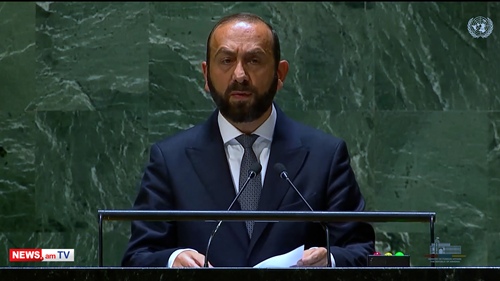
Ararat Mirzoyan։ Interdepartmental UN mission should be immediately deployed in Nagorno Karabakh


default.jpg

Newsfeed

Ararat Mirzoyan։ Interdepartmental UN mission should be immediately deployed in Nagorno Karabakh

The copyright for information published on this web site is owned exclusively by Armenian News-NEWS.am information-analytical agency. All information materials published on this website are intended solely for personal use. For full or partial reproduction of any material in other media it is required to acquire written permission from Armenian News-NEWS.am information-analytical agency. Those, who have committed copyright violations, will be prosecuted accordingly.


Categories
Audio Review - South Caucasus News

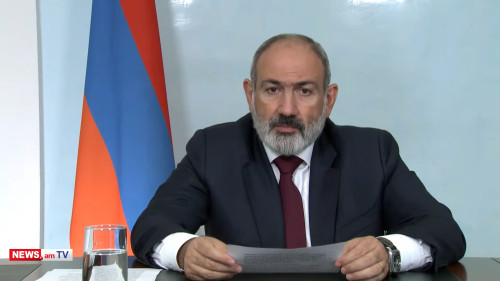
Pashinyan: Responsibility for Karabakh Armenians’ fate will fall entirely on Azerbaijan and Russian peacekeepers


default.jpg

If no real living conditions are created for Armenians in Nagorno-Karabakh to live in their homes and if no effective mechanisms of their protection from ethnic cleansing are created, there will be an extremely high possibility that the they will see removal from their homeland as the only way to save their lives and identity, Armenia’s Prime Minister Nikol Pashinyan has said in a live address.  

He said that a series of events that took place in recent years have forced all of us to assess, re-evaluate the situation, and draw conclusions.

“What happened in Armenia?” What is happening and what should happen? These are the questions whose answers are strategic for the future. The latest attacks undertaken by Azerbaijan against the Republic of Armenia lead to an obvious conclusion that the external security systems in which we are involved are not effective from the point of view of the state interests and security of the Republic of Armenia. This was became clear both during the 44-day war, during the events of May and November 2021, and in September 2022, and the list can be continued.

The capture of Khtsaberd and Old Tagher villages of Nagorno-Karabakh in December 2020 and the capture of more than 60 Armenian servicemen, the events of Parukh, the numerous expressions of intimidation of the Armenian population of Nagorno-Karabakh, the illegal blocking of the Lachin corridor, the Azerbaijani attack on Nagorno-Karabakh on September 19 raise serious issues also about the goals and motives of the activities of the Russian peacekeeping troops in Nagorno-Karabakh. Contrary to the tripartite statement of November 9, 2020, the Armenians of Nagorno-Karabakh are still facing the threat of ethnic cleansing,” he said.

According to Nikol Pashinyan, in recent days humanitarian goods delivered to Nagorno-Karabakh, but this does not change the situation. “If no real living conditions are created for Armenians in Nagorno-Karabakh to live in their homes and if no effective mechanisms of their protection from ethnic cleansing are created, there will be an extremely high possibility that the they will see removal from their homeland as the only way to save their lives and identity,” he added.

“The responsibility for such a development of events will fall entirely on Azerbaijan, which has adopted the policy of ethnic cleansing, and the Russian peacekeeping force in Nagorno-Karabakh. Of course, the RA government is working with international partners on the formation of international mechanisms to ensure the rights and security of Nagorno-Karabakh Armenians, but if these efforts do not yield concrete results, the government will welcome our brothers and sisters of Nagorno-Karabakh to the Republic of Armenia with all care. With this, however, the above-mentioned issues will not only not be addressed, but will also be exacerbated.

The Republic of Armenia has never abandoned its obligations to its allies and has never betrayed its allies, but the analysis of events shows that the security systems and allies on which we have relied for many years have had a goal of demonstrating our vulnerabilities and justifying impossibility that the Armenian people can have an independent state,” he added.

!

This text available in   Հայերեն and Русский

Print


Categories
Audio Review - South Caucasus News

PM Pashinyan’s spokesperson: All decisions about September 20 ceasefire were made by Nagorno-Karabakh


default.jpg

All decisions about the September 20 ceasefire were made by Nagorno-Karabakh. Prime Minister Nikol Pashinyan’s spokesperson Nazeli Baghdasaryan wrote on her Facebook page.

“We inform you again that all decisions about the September 20 ceasefire were made by Nagorno Karabakh.

The Republic of Armenia was not involved in decision-making. RA was generally aware that a process was taking place, but did not have specific information about the nuances.

The Republic of Armenia had no information about the mechanisms of discussion of documents, the format of decision-making. Nagorno-Karabakh has discussed and coordinated the issues with and/or through the Russian Federation peacekeeping force,” he wrote.

Earlier, Davit Ishkhanyan, Chairman of Artsakh National Assembly, announced that Nikol Pashinyan was familiar with the text of the statement of the Security Council of the Republic of Artsakh.

!

This text available in   Հայերեն

Print


Categories
Audio Review - South Caucasus News

Karabakh residents apply for Azerbaijani citizenship, and foreign attaches visited the outskirts of Khankandi


Karabakh residents apply for Azerbaijani citizenship, and foreign attaches visited the outskirts of Khankandi

Baku/23.09.23/Turan: The Ministry of Internal Affairs of Azerbaijan began to receive applications for citizenship from the Armenians of Karabakh, the head of the press service of the Ministry of Int ……

Karabakh residents apply for Azerbaijani citizenship, and foreign attaches visited the outskirts of Khankandi

Turan News Agency – turan.az https://turan.az

https://turan.az/img/turanlogo.gif

Baku/23.09.23/Turan: The Ministry of Internal Affairs of Azerbaijan began to receive applications for citizenship from the Armenians of Karabakh, the head of the press service of the Ministry of Internal Affairs, Elshad Hajiyev, told reporters on Saturday.

“Among the residents of Karabakh of Armenian origin, there are those who have applied to obtain Azerbaijani citizenship. Any resident of Armenian origin living in this territory can apply for this; their affairs are in the spotlight,” Hajiyev said.

He did not specify the number of applicants and how their cases would be considered.

As well , a group of military attaches of foreign embassies accredited in Baku visited the outskirts of Khankandi city today. Among them: attachés of Russia, Iran, Belarus, China, Kazakhstan. -0-


Categories
Audio Review - South Caucasus News

The surrender of weapons in Karabakh continues actively


The surrender of weapons in Karabakh continues actively

Baku/23.09.23/Turan: The process of handing over weapons continues in Karabakh. The Ministry of Defense publishes new videos and photos on this topic.

In turn, soldiers of the Azerbaijani Arme ……

The surrender of weapons in Karabakh continues actively

Turan News Agency – turan.az https://turan.az

https://turan.az/img/turanlogo.gif

Baku/23.09.23/Turan: The process of handing over weapons continues in Karabakh. The Ministry of Defense publishes new videos and photos on this topic.

In turn, soldiers of the Azerbaijani Armed Forces publish video materials from captured enemy positions and liberated settlements.

One of these videos was filmed in the village of Gozlukerpu (Getavan), in the former Mardakert region. This is a key village through which the road from Tartar to Kalbajar passes and on the way to the Sarsang reservoir.

It can be assumed that in the near future this entire strategic route will come under the control of the Azerbaijani Armed Forces. This is also supported by the fact that the population of several villages where were no battles has already left them. -02B-


Categories
Audio Review - South Caucasus News

Armenia will accept compatriots from Nagorno Karabakh if efforts to guarantee their rights and security fail to produce results – PM Pashinyan


Despite the trilateral statement of November 9, 202, the Armenian of Nagorno Karabakh still face the threat of ethnic cleansing, Prime Minister Nikol Pashinyan said in an address on Sunday.

“Humanitarian cargo has been allowed into Nagorno Karabakh over the past few days, but it does not change the situation. ,” he said.

“If the Armenians of NagornoKarabakh are not provided with real conditions to live in their homes and if no practical mechanisms of protection from ethnic cleansing are created, the probability that the Armenians of Nagorno Karabakh will see the departure from their homeland as the only salvation will increase,” PM Pashinyan stated.

“The responsibility for such development of events will lie fully with Azerbaijan that has adopted the policy of ethnic cleansing and the Russian peacekeeping contingent in Nagorno Karabakh,” he noted.

The Prime Minister said the Armenian Government is working with partners on working out international mechanisms for the protection of rights and security of the people of Nagorno Karabakh.

“However, if these efforts fail to produce results, the Republic of Armenia will accept brothers and sisters from Nagorno Karabakh with all care, but this will not only fail to address the existing issues, but will further aggravate those,” he said.


Categories
Audio Review - South Caucasus News

Philippines Condemns Chinese ‘Floating Barrier’ in South China Sea


The Philippines on Sunday accused China’s coast guard of installing a “floating barrier” in a disputed area of the South China Sea, saying it prevented Filipinos from entering and fishing in the area.

Manila’s coast guard and Bureau of Fisheries and Aquatic Resources “strongly condemn” China’s installation of the barrier in part of the Scarborough Shoal, Commodore Jay Tarriela, a coast guard spokesperson, posted on the X social media platform, formerly Twitter.

The barrier “prevents Filipino fishing boats from entering the shoal and depriving them of their fishing and livelihood activities,” he said.

The Chinese Embassy in Manila did not immediately rep

ly to requests for comment.China claims 90% of the South China Sea, overlapping with the exclusive economic zones of Vietnam, Malaysia, Brunei, Indonesia and the Philippines. Beijing seized the Scarborough Shoal in 2012 and forced fishermen from the Philippines to travel further for smaller catches.

Beijing allowed Filipino fishermen to return to the uninhabited shoal when bilateral relations were improving markedly under then-President Rodrigo Duterte. But tension has mounted again since his successor, Ferdinand Marcos Jr., took office last year.

Philippine coast guard and fisheries bureau personnel discovered the floating barrier, estimated at 300 meters long, on a routine patrol on Friday near the shoal, locally known as Bajo de Masinloc, Tarriela said.

Three Chinese coast guard rigid-hull inflatable boats and a Chinese maritime militia service boat installed the barrier when the Philippine vessel arrived, he said.

Filipino fishermen say China typically installs such barriers when they monitor a large number of fishermen in the area, Tarriela said. 


Categories
Audio Review - South Caucasus News

Armenia Calls for UN Mission to Monitor Rights in Nagorno-Karabakh


Armenia called on Saturday for the immediate deployment of a U.N. mission to monitor human rights and security in Nagorno-Karabakh amid signs that aid may be arriving in the breakaway region under a fragile cease-fire.

Azerbaijan on Wednesday declared a cease-fire after forcing Armenian separatist forces to accept the full return of Karabakh, an ethnic Armenian enclave, to Azeri control. Armenians there say they fear persecution if they remain.

Karabakh, internationally recognized as part of Azerbaijan, has been run by a breakaway administration since a war in the early 1990s amid the breakup of the Soviet Union. Azerbaijan has promised to protect the Armenians’ rights but says they are free to leave if they prefer.

“The international community should undertake all the efforts for an immediate deployment of an interagency mission by the U.N. to Nagorno-Karabakh with the aim to monitor and assess the human rights, humanitarian and security situation on the ground,” Armenian Foreign Minister Ararat Mirzoyan said in a speech to the United Nations, according to a transcript.

Azerbaijani Foreign Minister Jeyhun Bayramov, also speaking to the U.N., said his country would continue with efforts toward “advancing post-conflict peace-building, reintegration, and peaceful coexistence.”

Armenia, traditionally backed by Russia, lost a 2020 war to Azerbaijan, supported by Turkey, over Nagorno-Karabakh. It has prepared space for tens of thousands of Armenians from the region, including hotels near the border, though Prime Minister Nikol Pashinyan says he does not want them to leave their homes unless it is absolutely necessary.

Security Council members have called for peace in the region, with a number of Armenia’s Western allies condemning the Azeri military operation.

With thousands of the Karabakh Armenians left without food, an International Committee of the Red Cross aid convoy headed toward Karabakh on Saturday, the first since Baku’s offensive.

Russia said it had delivered more than 50 tons of food and other aid to Karabakh.

With 2,000 peacekeepers in the region, Russia said that under the terms of the cease-fire six armored vehicles, more than 800 small arms, anti-tank weapons and portable air defense systems, as well as 22,000 ammunition rounds had been handed in by armed groups as of Saturday.

U.S. Secretary of State Antony Blinken, who has held urgent talks with Armenia and Azerbaijan, said on social media, “The United States will continue its steadfast support for Armenia and its sovereignty and territorial integrity.”


Categories
Audio Review - South Caucasus News

Second Texas City at ‘Breaking Point’ as Migrants Flood Border, Mayor Says


The surge of migrants crossing the U.S. border from Mexico has pushed the city of El Paso, Texas, to “a breaking point,” with more than 2,000 people per day seeking asylum, exceeding shelter capacity and straining resources, its mayor said Saturday.

“The city of El Paso only has so many resources and we have come to … a breaking point right now,” Mayor Oscar Leeser said.

The crush of largely Venezuelan asylum-seekers is part of a larger swell of immigrants who traveled dangerous routes on buses and cargo trains to Mexican border towns near San Diego, California, and the Texas cities of El Paso and Eagle Pass.

Migrant numbers had plummeted in recent months, and the recent dramatic increase has generated a new wave of political attacks on U.S. President Joe Biden heading into the 2024 election.

Lesser told a news conference that El Paso plans to open a new shelter, and on Saturday chartered five buses to take migrants to New York, Chicago and Denver.

Republican governors in Texas and Florida have been criticized for sending migrants to cities perceived as liberal such as New York and Sacramento. But Leeser, a Democrat, said all of the migrants on the El Paso buses were going voluntarily to the cities of their choice.

Leeser said the Biden had been a good partner. But he said the overall U.S. immigration system was broken.

Many migrants from Venezuela, he said, lacked transportation to their desired destinations, while El Paso’s current shelter houses only 400 people, and must also be available to help the homeless.

As recently as six weeks ago, about 350-400 people were crossing into El Paso per day, but the past few days have brought 2,000 or more.

Over the past 10 days, the city has worked with the U.S. Border Patrol to provide shelter for 6,500 people, he said.

About two-thirds of those crossing into El Paso recently are single men, he said. About 32% are families and 2% are unaccompanied children.

“I think it’s really important to note that we have a broken immigration system,” he said. “It’s the same thing over and over again.”


Categories
Audio Review - South Caucasus News

With Victory Assured, Azerbaijan Now Seeks ‘Reintegration’ Of Karabakh Armenians


As Azerbaijan moves swiftly toward retaking full control of the region of Nagorno-Karabakh, the territory’s ethnic Armenian population is facing a deeply precarious future.

The Azerbaijani government has said it has a plan to “reintegrate” the Armenians into the Azerbaijani state following its victory in a one-day offensive and the surrender of Karabakh’s de facto ethnic Armenian leadership. But Baku still hasn’t offered specifics about what reintegration might mean — and its promises to protect the rights and security of its possible new Armenian citizens have little credibility among a traumatized and frightened Karabakh population.

Representatives of the central government from Baku and Karabakh Armenians on September 21 began working out the terms of a new arrangement following the Azerbaijani offensive, which Nagorno-Karabakh authorities say has killed at least 200 people, including 10 civilians, and wounded more than 400. (RFE/RL could not independently confirm the casualty figures.) While there were no immediate results from the talks, negotiations are slated to continue.

“A whole host of questions still need to be resolved,” David Babaian, an adviser for foreign policy to the separatist government’s de facto leader Samvel Shahramanian, told Reuters following the meeting with the Azerbaijanis. “We do not know what guarantee of security our people will get. This needs to be resolved.”

WATCH: Security forces have detained more than 80 people amid anti-government protests in the Armenian capital of Yerevan.

In the immediate aftermath of the assault, uncertainty reigned in Karabakh. Many Karabakh Armenians wrote on social media that they had been separated from family members during the offensive. There were sporadic reports of continued fighting. The Russian peacekeeping contingent in the territory said it had evacuated more than 5,000 people from the regions of Martakert, Martuni, and Askeran after Azerbaijani forces advanced into those regions. As of late night on September 21, the peacekeepers said they were hosting 704 displaced people at their base at the airport in Khojaly.

Azerbaijan has said six Russian peacekeepers were killed during Baku’s military offensive. According to the country’s Prosecutor-General’s Office, five were killed “by mistake” by Azerbaijani forces and one by Karabakh Armenian fighters.

Azerbaijani forces have not yet moved into the capital of the territory, known as Stepanakert in Armenian and Xankendi in Azerbaijani. Public services and administration are, for now, still being operated by the self-proclaimed Nagorno-Karabakh Republic (NKR), which has governed the territory since the early 1990s, after Armenian separatists defeated Azerbaijan in the first war between the two sides.

A generation of ethnic Armenians in Karabakh has now grown up under the NKR’s rule, as it maintained control of the territory with Armenia’s backing. Diplomatic efforts to resolve the conflict after the first war brought little progress.

IN PHOTOS: An estimated 10,000 evacuees are seeking shelter without basic living conditions in basements, while others have massed at an airport in hopes of fleeing to Armenia.


Concerns Grow For Humanitarian Situation Of Nagorno-Karabakh Evacuees


Photo Gallery:

Following a lightning military offensive by Azerbaijani forces in the disputed territory of Nagorno-Karabakh, an estimated 10,000 evacuees are seeking shelter without basic living conditions in basements, while others have massed at an airport in hopes of fleeing to Armenia.

The two sides fought another war in 2020 that lasted six weeks before a Russian-brokered cease-fire effectively recognized the loss of Armenian control over large parts of the NKR-controlled territory. With its one-day offensive this week, Azerbaijan forced a surrender that included the full disarmament and disbandment of the NKR’s armed forces. It is not clear how much longer the NKR itself — which Azerbaijan regards as a criminal junta — will survive. Azerbaijan has promised that the Armenians of Karabakh can continue to live in the territory. But if there is any viable future for the ethnic Armenian population in Karabakh, it would represent an exception to the established pattern of zero-sum territorial control and ethnic cleansing in the Caucasus.

When Armenia won the war in the 1990s, all of the more than 600,000 ethnic Azerbaijanis who had been living in the territory that the Armenians took were forced to flee. Armenians who had been living in the territories Azerbaijan retook in 2020 were also driven out and have not been able to return. In the separatist territories of South Ossetia and Abkhazia there remain only small, beleaguered pockets of ethnic Georgian inhabitants following successive wars there; the large majority of former Georgian residents were also forced to flee.

WATCH: Thousands of ethnic Armenians gathered at Nagorno-Karabakh’s only airport seeking protection and possible transit to Armenia.

Until 2020, Azerbaijan repeatedly promised that if Armenia agreed to peacefully return the territories it had taken during the first war, then the Armenians of the region would enjoy “the highest possible autonomy” within Azerbaijan. Baku offered examples like the culturally German Tyrol district of Italy and the culturally Swedish Aland Islands in Finland. As soon as the 2020 war began, though, the promise was revoked. “We offered them autonomy…but they rejected everything,” Azerbaijani President Ilham Aliyev said during the war. Immediately after the fighting ended with Armenia’s capitulation, he then vowed: “To hell with the status, the status has gone to the grave, the status has disappeared, it is gone.”

Since that 2020 victory, Azerbaijan has refused to publicly discuss what sort of arrangements the Karabakh Armenians could receive under Azerbaijani rule. State-connected think tanks have occasionally proposed models of coexistence, but Azerbaijani officials would say only that the Karabakh Armenians would be treated as any other citizens of Azerbaijan.

Following the recent offensive and the NKR’s capitulation, some Azerbaijani officials have spoken more openly about a plan.

Hikmet Hajiyev, a senior foreign policy adviser to Aliyev, has said a plan is “ready.” Aliyev himself promised the Karabakh Armenians that “all their rights will be guaranteed: educational rights, cultural rights, religious rights, and municipal electoral rights, because Azerbaijan is a free society.”

On September 22, Hajiyev told Reuters that members of the Karabakh armed forces who lay down their weapons may be given amnesty. To many observers, though, the promises are too little and too late and to be taken at face value. Many suspect the Azerbaijani promises are simply window dressing for what would amount to another ethnic cleansing. “The Karabakh Armenians are not just any minority. They have a specific history of conflict, and they have very serious security concerns. So, I think a project to reintegrate them into Azerbaijan would require painstaking negotiations, transitional arrangements, real thinking about security guarantees, and so on,” said Laurence Broers, an associate fellow at the London-based Chatham House’s Russia and Eurasia Program, said. “What we’re seeing is that these negotiations are taking place after very severe and asymmetric episodes of violence.”

As a result, “the commitments that Azerbaijan is making are not seen as credible by the wider population in Armenia,” Broers added. “The most likely outcome that we’ll see in the coming weeks and months is a substantial outflow of people to Armenia.”

For now, while some Karabakh Armenians have gone to the airport in Stepanakert seeking protection from Russian peacekeepers and possible transit, many have said they were not allowed. Some have said it is the Russian peacekeepers who are not allowing them to leave. Armenia’s government, meanwhile, says it has made preparations for an evacuation but has not deemed such a step necessary. “We don’t want to talk about this, because we believe that the Armenians of Nagorno-Karabakh should live in their homes, in their homeland, in dignified and safe conditions,” Armenian Prime Minister Nikol Pashinian said in a video address to the nation on September 21. “At this moment, our assessment is that there is no direct threat to the civilian population of Nagorno-Karabakh.” It is not clear how many Armenians will want to leave Karabakh, either temporarily or permanently. “The overwhelming majority of the people here do not want to live as part of Azerbaijan, [and] I do not know what will happen,” Babaian said.

Given the dire humanitarian situation in Karabakh following nine months of a blockade by Azerbaijan that preceded the military offensive, many observers called for people to be allowed to evacuate.

The “next few days will be crucial in determining whether [there] will be a significant outflow of population from the region, if not complete exodus of the ethnic Armenian population,” wrote Carey Cavanaugh, a former U.S. negotiator in the Armenia-Azerbaijan talks, on X, the platform formerly known as Twitter. “Those who wish to leave Azerbaijan should be afforded that option. The international community should help facilitate their safe and secure departure from Nagorno-Karabakh and assist with their reception in Armenia.” Armenians should be allowed to at least temporarily leave Karabakh, said Philip Gamaghelyan, a longtime peace activist in the region and professor of Peace Studies at the University of San Diego. “The absolute priority is to provide the opportunity for safe passage for full evacuation of the Armenians of Nagorno-Karabakh at this stage,” he said in a September 21 online discussion. “There has been nothing done for the last three years, and especially the last nine months [of the blockade], to in some form prepare them for integration or coexistence. So, at this point, to believe that they could live safely and with some rights is very hard to imagine.” But after a “break” in Armenia, Azerbaijan should be given the chance to “prove [skeptics] wrong” and provide a suitable environment. “And then, yes, we can organize a safe return,” Gamaghelyan said.

But a temporary evacuation could turn permanent, warned Lala Darchinova, an activist and a co-editor, along with Gamaghelyan, at the Caucasus Edition journal. “As much as I don’t want to see Karabakh without Azerbaijanis, I don’t want to see Karabakh without Armenians,” she said in the same online discussion. “So, evacuation…is a very big question for me, whether people would be able to come back. But it’s a very difficult situation, because in the short term, what is the alternative for these people?”


Protests In Yerevan Follow Azerbaijani Attacks As Karabakh Residents Seek Shelter


Photo Gallery:

Armenians took to the streets to demand Prime Minister Nikol Pashinian resign after Azerbaijan launched what it called an “anti-terrorist operation” targeting ethnic Armenian military positions in Nagorno-Karabakh that left at least 32 people dead and more than 200 wounded.

One factor that would likely complicate a mass exodus would be Russia. “Whether Karabakh Armenians remain or not is also unfortunately tied into geopolitical calculations around the continued Russian presence, because if there is no Armenian community remaining in Karabakh, then there is no justification for a Russian peacekeeping mission,” Chatham House’s Broers said. “It might be in Russia’s interests to see some symbolic presence there.” In a September 21 phone call with Aliyev, Russian President Vladimir Putin “emphasized the importance of ensuring the rights and security of the Armenian population of Karabakh,” the Kremlin reported. Broers said many Karabakh Armenians are unlikely to want to move to Armenia, even if their homes come under Azerbaijani control. “For many Karabakh Armenians, resettling in Armenia is not an attractive option,” he said, given Armenia’s history treating refugee Armenians as second-class citizens. “They’re really in a position of choosing between lesser evils.” The near-term future of Armenians in Karabakh is likely to be comparable to that of Serbs in Kosovo, said Shujaat Akhmadzada, a nonresident research fellow at the Baku-based Topchubashov Center, which focuses on international relations and security. That is, “there is antagonism, communities do not visit each other, they have their own symbolism in their own villages. Hopefully there is no violence, but there are occasional, let’s say antagonistic, interactions,” he said in a separate September 21 online discussion, organized by the online platform Bright Garden Voices. In the longer term, he said the situation may be comparable to that of Armenians in Turkey or Georgia.

Whatever the Azerbaijani government offers to the Karabakh Armenians it is likely to be merely for show, argued Anna Ohanian, a political science professor at Stonehill College.

“Considering that Azerbaijan is using coercive tactics, coercive strategies, the postwar conditions for Armenians who decide or are able or want to stay in Azerbaijan is not going to be pretty,” she said during the Bright Garden Voices event. “There could be some pretense for a while, in the short term, creating some sort of Potemkin villages here and there,” she said.