Categories
Audio Review - South Caucasus News

Georgia-Azerbaijan Land Border to Remain Closed until 2024


Azerbaijan is extending its special quarantine regime until January 2, 2024, at 06:00 AM, “with the aim to prevent the spread of the coronavirus (COVID-19) infection and to take measures to mitigate its potential consequences.” The prolonged quarantine will continue to restrict land travel between Georgia and Azerbaijan until that date.

In August 2023, ethnic Azerbaijanis living in Georgia appealed to President Ilham Aliyev of Azerbaijan, urging the opening of the land border. The quarantine measures have been in place since spring 2020 and have been particularly challenging for ethnic Azeris in Georgia and ethnic Georgians in Azerbaijan wishing to visit family, with air travel often the only and potentially unaffordable option.


Categories
Audio Review - South Caucasus News

US reiterates support to the territorial integrity of Armenia – Senator Gerry Peters


Prime Minister Nikol Pashinyan received US Senator Gerry Peters.

The Prime Minister highly appreciated the visit of Mr. Peters to Armenia in a difficult situation for the Armenian people and emphasized the importance of US support in overcoming the existing problems.

Nikol Pashinyan emphasized the existing close cooperation with the US, including strengthening of democracy in our country, effective implementation of reforms and other directions.

Senator Peters expressed concern about the dire humanitarian situation in Nagorno-Karabakh and emphasized the need for humanitarian aid to deliver food, medicine and other essential supplies. He shared his impressions from his visits to Syunik and Vayots Dzor provinces, reaffirmed the support of the United States for the territorial integrity of Armenia.

Reference was made to the humanitarian situation in Nagorno-Karabakh, issues related to the security and rights protection agenda of Nagorno-Karabakh Armenians.


Categories
Audio Review - South Caucasus News

USAID’s Samantha Power pays respect to Armenian Genocide victims


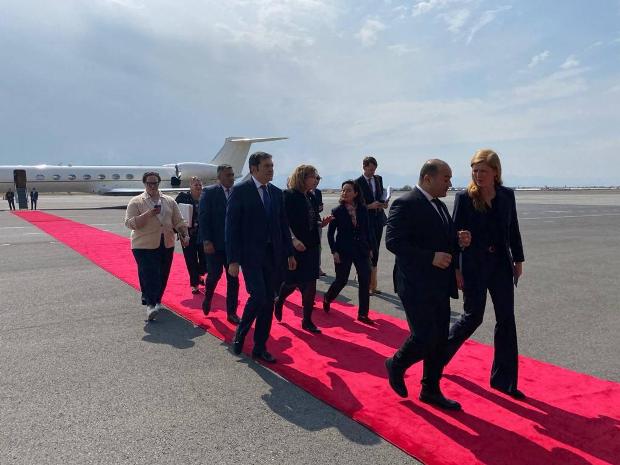
USAID Administrator Samantha Power paid respects to the victims of the Armenian Genocide at Tsitsrnakaberd Memorial following her arrival in Armenia on September 25, 2023, US Embassy in Armenia reports.

Samantha Power has arrived today in Armenia to affirm US support for Armenia’s sovereignty, independence, territorial integrity, and democracy and to address humanitarian needs stemming from the recent violence in Nagorno-Karabakh.

Administrator Power is joined by US Department of State Acting Assistant Secretary for Europe and Eurasian Affairs Yuri Kim.  


Categories
Audio Review - South Caucasus News

Ethnic Armenians Flee Nagorno-Karabakh As Yerevan Protests Grow


01000000-0aff-0242-e3a6-08dbbd9ed85e_cx2

Link has been copied to clipboard


Categories
Audio Review - South Caucasus News

106 dead bodies found in Karabakh since September 21


default.jpg

Search operations for servicemen and civilians who died and for those who are considered missing since the military operations have been ongoing in the entire territory of Artsakh (Nagorno-Karabakh) since September 21, reports the Artsakh State Service for Emergency Situations.

On September 21, a dead body of a civilian was found in Stepanakert, capital of Artsakh.

On September 22, a wounded serviceman was found and evacuated from Ghaybalishen village of Shushi region, and the body of two fallen servicemen in Charektar village.

On September 23, a total of 68 dead bodies were retrieved, four of which were civilians—two children and an elderly couple—from Sarnaghbyur village of Askeran region.

On the same day, two persons were found in Nakhijevanik and Sarushen villages; their lives are not in danger.

And on September 24, a total of 34 dead bodies were retrieved, and three civilians were found in Shosh village of Askeran region.

!

This text available in   Հայերեն

Print


Categories
Audio Review - South Caucasus News

Samantha Power, Yuri Kim arrive in Armenia


Samantha Power, Administrator of the United States Agency for International Development (USAID), arrived Monday in Armenia to affirm US. support for Armenia’s sovereignty, independence, territorial integrity, and democracy, and to address humanitarian needs stemming from the recent violence in Nagorno-Karabakh, Armenian News-NEWS.am has learned from the US embassy in Armenia.

Administrator Power is joined by Yuri Kim, US Department of State Acting Assistant Secretary for Europe and Eurasian Affairs. 

“The United States continues to support Armenia as it advances a dignified and durable peace in the region. The United States is deeply concerned about reports on the humanitarian conditions in Nagorno-Karabakh and calls for unimpeded access for international humanitarian organizations and commercial traffic,” the aforesaid embassy added.

Photo 1.jpg (42 KB)

!

This text available in   Հայերեն and Русский

Print


Categories
Audio Review - South Caucasus News

Azerbaijan has reclaimed Nagorno-Karabakh. What does that mean for the tens of thousands living there?


The same day that Azerbaijan celebrated the surrender of separatist Armenian fighters in Nagorno-Karabakh, many in the breakaway region’s capital spent the evening throwing stacks of paper onto a fire.

“One of the main things that people were doing in Stepanakert was burning all the possible documentation that could become evidence for the Azerbaijani authorities that they personally were part of the de facto government,” Olesya Vartanyan, Crisis Group’s senior analyst for the South Caucasus, told CNN.

“They believe that this could lead to their persecution,” she said.

The ceasefire may have ended the latest brief but bloody conflict fought for control of the region, but there are fears a fresh humanitarian disaster is just beginning. Azerbaijan has said it plans to “reintegrate” Nagorno-Karabakh, but how this happens without a mass exodus of the region’s more than 120,000 ethnic Armenians, or without violence being committed against those who stay and attempt to resist Azerbaijani rule, is unclear.

Azerbaijan said it had regained full control of Nagorno-Karabakh, an ethnic-Armenian enclave within its borders, after launching a lightning 24-hour assault on Tuesday that killed at least 200 people and injured many hundreds more. Karabakh officials said their forces were outnumbered and had no choice but to surrender.

Whether this leads to a lasting peace is not yet clear. Nagorno-Karabakh is internationally considered part of Azerbaijan but for decades has been under the control of Armenian separatists. Armenia and Azerbaijan have already fought two wars over Nagorno-Karabakh since the collapse of the Soviet Union, and ceasefire agreements between them have proven brittle.

While this ceasefire may have saved Karabakh from the sort of bloodbath seen in previous wars, it has utterly upended the lives of ethnic Armenians in the region, who now face an uncertain future. Whereas the 2020 ceasefire called on both sides to lay down their weapons, Wednesday’s agreement was far more comprehensive. Nagorno-Karabakh’s presidential office said it had agreed to the “complete disarmament of its armed forces.”

But officials from Baku have demanded more, calling for “the dissolution of the puppet regime” in Nagorno-Karabakh, which has for decades been ruled by a de facto government not recognized by Azerbaijan or any other country, including Armenia.

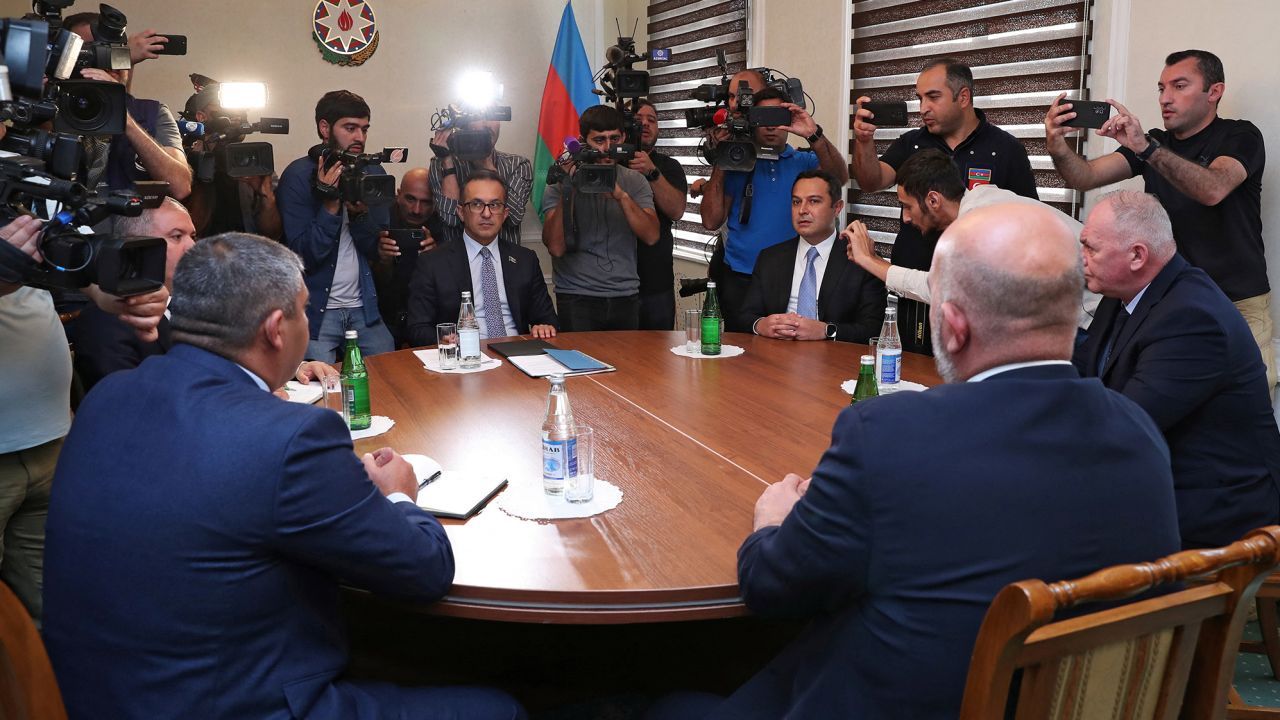
Azerbaijan’s President Ilham Aliyev has long been explicit about the choice that confronts Karabakh officials. In a speech delivered in May, he told Karabakh Armenians they needed to “bend their necks” and accept full integration into Azerbaijan. Baku sent representatives to meet with Karabakh officials in the city of Yevlakh on Thursday, “to discuss reintegration issues.”

Few details were released about the meeting, ahead of which Aliyev said of the Karabakh Armenians that “all their rights will be guaranteed.” The Azeri delegation said the talks had been “held in a constructive and positive environment,” and had focused on the humanitarian situation, especially the need for fuel and food.

“Their requests were well received. The heating systems of kindergartens and schools, emergency medical aid and firefighting equipment, fuel and humanitarian aid will be supplied,” the delegation said, according to the national news agency AZA.

There are fears over what “reintegration” entails, however. Armenian Prime Minister Nikol Pashinyan and international experts have repeatedly warned of the risk of ethnic cleansing of Armenians in the enclave.

The United Nations secretary-general “remains deeply concerned about the impact of the escalation on the humanitarian situation,” UN senior political official Miroslav Jenca said in a speech at the UN Security Council on Thursday.

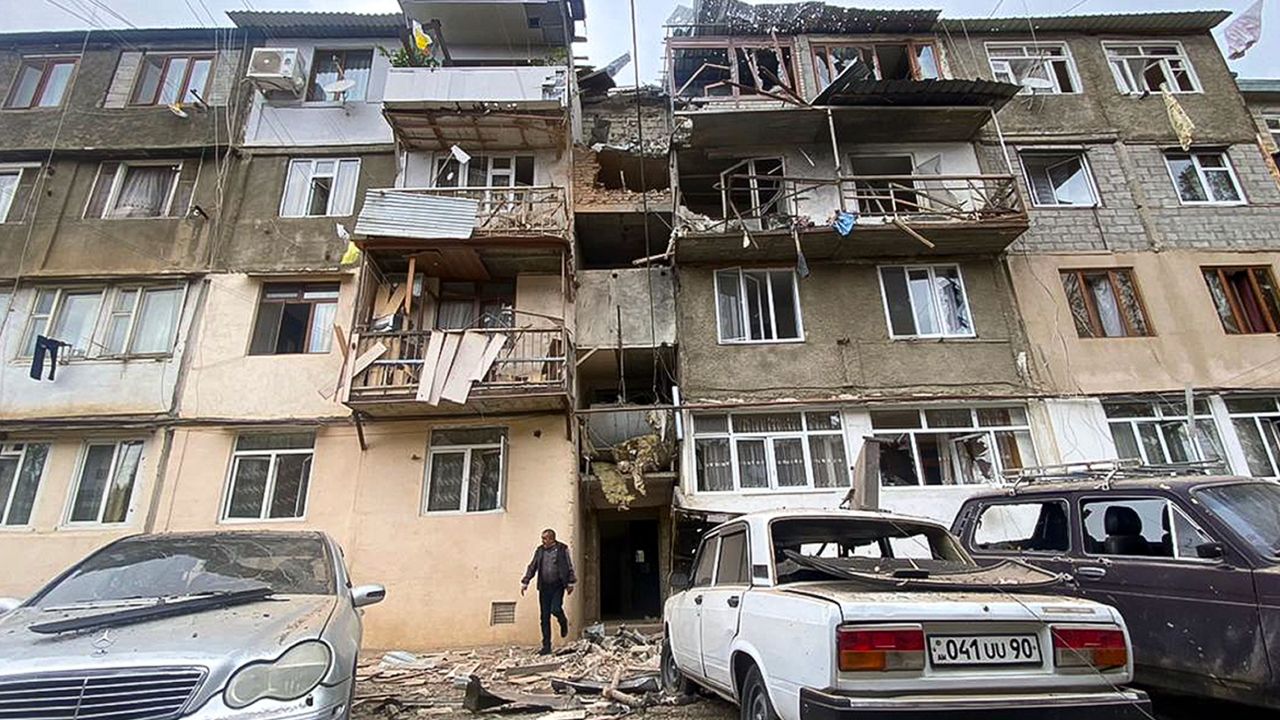
A damaged residential building after Azerbaijani shelling of Stepanakert, Nagorno-Karabakh, September 19, 2023.

Nagorno-Karabakh has been under blockade for nine months. In December 2022, Azerbaijan-backed activists established a military checkpoint along the Lachin corridor, the only route connecting Armenia to the region, preventing the import of food and prompting fears that residents were being left to starve.

The blockade has also prevented humanitarian organizations and foreign media from accessing the region, meaning that it is difficult to independently verify reports of further Azerbaijani attacks and the movement of the Armenian population.

Siranush Sargsyan, a journalist in Nagorno-Karabakh, told CNN she could hear “intensive” shelling from a suburb in Stepanakert Thursday, while the negotiations between Karabakh and Baku officials were ongoing. “Most of the population were in panic, running and frightened,” she said.

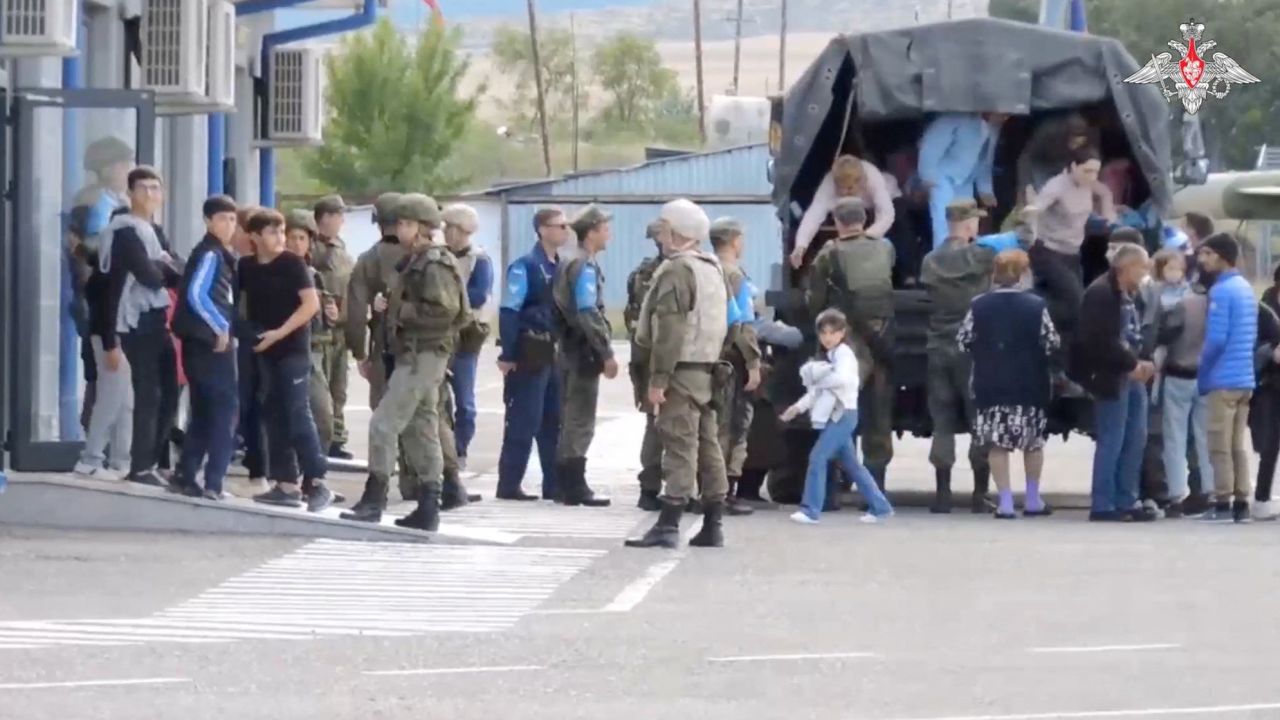
Following the truce, thousands of Karabakh residents reportedly fled to the airport, where Russian peacekeepers have a base.

Sargsyan also said “there are more than 20 villages under siege” in the more rural areas of Nagorno-Karabakh. “There is no electricity and phone connection doesn’t operate, so we don’t know if our relatives are safe.”

Those trying to evacuate face a host of problems, from a lack of fuel to the blockade Lachin corridor.

Olesya Vartanyan said the movement of Azerbaijani troops into these areas displaced thousands. “These people, they don’t have a place to live. Many of them are in the streets,” she said.

While many Armenians, fearing further escalation, have already made up their minds to leave, Vartanyan said it is unclear who will organize routes out of the country, if the Lachin blockade is finally lifted. “Will it be Russian peacekeepers, the ICRC, or will it be Azerbaijani authorities?” she said.

“Then, does it mean people will have to go through filtration camps? And then will people get detained – for example, the local men who took part in the fighting in the past, or those who were part of the local de facto authorities?” she asked. “It’s a mess.”

It is also unclear where Karabakh Armenians will travel to, if evacuations are able to begin.

“The Government of Armenia doesn’t seek the displacement of the Armenians of Nagorno-Karabakh and believes that the rights of Armenians of Nagorno-Karabakh to live safely and in dignity in their homes must be guaranteed,” Pashinyan’s office told state media Armenpress Thursday. But, if this is “impossible, the necessary decisions will be taken,” the statement added, without adding further details.

Farid Shafiyev, chair of the Center of Analysis of International Relations in Baku, told CNN that the choice confronting Armenians who chose to stay was clear.

“Those who don’t want to accept Azerbaijani jurisdiction, they have to leave. Those who would like to stay and get the passports, they are welcome to stay,” said Shafiyev, whose center was involved in Baku’s plans for “reintegration.”

Asked whether she would also attempt to evacuate, Sargsyan said she wanted to stay in Stepanakert as long as possible. “But if they attack again I don’t know what we will do,” she said. “What I know is I can’t trust them, their fake promises.”

Beyond the immediate attempt to provide shelter and other aid to the thousands of Armenians attempting to flee Nagorno-Karabakh, there is the question of how Baku intends to dissolve existing institutions in the region and erect its own.

Azerbaijani officials met with ethnic Armenian representatives from Nagorno-Karabakh in Yevlakh, Azerbaijan, September 21, 2023.

“This is an entity that has been self-governing as a de facto state. Prior to that it was part of Soviet Azerbaijan. It has a very long experience and practice of autonomy,” Anna Ohanyan, a senior scholar in the Russia and Eurasia program at the Carnegie Endowment for International Peace, told CNN.

Ohanyan warned that attempting to tear down existing institutions, which Baku has claimed it intends to, would be “an attack on the capacities for genuine peace-building down the road. If Azerbaijan was genuine about integrating, there would be some integration of these institutions.”

More gravely, Ohanyan warned there is “no question” that Azerbaijan would use force, if Armenians in the enclave refused to accept Azerbaijani citizenship.

“If the Armenian community will not leave, but also will not take up Azerbaijani passports, I think that basically would be suicidal,” Ohanyan told CNN.

The best case scenario, according to Ohanyan, would be “a Potemkin village… to continue to gaslight the West,” referring to fake settlements once used to impress the Russian empress Catherine the Great.

“But in the long term, I think there will be a systematic push, continued demographic engineering to push Armenian communities outside the region.”

Previous reporting from CNN’s Tim Lister, Gianluca Mezzofiore, Anna Chernova, Nick Paton Walsh, Katherina Krebs, Mariya Knight, Chris Liakos, Maya Szaniecki, Radina Gigova and Alex Hardie.


Categories
Audio Review - South Caucasus News

Libya Says Derna Mayor, Other Officials Detained After Flood


The mayor of Libya’s eastern city of Derna was detained along with other officials on suspicion of mismanagement and negligence over the collapse of dams that flooded the city two weeks ago, Libya’s attorney general’s office said on Monday.

The attorney general’s office, based in the capital Tripoli, said it had issued orders to detain eight local officials over the collapse of dams in a storm, which unleashed the torrent that swept neighborhoods into the sea, killing thousands.

Those detained included the mayor and an official in charge of water resources, it said, without identifying them.

Angry residents have blamed the authorities for the collapse of the dams, which had been built to hold back the flow into the seasonal riverbed running through the city.

A 2007 contract to repair the dams was never completed amid civil war that began with the NATO-backed uprising that toppled Muammar Gaddafi in 2011. Derna was controlled until 2019 by fighters from a series of groups including Islamic State.

Demonstrators torched the home of mayor Abdulmenam al-Ghaithi last week, and the administration in the east of the country said he was suspended and the entire city council was sacked.

Thousands of people are confirmed dead from the floods and thousands more are still missing, with whole buildings washed out to sea. International rescue teams continue efforts to recover bodies from under the rubble and in the city’s port, with hopes of finding survivors dwindling.

The flood and rescue effort have also exposed friction between the central government and a rival administration that controls the east of the country and does not recognize the authorities in Tripoli.


Categories
Audio Review - South Caucasus News

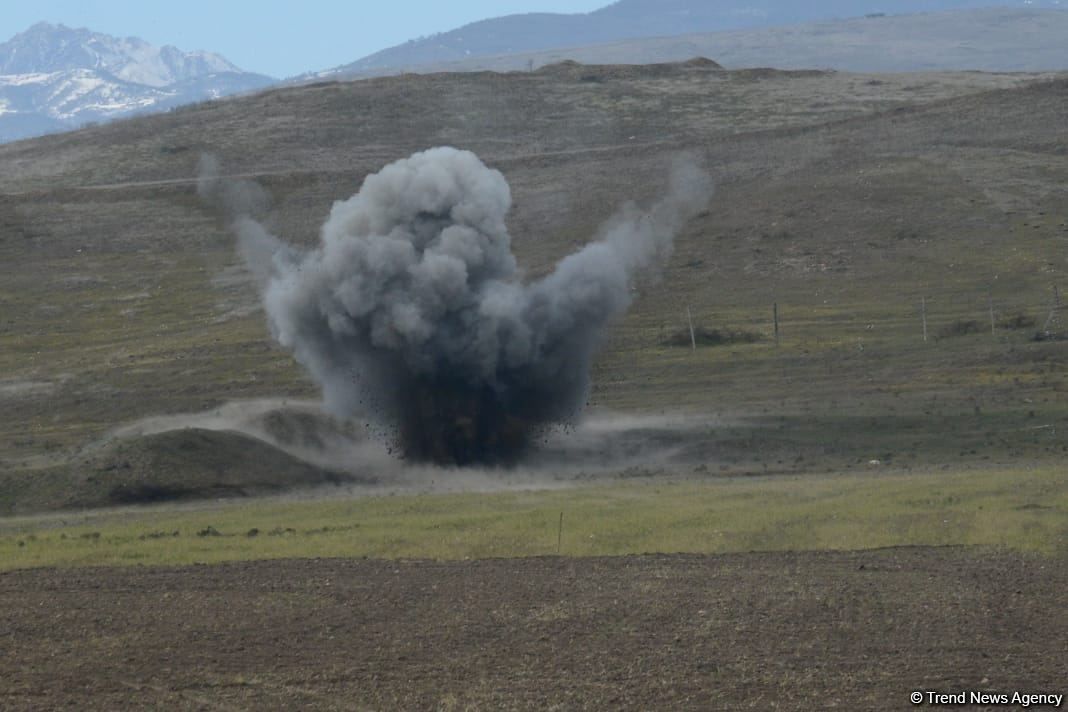
As result of landmine explosion 2 servicemen martyred, 1 injured


trend_mina_blast_260121_2.jpg

On September 24, at 17:35, a KamAZ-banded military vehicle
belonging to the Azerbaijan Army hit an anti-tank landmine,
Azernews reports, the press service of the Defense
Ministry.

Defense Ministry said that as a result of the explosion the
military servicemen of the Azerbaijan Army Akram Shadmanov Yunis
oghlu and Tural Seyidov Islam oghlu were martyred.

The third serviceman Elvin Aliyev Taleh oghlu was injured with
various degrees of bodily injuries. After providing first aid to
Azerbaijan soldier, he was immediately evacuated to a nearby
military medical facility. His condition is stable, there is no
threat to his life.

Follow us on Twitter @AzerNewsAz


Categories
Audio Review - South Caucasus News

USAID Administrator Samantha Power arrives in Armenia


USAID Administrator Samantha Power has arrived today in Armenia to affirm U.S. support for Armenia’s sovereignty, independence, territorial integrity, and democracy and to address humanitarian needs stemming from the recent violence in Nagorno-Karabakh. Administrator Power is joined by U.S. Department of State Acting Assistant Secretary for Europe and Eurasian Affairs Yuri Kim.  

The United States continues to support Armenia as it advances a dignified and durable peace in the region. 

The United States is deeply concerned about reports on the humanitarian conditions in Nagorno-Karabakh and calls for unimpeded access for international humanitarian organizations and commercial traffic.