
Day: March 6, 2026
EU High Representative/Vice President Kaja Kallas and Enlargement Commissioner Marta Kos said Georgia’s newly adopted legislation on foreign funding and political activity establishes a “system of state control over political activity in the country” and is part of the authorities’ “systematic” effort to restrict “democratic and civic space.”
The Georgian Dream-led disputed parliament has adopted in the final hearing a restrictive package on March 4 that imposes additional curbs on receiving foreign funding, criminalizes “external lobbying,” restricts political activities, imposes limits on businesses, and penalizes “systematic acts” directed “at establishing the perception” of the government’s illegitimacy.
“The adoption of the legislative package on foreign funding and political activity by the Georgian Parliament on 4 March is part of a systematic effort of the Georgian authorities to restrict the country’s democratic and civic space,” the two EU officials said in a March 6 joint statement.
“The new legislation establishes an extensive system of state control over political activity in the country. It introduces potential criminal liability for individuals or entities receiving support from foreign sources. Its vague provisions create profound legal uncertainty and major risks of arbitrary and selective enforcement,” the statement said.
Kallas and Kos said the adoption of the changes shows that Georgian authorities “further disregard their international human rights obligations,” their commitments under the EU-Georgia Association Agreement, and “move further away from the objective of EU membership enshrined in the Constitution of Georgia.”
The statement also referred to what it described as “the unjust detention of politicians, journalists and activists,” calling for their immediate release.
“Georgian authorities’ actions have consequences,” the statement warned, adding that “in response to Georgia’s deliberate and persisting violation of the commitments in key areas of democracy and fundamental rights under its visa-free regime,” the EU has suspended visa-free travel for Georgian holders of diplomatic, service, or official passports under the Visa Suspension Mechanism.
The officials recalled “the depth and substance of the cooperation” between the EU and Georgia, noting that the bloc, along with its member states, “have consistently shown their commitment to Georgia’s prosperity and stability, offering reliable support during critical moments, including through its monitoring mission EUMM [European Union Monitoring Mission in Georgia] since 2008.”
The statement also highlighted EU assistance during times of “economic crisis, providing financial support,” and noted that following “Russian restrictions affecting Georgian exports, the EU expanded trade opportunities for Georgian producers.”
It added that, unlike holders of diplomatic passports, Georgian citizens can still travel to the EU visa-free. “Young people from Georgia are welcomed in the EU through hundreds of scholarships,” the statement said.
Reaffirming that EU support for Georgia’s security, territorial integrity, and sovereignty within its internationally recognized borders is “unwavering,” the statement recalled that the bloc granted Georgia EU candidate status in 2023 and remains ready to support “the Georgian people on their European path.”
“The Georgian authorities put this longstanding partnership at very serious risk and are regrettably moving Georgia further away from the EU path, a goal enjoying the support of the vast majority of Georgian people,” the statement concluded.
“At this point in time, we note with deep regret that Georgia is a candidate country in name only.”
Also Read:
Categories
Иран нанес удар возмездия
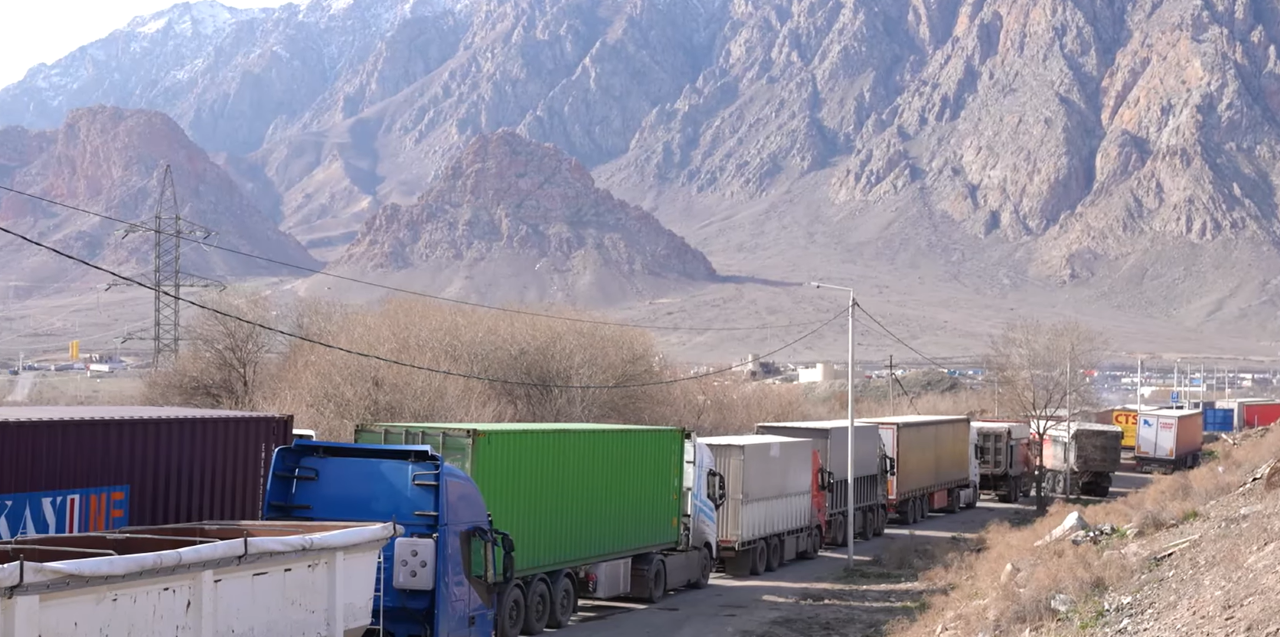
Armenia Iran trade decline
“There has been some decline in cargo transport volumes in recent days, but the decrease is not very significant,” the State Revenue Committee of Armenia said about trade turnover with Iran.
Experts at the committee say the ongoing military actions in Iran make the decline “natural and predictable”. They believe cargo transport volumes will decrease.
“Because of the situation in Iran, transport companies do not want to use Iranian territory as a transit route. They prefer to move goods imported from China and from countries of the Middle East through the territory of Georgia,” the committee said.
Officials warn that cargo transport volumes could decline further. In response, Armenia’s prime minister Nikol Pashinyan assured journalists that Armenia will not face shortages of goods imported from Iran.
He said the Armenian authorities had already taken steps to mitigate and minimise risks after tensions around Iran escalated.
What is known at the time of publication, as well as an economist’s commentary.
- Iran strikes airport in Azerbaijan’s Nakhichevan exclave
- Opinion: ‘There are no signals that Iran plans to sell weapons to Armenia right now’
- ‘No rally banned in Armenia since 2018’ — Pashinyan responds to Iranian envoy
Communication disruptions reported in Iran
Journalists asked the State Revenue Committee of Armenia whether reports were accurate that the border checkpoint on the Iranian side had closed for citizens but remained open for truck traffic.
Officials said they only had information about queues that appear periodically. They explained that communication disruptions in Iran cause these delays.
“Queues have also formed at the Agarak border checkpoint on the Armenian side. At the moment, 180–200 trucks are waiting in line.”
Staff at the State Revenue Committee say communication outages force officials to work with paper versions of documents. This process takes more time.
“To prevent congestion, authorities may introduce certain restrictions for citizens in order to ensure normal movement of trucks.”
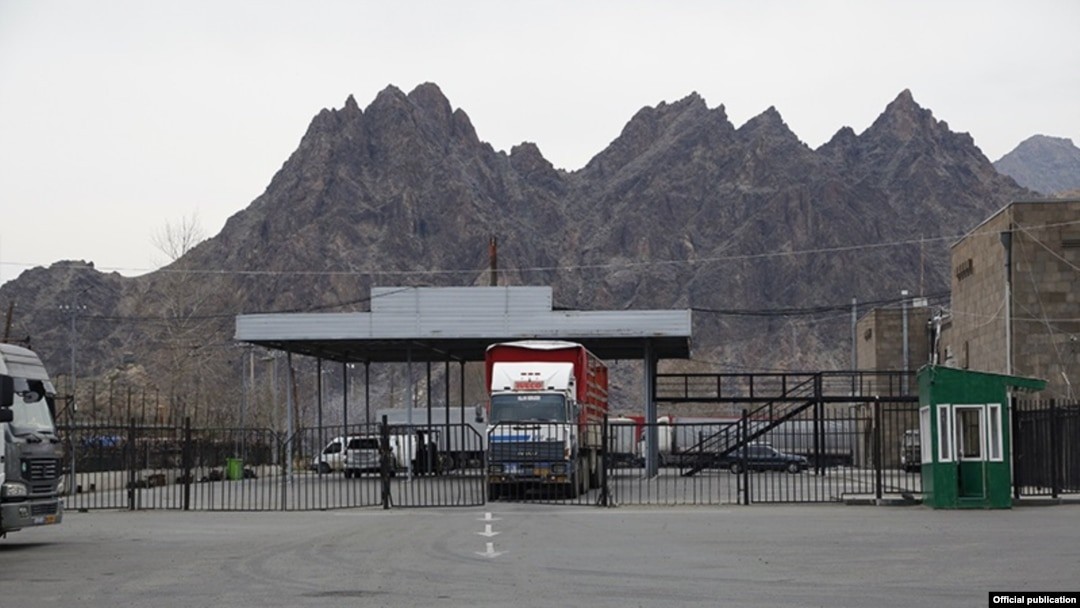
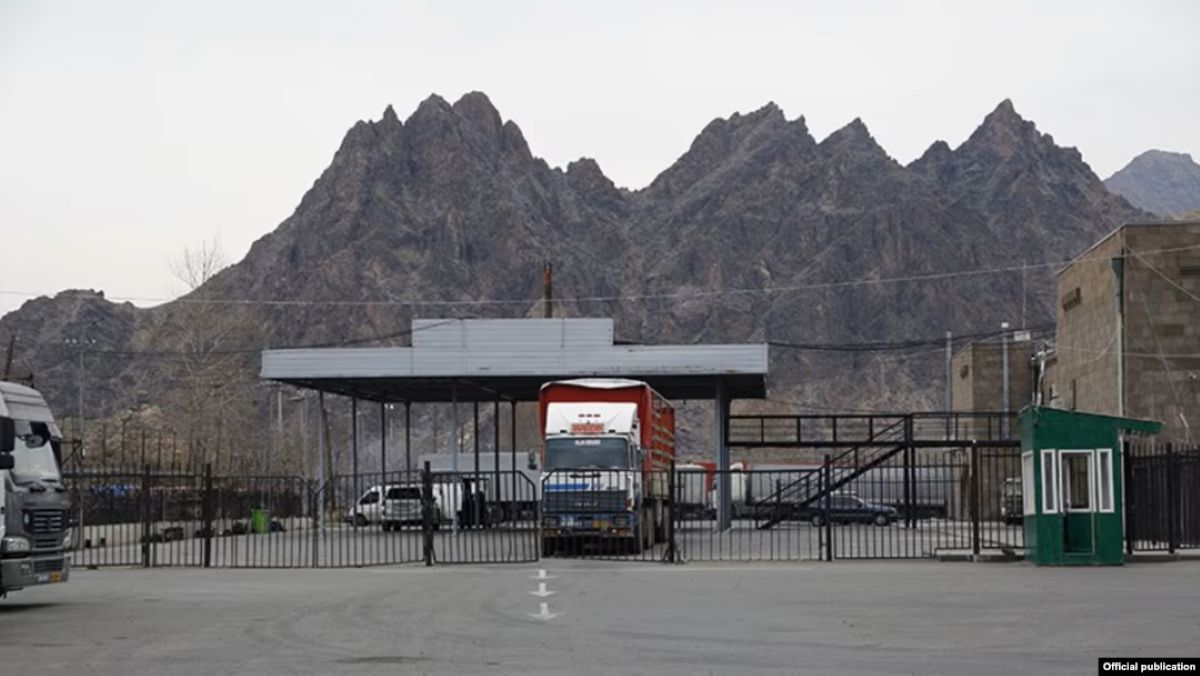
Operation of the customs checkpoint on the Armenia–Iran border
On 4 March, the State Revenue Committee of Armenia said cargo transport volumes between Armenia and Iran had not changed significantly.
“The Agarak border checkpoint operates as usual. It handles truck traffic from Armenia to Iran and from Iran to Armenia. The checkpoint serves an average of 400–450 trucks per day.”
After the start of military actions by the United States and Israel in Iran, officials reported that the Armenia–Iran border had not closed. However, on 2 March the Iranian ambassador to Armenia said during a press conference that authorities had briefly closed it.
“Two Iranian borders closed for 24 hours because of problems with systems operating at the border. One of them was the Iran–Armenia border. The problem was resolved at 9:30 in the morning, and now traffic moves freely in both directions,” said Khalil Shirgolami.
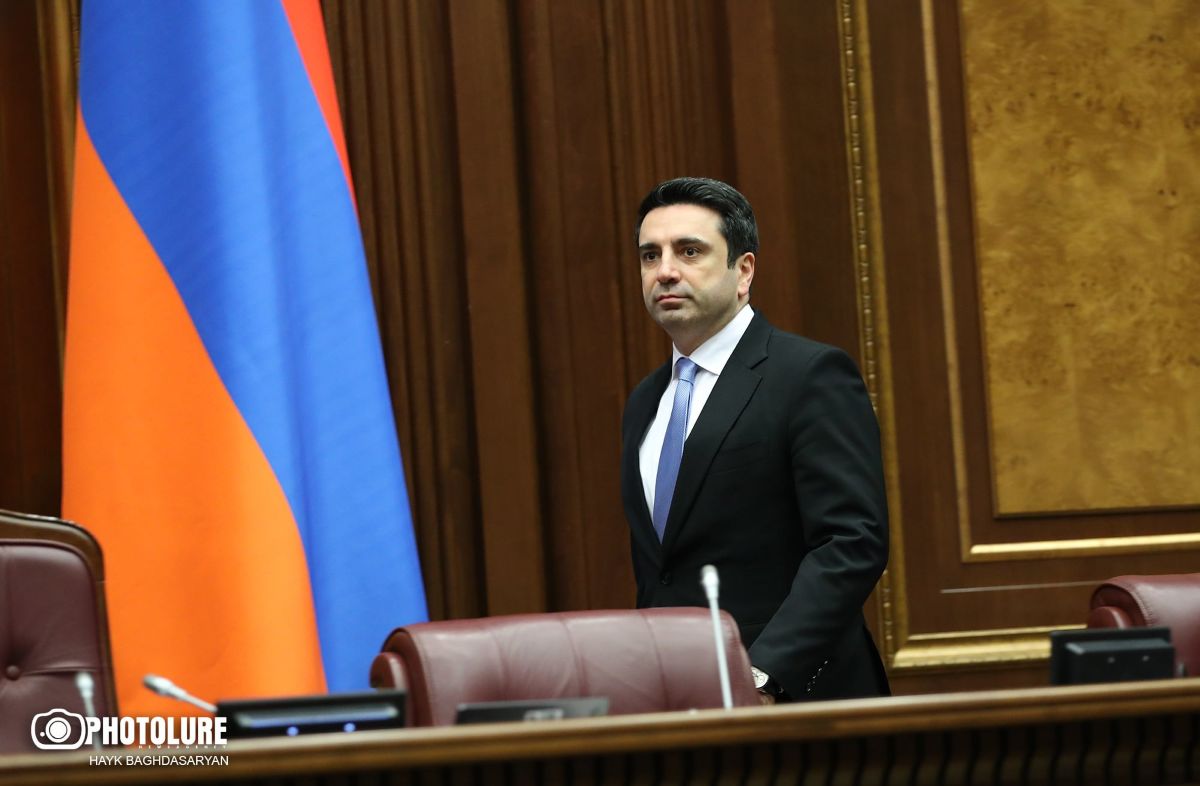
Commentary
Economist Suren Parsyan commented on the situation:
“Iran is our strategic partner not only in terms of importing or exporting certain goods. For Armenia, Iran is primarily an alternative route and a connection to the outside world.
We do not have strong dependence on Iran when it comes to food supplies. However, depending on the season, we import various fruits and vegetables. In the spring and winter months Armenia either does not produce these agricultural products or sells them at very high prices.
If the blockade and the war continue for a long time, these products could become more expensive here.
We import cream, powdered milk and even butter from Iran. Armenia’s milk production remains unstable. The country produces a lot of milk in summer but very little in winter. At the same time, the population still needs dairy products, so we often solve this problem through imports from Iran. If supplies of these products remain limited for a long time, prices for dairy products could rise.
Armenia should try to find alternative import routes from Georgia, Turkey, Russia and other directions. This could partly soften price increases.”
📢 FRЕЅH NЕWS: РRЕЅАLЕ НАЅ NОW LАUNСНЕD 🚀
📌 Моrx.com/i/communities/…UUc
👥 Invited Users: @StrongestSoulz @Hush21302423006 @SouthCaucasus
— 𝗫 𝗡𝗼𝘁𝗶𝗳𝗶𝗰𝗮𝘁𝗶𝗼𝗻 (@Cerv325) Mar 6, 2026
The Communications Commission, Georgia’s media regulator, signaled plans for more proactive enforcement of restrictive broadcasting laws in a statement criticizing recent U.K. sanctions against two pro-government television channels, Imedi TV and POSTV, imposed over allegations of spreading “Russian disinformation.”
ComCom, chaired by former Georgian Dream MP Goga Gulordava since January, is responsible for enforcing the Law on Broadcasting, including the April 2025 amendments that foresee stricter content regulation, which the ruling party says are modeled on a “British” system.
“The decision adopted by the United Kingdom against two Georgian television companies, one of which is the highest-rated broadcaster in Georgia, is directed both toward restricting fair competition among mass media outlets and toward hindering the professional activities of journalists, which may pose a threat to media pluralism and freedom of speech in the country,” the commission said in its March 6 statement.
The regulator argued that restrictions on media activity must meet strict legal standards.
“Restrictions on the freedom of mass media are permissible only under a high standard of proof, on exceptional grounds, and through emergency legal procedures,” the statement said, adding that “no complaint has been submitted to the Commission regarding the issues that formed the basis for the above-mentioned decisions.”
The regulator noted that the Law on Broadcasting and the Commission-approved Broadcasters’ Code of Conduct govern content regulation in broadcasting and are based on U.K legislation, while aligning with international media freedom standards. ComCom, however, noted that it has so far not initiated proceedings regarding media content regulation and has limited itself to responding to complaints.
Citing “the abovementioned” and the analysis of “challenges in the media environment,” the regulator said it now deems it necessary that starting next week, “the Commission invoke in the practice the norms established by the Law on Broadcasting and the Broadcasters’ Code of Conduct.” This, ComCom said, will ensure “that the objectivity of broadcasters is assessed on due procedure and a high legal standard.”
The regulator said the decision “should have been adopted in any case in order to establish proper and balanced media practices,” but “the current situation has made the issue and the need to resolve it even more relevant.”
The sanctions for content violations can range from verbal warnings to eventual revocation of the broadcasting license. The regulator has already found violations under the new laws in two opposition-leaning channels using terminology questioning the legitimacy of the Georgian Dream government, but has not fined them.
Imedi and POSTV have found themselves in chaos and uncertainty following UK sanctions, with Georgian Dream authorities summoning the UK ambassador over the decision and vowing to take “full responsibility” for defending the “press freedom” of the journalists.
ComCom statement comes as Georgian media outlets not aligned with the ruling party, both broadcasters and online platforms, struggle for survival under a series of restrictive laws severely limiting their funding options.
Also Read: