
Categories
South Caucasus News

Armenia and Poland to continue military-technical cooperation as Pashinyan visits Warsaw


Nikol Pashinyan’s visit to Poland

Nikol Pashinyan’s visit to Poland

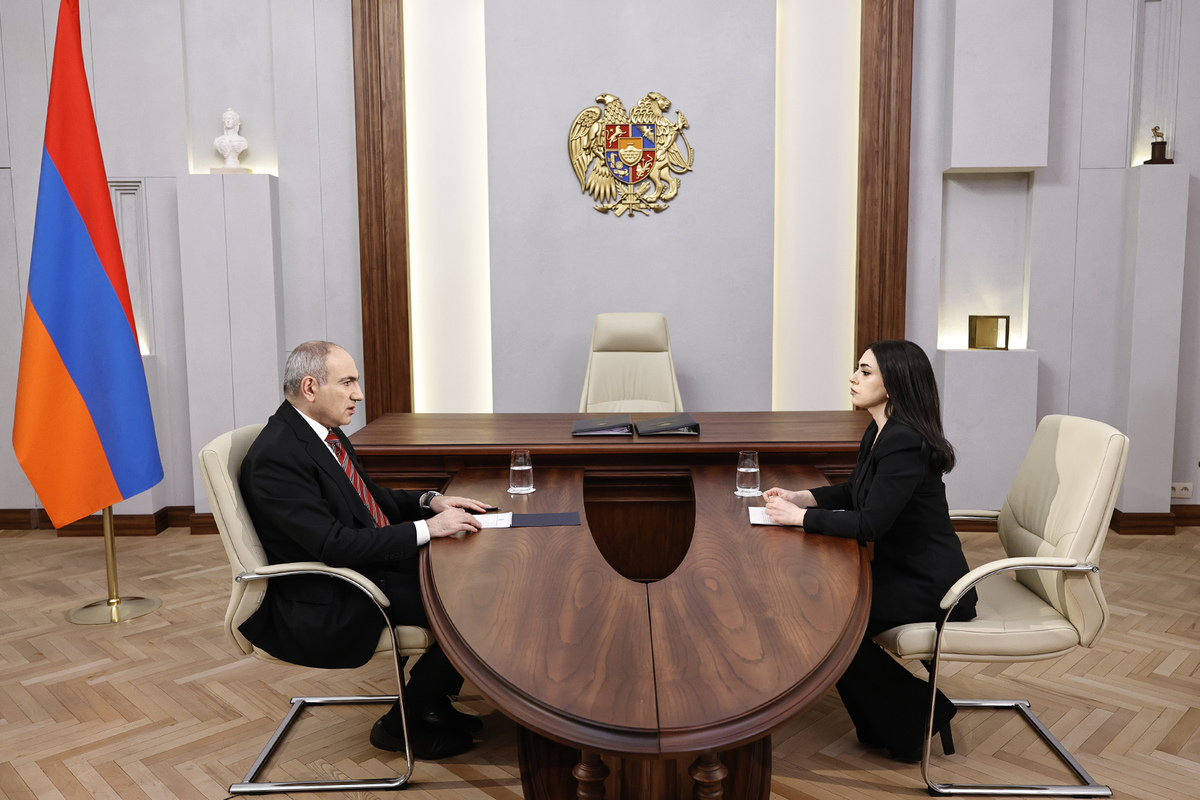
Armenian Prime Minister Nikol Pashinyan held talks with his Polish counterpart Donald Tusk during an official visit to Poland. After the meeting, the two leaders addressed the press. Both said the visit would give new momentum to relations between Yerevan and Warsaw.

Poland’s prime minister praised Pashinyan’s personal efforts to establish peace in the region. He described them as a rare demonstration of political will and vision “in today’s difficult conditions, amid Russia’s aggression against Ukraine”.

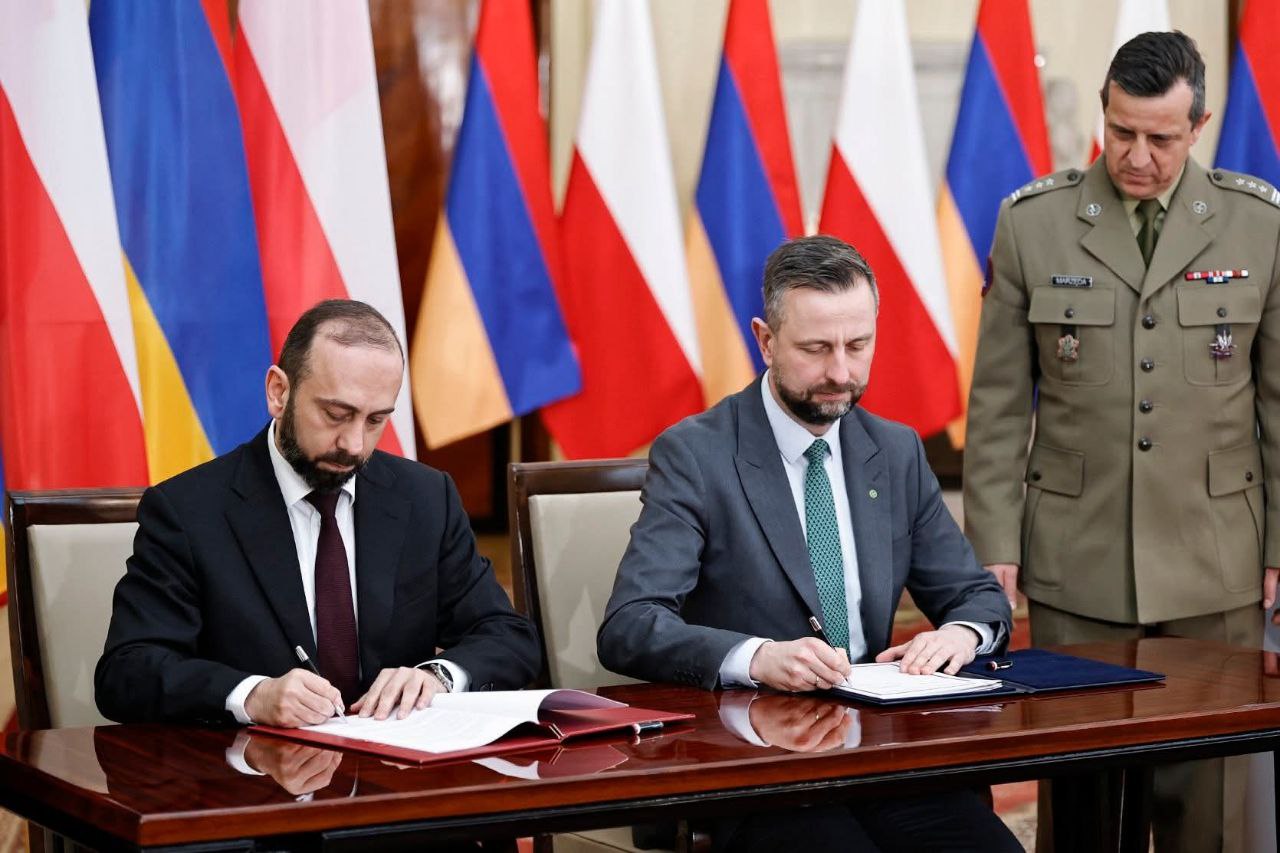
Armenia and Poland signed a military-technical cooperation agreement during the visit. Armenian Foreign Minister Ararat Mirzoyan and Poland’s Minister of National Defence Władysław Kosiniak-Kamysz signed the document.

“We believe cooperation in the field of security will benefit not only Armenia, but the entire region,” Donald Tusk said.

According to him, Yerevan and Warsaw clearly understand what they must do “to stand together and remain stable, and to ensure the security of their country and people.”


Cooperation to continue and expand

Armenia’s prime minister’s office said the leaders discussed:

  • issues related to the implementation of joint programmes,
  • the peace process between Armenia and Azerbaijan,
  • the implementation of the “Trump Route” initiative (a transit road through Armenian territory),
  • and matters concerning the further development of cooperation between Armenia and the European Union.

Donald Tusk stressed Poland’s interest, as a member state of the European Union, in strengthening and deepening cooperation with Armenia.

The Armenian prime minister highlighted the importance of expanding economic cooperation with Poland. Pashinyan thanked the Polish leader for supporting Armenia’s European integration process.
‘It is commendable that Armenia has chosen the European path’

Polish Prime Minister Donald Tusk said it was symbolic that his meeting with Pashinyan took place on 26 February. Armenia and Poland established diplomatic relations on that date in 1992.

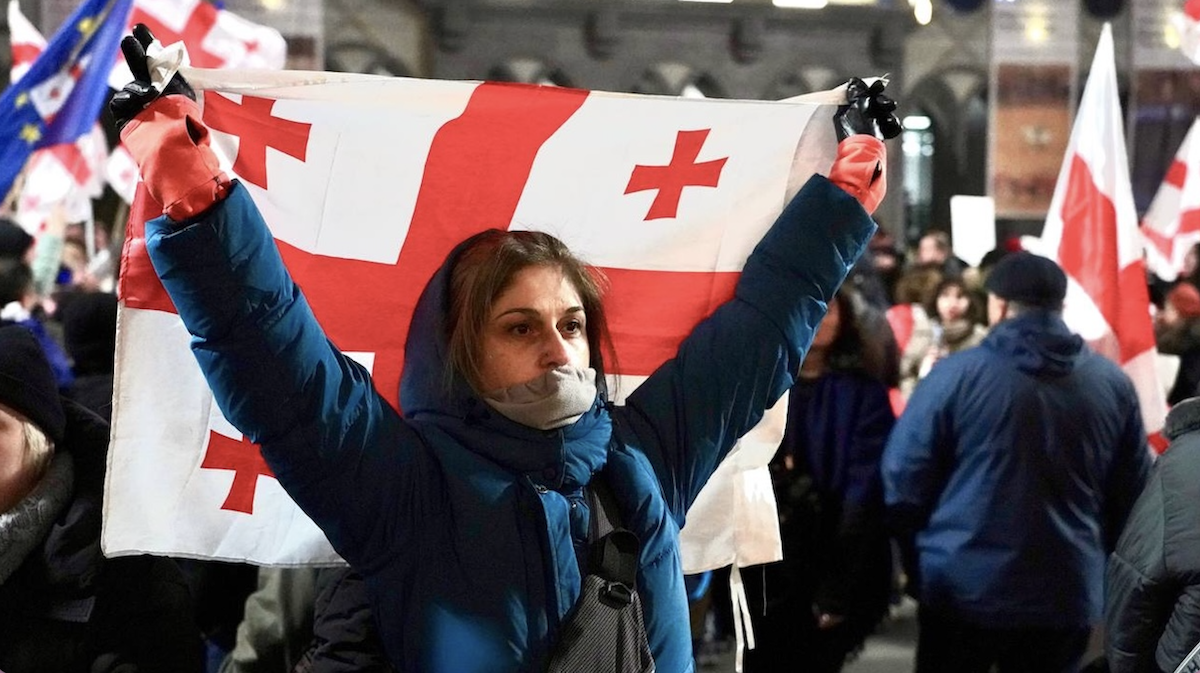
Tusk welcomed the Armenian parliament’s decision to adopt a law launching the process towards European Union membership, saying the country had chosen a European path. He stressed that the EU tends to accept countries that “share the same values”.

“We remain very cautious, but clearly open to EU enlargement — for all countries that choose democracy, independence and peace.”
“Armenia’s task is to meet EU standards”

Armenian Prime Minister Nikol Pashinyan said Poland’s support gives Armenia greater confidence to continue democratic reforms. He described the country’s main task as “becoming a state that meets European standards”.

Pashinyan acknowledged that democratic reforms involve a complex process and bring “challenges and doubts”.

“Some try to create the impression that being a democratic country means being weak and unable to guarantee and defend your own security. Poland offers a vivid example of how democracy can coexist with a strong security system and a strong economy.”

He praised Poland’s support for democratic reforms in Armenia and for efforts to establish peace in the region. Pashinyan said Europe, including Poland, has served as a model for him in this process.

“In the peace process, it was the example of Europe’s difficult and brutal history that convinced us that peace truly matters most.”
New agreement to replace previous cooperation document

Armenia’s government approved the signing of a military-technical cooperation agreement with Poland in advance. Ministers made the decision during a cabinet meeting held last week. After the signing, parliament will now review the document and ratify it.

The new agreement will replace a defence cooperation document that parliament ratified in 2005.

“The new agreement aims to establish the main principles and procedures for cooperation in the military-technical sphere, based on equality, mutual respect and mutual benefit,” the explanatory note says.
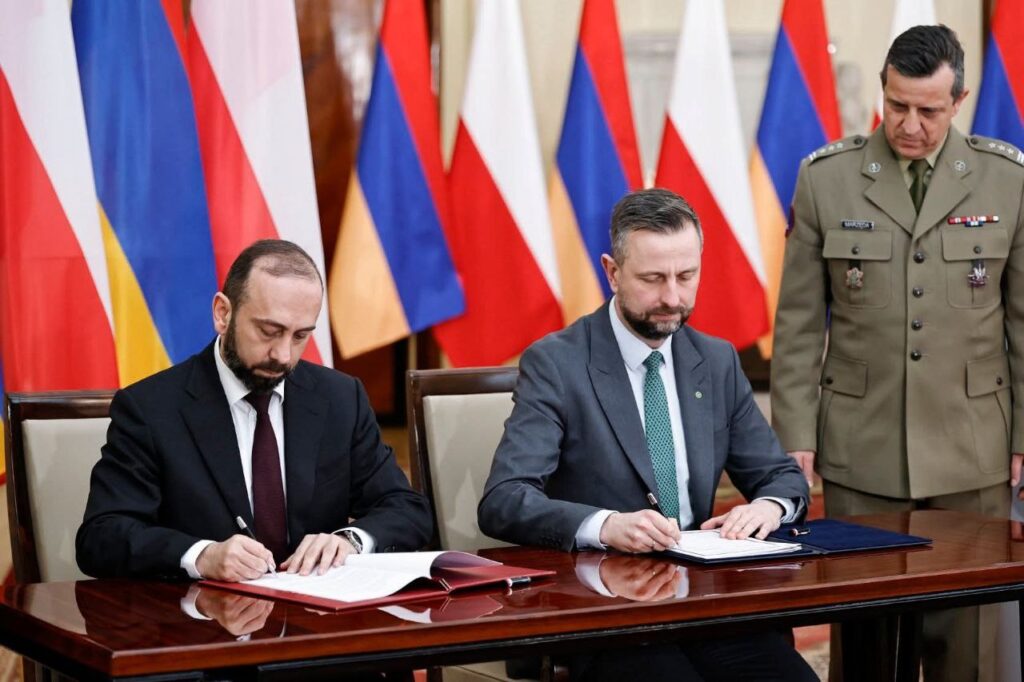
Armenian Foreign Minister Ararat Mirzoyan and Poland’s Minister of National Defence Władysław Kosiniak-Kamysz signed the agreement.

The explanatory note also states that Armenia attaches great importance to deepening relations with Poland, based on mutual trust, in order to achieve “tangible results” in the defence sphere. No further details are available at this stage.

Categories
South Caucasus News

Американские «Шахеды» готовы к удару по Ирану


Categories
South Caucasus News

Pakistan declares open war with Taliban as ceasefire collapses


Pakistan launched strikes on the Afghan cities of Kabul and Kandahar in the early hours of Friday, according to Pakistani government officials, AzerNEWS reports.

Categories
South Caucasus News

Macron to update French thinking on the potential use of French nuclear warheads


Categories
South Caucasus News

First Lady Mehriban Aliyeva meets with First Lady of Ethiopia


On February 27, the First Lady of Azerbaijan, Mehriban Aliyeva, met with the First Lady of Ethiopia, Zinash Tayachew, Azernews reports.

Categories
South Caucasus News

Azerbaijan to showcase model urban development experience on global stage


The 13th session of the World Urban Forum (WUF13) will serve as the next strategic platform for Azerbaijan to present its urban development experience to the international community.

Categories
South Caucasus News

After UK Sanctions, Imedi TV Plans to Launch Its Own Bank


Imedi TV said it will launch its own “Imedi Bank” within “a few months,” with financial backing from the broadcaster’s “loyal friends and sponsors,” days after being sanctioned by the UK for spreading “Russian disinformation.”

Sanctioned on February 24 along with POSTV, another major pro-government channel, Imedi said on February 27 that it will have “no kind of problem, including financial,” amid wider discussions suggesting that British sanctions could severely impact the channels.

The broadcaster thanked companies and organizations that “expressed solidarity” and those that “stated Imedi will continue to have their financial support.”

The statement added that several banks, “despite possible difficulties,” have “expressed readiness” to provide banking services to the broadcaster.

Imedi said it is “fully aware of the potential risks for their business,” including reputational and financial, and added that it “certainly does not want to put any of them under pressure or trigger a hunt by forces that, with direct involvement, have attacked free media and freedom of speech for the second time since 2007.”

“Imedi TV is born for victory,” the statement added, saying it continues to work “with tripled energy” and will ensure salaries are paid, even raised, and other financial obligations are met “without any delays.”

“In addition, we inform the public that we, the new founders of the Imedi holding, with financial support from the broadcaster’s loyal friends and sponsors, will establish our own bank, called “Imedi Bank,” in the shortest possible time, within just a few months,” the statement concluded.

Calling the statement about launching its own bank “ridiculous,” economist and former president of the National Bank of Georgia, Roman Gotsiridze, said this cannot happen without a license from the National Bank. He added that the broadcaster could only create what he called a “bank of black money,” where “wealthy sponsors usually deposit cash.”

In a separate Facebook post, Gotsiridze added, “If anyone thinks of creating a microbank, which the law allows and would serve only Imedi in lari, this would be a direct involvement of the National Bank in circumventing sanctions, putting the country’s financial system at great risk.”

On February 25, National Bank President Natia Turnava said the activities of Georgia’s commercial banks are “subject to the Constitution of Georgia and national legislation,” and in case of conflict with another jurisdiction, banks “are obliged to act in accordance with the norms established by the [Georgian] Constitution and legislation.” 

Experts have suggested that the sanctioned channels may encounter serious banking problems, particularly with TBC and Bank of Georgia, Georgia’s two major commercial banks listed on the London Stock Exchange, adding that other banks may also refrain from cooperation due to indirect risks associated with international transactions. 

In parallel developments, after being down for several hours, Imedi TV said on February 26 that its websites were inaccessible due to “a technical problem caused by the sanctions,” but service has now been fully restored. Some social media users suggested the Imedi websites had relocated their server to Russia.

Meanwhile, Georgian Dream vows to take “full responsibility” for defending the sanctioned channels.

On February 27, UK Ambassador Gareth Ward was summoned to Georgia’s Foreign Ministry over the sanctions. The ministry said after the meeting with FM Maka Botchorishvili that the sanctions are “unfounded” and “a blatant attack on Georgian society.”

Also Read:


Categories
South Caucasus News

President Ilham Aliyev holds expanded meeting with Ethiopian PM


On February 27, the President of the Republic of Azerbaijan, Ilham Aliyev, held an expanded meeting with the Prime Minister of the Federal Democratic Republic of Ethiopia, Abiy Ahmed Ali, AzerNEWS reports.

Categories
South Caucasus News

bp appoints Nadir Imanov as new Vice President for AGT region


Nadir Imanov has been appointed Vice President for Finance for bp’s Azerbaijan, Georgia and Türkiye (AGT) region, effective April 1, 2026, AzerNEWS reports.

Categories
South Caucasus News

Жесткое позиция Киева: Украинцы не пойдут на уступки