
Day: February 16, 2026

The drill, dubbed the “Smart Control of the Strait of Hormuz,” involves the IRGC’s naval forces and is being conducted under the supervision, control and field monitoring of IRGC’s Chief Commander Mohammad Pakpour, News.Az reports, citing Reuters.
***
Among the main objectives of the drill are assessing the readiness of the IRGC Navy’s operational units, reviewing and practicing the IRGC’s security plans and scenarios of military counteractions in the face of potential security and military threats in the Strait of Hormuz, and intelligently exploiting Iran’s geopolitical advantages in the Persian Gulf and Sea of Oman, the statement said.
“The intelligence and operational exercises of the units involved in the drill center on the rapid, decisive, and comprehensive response of the IRGC’s operational forces to anti-security plots in the maritime arena,” it added.
The development comes amid simmering tensions between Iran and the United States, as well as a U.S. military buildup in the West Asia region, despite that delegations from Tehran and Washington are scheduled to hold a second round of indirect nuclear talks in Geneva on Tuesday.
The post Iran’s IRGC launches “combined, targeted” drill in Strait of Hormuz appeared first on azeritimes.com.

Hungarian Prime Minister Viktor Orban said the agreement, together with a sanctions-related exemption granted by the U.S. administration, would strengthen Hungary’s energy security and support its ability to provide competitively priced energy for households and industry, News.az reports, citing Telegraph.
***
He said Hungary maintains an open and transparent approach with its partners, including the United States, and that any concerns can be addressed through direct dialogue.
Rubio said the nuclear agreement followed discussions held during a November meeting between U.S. President Donald Trump and Orban at the White House. He also confirmed that Washington had suspended certain sanctions measures affecting Hungary, allowing further progress in bilateral energy cooperation.
The post Hungary, U.S. sign nuclear cooperation agreement appeared first on azeritimes.com.
Categories
Проблемы уличных торговцев

Duvall died “peacefully” at his home in Middleburg, Virginia on Sunday, according to a statement sent by his public relations agency on behalf of his wife, Luciana, News.Az reports, citing CNN.
***
Duvall memorably played the Corleone family consigliere, or key adviser, in Francis Ford Coppola’s “The Godfather,” earning his first of seven Academy Award nominations for the 1972 film before reprising the role two years later in “The Godfather Part II.”
Born in San Diego, California – his father was a career naval officer – Duvall played a wide variety of roles, from cowboys to military men.
He attended Principia College in Illinois and served in the army during the Korean War before moving to New York and studying drama under famed acting coach Sanford Meisner. During that period, he shared an apartment with Dustin Hoffman and hung out with Gene Hackman, another young actor who would go on to great success. Hackman died last year.
Duvall appeared in a number of plays before being cast in the film version of “To Kill a Mockingbird” in the small but pivotal of Arthur “Boo” Radley in 1962. (He later named one of his dogs “Boo.”)
An array of film roles followed, among them the bad guy opposite John Wayne in Wayne’s lone Oscar-winning performance, “True Grit”; the part of Major Frank Burns in the Robert Altman movie “M*A*S*H”; and the lead in “Star Wars” director George Lucas’ dystopian 1971 sci-fi directing debut, “THX 1138,” in which Duvall (and everyone else) sported shaved heads.
That came out the year before “The Godfather,” and his role as Corleone family attorney Tom Hagen propelled Duvall into another echelon. The actor worked constantly thereafter, playing a network executive in the satire “Network,” and migrating to television in the blockbuster TV miniseries “Lonesome Dove.”
Duvall won an Oscar for portraying a country singer in the 1983 movie “Tender Mercies,” in which he did his own singing.
He also earned Academy Award nominations for playing a marine at odds with his family in “The Great Santini,” and as Lt. Col. Kilgore in the Vietnam War epic “Apocalypse Now,” which reunited him with Coppola and featured him delivering the oft-quoted line, “I love the smell of napalm in the morning.”
Duvall noticeably skipped appearing in the long-delayed “The Godfather Part III” in 1990, due to a pay dispute with Coppola, telling Bob Costas that Al Pacino was going to be paid five times the amount he was offered, which was “totally unacceptable.”
Later, in an interview with Larry King, Duvall called his decision not to appear in the third “Godfather” movie “a matter of principle.”
Roles in other Westerns were also a part of his oeuvre, such as “Open Range” opposite Kevin Costner, and his Emmy-winning role in another miniseries, “Broken Trail.”
Duvall also became a filmmaker, writing, directing and costarring in the 1997 movie “The Apostle,” about a troubled preacher, and later directing the films “Assassination Tango” and “Wild Horses.” He was again nominated for an acting Oscar for his work in “The Apostle.”
He remained active well into the 2010s, earning his final Oscar nomination at 84 for “The Judge” in 2014, and appearing in such films as “Jack Reacher” and “Widows.”
Duvall also played a number of historical figures during his career, including Robert E. Lee (“Gods and Generals”), Joseph Stalin (in the HBO movie “Stalin”) and Nazi war criminal Adolf Eichmann (“The Man Who Captured Eichmann”).
Married four times, Duvall’s last marriage was to Argentinian actress-director Luciana Pedraza.
The post Oscar-winning actor Robert Duvall dies at 95 appeared first on azeritimes.com.
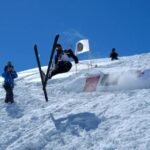
Hundreds of ski enthusiasts from across the country were seen climbing the rugged, snow-covered terrain in the mountainous region to enjoy a skiing competition on challenging slopes amid cold weather, supporting their favorite teams in the national race that concluded Sunday, News.az reports, citing CNN.
***
“I am very happy to attend the ski competition in Bamiyan. It is a suitable place for winter sports, and I feel proud to be here,” said Azim Arefi, a contestant from Kabul.
Describing skiing as a popular sport among youth in post-war Afghanistan, Arefi said the winter sport is gaining popularity. He called on relevant organizations to support skiing and other winter sports.
“I want the authorities to support this sport so it can flourish to a level where Afghan youth can attend international competitions. It is our hope that Afghanistan, particularly Bamiyan, can host international winter sports tournaments in the future,” the young athlete said.
Ignoring the chilly weather, hundreds of skiing fans encouraged the competitors with cheers on the snow-blanketed mountain at an altitude of about 2,500 to 3,000 meters. However, unlike in the past, the race was held without female contestants.
“I came from Wardak province to attend the ski competition. Teams from four provinces – Kabul, Ghazni, Wardak and the host Bamiyan – competed today,” Rahimullah Haidery told Xinhua from the snow-covered hilltop.
Haidery, who has been skiing for the past four years, lamented the shortage of facilities to properly continue the sport. “My dream is to compete in international ski competitions outside my country one day,” he said with determination.
Assadullah Batory, the chief executive of the Afghanistan Ski Federation, praised the participation of Afghan youth in the tournament. He said the eighth edition of the winter sports tournament, with the participation of hundreds of athletes and fans, formally opened Saturday amid hope and joy.
Aimed at supporting athletes and promoting winter sports, a total of 80 skiers from Kabul and Ghazni, Wardak and Bamiyan provinces competed.
Skiing is gaining popularity among youth in Afghanistan, Batory said, adding that the winners would be honored and the best would be chosen to compete in overseas competitions.
“International winter competitions were held in China last year and are scheduled for Saudi Arabia in 2028. Afghanistan has been invited, and we are getting ready to attend,” Batory said.
Batory also described sports and their promotion as necessary for a healthy society, noting, “The message of sport is to fight drug addiction, depression and illness to have a sound and healthy society.”
The post Afghan skiers hit slopes as winter sport gains ground appeared first on azeritimes.com.

It’s not yet three weeks since Benfica’s epic 4-2 win in the last game of the group stage which saw a 98th minute goal from goalkeeper Anatolly Trubin qualify Jose Mourinho’s side for the play-off, while condemning Real Madrid to play two extra games it could have done without in a packed season, News.az reports, citing BBC.
***
Real Madrid paid a heavy price for that defeat, with both Raul Asencio and Rodrygo shown red cards in the closing moments and both are suspended for Tuesday’s return to Lisbon.
Asencio’s suspension is a problem given that Dean Huijsen is struggling for form in central defense, as shown by the penalty he conceded in Saturday’s 4-1 win at home to Real Socieda. With David Alaba the only other available central defender, Arbeloa will have to choose between the Austrian or dropping Aurelien Tchouameni back from midfield.
Jude Bellingham is also out with his hamstring injury, but Kylian Mbappe should be available after sitting out against Real Sociedad due to a slight physical problem.
Trent Alexander-Arnold’s return at right back gives the team more creative options, with the former Liverpool defender’s ability to hit long passes, along with his effectiveness from set pieces.
Benfica coach Mourinho is of course well known to Real Madrid after his spell as coach and Mourinho has even been mooted as a possible replacement for Arbeloa if things down work out for the former B-team boss between now and the end of the season.
Mourinho knows Real Madrid’s strengths and weaknesses and had Arbeloa as one of his lieutenants during his years at the Bernabeu, so not just the tactical, but also the psychological battle between the two is likely to be points of interest in the two games over the coming week.
The post Real Madrid faces Benfica again in Champions League appeared first on azeritimes.com.