
Energy security, sovereignty and strategic trust are drawing President Ilham Aliyev and President Aleksandar Vucic closer than ever. The first meeting of the Strategic Partnership Council in Belgrade meant more than diplomatic warmth: it marked a deliberate move to firm up Azerbaijan–Serbia relations in long-term energy investment, political coordination and economic integration. From a planned 500-megawatt gas-fired power plant near Nish to expanded gas exports, renewable energy cooperation and food security agreements, both countries are positioning themselves as reliable partners in a volatile European landscape.
Day: February 15, 2026
U.S. President Donald Trump said the Board of Peace will announce this week that member states have pledged more than $5 billion toward humanitarian and reconstruction efforts in Gaza and committed thousands of personnel to an international stabilization force and local police in the territory, AzerNEWS reports.

Moscow’s troops had taken control of the settlements of Pokrovka and Minkivka. The claims have not been independently verified, News.Az reports, citing Reuters.
The reported drone interceptions highlight the continued intensity of aerial warfare in the conflict, with both Russia and Ukraine increasingly relying on drone strikes to target military infrastructure, logistics routes, and frontline positions.
The post Russia claims downing 345 drones, seizing two villages appeared first on azeritimes.com.
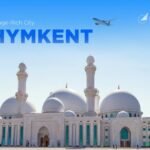
According to the airline, ticket sales for the new route are already open. The first flight on the Baku–Shymkent–Baku route is scheduled for June 16, News.Az reports, citing AZERTAC.
Under the initial summer schedule, flights will operate twice a week between June 16 and June 27, with departures from Baku on Tuesdays and Saturdays and return flights on the same days.
***
From June 30, the frequency will increase to three flights per week. Departures from Baku will be scheduled for Tuesdays, Thursdays, and Saturdays, while return flights from Shymkent will operate on Wednesdays, Fridays, and Sundays.
Shymkent will become the fourth destination in Kazakhstan served by AZAL as part of its expanding route network. In 2025 alone, the airline operated nearly 850 regular round-trip flights to Almaty, Astana, and Aktau.
Shymkent, Kazakhstan’s third-largest city by population, is known for its rich cultural heritage and modern urban environment. The city attracts visitors with its lively streets, green parks, and strong hospitality traditions.
Passengers can purchase tickets through AZAL’s official website, mobile application, ticket offices, and accredited travel agencies. The new route is expected to further strengthen business, tourism, and cultural ties between Azerbaijan and Kazakhstan.
The post AZAL launches new regular flights to Shymkent appeared first on azeritimes.com.

The new plug-in hybrid system, revealed in Australia, is expected to debut in global markets from late 2026 or early 2027. The company says the updated technology will deliver lower fuel consumption and higher power outputs compared to current offerings, News.Az reports, citing foreign media.
The headline figure is a “targeted” driving range of 2000km using a mix of petrol and electric propulsion — a significant jump from the 1200km range claimed for the most advanced Chery hybrids currently sold in Australia. If achieved in real-world conditions and introduced locally, such a vehicle would become the longest-range new car on sale in Australia, theoretically capable of travelling from Sydney to Melbourne and back without refuelling or recharging.
***
Chery has not yet confirmed which specific models will be the first to receive the system. However, the company has indicated that SUVs will lead the rollout and that the technology could be integrated into existing nameplates during future model updates and facelifts.
Peter Matkin, Chery’s executive director of engineering for international programs, said the powertrain upgrade would form part of regular model updates. While models such as the Chery Tiggo 8 and Chery Tiggo 7 are relatively new to Australia, their platforms date back to 2018 and 2020 respectively, making them likely candidates for all-new generations incorporating the new hybrid system.
Two variants of the sixth-generation Super Hybrid system are under development to suit different vehicle sizes. The ‘DHT160’ version is intended for SUVs weighing between 1500kg and 2000kg — roughly up to the footprint of the Tiggo 8. It will deliver 160kW and 275Nm from its electric motor, an increase from the current 150kW output.
For larger SUVs weighing more than two tonnes, Chery is developing a more powerful ‘DHT230’ system. This configuration will produce 260kW and 330Nm and could be fitted to larger models such as a future version of the Chery Tiggo 9, which competes in the same size class as the Kia Sorento.
Current Chery Super Hybrid vehicles pair their electric motors and hybrid transmissions with 1.5-litre turbocharged four-cylinder petrol engines. The new system introduces a redesigned “16-in-one” electric motor that reduces both weight and size by 30 per cent. It can spin at up to 24,000rpm and incorporates improved cooling technology, enhancing heat dissipation by 40 per cent when towing.
The hybrid setup is expected to be matched with a new 18.46kWh lithium iron phosphate (LFP) battery pack. Chery claims the updated battery is more durable than previous versions and offers improved waterproofing and puncture resistance. Although only slightly larger than the 18.3kWh unit in the Tiggo 7 Super Hybrid — and smaller than the 34kWh pack used in the Tiggo 9 — larger battery options are expected for bigger SUVs and Chery’s forthcoming ute.
The company says fuel economy will improve by around 3 per cent compared to its current system, which it cites as delivering a real-world figure of 2.98 litres per 100 kilometres under Australian testing conditions. Despite the modest efficiency gain, Chery is aiming to achieve the ambitious 2000km range target.
On paper, such a figure would allow drivers to travel from Melbourne to Brisbane on a single tank and full charge. By comparison, the current Tiggo 7 Super Hybrid claims a 1200km hybrid range under NEDC laboratory testing and fuel consumption of 1.4 litres per 100 kilometres under those controlled conditions.
Chery may increase the size of its 60-litre fuel tank in future models to help achieve the extended range.
For reference, among non-plug-in hybrid vehicles currently on sale in Australia, the longest-range model is the Toyota LandCruiser 78 Series Troop Carrier, which claims a driving range of 1875km from its 180-litre fuel tank.
Chery has not yet confirmed when vehicles equipped with the sixth-generation Super Hybrid system will arrive in Australia.
The post Chery targets 2000km driving range with advanced plug-in hybrid tech appeared first on azeritimes.com.