
Month: January 2026
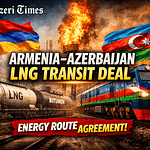
Yerevan/Baku – January 27, 2026 – In a significant step forward for economic cooperation amid ongoing normalization efforts, Armenia and Azerbaijan have finalized an agreement allowing the railway transportation of liquefied natural gas (LNG, often referred to as liquefied petroleum gas or LPG in regional contexts) and bitumen through Azerbaijani territory to Armenia.
Armenian Minister of Economy Gevorg Papoyan announced the breakthrough on social media, stating: “An agreement has been reached between Armenia and Azerbaijan on the railway transportation of liquefied gas and bitumen through the territory of Azerbaijan. Our entrepreneurs can already take advantage of this opportunity.”
The deal, reported widely by Armenian and Azerbaijani media outlets including News.Az and Aze.Media, comes as Armenia grapples with supply challenges for liquefied gas. Traditional import routes from Russia via the Upper Lars checkpoint have faced disruptions due to weather conditions, while supplies from Iran have encountered complications related to regional logistics and other factors. These issues have driven up domestic prices in Armenia, with reports of shortages and price spikes prompting the search for alternative transit paths.
Under the new arrangement, Russian-sourced liquefied gas will be transported by rail through Azerbaijan to reach Armenian markets, marking a pragmatic use of existing infrastructure to address immediate energy needs. Bitumen, a key material for road construction and infrastructure projects, is also included in the transit protocol, potentially supporting Armenia’s ongoing development efforts.
This agreement builds on recent progress in bilateral economic ties. Late last year, Azerbaijan began direct shipments of petroleum products, including gasoline, to Armenia for the first time in decades. Those initial deliveries—transiting via Georgia due to the lack of direct rail links between Baku and Yerevan—were hailed as historic milestones. They followed high-level discussions, including meetings between deputy prime ministers, and contributed to broader confidence-building measures in the post-conflict era.
The transit deal aligns with the broader peace process facilitated in part by international mediation, including U.S.-brokered initiatives like the TRIPP (Trump Route for International Peace and Prosperity) framework. Such arrangements underscore a shift toward mutual economic benefits, regional connectivity, and reduced dependencies on single supply sources. Armenian officials have framed similar imports as part of an energy diversification strategy to enhance security and affordability for consumers.
While Azerbaijani authorities have not issued an immediate official comment on the latest agreement, the move reflects growing pragmatism on both sides. Previous fuel shipments from Azerbaijan have already helped lower gasoline prices in Armenia by up to 15% in some cases, breaking local monopolies and demonstrating tangible dividends from improved relations.
Analysts view this as another concrete sign that economic cooperation can serve as a foundation for lasting stability in the South Caucasus. With parliamentary elections approaching in Armenia and ongoing border delimitation talks, such practical steps may help sustain momentum toward a comprehensive peace deal.
As implementation begins, Armenian businesses are positioned to leverage the new route for more reliable and potentially cost-effective supplies of essential energy products and materials. This development could pave the way for expanded trade in other sectors, further integrating the region’s economies after years of separation.
Azeri Times will continue to monitor developments in this evolving story.
The post Yerevan and Baku agree on LNG supplies to Armenia via Azerbaijan appeared first on azeritimes.com.
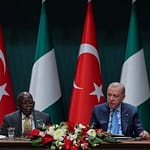
Turkey and Nigeria signed nine cooperation agreements during a state visit by Nigerian President Bola Ahmed Tinubu to Ankara.
The accords cover media collaboration, military training, higher education, and halal accreditation, further solidifying a strategic partnership where Nigeria is Türkiye’s largest trade partner in Sub-Saharan Africa, News.Az reports, citing Turkish media.
Türkiye and Nigeria have signed a suite of nine cooperation agreements, including a key memorandum on media and communication, as part of efforts to deepen their strategic partnership. The pacts were inked in Ankara on Tuesday during an official visit by Nigerian Head of State Bola Ahmed Tinubu, who held talks with President Recep Tayyip Erdogan.
The media memorandum of understanding, valid for three years, facilitates the exchange of information, expertise, and best practices between the two countries. It also provides for organizing joint seminars, workshops, training programs, and reciprocal visits for officials and experts in the broadcasting and communication sectors. This agreement aims to foster closer ties between the media landscapes of both nations.
The signing ceremony, held after bilateral and delegation-level meetings, encompassed a wide range of sectors beyond media. Additional agreements focused on military training, diaspora policy, higher education, halal accreditation, diplomatic training, and social affairs. These accords build upon a longstanding relationship; diplomatic ties between Ankara and Abuja have been in place since November 1960.
The partnership is underpinned by robust economic and security cooperation. With energy trade included, Nigeria became Türkiye’s largest trading partner in Sub-Saharan Africa in 2025, with bilateral trade volume reaching $688.4 million in the first eleven months of the year. Defense cooperation is particularly strong, with the Nigerian Air Force having purchased Turkish drones and T129 ATAK helicopters. Over 50 Turkish companies operate in Nigeria, with total investments nearing $400 million and contractor projects valued at around $3 billion.
The post Türkiye and Nigeria ink nine deals, covering media and defense appeared first on azeritimes.com.

Google AI Plus, the company’s most affordable AI subscription plan, is now available in the US. It will cost $8 per month, though new users can get it for just $4 a month for the first two months, available for a limited time.
Google AI Plus, the company’s most affordable AI subscription plan, is now available in the US. It will cost $8 per month, though new users can get it for just $4 a month for the first two months, available for a limited time.AI Plus gives you access to 200GB of storage, as well as access to the Gemini 3 Pro model, Deep Research and Nano Banana Pro inside the Gemini app, News.Az reports, citing foreign media.
Nano Banana Pro generates images that look so realistic, they’re nearly indistinguishable from ordinary photos snapped on phones. Google even had to limit its usage due to high demand.
A subscription to AI Plus also expands your access to Google’s AI filmmaking tool Flow, its image-to-video creator tool Whisk and its research assistant tool NotebookLM. In addition to the US, the plan is now making its way to 34 more countries, making it available in all regions where Google is selling its AI services. In the US, the new option costs less than half of a $20 AI Pro subscription, which comes with 2TB of storage and access to more tools like code assist. Google’s most expensive AI plan, the AI Ultra, costs a whopping $250 a month and comes with 30TB of storage, along with all the AI tools the company can offer. Take note that if you’re paying for a Google One Premium 2TB subscription, you’ll also get all of AI Plus’ features over the next few days
The post Google AI Plus launches in the US for $8 per month appeared first on azeritimes.com.

US President Donald Trump and Syrian President Ahmad al-Sharaa had an extensive phone call, during which they discussed Syria’s transitional phase, security issues, and potential bilateral cooperation.
The Syrian presidency stated the leaders agreed on the importance of dialogue, while Trump expressed support for Syria’s unity and readiness to encourage investment in reconstruction, News.Az reports, citing foreign media.
In a significant diplomatic engagement, US President Donald Trump and Syrian President Ahmad al-Sharaa held a detailed telephone conversation on Tuesday focusing on Syria’s future. The discussion covered the country’s political transition, security, and potential avenues for bilateral cooperation.
According to a statement from the Syrian Presidency, President al-Sharaa reaffirmed his country’s commitment to territorial unity and national sovereignty. He emphasized Syria’s “approach of openness” and willingness to cooperate with international parties based on mutual interests. Al-Sharaa also stressed the need for unified efforts to prevent the resurgence of terrorist groups like Daesh and described “active diplomacy” as the only solution to regional crises.
President Trump expressed support for “the aspirations of the Syrian people to build a unified and strong state” and welcomed the existing ceasefire as a pivotal step. He praised understandings related to integrating armed groups, including the Syrian Democratic Forces (SDF), into official state institutions. On the economic front, Trump signaled Washington’s readiness to support reconstruction by encouraging investment, stating that Syria’s economic stability is “a cornerstone of stability in the Middle East.”
Earlier, Trump told reporters he had a “great” conversation with the “highly respected president of Syria,” adding that matters related to the region were “working out very, very well.” The call marks a notable shift in high-level communication between the two nations, which have had tense relations for over a decade, and indicates a potential recalibration of US policy focusing on stabilization and economic engagement in Syria’s post-conflict phase.
The post Trump and Syrian leader discuss post-conflict cooperation, reconstruction appeared first on azeritimes.com.