
Hyundai Motor Co. reported a 40% drop in operating profit in the fourth quarter of 2025, falling to 1.7 trillion won (approximately $1.2 billion), below analysts’ expectations, Azernews reports, citing foreign media.
Day: January 29, 2026
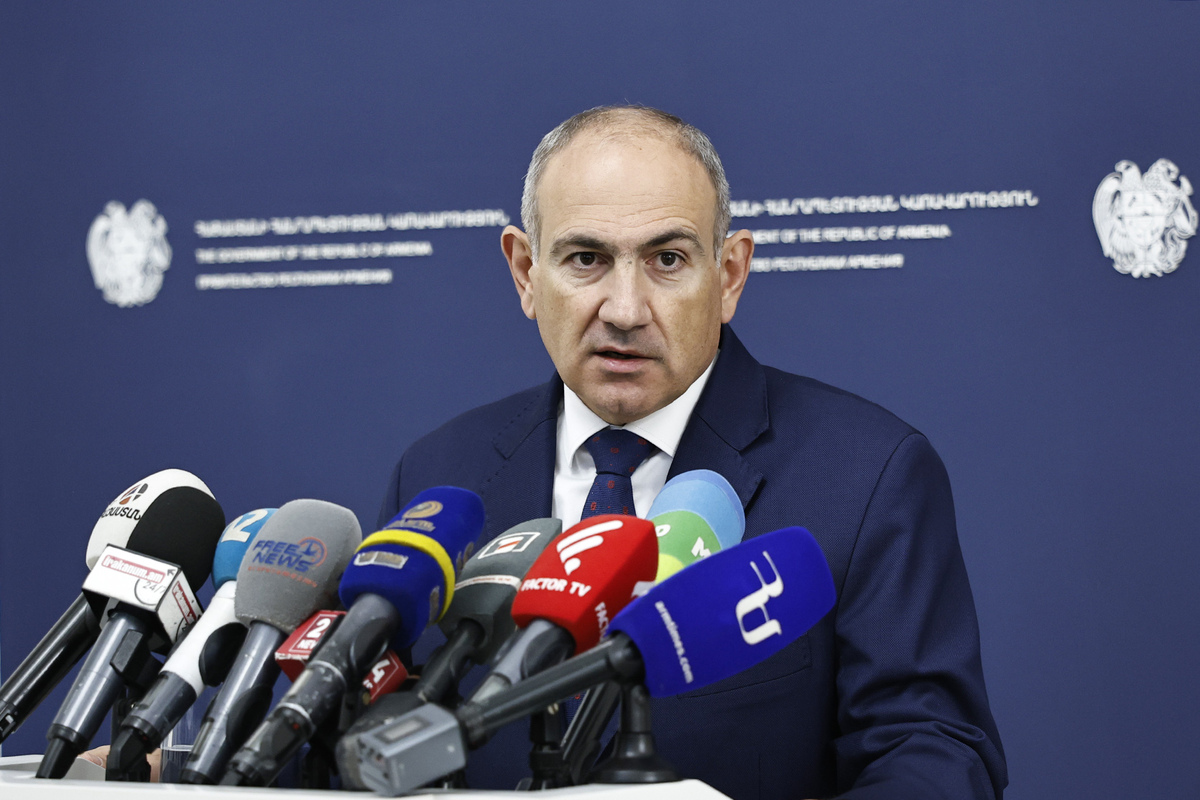
Pashinyan responds to Kocharyan’s remarks
“The knowledge and views of Kocharyan, Armenia’s former president, about the regional and international situation are hopelessly outdated,” Armenian Prime Minister Nikol Pashinyan said at a briefing.
He made the remarks while responding to comments by former Armenian leader Robert Kocharyan on the TRIPP project.
TRIPP, short for Trump Route for International Peace and Prosperity, is a proposed road that will link Azerbaijan with its autonomous exclave of Nakhchivan through Armenian territory.
For several years, Yerevan and Baku failed to reach agreement on the issue. Azerbaijan demanded access to the route and referred to it as the “Zangezur corridor”. Armenian authorities said they were ready to unblock all transport links. They rejected the term “corridor”, arguing that it implied a loss of control and, therefore, a loss of sovereign rights over the territory.
Only on 8 August did the sides reach a breakthrough in Washington. They agreed that the road would remain under the sovereign control of Armenia. The United States will join the unblocking process as a business partner. Following this agreement, the project became known as the “Trump Route”, named after the mediator.
Former president Robert Kocharyan said that the “Trump Route” is an Armenian-American project but serves the interests of Azerbaijan and Turkey. He argued that the project offers no economic benefits to either Armenia or the United States. Kocharyan also said that Washington wants to “establish control over Iran” through the project.
Prime Minister Nikol Pashinyan described these claims as the result of “outdated views”.
He focused in particular on Kocharyan’s assertion that the United States has no “economic interests” in the project. Pashinyan said:
“US policy is built entirely on economic logic. All decisions taken by President Trump have an economic rationale. As for the benefits TRIPP will bring to Armenia. The project envisages multi-million-dollar investments in Armenia. It is a large-scale investment programme that will undoubtedly also bring strong security guarantees.”
During the briefing, the prime minister also answered questions about linking the energy systems of Armenia and Azerbaijan, building a new nuclear power plant in Armenia, and the confrontation with the country’s senior clergy.
These were the main points raised during the Armenian prime minister’s weekly briefing.
- Opinion: ‘Armenia is returning to space it was pushed out of’
- Opinion: ‘Armenia will restore rail links with Azerbaijan and Turkey – with or without Russia’
- US stake in TRIPP project to reach 74%, Yerevan and Washington say
‘It does not pose a threat to Armenia’ — on linking with Azerbaijan’s energy system
According to Armenian Prime Minister Nikol Pashinyan, both Armenia and Azerbaijan have “energy surpluses”. He said this points to the region’s potential.
“The interest of both our countries lies in gaining access to larger export markets. Azerbaijan, in particular, has a stronger interest in supplying energy to Nakhchivan,” he said.
Pashinyan also stressed that Armenia’s energy system already connects to those of Georgia and Iran. He said it would therefore be “right to connect it with Azerbaijan and Turkey as well”.
Such a link would allow Armenia, at the very least, to earn transit revenue. He said this would also create new opportunities for private companies.
The prime minister said Armenia sees no threat in linking energy systems. He said the country sees opportunities instead. He added that such cooperation could also help “strengthen peace”.
“I also publicly expressed satisfaction” — on thanking Aliyev
Comments made by Armenia’s president at the World Economic Forum in Davos sparked a strong reaction on Armenian social media. President Vahagn Khachaturyan thanked Ilham Aliyev and Armenian Prime Minister Nikol Pashinyan for what he described as their “political will”. He said that for both leaders it mattered more “to live in peace than to stay in power”.
Journalists later asked the prime minister how he viewed the president’s remarks. They also asked whether he himself felt grateful to the Azerbaijani president. Pashinyan said that he had “also publicly expressed satisfaction” with decisions taken by Aliyev.
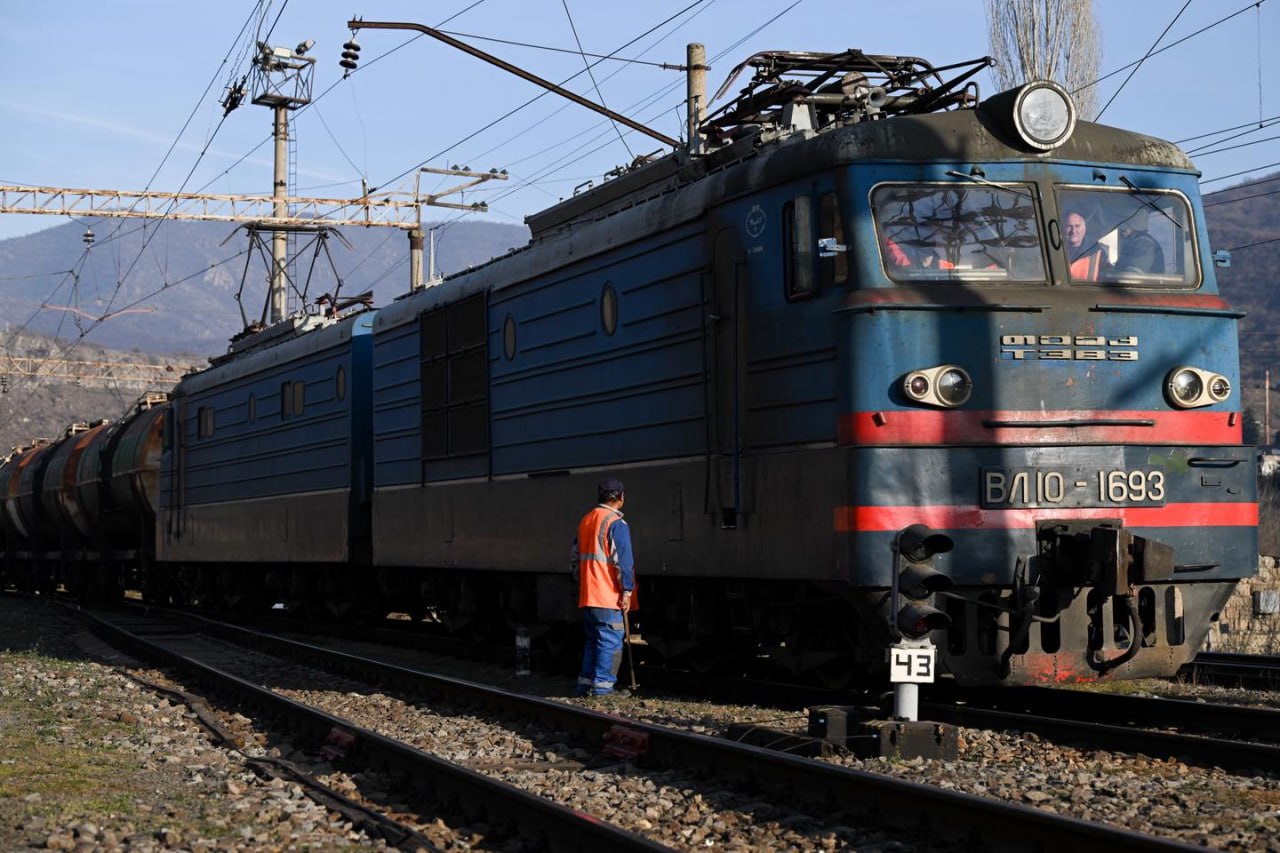
“If grain and diesel fuel reach Armenia through Azerbaijani territory, and roads are unblocked… I do not think we should criticise Azerbaijan for this,” he said.
Pashinyan said that several issues that had troubled Armenian society had recently been resolved. He noted in particular that four Armenians had returned from Baku.
Responding to comments about the “loss of Nagorno-Karabakh”, he repeated that the Karabakh movement should not continue.
“Talk of Karabakh being ours and no longer being ours comes from people who have fallen into a geopolitical trap. The truth is that the Republic of Armenia was not ours, but from now on it is ours,” he said.
At the same time, Pashinyan added that those who disagree with the government’s policies remain free to pursue change through a revolution.
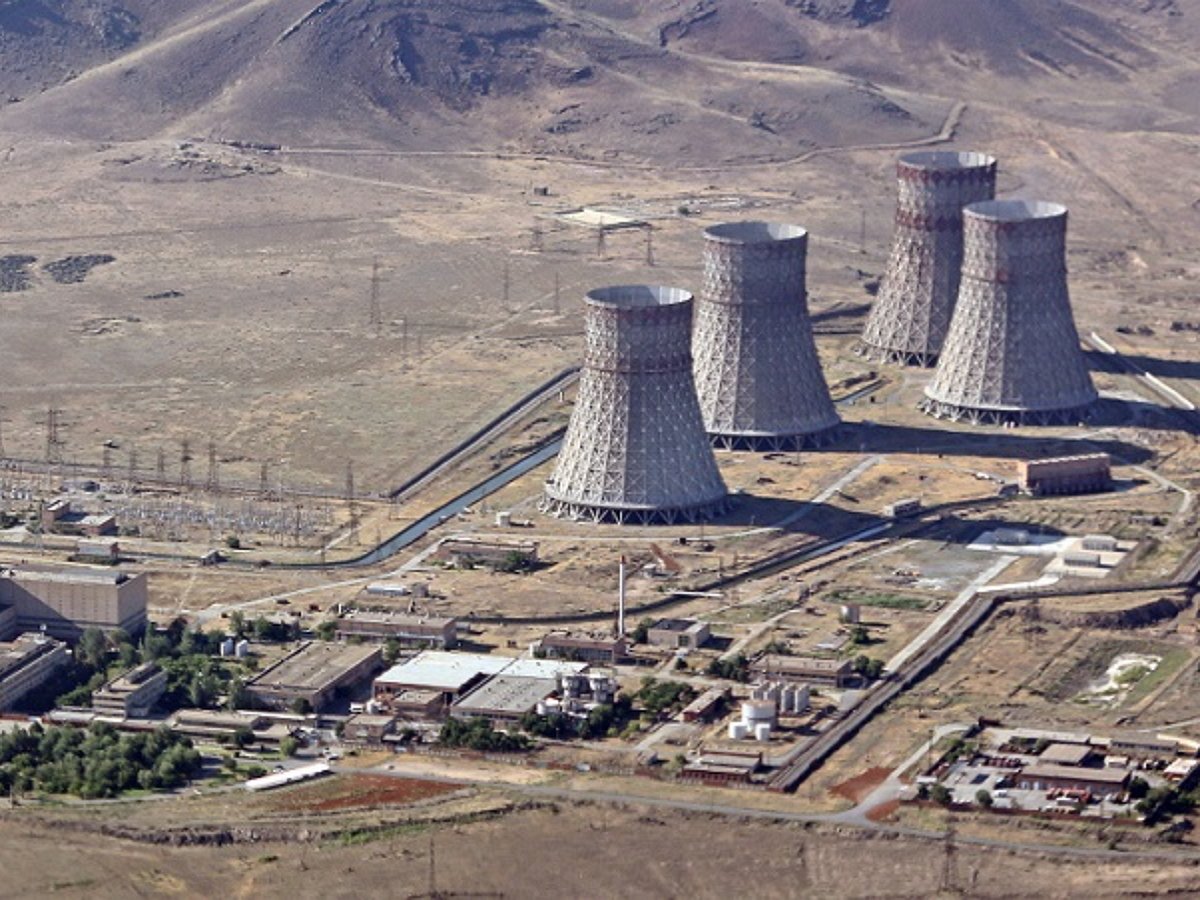
‘A decision will be taken once we have answers to all questions’ — on building a new nuclear power plant
Journalists asked whether the government had finally made a decision on building a new nuclear power plant. For a long time, public debate in Armenia has focused on whether the country would choose cooperation with the United States or Russia.
Prime Minister Nikol Pashinyan said that on 8 August 2025 three memorandums were signed in Washington. One of them covers cooperation in the energy sector. The document also provides for cooperation with the United States in civilian nuclear energy.
“However, the Armenian government is developing cooperation with various countries that possess nuclear technologies: France, Russia, the United States, South Korea and China,” he said.
Pashinyan added that the government will take a final decision once Armenian experts receive answers to all outstanding questions.
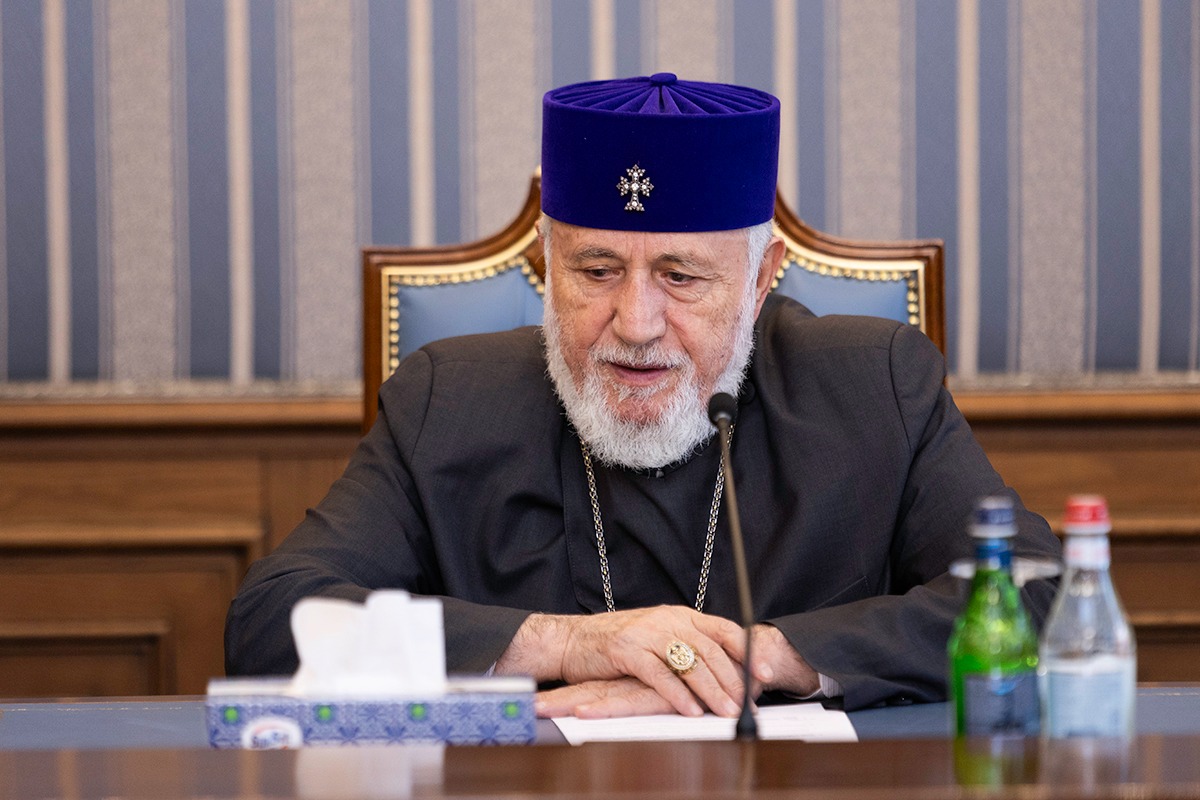
‘There is no confrontation between church and state’ — on removing the Catholicos
Armenian Prime Minister Nikol Pashinyan said there is no confrontation with the Armenian Apostolic Church.
“There is a person who has usurped power in the church and who, under no circumstances, can hold this position. We will take all possible lawful and legitimate steps to remove him from a throne he does not deserve,” he said.
For several months, the prime minister has spoken publicly about removing the Catholicos from office. When he launched what he described as a movement to “renew the church”, he said that Garegin II must step down because he broke his vow of celibacy and has a daughter. Pashinyan later accused the Patriarch of ties to the security services of a foreign state. He said:
“I do not need a Catholicos who will obey me. I need a Catholicos who will not obey a senior lieutenant of a foreign intelligence service. And who will not report daily to lieutenants of a foreign intelligence service.”
The prime minister and his team now declare invalid the Catholicos’s decisions to defrock clergy who joined the church renewal movement. They argue that Garegin II is not the Catholicos, and therefore his decisions have no legal force.
Journalists drew a parallel between the church and the government, suggesting that “in that case, someone could challenge the government’s legitimacy”.
“We received a lawful mandate from the people, and we are not impostors like Ktrich Nersisyan,” Pashinyan replied, referring to Garegin II by his secular name.
Pashinyan responds to Kocharyan’s remarks