
Gulf and Arab countries on Tuesday offered their support for the internationally recognized government in Yemen, after the UAE withdrew its forces from the country, Azernews reports, citing Arab News.
Day: December 31, 2025
Like last year, on December 31, 2025, Georgian protesters will be gathering at their usual spot – Tbilisi’s Rustaveli Avenue – to welcome the New Year. This year’s celebration is expected to be more modest than last year’s “Giant Supra.” The event follows a series of curbs on freedom of assembly and a string of unfortunate political developments that must have killed the spirit among Georgians. Frosty weather with occasional rainy snow is expected in the capital, while other parts of the country are experiencing heavier snowfalls and related disruptions. Many will be seeing 2026 from behind bars.
Yet, as they bid farewell to a year marked by losses, the most dedicated activists will still have something to celebrate: on January 1, 2026, the non-stop protests that began last November will enter their 400th day. Against the odds, Georgian Dream has yet to achieve full consolidation of authoritarian rule, and the battle goes on.
Here are the key trends that defined Georgia in 2025, along with a glimpse of what may lie ahead in 2026.
Resistance and Repression
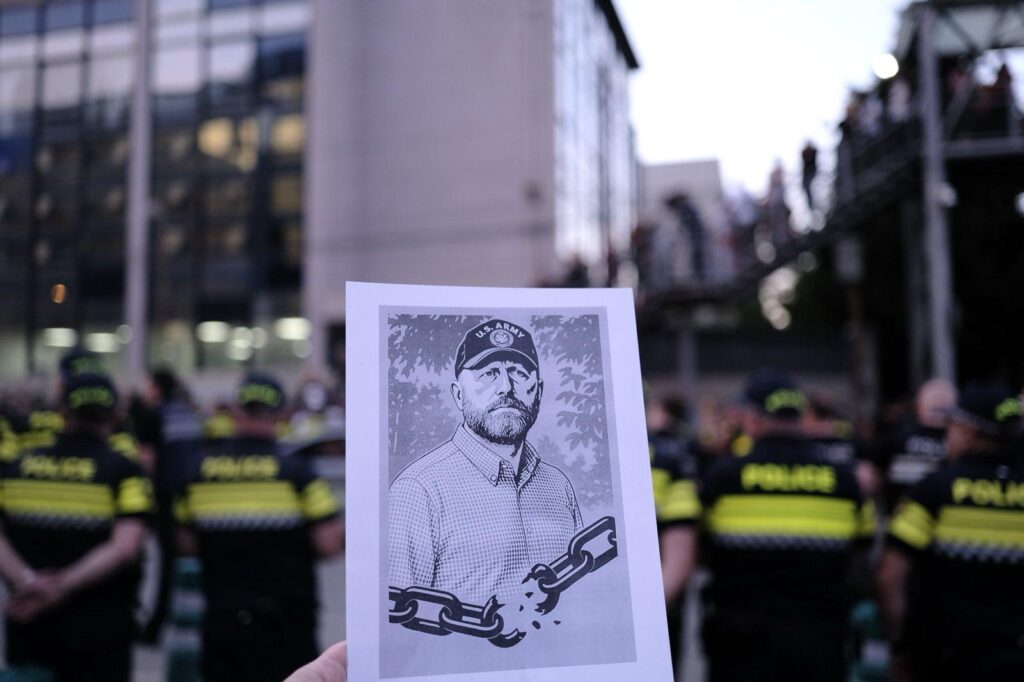
2025 in Georgia was a year shaped by repression and resistance. More than a hundred people remain in jail on criminal charges after protest- and opposition-related arrests. Most of them were detained during the early weeks of the pro-EU demonstrations that erupted on November 28, 2024, and later following the election-day unrest on October 4. Among those imprisoned and convicted are journalist Mzia Amaghlobeli, poet Zviad Ratiani, and protesters from various social, geographic and professional backgrounds. Key opposition figures also continue to face prosecution, including on charges of “sabotage.”
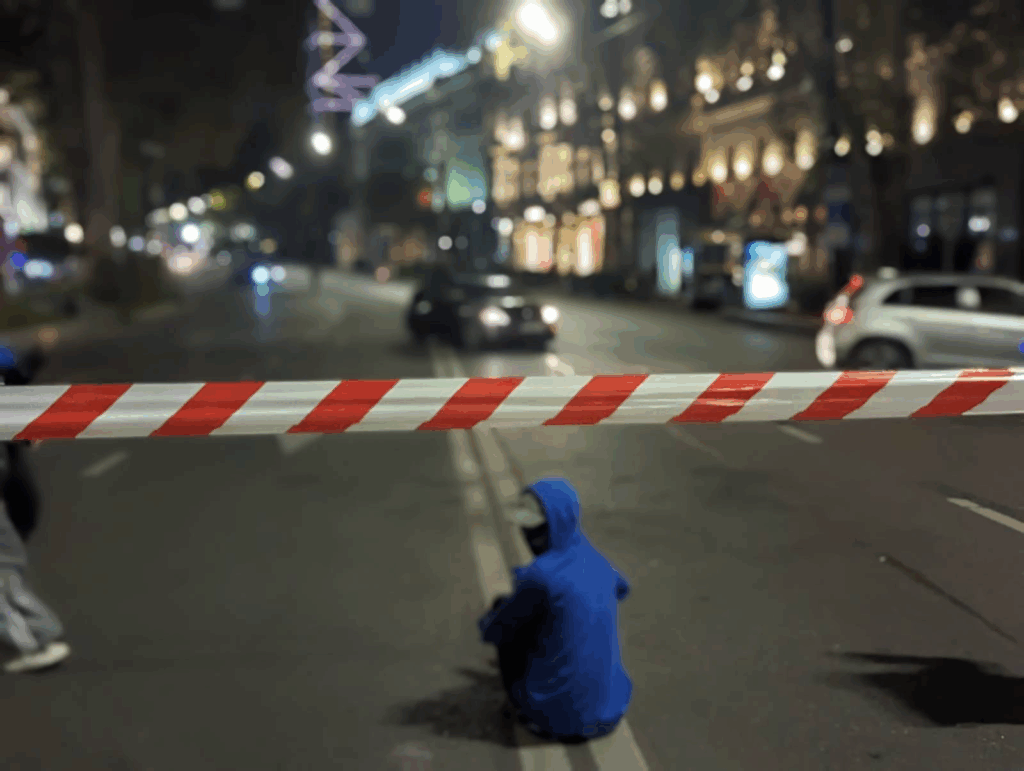
Protests have taken place daily over the past year, to which Georgian Dream responded with a series of anti-protest laws. Several hundreds were subject for heavy fines in initial months for “blocking the road” as part of Rustaveli Avenue protests. Starting October, such acts became punishable with administrative detention and criminal sentence if repeated. Since December, demonstrators have risked similar penatlies for rallying on sidewalks, and GD also introduced stricter advance notice rules.
- Repression in Numbers
- October 4 Continues to Haunt Georgia as Questions Persist
- GYLA: 2025 Was Year of ‘Curtailed Freedoms’ in Georgia
2026: More than 20 protesters currently expect the first court rulings in sidewalk cases, with all hearings adjourned to January. Those rulings will also give a glimpse of how strict the ruling party can go, and how the resistance will respond. The first months of 2026 will also likely show how the protests will adjust to growing crackdown. Verdicts in dozens of October 4 cases are also expected next year.

Reforms and Purges
An estimated 700–1,000 civil servants reportedly lost their jobs over party-critical stances in the past year.
- Dozens Out of Foreign Ministry Amid “Reorganization”
- Dozens Reportedly Fired From National Exams Center in ‘Reorganization’
As Georgia enters 2026, critics expect purges to extend into academia. The fears intensified amid the controversial university reform that promises a radical overhaul of the higher education system, which, education experts worry, will end up gutting public universities. Authorities will start implementing the reform on a larger scale in 2026.
Media and Civil Society Under Pressure
Media and civil society organizations came under intense pressure in 2025, including through a series of laws that effectively severed access to foreign funding. Dozens of media outlets and non-governmental organizations were subjected to inspections under controversial amendments to the Law on Grants and Georgia’s Foreign Agent Registration Act (FARA), among others. Several key watchdogs saw their accounts frozen as part of a criminal “sabotage” investigation. Television and radio channels were hit particularly hard, facing acute financial crises. One of them, Mtavari Arkhi, went off air in the spring. Up to 17 regional broadcasters are also said to have halted their work. Most key watchdog groups and online outlets, however, managed to survive, albeit while struggling with severely depleted funding sources.
- Georgian Dream’s FARA Takes Effect
- How Georgian Dream Is Drying Out Independent Online Media
- Mzia Amaghlobeli Awarded Sakharov Prize
2026: Anti-Corruption Bureau, the public agency responsible for enforcing repressive laws, is set to be dismantled in the spring, with its functions absorbed by the Audit Office. It remains unclear whether the Office will continue to enforce these laws, whether authorities will once again rely on criminal investigations to more effectively target organizations, or whether, for some reason, they will refrain from action. Broadcasters appear most at risk, with Formula TV and TV Pirveli, key opposition channels, facing potential closure.

Party (and Other) Politics
Mainstream opposition parties were, without question, the biggest losers of 2025.
The first blow came through the jailing and prosecution of key opposition leaders, including for boycotting the so-called Tsulukiani Commission. The second came during the partially boycotted October 4 municipal elections, where some major opposition forces lost support over their decision to participate, while others were tainted by their association with election-day unrest. Georgian Dream is also seeking to ban three major opposition forces through a constitutional court appeal.
With mainstream opposition largely absent, newer, but smaller, political forces such as the Federalists, Freedom Square, and the Movement for Social Democracy have gained momentum, including through active participation in protests. At the same time, hardline forces aligned with Georgian Dream – like United Neutral Georgia – sought to expand, apparently hoping to fill the gaps created by GD’s crackdown on genuine opposition.

- Georgian Authorities to Prosecute Eight Opposition Leaders for ‘Crimes Against State’
- Ruling Party Appeals to Constitutional Court to Ban Three Major Opposition Forces
- Scarier Than Thou: Georgian Dream’s Radical Sidekicks
2026: As the year closes, the first jailed opposition leader, Zurab Japaridze of Girchi – More Freedom, has been released, with several others expected to follow in the coming weeks. However, some, including Ahali’s Nika Melia, have had their sentences extended on separate charges, and many continue to face new criminal cases under the “sabotage” investigation. It remains to be seen how these political leaders will use their freedom – coming under a ticking clock – to reengage in the resistance.
Another thing to watch next year is whether the newly-emerged forces can maintain their strength and prove sustainable, which could also define whether the ongoing crisis might ultimately spur some positive political transformation. Finally, there are expectations that Georgian Dream may call snap elections next year amid bans of key opposition parties, in a hope to consolidate its rule through a constitutional majority.
Nino Saghiridze / Civil.Ge.
Foreign Policy – Troubled Transition
Relations with key European partners fell to historic lows. GD government continued to struggle with Western political legitimacy. Georgian Dream spent much of 2025 openly confronting the West, particularly the EU, including through hostile rhetoric and attacks on diplomats. Brussels responded with a series of warnings, including the possibility of suspending visa-free travel, but first for diplomatic passport holders. In parallel, the ruling party attempted to reset relations with the Trump administration, but without success. The overall Western response to GD’s democratic backsliding, however, was weaker than Georgian opposition hoped it to be, including with repeated blockages of MEGOBARI Act, foreseeing sanctions on GD officials, in U.S. Senate.
- Kobakhidze Offers Reset With West
- Kavelashvili Regrets U.S. Passivity, Suggests ‘Deep State’ Still Calling Shots, in Open Letter to Trump
- U.S. Annual Defense Bill Passes Without MEGOBARI Act. What’s Next?
- German Ambassador Speaks with RFE/RL About GD Attacks, Bilateral Relations, EU Prospects
At the rhetorical level, Georgian Dream framed its foreign policy as “pragmatic” and “sovereign,” driven by economy and centering it on the country’s self-described strategic value as a Middle Corridor transit hub. The government appeared to count on renewed EU engagement with less democratic conditionality based on Georgia’s role in regional connectivity. Efforts to deepen ties beyond the Euro-Atlantic space also ran into clear limits, including due to inherent political constraints on engagement with Russia.
In 2026, key questions remain: how far Brussels will go in responding to Georgian Dream’s anti-EU moves; whether a peace process between Armenia and Azerbaijan could erode Georgia’s key role as a key transit corridor, potentially forcing Tbilisi into difficult compromises with its confrontational rhetoric; and whether the United States will finally articulate a coherent policy toward Georgia, and what form it might take.
- Contesting West, Aligning with Rest: Georgian Dream’s Foreign Policy in 2025 and Beyond
- Georgia ‘Candidate Country in Name Only’ – EU Commission Adopts 2025 Enlargement Package
- Kobakhidze Joins Turkmenistan Summit Alongside Putin

Economy – Numbers Lie
Despite the crisis, Georgia demonstrated notable economic resilience, including strong GDP growth, moderate inflation, and continued reserve replenishment by the central bank. The local currency, the lari, remained stable despite early expectations that the turbulent political climate would weaken it. Western countries, including the United States and the EU, continued to dominate growing foreign transfer flows to Georgia.
Behind these positive indicators, however, economic concerns persisted. Authorities sought to address them by heavily promoting a USD 6.6 billion Emirati investment, though the real estate mega-project has faced multiple criticisms. Officials also marked the completion of key infrastructure projects, including the most challenging section of the East–West highway and railway modernization, hoping these would stimulate the Georgian economy.
- Georgia’s Public Employment Program is Ending. Was It Ever About Employment?
- Rikoti Highway Completed as Georgian Dream Hails ‘Project of Century’
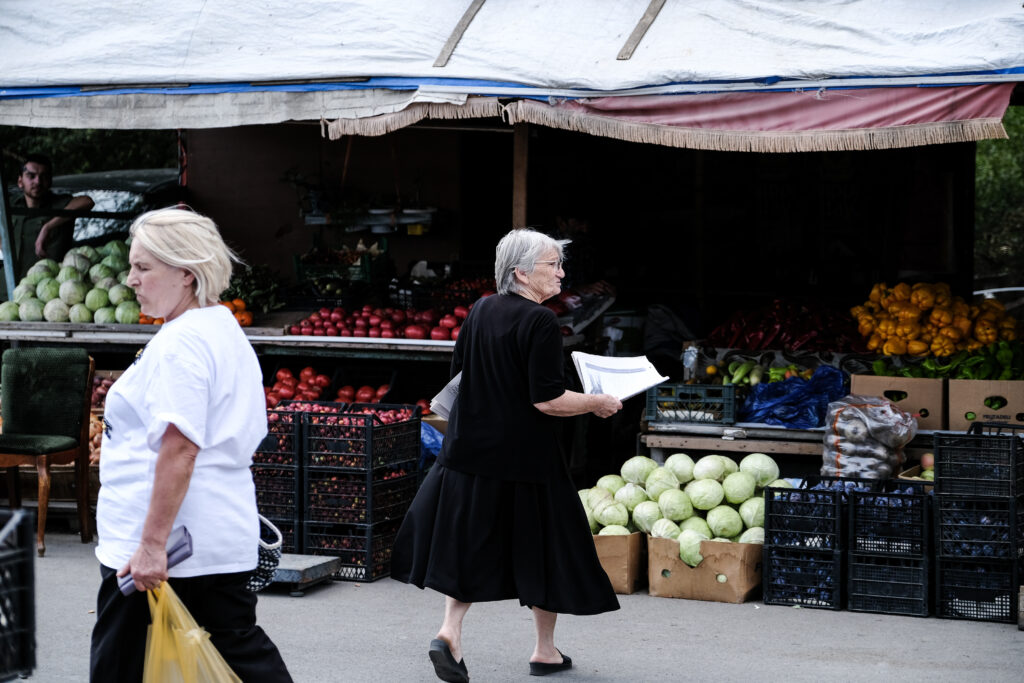
2026: By year’s end, acknowledging the problem, the government also announced measures against high grocery prices, with the State Security Service investigating potential criminal deals behind the high markups. Georgian Dream authorities had attempted a similar initiative in the past, but it went nowhere. The coming months will reveal whether this latest effort will prove any more effective or are, as critics suspect, only meant as repressive mechanisms against business.
Georgian Dream’s War on Crime, Drugs, Migration, and Itself
Throughout the year, Georgian Dream sought to rally support by portraying itself as an uncompromising fighter against drugs, illegal migration, criminal networks, and corruption. It tightened legislation related to drugs and migration and repeatedly touted large numbers of expelled foreigners and arrested drug traffickers. The crackdown on the so-called Thieves’ World – a criminal underworld network – also intensified. The war on corruption, however, largely appeared to target Georgian Dream’s former allies and officials, many of whom became entangled in a wave of resignations, arrests, prosecutions, and related incidents.
- MIA: Over 5,000 Arrested on Drug Charges in Seven Months
- Kobakhidze: 1,131 Illegal Migrants Expelled in 2025
- Police Arrest 49 Over Links with ‘Thieves’ World’
- Georgian Dream’s Ex-Officials and Business Associates in Hot Water
As the year closes, the former GD State Security Chief Grigol Liluashvili and the ex-Defense Minister Juansher Burchuladze are behind bars and stand trial on corruption charges, while former Prime Minister Irakli Garibashvili remains out on bail. Ex-Prosecutor General Otar Partskhaladze was recently charged with organizing a high-profile contract killing. How far this circle of prosecutions will expand remains one of the main questions for 2026, and whether it might eventually ensnare the party’s current leadership as well.
Also Read:
Unlocking the potential of the Middle Corridor—also known as the Trans-Caspian International Transport Route (TITR)—could accelerate the development of cross-border fintech, boost trade flows and deepen economic integration across the region, Azernews reports, citing the Asian Development Bank (ADB).
Eva Shashiashvili, a protester detained in connection with the October 4 unrest, was released on December 31 after Tbilisi City Court replaced pretrial detention with GEL 5,000 bail at the prosecutor’s request, amid her health and family circumstances.
Shashiashvili, 46, is a cancer patient who has had a thyroid tumor since 2018 and requires continuous monitoring that cannot be provided in prison, her lawyer, Mariam Khachapuridze, said.
She is also the sole caregiver for her 24-year-old daughter with a disability, who is undergoing treatment at a medical facility. The family said on Dec. 30 that the daughter’s hospitalization, which was due to expire in December, was extended.
Shashiashvili was arrested on October 6. She is charged with participating in group violence and attempting to seize a facility of strategic or special importance.
On October 4, when Georgia held local elections, a group in a large demonstration in Tbilisi, at the organizers’ call, attempted to occupy the presidential palace but was dispersed by riot police. The prosecution video shows Shashiashvili throwing a stone once during the unrest. She admitted the fact.
In total, 65 people have been charged in connection with the events. Of them, 59 were sent to pretrial detention, including Shashiashvili. Three individuals were granted bail, with Shashiashvili now the fourth, while three others were charged in absentia. They face years in prison if convicted.
Concerns about Shashiashvili’s detention conditions were raised shortly after her detention. However, Georgia’s Special Penitentiary Service rejected the allegations in an October 14 statement, calling reports of “inhuman conditions” false and unverified.
On December 26, opposition politicians, disability rights activists, and supporters held a rally calling for Shashiashvili’s release on bail and submitted a request to the Prosecutor General’s Office. Prosecutor Vazha Todua later said the prosecution would review additional defense documents and reconsider whether to seek bail in court.
Also Read: