
The total volume of Azerbaijan’s trade turnover with Bulgaria for the period of January-November of this year has been revealed. According to the official data, the volume has exceeded…
Day: December 30, 2025
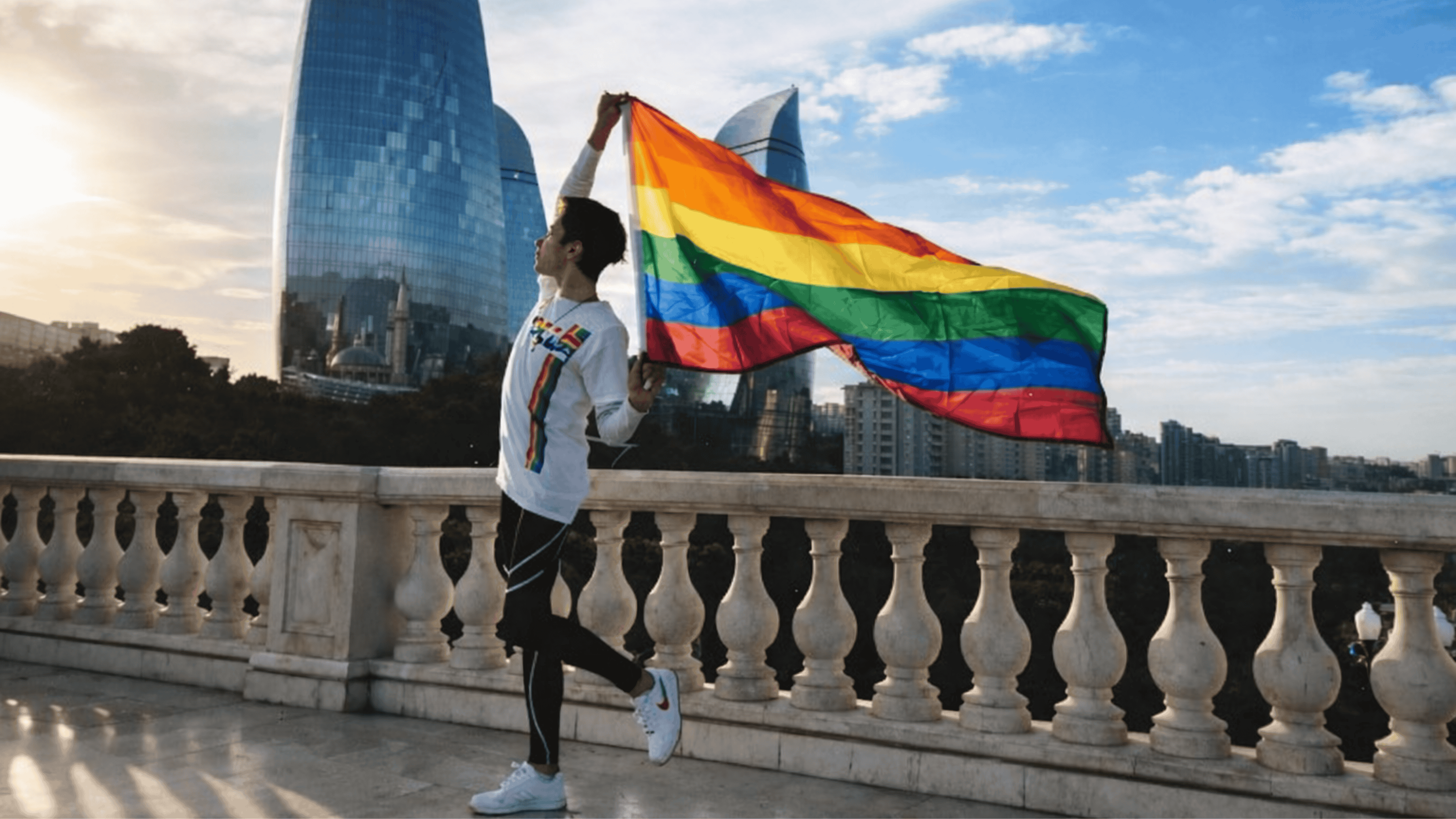
LGBTQ+ people detained in Baku raid
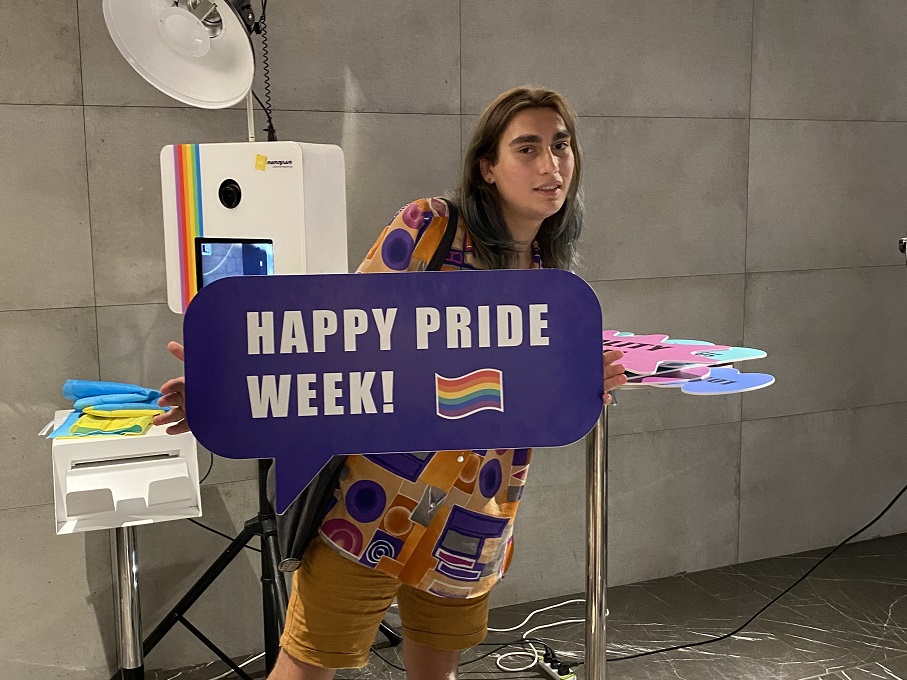
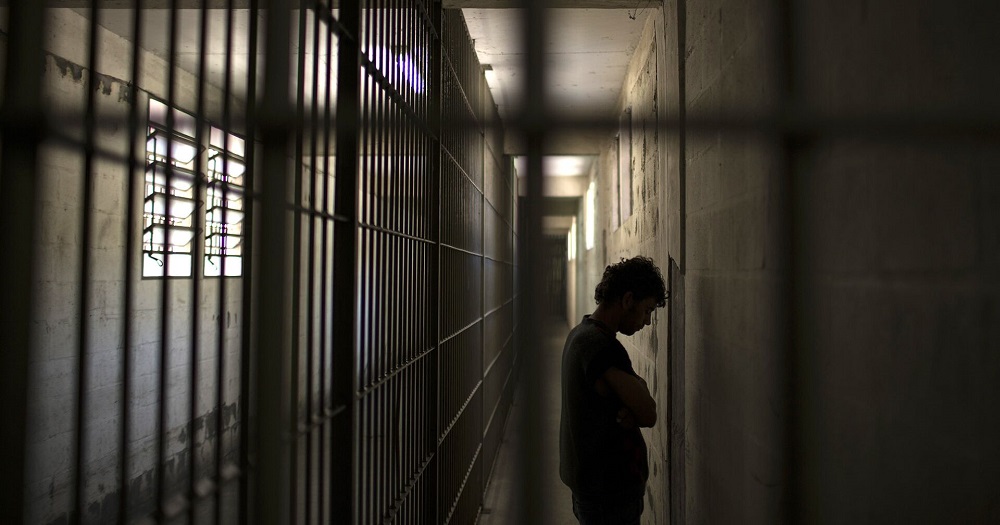
In Baku, police detained 106 people during a raid on the Labyrinth club, a venue frequented by members of the LGBTQ+ community, including lesbians, gay men, bisexual, transgender and other queer people.
According to witnesses and those detained, police used force, subjected them to degrading treatment and issued threats.
Police said the raid was carried out over alleged drug use at the venue. However, no narcotic substances were ultimately found, and those detained were fined under an administrative offence for smoking in an enclosed public space.
Raid and detainees’ accounts
The raid began suddenly at around 1 a.m. Police officers entered the club and forcibly escorted those inside onto the street, before loading them into police vehicles. Witnesses said the detainees were taken to the Nasimi district police department in Baku.
At the station, they were reportedly kept outdoors for about two hours in cold conditions, wearing light clothing and not allowed to sit down. They were then taken one by one into offices, where officers asked what the detainees described as humiliating questions about their private lives and sexual orientation.
Several detainees said they were subjected to severe violence by police. According to their accounts, one person who objected to such questioning was taken into a separate room and later returned with a bloodied face and a split lip. He said police officers had beaten him and subjected him to degrading treatment.
Another detainee said police lined everyone up and ordered them to stand without bending their knees, threatening sexual violence against anyone who moved.
People were reportedly kept in this position for around two hours. During this time, officers allegedly photographed detainees on their phones, confiscated mobile phones, went through messages and photos, and in some cases copied private images.
Detainees also said they were constantly insulted, sworn at and subjected to psychological pressure at the police station, while officers ignored those who began to feel unwell.
After several hours, police told the detainees they had been held on suspicion of drug use. However, as no illegal substances were found, all 106 people were fined under an administrative offence for smoking in an enclosed public space. The fines amounted to 30 manats (about $18), or in some cases 50 manats (about $30).
According to the detainees, they were also told that they would not be released unless the fines were paid.
Activists and rights organisations respond
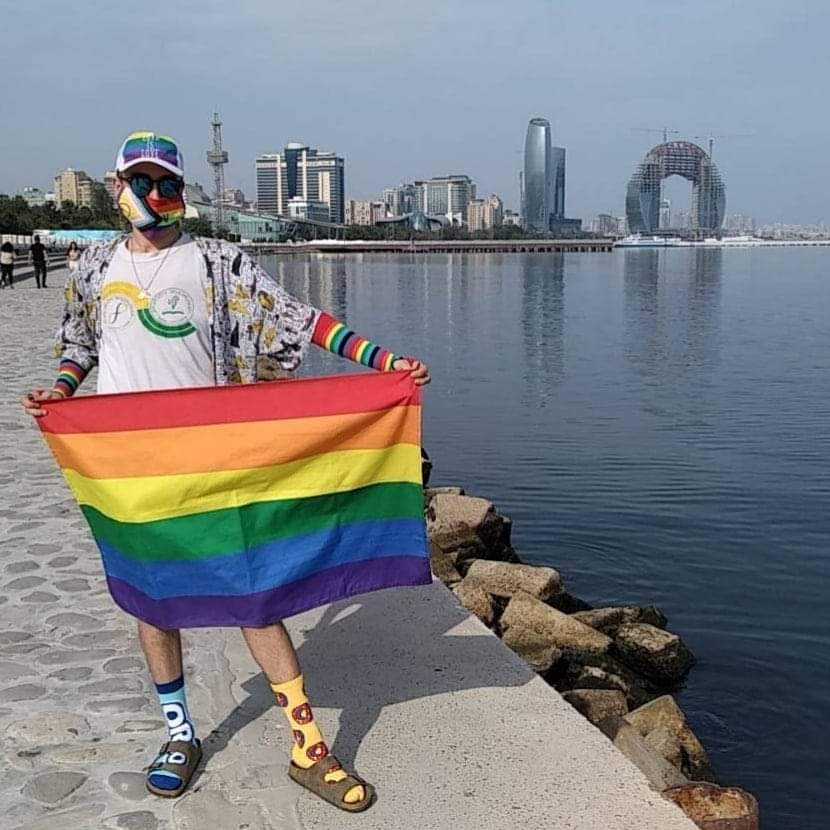
The incident has raised concern among human rights defenders, independent lawyers and LGBTQ+ activists.
LGBTQ+ activist Ali Melikov told Meydan TV that the raid reflected the Azerbaijani authorities’ broader efforts to exert total control over all independent groups.
According to him, while the government does not openly promote transphobia in society, it uses it as a tool of pressure and regularly carries out similar raids against the queer community.
“What happened is nothing new for us,” Melikov said.
He recalled that earlier this year police officers had used gay dating apps to gather information and allegedly blackmail some users.
Independent lawyers and human rights defenders say one of the main obstacles to preventing such cases is a gap in the law. Azerbaijan does not have specific legislation prohibiting discrimination on the grounds of sexual orientation or gender identity.
The absence of such legal protections leaves LGBTQ+ people particularly vulnerable to rights violations.
“Social and economic problems, as well as political pressure, have intensified to such an extent that there are almost no independent institutions left that can protect us. Police use vulnerable and unprotected people as a means of pressure and a source of illegal extortion,” Melikov said.
Representatives of local independent NGOs, including activists from Minority Azerbaijan and the Nefes LGBT Alliance, have repeatedly condemned raids against the LGBTQ+ community, saying such actions violate human rights.
As information about the raid spread, international organisations also began to respond. ILGA-Europe (the International Lesbian, Gay, Bisexual, Trans and Intersex Association – Europe) issued a statement expressing concern and urging the Azerbaijani authorities to ensure the protection of human rights and dignity for all.
During mass detentions in 2017, UN human rights experts and organisations such as Human Rights Watch strongly criticised violence and the persecution of LGBTQ+ people in Azerbaijan. Local rights defenders say similar raids and arrests continue to create an atmosphere of fear for an already marginalised community.
The 2017 crackdown
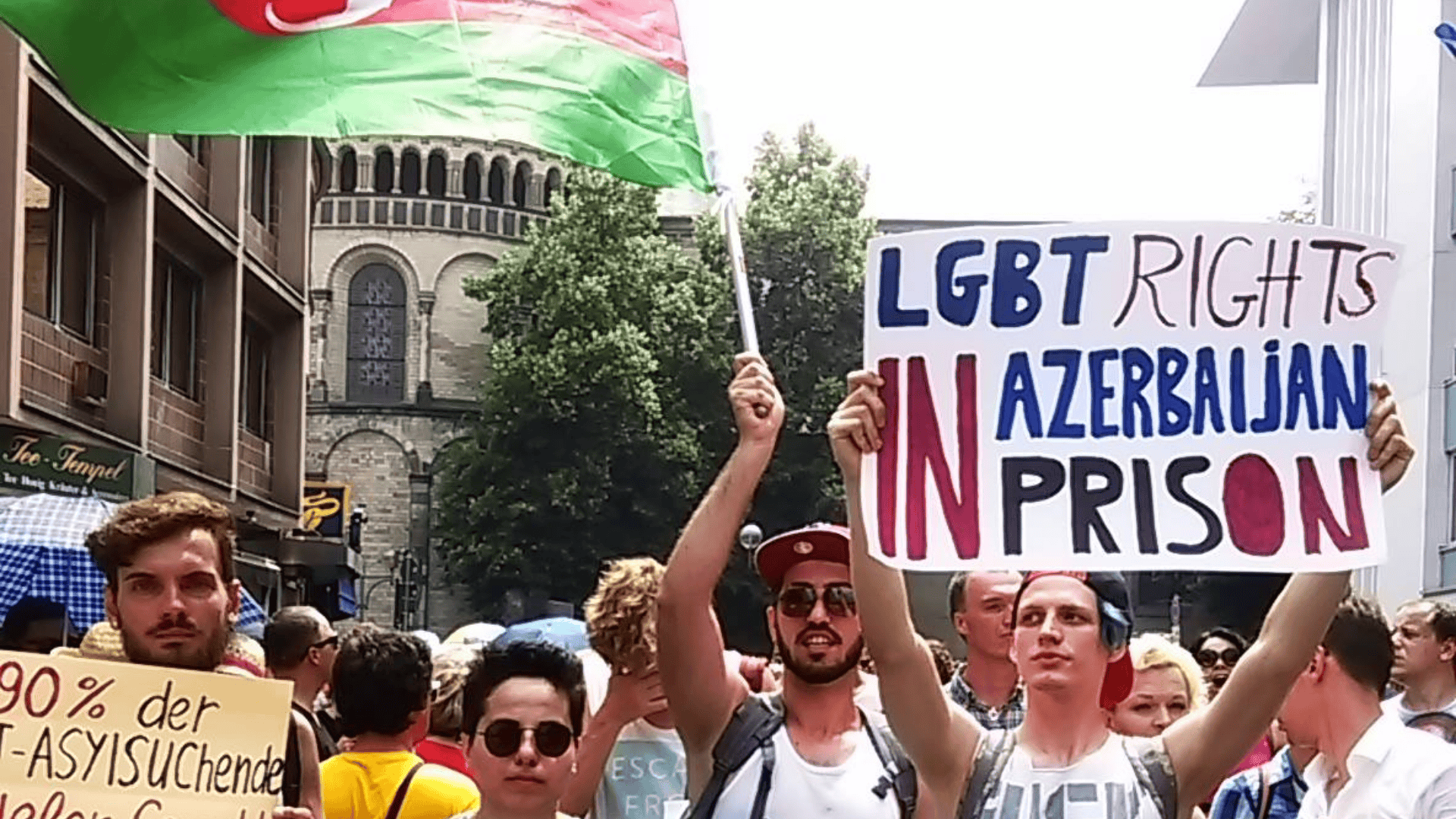
The raid against the LGBTQ+ community in Baku is not without precedent. In September 2017, a similar large-scale police operation targeting LGBTQ+ people was carried out in the capital. According to official figures, 83 people were detained at the time.
Those detained in 2017 also reported serious abuse and humiliation. In particular, many transgender women said their hair was forcibly cut, which they described as especially degrading.
Some detainees were given administrative sentences of between 10 and 30 days in detention, while others were fined. As a result, many lost their jobs after employers refused to take them back following their prolonged absence.
After the 2017 events, some of those detained sought to challenge the actions of the authorities through the courts. A group of four independent lawyers represented 33 people and filed complaints.
However, lawyer Samed Rahimli said the courts rejected all the complaints. Appeals by the same 33 people to the prosecutor’s office also produced no results, as prosecutors said they had found no violations of the law.
At the time, Azerbaijani human rights defender Kamala Agazade said that without the adoption of an anti-discrimination law protecting LGBTQ+ people, legal challenges were unlikely to succeed.
“Society needs a law that guarantees the protection of LGBTQ+ rights,” Agazade said.
She argued that such legislation could help Azerbaijan shed its reputation as “the most homophobic country in Europe”, a label that has become associated with the country in recent years.
Following the wave of detentions in 2017, the Council of Europe’s Commissioner for Human Rights, Nils Muižnieks, called on Azerbaijan’s Interior Ministry to investigate allegations of torture against detained LGBTQ+ people. The authorities rejected the claims.
In a response, the then interior minister, Ramil Usubov, said the allegations of rights violations against “sexual minorities” were unfounded, adding that the detentions had been carried out “to ensure public order and security”.
Azerbaijan’s official bodies generally maintain that the rights of all groups in the country are fully protected and that the situation of LGBTQ+ people does not differ from that in most European countries.
LGBTQ+ rights in Azerbaijan
Against the backdrop of the latest events, the broader state of LGBTQ+ rights in Azerbaijan has once again come under scrutiny.
Although same-sex relations were decriminalised in 2000, the country has no specific legislation protecting the LGBTQ+ community from discrimination. As a result, LGBTQ+ people lack legal safeguards in areas such as education, healthcare, employment and other spheres.
This is also reflected in ILGA-Europe’s annual Rainbow Index. Azerbaijan ranks last among 49 European countries and has held the “worst-performing” position for nine consecutive years.
The index measures both legal protections and their practical implementation for LGBTQ+ people across Europe. Azerbaijan has remained at the bottom of the ranking for many years.
Human rights defenders say negative public attitudes towards LGBTQ+ people, combined with gaps in the law, create conditions in which law enforcement agencies can easily target these groups.
LGBTQ+ people detained in Baku raid
It’s unclear why someone decided to open that one takeaway coffee spot in The Town years ago.
The spot opened on the transit road, which cut through a settlement and bypassed the centre. The road connected Georgia’s East with Georgia’s West, which, as we all know, meant that it also connected the world’s East with the world’s West. Many cars, Georgian or foreign, passed there on longer trips, but few bothered to stop, and few had bothered to offer them coffee before. But then someone finally stopped at that new place, bought coffee, and decided it was the best coffee they had ever had. Hard to tell what was so special about it: it might have been the contrast between the decent Italian Lavazza and the dull, provincial surroundings. Or, situated right in the middle of a longer East–West route, it might have been the exact spot where a traveller’s coffee cravings peaked.
Or maybe it indeed was the best coffee. The word quickly spread, and as more passengers stopped there to taste the legendary hot drink, all agreed it was exceptional. Witnessing the boom, cafés and fast-food spots started popping up around it one by one. Soon, the dull road turned into a permanently crowded, jammed food street. Even the locals started dining there, allowing themselves to be more than serving hosts.
The Town, once known to outsiders for its prominent “funny” accent and industrial pollution, started reinventing itself through a thriving hospitality business. But all that boom came under a looming sense of imminent end. Those cars would soon be bypassing the Town, and no coffee magic would be powerful enough to pull them back in.
Here is Nini and the Dispatch newsletter, exploring countless tunnels to find lost connections.
It was on that coffee street that I last met L., my German teacher.
L. is a legend. Outside the municipality, she is known as “that one woman” responsible for producing The Town’s disproportionately large population of German-speakers. “That one woman” used to be a curly-haired, stylish woman with a striking appearance. You’d easily notice her when she walked down the street, but she spent most of her time inside the apartment downtown, where she gave German lessons. More than the usual private tutoring with strictly defined hourly schedules, however, the prolonged classes resembled a sort of ancient academy: groups of students, one after another, would huddle in the room and listen to hours of teaching that, well, not too rarely would grow into preaching.
Grammar and vocabulary exercises would turn into storytelling sessions, with personal tales complemented by those she’d heard from others. Stories would then evolve into discussions about art and literature. There was no one else to tell us about those things, and we were supposed to know those things: at some point in our lives, we’d be finding ourselves in an educated society, most likely somewhere in the capital’s high-ceiling apartments, and you wouldn’t want to sit there like a fool once the conversation switched to books and films.
***
The lights went out on the coffee street as quickly as they had appeared. The 9 km road bypassing The Town opened in April 2024, after Georgia’s protracted but ambitious East–West highway project finally reached the curvy western landscapes. The bypass would reduce transit time by half an hour and spare travellers all the traffic jams The Town’s busy coffee street created. Eleven bridges and four tunnels were built on that section, all to “international standards.”
Inaugurating the road at the time, the then-infrastructure minister said the ongoing works would play a crucial role in developing the Middle Corridor, the trans-Caspian transit link that gained much-awaited relevance after Russia’s full-scale invasion of Ukraine. The minister left his post a year later. In October, his home was raided as part of the ruling party’s crackdown on former officials. His deputy was arrested.
***
February was special for L. She was away the whole month, traveling to Berlin for the film festival. We knew she was happy, and the students, too, were happy with the weeks-long break from intense foreign-language classes. She’d come back to The Town in March, bringing with her a bunch of German entertainment magazines and new stories.
The weeks that followed were weeks of exploration. We’d leaf through magazine articles and absorb new media expressions while tuning into L.’s parallel firsthand accounts from European show business. With one foot, we’d walk the streets of The Town, which, L. warned, were quite short for international standards, even if we didn’t know that yet, and hardly worth wasting our precious time on aimless wanderings. With the other foot, we’d stand on the red carpet somewhere in Berlin, judging whether Jennifer Lopez or George Clooney measured up to how they were portrayed on screens. Some stars looked way better in person, she’d tell us. Others owed their fame to camera work.
***
Transit was not the only purpose The Town was slowly losing. For about a century, it had supplied ferroalloys to global markets. To local markets, it exported cheese and comedians: having lived in the historically poor but well-connected midwestern region, the outgoing locals had perfected the art of making things out of nothing. Such were the jokes, and also the vegan cuisine created by mixing random grass with walnuts scattered in the orchards. But with the reported drop in international demand, the ferroalloy plant was going through shutdowns. The TV comedy shows slowly lost their audiences to cat reels. The food was still popular, but not that many ventured into The Town to enjoy it anymore.
Part of the coffee street’s food spots, too, had to shut down. Where officials hailed boosted international connectivity, all the locals in the region saw was gradual disconnection. One thing some of them could actually see moving was the soil under their homes, which they blamed on tunnel blasts. Others found their homes and orchards now situated directly above the newly bored tunnels. It must be a strange sensation to have the world pass beneath your feet, yet no longer be part of it.
***
But The Town is still exporting German speakers. L. is still giving classes, generation after generation, and the legend of “that one woman” now lives on among the Gen Z population. The freshly graduated students still head to the capital, impress that rumored snobbish educated society, and then chase foreign scholarships to explore wider Europe.
Lately, however, that, too, has come under the shadow of parallel disconnection: there are growing signs that Georgia’s turn away from the West, accompanied by a democratic crisis, may come at the cost of international study opportunities.
***
What could be worse than having the world pass under your feet and not being part of it? Perhaps the world someday bypassing those tunnels, too. Many tunnels have been inaugurated over the past months and weeks. On December 24, Georgian leaders stood in front of an 8.3 km dual-tube tunnel they described as the “largest in the region,” again one connecting the East with the West, to mark the completion of over a decade of railway modernization works. On December 29, they sat under falling snow at the Rikoti Pass, marking the completion of the “project of the century” — a highway section in the same area, which would put an end to drivers’ longtime pain of navigating narrow and twisting roads. The 54 km, four-lane stretch includes 51 new tunnels and 97 bridges.
The leaders again spoke about ambitions of becoming “a key, reliable, and indispensable link” in the Middle Corridor. But the desperate wording itself suggested the shadow of loss. The peace prospects between neighboring Armenia and Azerbaijan, and the alternative transit links that this process offers, may soon strip the country of its singular transit role. The bad karma of being mean to the outside world may be catching up with Georgia.
***
Every town has its German teacher, even if not all of them teach German. These are individuals who’ve seen the world, share stories, and do their utmost to prepare younger generations to tell their own stories to the world outside. And don’t we all love telling the world about ourselves? Turn on The Town’s local news. There is always a segment about a student who has achieved a small success, where the reporter asks them what their plans are for the future. Very often, they’ll say they want to introduce Georgia to the world.
But things have changed dramatically over the decades L. has been giving German classes. If our understanding of the outside world was once shaped by real stories told by our teachers, those stories are now increasingly lost in the endless crossfire of facts, disinformation, and fact-checking.
***
The café where I last met L. has an English name. It’s called Discovery. It is one of those places that, after the highway bypassed the coffee street, still manages to survive on local demand. They are trying their best, and they will probably figure something out. Because, in the end, the international connectivity Georgia craves so much was never about large infrastructure projects. It was never about drunken dinner-table fantasies of men talking about Georgia’s unique geopolitical importance and how every great power has always wanted to control us. Nor was it about the current foreign policy, which, once again, seems to have been fed by those same fantasies.
It was always about the efforts of local teachers building their own tunnels to the world, and local baristas luring that same world into their Towns with unexplained coffee mysteries.
🪖🇦🇲The Chief of the General Staff of the Armed Forces of #Armenia and Deputy Minister of #Defense, #EdvardAsryan, visited the eastern border area.
#ArmenianArmy #SouthCaucasus #MiddleEapic.x.com/F4xokNcWRbWRb
— Arthur Maghakian (@ArMaghak) Dec 30, 2025