
Turkish Vice President Cevdet Yılmaz, who arrived in Baku to attend the opening of the 12th Session of the Turkiye–Azerbaijan Joint Economic Commission (JEC) and the 2nd Turkiye–Azerbaijan Investment Forum, met with members of the press following his official engagements in the Azerbaijani capital.
Day: December 25, 2025
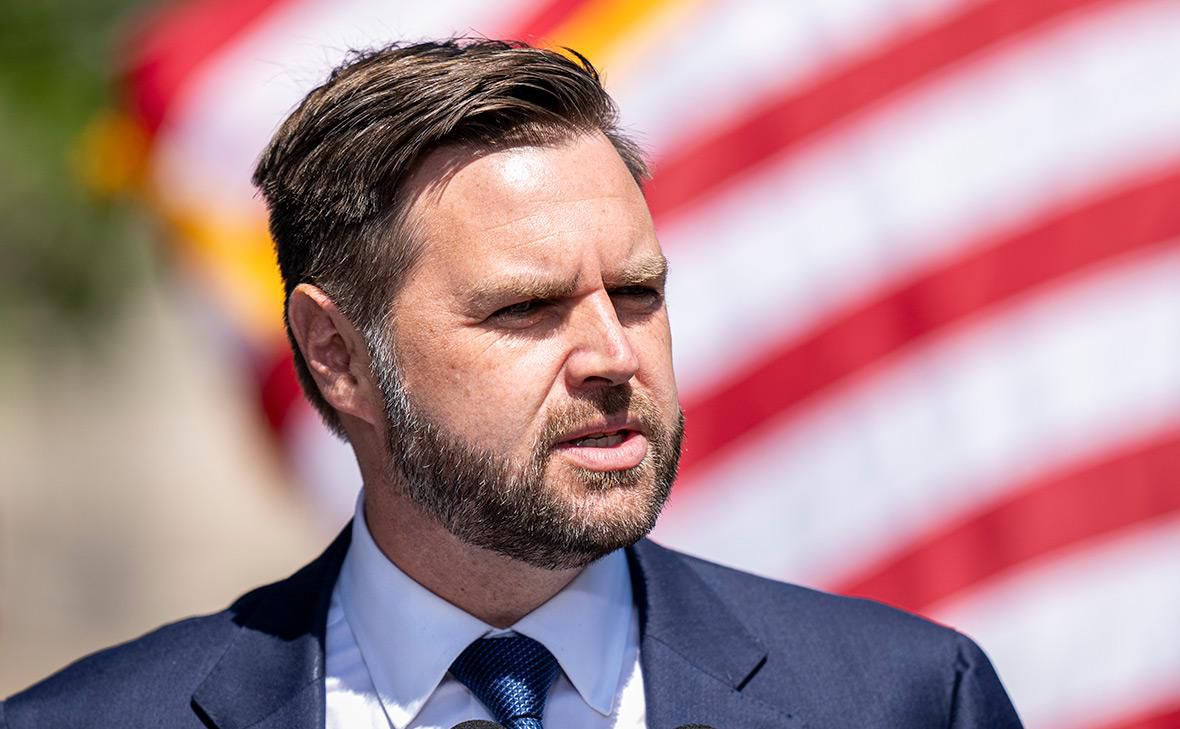
Will JD Vance visit Armenia?
There is growing discussion in Armenia about a possible visit by a senior US official. International relations expert and US analyst Suren Sargsyan said that a “very senior official” may visit Armenia in February 2026, without naming the individual. Meanwhile, Arman Babajanyan, leader of the For the Republic party, said the visit would be by US Vice-President JD Vance.
“This will not be just another routine visit by a senior official. It will mark Washington’s rapid move towards implementing the agreements reached in the United States on 8 August,” Babajanyan said.
Despite the active public debate, officials in Yerevan have neither confirmed nor denied the reports. Foreign ministry spokeswoman Ani Badalyan said Armenia would “provide timely and appropriate information on planned visits by senior officials”.
Political analyst Areg Kochinyan has suggested that Vance could attend the launch ceremony of the so-called Trump Route — a transit corridor through Armenia to be built and operated with the involvement of US businesses.
“If construction moves quickly and the road opens during Donald Trump’s presidency, it cannot be ruled out that the US president himself could come to Armenia to take part in the opening of the infrastructure,” Kochinyan said.
- Opinion: ‘Armenia signals to Russia that it cannot join TRIPP project’
- Pashinyan believes “Trump Route” will become a new component of Armenia’s security
- Opinion: ‘Turkey is trying to limit Armenia’s transit options’
“Armenia has unique opportunity to become communications hub, centre of trust and security”
According to Arman Babajanyan, leader of the For the Republic party, a “historic visit” by US Vice-President JD Vance would mark not only the launch of the so-called Trump Route and other programmes agreed between United States and Armenia.
“This would also be a message to Armenian citizens that independence and sovereignty are not just declared ideas, but a strategic choice that must be defended. Armenia has such a choice — including through the United States — with real partners, tools and support to ensure security, investment and deeper sustainable development,” Babajanyan said.
US involvement in a project on the scale of the Trump Route, he added, opens up new opportunities for Armenia.
“This is a unique opportunity for Armenia to become a communications hub and a centre of trust and security. This can be achieved through discipline, professionalism and concrete steps that protect the state’s interests,” he said.
The politician advises the authorities to prepare for a visit by a high-ranking guest by:
- putting together a package of documents that would include investment projects for infrastructure along the Trump Route;
- take steps to rapidly modernise border and customs controls;
- take measures to secure legal guarantees — contract transparency, risk prevention, and the protection of both investor and state interests.
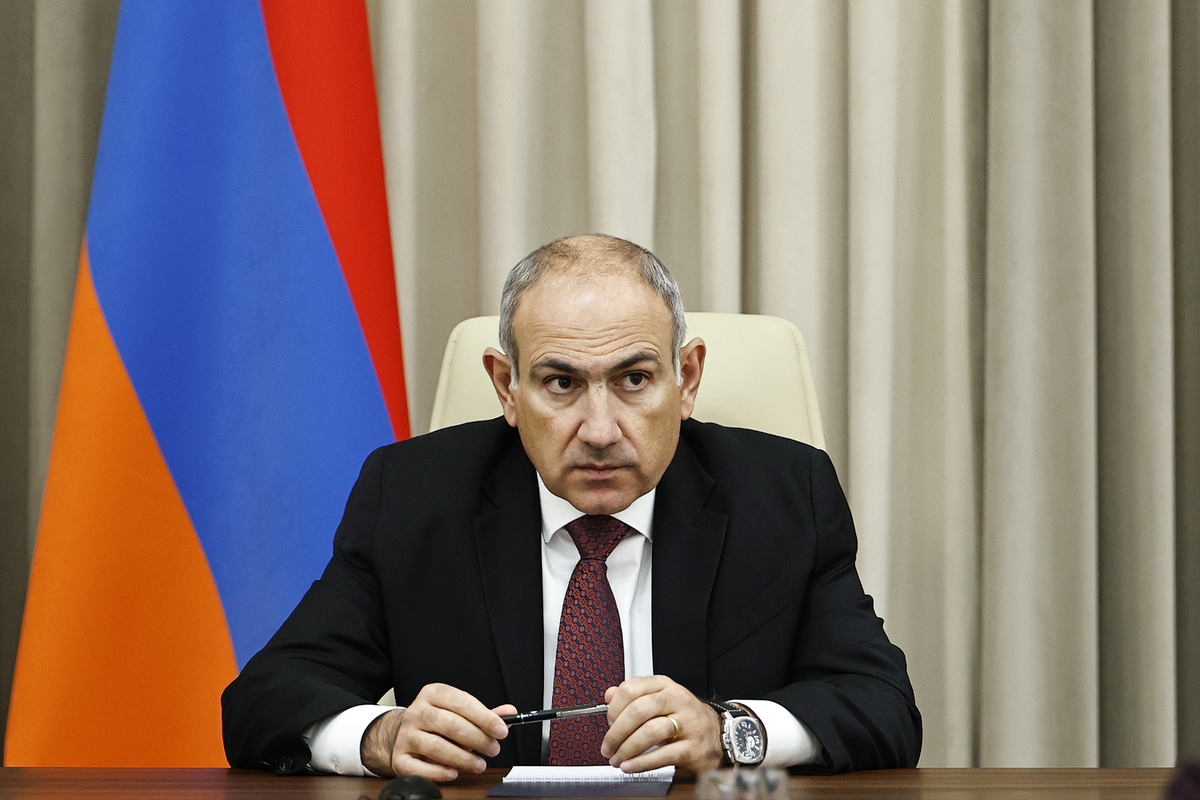
‘Year will be active in terms of implementation of US policy’
Unlike Arman Babajanyan, US analyst Suren Sargsyan did not name names when speaking about a possible visit. He did, however, insist that a visit is being planned. According to him, the senior US official would travel only to Yerevan, with no plans to visit other countries in the region.
He said early 2026 would be “extremely active” for Armenia “in terms of the implementation of US policy”.
Sargsyan noted that the most senior US officials ever to have visited Armenia were the Speaker of the House of Representatives and the Secretary of State.
“Of all US presidents, only George W Bush visited the region — Georgia. And of all US vice-presidents, only Mike Pence visited the region during Donald Trump’s first presidency — and he, too, only went to Georgia,” he said.
The expert said it would be unprecedented for a visit of this level to take place without a serving US ambassador in Armenia.
US President Donald Trump has recently decided to recall US diplomatic staff from 30 countries, including Armenia. All were appointed during Joe Biden’s presidency, and the Trump administration purportedly does not fully trust them. The term of the current US ambassador, Kristina Kvien, is due to end in mid-January. The United States Embassy in Armenia said Washington’s policy towards Armenia would remain unchanged..
Trump also met Armenia’s ambassador to the US, Narek Mkrtchyan, the previous day. He reportedly reaffirmed his unequivocal support for the peace process and stressed Pashinyan’s key role in securing regional peace.
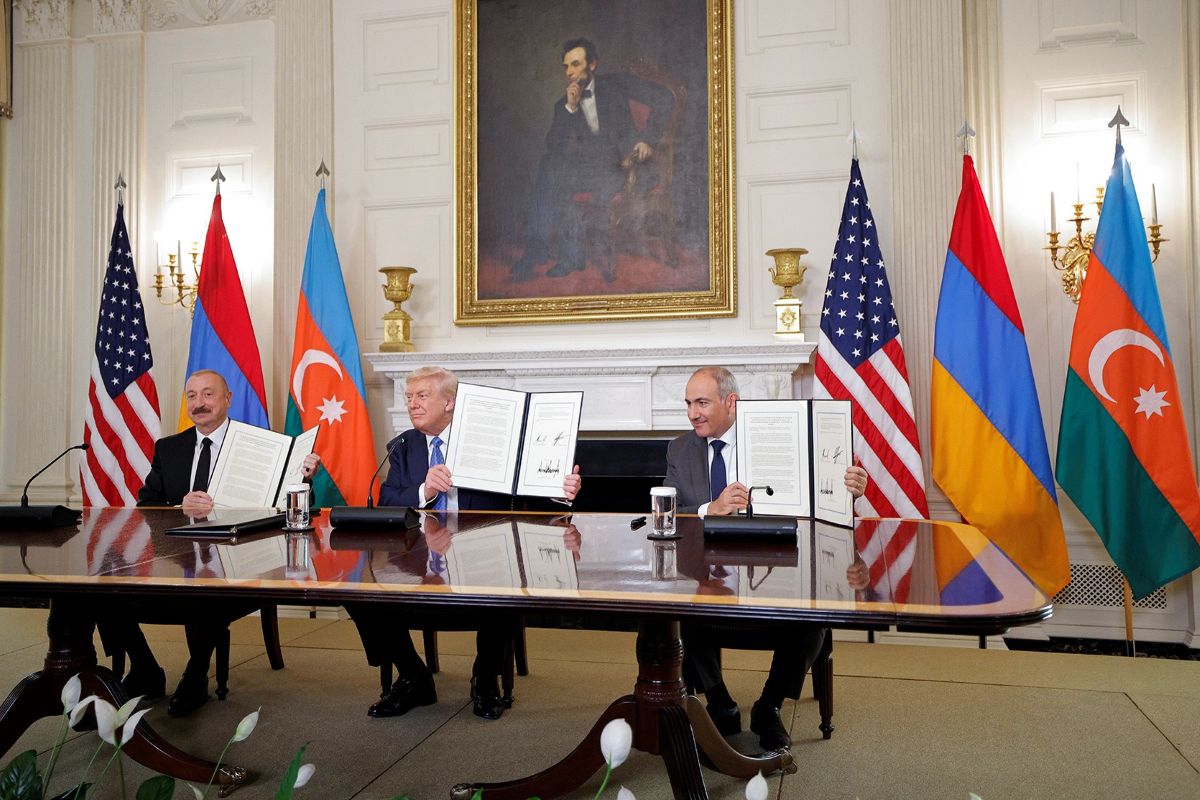
Pashinyan: Work on Trump Route project will begin on ground in second half of 2026
Nikol Pashinyan said Armenia and the US are still drafting a document setting out the strategic framework for the TRIPP project. Once that process is completed, the next stages of work will begin. Pashinyan made the remarks at his regular briefing on Monday, saying work on the ground may begin in the second half of 2026.
The Trump Route for International Peace and Prosperity (TRIPP) is a transport route linking Azerbaijan with its exclave, Nakhchivan, via Armenia. For several years, Yerevan and Baku failed to reach agreement on the issue. Azerbaijan demanded a road it referred to as the “Zangezur corridor.” Yerevan said it would unblock all transport links but rejected the term “corridor”, saying it would imply a loss of sovereignty.
Only on 8 August, in Washington, did the leaders of Armenia and Azerbaijan reach an agreement. They agreed the road would remain under Armenia’s control, with the US joining the unblocking process as a business partner. As a result, the project bears the name Trump Route, after the mediator.
“My forecast remains unchanged: work on the Trump Route project will begin on the ground in the second half of 2026,” Nikol Pashinyan said.
He said the first stage of the project would involve building a railway.
“Although I do not rule out that, as the project’s economic viability and investment appeal become clearer, it may turn out that a gas pipeline or oil pipeline should be built first. But at this stage, we believe the priority is the railway. The specific feature of the railway is that its route is clear, as a railway previously ran along this section,” Pashinyan said.
The prime minister said the government is modernising border and customs infrastructure and purchasing modern equipment. He said the equipment would be used on the Armenia–Azerbaijan border and on Armenia’s borders with Georgia, Iran and Turkey.
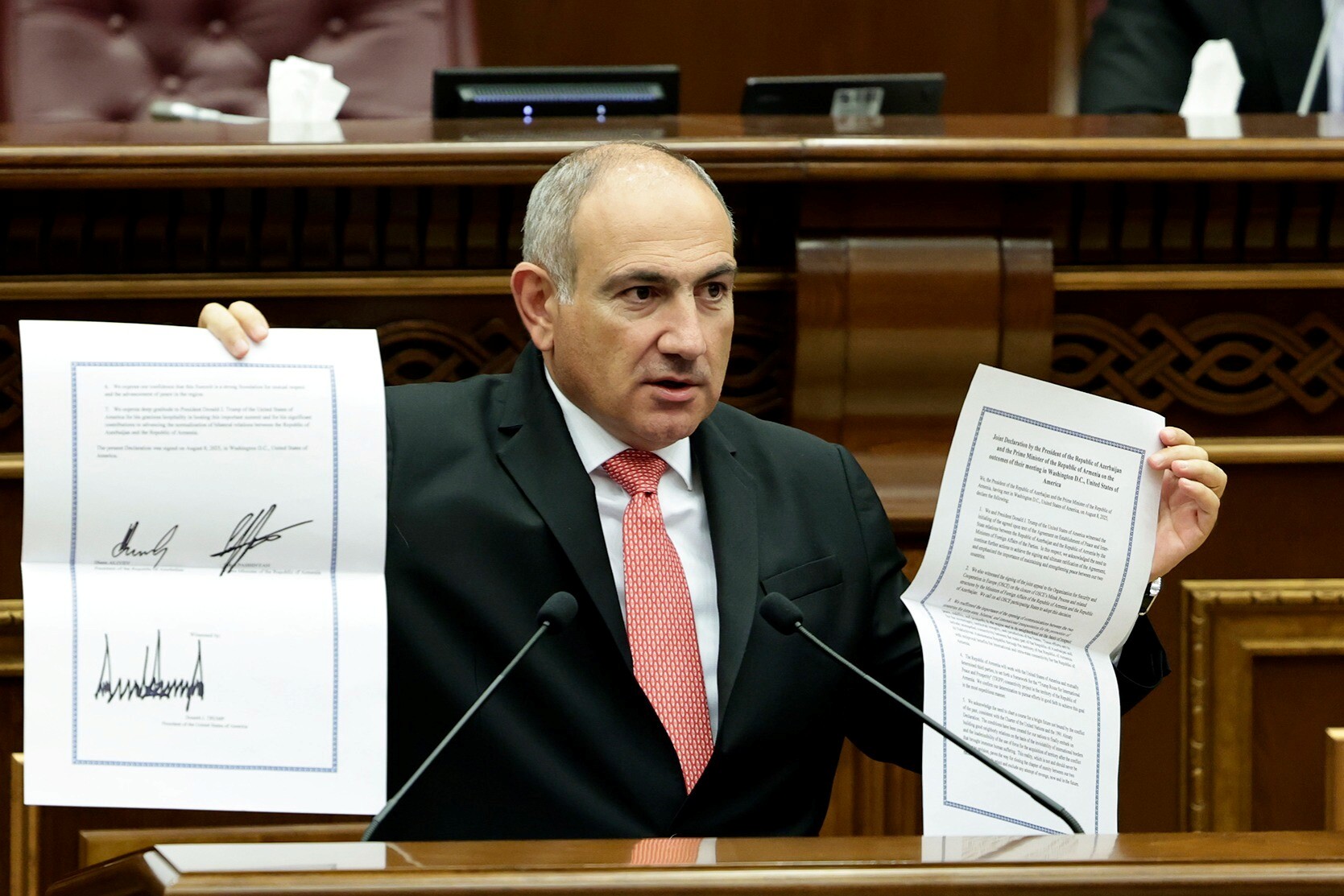
Comment by political analyst Areg Kochinyan
“If we consider that no US vice-president — let alone a president — has ever visited Armenia, this alone suggests that it is more than a purely ceremonial trip.
If the rumours are true, the timeline indicates that the sides are close to approving the contractual framework for TRIPP. Most likely, this framework will be approved and published in January–February next year. Only after that would there be talks about the start of construction or a launch ceremony. I would not rule out that the US vice-president could time a potential visit to coincide with the launch of TRIPP.
The Trump Route is an important foreign policy initiative for the current US administration.
The fact that the Witkoff office continues to handle the project — alongside Israel–Palestine, Ukraine–Russia and several other tracks — speaks for itself.
This is, in essence, their most successful initiative to date. None of the other conflicts they have worked on has resulted in a full settlement.
If my assumptions are correct and the purpose of the visit is the launch of TRIPP, this would provide a serious boost to the further advancement of the Armenia–Azerbaijan peace process and, potentially, to the signing of a peace agreement.
Theoretically, I do not rule out signing such an agreement before Armenia’s parliamentary elections in June 2026. However, parliamentary ratification would take place at a later stage,” Areg Kochinyan said.
Categories
联合国JPO项目P2级别对未来发展如何? – 知乎
The State Security Service of Georgia (SSSG) announced on December 25 arresting Bacho Akhalaia, who served as interior and defense minister under the United National Movement (UNM) government, on allegations of leading the October 4 events, with the agency citing records of “phone internet communications” with other alleged organizers as evidence.
The arrest comes nearly three months after the October 4 tensions, when a group of protesters, upon calls by election-day rally organizers, tried to occupy the presidential palace in Tbilisi, but were repelled by police. Georgian Dream authorities framed the events as a foreign-orchestrated coup attempt, arresting up to 60 persons in the weeks that followed, including five alleged organizers: activist and opera singer Paata Burchuladze, United National Movement party members Irakli Nadiradze and Murtaz Zodelava, Strategy Agmashenebeli party member Paata Manjgaladze, and retired colonel Lasha Beridze.
October 4 developments “were led through internet applications [by Akhalaia],” Lasha Maghradze, deputy SSSG head, said during the briefing, describing Akhalaia as “the main organizer” of the events within Georgia. He said the agency was able to establish the records of internet communications via phone applications “with a high standard of truthfulness, down to the exact minutes and seconds” based on internet traffic data.
Maghradze said the agency had traced a total of 343 “internet sessions” between an IP address registered to Akhalaia’s wife, Ana Nadareishvili, and five alleged organizers of the October 4 events, spanning the period from September 28, 9 pm, until the suspects’ arrest in the early hours of October 5.
That, Maghradze said, included communications on the day of the tensions, including nine minutes before Zodelava and Burchuladze would make “violent calls,” as well as in the aftermath of the “violent storming” of the palace, during which Beridze was said to have been near the site and “receiving directives” from Akhalaia.
The deputy SSSG head further claimed that, after a “tape” allegedly suggesting Akhalaia and Paata Burchuladze were orchestrating unrest was leaked late on October 4, Zodelava began communicating with Zviad Gagua, a person allegedly living at Akhalaia’s residence. According to Maghradze, three minutes after the contact between Gagua and Zodelava, the latter returned to the stage and presented a new plan to move toward the Georgian Dream headquarters.
The SSSG announcement followed reports that police had been mobilized near Akhalaia’s apartment. The agency said that Ana Nadareishvili, Akhalaia’s wife, had also been arrested but would be released while the investigation continues to examine her possible involvement in the alleged events.
Officials repeatedly brought up Akhalaia’s name in connection with the October 4 unrest in recent months, including over an alleged recording of his conversation with Paata Burchuladze and claims linking him to the so-called Hexogen case, in which two Ukrainian citizens were arrested for allegedly importing explosives. Akhalaia was earlier summoned by the Georgian Interior Ministry over the recording, which was released by pro-government media and which the former minister denied was authentic.
During the briefing, Maghradze also pointed to Akhalaia’s possible links with a criminal case where SSSG claimed on October 5 that it found “large quantities” of firearms, ammunition, and explosives. The agency alleged at the time that they were intended for “subversive acts” during the October 4 unrest in Tbilisi, and linked them to a “military unit” in Ukraine.
Akhalaia, a controversial figure during the United National Movement’s rule, has been convicted of multiple offenses related to his official duties after Georgian Dream came to power in 2012. He was arrested in 2012 and released in 2022, having been found guilty of abuse of power, organizing torture, and sexual abuse in separate trials.
Also Read:
A scandal in Abkhazia over Russian political technologists who illegally worked for pro-government candidates during the recent municipal elections has shown no sign of easing.
To recap what happened: on 5 November, three days before the vote, a group of Abkhaz opposition activists raided an office where Russian political technologists were working. They forced them to admit to illegal activities and handed them over to the State Security Service (SGB), which, without conducting any investigation, sent them back to Russia the same day.
The Russian side later said the technologists had been victims of a violent attack by Abkhaz opposition activists and opened a criminal case against the opposition figures involved.
Following this, Abkhazia’s State Security Service launched its own investigation and ultimately imposed administrative fines on the Russian political technologists.
This outcome satisfied neither the Abkhaz opposition nor, it appears, Moscow.
On 22 December 2025, the Sukhumi prosecutor’s office opened a criminal case over alleged death threats, violations of the secrecy of correspondence and the misappropriation of funds against Russian citizens Ivan Reva, Dmitry Budykin and Pavel Timofeev — the same political technologists.
A separate criminal case was also opened over alleged violations of rules governing the financing of local election campaigns.
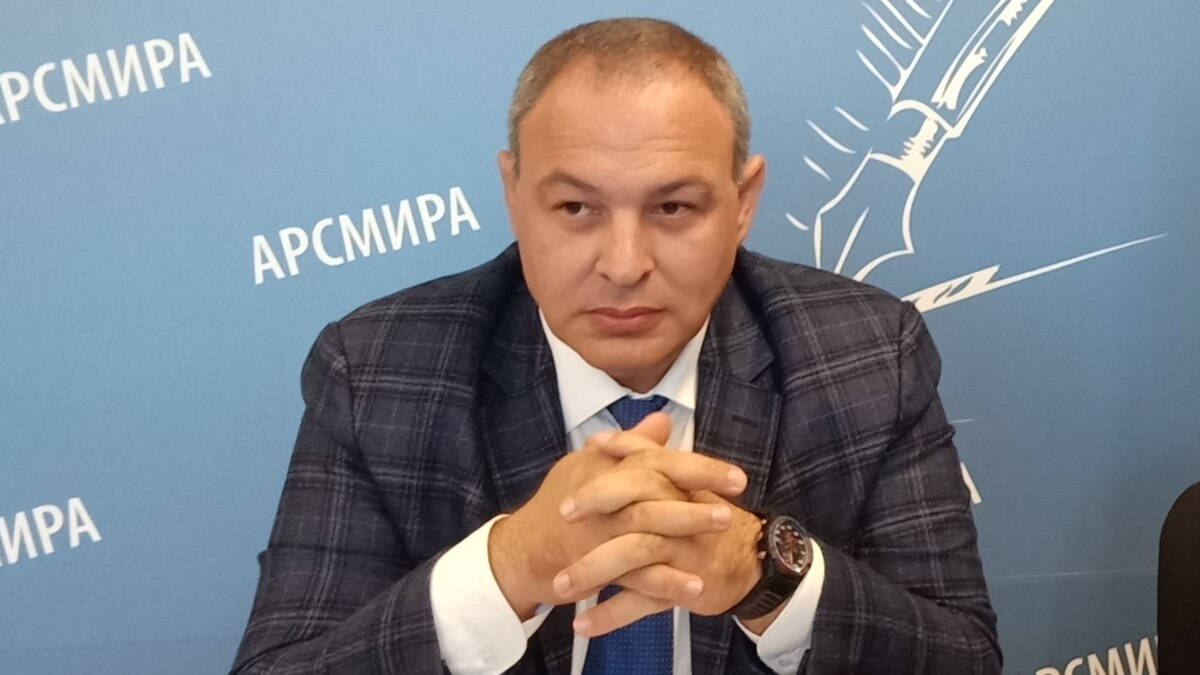
The head of the Ahyatsa civic movement, Akhra Bzhaniya, said the “case of the Russian political technologists” has a deeper significance than Abkhaz law enforcement authorities are trying to present.
In his view, the issue is not only Russia’s interference in the municipal electoral process, but a gradual attempt to bring Abkhazia’s political processes under full control.
Akhra Bzhaniya:
“There is a well-tested way to change the constitutional order in any country: change the ideology, bring the right people to power and abolish the constitution. I fear we are now going through this very scenario.
Russian political technologists are not merely hired operatives. On the contrary, they — and others like them — were directing the electoral processes, while local ‘politicians’ and the ‘authorities’ acted as their assistants and cover.
They came here with a simple task: to facilitate a gradual reshaping of Abkhazia’s political landscape. The aim is to ensure that, in the future, there are no votes against the president’s line, no protests, no free press and, accordingly, no opposition figures in power. Only loyalists are meant to be elected,” he said.
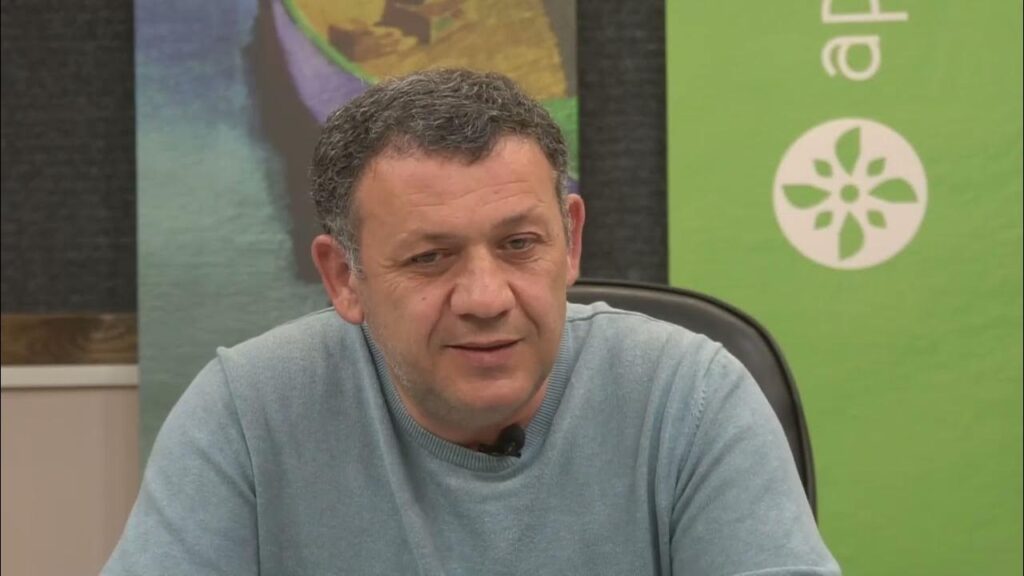
“Half the republic was covered with banners dividing society into those deemed acceptable and unacceptable. Polls were conducted on changing the constitutional system. People were openly recruited to shape a favourable information environment, and election campaigns for candidates to public office were financed — yet Abkhaz law enforcement agencies and the courts have limited their response to administrative fines.
But there is a silver lining. Had this story not become public, we would still not understand the scale of the problem. We would not know that foreign specialists, funded by foreign money and operating under local cover, were organising elections to suit their future objectives.
Their downfall was a sense of impunity. Being caught red-handed was likely a shock for their handlers, as it put at risk a plan to manage Abkhazia’s elections.
Something had to be done. What exactly? To deter locals from interfering in the future with similar political technologists and their work to ‘reform’ our state. That is why criminal cases were opened in Russia, and why our law enforcement agencies were instructed to take action.”
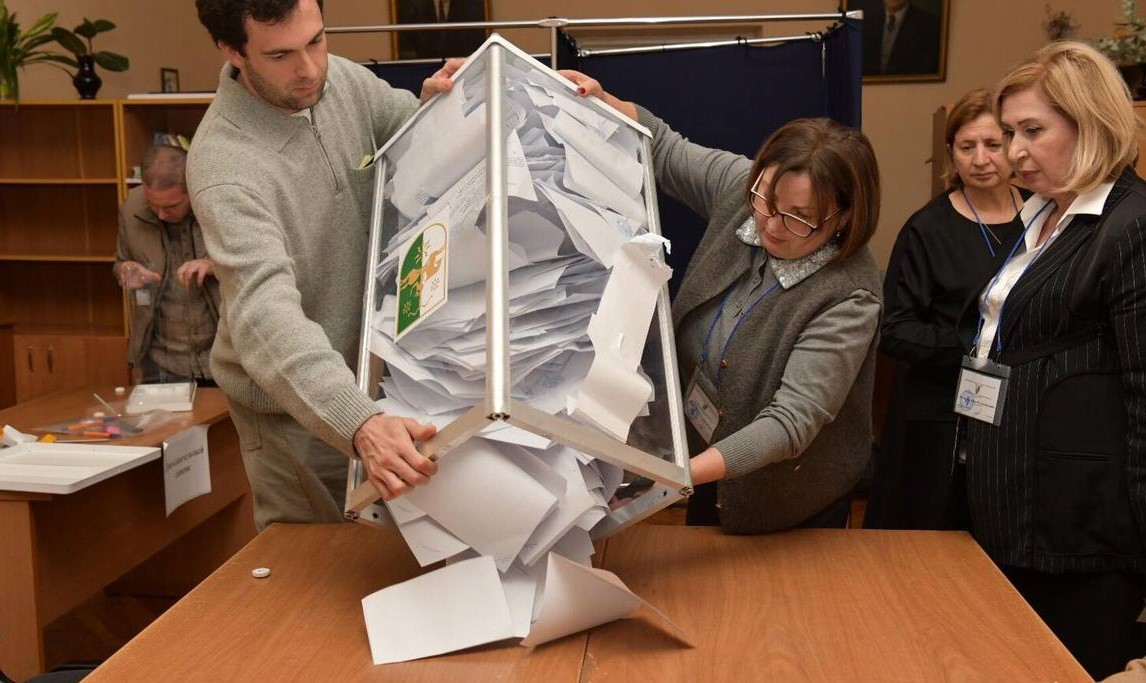
“But the most striking point is that those who are now trying to go after Abkhaz civil society while turning a blind eye to the actions of the visiting technologists may soon find themselves crushed by the very system they are serving. An Abkhaz republic with its own laws and elections — which currently provides them with work and social status — could lose so much of its autonomy that their services will no longer be needed.
If Russian political technologists can control our expression of will, why should they not go on to control everything else — ministries, state agencies, television channels and administrations?
It appears that Abkhaz security officials themselves are uncomfortable dealing with this case. But even if they want to quietly bury it, society must demand a clear stance: either you protect us — and yourselves — from foreign interference in our constitutional rights, or you face protests.
No one in our society is naive enough to believe that the activities of political technologists would stop at the electoral process. Tomorrow they will move on to shaping compliant political institutions — parties, civic groups and youth organisations. From there, it is only a short step to a referendum on Abkhazia’s status. I do not believe the citizens of Abkhazia would welcome such a future. Our republic was won at too high a price to be laid at the feet of Ivan Reva and others like him.”
Toponyms, terminology, views and opinions expressed by the author are theirs alone and do not necessarily reflect the views and opinions of JAMnews or any employees thereof. JAMnews reserves the right to delete comments it considers to be offensive, inflammatory, threatening or otherwise unacceptable.
Russian political technologists in Abkhazia