
Vietnam’s National Assembly on Wednesday approved an amended education law that will eliminate the traditional secondary school diploma starting in 2026, Azernews reports, citing foreign media.
Day: December 10, 2025

At an extraordinary session held on 10 December, the parliament of Abkhazia decided to postpone the implementation of the recently adopted law on the cadastre for six months, citing deep systemic issues that have rendered it non-functional.
During the same session, lawmakers also discussed amendments to the law proposed by the president’s administration.
The law on real estate cadastre came into force on 1 October 2025 and was expected to bring a “revolution in property transactions.”
However, within the first few days, the Cadastre Chamber ran into numerous problems when attempting to register property deals.
According to the chamber’s head, Temur Sanguliya, district technical inventory offices are effectively sabotaging their work, 40% of Abkhazia’s population have no property documents at all, 25% have incorrectly prepared documents, and there is a catastrophic shortage of staff.

Former vice president of Abkhazia, Vitaly Gabnia, outlined what he sees as the core problem with the implementation of the cadastre law:
“The law began operating without the necessary subordinate regulations and basic organizational preparation, despite warnings from relevant specialists in advance.
Adopting a document of this scale required expert development and broad public discussion. None of that was done. The result is chaos in the real estate sector and widespread violations of citizens’ rights. Landmark laws should not be passed behind closed doors, as this undermines trust in state institutions.”
Gabnia also recalled that, immediately after the problems were identified, it was proposed to suspend the law and create a working group to revise it.
“However, the creation of the group was rejected, experts were once again not involved, and the full suspension was replaced with a ‘partial’ one. It is difficult to imagine the damage this could cause to the republic. Continuing down the wrong path is pointless. The problem is not with enforcement, but with the very substance of the law,” he said.
Toponyms, terminology, views and opinions expressed by the author are theirs alone and do not necessarily reflect the views and opinions of JAMnews or any employees thereof. JAMnews reserves the right to delete comments it considers to be offensive, inflammatory, threatening or otherwise unacceptable.
Law on cadastre in Abkhazia

Human Rights Report: Georgia 2025
The Georgian Young Lawyers’ Association has published its report on the human rights situation in Georgia in 2025, noting that the year was marked by restrictions on freedoms.
According to the report, the move towards authoritarianism that began in 2024 has continued. It highlights that one of the main targets of the crackdown has been freedom of expression, while the situation regarding the right to peaceful assembly has continued to deteriorate.
The human rights report, released annually on 10 December, outlines trends and patterns linked to significant restrictions on human rights.

What does the report say?
- In 2025, Georgia experienced a year marked by restrictions on freedoms. The consolidation of authoritarian rule and the curtailment of rights particularly affected freedom of expression, as well as the rights to assembly and association—key pillars of a functioning democracy.
- The strengthening of authoritarian rule that began in 2024 continued this year, characterized by a deliberate undermining of human rights and democracy through various methods, including changes to the legal framework, physical violence, arbitrary arrests and fines, politically motivated court cases, and disinformation campaigns.
- Freedom of expression became one of the main targets of repression. The legal framework governing freedom of expression worsened, including bans on insulting public officials and politicians, weakened protections for public debate under defamation laws, a complete ban on foreign funding for broadcasters, and restrictions on media activity in courts.
- The situation regarding the right to peaceful assembly also deteriorated. The ruling Georgian Dream party introduced a series of human-rights-incompatible amendments to the Administrative Offenses Code, Criminal Code, and the Law on Assemblies and Demonstrations, created new offenses, and significantly increased penalties. Throughout the year, protesters faced arbitrary administrative detentions, heavy fines, and physical violence.
- The right to association also worsened significantly in 2025. In addition to passing new repressive laws, Georgian Dream targeted civil society through politically motivated investigations, account freezes, and interrogations.
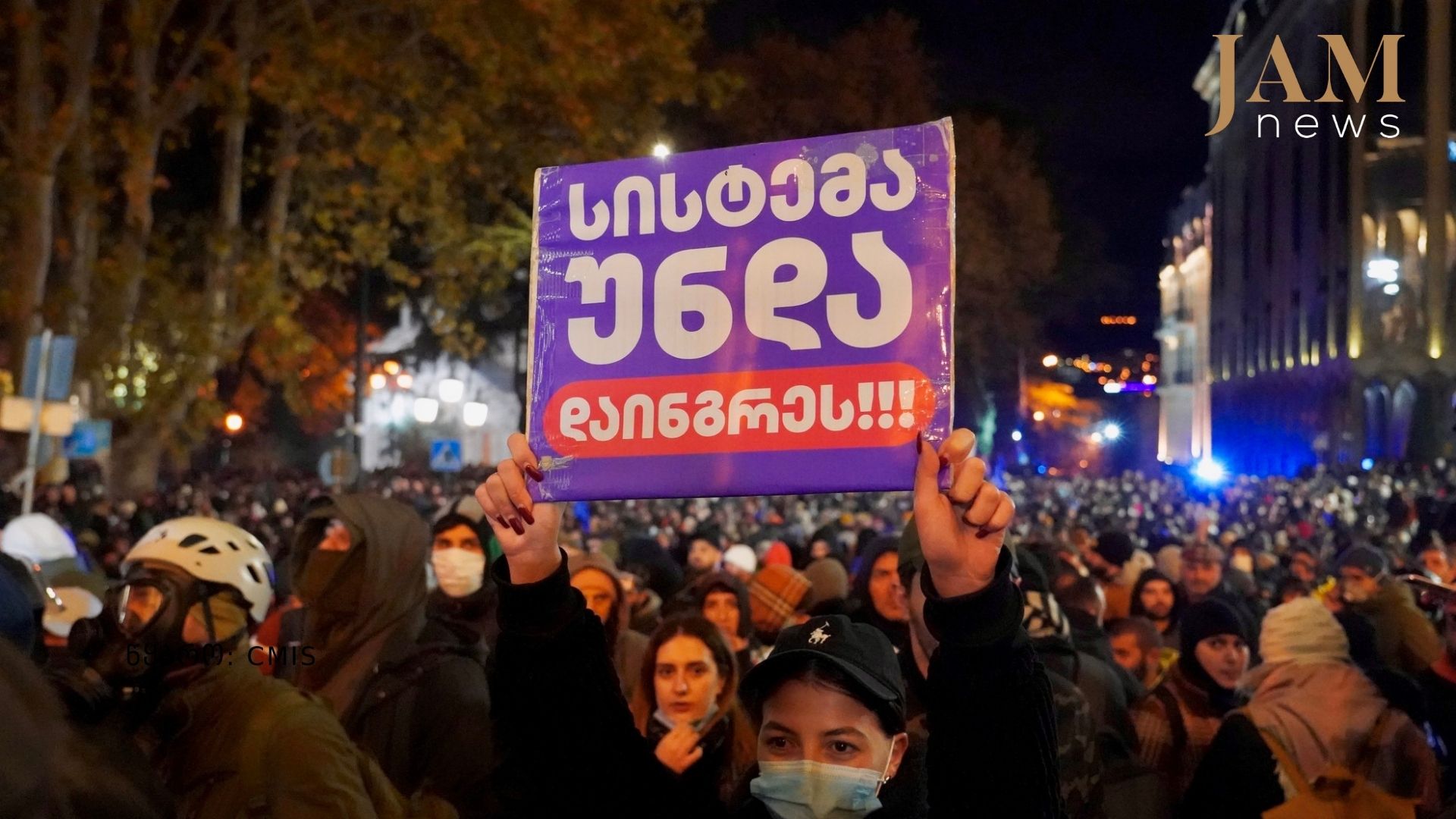
- One of the most serious issues has been politically motivated criminal justice. Monitoring of 69 criminal cases in first-instance courts from spring 2024 to September 2025 showed that the use of criminal prosecution against activists aimed not only to prevent specific potential crimes but also to suppress the rights to freedom of assembly and expression.
- Brutal treatment of demonstrators continued in 2025. Those responsible for systematic torture in November–December 2024 remain unpunished.
- The situation for vulnerable groups worsened. Throughout 2025, the rhetoric, laws, and actions of the authorities continued to undermine progress made in previous years on gender equality, while also promoting sexism, homophobia, and transphobia.
- Against the backdrop of ongoing political repression, economic, social, and cultural rights remain largely ignored. In 2025, the dire consequences of the country’s ongoing crisis for the right to adequate housing and the right to live in a safe environment became increasingly evident.
- Several deaths were recorded in 2025, allegedly resulting from the state’s neglect in protecting the right to life.
“The Georgian Young Lawyers’ Association managed to prepare this report despite attacks from propaganda media, restrictive legislation, and government officials,” the organization noted.

Human Rights Report: Georgia 2025