
Day: December 9, 2025

Corruption report in Georgia — 2025
On 9 December, International Anti-Corruption Day, Transparency International Georgia (TI) issued a statement noting that corruption levels in Georgia at the end of 2025 are alarming. The organisation assessed that Georgia is now a kleptocratic state.
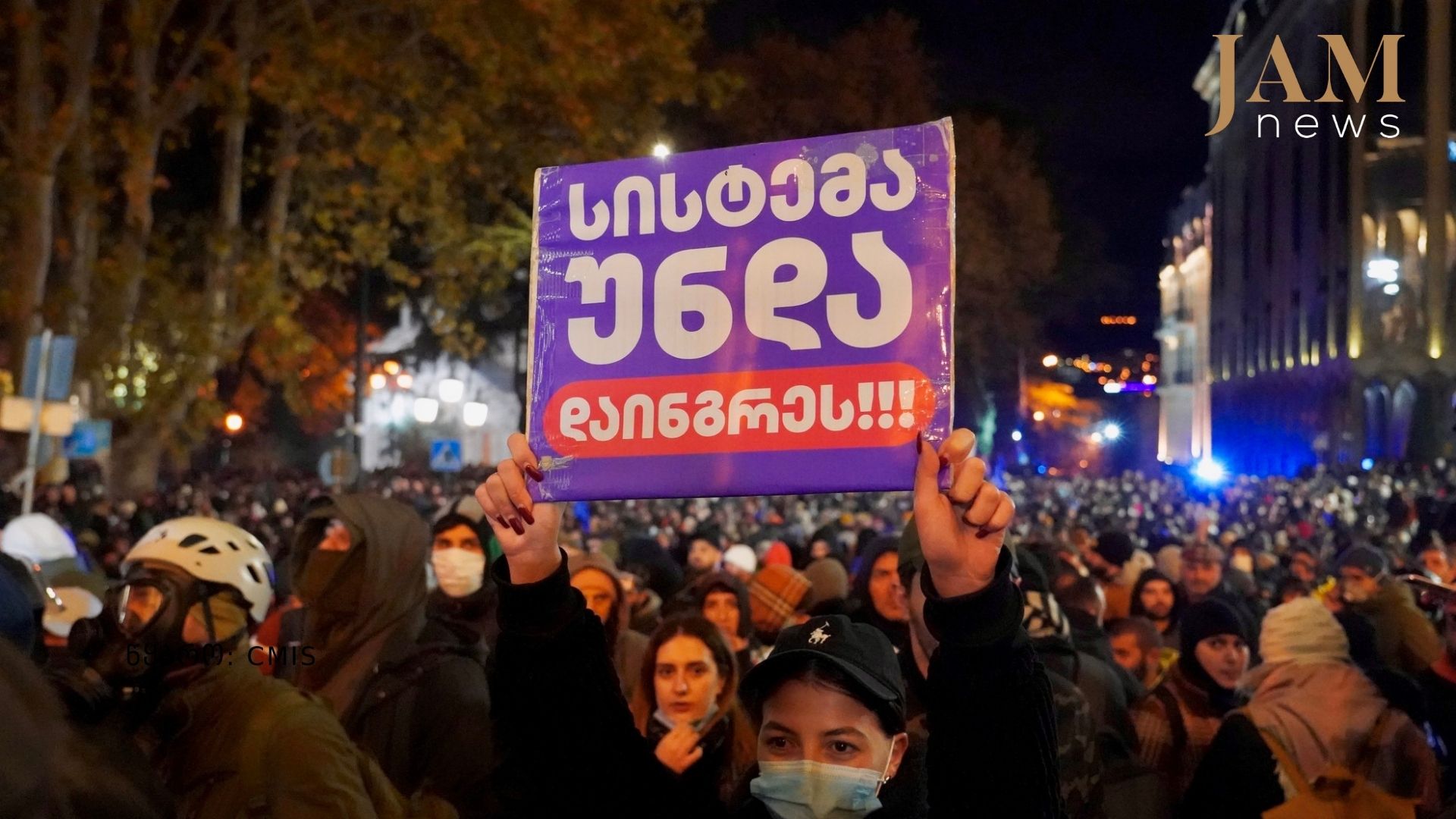
“In such countries, the sole aim and motivation of the ruling elite is personal enrichment, achieved by plundering citizens and the state. Resources amassed through corruption are then used to maintain power.
The rule of Bidzina Ivanishvili, who heads a captured state, is based on the loyalty of a specific group, which he allows to enrich itself through corruption and then uses these resources to subjugate state institutions and preserve his own power.
Corruption and the damage it causes are expected to increase in the future,” the organisation writes.
Corruption report in Georgia — 2025: Transparency International
- State capture is complete — there is no independent government body able to speak openly about corruption or take meaningful action against it.
- A kleptocracy is taking shape — the number of documented corruption cases in the highest echelons of power, their nature, and the identities of those involved point to systemic corruption at the top levels of government.
- Anti-corruption efforts are performative — investigative bodies serve internal conflicts and disputes within the ruling party, while hundreds of documented cases of high-level corruption remain unresolved.
- The Anti-Corruption Bureau is being abolished — the agency, created just three years ago to prevent corruption, has been turned into a repressive tool against the non-governmental sector. It is now being dismantled, along with its key anti-corruption functions: monitoring officials’ asset declarations, overseeing political finance, developing the national anti-corruption strategy, participating in international anti-corruption platforms, protecting whistleblowers, and controlling conflicts of interest.
- International obligations and recommendations on corruption are ignored — Georgia openly rejects anti-corruption requirements developed by the European Commission and GRECO. The country has also withdrawn from major international anti-corruption processes, such as the OECD Anti-Corruption Network assessments and the Open Government Partnership (OGP).
- The country has lacked a national anti-corruption strategy for the fifth consecutive year, meaning that for more than five years, no state institution has considered what corruption risks exist, where they are growing, and what measures are needed to reduce them.
- Collaboration between state institutions and civil society is prohibited by law. Civil society, a key component of successful anti-corruption efforts, particularly at the elite level, is being persecuted and pushed to the brink of extinction. Participation of civil society in decision-making has been legally abolished, in direct violation of the UN Convention against Corruption.

Corruption report in Georgia — 2025
Armenia’s political landscape is entering a critical phase as the country navigates the delicate process of normalizing relations with Azerbaijan. Since the signing of the peace accord in Washington, Nikol Pashinyan has made bold statements and decisions aimed at positively advancing the process. Although the Azerbaijani side still hopes for some practical steps, these actions by Pashinyan should certainly be regarded as commendable.

Opinion on restricting protests in Georgia
“Imposing restrictions on rallies in areas where no cars pass is completely unacceptable. Essentially, it criminalizes freedom of expression and assembly — it will have a highly chilling effect, and the aim [of the new legislative amendments] is clear,” said Nona Kurdovanidze, chair of the Georgian Young Lawyers’ Association.
Kurdovanidze explained that the changes proposed in the new bill contradict Georgia’s constitution.
The new amendments require organisers to notify the Georgian Interior Ministry in advance if a gathering or demonstration takes place in areas with pedestrian or vehicle traffic, or if the event obstructs the movement of people or vehicles. Notification must be submitted to the Patrol Police Department of the Interior Ministry no later than five days before each gathering or demonstration.
“If participants refuse to hold a gathering or demonstration in the location proposed by the Interior Ministry, they will face administrative detention for up to 15 days, and in the case of a repeat offence — criminal liability, including imprisonment for up to one year,” said Irakli Kirtskhalia, a Georgian Dream MP, at a briefing.
Regarding the amendment requiring organisers to notify the Interior Ministry in advance of a demonstration in areas open to public movement, Kurdovanidze said this effectively means obtaining permission to hold a rally, making spontaneous gatherings impossible.

Nona Kurdovanidze said: “In areas where no cars pass, introducing such restrictions is completely unacceptable and violates the constitution. It is, in essence, the criminalisation of freedom of speech and assembly. It will have a highly negative effect, and the aim [of the new amendments] is clear.
This continues already implemented legislative changes, which have become particularly severe in recent years. In 2024–2025, a series of amendments were made to the Law on Assemblies and Demonstrations and the Georgian Criminal Code, which effectively eliminate citizens’ ability to hold gatherings freely.
What can citizens do in this situation?… It is possible that the provisions adopted by parliament will be challenged in the Constitutional Court. However, unfortunately, expectations that the Constitutional Court could play any positive role, given the current circumstances, may be unrealistic.”
It is claimed that [the requirement to notify the Interior Ministry of a rally] is merely informational, but given the content of the [bill] and its restrictive tone, it is equivalent to obtaining prior permission [for a protest]. This is prohibited both by international treaties to which Georgia is a party and by the Georgian constitution.
Moreover, the Constitutional Court of Georgia has already ruled on these issues, stating that restrictions cannot be imposed that make spontaneous expressions of protest by citizens impossible. Yet the new amendments effectively exclude the possibility of holding spontaneous gatherings.

Opinion on restricting protests in Georgia
Georgian Dream on amendments to protest law
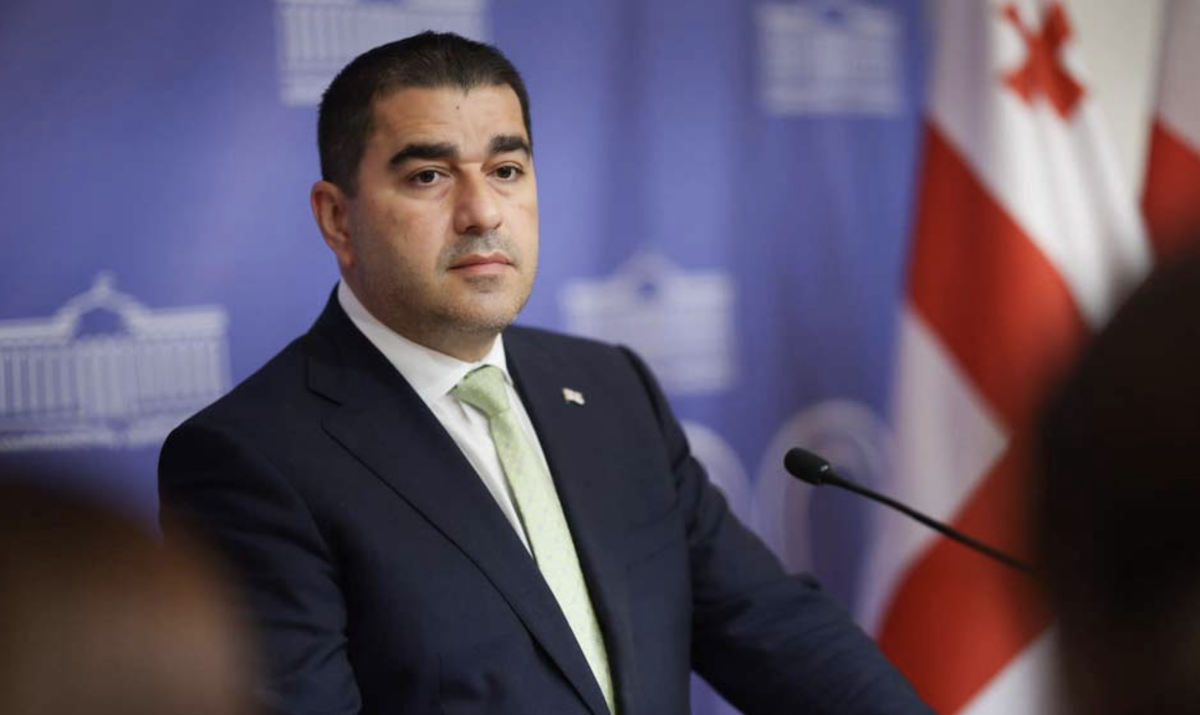
Shalva Papuashvili, chair of the Georgian Dream parliamentary faction, said that tightening the law on assemblies and demonstrations aligns with the practice of both the Constitutional Court and the Strasbourg Court.
“If participants refuse to hold a gathering or demonstration in the location proposed by the Interior Ministry, they will face administrative detention for up to 15 days, and in the case of a repeat offence — criminal liability, including imprisonment for up to one year,” said Irakli Kirtskhalia, a Georgian Dream MP, at a briefing.
In addition, the Georgian Dream bill once again requires organisers to notify authorities five days in advance of any gathering or demonstration. On 14 December 2023, the Constitutional Court ruled that such a requirement is unconstitutional, as it makes spontaneous gatherings impossible.
According to Papuashvili, the rule requiring advance notification of rallies has existed before, and protests, especially small ones, should not obstruct the movement of vehicles or pedestrians.
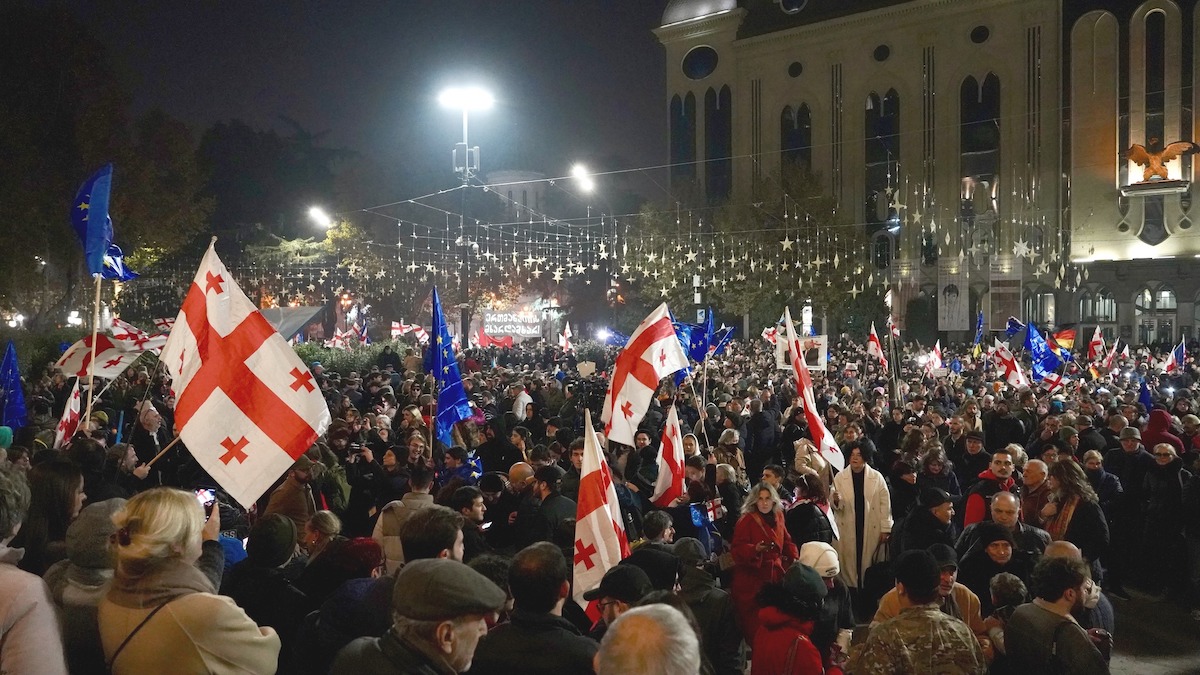
Papuashvili also claimed that protesters allegedly use procedural tricks to delay paying fines in administrative cases. He said the tougher penalties for violating assembly laws are due to offenders “not responding” to fines.
Comment from Shalva Papuashvili
“This bill fully complies with both constitutional norms and the practice of the Strasbourg Court, so it has no legal flaws…
Of course, if a gathering obstructs citizens’ movement, the police will have the option to direct protesters along a different route. People travelling by car should not experience unnecessary inconvenience, especially when there are few protesters and the road should not be blocked. It is good that society as a whole agrees with this.
We see that even those participating in protests follow the law in this regard, and there is a full understanding of the standard that should apply. The same applies to pedestrians’ rights. If there are few protesters, they should not impede the movement of others on foot.
I don’t think there is anything unclear or beyond human norms here, let alone legal norms… Why should fifty people block a street? We have already agreed that they will not block it. It is good that they have finally fallen in line.”
“Unfortunately, sanctions had to be toughened for radical groups. The law, in place for years, was always clear: it is impossible for fifty people to block a road. But they did not comply and used certain procedural tricks to delay paying fines [for blocking the road]. Parliament, accordingly, responded to these attempts at abuse. As a result, everything remained within the legal framework established in our country for decades.
Anyone wishing to protest has every opportunity to do so without unnecessarily infringing on the rights of other citizens… What is the point of a fine or any other sanction for administrative offences? It is meant to have a preventive function…
But we saw that there was no response to a number of fines, so law enforcement was delayed. That is why we made a timely decision regarding vehicle movement, which brought order to the situation.”
Georgian Dream on amendments to protest law
Categories