Categories
South Caucasus News

Mandarin season in Abkhazia. Video


Mandarins in Abkhazia

Mandarins are one of Abkhazia’s “calling cards.” we show how the harvest takes place.

In 2025, more than 6,000 tonnes of mandarins were exported from Abkhazia, mainly to Russia. That’s about 300 tonnes more than last year, even though, according to agronomists, this year’s crop has been poor.

Mandarin harvesting at the “Sofia” agricultural enterprise is done by residents of eastern Abkhazia. Pickers earn 120 rubles (around $1.5) for each box they collect. One person can gather 25 to 40 boxes a day.

Agronomists say that mandarins yield a rich harvest every two years. Last year was a bumper year, with large fruits on all the trees. This year, the mandarins are smaller, and some trees didn’t bear fruit at all.


Toponyms, terminology, views and opinions expressed by the author are theirs alone and do not necessarily reflect the views and opinions of JAMnews or any employees thereof. JAMnews reserves the right to delete comments it considers to be offensive, inflammatory, threatening or otherwise unacceptable.

Mandarins in Abkhazia


Categories
South Caucasus News

‘Catholicos of All Armenians has no intention of deserting’ – Head of Holy See’s Office


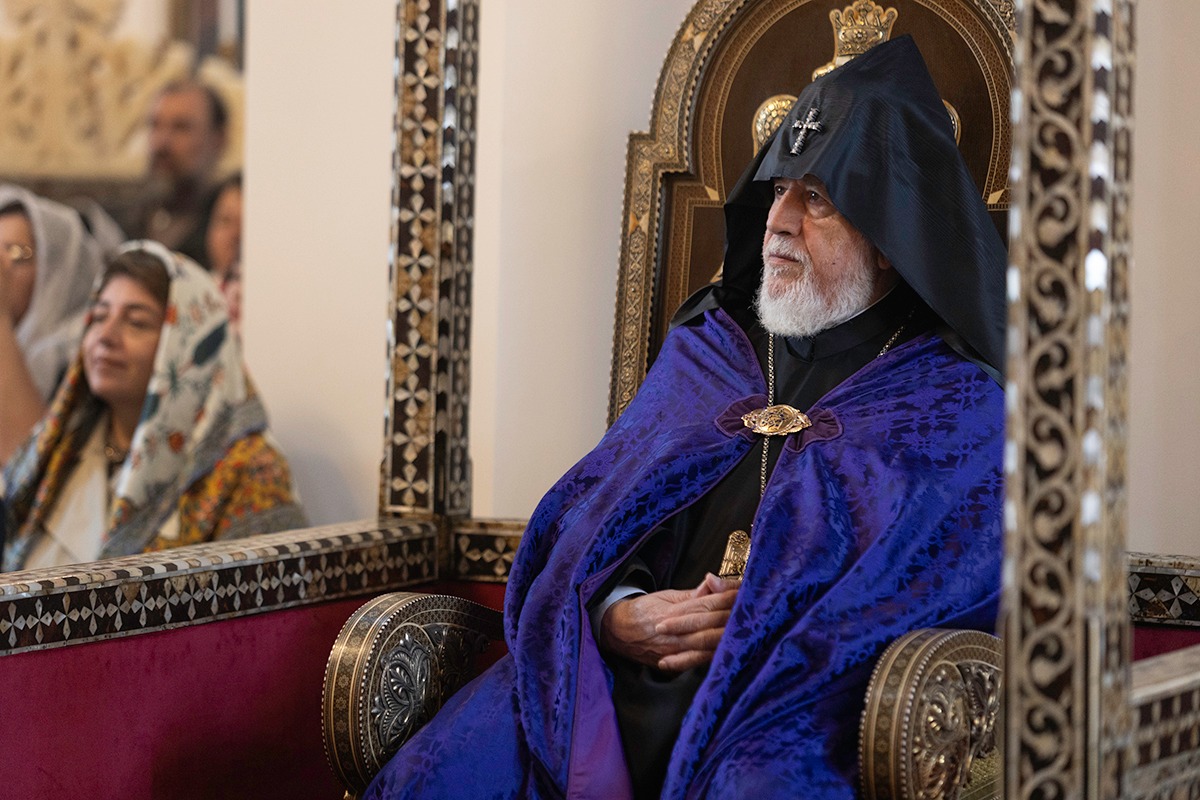
Garegin II will not abdicate throne

Garegin II will not abdicate throne

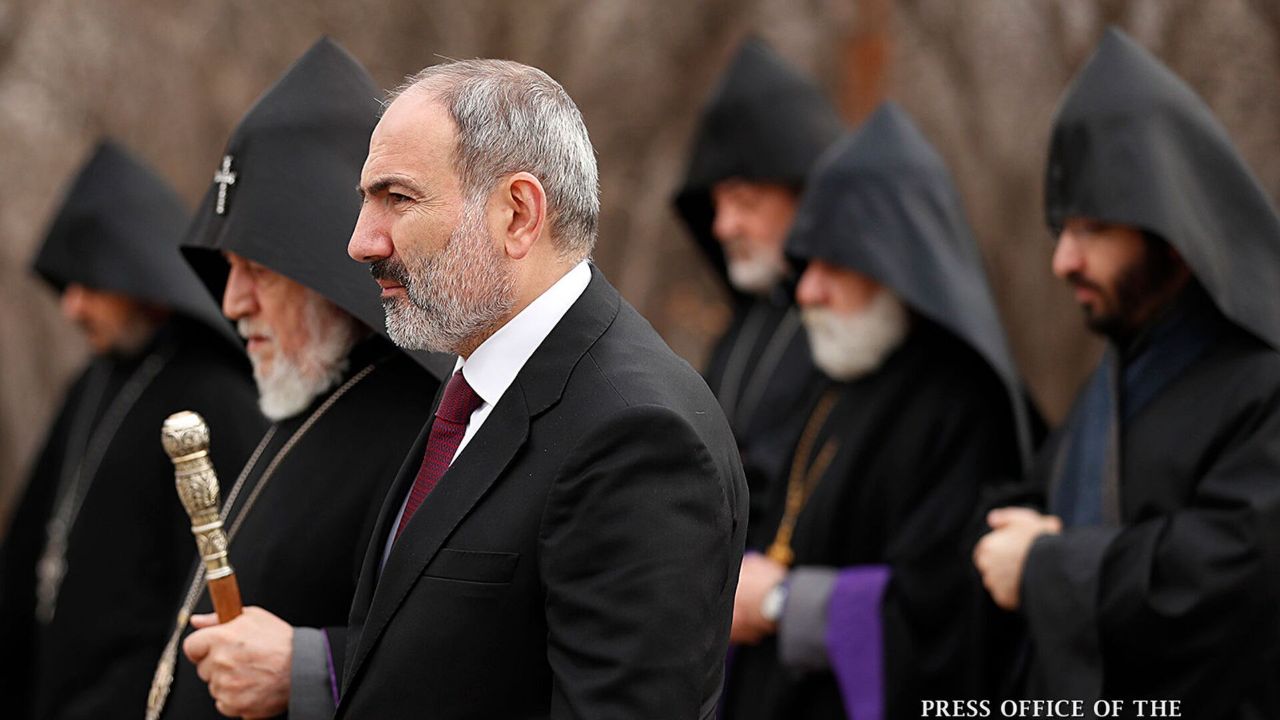
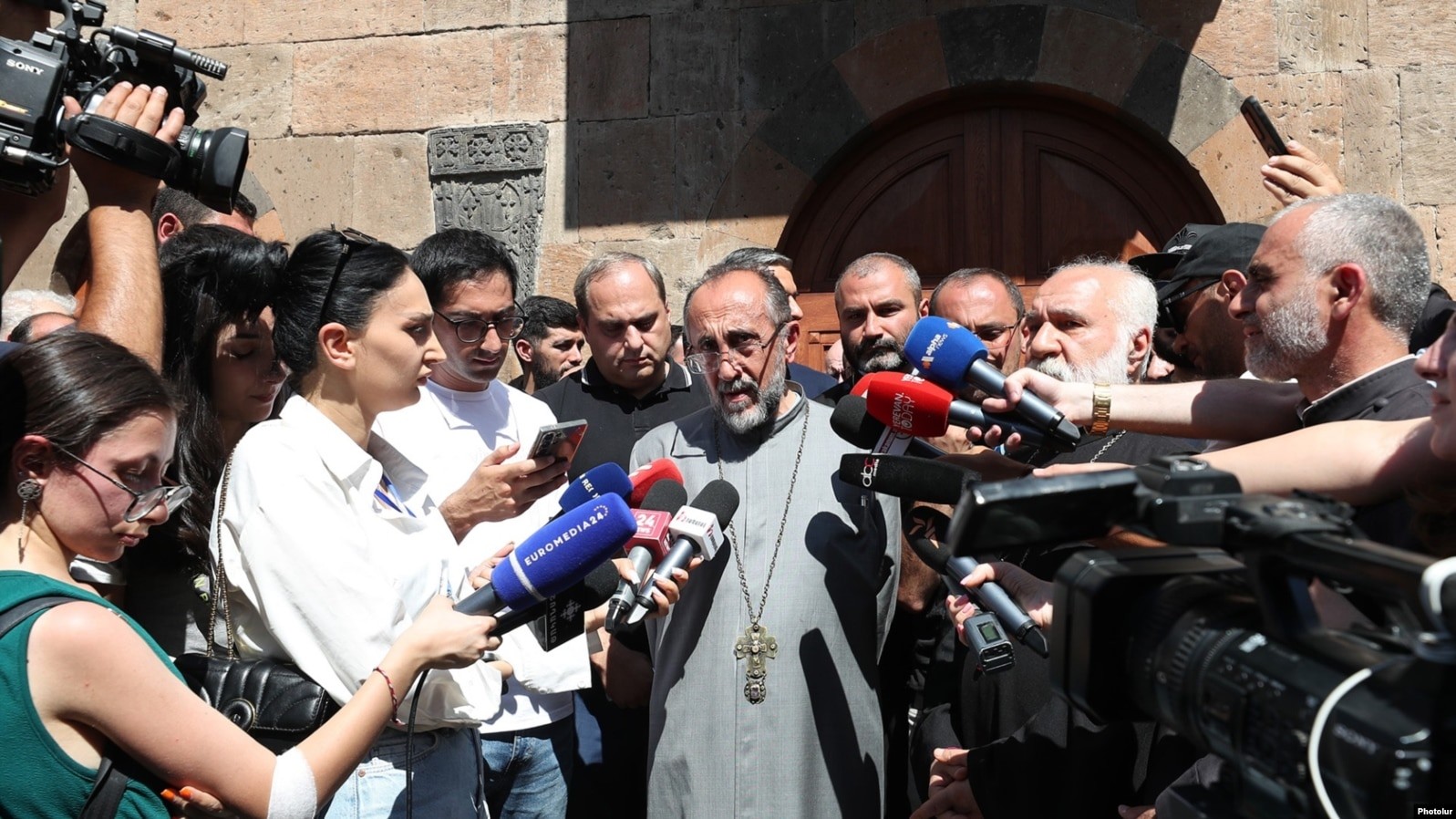
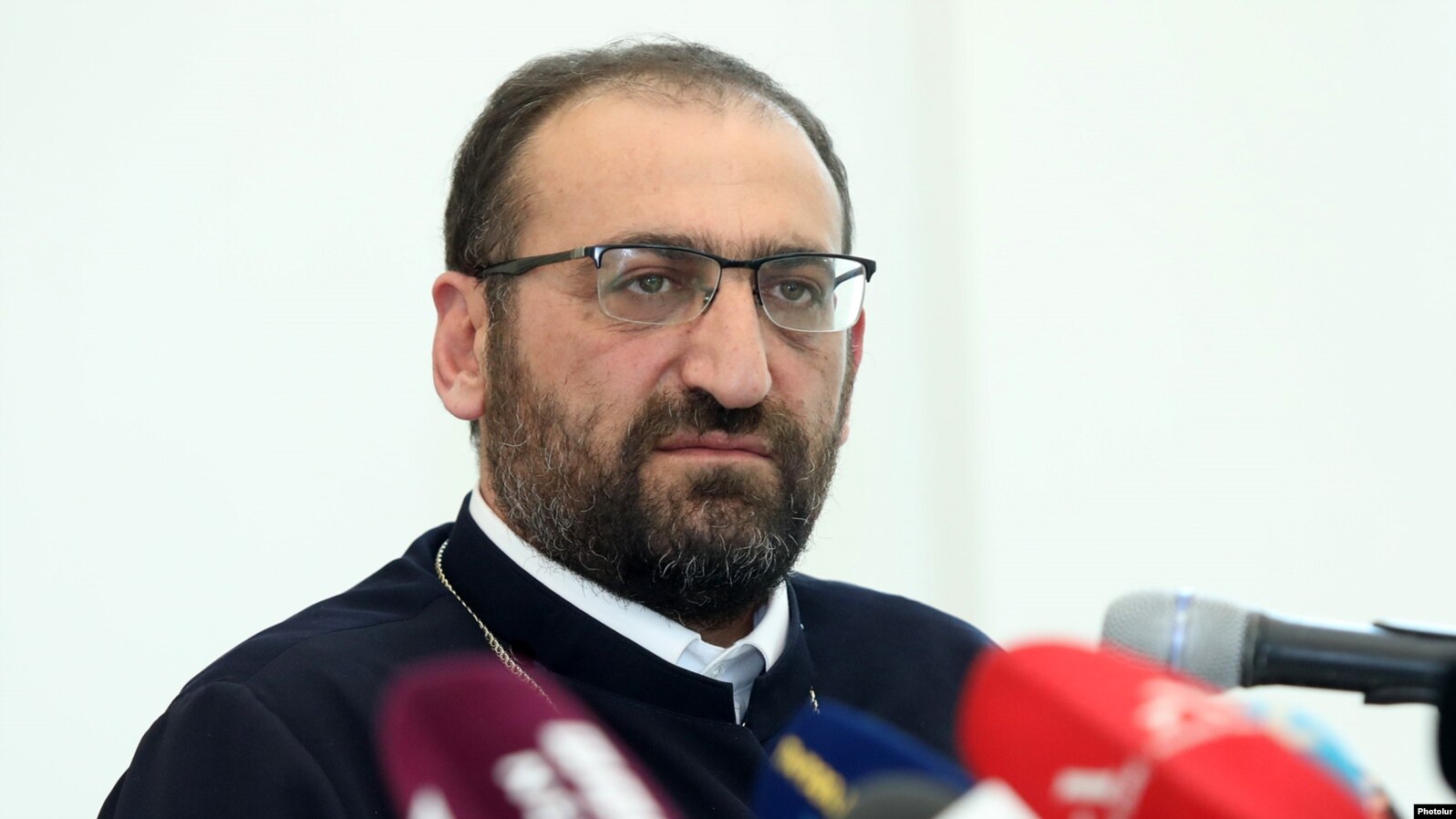
Archbishop Arshak Khachatryan, head of the Holy See’s Office in Etchmiadzin, said today: “I see no grounds for the Catholicos of All Armenians to abdicate. He cannot step down simply because certain circles, including questionable ones, are pushing such an agenda. Nor can he step down even if ten bishops demand it.”

His press conference came in response to a statement by ten senior clergy members of the Armenian Apostolic Church, who called on the Catholicos to resign. Last week, they also met with Armenian Prime Minister Nikol Pashinyan. In effect, they expressed solidarity with the Prime Minister, who has long argued for church reforms and for the Catholicos to be removed. He claims that the Patriarch broke his vow of celibacy and has a child.

The clergy statement reads: “We expect Garegin II, for the love of our Church and our people, to assess the situation soberly, avoid causing unnecessary turmoil to our nation and Church, and voluntarily retire. This would allow new elections to be organised.”

Meanwhile, Archbishop Khachatryan emphasized that the Catholicos is elected by the National Church Assembly. Accordingly, a voluntary decision to step down “would amount to desertion.”

“I am confident that the Catholicos will not make such a decision and cannot act in this way. He possesses an exceptionally strong sense of belonging to the Church,” Archbishop Arshak Khachatryan stressed.

During the press conference, he also addressed not only the potential resignation of the Patriarch but discussions regarding his alleged violation of the vow of celibacy, as well as a private video in which he is reportedly involved.


Context

At the end of last week, ten senior clergy members issued two statements. In the first, they criticised the Patriarch’s inaction for failing to remove the head of his office from service:

“The Catholicos is trying at all costs to conceal the sacrilegious actions of Archbishop Arshak, thereby becoming a protector of sacrilege.”

The archbishops and bishops appealed to the Catholicos, urging him to suspend Archbishop Khachatryan from his duties. The call was based on a private video in which the head of the office is reportedly involved. The video appeared on Telegram channels at the end of October. Since then, the scandal surrounding the senior Armenian Apostolic Church clergyman has continued. However, the Catholicos chose not to take any action regarding the matter.

Prime Minister Nikol Pashinyan met with the clergy who condemned the Catholicos, thanking them for publicly expressing their “principled position.”

Then, on 28 November, a session of the Supreme Spiritual Council was scheduled at the Holy See of Etchmiadzin. However, it did not take place, as the session was boycotted by the clergy who had signed the statement and were members of the council.

The first statement was followed by a second, in which senior clergy expressed hope that the Catholicos would voluntarily step down.

In response, other senior clergy reaffirmed their loyalty to Garegin II. The statement by the ten clergy members was condemned by members of the Russian and New Nakhichevan dioceses. The head of this diocese is Ezras Nersisyan, brother of Garegin II. He was supported by the primate of the Shirak Diocese, Archbishop Mikael Adjapahyan, who is under arrest on charges of calling for a seizure of power. The primate of the Tavush Diocese, Archbishop Bagrat Galstanyan, also expressed solidarity with the Catholicos. He is also under arrest, accused of planning “terrorist acts and a seizure of power.”

Archbishops Mikael Adjapahyan and Bagrat Galstanyan proposed that the Patriarch end the “service of disobedient” clergy members and appoint new diocesan heads.

‘A treacherous step’: bishops’ statement sparks controversy

“That which they have done is treason, apostasy, a blatant step toward division,” Archbishop Arshak Khachatryan said, describing the actions of the “disobedient clergy.”

According to him, these clergy members have betrayed God, the Church, and themselves by taking the path of “self-denial.” He did not rule out that their actions might receive “an appropriate assessment” in the near future.

“The only thing I rule out is that we will retreat or give in to this pressure,” he added.

Khachatryan also said that the Patriarch will decide which body will consider the matter and make a ruling. For this purpose, a disciplinary commission could, in particular, be established.

‘Patriarch has a large army of supporters

Archbishop Arshak Khachatryan spoke about unity within the Church and the support the Catholicos enjoys from the clergy:

“The Patriarch is not alone. Only ten bishops issued a statement [condemning the Catholicos]. To demonstrate the clergy’s unity with the Catholicos, it is not necessary for all clergy members to issue a statement,” he said.

Moreover, according to the head of the Holy See’s Office, even if no clergy member supported the Patriarch, he could not be considered to have “abdicated the throne.”

“Even if such a situation arose—which it would not—and he were left alone without any support from the Church, no one can consider him to have abdicated while he continues to hold the position,” he explained.

Khachatryan stressed that Garegin II has a large army of supporters. He added that the Catholicos shows no intention of yielding or stepping down.

Are the children of clergy really the main problem in Armenia?

Journalists asked Archbishop Arshak Khachatryan to comment on the reports that the Catholicos may have broken his vow of celibacy.

He said he did not consider himself in a position to answer the question and described the reports as “an artificial provocation aimed at discrediting the Church.”

“Is the main problem in Armenia today really the private relationships of clergy and their alleged children? Will obtaining exhaustive answers to these questions strengthen our country’s security? Will our borders become inviolable? Will societal divisions disappear? Of course not. It is clear that these issues are being raised to deepen the split. I do not understand the claim that clergy have no right to a personal life. That is basic ignorance, whoever says it. Everyone has a right to a personal life.”

‘I have not committed any acts I should be ashamed of

The press conference also addressed a video in which Archbishop Arshak Khachatryan is reportedly featured. He said that the videos circulating on social media are “lies, forgeries” and have no connection to him. He even suggested that they might have been created using artificial intelligence.

“I will take all measures to present an objective picture, including conducting an international expert examination,” he said.

The archbishop added that he has “never acted against the Church” and has nothing to be ashamed of. In his view, he has become a target because he does not praise the authorities:

“They want to persecute everyone who does not share their political agenda, who criticizes them. They have found individual ways to target each person. And this—[the dissemination of a private video]—fell to me. It has become our cross, and we must bear our cross.”

Speaking about a possible temporary suspension from duties, he noted that “if it is necessary in the interests of the Church, I am ready to take any step.”

At the end of October, an unknown Telegram channel was the first to publish a private video reportedly featuring the head of the Holy See’s Office. The footage was reportedly recorded using hidden cameras installed in the living room and bathroom of the clergyman’s home. Reports said the video shows Archbishop Arshak Khachatryan and his uncle’s wife.

As part of a criminal case being investigated by the Investigative Committee, audiovisual and facial recognition examinations confirmed “the presence of Archbishop Arshak Khachatryan in the video.”

‘Pashinyan is interfering in the church’s autonomy

“The head of state, without having such authority, is directly interfering in the autonomy of the Church. He decides who should be the Catholicos and under what procedures they should be elected. Moreover, he reserves the right to carry out a kind of morality assessment of the clergy,” the clergyman said, describing the program of “church renewal” announced by the Prime Minister.

Archbishop Arshak Khachatryan believes that all of this is happening to distract people from real problems. According to him, Pashinyan takes such steps based on geopolitical, political, or personal factors:

“[Nikol Pashinyan] wants a controllable clergy that will serve his interests.”

Khachatryan assured that as long as Garegin II remains Catholicos, “this approach will not happen.”

‘The situation can only be resolved if we reject this government

The clergyman stressed that “illegal processes” are taking place around the Church.

“An illegal process cannot have a lawful resolution. These are actions driven by obvious political or geopolitical considerations. Legal resistance may yield some results, but it will not fully dispel our concerns,” he said.

The archbishop is convinced that “any political or external interference in the life of the Church” cannot be justified either legally or canonically.

He emphasized that if church processes are carried out under external pressure, the Church will cease to fulfil its mission and become “a servant to outside agendas.”

“The solution must be resistance. We need patience and a rational use of the tools available. I do not have ready-made recipes to say: let’s do this or that,” he said.

At the same time, he noted that resolving the problem of “attacks” on the Church is linked to events in Armenia following the 44-day war in 2020.

“To address the issue, we must reject this government and their agenda. By lawful, constitutional, non-violent—again, I emphasize, non-violent—means. I will not give them the satisfaction of provoking another criminal case on this basis,” he concluded.


Categories
South Caucasus News

“53 dead, 19 captives” -In counterattack in Dnipropetrovsk, Ukrainians captured 19 Putin’s soldiers


Categories
South Caucasus News

Armenia, Iran Discuss Parliamentary Cooperation – Caspian Post


Armenia, Iran Discuss Parliamentary Cooperation  Caspian Post

Categories
South Caucasus News

Backgrounder: MEGOBARI Act – Status and Possible Path Forward


Many opponents of the ruling Georgian Dream party have pinned their hopes on the MEGOBARI Act, a bipartisan U.S. bill that proposes sanctions on Georgian officials responsible for the country’s anti-Western and anti-democratic turn. Optimism has dimmed recently, however, as reports came in from Washington, DC, that the bill, having passed the House of Representatives, has stalled in the Senate. As the fate of the MEGOBARI Act remains uncertain, much will depend on developments in Congress over the coming weeks, including whether the bill’s proponents will manage to attach it to so-called “must-pass” legislation.


Anna Kalandadze is an award-winning journalist based in Washington, DC. She has covered developments in Georgia, across Europe, and in the United States for over two decades.


Congressional leaders in the United States are working toward a swift conclusion for the Fiscal Year 2026 National Defense Authorization Act (NDAA).

That bill is currently in the Conference Committee process, where negotiators reconcile differences between the House and Senate versions. The expectation is to finalize the Conference Report – the unified, compromise bill – and hold final votes in both chambers as early as the first week of December. This high-stakes legislative push is designed to clear the “must-pass” defense bill for the President’s signature before the scheduled Congressional holiday adjournment, typically falling around December 19.

The inclusion of new provisions, such as the MEGOBARI Act, remains a critical, unresolved point that must be settled during these final negotiations.

What is the MEGOBARI Act?

The MEGOBARI Act (Mobilizing and Enhancing Georgia’s Options for Building Accountability, Resilience, and Independence Act) is a bipartisan legislative effort in the U.S. Congress aimed at supporting Georgia’s democratic and Euro-Atlantic aspirations while targeting government officials involved in corruption or anti-democratic actions. The English abbreviation of the bill MEGOBARI means “friend” in Georgian.

The MEGOBARI Act requires the U.S. President to impose sanctions on Georgian government officials and foreign persons determined to be:

  • Undermining Georgia’s security or stability.
  • Engaging in significant acts of corruption related to blocking Georgia’s Euro-Atlantic integration (joining NATO and the EU).

Sanctions mandated include visa bans and property-blocking sanctions (freezing assets). Immediate family members who have benefited from the sanctioned individual’s conduct are also subject to these measures.

Current Status: Passed House, Stalled in Senate

The Act passed the U.S. House of Representatives on May 5, 2025, with strong, bipartisan support – 349 votes in favor.

Key House sponsors included:

  • Rep. Joe Wilson, a Republican, lead sponsor and a co-chairman of the U.S. Helsinki Commission;
  • Rep. Steve Cohen, a Democrat, co-sponsor;
  • Rep. Richard Hudson, Republican, and
  • Rep. Marc Veasey, a Democrat.

Key Senate sponsors include:

  • Sen. Jeanne Shaheen, a Democrat and Lead Sponsor
  • Sen. Jim Risch, a Republican, Co-Sponsor

The Roadblock: In August 2025, an attempt to include the MEGOBARI Act’s text in the annual National Defense Authorization Act (NDAA) was reportedly blocked by certain Senators, most notably Republican Markwayne Mullin.

What’s Next: The ‘Christmas Tree’ Bill?

The bill is currently stuck in the Senate and risks dying if the Senate does not act before the 119th Congress concludes at the end of 2025. The most likely path forward is a high-stakes legislative maneuver in December 2025.

The traditional way to circumvent the Senate blockage is to seek a Senate Floor Vote, which means a full Senate debate. The outcome of the vote is uncertain due to reported opposition from certain Senators.

An alternative maneuver is the Conference Committee Strategy, which means that the proponents will attempt to include the MEGOBARI Act in the final text of the NDAA Conference Report, trying to ensure its passage by attaching it to a “must-pass” legislation.

The NDAA is an annual bill that authorizes the U.S. Department of Defense budget and sets national security policy. It is considered “must-pass” legislation and has been successfully enacted every year for over six decades. This near-certainty of passage makes it a powerful vehicle.

Because its passage is virtually assured, the NDAA is often referred to as a “Christmas tree.” By attaching the MEGOBARI Act during the final Conference Committee negotiation, proponents can bypass procedural holds that stall standalone bills in the Senate. If the Act is added here, Senators must vote for or against the entire defense bill, making opposition to a single component very difficult.

Also Read:


Categories
South Caucasus News

Sweden sees rise in health tourism


Sweden has captured global attention with its new campaign, Visit Sweden — The Swedish Prescription, in which doctors from the United States, Great Britain, the Netherlands, and Germany support the idea of “prescribing” trips to Sweden for wellness purposes, Azernews reports.

Categories
South Caucasus News

Central Asia and Azerbaijan: a shared cultural legacy for a shared future – Euronews.com


Central Asia and Azerbaijan: a shared cultural legacy for a shared future  Euronews.com

Categories
South Caucasus News

Georgian government vowes to take legal action against BBC


Georgian authorities to sue the BBC

Georgian authorities to sue the BBC

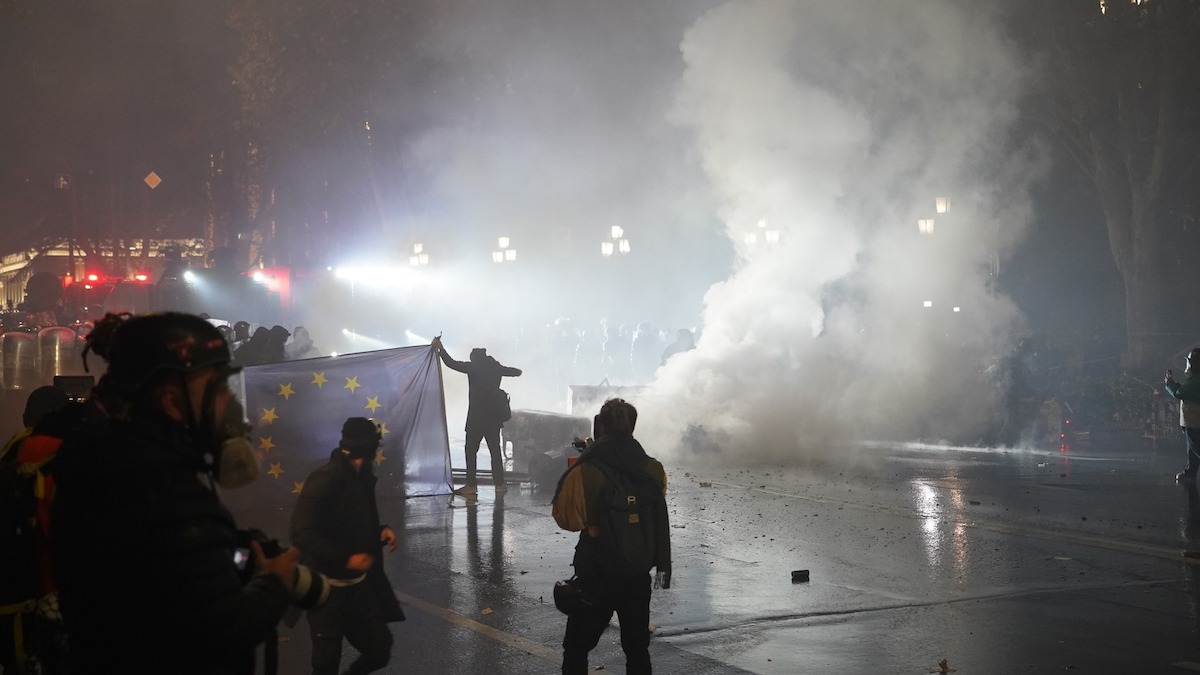
As the ruling Georgian Dream party announced, the Georgian government has decided to launch an international legal case against the BBC. In its statement, the party said it intends to use every legal avenue to ensure that “so-called media outlets that spread lies are held accountable for disseminating dirty, false allegations.”

According to the party, the BBC “baselessly claims” in its article that Georgian police used First World War–era chemical agents to disperse protests in 2024. It says the information presented by the BBC relies on “accounts from interested parties and criminals.” Georgian Dream argues that by publishing the article, the BBC is taking part in spreading “deep state propaganda.”

Statement by Georgian Dream

“The BBC has published an article that, alongside a series of absurd and false claims, accuses the Georgian authorities of allegedly using a ‘chemical agent’ against radical protesters during unlawful demonstrations. It is obvious that this so-called media outlet, now a tool of ‘deep state’ propaganda, has no factual basis for such a serious allegation.

Given that this outlet has repeatedly been involved in scandals in recent years – with multiple instances of proven misinformation that even led to changes in management – we initially set out just two conditions in our response: that our position be fully reflected, and that the BBC provide evidence for every claim it makes. At the same time, we demanded that all assertions in the article be based solely on verifiable facts and high journalistic standards.

In return, we received a torrent of lies and grave accusations against the Georgian authorities, built, as we have already noted, on accounts from interested parties and bearing no relation to reality.

The BBC clearly has no moral or professional constraints when it comes to carrying out dirty assignments and spreading disinformation — something evident in today’s article. The management changes resemble the recent succession of British prime ministers, none of whom brought real or even superficial change, resulting simply in one government controlled by the ‘deep state’ being replaced by another.

Since this once-respected media outlet — now reduced to a tool of informal governance — has publicly disseminated false accusations against the Georgian authorities without providing a single piece of evidence; since its so-called ‘investigation’, built on lies, relies largely on accounts from criminal elements and has nothing to do with reality; since the BBC received exhaustive answers to all its questions yet chose not to publish even one percent of our substantiated responses; and since this defamatory propaganda material aims to tarnish the Georgian government, the Georgian police, and, most importantly, Georgia’s statehood — we have decided to launch legal action against this false media organisation in international courts. We will use every possible legal avenue to ensure that this so-called media, which spreads lies, is held accountable for its false accusations.”

On 1 December, the BBC published an extensive report alleging that the Georgian authorities used a First World War–era chemical agent to suppress anti-government protests last year.

According to the BBC, the investigation drew on informants within Georgia’s riot police, as well as interviews with chemical weapons experts, doctors and injured protesters.


Categories
South Caucasus News

Natural disasters in Southeast Asia: Severe floods have claimed the lives of hundreds of people


Categories
South Caucasus News

Korean automakers launch aggressive year-end discounts amid slowing sales


Major Korean automakers kicked off aggressive year-end discount campaigns on Monday, with price reductions reaching 2.2 million won ($1,490) on Hyundai’s Grandeur, 6.3 million won on the Ioniq 9, and 5.4 million won on the Renault Grand Koleos, Azernews reports, citing Korean media.