
Day: November 30, 2025
Categories
Макрон о рисках России
The Georgian national football team had lost games before, but last summer, even a defeat was greeted with fireworks. That things were so different this year had less to do with the fact that fireworks were banned in the months since, and more with why they were banned.
“In football, victory is always visible. But support is most valuable precisely when the result falls short of hope,” Georgian goalkeeper Giorgi Mamardashvili wrote on November 19 in a Facebook post following yet another loss, one that sealed the team’s unlucky qualifying streak. The message barely concealed the player’s dissatisfaction with the support the national team has been receiving lately.
The scale of negative reaction to his post must have taken the Liverpool goalkeeper by surprise. “You think everything’s like in the old times?” former fans shot back at Mamardashvili, once hailed as one of Georgia’s golden boys. The team’s poor performance on the pitch had little to do with the mass disappointment that supporters now traced to their “unrequited support” for the team: over the past year, the once-admired players had largely chosen to stay silent as their fans continued to endure injustice. Some had even campaigned for the very force that openly promised abuse.
Sports used to be the one thing that expressed the nation’s shared aspirations in the turbulent months leading up to last November. This November, too, it was sports that most clearly showed how a single year had changed the country – how the repression by some and the indifference from others had irreversibly damaged its social fabric, and how, even when those actively protesting often felt alone in their discontent, the rest of the country could no longer pretend that things could ever go back to normal.
Here is Nini and the Dispatch newsletter, writing about how the country finds itself after 12 months of non-stop protests.
It will likely remain a mystery why, on November 28, 2024, Irakli Kobakhidze said what he said. By that time, opposition-led protests had failed to prevent Georgian Dream from taking up their parliamentary seats after disputed elections. It was already common knowledge that Georgia’s EU integration process was effectively halted. Perhaps the silence convinced the party that the protest was over, or they simply wanted to test how much protest energy still remained to crush it for good before it regained strength.
Two weeks later, with hundreds detained and beaten, even Georgian protesters found it hard to believe that people were still filling Tbilisi’s Rustaveli Avenue every day.
A month later, the ruling party had to push through a series of repressive laws, introducing draconian fines to end street protests. Breaking the habit, protesters marked the New Year and Christmas outside together.
Two months later, as protesters were daily pushing past their “good citizen” selves to defy the new anti-protest laws, it gradually became clear that Trump’s reelection did little to help Georgian Dream’s international legitimacy. The party remained isolated, and people kept gathering at the parliament.
By spring, the repression had expanded. Opposition leaders were jailed one by one, and the party introduced laws that effectively restricted access to funding for media and independent NGOs. Daily protests – even with lower turnout – continued in the major cities, with occasional larger marches outside the center.
By summer, Georgian Dream began enforcing those laws, harassing NGOs and media outlets with inspections. Where inspections proved insufficient, they cracked down with criminal investigations. Demonstrations persisted throughout the vacation season.
With autumn came guilty verdicts, partially boycotted October 4 municipal elections, and with them a so-called “peaceful revolution” that was neither peaceful nor a revolution, but a tragic chaos ending in dozens more criminal jailings. The ruling party effectively criminalized protest, appealed to the Constitutional Court to ban three major opposition forces, launched further criminal prosecutions against opposition leaders – many already in jail or exile – and moved to strip Georgians abroad of their voting rights. Protests continue, even if the demonstrators in Tbilisi are now pushed onto the sidewalks, only to be snatched from there as well.
The cost of it
For a year now, in a development few would have predicted last November, Georgians have been protesting nonstop. Sustaining those protests, however, came at a cost.
More than a hundred people, including protesters from every social and geographic background, opposition politicians, prominent journalists, and poets, are in jail – on trial or convicted on criminal charges. Many in the resistance, including hundreds of civil servants and those in civil society groups, have lost their sources of income, while independent outlets, critical broadcasters, and NGOs are in survival mode. More than a thousand Georgians have faced heavy fines, over 600 have seen the inside of detention facilities, and hundreds of abuses against journalists have been reported.
The government’s announced reforms suggest that the crackdown on academia is only a matter of time. Major opposition forces have been severely weakened, not only by harsh repression but also by their own misjudgments, lack of vision, and infighting. Faced with hopelessness, thousands who actively protested in the initial weeks appear to have gone home and never returned, leaving the core of the movement struggling to find ways to re-engage them.
The rapid pace at which things have deteriorated baffles even those who had seen the worst of autocratic turnarounds.
But if things are bad, they are hardly better for the ruling party. Every attempt to reset relations with the West, sincere or not, seems to have failed, and every effort to seek alternatives elsewhere brings controversy and questions, even from their own supporters. In a quest to consolidate power, Georgian Dream has begun devouring its own allies and officials, claiming to fight “corruption” while only confirming that corruption had flourished during more than a decade of their rule. New grassroots forces appear to be emerging alongside the continued crackdown on the mainstream opposition, with fewer resources but greater public solidarity. If the ruling party once relied on conservative rhetoric to maintain support, the same narratives now seem designed to only mask the one tool authorities truly depend on: fear.
Even with fear at its disposal, Georgian Dream repeatedly seems to be testing the limits of how much repression it can afford at a time. The country’s small size, the flexibility of the resistance movement, and enduring solidarity continue to force the party to weigh PR costs. Authorities had to deploy large numbers of police in recent weeks in Tbilisi to physically prevent daily road blockages: against their own threats, they seem desperate to avoid mass criminal arrests for “repeated offences” as harsher laws alone were insufficient to end the rallies.
It has been a year since the Georgian Dream’s announcement on halting EU integration sparked continuous mass protests, yet the situation remains as uncertain as it was weeks after they started.
***
Late on November 27, 2025, roughly an hour before the anniversary of the non-stop protests, Georgian basketball player Giorgi Shermadini delivered his farewell speech. The speech, made from the pitch, also followed a home defeat to Ukraine, but fans who came to watch the match seemed to care little: Shermadini, who had been a valuable contributor to the team for decades, was about to retire. His emotional reflections and words of thanks were met with cheers and applause.
But then the player found a moment to show gratitude to the wrong person. “Thank you, Mr. Prime Minister, for everything you are doing for the team,” he began – only to spend the next few seconds making frantic hand gestures, trying to control the growing noise of boos and whistles from the crowd.
The player was neither ready nor aware. Neither are many others, not even those in the resistance, fully aware of the breadth of cracks that have appeared in the country over the past twelve months. Nor does anyone know how, when, or with what the lingering void can be filled. It will be a while before Georgians – no matter their political leanings – again find their comfort zones.
The sense of new normalcy that the authoritarian shift promised to some has yet to arrive.
Georgian politician tried to torch court
According to the Interior Ministry, Aleko Elisashvili, one of the leaders of the opposition party Lelo – For Georgia, attempted to set fire to the Tbilisi City Court administration building on 29 November. The information was confirmed by his lawyer, Giorgi Rekhviashvili.
Police footage shows Elisashvili badly beaten.
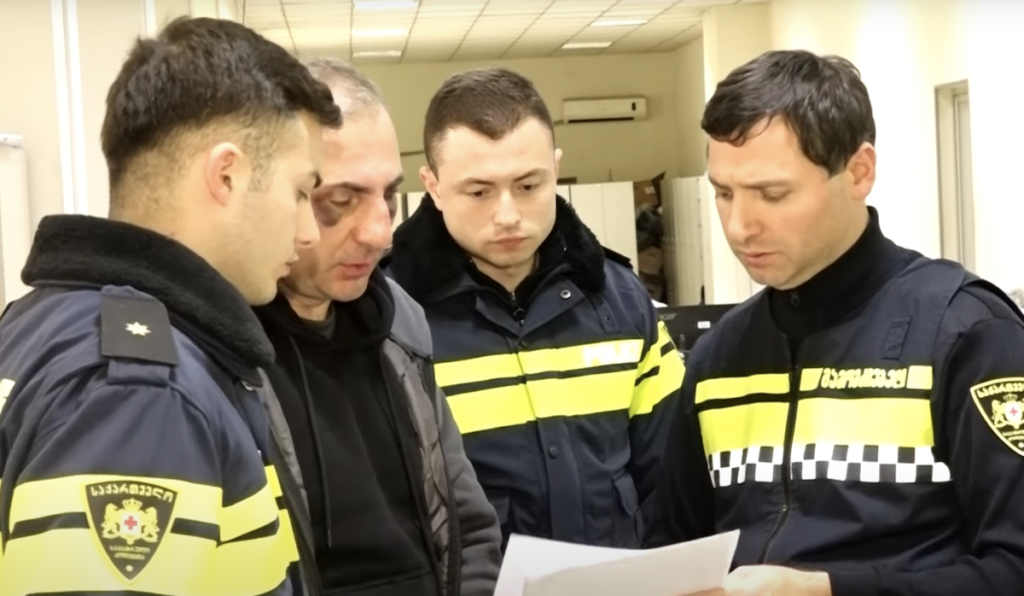
According to the Interior Ministry, in the early hours of 29 November, Aleko Elisashvili, his face covered with a mask, smashed the glass façade of the Tbilisi City Court administration building with a hammer and entered the building. He then poured petrol throughout the premises, including on office supplies, equipment and documents, and attempted to set the building on fire, but was detained before he could do so.
“Elisashvili was immediately detained at the scene by court marshals. He resisted, using physical force and a firearm he was carrying.
Despite his resistance, Aleksandre Elisashvili was detained on site.
A court marshal was taken to hospital with injuries sustained during the confrontation. Elisashvili also suffered injuries during the arrest as a result of his resistance. Police seized the tools used in the attempted crime as evidence,” the Interior Ministry said.
Statement from the lawyer
According to lawyer Giorgi Rekhviashvili, the politician told him he acted in protest against what he sees as an unfair trial and “only regrets missing the few seconds needed to finish the job.”
He said Elisashvili deliberately chose the early hours of Saturday morning to ensure no one would be harmed.
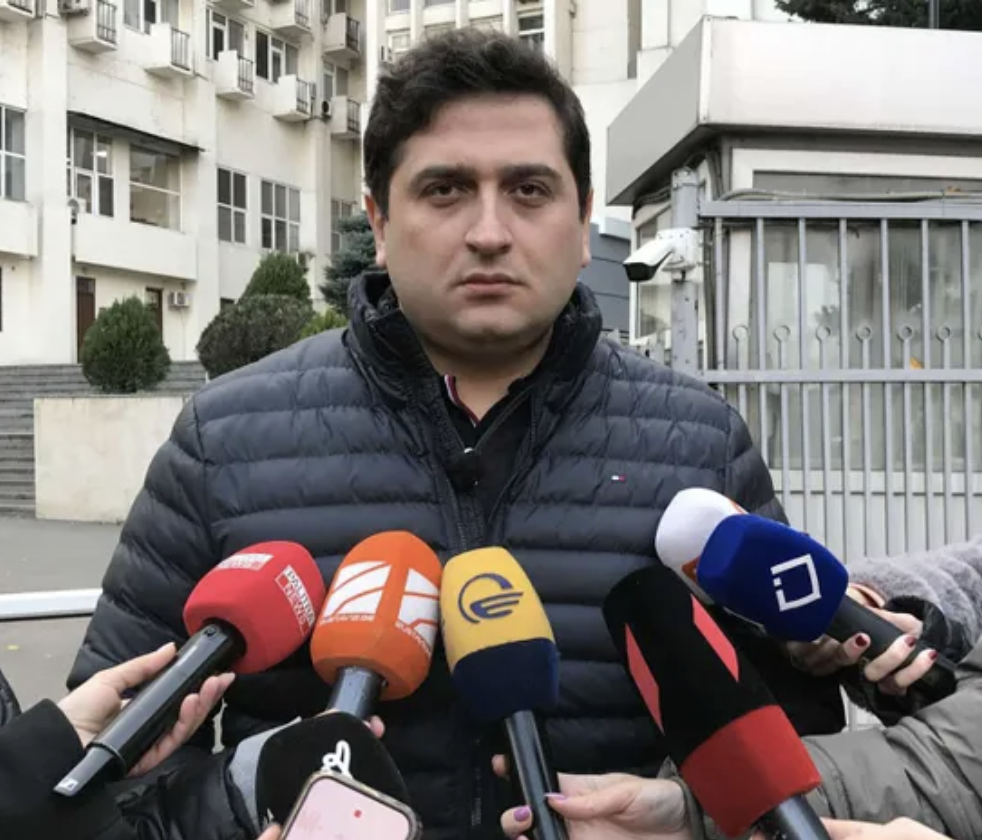
Lawyer Giorgi Rekhviashvili:
“I was allowed to meet Aleko Elisashvili at the Dighomi detention facility in Tbilisi 10 hours after his arrest. He has serious facial injuries and was severely beaten.
I am now relaying Elisashvili’s position and making a statement on his behalf.
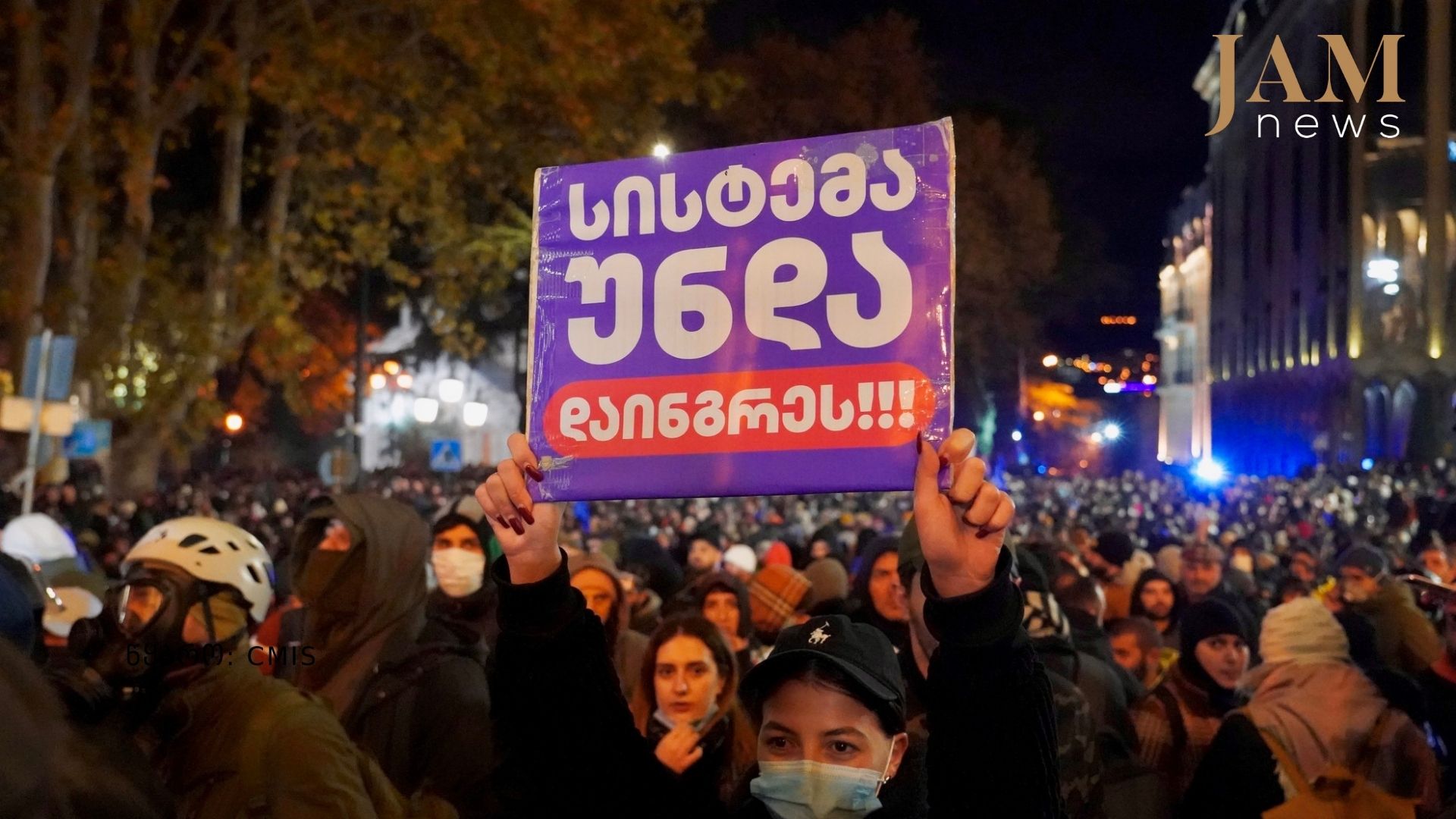
He carried out this act to protest against what he sees as an unjust court. The words he passed on to me were: ‘Into the fire with oligarchy, into the fire with the unjust court’ — slogans used by participants in Georgia’s more than year-long pro-European protests (JAMnews).
Aleko said he only regrets not having the few extra seconds needed to finish the job.
He said he thought his action through carefully. He chose the early hours of a Saturday specifically to ensure no one was harmed. The aim of his protest was to draw public attention to the number of activists he believes have been unlawfully and unfairly convicted, and to how Georgian Dream uses the courts to reinforce its dictatorship. This is the statement from Aleko Elisashvili,” Rekhviashvili said.
Georgian politician tried to torch court