
Day: November 28, 2025
Pressure on journalists in Georgia
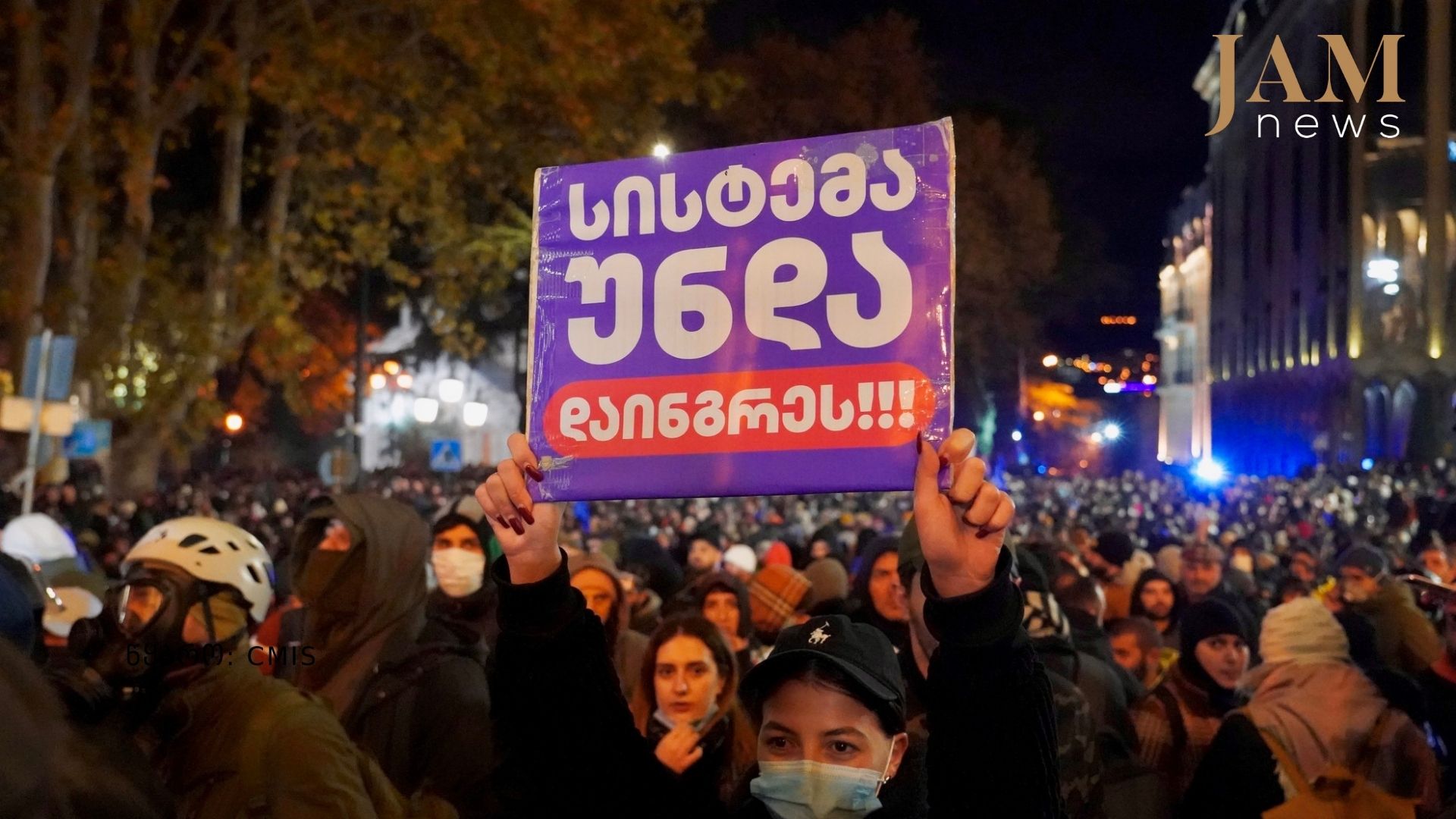
Transparency International Georgia has published a report covering a year of ongoing protests in the country. According to the organisation, since November 2024, up to 400 cases of violence, intimidation, threats, harassment, pressure on journalists, and various forms of interference in media work have been publicly recorded. Around 100 of these cases occurred in the final month of 2024, with the rest recorded throughout 2025.
The organisation concludes that the year since the protests began has been particularly challenging and critical for the media in Georgia.
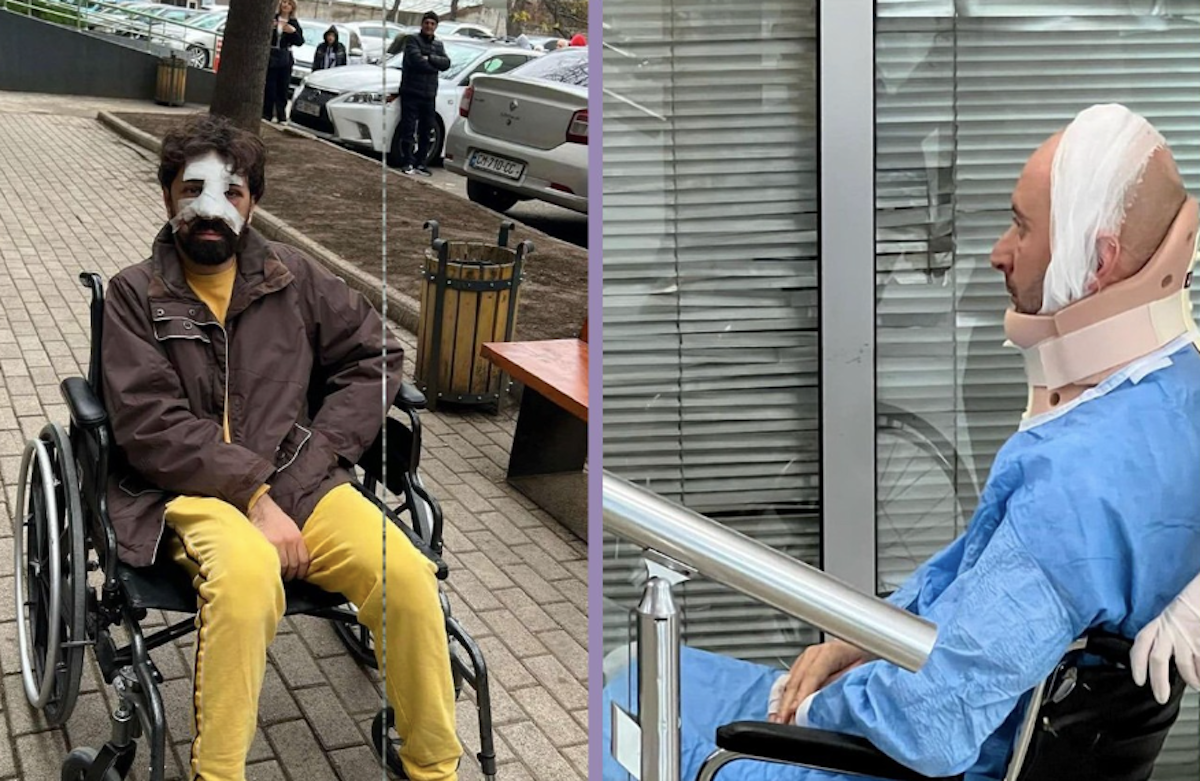
According to Transparency International, dozens of journalists and camera operators were seriously injured while covering protests, requiring medical attention. The injuries were caused by physical attacks, as well as the use of tear gas and water cannons.
Journalists also reported verbal abuse, intimidation, and humiliation. In addition, several journalists had their equipment damaged and/or confiscated while reporting.
The organisation is particularly concerned about cases in which journalists and camera operators working live were attacked by so-called “titushki” and law enforcement officers.
“For example, at the end of 2024, Pirveli TV journalist Maka Chikhladze and camera operator Giorgi Shetsiruli were attacked while on air. In another case, Formula TV journalist Guram Rogava was hospitalised with severe head injuries after a targeted attack by a special unit officer during a live broadcast. He required a long course of rehabilitation,” the report states.
Transparency International Georgia stresses that none of the attacks on media staff have been investigated, and no one has been held accountable. The organisation says the apparent indifference of law enforcement raises serious concerns that preventing such crimes, conducting proper investigations, and punishing perpetrators do not serve the interests of the Georgian Dream government, and that these illegal actions were organised by the authorities.
Illegal detentions of journalists
According to Transparency International, “over the past year, illegal detentions of journalists and media workers have become an especially worrying trend, reaching an alarming scale.
In just the last year, 26 media workers were detained, more than half of them in the final month on administrative charges related to so-called road blockages.
Of particular concern is the illegal detention in January 2025 of Mzia Amaglobeli, founder of the online outlets Batumelebi and Netgazeti, in a criminal case, and her two-year sentence. Her health deteriorated significantly in detention, with human rights defenders describing her vision as ‘alarming.’
The mass detentions of journalists and their persecution are part of the repressive policies of the Georgian Dream government, aimed at suppressing and eradicating freedom of expression in the country.”

Illegal fines for journalists
“Another harmful trend observed during the year-long protest cycle is the fining of media workers for carrying out their journalistic work under the article on so-called road blockages.
Over the past year, around 40 such cases were recorded. The authorities’ disregard for the fact that journalists were performing their professional duties during protests, coupled with imposing hefty fines, serves to intimidate and increase pressure on journalists. These fines and financial pressures could potentially force some to abandon their profession.
Critically minded media have also faced other repressive measures, including expanded regulatory powers of the Communications Commission, lawsuits, and the blocking of funding sources.
Due to financial constraints, up to 20 regional outlets were unable to continue operating in 2025. In addition, one of the country’s largest opposition TV channels, Mtavari, was shut down in May 2025.
Meanwhile, a campaign to discredit independent outlets continues, led by ruling party figures and their propaganda channels. On 23 November 2025, the pro-government media outlet Imedi published an extensive piece targeting more than 20 online outlets and investigative journalists, labeling independent media as a ‘propaganda network of foreign intelligence services’ and accusing them of treason and incitement to unrest.
Despite this, independent and critically minded media continue to serve the public honestly and provide comprehensive information. Transparency International Georgia highly values the role of independent and critical media in the country and thanks each of their staff for their tireless work and dedication.
Freedom of speech and expression is a fundamental democratic value, with independent media as its main guarantor. In Georgia today, such media face the threat of eradication. The disappearance of independent outlets would cement the formation of a one-party system and set Georgia on the path toward dictatorship,” the statement reads.
Pressure on journalists in Georgia
Azerbaijan targets critics abroad
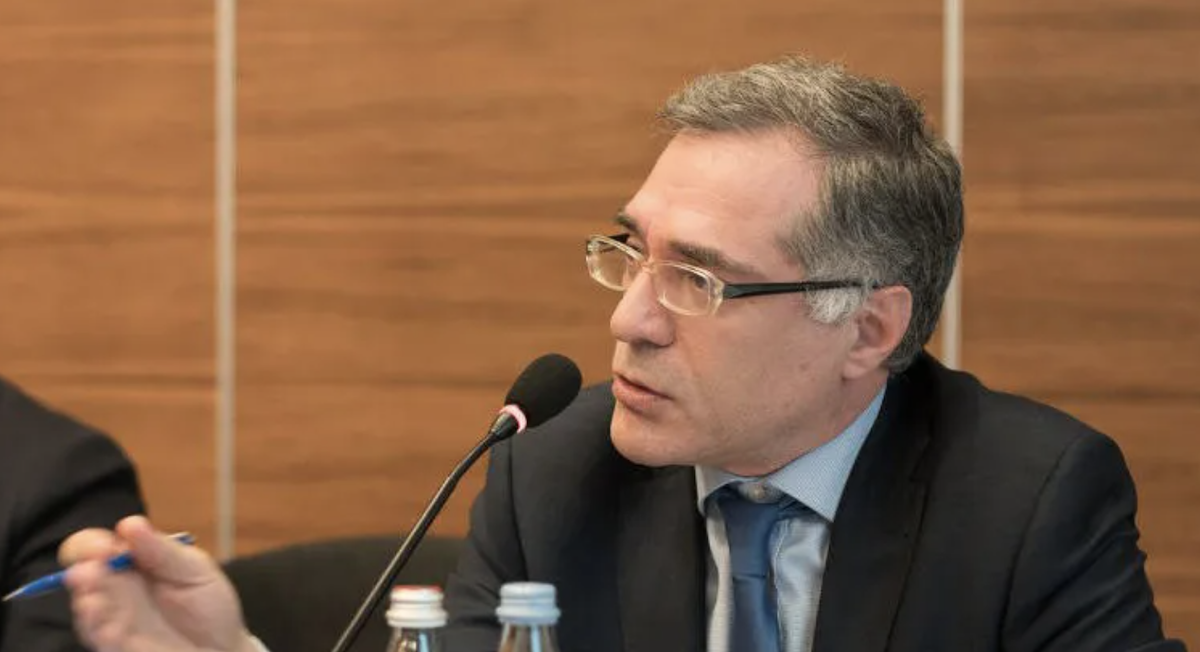
Georgi Gogiya, deputy director for Europe and Central Asia at Human Rights Watch, warns that Azerbaijani authorities have stepped up their campaign against independent and critical voices living abroad.
“Since March, journalists, bloggers, and political activists abroad have faced charges that appear politically motivated. Arrest warrants in absentia have been issued against them, and they have been summoned for questioning. These measures are part of the authorities’ efforts to suppress critical voices and restrict freedom of expression.”
HRW notes that those targeted are primarily being punished for criticizing human rights violations by the authorities, and there is no evidence linking them to any illegal activity.
The commentary was prepared by a regional analyst. The terms and place names used, as well as the opinions and ideas expressed, reflect solely the author’s or specific community’s position and do not necessarily represent the views of JAMnews or its individual staff members.
Arrest warrants in absentia and the charges filed
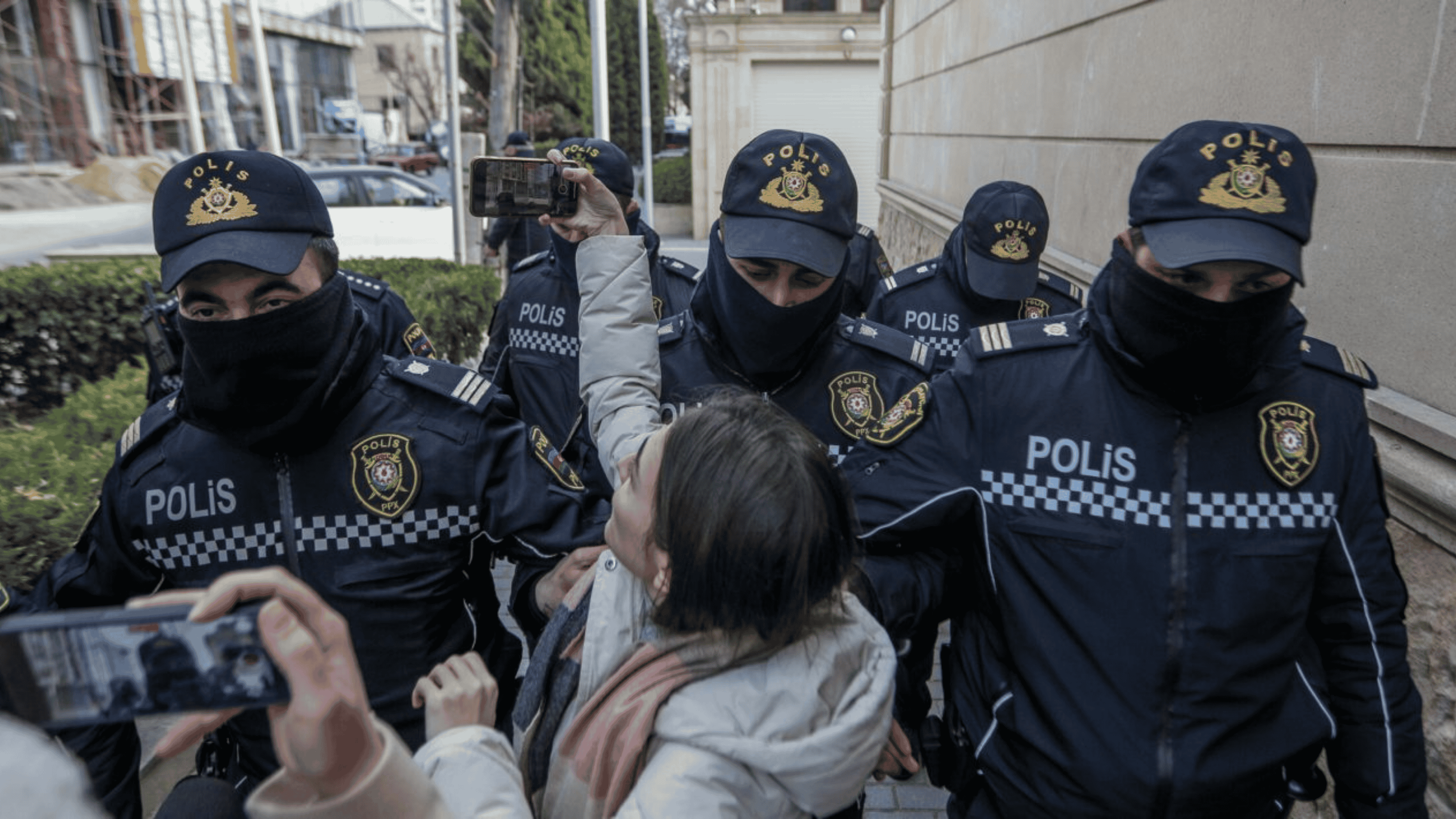
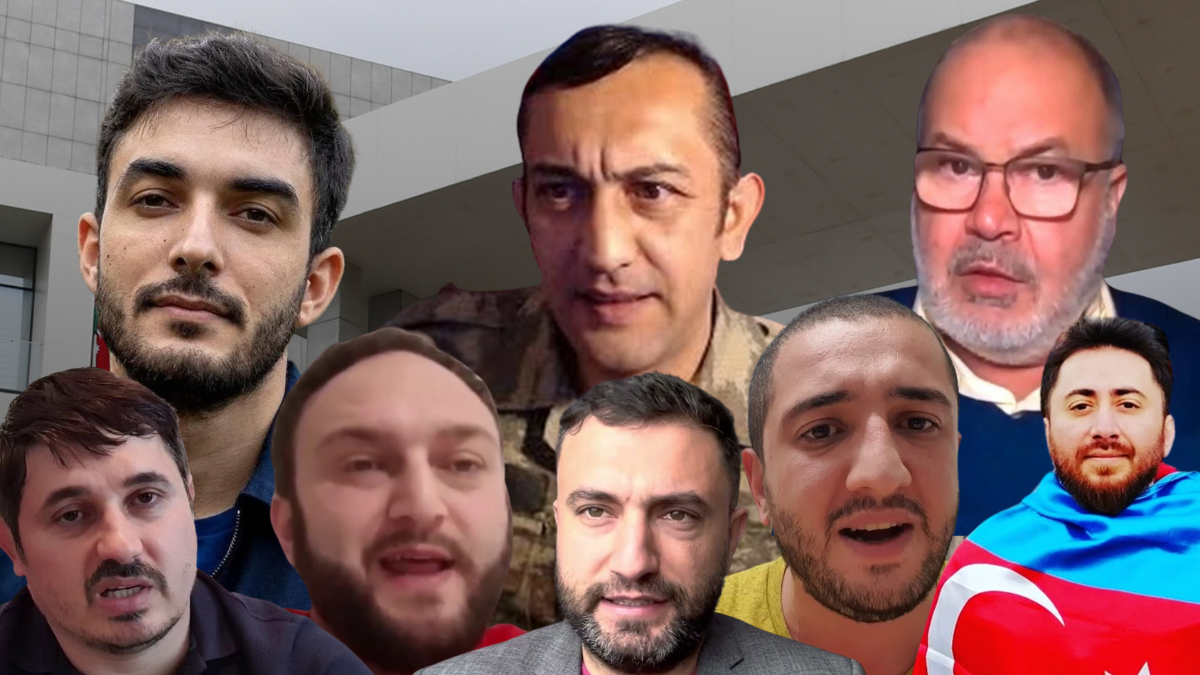
Azerbaijani authorities are putting pressure on critics living abroad using legal mechanisms, with arrest warrants in absentia becoming a key tool. Since the critics are outside the country, the courts issue detention orders without their presence.
In March this year, the General Prosecutor’s Office opened criminal cases against several emigrant bloggers on a range of serious charges, including fraud, calls for terrorism, incitement to mass unrest, urging disobedience to authorities, and public calls for the violent overthrow of the government.
Authorities warned that if these individuals do not appear for questioning, in absentia trials would be launched, potentially leading to convictions in their absence.
In the following months, courts issued in absentia sentences against several critics living abroad. For example, in September, France-based blogger Mohammed Mirzali was sentenced in absentia to six and a half years in prison on multiple charges, including “incitement to mass unrest.”
In recent months, 24 critics have come under pressure.
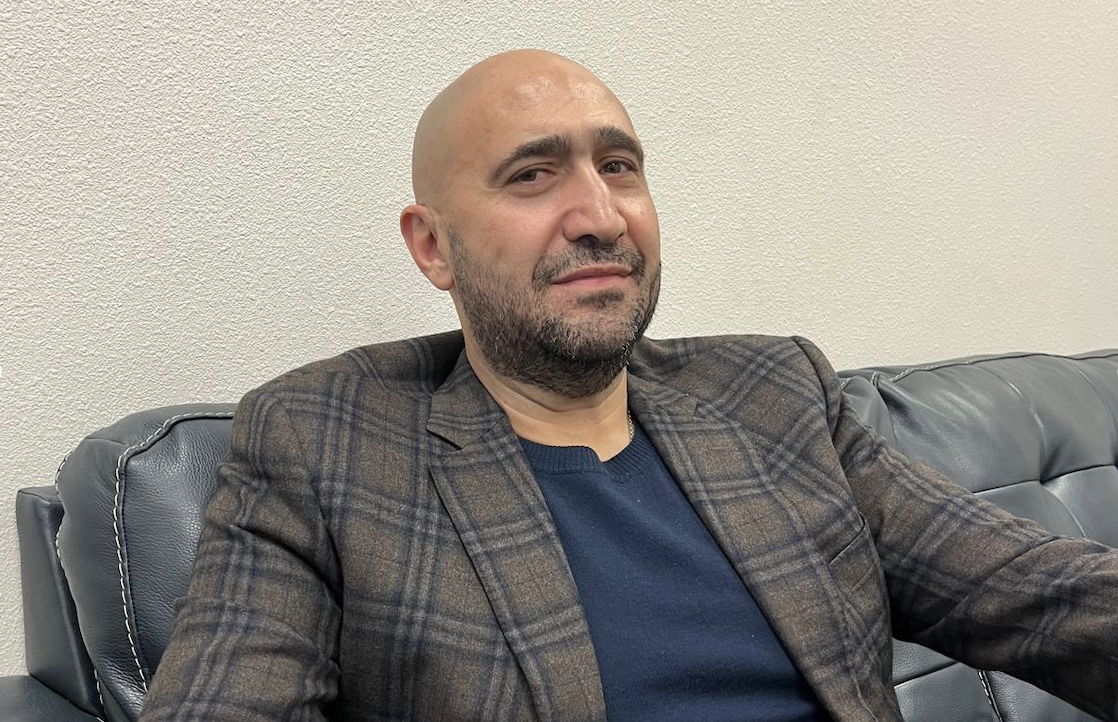
In recent months, Azerbaijani authorities have carried out a large-scale campaign against critics living abroad. During this period, in absentia measures have been taken against 24 individuals who have spoken out against the government, mainly under charges of “public calls against the state” (Article 281.2 of the Criminal Code).
Those targeted come from a range of fields, including prominent journalists such as Sevinc Osmanqizi and Ganimat Zahid, bloggers like Tural Sadygly and Mohammed Mirzali, scholars such as historian Altay Geyushov, and political analysts including Arastun Orudjlu.
Many of them have lived abroad for years and use online platforms to criticize Azerbaijani authorities. The scale of the campaign is evident both in the growing number of people targeted and in its reach across different professional and social spheres.
“Calls against the state” and other politically motivated charges
The charges brought by authorities against critics living abroad are largely political in nature. The most common is “public calls against the state” (Article 281.2).
Other frequently used articles include “calls for disobedience to lawful orders of authorities and for mass unrest” (Article 220.2) and “incitement of national, racial, social, or religious hatred” (Article 283.1).
HRW notes that these articles have been used in Azerbaijan for many years to suppress freedom of expression and to criminalize peaceful critical speech.
The nature of the charges, such as calls against the state or incitement to unrest, points to their political motivation. Human rights defenders argue that these charges are unfounded and aimed solely at silencing critics.
Investigation into emigrants and in absentia trials
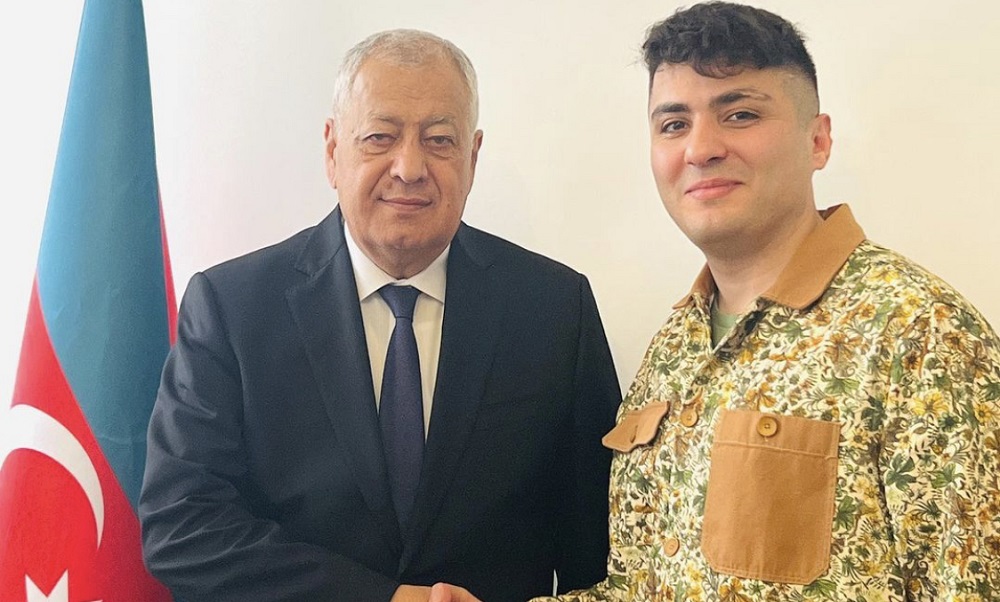
As part of their chosen strategy, authorities first summon targeted activists living abroad to the General Prosecutor’s Office through the press or an official notice to participate in investigative actions. They are informed that a criminal case has been opened against them and are “invited” to return to Azerbaijan by a certain date to take part in the investigation.
Critics living abroad understand that returning would likely lead to an unfair arrest, so they do not go. As a result, trials are conducted in absentia, and in absentia sentences are issued.
For example, in November, an in absentia trial began in the Baku Court for Serious Crimes involving eight emigrant bloggers, and the indictment was read out to them.
These in absentia trials, which violate international law standards, proceed without the defense present and effectively formalize a predetermined outcome: declaring the critic a criminal. They also send a public message that anyone who sharply criticizes the authorities will be punished, regardless of where they are located.
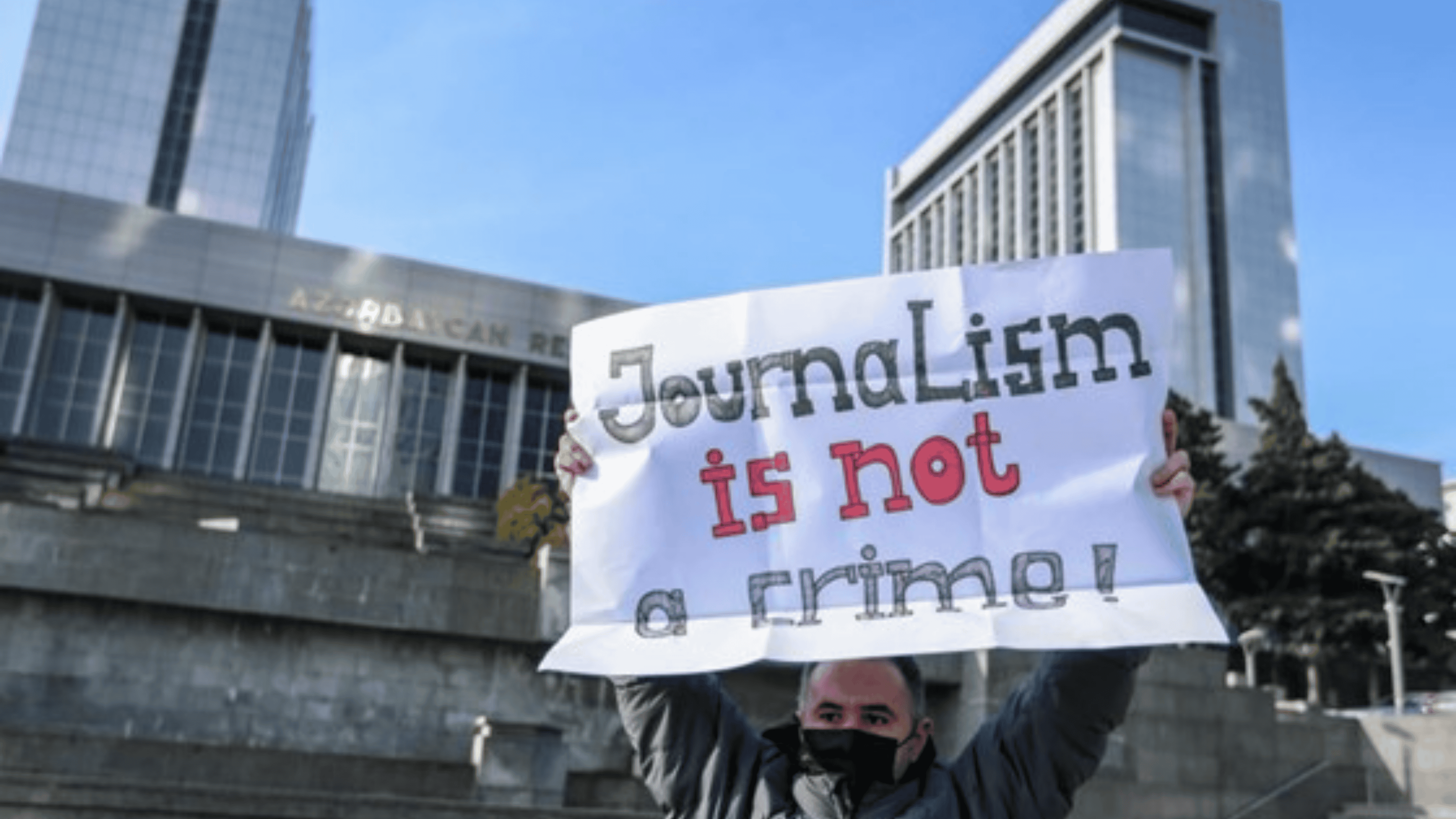
No illegal activity has been found on the part of the accused.
What journalists and activists under attack have in common is that in no case has any illegal activity on their part been proven. They have been targeted for their critical statements and materials exposing government policies and human rights violations.
HRW notes that the charges lack any real basis, and it is clear that these individuals are being persecuted solely for openly criticizing human rights abuses committed by the authorities.
For example, journalists Sevinc Osmanqizi and Ganimat Zahid, as well as academic critic Altay Geyushov, have for years used YouTube and social media to report on corruption, election fraud, and other human rights violations.
Azerbaijani authorities portray this critical work as a “crime,” claiming it poses a threat to national security. However, the evidence presented does not show that these individuals incited violence, engaged in terrorist activity, or committed any specific unlawful acts.
The lack of evidence supporting the charges is seen as an indication that these proceedings are politically motivated.
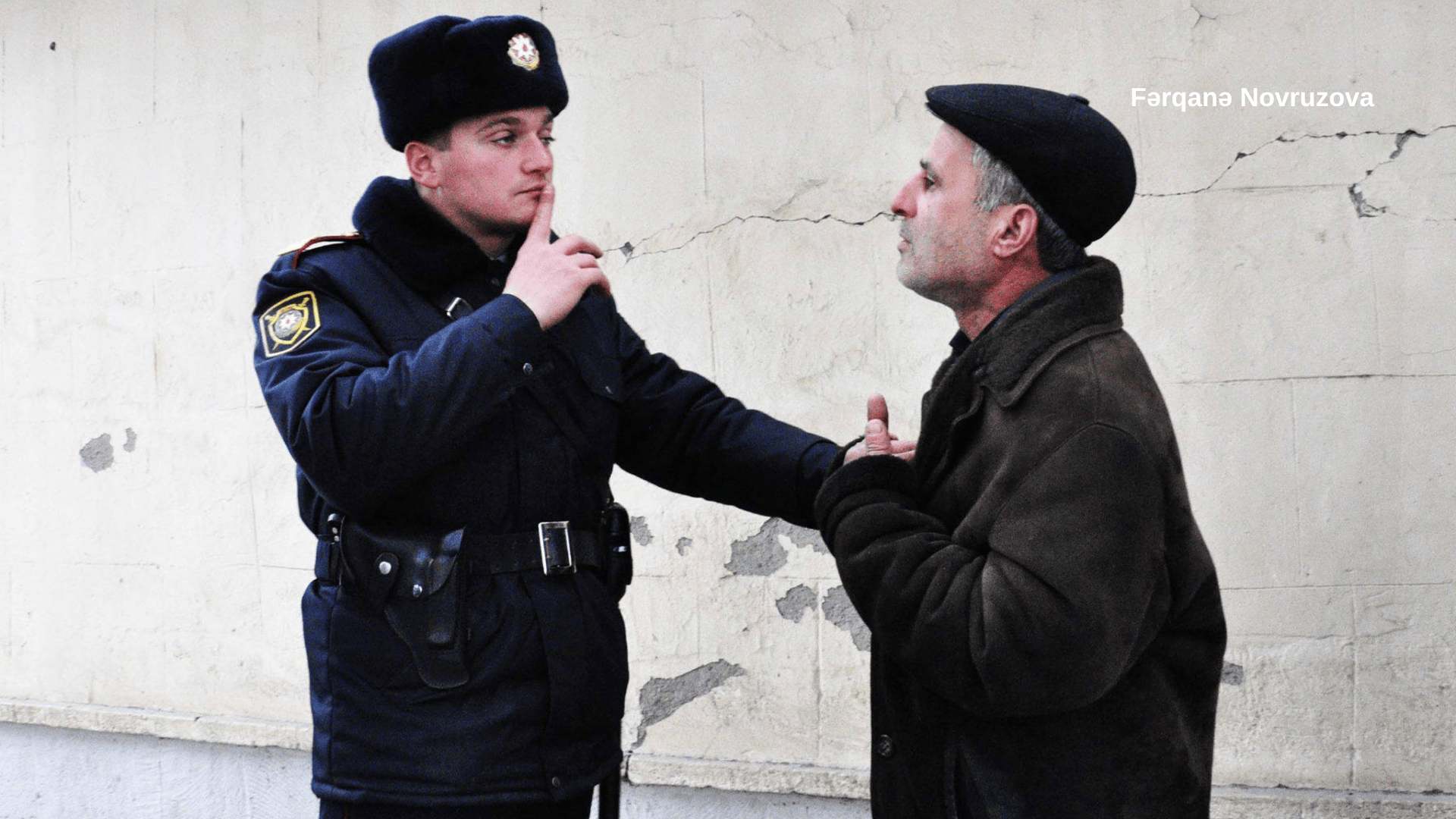
HRW call: “End politically motivated persecution”
International human rights organizations have strongly condemned the actions of Azerbaijani authorities. Human Rights Watch, in particular, has called on the Azerbaijani government to immediately drop all politically motivated charges.
HRW representative Georgi Gogiya emphasizes that the authorities must end the harsh pressure on independent voices both inside the country and abroad, and uphold their international obligations regarding freedom of expression and freedom of assembly.
Organizations like HRW state that the persecution of critics violates Azerbaijan’s international commitments and undermines the country’s global image.
They stress that the authorities must respect their human rights obligations and stop the criminal prosecution of independent journalists and activists.
“Otherwise, freedom of expression will continue to be suppressed both domestically and internationally, in contradiction with democratic values.”

Азербайджан преследует критиков зарубежом