
Additionally, for the first time in 14 years, Azerbaijan imported pomegranates from Vietnam, totaling 0.05 tons worth 200 USD, based on available foreign trade statistics dating back to 2011.
Day: November 25, 2025
Georgian Dream attacks online media
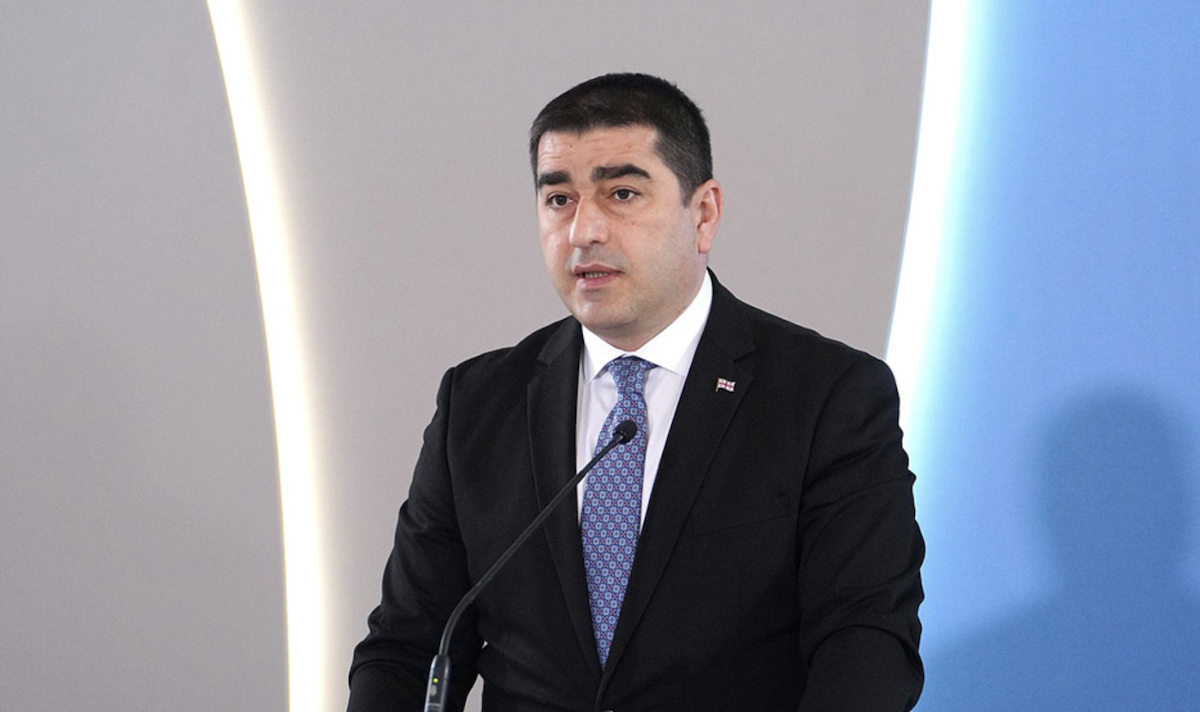
Georgian Dream parliamentary speaker Shalva Papuashvili has openly attacked independent online media in Georgia, threatening them with criminal prosecution. His attacks followed a propaganda article published by the pro-government channel Imedi, which claimed that online media act against the country’s interests and receive large sums of money for doing so.
- Reporters Without Borders puts Bidzina Ivanishvili on Press Freedom Predators list
- In six months, Georgia passed five laws restricting media. Here’s a breakdown
At a briefing on 25 November, Shalva Papuashvili claimed that online media are bypassing the law to obtain funding, which he said constitutes a criminal offence. He added that “law enforcement agencies are monitoring these processes, and if violations are detected, appropriate measures will be taken.”
Without providing any evidence, Papuashvili accused online media of “transferring money through various fraudulent schemes”:
“As for these schemes, there is an attempt to circumvent Georgian law. They have to receive money in Estonia, bring it here in suitcases, transfer it through different countries using cryptocurrency… They resort to criminal offences, including tax evasion and other violations.”
Papuashvili also said that “everything will be under control”:
“Competent people are monitoring these processes. Wherever they see signs of a crime, there will be an appropriate response. There is legislation, and everyone — in Brussels and Stockholm — must respect Georgia’s independence and prevent money transfers via cryptocurrency.”
He further claimed that online media are no different from NGOs, and their journalists are simply “activists with microphones.”
Propaganda piece by Imedi and the discrediting of online media
Papuashvili’s statements closely mirrored the talking points of a pro-government Imedi TV segment aired two days before his briefing. On 23 November, the channel broadcast a weekly programme titled “Network of Foreign Intelligence Services”, which accused independent online media of collaborating with foreign intelligence agencies.
The segment claimed that many journalists working in online media were not real journalists but so-called “national intelligence operatives” acting on specific instructions. Online media were accused, without any evidence, of “coordinated actions against the country to the detriment of its interests.” The programme provided no proof, facts, or documents to support these claims.
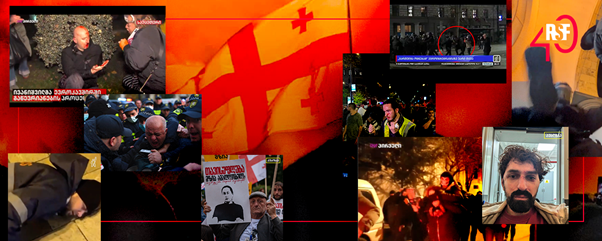
The main focus of the segment was the joint campaign by 22 online outlets called “The Light Must Not Be Extinguished”. The campaign began in August after the Georgian Dream party’s repressive laws cut off all avenues for donor funding.
On 13 August, the websites of these outlets temporarily went offline, displaying a black screen for an hour. The media later explained that this was a warning signal: they wanted readers to understand that if independent media disappeared, the “light” would truly go out. As part of the campaign, the outlets created a website allowing anyone to make donations to support independent media with a single click.
In the Imedi segment, the campaign was portrayed as an anti-state underground network allegedly receiving millions of dollars.
The segment accused the media of coordinated anti-state actions solely because they report on major events in the country and ask critical questions, such as coverage of Eagle Hills’ project — described by Georgian Dream as an “unprecedented Arab investment” — and the proposed education reform.
In addition to the 22 outlets involved in the campaign, the segment also mentioned other online media, including JAMnews.
Response of independent media to Imedi TV
The outlets involved in the campaign responded to Imedi with a joint statement. They filed a complaint with the self-regulatory body, demanded a retraction, and requested the opportunity to hold a live broadcast in response to the defamation.
“The political environment in Georgia has never been tolerant of journalists defending free and professional standards, but what the Georgian Dream party and its associated propaganda machine are doing recently goes beyond all legal and ethical boundaries,” the statement reads.
The outlets said that Imedi is targeting media whose professionalism, reliability, and reputation have never been questioned, bombarding them with fabricated news and lies.
They explained that, with public support through the campaign, they raised a total of 100,000 GEL in donations over three months. These funds allowed the outlets to maintain their offices and pay necessary fees to keep their websites running.
The statement emphasises that the main goal of the authorities’ campaign against independent online media is to disrupt their work:
“The authorities are concerned about the issues raised on socially significant topics, including the Eagle Hills project and higher education reform. They want media to stop covering current events in the country, ongoing protests, the political crisis, corruption scandals involving high-ranking officials, human rights violations, urgent social problems, and more. That is why they are attempting to discredit independent outlets and create conditions that make our existence impossible.”
Georgian Dream attacks online media
New law on juvenile crime in Georgia
The Georgian Centre for Social Justice (GCSJ) has assessed the new draft law, “On the Rehabilitation and Support of Minors in Conflict with the Law”, and warns that, instead of providing rehabilitation and support, the amendments could lead to serious violations of children’s rights and a major setback in child protection.
The centre urges the Georgian Dream party not to pass the legislative package and to focus on preventive policies instead.
The organisation argues that, although the draft law states that placing a child in a children’s home is not a form of punishment and that the decision is made by a court, the rules for placement and the conditions of stay suggest that the measure is effectively equivalent to restricting the minor’s freedom and confining them in a closed institution.
“In particular, the draft law says that a child placed in a children’s home for minors in conflict with the law may move freely within the facility, but it does not clearly guarantee this right. The law also stipulates that a minor cannot leave the home without the consent of the director or an authorised representative.”
Only after undergoing a formal review can a minor in conflict with the law be allowed, accompanied by a legal guardian, to temporarily leave the children’s home.
“The draft law establishes that the rules for temporary leave, the times and procedures for visits, and the measures to ensure the minor’s safety will be determined by the Minister of Justice.
Minors will receive their education within the Rehabilitation and Support Home and will not be allowed to attend other educational institutions, such as public schools, vocational colleges, or higher education institutions,” the statement says.
What human rights defenders say
According to the Georgian Centre for Social Justice, the draft law directly contradicts international standards on child protection. The centre highlights several violations:
- Age of placement in a children’s home: The draft allows children as young as 10 to be placed in a home. However, the UN Committee on the Rights of the Child states that criminal responsibility should generally start at 14. Scientific research shows that the brains of 12–13-year-olds are still developing, so their ability for abstract thinking and understanding the consequences of their actions is not fully formed.
- Recommendation to raise the age of responsibility: Considering the complexity of child development, the Committee even supports raising the age of criminal responsibility to 15 or 16. Responses to the actions of children below criminal age should follow a child-focused, interdisciplinary approach. They should be based on comprehensive assessments of the child’s needs, with support provided within the family. Separation from the family — for example, placement in alternative care institutions — should be used only as a last resort.
- Risk of indefinite detention: The draft states that a child may leave a children’s home after the court-determined period. However, the law allows placement for up to six months, with the court able to extend it for further six-month periods repeatedly. The law sets no limit on total duration, creating a risk that children could remain confined until adulthood. This mechanism, allowing long and disproportionate restriction of freedom, violates international standards. According to the UN Committee on the Rights of the Child, freedom restrictions should be as short as possible.
- Lack of last-resort principle: The draft fails to clearly establish that placement in a home should be a last resort. In some cases, such as when a prosecutor issues a simplified procedure decision confirming the child committed an offence with a maximum sentence of over five years, placement in a home is used instead. Georgian practice shows that minors often commit crimes in groups or with aggravating circumstances. Under the Criminal Code, offences including group property crimes carry maximum sentences over five years, automatically leading to placement in a home. This clearly violates the Convention on the Rights of the Child and UN rules on the treatment of detained minors, which require freedom restrictions to be a measure of last resort.
- Insufficient appeal guarantees: The Convention on the Rights of the Child requires that every child has access to appeal mechanisms, immediate legal and other support, and the right to challenge the lawfulness of detention. The draft law does not provide clear mechanisms for appeal or effective support, which is a major problem.
- Risk of educational and social isolation: Children placed in special institutions are unlikely to receive quality education — general, vocational, or higher education — and will be isolated from society, further hindering their development and social integration.

“Research shows that restricting or depriving children of their freedom has a serious impact. For example, a UN-backed study found that confinement can have sharply negative effects on children’s physical and mental health, their development, and their future lives. Studies show that detained children experience fear, isolation, trauma, and face discriminatory and stigmatizing treatment.
Although the Georgian Dream party in recent years has passed repressive laws under the pretext of protecting children and families, it now flagrantly violates minors’ rights and ignores their needs. The ruling party not only fails to uphold the principles of its own Juvenile Justice Code, respect international child protection standards, or implement preventive policies, but its initiatives also rob children of their future. These children are already vulnerable due to poverty, social marginalization, or family trauma.
We live in a country where more than 378,000 children are registered as socially vulnerable, over 278,000 minors receive unemployment benefits, and many children face severe material and social deprivation with limited access to quality education, healthcare, social support, and safe environments. Yet the government ignores the reality in which minors live and treats lowering the age of responsibility and punishment as the only solution.
We urge the Georgian Dream party not to adopt this legislative package and instead focus on preventive policies that provide proper support to children and strengthen families, rather than punishment,” the human rights defenders said.
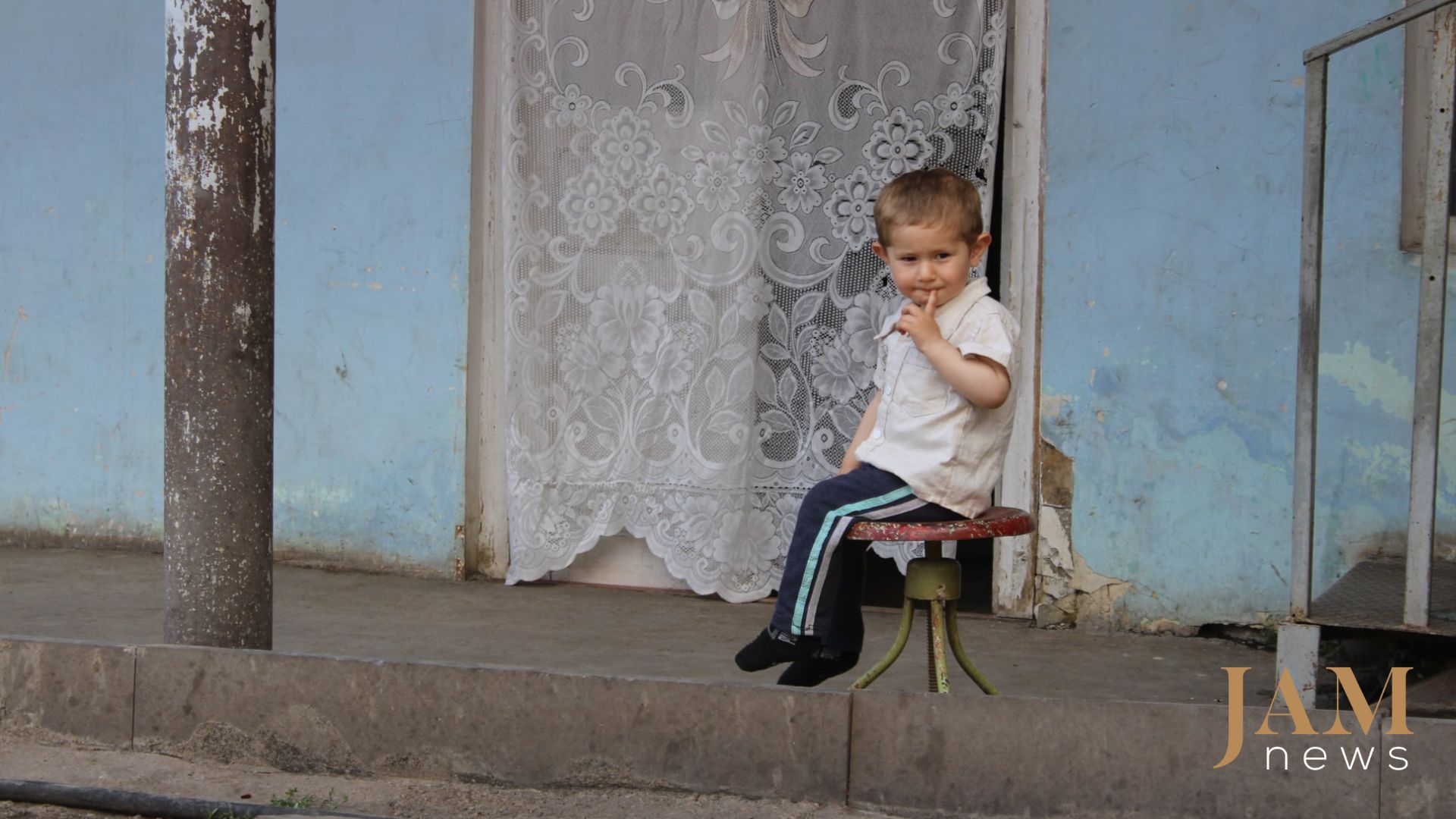
The Georgian parliament plans to adopt a special law targeting minors who commit criminal offences under the Criminal Code before turning 14.
Under the draft law, a new public legal entity will be established within the Ministry of Justice — the Centre for Rehabilitation and Support of Minors in Conflict with the Law. This centre will serve as the leading and coordinating body responsible for implementing the measures outlined in the law. Its powers and responsibilities will include:
- Assessing the condition of minors in conflict with the law and their individual needs;
- Referring or directing minors to appropriate services or programmes;
- Monitoring the participation of minors in these services or programmes;
- Tracking the condition of minors after they complete the relevant programmes;
- Placing minors in a rehabilitation home in cases provided for by law.
Experts have criticised the draft, arguing that “placing children in prison-like institutions” is not the best way to address juvenile delinquency. The government, however, insists that this model is widely used in Europe — particularly in Germany — and that Georgia is directly copying the German system.
New law on juvenile crime in Georgia
“As we worked with children, we began to see how domestic violence, divorce, and emotional challenges faced by mothers were becoming increasingly common. It became clear that a separate support service for women was essential,” said Kamala Ashumova, Executive Director of the Reliable Future Social Initiatives Public Union, speaking at the presentation of the Women’s Support Helpline Brochure in Spanish on November 25, Azernews reports.