
Categories
Day: November 24, 2025
Categories
Monday Cable – November 24
Good morning, dear readers. As per our tradition, we start our week by taking a look back at the key developments of the past week and bringing you up to speed on what happened over the weekend, including pro-government Imedi’s latest attack on online media, more detentions, and a fatal incident at the construction site of a controversial road project. Also, the London court is to deliver a ruling in the Ivanishvili-Credit Suisse dispute, and GD leaders head to the Vatican to meet the Pope.
The Past Week:
- GD Sets Agenda, Again
Georgian Dream opened the past week with three major announcements: 1. It will abolish the South Ossetian provisional administration established in 2007 by then-President Mikheil Saakashvili; 2. It will abolish the Anti-Corruption Bureau, created in 2022 under the EU Commission’s recommendations, and transfer its functions to the State Audit Office; 3. Most significantly, it will put an end to voting abroad.
- The Diaspora Problem
Stripping diaspora of their constitutional rights was met with predictable backlash, as Georgian emigrants were told they would have to fly home to exercise their fundamental right to vote. Explaining the decision, the ruling party argued that Georgian citizens must make “informed choices,” something they claimed is impossible under “foreign jurisdictions” and while receiving “filtered information” from media and relatives. GD Deputy Parliament Speaker Nino Tsilosani went as far as to argue that the new initiative will ensure the fair treatment of all emigres, citing “hundreds of thousands” of Georgians in Russia deprived of voting rights amid the absence of diplomatic ties between Tbilisi and Moscow.
ISFED, a major election monitor, slammed the proposal, arguing it is driven by “narrow party interests,” noting that only about 13% of voters abroad supported GD in the 2024 parliamentary elections, far lower than the 54% it received (according to disputed results) at home. Many likewise seized on these numbers, suggesting GD wants to strip voting rights from citizens it cannot influence and who overwhelmingly vote against it.
- Diplomatic Drama
The Week’s Diplomatic Drama once again centered on Brussels, which postponed the Human Rights Dialogue indefinitely. While the EU cited “impediments” from Georgian Dream, sources familiar with the discussions told us the real reason was GD’s decision to include a sanctioned official in the delegation. The ruling party, meanwhile, claimed that Brussels is “avoiding” – and “afraid of” – dialogue, as the two sides traded accusations yet again. In parallel, new rules to tighten the visa-free suspension mechanism, which are widely believed to target (at least part of) Georgian passport holders starting in December, moved forward after receiving the EU Council’s green light. All this came as PACE monitors, who recently visited Georgia, warned that the authorities’ actions could soon lead to “dictatorship.”
Bitesize:
- Georgian authorities have lost eligibility for Erasmus+ programs starting in 2026. Students, for now, remain eligible;
- Maka Botchorishvili paid her first visit to Israel in her capacity as Georgian Dream’s foreign minister;
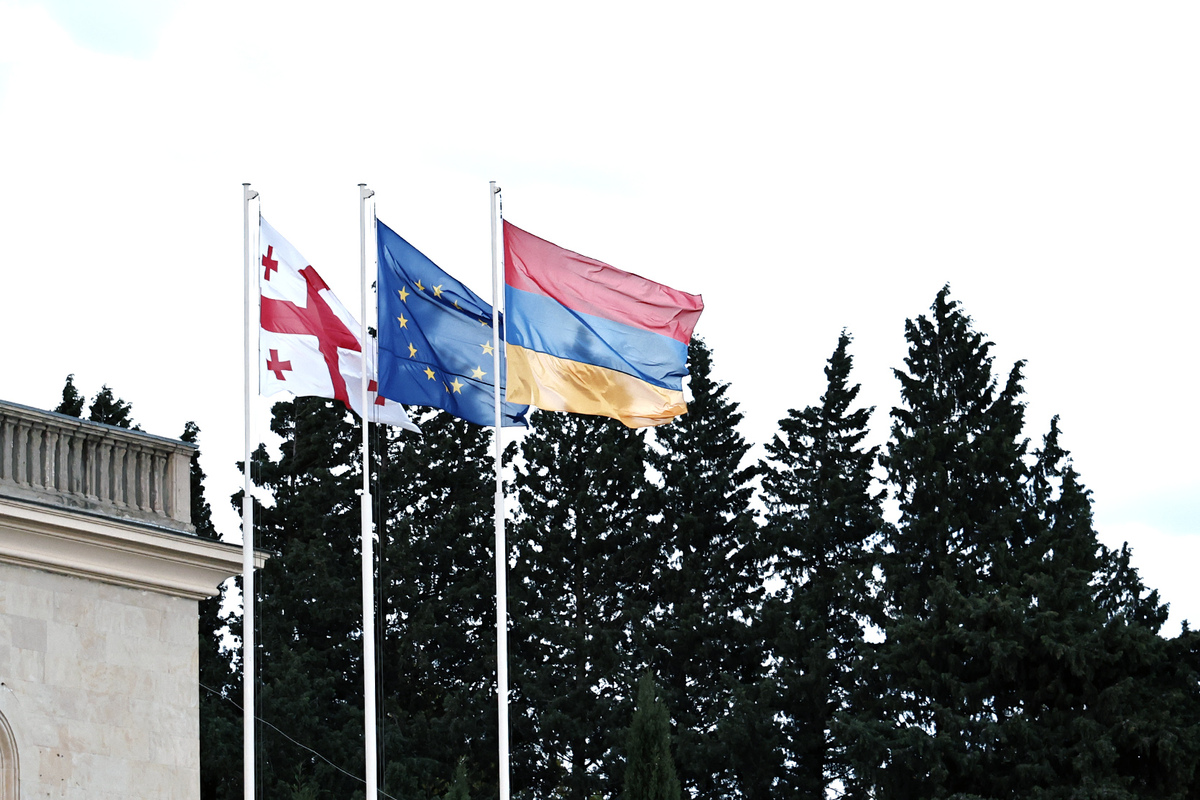
- Armenian President Vahagn Khachaturyan visited Tbilisi, meeting with GD-elected President Mikheil Kavelashvili and Prime Minister Irakli Kobakhidze, with both sides praising their friendly neighborly relations and commitment to peace;
- U.S. State Department official Jonathan Askonas visited Tbilisi, where he met with Levan Zhorzholiani, the head of the GD Government Administration. Zhorzholiani noted that the GD government is “not satisfied” with the current state of relations with the United States;
- The Court of Appeals upheld the original ruling sentencing Mzia Amaghlobeli to two years in prison;
- Former Interior and Defense Minister Irakli Okruashvili, already serving a prison term, was sentenced to seven years in a separate case related to a high-profile 2004 murder;
- Jailed opposition politician Zurab Japaridze chose to remain in prison and declined the chance to be released a month early on parole, citing his firm decision not to cooperate with the “Russian regime” in any form;
- Such firmness was not shared by 21-year-old former-protester–now–GD member Luka Dzadzamia, who resigned from Tbilisi City Council;
- Tbilisi and Tskhinvali met in Ergneti for the 128th IPRM meeting;
- Freedom Square was finally registered as a political party after the Public Registry had rejected its application twice.
Weekend News: Imedi Comes After Online Media
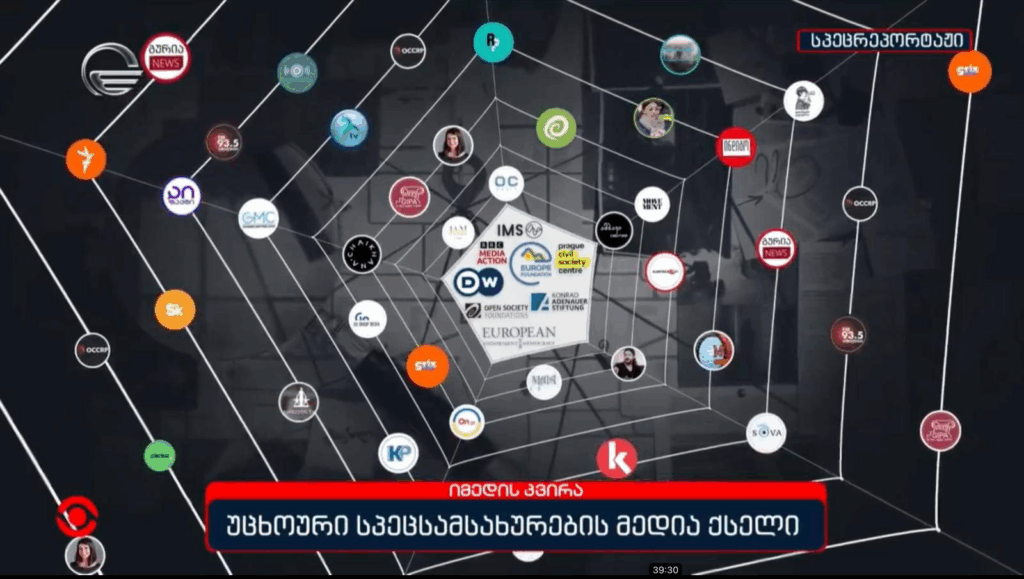
After running a series of similar pieces targeting universities and NGOs, pro-government Imedi TV has now focused its “journalistic investigation” on a group of independent online media outlets — particularly those involved in the Sinatle Media fundraising campaign launched after new restrictive laws cut off their access to funding. In a 17-minute segment, the channel advanced a set of complex and contradictory conspiracy narratives, alleging that an “anti-Georgian network disguised as media and serving foreign secret services” is working to undermine the country’s economy. The outlets’ reporting on the government’s controversial university reform and the 6.5-billion-dollar Eagle Hills investment from the UAE was cited as supposed evidence of the plot.
The segment claims that, following new legislation and a cut in USAID funding, independent media outlets are now supported by a range of European organizations, naming BBC Media Action, Deutsche Welle, Reuters, the European Commission, International Media Support, the Prague Civil Society Center, and the European Endowment for Democracy among them. It alleges a “large-scale scheme” through which Georgian online outlets received more than GEL 17 million (USD 6.5 million) in under ten months in what it calls “unprecedented international assistance,” as well as additional “shadow funding” via platforms such as Wise. While the report opens by asserting that those involved are not real journalists but NGO operatives, it ultimately claims the supposed network – particularly its editors and managers – consists of people trained at the GIPA journalism school.
The segment concludes by asserting that “information about every covert or open network is in the hands of Georgian intelligence services.” (We’ll be writing more about the matter).
Also:
Four Dead in Controversial Road Project Incident: Four workers died and another was hospitalized after a suspected ground collapse during retaining wall works on the Kvesheti–Kobi section of the North–South Corridor road project, Georgia’s Roads Department reported. The agency said the five were citizens of China and Turkmenistan. It’s not the first fatal incident to strike the controversial construction, which has drawn criticism over environmental risks, the involvement of the China Railway Tunnel Group, and concerns that the planned improved road connection to Russia poses security threats. We’ll be reporting more. Until that, read more about the controversy here.
Chicken game: Police detained dozens this week and over the weekend during nightly rallies on and around Rustaveli Avenue, where protesters may no longer be able to block traffic but are marching energetically through nearby streets to keep the momentum alive. Citizens were detained amid sporadic tensions and under a variety of dubious pretexts. One of them, Vano Skhirtladze, was sentenced to eight days in detention after an officer failed the so-called “chicken test”: police testified in court that he was arrested because he squawked a yellow rubber chicken “to mock” the officers. The police reputation has suffered a blow over handling the past years’ protests. Perhaps for that reason, the Interior Ministry has launched a new campaign aimed at schoolchildren to present the “Police Officer” profession as one of high value.
On Ukraine, which is facing a highly controversial 28-point peace plan, we also heard some – expected – reactions. Salome Zurabishvili tagged President Zelensky on X, telling him she and her Georgian friends “stand with you at this vital moment, wishing you strength and a future of peace in dignity, in respect of your country’s independence.” Meanwhile, GD’s Parliament Speaker Shalva Papuashvili said Ukraine is “in a dire position” and that its government “can neither continue the war nor end it.” He argued that Zelensky must choose “between two bad options,” something he claimed the GD government avoided by staying out of war and pursuing peace.
What to Expect:
Ivanishvili Ruling: Today, a London court is set to issue its final ruling in Bidzina Ivanishvili’s long-running dispute over assets linked to Credit Suisse. While Ivanishvili is expected to win again, the billionaire oligarch no longer believes he will recover his disputed money due to sanctions, his lawyer said in a Facebook post last week, accusing the “deep state” of “political persecution.”
GD on Holy Trip: GD Prime Minister Irakli Kobakhidze is set to meet today with Pope Leo XIV as part of an official Vatican visit, where Kobakhidze will be accompanied by Foreign Minister Maka Bochorishvili, Culture Minister Tinatin Rukhadze, and Administration Head Levan Zhorzholiani.
Interview
“The opposition parties are losing ground: first, their leaders are in jail, and now they are also being banned, meaning most of them will not be able to participate in the elections,” Salome Zurabishvili, Georgia’s fifth president, told Civil.ge’s Konstantin Hadzi-Vukovic, in a recent interview where she also spoke about the main challenges and prospects of the ongoing resistance. “In a way, this is forcing us to face the need to restructure the opposition movement as a whole, by taking into account the civil society, the new small parties emerging from and around the protest movement. This does not mean that the banned opposition parties won’t have a voice, but they will no longer be the only ones.” Read in full here.
OTD: From Civil.ge’s Archives
On these days 22 years ago, Georgia celebrated then President Eduard Shevardnadze’s resignation after the bloodless Rose Revolution. On November 24, Mikheil Saakashvili, who led the revolution, announced the end of civil disobedience. Read more about the legacy of the key event in Georgia’s recent history in our analytical piece from two years ago here.
Visual Politics
Imedi TV relied on dramatic visuals to promote what it described as a “large-scale scheme” involving an “anti-Georgian network operating under the guise of media and serving foreign intelligence services.” The 20-minute segment used multiple graphics to support the narrative, while advancing conspiracy claims that at times contradicted one another – for example, asserting that most journalists are actually NGO employees but also part of a unified secret network linked to a specific journalism school.
President Aliyev: Turkic world is experiencing a period of renewed growth Latest news from Azerbaijan
Azerbaijan has recorded a notable surge in the export of copper ores and concentrates during January-October of this year, reflecting strengthened industrial output and rising global demand for strategic raw materials, Azernews reports.
According to export statistics for non-oil products of Azerbaijani origin, more than…
According to export statistics for non-oil products of Azerbaijani origin, more than…
Georgian Dream moves toward Russia
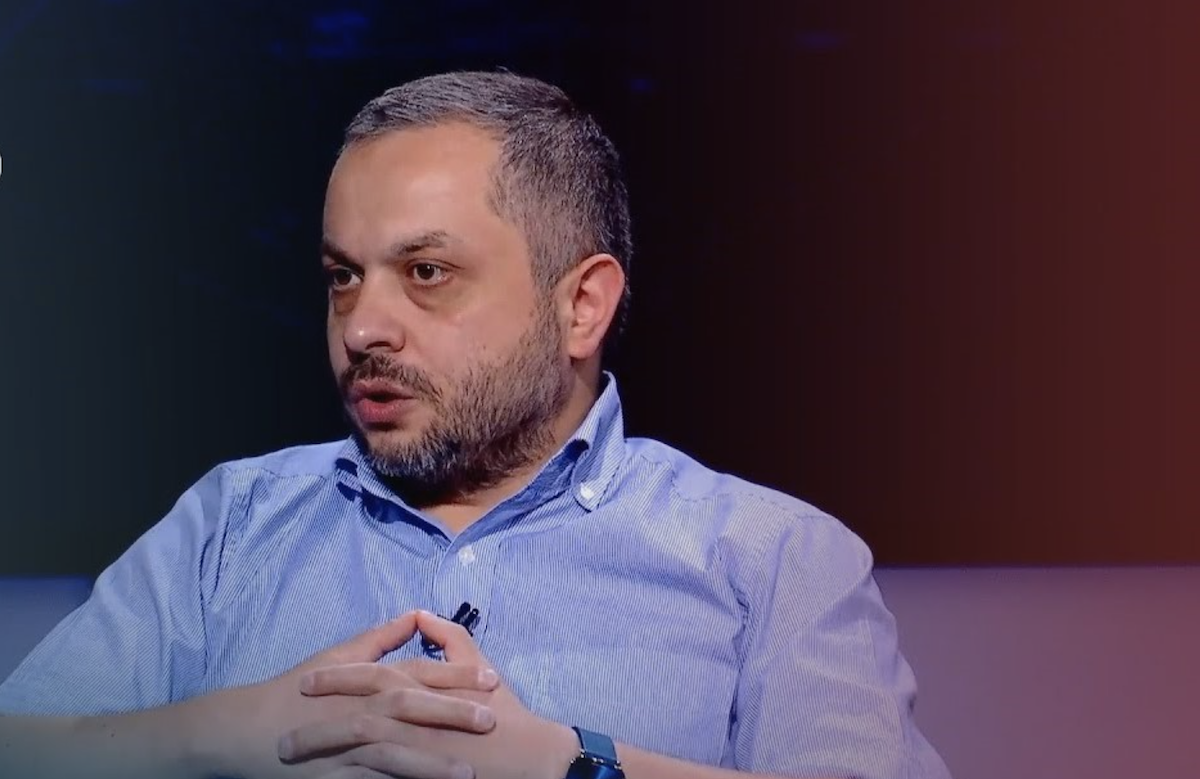
Georgian historian Beka Kobakhidze comments on a series of new laws introduced by Georgian Dream, which he argues were adopted despite bringing no benefit to the ruling elite — and even damaging its standing among its own supporters.
Kobakhidze believes this is happening because Georgia’s leaders feel compelled to follow recommendations from the Kremlin in order to remain “compatible with Russia.”
“It’s similar to how the European Union presented Georgia, as an EU candidate, with a list of conditions that had to be met for the integration process to continue. Only now this ‘integration’ is moving in the direction of Russia,” Kobakhidze says.
“For Moscow to regard Georgia’s ruling regime as a ‘reliable partner’, society will have to endure many more shameful episodes,” the analyst warns.
The most recent legislative initiatives put forward by Georgian Dream include abolishing the administration of the “South Ossetia” administrative unit — created on the territory of the former South Ossetian Autonomous Region — and shutting down the anti-corruption bureau.
Another proposal has sparked heated debate and public anger: a plan to ban Georgian citizens from voting while abroad. Under the amendment, they would have to return to the country in order to cast their ballots.
- New Georgian government initiatives: abolishing several agencies and banning voting from abroad
- Opinion: ‘Emigrants are punished for not voting for Georgian Dream’
- Opinion: ‘How will Georgian Dream supporters accept their wives, mothers and sisters losing right to vote?’
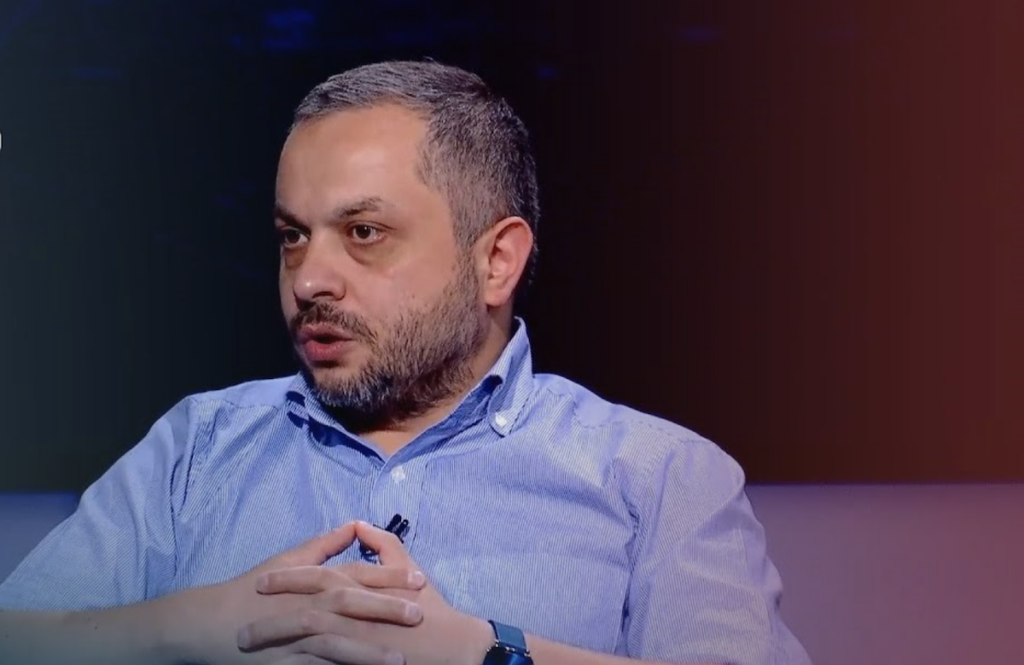
Historian Beka Kobakhidze:
“Why is Georgian Dream stripping Georgian emigrants of their right to vote?
It’s easy to fall into the trap of giving a simple answer: because their views are shaped abroad, because their votes can’t be manipulated, and so on.
Let me start with a short digression. Georgia is a very small country, but it sits between major powers. It cannot become isolated or exist on its own.
Let’s recall the period of King Heraclius II (who ruled in the 18th century and is known for the 1784 Treaty of Georgievsk, which placed the Kingdom of Eastern Georgia under the protection of the Russian Empire — JAMnews).
Heraclius II was initially aligned with Persia under Nader Shah. When Persia weakened, he turned toward Russia. Shortly afterwards, Georgia was crushed by the Russian Empire.
The first Democratic Republic of Georgia (1918–1921) tried to direct the country toward Europe. It was immediately suppressed by Soviet Russia.
After independence was restored, in 1995 Georgia again tried to rebuild its ties with Europe. Reforms were aimed at making the country compatible with the European space.
Europe set conditions — mostly concerning democracy, good governance and human rights. Georgian governments since then tried, to varying degrees, to lay the foundations for this. Georgia became the most democratic country in the region.
This continued until Bidzina Ivanishvili (the oligarch founder and honorary chairman of Georgian Dream) came to power in 2012 and shifted the country’s foreign policy course toward Russia.
What is happening now resembles the way the European Union, after granting Georgia candidate status, presented it with a list of conditions that had to be met for the integration process to move forward. Only this time, the alignment is with Russia — and the ruling regime must fulfil Moscow’s conditions in order to be recognised there as a ‘reliable partner’.”
Examples of actions that Georgian Dream did not need for its own political interests but carried out in line with directives from the Kremlin.
Example 1.
Let’s start with the most recent case — the plan to ban Georgian citizens from voting abroad.
In the 2024 parliamentary elections, despite strong mobilisation efforts targeting the Georgian diaspora, only about 35,000 emigrants voted in other countries.
Of those, the real opposition received around 25,000 votes.
Is this number an electoral threat to Georgian Dream? No — inside Georgia, the ruling party has far more resources for vote-buying, intimidation, propaganda, and manipulation.
This decision therefore damages Georgian Dream’s reputation among its own supporters far more than it helps the party win elections.
So why are they doing it, especially now, three years away from the next elections?
My historical experience and work with Russian archival documents suggest that Russian handlers do not develop separate policies for Georgia, Ukraine, or Lithuania.
In the Kremlin, there is a single policy for all the “inorodtsy” — a term Russians historically used for the small nations within their empire.
Time will pass — I may not be around to see it — but one day the archives on current events will be opened. I have no doubt that my assumption will be confirmed.
Recently, Moscow suffered a defeat in Moldova during a referendum asking whether the country should pursue EU membership.
Pro-European forces won largely thanks to the active participation of Moldovan citizens living abroad.
Russian handlers were angered and drafted a unified political manual: emigrants must be excluded from voting. This directive then reached Tbilisi, and Georgian Dream is implementing it.
Nobody explained to the Russians that, unlike Moldova, Georgia has very few polling stations abroad, and emigrants cannot significantly influence the outcome of elections.
This is especially true in a country where elections are not genuinely competitive and opposition parties are effectively banned.
There are also clear signs that Georgian Dream now plans to hold a “referendum on Georgia’s neutrality.”
The proposed referendum could, in theory, attempt to annul Article 78 of the Georgian Constitution, which obliges the country’s constitutional bodies, within their powers, to take all measures to ensure Georgia’s full integration into the European Union and the North Atlantic Treaty Organization.
This is the approach of the ruling party. Already in Georgia, some minor political figures — often seen as “crazy” — are talking about it, but real politics will eventually take over.
These individuals are shaping the information environment and have been very active in recent months promoting the idea of “neutrality,” with backing from pro-government propaganda channels.
It appears likely that a referendum will be held, similar to the one recently conducted in Moldova. Early parliamentary elections may also follow, and both would likely be initiated under Russia’s guidance.
Example 2.
Let’s recall the apologies to the Ossetians for the August 2008 war, delivered by Bidzina Ivanishvili in Gori in September 2024. Was this really needed by Georgian Dream, especially right before elections? Why accuse Georgia of starting that war, and what did that give Georgian Dream?
Absolutely nothing. Except one thing: it fulfilled yet another item in Russia’s “recommendations” for achieving “compatibility” with Moscow.
Example 3
In 2022, a Russian Foreign Ministry report labelled the Georgian “Laboratory for the Study of the Soviet Past” as a “hostile organisation.” Almost immediately, the Georgian authorities closed the Soviet archives.
Neither the “Sovlab” organisation nor the archives themselves posed any problems for the Georgian Dream government. In fact, I am confident that neither Ivanishvili nor Kobakhidze (the prime minister from Georgian Dream) even knew these archives or the organisation existed.
But Moscow had just closed “Memorial” — an organisation similar to Georgia’s Sovlab — and demanded that Georgia follow the same “compatibility with Russia” recommendation.
Example 4
In 2021, Georgia marked 100 years since the Soviet occupation. Georgian Dream, predictably, did not commemorate this day — nor the 100th anniversary of the 1924 uprising.
In a Facebook statement at the time, Prime Minister Garibashvili claimed that on 16 February 1921 the Red Army invaded Georgia, but Russia was not mentioned.
Archival documents, however, confirm the historical facts. On 12 February 1921, in the Lori region, a staged uprising began, with the Red Army involved from the very first minutes.
Official Soviet and modern Russian accounts claim that workers rose up on 12 February, and the Red Army came to their aid on 16 February.
This false version does not appear in any Georgian textbooks or in any book published in Georgia after 1990. No Georgian historian has ever written this.
So where did the 16 February date in Garibashvili’s statement come from, if not supplied from Moscow?
Georgian society still faces many shameful episodes as Georgian Dream works to achieve “compatibility with Russia.”
Новости в ГруGeorgian Dream moves toward Russia
“The joint and coordinated activities of NGOs from the Turkic world within the framework of the UN and other international institutions, as well as their consolidation on a single platform, can make a significant contribution to our common cause and objectives,” President of the Republic of Azerbaijan Ilham Aliyev said in his message to the participants of the Solidarity Forum of NGOs from the member countries of the Organization of Turkic States, held on November 24 in Baku, Azernews reports.