Categories
South Caucasus News

Opinion: ‘They’re banning people from walking on pavement. On what grounds?’


On protest marches in Georgia

On protest marches in Georgia

Commenting on the restrictive measures used by police during protests in central Tbilisi, former head of the Georgian Young Lawyers’ Association Nika Swimoniashvili says demonstrators are now being prevented from moving not only along the roadway but even on the pavement — a practice, he stresses, that has no basis in law.

On 16 October, the ruling Georgian Dream party approved new legislative amendments under which covering one’s face with a mask or blocking a road during a protest can be punished with up to 15 days of administrative detention. But authorities have gone further, attempting to extend these restrictions to pavements as well.

According to Swimoniashvili, the arguments offered by law enforcement to justify these measures simply do not stand up to scrutiny.
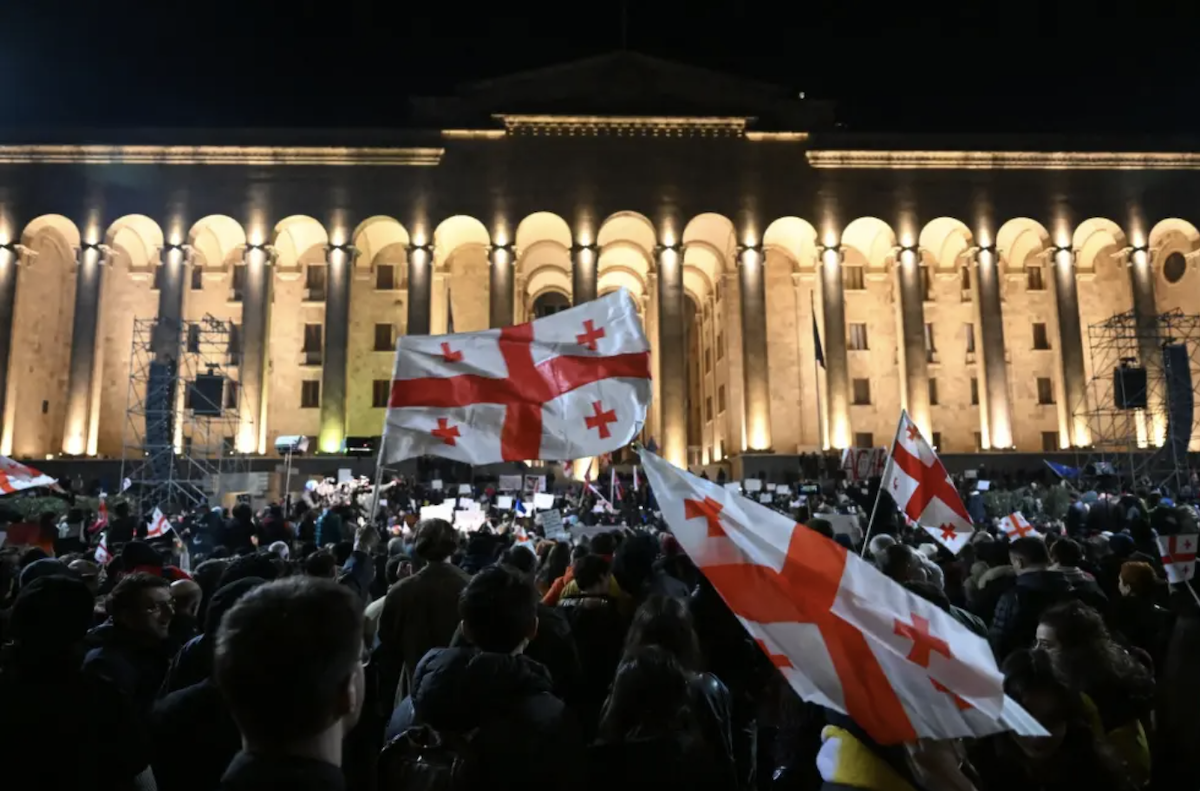
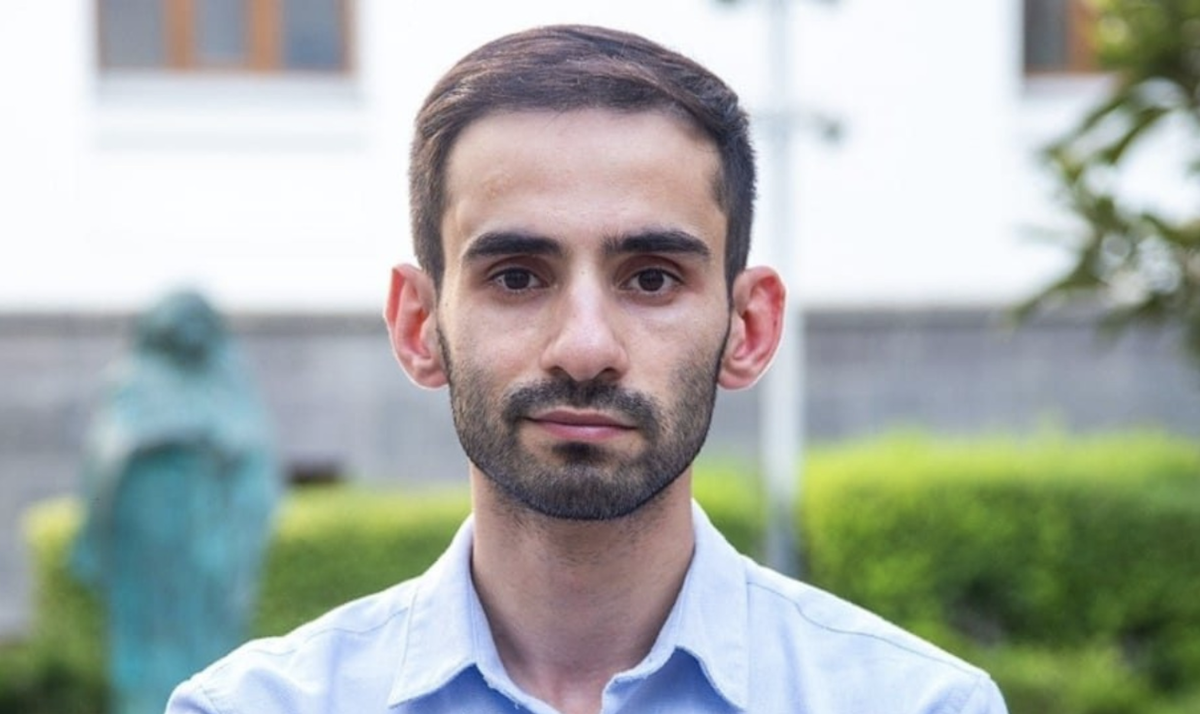
Nika Simonishvili says police no longer allow protesters to block roads, prompting demonstrators to adopt a more mobile approach — replacing static rallies with protest marches. This format, he argues, has proved so effective that Georgian Dream has grown visibly uncomfortable with the sight of so many dissenting citizens on Tbilisi’s streets. “That’s why they’ve started creating new obstacles,” he says.

“What will they do on 28 November — the anniversary of the government’s decision to halt Georgia’s EU integration process — when thousands of people take to the streets again? Will they once more deploy police along the pavements and try to curtail freedom of assembly? It won’t work. Thousands will come out on 28 November to show again that they reject what Georgian Dream is doing.”

“In effect, the authorities are banning people from walking freely on the pavement. And I stress: not on the roadway, but on the pavement. How does that fit into any legal framework? They cannot cite a single lawful basis for this restriction — no such provision exists in any legislation.”

Simonishvili argues that Georgian Dream’s heavy-handed tactics have achieved nothing. Changing the form of protest has not delivered the victory the party hoped for. And even if the authorities try to obstruct future marches, he says, the protest movement will simply adapt and take on a new shape.


Categories
South Caucasus News

Британия уже готовит войска для Украины


Categories
South Caucasus News

Vice-President of Heydar Aliyev Foundation Leyla Aliyeva visits boarding school in Lankaran


On November 21, Leyla Aliyeva, Vice-President of the Heydar Aliyev Foundation, and Alena Aliyeva visited a special boarding school for children with disabilities in the city of Lankaran.

Categories
South Caucasus News

Friday Wrap-up: Armenian civil society visits Baku, new motions in the Anar Mammadli case, and Supreme Court rejects Bakhtiyar Hajiyev’s appeal


This week in Azerbaijan, Armenian civil society representatives paid a rare visit to Baku as part of ongoing dialogue efforts, new legal motions were filed in the case against activist Anar Mammadli and his colleague Anar Abdulla, and the Supreme Court upheld the sentence against jailed civic activist Bakhtiyar Hajiyev.

Armenian civil society representatives travel to Baku in reciprocal peace dialogue visit

On November 21, a group of Armenian civil society representatives arrived in Baku, marking a reciprocal step following the visit of an Azerbaijani delegation to Yerevan on October 21 and 22.
The meetings form part of the peace agenda outlined in the Joint Statement signed in Washington on August 8, 2025, by the leaders of Azerbaijan, Armenia, and the United States.

At the earlier October meeting in Yerevan, which was held with the participation of Armenia’s Security Council Secretary Armen Grigoryan, NGOs from both countries discussed post-conflict regional cooperation and the next steps in advancing the peace process.

The Washington Joint Statement, reached nearly two years after Azerbaijan restored full control over its territory following the 2020 war and the 2023 one day operation, included commitments to mutual recognition of territorial integrity, withdrawal of claims, and the peaceful settlement of disputes.
The agreement also endorsed the route known as TRIPP, a transit corridor connecting mainland Azerbaijan with Nakhchivan through Armenia, to be implemented under Armenian sovereignty and jurisdiction.

New motions filed in trial of activists Anar Mammadli and Anar Abdulla

On November 17, the Baku Court of Grave Crimes held another hearing in the joint criminal case of public activist Anar Abdulla and Anar Mammadli, head of the Election Monitoring and Democracy Studies Center, EMDS SMDT. Judge Aygun Gurbanova presided.

Mammadli’s lawyer, Javad Javadli, submitted a petition requesting that the court formally obtain several documents from the Azerbaijani government’s representative to the European Court of Human Rights, ECHR. According to the defense, these materials directly undermine both the factual and legal basis of the charges and demonstrate their lack of legitimacy.

Javadli reminded the court that the ECHR’s 2018 ruling deemed Mammadli’s previous imprisonment unlawful. That conviction has never been reversed, and the lawyer argued that this unremoved conviction status is now being improperly used as an aggravating factor in the current case.

He also referenced the ECHR’s January 12, 2023 decision, which found the non-registration of SMDT to be arbitrary and a violation of freedom of association under Article 11 of the European Convention. Rather than remedying the violation, Javadli noted that authorities are citing the organization’s continued unregistered status as evidence against Mammadli.

During the hearing, activist Anar Abdulla delivered a statement and answered questions from the prosecutor. The next session is scheduled for December 8 and will continue with witness testimonies.

Supreme Court upholds sentence against civic activist Bakhtiyar Hajiyev

On November 18, the Supreme Court of Azerbaijan considered the cassation appeal of prominent civic activist Bakhtiyar Hajiyev. Judge Alasgar Novruzov presided, and the court ultimately upheld the appellate ruling, leaving Hajiyev’s conviction in force.

Hajiyev was arrested on December 9, 2022, and in January 2025 he was sentenced by the Baku Court of Grave Crimes to 10 years in prison. He was convicted on charges including smuggling foreign currency, money laundering, and tax evasion, accusations he vehemently denies.

Earlier in the process, he had also faced charges of hooliganism, Article 221.2.2, and contempt of court, Article 289.1. In his final statement before sentencing, Hajiyev described all charges as fabricated and politically motivated, asserting that the case was ordered by high-level officials.

Rights organizations argue that the Supreme Court’s decision reinforces concerns about systemic pressure on government critics and the continued use of criminal proceedings as a tool against independent civic activists.

The post Friday Wrap-up: Armenian civil society visits Baku, new motions in the Anar Mammadli case, and Supreme Court rejects Bakhtiyar Hajiyev’s appeal appeared first on MEYDAN.TV.


Categories
South Caucasus News

BYD launches new electric car in Israel


Chinese automaker BYD officially launched sales of its new electric car model in Israel on Thursday, the company’s Israeli dealership, Shlomo Motors, announced, Azernews reports, citing foreign media.

Categories
South Caucasus News

В США передумали выделять Украине миллионы


Categories
South Caucasus News

Экстренное обращение Зеленского к Украине: Киев согласен на мир?


Categories
South Caucasus News

Heydar Aliyev Foundation reopens fully renovated Lankaran orphanage building


The building of the social service institution of Osman Mirzayev Orphanage in the city of Lankaran has been overhauled by the Heydar Aliyev Foundation. The orphanage building was inaugurated after the renovation on November 21.

Categories
South Caucasus News

Crews battle church fire in Pennsylvania


Categories
South Caucasus News

Europe’s silence on Azerbaijan’s recovery exposes its double standards


As Azerbaijan pushes forward with its peace agenda and reconstruction efforts, recently, a striking imbalance has recently emerged in the international response, particularly from Europe. During the years of occupation, the European Union and various European organisations regularly introduced peacebuilding programs, civil society initiatives, and grant-based projects, many of which ultimately helped maintain the existing status quo rather than resolve the conflict. Yet now, in a period when Azerbaijan has restored its sovereignty, opened the path for normalisation with Armenia, and is addressing the immense humanitarian and infrastructural consequences of occupation, Europe’s involvement has sharply declined.