
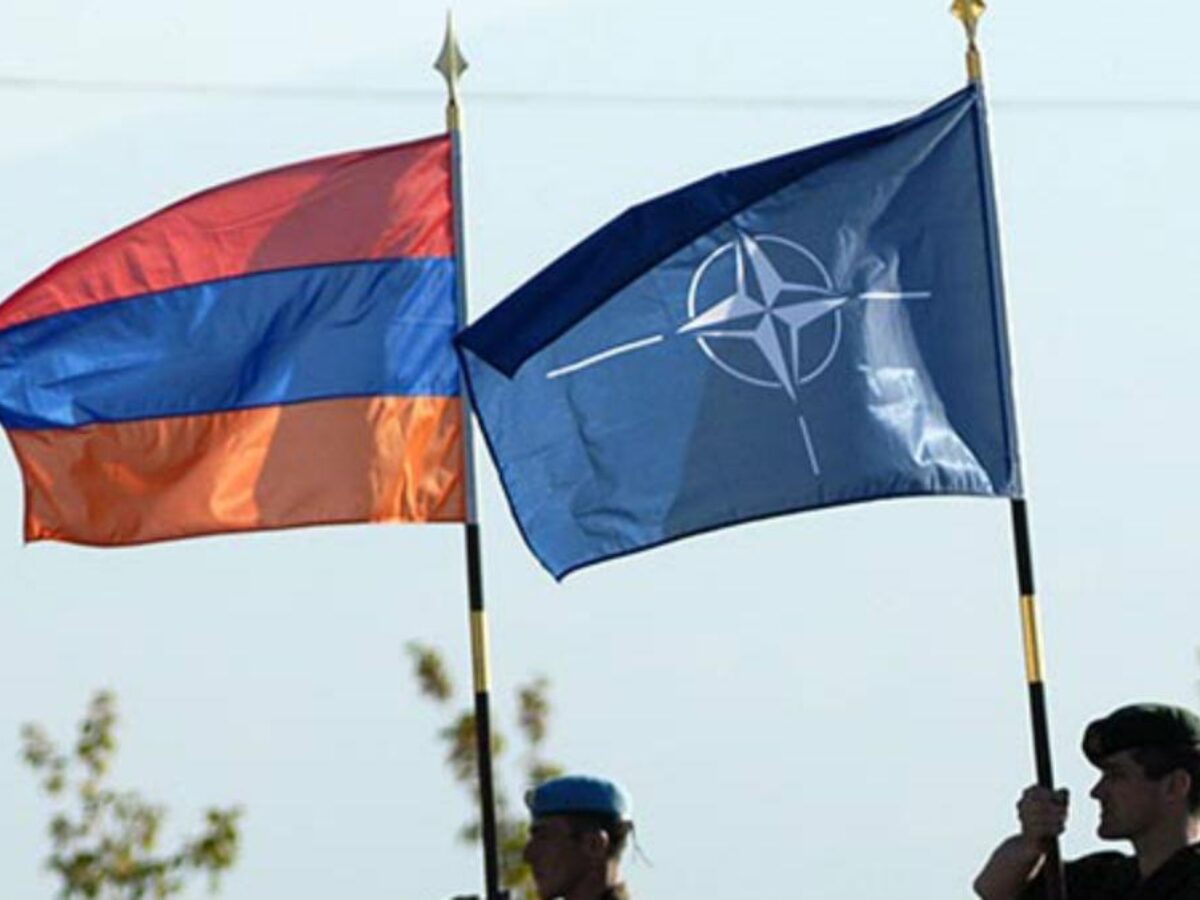
Review of Armenia–NATO relations
“Reviewing Armenia–NATO relations is no longer a choice but a necessity,” says political analyst Narek Minasyan, an expert at the Centre for Security Policy Studies.
In his article on Armenia’s ties with the North Atlantic alliance, Minasyan emphasizes that the country has never aimed to join NATO. He also sees no demand for membership among political or public circles today. At the same time, he notes that recent events have created a “favourable ground” for expanding relations with the alliance.
“In the context of regional shifts, the inaction of the Russia-led CSTO, and ongoing defence reform agendas, deeper cooperation with NATO could play a key role in strengthening Armenia’s security system. It could also help diversify the country’s foreign policy,” Minasyan explains.
Assessing the current partnership framework, he concludes that Armenia can align its military and civilian capacities with international standards. He stresses that achieving this does not require full NATO membership, which would entail binding alliance obligations.
- ‘We decided to leave someone else’s pocket and become independent state’ – Pashinyan
- Armenia between the West and Russia: risks of the government’s ‘balanced’ policy
- Armenia and France set to deepen military cooperation in 2025
- “Azerbaijan has always been as much a brotherly state for the CSTO as Armenia,” says Pashinyan
Armenia joined the North Atlantic Cooperation Council in 1992. Since 1994, bilateral cooperation has developed under the “Partnership for Peace” programme and later through an Individual Partnership Action Plan. This framework established a political dialogue with the alliance on security issues, defence reforms, and professional training for the armed forces.
Since the 2000s, Armenia has primarily worked with NATO through peacekeeping missions in Afghanistan and Iraq. The country also continues to participate in the mission in Kosovo.
Expert commentary
Political analyst Narek Minasyan argues that Armenia’s review of relations with NATO is driven by new geopolitical realities, a wide range of security threats, and the country’s need to maintain regional stability.
According to him, there are more than enough grounds for this step:
- regional realities, including the new status quo formed after the 44-day war and ethnic cleansing in Karabakh, Armenia’s frozen participation in the Russia-led CSTO military bloc, and the weakened positions of Russia and Iran in the region;
- diversification of Armenia’s foreign policy;
- reform of the armed forces.
The political analyst believes that revising Armenia–NATO relations could help balance the alliance’s cooperation in the region. He notes that NATO’s engagement with Armenia currently remains at its lowest level.
Minasyan explained that Georgia maintains the closest ties with NATO and holds candidate status for membership. Azerbaijan, like Armenia, is a partner country. However, thanks to its alliance with Turkey, Azerbaijan has achieved significant progress in reforming its armed forces according to NATO standards, following the Turkish model.
The expert adds that reviewing relations with the alliance could become a key component of Armenia’s efforts to diversify its foreign policy.
Speaking of the “significant progress” in the process of diversifying its foreign relations, Minasyan reminds that Armenia has managed to:
- establish military-technical cooperation with France and India,
- form strategic partnerships with Georgia, China, and the United States,
- deepen relations with the European Union (including hosting an EU monitoring mission on the border with Azerbaijan and receiving support through the European Peace Facility).
According to political analyst Narek Minasyan, NATO could play a crucial role in achieving the objectives outlined in Armenia’s army transformation concept for 2024–2035:
“A process of reviewing relations with NATO is emerging. Moreover, this could support the reform of Armenia’s Armed Forces, strengthen cybersecurity capacities, enhance resilience against hybrid threats, and improve crisis management.”
At the same time, he stresses that, in the context of strengthening bilateral cooperation, Armenia must take into account:
- the complex relations of Russia and Iran with NATO,
- Turkey’s central role in the alliance and its strategic partnership with Azerbaijan.
Minasyan argues that Armenia should advance its ties with NATO under the principle of “deepening cooperation without creating new security challenges.”
He recommends that Armenian authorities focus on programs designed for partner countries. For example, he suggests reinforcing NATO partnership through the “Defence Capacity Building” program. This initiative already provides support to several non-member states, including Georgia and Moldova:
“It can serve as a key platform to enhance the efficiency of defense institutions, modernize education and training systems, improve governance transparency, and align security structures with international standards.”
The analyst adds that Armenia–NATO cooperation in the defense sector should prioritize not only technical and expert support but also the development of human capital. He expects this approach to ensure long-term stability and resilience in the country’s defense system.
Review of Armenia–NATO relations