
#SouthCaucasus #Москва выдала #Алиев-у план #госпереворот-а в Азербайджане. Что об этом известно? – YouTube https://t.co/P9q26wVVw0
— Michael Novakhov (@mikenov) November 10, 2025
Day: November 10, 2025
#SouthCaucasus
#Москва выдала #Алиев-у план #госпереворот-а в Азербайджане. Что об этом известно? – YouTube youtube.com/watch?v=pRlQEOVq…— Michael Novakhov (@mikenov) Nov 10, 2025

#aztv #rusiya #moskva #kremlin #putin #lavrov #xeberler #xəbərlər
Copyright © AZTV
YouTube kanalına abunə olun: https://bit.ly/2ZKtzKO
Facebook – https://bit.ly/38x28YP
İnstagram – https://bit.ly/2Z3BBPX
Twitter – https://bit.ly/2VPe976
Youtube – https://bit.ly/31Qb1eY
Telegram: https://bit.ly/3heof98
Rəsmi sayt:
https://bit.ly/3e28gJJ AZ
https://bit.ly/3dZP4MJ RU
https://bit.ly/2Z4EMH9 EN
NEW!! Ukraine top of mind as G7 top diplomats meet in Canada tomorrow
Rubio leads U.S. delegation 👇🏻
— Alex Raufoglu (@ralakbar) Nov 10, 2025
Kazakhstan Eyes More Grain Supplies To Armenia After First Transit Via Azerbaijan Ազատություն Ռադիոկայան

Georgian activist on detention conditions
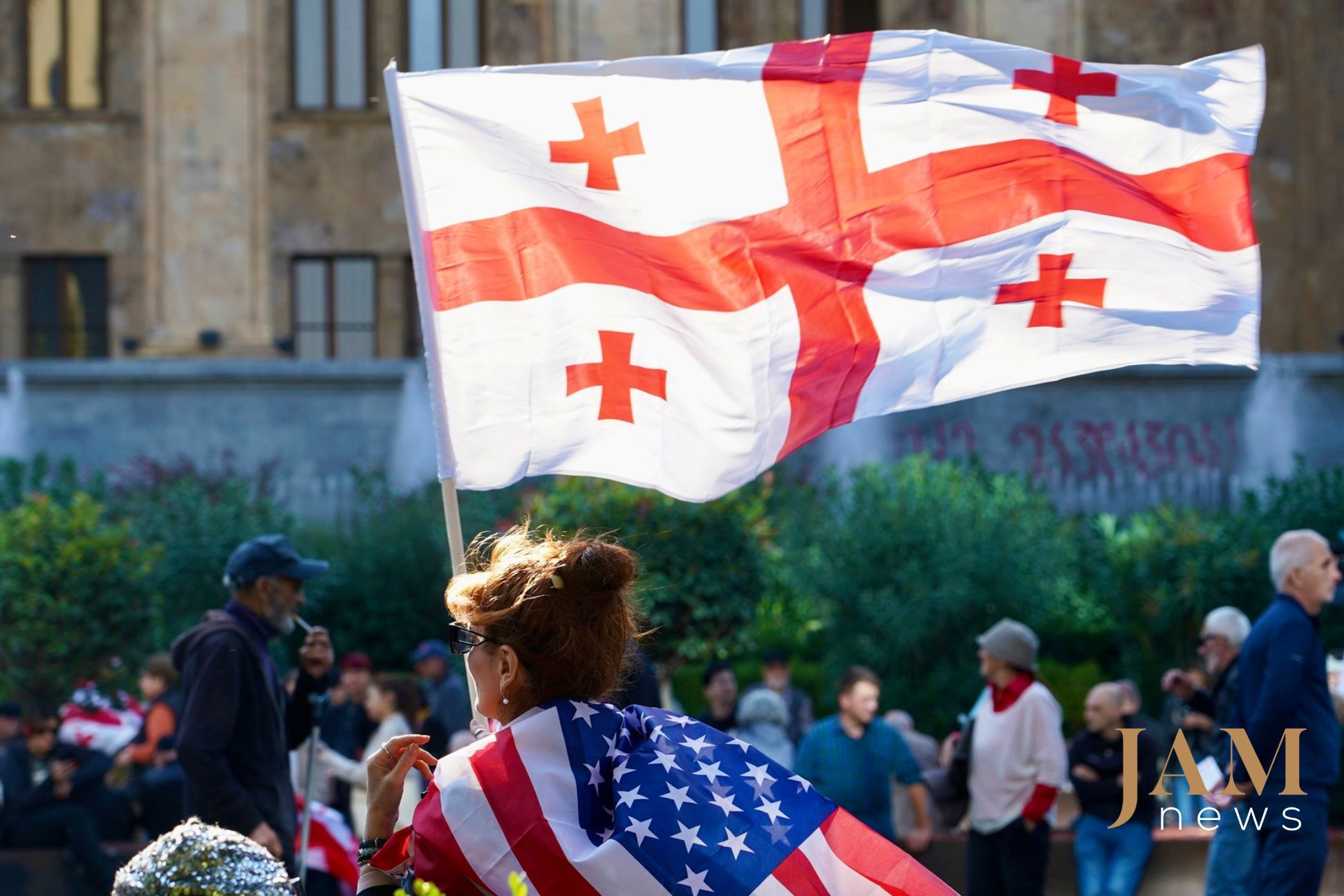
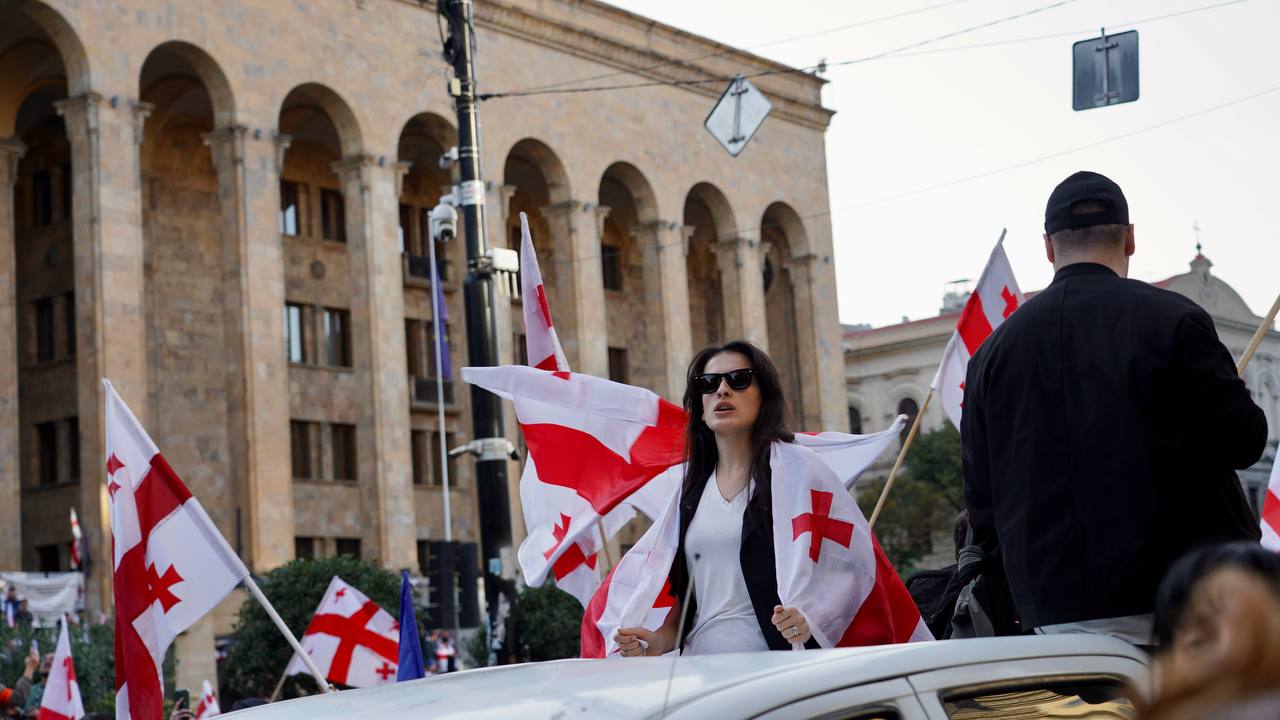
Since 19 October 2025, after the ruling Georgian Dream party adopted new repressive laws against protesters, more than 150 people have been arrested on Rustaveli Avenue in Tbilisi on charges of blocking the road. Over 100 of them were sent to prison — some for three, others for five, and some for 10 days or more. Among those detained were around 50 women.
- Georgian Dream passes new law tightening measures against protesters
- “Take off the mask!” how Georgian government tackles face mask use
- Opinion: ‘Rustaveli Avenue protests are the strongest expression of resistance in Georgia’
Journalists, poets, publishers, doctors and even pensioners were among those jailed. On one occasion, four members of the same family were arrested on the same day.
Under the new repressive amendments, a judge immediately sentences a protester to two months in prison (60 days) if they are found at a rally with flammable materials, pyrotechnics or firearms.
Wearing a mask during a protest, using tear gas or blocking the road is punishable by up to 15 days in jail. A repeat offence carries a one-year prison term, while each subsequent violation can result in two years’ imprisonment.
Those detained are first tried and then transferred to a pre-trial detention centre in Tbilisi. However, in recent days the capital’s prisons have become so overcrowded that some detainees had to be moved to other cities.
That is how 22-year-old Neka Natelashvili ended up in Poti. Like around 30 other demonstrators, Neka was arrested on Rustaveli Avenue on 22 October — one of the loudest nights since the new amendments came into force. Among those detained that day were doctor Vazha Gaprindashvili, journalist and Public Broadcaster board member Lika Basilaia-Shavgulidze, activist Isako Devidze, Left Behind group founder Ilo Glonti, economist Nikoloz Shurgaia and others. Some people were taken away by police straight from the pavements.
After Neka’s arrest, a clip from the Georgian TV quiz show The Bookshelf went viral on social media, showing her breaking the record for the number of correct answers given in one minute.
Soon after her detention, social media users began discussing the fact that Neka was the only woman among the prisoners transferred to the Poti detention centre. Other inmates later said that Neka kept singing the song My Beautiful Country [which has become a symbol of Georgia – JAMnews] — without pause inside the facility.
When activists from Zugdidi heard the story, they came to the Poti detention centre and played the same song through a loudspeaker in the prison yard.
Neka is now free. At JAMnews’s request, she spoke about the days she spent in custody.
Neka Natelashvili, 22, literary critic and poet
Date of arrest: 22 October 2025
Sentence: six days in detention
Judge: Nino Enukidze
Place of detention: Poti City Temporary Detention Centre, Cell No. 5
“When we reached Poti, it was already 24 November. My eyes ached from exhaustion, but there were still many procedures ahead — inventorying belongings, taking fingerprints, photographing — just like in a film. It all passed as if in a dream, and suddenly I found myself in the very last cell of the temporary detention centre — Cell No. 5.
When the iron door shut, I looked around the room and lit a cigarette. Soon they handed me clean sheets. By the time I spread them out, dawn had already broken. I lay down to sleep.
I was woken up at nine in the morning — that’s the rule. At that time, the guards change shifts, and you’re taken out to wash your hands and face. Before bedtime, your cell is inspected, and when you return, you’re made to go through a metal detector — in case you’ve picked something up in the bathroom.”
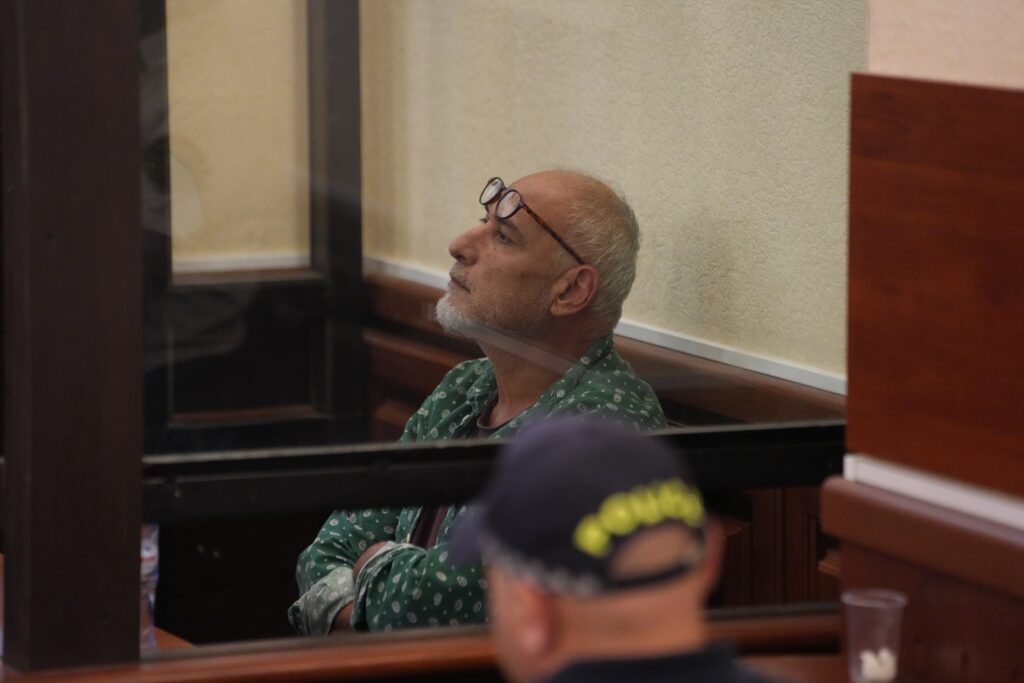
“I went back to the cell and fell asleep again. When I woke up, I heard a familiar voice. Jumping up instantly, I saw my childhood friend Davit Chkadua — he’d been placed in the cell opposite mine. He too had been arrested for blocking the road, but unlike me, he was sentenced to ten days.
Gradually, parcels began to arrive for me, but my books were nowhere to be seen. I asked a guard to bring me something to read. He brought two books — a collection of short stories by Ilia Chavchavadze with a torn cover, and a book by Heinrich Böll, though I can’t remember the title.
I chose Ilia and started reading. I was about halfway through when my own books finally arrived — The Second Sex and Pedro Páramo. I’d asked my sister to bring them during the court hearing. I needed The Second Sex by de Beauvoir for my studies, while Pedro Páramo was simply my favourite book.
The light in the cell is never turned off — it can only be dimmed slightly. For someone who can’t sleep even in a softly lit room, that’s real torture.
I tried to sleep with the blanket pulled over my head, but I never managed to fall asleep before four in the morning.”
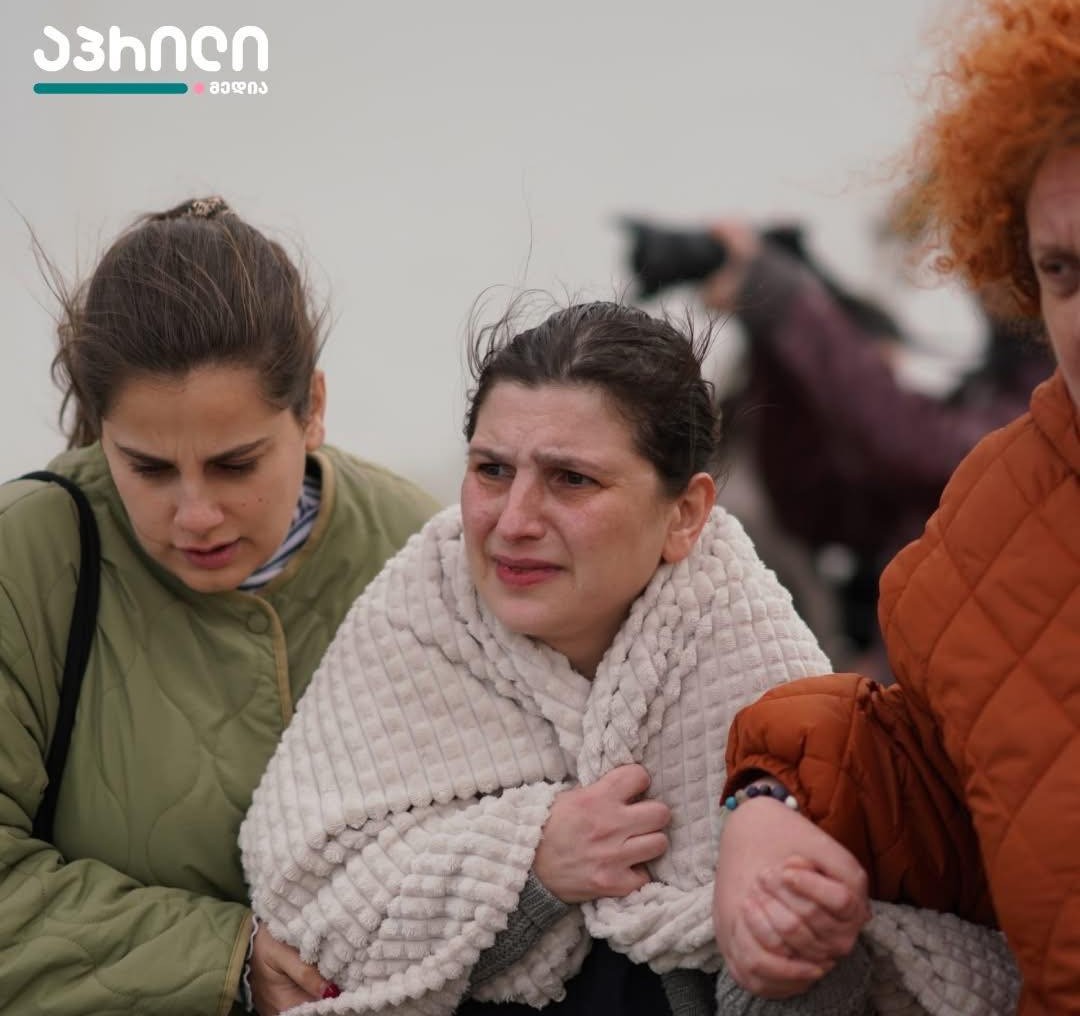
“Even hair ties weren’t allowed. Because of that, my long hair would get tangled around my neck as I slept, and I’d wake up choking. When I couldn’t fall asleep, I would instinctively reach under the pillow for my phone — but there was neither a pillow nor a phone.
Later, they sent me a notebook and a pen, and I started to write. I wrote and wrote, describing every detail — what I was doing, what I would do next.
When it became unbearable, I counted cigarette butts that were brought to me inside a document folder.
The hardest thing for me was getting used to the surveillance camera installed in the cell. Because of it, I had to change clothes under the blanket.
Another problem was the lack of creams and shampoo. My skin suffered badly during those six days — and my hair even more.”
“When I was first arrested, everyone — from the police to the guards — admired the shine of my hair. But when I came out of the detention centre, all I had left was a broom. I was allowed to wash only twice a week, and only with soap. That’s when I understood why women in prison cut their hair short.
On the last day of my stay in detention, I realised my trousers were slipping down. When I got home, I discovered I had lost four kilos. Honestly, I was glad — I’d wanted to lose weight for a while. Every day I received a huge amount of food in parcels. I even tried to count it all to ask people to stop sending more, but the flow never ceased.
Yet every time I took a bite, I felt sick, so I ate almost nothing. The guards offered me tinned stew and soup, but I never touched their food.
The final day was the hardest. I counted every second until my release. Fifteen minutes before freedom, the guys from the neighbouring cell shouted: ‘Before you go, sing for us one more time!’ I started singing and didn’t stop until the end.
When the door opened and the guard motioned for me to leave, I was mid-song and couldn’t bring myself to stop. As we walked down the corridor, I kept singing, prisoners in their cells clapped, and I repeated to myself over and over: ‘Don’t cry, Neka, don’t cry!’ When I stepped outside, I burst into tears.
Outside, I was met by fresh air — and kind people.”
More than 50 civil society organizations said Georgia’s Anti-Corruption Bureau, which they believe is under the influence of the ruling Georgian Dream party, is being “repurposed not to hold those in power accountable, but to target independent civil society organizations in Georgia.”
Citing the latest monitoring by Transparency International – Georgia, which detailed alleged corruption schemes benefiting companies linked to Georgian Dream officials and party founder Bidzina Ivanishvili, 53 organizations said in a November 10 statement that these alleged corruption cases are absent from the Bureau’s reports “despite its legal mandate to monitor officials’ asset declarations and respond to suspicious transactions.”
The organizations described the Bureau’s reports as “formal” and failing to document “any instances of elite corruption, conflicts of interest, or specific property transaction evaluations,” saying this shows the Bureau “is not fulfilling its preventive or oversight functions but is instead serving political purposes of retaliation.”
Meanwhile, they noted that the Bureau “is being used as a tool to persecute independent civil society organizations,” recalling instances in which it demanded they hand over extensive information about their activities. The groups noted that in its latest inspection, which began in September, the Bureau, headed by GD loyal Razhden Kuprashvili, targeted “over 80 NGOs” under controversial amendments to the country’s Law on Grants, which prohibit receiving foreign funding without government approval.
“These actions reflect a growing trend in which the captured state apparatus seeks to restrict civil sector activities while corrupt government representatives remain untouchable,” the groups said.
They added, “When accountability is only applied to civil society, not to the powerful and corrupt, it becomes repression masked as oversight, stifling civic freedoms and limiting civil society’s ability to monitor, speak out, and hold power accountable – a direct threat to Georgia’s democratic future.”
Also Read:
- 01/09/2025 – Prosecutors Summon NGO Heads to Testify in ‘Sabotage’ Probe
- 27/08/2025 – Authorities Freeze Bank Accounts of Seven NGOs in ‘Sabotage’ Criminal Probe
- 22/08/2025 – Inspected CSOs Say FARA Doesn’t Apply to Them as They Refuse to Register
- 23/06/2025 – ISFED Says It Also Received Anti-Corruption Bureau’s Inspection Order