Categories
South Caucasus News

Transparency International records 250 cases of corruption among Georgian elite over five years


Corruption in Georgia’s elite

Corruption in Georgia’s elite

Transparency International Georgia (TI) has revealed cases of corruption involving former senior Georgian officials, noting that it recorded 250 instances within the elite over the past five years. At a briefing, the organisation outlined the schemes high-ranking officials used to enrich themselves personally.

According to TI, 221 senior officials were involved, including 38 ministers and deputy ministers, 40 members of parliament, 17 judges, and 67 senior municipal officials.

Until recently, the ruling Georgian Dream party had completely denied the existence of corruption within the elite.
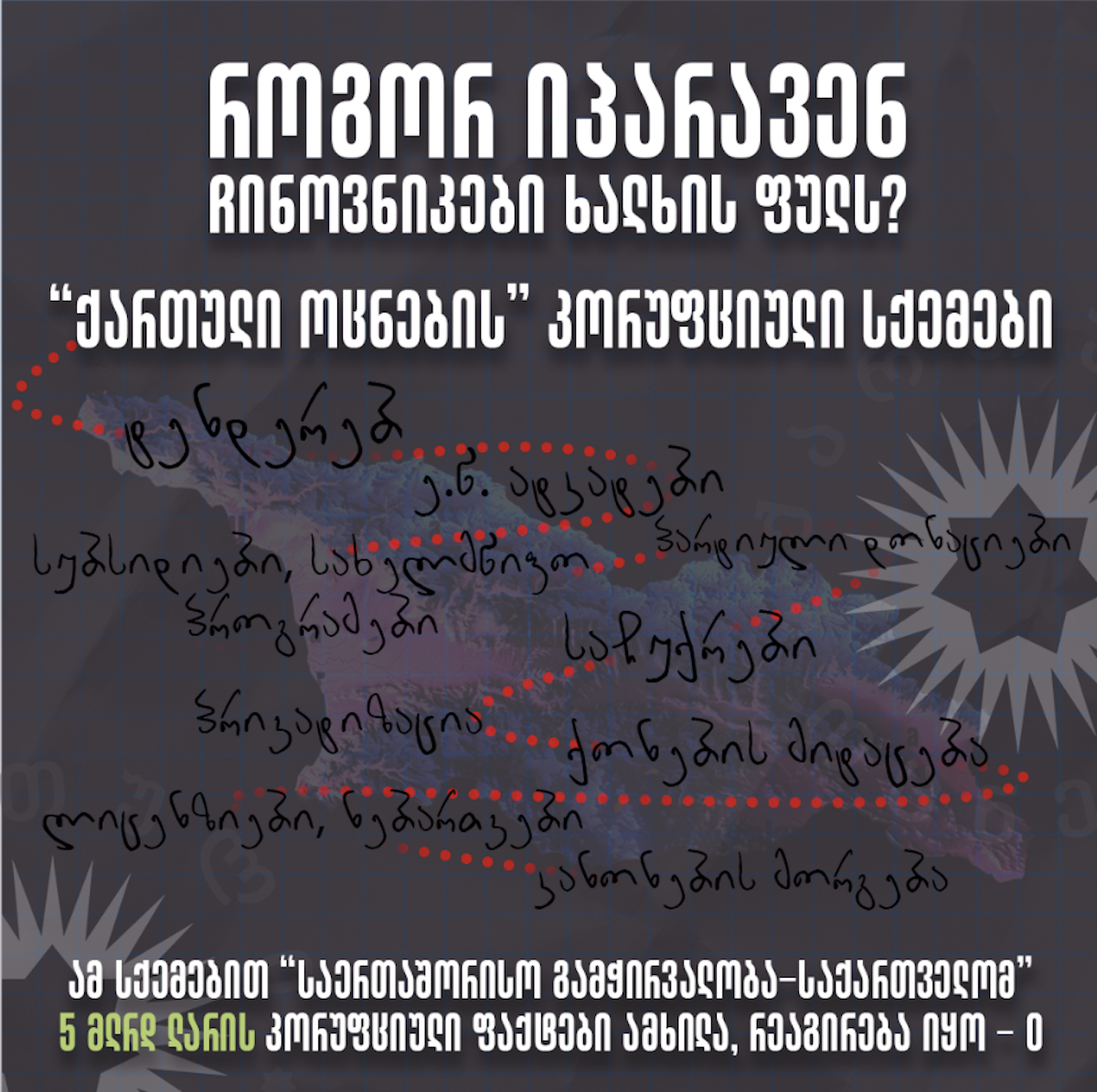
Corruption schemes used by officials to enrich themselves

Misuse of public funds through government procurement

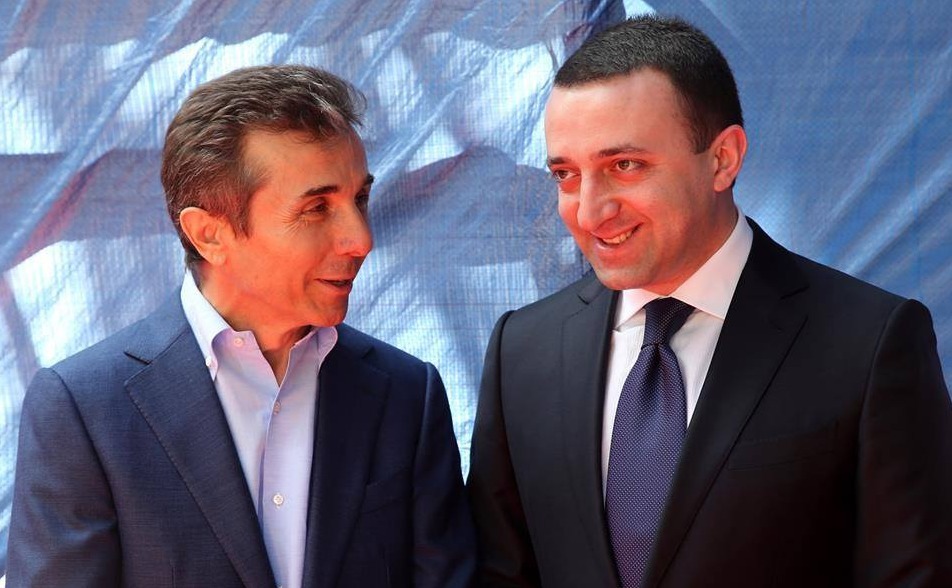
According to investigations by Transparency International, officials from the Georgian Dream party obtained 5 billion GEL through manipulations in public procurement. 3.3 billion GEL came from regional budgets. A third of this amount — 1.13 billion GEL — relates to 2024, when Irakli Kobakhidze was prime minister. Examples include:

  • 650 million GEL went to a company owned by businessman Otar Tatishvili, linked to Bidzina Ivanishvili;
  • Tender contracts worth 390 million GEL were awarded to relatives of Irakli Garibashvili through a company connected to him, Serpatim;
  • Companies connected to Georgian Dream MP Giorgi Chkonia received tenders worth 392 million;
  • Companies linked to Georgian Dream MP Anzor Bolkvadze won tenders worth 30 million GEL;
  • Companies linked to Georgian Dream MP Viktor Japaridze won 25 million GEL in tenders;
  • Companies connected to Senaki mayor Vakhtang Gadelia won tenders worth 32 million GEL.
Corruption schemes through subsidies, agricultural programmes, and business support

Companies donating to the Georgian Dream party received 71 million GEL via agricultural programmes. Of this, 7.7 million GEL was returned to the party as donations.

  • A large share — 56 million GEL — went to one individual, Vakhtang Karichashvili, a business partner of Bidzina Ivanishvili’s cousin.
  • Companies linked to Georgian Dream received 30 million GEL through the 2022 crop subsidy programmes.
  • Companies participating in the “Produce in Georgia” programme received 7.4 million GEL, of which 1.6 million GEL was returned to Georgian Dream as donations.

Corruption schemes also involved funding the ruling party.

Companies that donated 7 million GEL to Georgian Dream between 2020 and 2024 received 1.028 billion GEL in public procurement contracts.

Another part of the corruption scheme involved issuing licenses and permits to influential individuals.

A significant number of permits for small and medium hydropower plants were allocated through corrupt channels.

  • Twenty-nine of these permits went to Koke Kokolashvili, a businessman and relative of Bidzina Ivanishvili.
  • Permits for hydropower construction were also awarded to individuals connected to the family of Agriculture Minister David Songulashvili.
Seizure of state property through privatisation or leasing.

Between 2013 and 2020, state property was sold for 13 million GEL to private individuals, who then donated 2 million GEL to the Georgian Dream party.

In Adjara alone, more than 15 million GEL was gained through privatisation by Georgian Dream donors.

“More than 300 government decrees adopted between 2021 and 2023 remain classified. These directly concerned the transfer of state property, often for a symbolic 1 GEL.

We have also documented cases where laws were passed specifically to enrich certain individuals or avoid taxes. One such case involves the so-called offshore law, which brought around 100 million USD into the state budget,” Transparency International said.

Categories
South Caucasus News

Shell reports strong growth in Q3 profits


London, October 30, 2025 — Energy giant Shell reported a 23% year-on-year increase in third-quarter net income to $5.4 billion, exceeding analyst expectations of $5.05 billion, according to an LSEG consensus, Azernews reports, citing foreign media.

Categories
South Caucasus News

Российские военные готовы прекратить огонь в Покровске


Categories
South Caucasus News

Tear gas fired as Tanzania election protests spill across border into Kenya


Categories
South Caucasus News

Многообразие и гармония культур и религий


Categories
South Caucasus News

Russian President Vladimir Putin said that Russia had tested …


Russian President Vladimir Putin said that Russia had tested a Poseidon nuclear-powered super autonomous torpedo and that it had been a great success. There are few confirmed details about the Poseidon in the public domain but it is essentially an autonomous nuclear-capable torpedo which is capable of triggering radioactive ocean swells to …

Categories
South Caucasus News

Podium postures: Two UN speeches, two roads for the South Caucasus – The Armenian Weekly


Podium postures: Two UN speeches, two roads for the South Caucasus  The Armenian Weekly

Categories
South Caucasus News

Aliyev and Pashinyan at UN General Assembly – The Armenian Weekly


Aliyev and Pashinyan at UN General Assembly  The Armenian Weekly

Categories
South Caucasus News

AI investments expected to reach trillions by 2025


Global investments in artificial intelligence (AI) continue to grow at an unprecedented pace. Spending is projected to reach $1.48 trillion in 2025, marking an increase of nearly 50% compared to the previous year. Analysts predict that by 2026, global AI investment will surpass $2 trillion, and by 2029, it could reach $3.3 trillion, making AI one of the fastest-growing technologies in recent decades, Azernews reports.

Categories
South Caucasus News

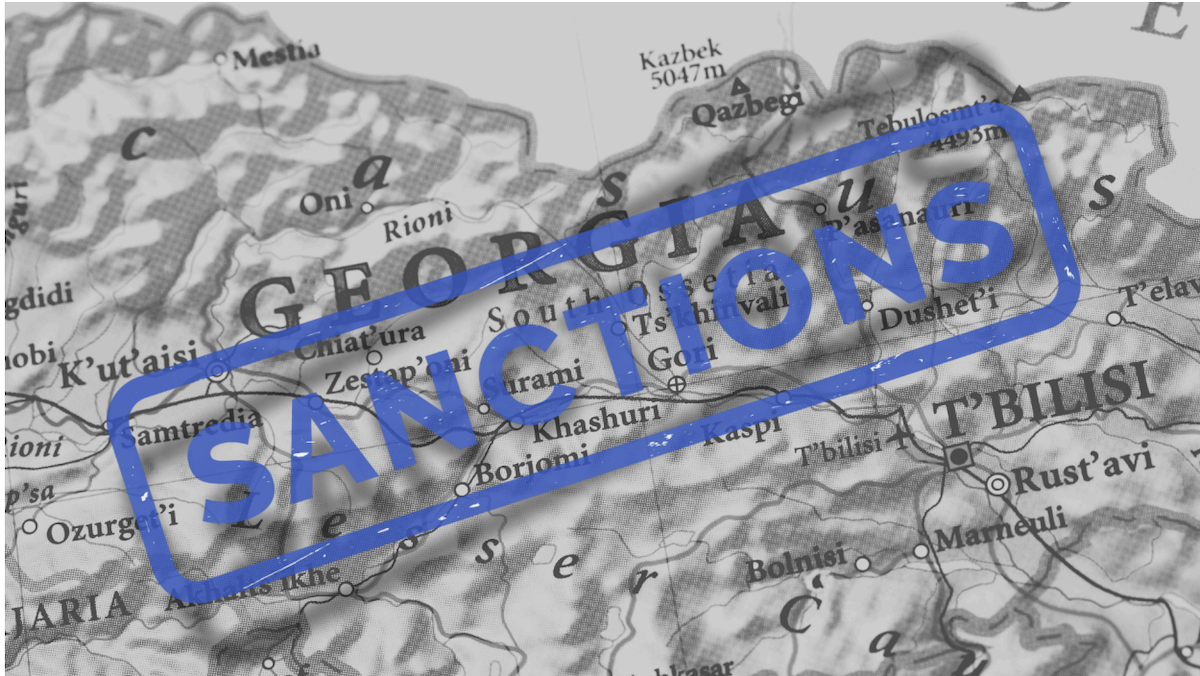
Georgia helps Russia evade sanctions, study finds


Georgia helps Russia evade sanctions

Georgia helps Russia evade sanctions

The UK-based Foreign Policy Centre has published a report on how Russia is evading Western sanctions, claiming that Georgia lies at the heart of the scheme.

Shalva Papuashvili, chair of the ruling Georgian Dream parliamentary faction, commented on the findings: “They can contact Mr O’Sullivan, the EU’s sanctions coordinator, and ask whether Georgia is being used [by Russia] to bypass sanctions. He will give them the answer instead of us.”

What report says

According to the report, Western sanctions imposed on Russia after its invasion of Ukraine — designed to shrink the Kremlin’s military budget — have instead created a “sanctions bubble”: an adaptive network of offshore jurisdictions and intermediaries that turn restrictions into profit.

“At the centre of this system stands Georgia, which has evolved from passive circumvention to strategic facilitation, leveraging its geography, financial infrastructure, and political flexibility to become a key node in Russia’s sanctions-evasion network” the Foreign Policy Centre writes. “Georgia has transformed sanctions into opportunity, embedding itself as an indispensable node in sanctions-evasion networks.”»”

The organisation says the war in Ukraine and Western sanctions have opened up new economic opportunities for Georgia. The country has benefited financially from trade and financial ties with Russia, deepening Moscow’s influence over Georgia’s economy and politics.

The report also notes that while many Russian tech firms are officially registered in Dubai, they often hire developers in Georgia — attracted by lower salaries and favourable tax conditions.

The article emphasises that:

  • Georgian banks handle money transfers, savings, and transactions for Russian emigrants.
  • Financial flows linked to Russia — including re-exports, remittances, and tourism — accounted for 14.5% of Georgia’s GDP in 2022.
  • Georgia is a major re-exporter of cars to Central Asia, from where vehicles often end up indirectly in Russia.
  • Imports of dual-use technologies (e.g., microchips) into Georgia have surged, suggesting re-export to Russia for military purposes. These goods enter via Black Sea ports — Batumi and Poti — and are then transported either north through Russian-controlled Abkhazia or east through Armenia, Kazakhstan, and Kyrgyzstan.
  • Some goods pass through logistics and customs hubs in Tbilisi, where export documents are processed or altered to obscure their final destination (“destination laundering”).
  • The report also highlights risks of concealing the origin of oil exported to Europe. Russian oil is repackaged in Georgia before being sold in Europe. By 2023, 61% of Georgia’s oil imports came from Russia.
  • More than 37,000 Russian companies are registered in Georgia, most of them established after 2022.
  • In 2023, Russian foreign direct investment in Georgia reached $67 million.
  • In the same year, remittances from Russia and tourism brought Georgia $3.1 billion.

The Foreign Policy Centre also notes that, alongside this:

  • The Georgian government adopted an offshore law providing tax benefits to those transferring assets from abroad, helping attract sanctioned elites into the country.
  • The Georgian government (“Georgian Dream”) has veered away from its Euro-Atlantic path.
  • The EU has suspended Georgia’s accession process due to parliamentary election violations and democratic backsliding.

The organisation also highlights a 2023 directive from the head of Georgia’s central bank, which removed the obligation for commercial banks to restrict access to accounts held by individuals under Western sanctions, unless a Georgian court issues a conviction in the relevant case.

“This policy protects oligarchs and attracts dubious business, including those engaged in fraudulent activities,” the report states, warning that if this “sanctions bubble” bursts, Georgia’s economy could collapse.

“It deepens political dependence and corruption, undermines the rule of law, and isolates Georgia from the West.”

The organisation recommends that:

  • Regulatory gaps should be closed, and cooperation between Western regulatory bodies improved.
  • The West should tighten the enforcement of sanctions on Georgia, but target individual oligarchs and their associates rather than the general population;
  • Support should be provided to help the business elite free themselves from Russian influence;