
Day: September 30, 2025
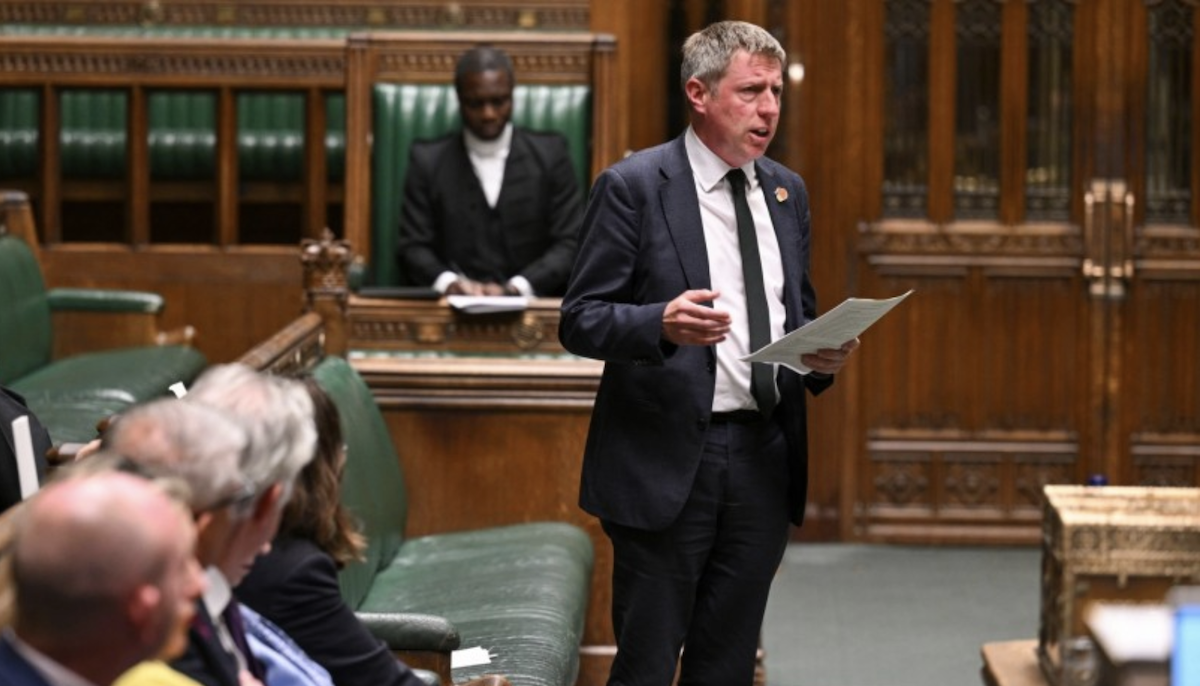
James McCleary challenges Ivanishvili
At a briefing in the Parliamentary Assembly of the Council of Europe on September 30, British MP James McCleary once again condemned the undemocratic actions of Bidzina Ivanishvili’s government in Georgia.
In his speech, McCleary addressed Ivanishvili, the oligarch and founder of the ruling Georgian Dream party, who is regarded as the de facto ruler of Georgia. McCleary urged him to stop the drift toward authoritarianism and to take a series of pro-European steps.
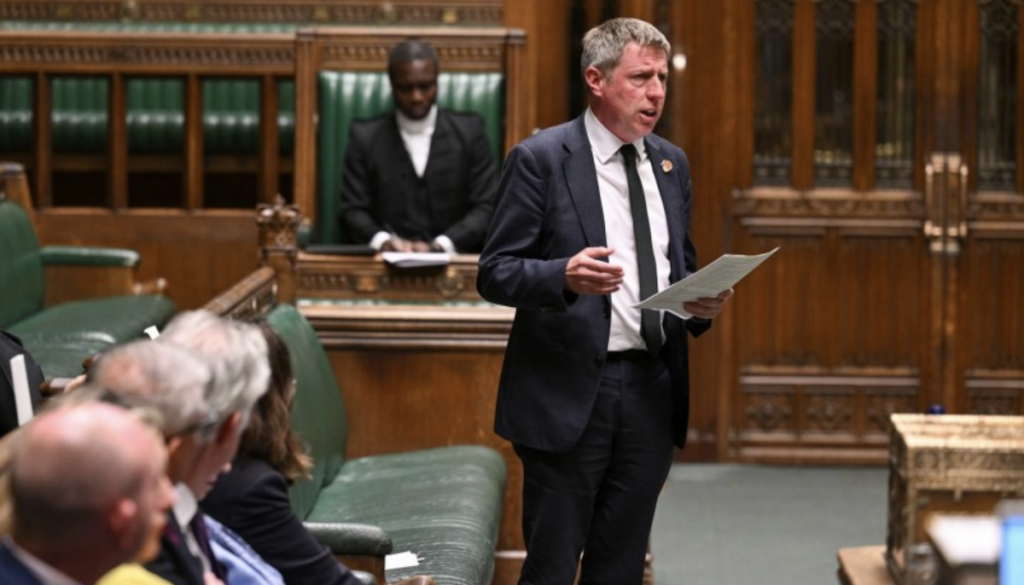
James McCleary:
“We, along with my fellow parliamentarians, have had many discussions about the situation in which Georgia finds itself. It is unacceptable, and the British government recognizes this.
As many of you likely know, the United Kingdom recently imposed sanctions on specific individuals in Georgia for the actions we are witnessing. The arrests of opposition leaders and leading journalists are unacceptable, and political prisoners must be released immediately. I absolutely and unequivocally condemn these repressive measures.
Thanks to our influence, the British government is taking serious steps, in particular sanctions against those individuals whom we know to be behind the Georgian Dream government, including Bidzina Ivanishvili, against whom I personally called for sanctions.
I want to address him directly, because I know he pays attention to what we say in the government and parliament of the United Kingdom.
“I also know that the Georgian Dream government listens to what we say, because they issue statements claiming that I have no idea what I’m talking about.
So I will tell them the following.
If you want us to stop talking about you, if you want us to stop threatening you with sanctions, if you want us to stop telling you what steps to take, if you want us to stop condemning your authoritarian actions in Georgia, then it’s very simple: release the political prisoners and journalists, hold transparent and fair elections, and allow the Georgian people to choose their own path, whether European or otherwise.
So I appeal to you: free the Georgian people, stop the drift toward authoritarianism, ensure free and fair elections in Georgia, and help create a bright future for everyone.”
News in Georgia
EU 18th sanctions package
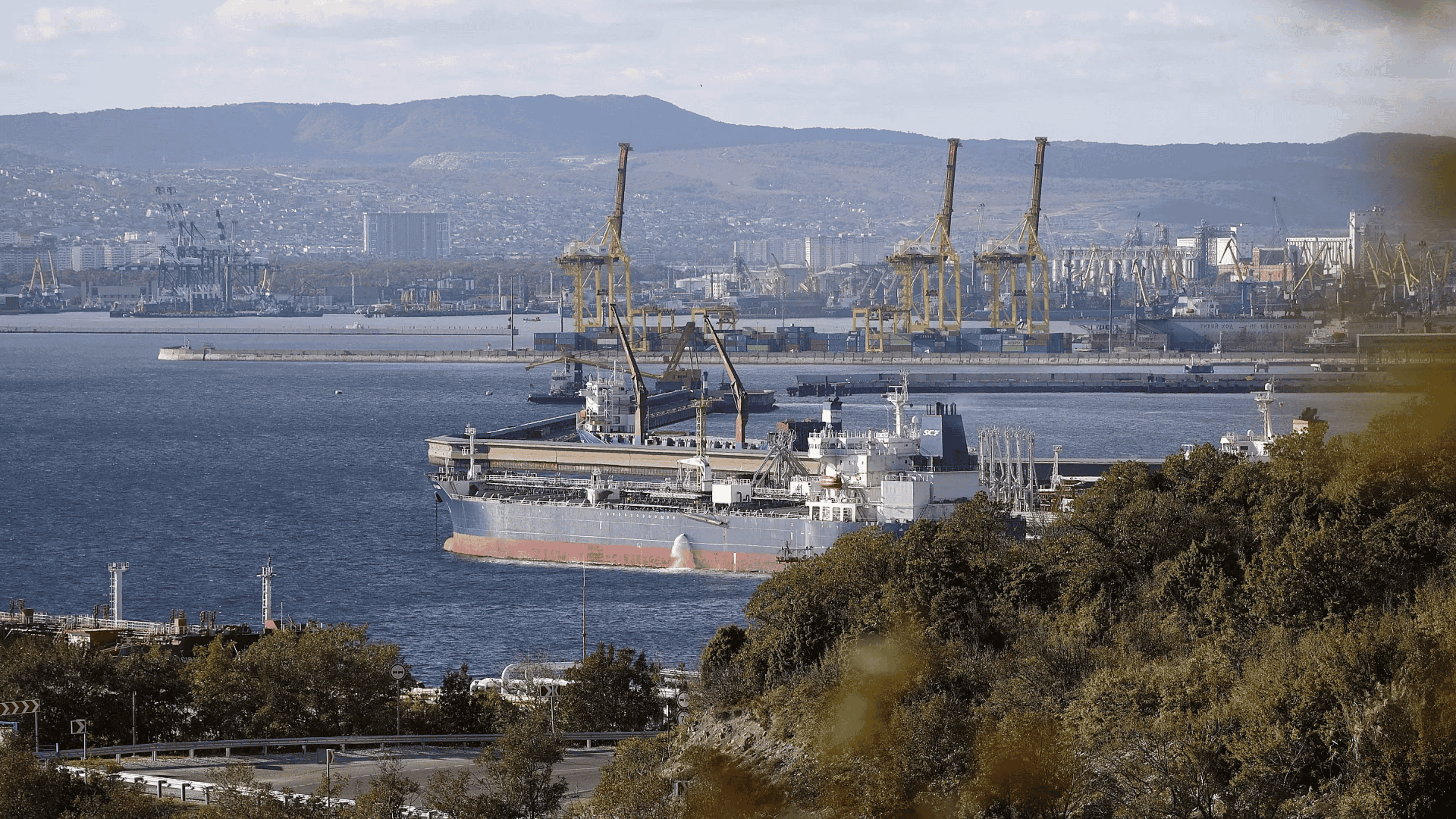
The 18th sanctions package adopted by the European Union in July bans the import of petroleum products made from Russian oil, including those refined in third countries. The restrictions also cover Turkey’s SOCAR STAR refinery and Azerbaijani tankers.
EU External Action Service spokesperson Anitta Hipper explained that the ban is intended to “eliminate any possibility of Russian crude oil entering the EU market.” In other words, if fuel products made from Russian oil — including at state-owned refineries — are exported to the EU, it would constitute a violation. The package also includes port bans on around 100 tankers linked to Russia’s so-called “shadow fleet.”
The role of the STAR refinery and scale of imports
The STAR oil refinery in Turkey — a joint venture involving Azerbaijan and SOCAR — has long been linked to dependence on Russian crude. Since late 2023, the volume of Russian oil processed there has risen sharply.
According to research by Global Witness, in the first quarter of 2024 more than 90% of the oil used at STAR came from Russia, with total imports from Russia to the plant amounting to $1.2bn. By comparison, in the same period of 2022 the figure was just $500m.
In autumn 2023, under the framework of gas deals and loan agreements, Russian company Lukoil granted SOCAR a $1.5bn loan, in exchange for which supplies of Russian crude to STAR resumed.
As Reuters reported, the deal allowed Azerbaijan to pay off $1.3bn in debt early to US banks Citi and JP Morgan, paving the way for renewed imports of Russian oil to STAR. By late 2023 and early 2024 the refinery was effectively running mainly on Russian crude.
Statements from EU officials
EU foreign service spokesperson Anitta Hipper told OC Media that STAR falls under the EU’s 18th sanctions package. She stressed that the goal of the package is to limit activities that support Russian oil:
“If STAR uses Russian crude to produce goods for export to the EU, that will already be prohibited. The point is to completely exclude Russian crude oil from entering the EU market.”
For the EU, blocking oil flows to Europe through STAR is the main priority.
Accusations of ‘rebranding’ and Baku’s position
Since the war in Ukraine began, Azerbaijan has been repeatedly accused of “rebranding” Russian oil and gas — presenting them as Azerbaijani when entering the European market.
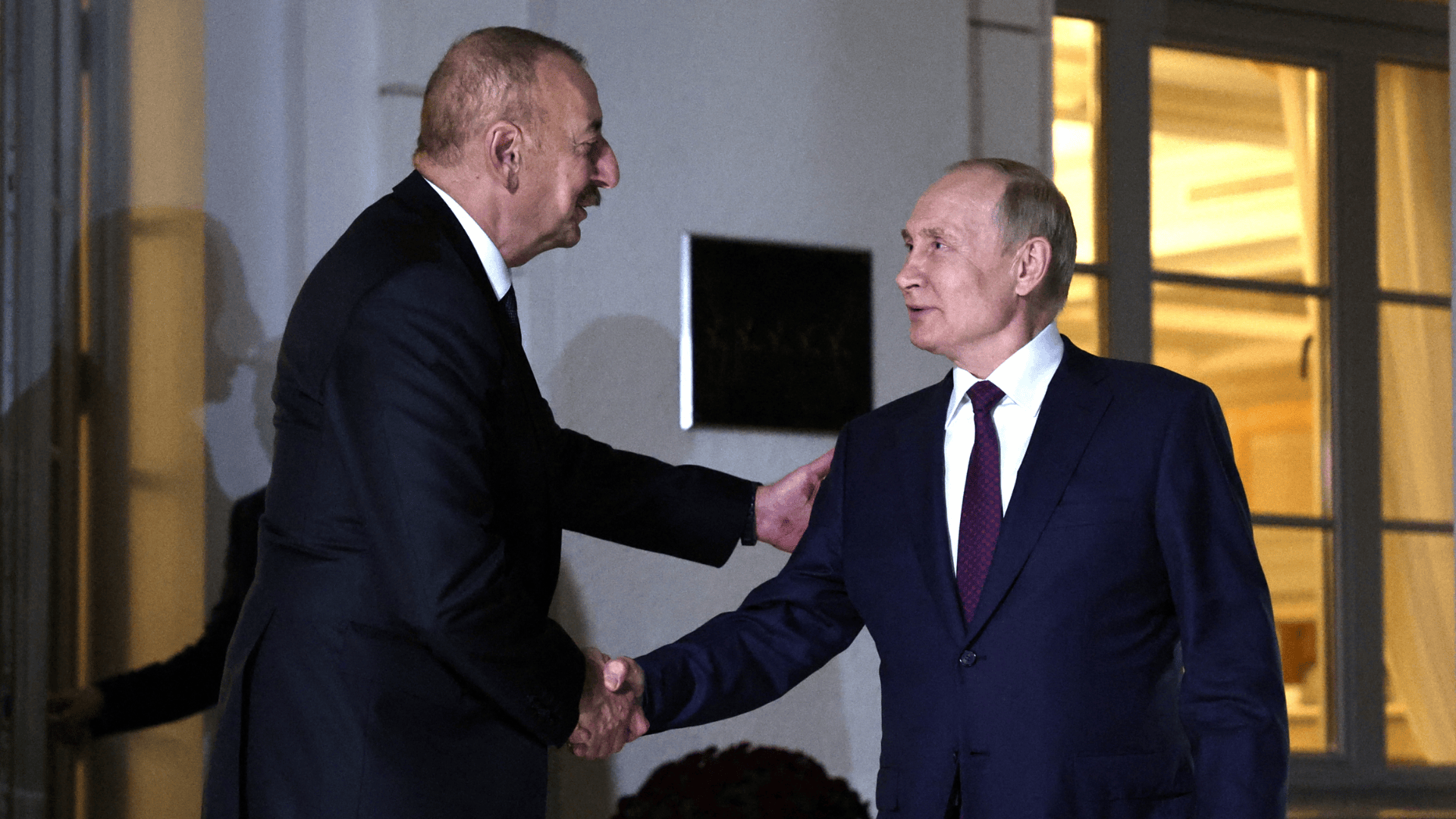
Although such claims have often appeared in the press, Baku has consistently denied them. In 2024, presidential aide Hikmet Hajiyev rejected Kazakh media reports alleging that Azerbaijan was importing Russian gas, saying these were merely swap operations.
As for STAR, the Azerbaijani authorities have systematically dismissed accusations of spreading false information. For now, Baku has given no official response to the sanctions against the refinery.
Azerbaijan’s tanker fleet and oil transport routes
Research shows that the Azerbaijan Caspian Shipping Company (ASCO) deployed new Aframax-class oil tankers to serve the STAR refinery in Turkey.
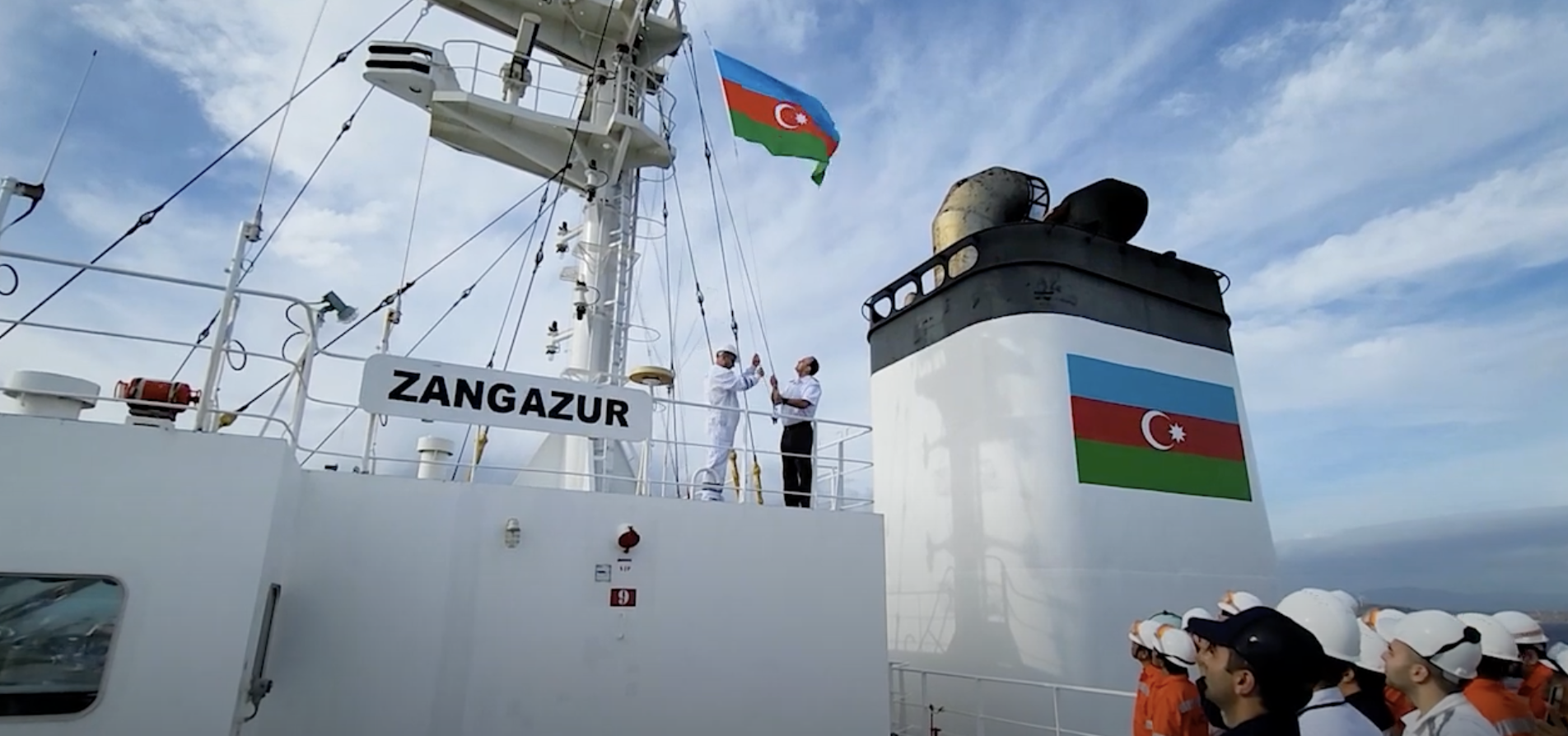
According to OCCRP, Azerbaijani-flagged tankers Zangezur, Shusha and Karabakh made several trips last year carrying oil from Russia’s port of Primorsk to Turkey’s Nemrut Bay. Under the EU sanctions that came into force in July 2025, Shusha and later Karabakh (on 18 July) were blacklisted. Both have been operating under the Azerbaijani flag since summer 2023 and in recent months have mostly run the Primorsk–Nemrut route.
The Zangezur tanker was sanctioned by the UK in May this year as part of measures against the “shadow fleet” and soon after was also banned at EU level. OCCRP reports that the 115,000-tonne Aframax, owned by the state company Caspian Shipping, carried oil from Primorsk to Nemrut 11 times in the past year.
Another Azerbaijani Aframax, Khankendi (formerly Aristofanis), switched to the Azerbaijani flag in autumn 2024 and has since used the same route. Available information suggests it could be included in the next EU sanctions package. At present, four of ASCO’s six tankers — Zangezur, Shusha, Karabakh and Khankendi — are engaged in transporting Russian oil.
Reaction from research organisations: Global Witness and OCCRP
International watchdog and anti-corruption groups have published detailed reports on the transport of Russian oil by Azerbaijan and its refining at STAR.
Global Witness expert Jonathan Noronha-Gant said:
“Azerbaijan was supposed to replace Russia as a supplier to Europe, but instead it has become an open backdoor for Putin’s oil. This trade undermines EU sanctions on Russian crude and delivers billions of dollars to the Azerbaijani authorities.”
He added that Brussels’ decision to restrict oil from refineries such as STAR was “very good news.”
In an OCCRP report, Maximilian Hess of the US-based Foreign Policy Research Institute stressed that sanctioning the Zangezur tanker was a serious warning to Azerbaijan:
“This is a direct signal: Azerbaijan’s attempts to circumvent sanctions against Russia carry serious risks for its diplomatic standing and its economy.”
In other words, just as Azerbaijan is seeking to cement its role as a reliable energy partner for the West, such accusations risk pushing it towards diplomatic isolation.
Consequences and prospects
For Azerbaijan, the situation brings both geopolitical and economic challenges. Official Baku has sought to play a key role in diversifying Europe’s fuel supplies — for example, Azerbaijani natural gas flows to the EU through the TANAP–TAP pipeline.
In April this year, EU energy commissioner Kaja Kallas said during a visit to Baku: “Azerbaijan has helped diversify the EU’s energy mix and strengthen our security.” But some experts now point out that much of the oil moving through pipelines via Azerbaijan is in fact “Putin’s blood oil.”
Observers warn that this could undermine trust between Azerbaijan and Europe, straining diplomatic relations.
At the same time, the warning signs from Azerbaijan are being discussed within Europe itself, with further adjustments expected in EU energy cooperation with Baku. SOCAR has announced plans to acquire Italy’s Italiana Petroli, which owns more than 4,500 petrol stations and two refineries, in the coming months.
Some analysts believe Azerbaijan is trying to strengthen its position not only as a gas exporter but also through such investments, while also seeking alternative markets and routes to reduce dependence on Russian crude. In other words, in the future Baku will likely have to orient itself more firmly towards the European market and build more transparent supply chains — a shift that could help ease both trade and diplomatic fallout.
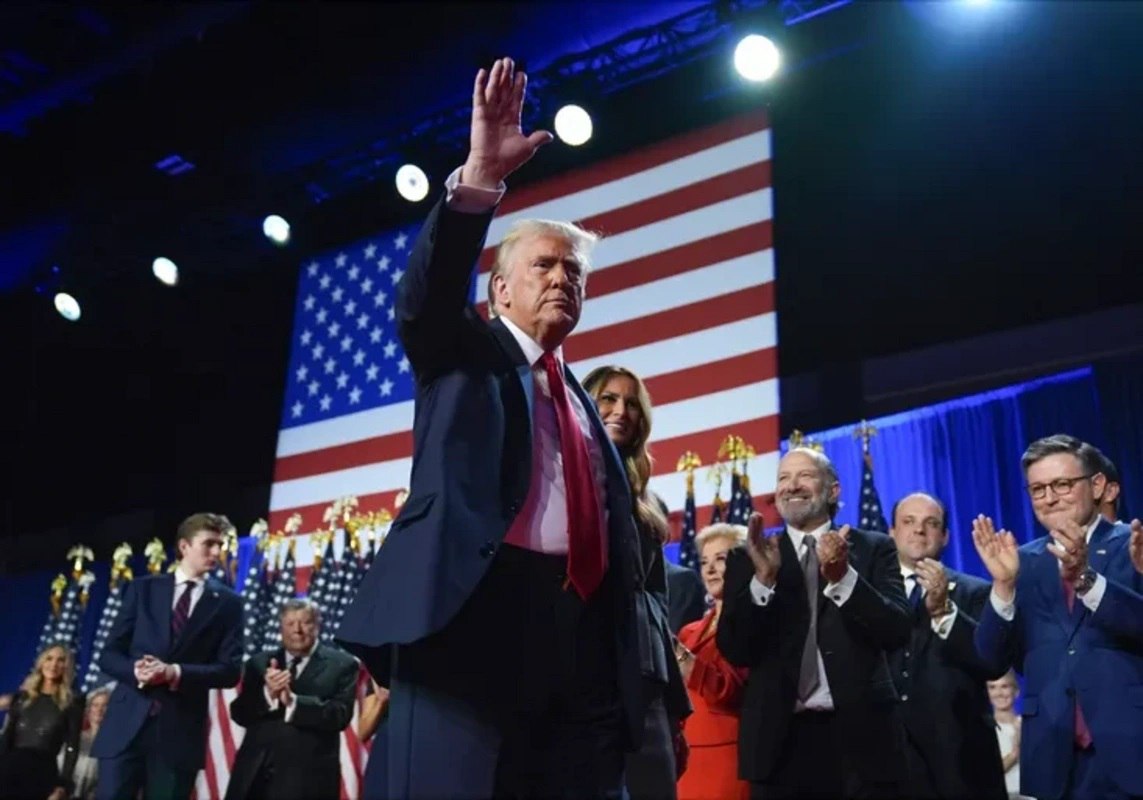
EU 18th sanctions package
AzInTelecom LLC, a subsidiary of AZCON Holding, is actively participating in the INMerge Innovation Summit 2025, one of the region’s largest innovation events, taking place at the Baku Congress Center. Over the two-day summit, AzInTelecom’s delegation has been engaging with representatives from local and international companies, discussing potential partnerships and collaboration opportunities, Azernews reports.