
Day: September 4, 2025
Jago Arabuli mit einem Vortrag im November in Baden-Baden 👇 pic.twitter.com/8jMcycQRSB
— Notes from Georgia/South Caucasus (Hälbig, Ralph) (@SouthCaucasus) September 4, 2025
On September 3, the Georgian Dream parliament adopted in a third and final reading a legislative package requiring individuals convicted of grave financial crimes to repay damages to victims and barring them from leaving Georgia even after serving their prison sentences until those damages are paid.
The changes affected several laws, including Georgia’s Criminal Code and Criminal Procedure Code, and have been awaiting a final vote since GD lawmakers stopped passage at the end of the spring session. In the final reading during the fall session, lawmakers set a travel ban of up to 16 years on offenders leaving Georgia until they repay damages. MP Archil Gorduladze, who presented the package, said most other revisions were only technical edits and corrections. All MPs voted unanimously in favor of the legislation.
“The main point is not the categories of crimes or the length of a conviction set by those categories,” Gorduladze said, noting that was how the length of a travel ban was determined in the previous version of the legislation. “What matters is the damage a specific offender caused to a specific victim. A crime may be minor, but the damage could be large. That is why, based on the scale of the damage, the maximum [exit ban] is set at 16 years.”
The bill was introduced and passed amid prosecutions and arrests of former Georgian Dream officials and business associates. While the ruling party touted an “uncompromising” fight against corruption, critics said the legislation would serve personal retribution and the financial interests of Georgian Dream’s billionaire founder, Bidzina Ivanishvili.
Then-MP Mamuka Mdinaradze confirmed the bill was also “inspired” by the case of Giorgi Bachiashvili, an ex-associate of Ivanishvili who was found guilty of embezzling a large sum of cryptocurrency from him and sentenced in absentia to 11 years in prison before his controversial alleged abduction from abroad and subsequent arrest. In May, Bachiashvili was ordered to repay Ivanishvili nearly USD 900 million in bitcoins.
The legislation lists crimes under which convicts will have to repay damages and face a travel ban, including fraud, extortion, misappropriation or embezzlement, property damage by deception, destruction of property, concealment of assets through sham transactions, abuse of power, and interference with computer systems for financial gain. Most of these offenses must involve damages “in large quantities,” an aggravated circumstance under Georgian law.
A travel ban can apply unless the compensation is repaid, or the victim waives their right to compensation, or the victim consents to the lifting of the travel ban.
To add to the gravity, the law also permits the recovery of stolen or embezzled funds not only from the offender’s assets, but also from the assets of close relatives or other persons to whom the convict transferred property for free or on preferential terms following the financial offense in question, or if the assets were transferred or acquired through a transaction considered as money laundering.
The bill also prohibits informal agreements aimed at alleviating the convict’s lot. Fines or up to three years’ imprisonment are foreseen for the convicted offender who generates undeclared revenue exceeding twice the minimum subsistence level (currently set at approximately USD 100), or acquires real estate or a vehicle through such an arrangement. Similarly, individuals, including family members, who provide such funds or property to the convict may also be subject to a fine and face up to five years in prison, with the property subject to confiscation.
Transferring funds to the personal bank accounts of convicts, if the bank operates under the supervision of the Georgian central bank, or formally transferring property into their possession, will still be permitted, as such assets can be seized to compensate victims.
Also Read:
On September 3, the Georgian Dream parliament adopted in a third and final reading a legislative package requiring individuals convicted of grave financial crimes to repay damages to victims and barring them from leaving Georgia even after serving their prison sentences until those damages are paid.
The changes affected several laws, including Georgia’s Criminal Code and Criminal Procedure Code, and have been awaiting a final vote since GD lawmakers stopped passage at the end of the spring session. In the final reading during the fall session, lawmakers set a travel ban of up to 16 years on offenders leaving Georgia until they repay damages. MP Archil Gorduladze, who presented the package, said most other revisions were only technical edits and corrections. All MPs voted unanimously in favor of the legislation.
“The main point is not the categories of crimes or the length of a conviction set by those categories,” Gorduladze said, noting that was how the length of a travel ban was determined in the previous version of the legislation. “What matters is the damage a specific offender caused to a specific victim. A crime may be minor, but the damage could be large. That is why, based on the scale of the damage, the maximum [exit ban] is set at 16 years.”
The bill was introduced and passed amid prosecutions and arrests of former Georgian Dream officials and business associates. While the ruling party touted an “uncompromising” fight against corruption, critics said the legislation would serve personal retribution and the financial interests of Georgian Dream’s billionaire founder, Bidzina Ivanishvili.
Then-MP Mamuka Mdinaradze confirmed the bill was also “inspired” by the case of Giorgi Bachiashvili, an ex-associate of Ivanishvili who was found guilty of embezzling a large sum of cryptocurrency from him and sentenced in absentia to 11 years in prison before his controversial alleged abduction from abroad and subsequent arrest. In May, Bachiashvili was ordered to repay Ivanishvili nearly USD 900 million in bitcoins.
The legislation lists crimes under which convicts will have to repay damages and face a travel ban, including fraud, extortion, misappropriation or embezzlement, property damage by deception, destruction of property, concealment of assets through sham transactions, abuse of power, and interference with computer systems for financial gain. Most of these offenses must involve damages “in large quantities,” an aggravated circumstance under Georgian law.
A travel ban can apply unless the compensation is repaid, or the victim waives their right to compensation, or the victim consents to the lifting of the travel ban.
To add to the gravity, the law also permits the recovery of stolen or embezzled funds not only from the offender’s assets, but also from the assets of close relatives or other persons to whom the convict transferred property for free or on preferential terms following the financial offense in question, or if the assets were transferred or acquired through a transaction considered as money laundering.
The bill also prohibits informal agreements aimed at alleviating the convict’s lot. Fines or up to three years’ imprisonment are foreseen for the convicted offender who generates undeclared revenue exceeding twice the minimum subsistence level (currently set at approximately USD 100), or acquires real estate or a vehicle through such an arrangement. Similarly, individuals, including family members, who provide such funds or property to the convict may also be subject to a fine and face up to five years in prison, with the property subject to confiscation.
Transferring funds to the personal bank accounts of convicts, if the bank operates under the supervision of the Georgian central bank, or formally transferring property into their possession, will still be permitted, as such assets can be seized to compensate victims.
Also Read:
Washington meeting results
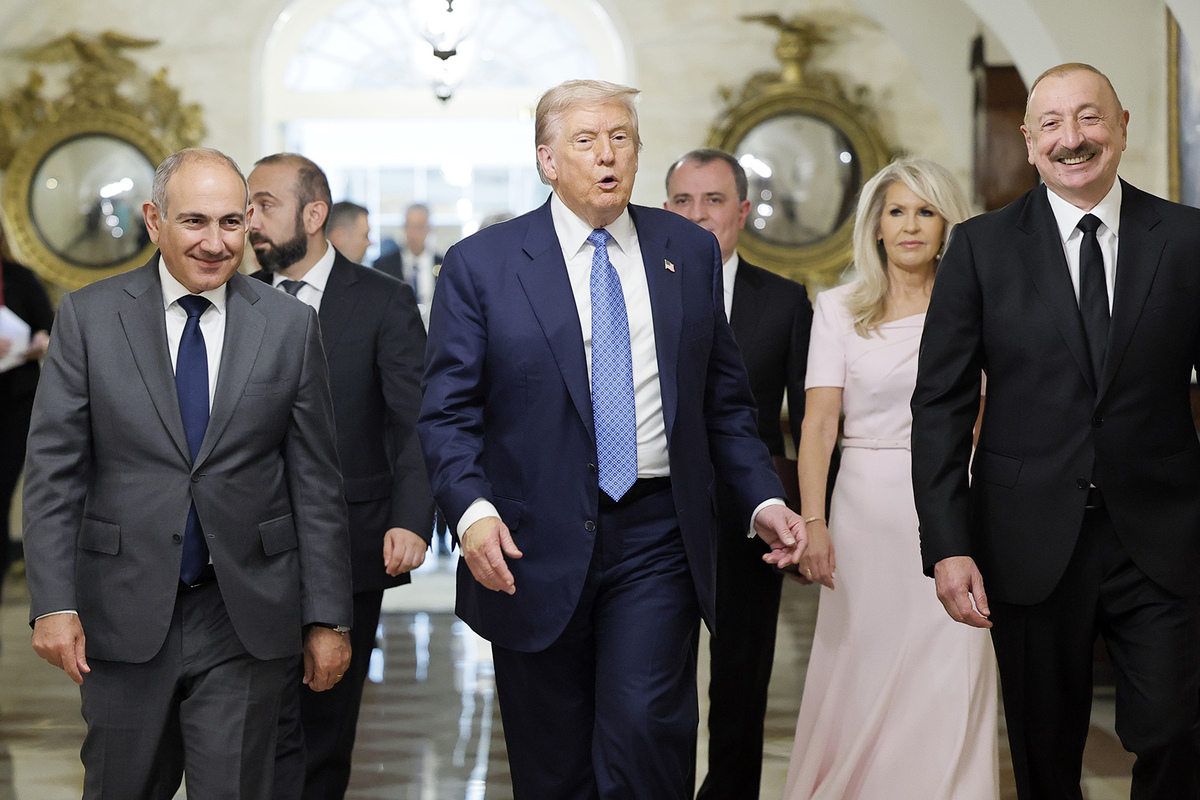
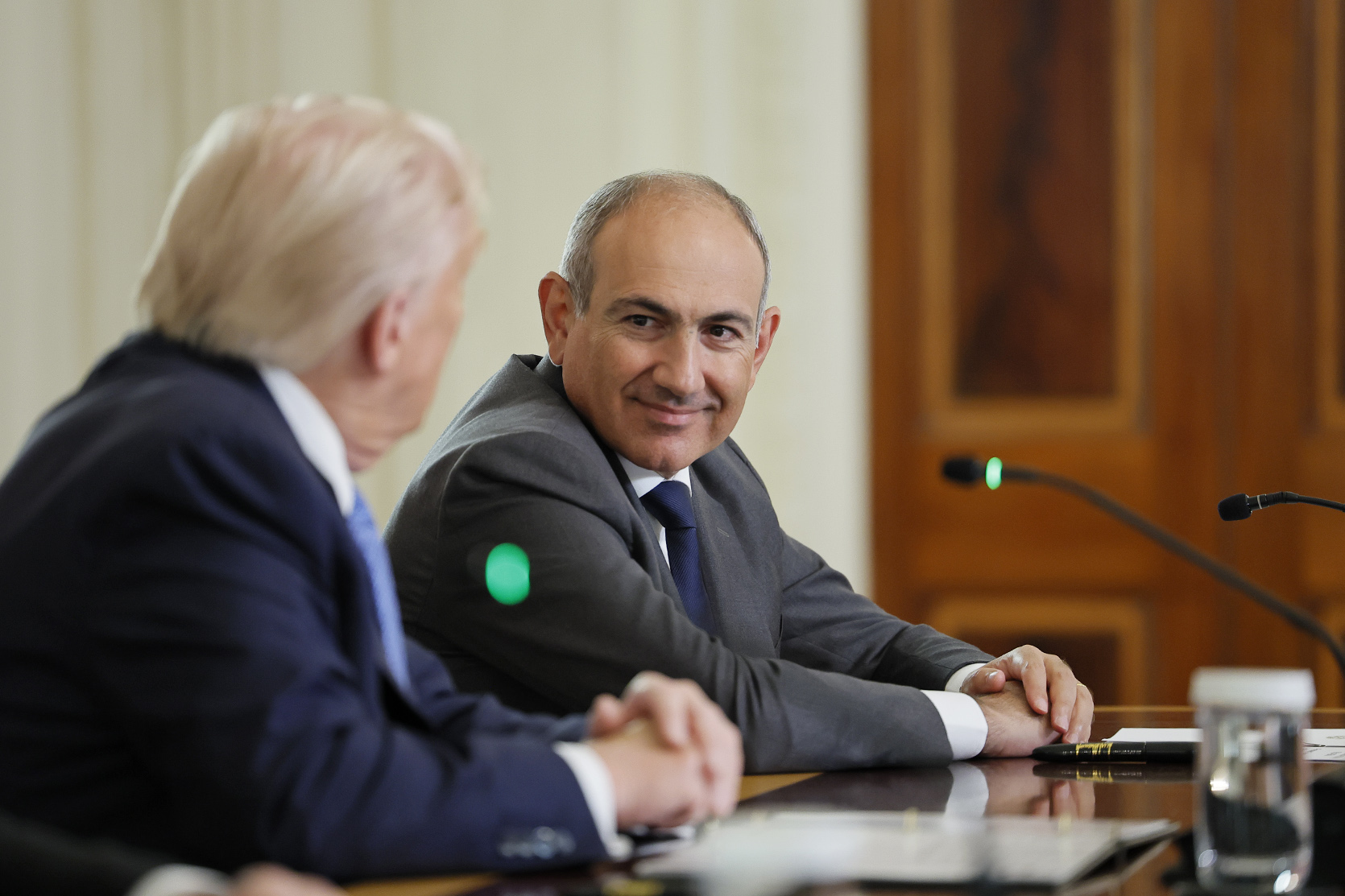
Some Azerbaijani media outlets have tried to portray the results of the Washington meeting between Trump, Pashinyan and Aliyev as a complete victory for Baku. Meanwhile, Armenian analysts argue that Azerbaijan not only gained benefits but also made concessions.
Political scientist Narek Minasyan sees Baku’s renunciation of the use of force or threats against Armenia as a retreat from its earlier stance. He also points to the abandonment of demands for an extraterritorial corridor through Armenian territory — the so-called “Zangezur corridor.”
According to him, the documents signed in Washington allow Azerbaijan to present itself as “a constructive player committed to a peace agenda.” Whether that proves to be true, he noted, will become clear once the agreements start being implemented.
“The agreements reached in Washington represent a serious opportunity to build a stable, peaceful and prosperous region. Their implementation, however, depends on how sincere Azerbaijan’s leadership is in its commitment to peace, and how consistent the United States proves to be,” Minasyan said.
- OSCE Minsk Group disbanded: Armenia debates whether it is “progress or a loss”
- “Armenia is now in its least vulnerable position” – key points from Pashinyan’s briefing
- “Trump Route” will create conditions for new investment in Armenia – economist
- “Trump Route” will create conditions for new investment in Armenia – economist
On 8 August in Washington, Armenia and Azerbaijan initialled a peace agreement. With US mediation, the two sides also reached an understanding on reopening transport links. Disagreements over this issue had been so deep that in August 2024 it was removed from the draft peace treaty, in the hope that this step would make it possible to sign the document in the near future.
The reopened road has been named the “Trump Route for International Peace and Prosperity” — TRIPP. The details of how the project will be implemented are still unclear. What is known is that an Armenian-American company will be set up to “manage the business.” Yerevan insists that Armenian authorities will carry out customs and border control, and it is explicitly stated that the land used for the road will remain under Armenia’s ownership.
In addition, Yerevan and Baku signed several bilateral documents with the US. Armenia and the US, in particular, signed three memorandums of understanding covering: 1) cooperation in artificial intelligence and semiconductors, 2) energy security, and 3) support for the “Crossroads of Peace” project.
Comment
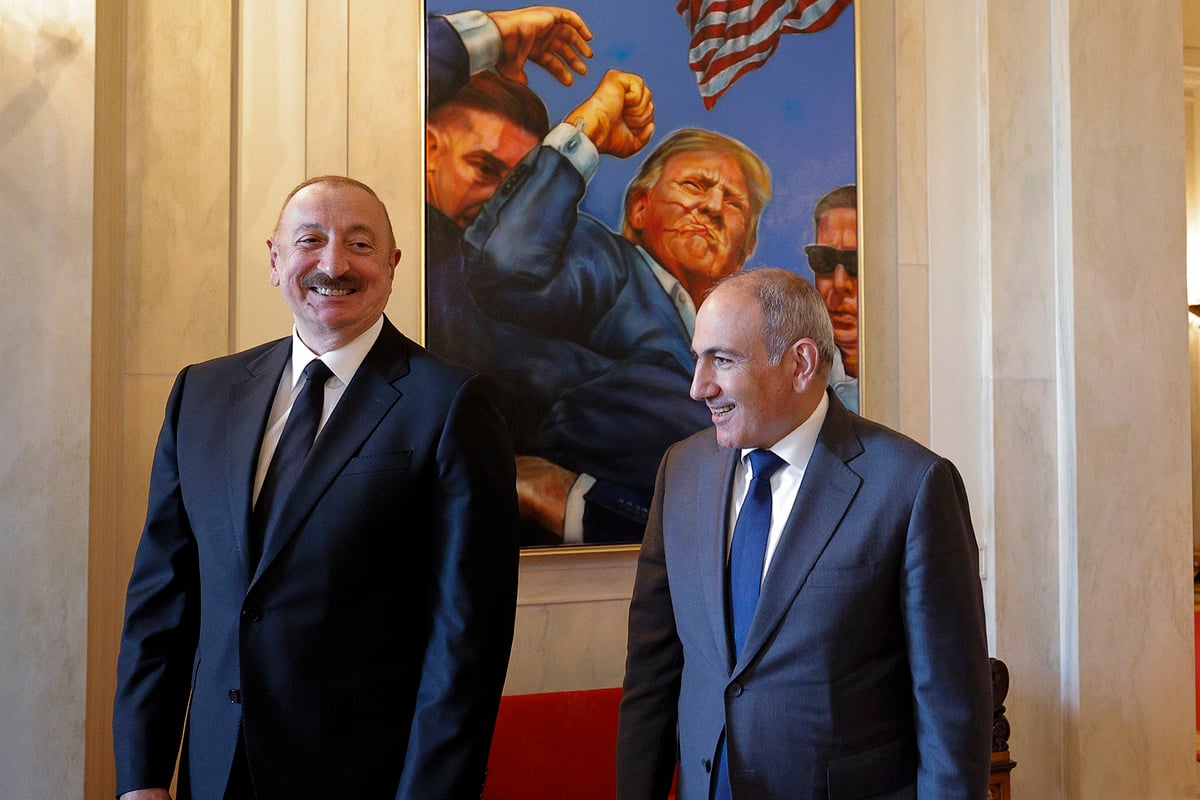
Political analyst Narek Minasyan sees the Washington agreements as a package deal crafted by the Americans to secure two things:
- a “win-win” outcome on the path to peace,
- and extra “carrots” for Yerevan and Baku in their bilateral ties with the US, designed to encourage compromise.
“For both Azerbaijan and Armenia, rejecting the US administration’s offer would have been risky — not only in terms of losing potential ‘carrots,’ but also in terms of possible unwanted pressure, given Trump’s unpredictability,” Minasyan stressed.
Among those incentives, he lists the US-Azerbaijan bilateral agreements — a reset in relations — and the suspension of Section 907.
Since 1992, Section 907 has barred the US government from providing direct aid to Azerbaijan, including military assistance. From 2002 onwards, every US president signed annual waivers suspending its effect. The only year it remained in force was 2024. On 8 August 2025, Trump once again signed a decree temporarily suspending Section 907.
“Azerbaijan expects that lifting the restrictions will create new opportunities to deepen cooperation with the US in the economic, technological, energy and military spheres. This will also boost the country’s investment appeal,” Minasyan said.
Another tangible result of the talks, he noted, was the agreement to set up a working group to draft a charter on strategic partnership between Azerbaijan and the US.
“On the one hand, this will take bilateral relations to a qualitatively new level, opening fresh avenues for cooperation. On the other hand, it will correct the imbalance between US-Armenia and US-Azerbaijan relations.”
In January 2025, Yerevan and Washington had already signed their own strategic partnership charter.
According to Minasyan, under the memorandum signed with Azerbaijan, partnership will cover three areas:
- regional communications (including energy, trade and transit),
- investment (including artificial intelligence and digital infrastructure),
- security (including the sale of defensive equipment and counterterrorism).
Minasyan added that the charter is expected to be ready for signing within a few months.
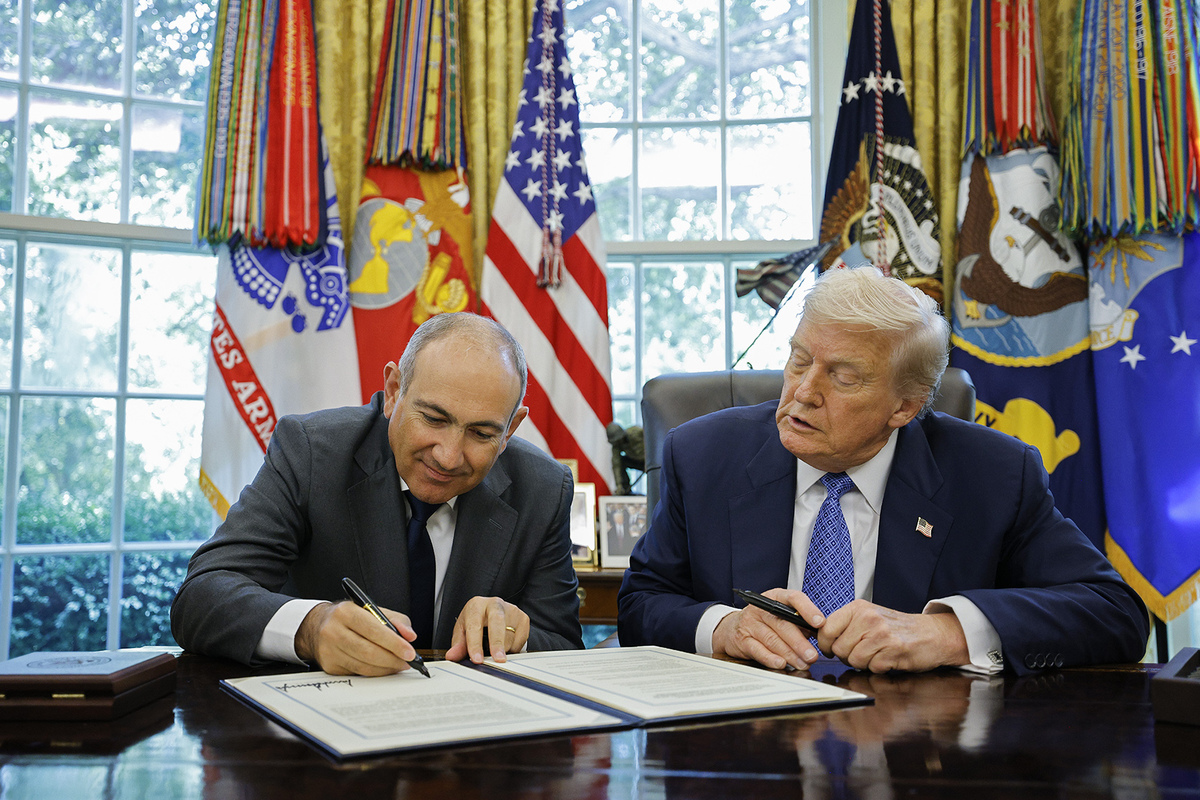
The political analyst is convinced that Baku also gained political dividends — with the Azerbaijani president’s reception at the White House.
“For Ilham Aliyev, a meeting at Trump’s level was, above all, about satisfying personal ambitions. It was another chance to reinforce his authority at home and in international affairs. The reception also carried symbolic weight, since for the new US administration the ethnic cleansing of Armenians in Nagorno-Karabakh and widespread human rights abuses in Azerbaijan have effectively been pushed into the background. The agenda has shifted to shared interests,” Narek Minasyan explained.
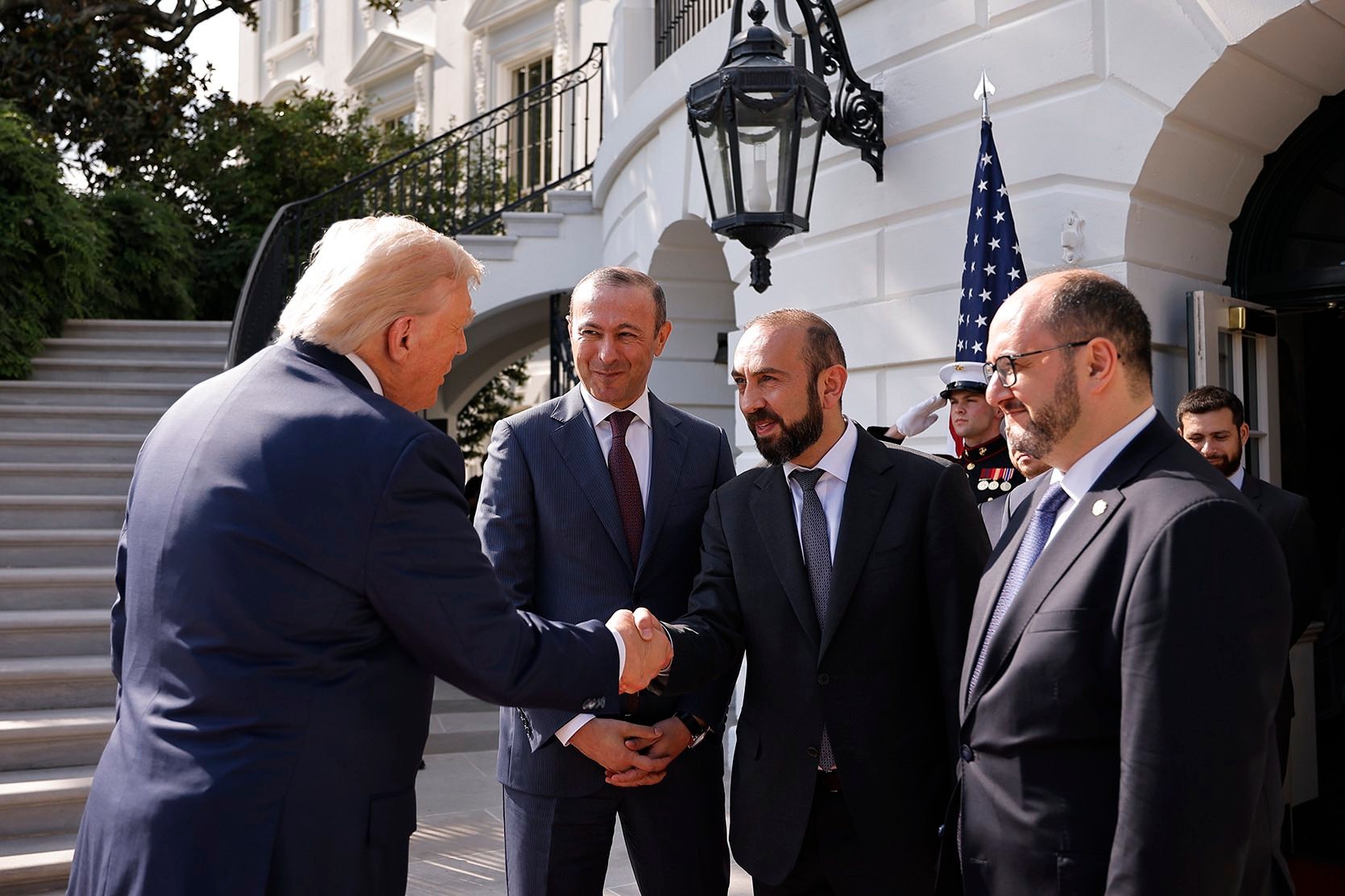
At the same time, the analyst points to concessions Baku made following the White House meetings:
“Azerbaijan gave up the lever it had used against Armenia for years — the threat and use of force.”
He suggests that making political commitments to peace in the presence of US president Donald Trump reduces the likelihood, at least in the short term, of border escalations and provocations by Azerbaijan. Still, Minasyan does not rule out changes in the longer run:
“There are no signs yet that Baku is moving away from militarisation or from the state-level promotion of Armenophobia.”
In any case, he argues, the Washington agreements give Armenia time to strengthen its defence capabilities. In a more positive scenario, they could even lay the groundwork for genuine peace in the region.
He also sees Azerbaijan’s abandonment of demands for an extraterritorial corridor as a retreat from previous positions. The principles enshrined in the trilateral declaration, he says, rule out the existence of such a corridor.
At the same time, he notes that Azerbaijani propaganda continues to use the term “Zangezur corridor”:
“For Armenia, the way to finally neutralise risks in this area is to set clear terms for implementing the ‘Trump Route’ together with the American side.”
According to Minasyan, the forthcoming Armenia-US document must clearly define all key terms. For example, what Baku often calls “unhindered communication.” He also considers it necessary to adopt additional legal and technical provisions to prevent “manipulation by the Azerbaijani side.”
Washington meeting results
Washington meeting results
Some Azerbaijani media outlets have tried to portray the results of the Washington meeting between Trump, Pashinyan and Aliyev as a complete victory for Baku. Meanwhile, Armenian analysts argue that Azerbaijan not only gained benefits but also made concessions.
Political scientist Narek Minasyan sees Baku’s renunciation of the use of force or threats against Armenia as a retreat from its earlier stance. He also points to the abandonment of demands for an extraterritorial corridor through Armenian territory — the so-called “Zangezur corridor.”
According to him, the documents signed in Washington allow Azerbaijan to present itself as “a constructive player committed to a peace agenda.” Whether that proves to be true, he noted, will become clear once the agreements start being implemented.
“The agreements reached in Washington represent a serious opportunity to build a stable, peaceful and prosperous region. Their implementation, however, depends on how sincere Azerbaijan’s leadership is in its commitment to peace, and how consistent the United States proves to be,” Minasyan said.
- OSCE Minsk Group disbanded: Armenia debates whether it is “progress or a loss”
- “Armenia is now in its least vulnerable position” – key points from Pashinyan’s briefing
- “Trump Route” will create conditions for new investment in Armenia – economist
- “Trump Route” will create conditions for new investment in Armenia – economist
On 8 August in Washington, Armenia and Azerbaijan initialled a peace agreement. With US mediation, the two sides also reached an understanding on reopening transport links. Disagreements over this issue had been so deep that in August 2024 it was removed from the draft peace treaty, in the hope that this step would make it possible to sign the document in the near future.
The reopened road has been named the “Trump Route for International Peace and Prosperity” — TRIPP. The details of how the project will be implemented are still unclear. What is known is that an Armenian-American company will be set up to “manage the business.” Yerevan insists that Armenian authorities will carry out customs and border control, and it is explicitly stated that the land used for the road will remain under Armenia’s ownership.
In addition, Yerevan and Baku signed several bilateral documents with the US. Armenia and the US, in particular, signed three memorandums of understanding covering: 1) cooperation in artificial intelligence and semiconductors, 2) energy security, and 3) support for the “Crossroads of Peace” project.
Comment
Political analyst Narek Minasyan sees the Washington agreements as a package deal crafted by the Americans to secure two things:
- a “win-win” outcome on the path to peace,
- and extra “carrots” for Yerevan and Baku in their bilateral ties with the US, designed to encourage compromise.
“For both Azerbaijan and Armenia, rejecting the US administration’s offer would have been risky — not only in terms of losing potential ‘carrots,’ but also in terms of possible unwanted pressure, given Trump’s unpredictability,” Minasyan stressed.
Among those incentives, he lists the US-Azerbaijan bilateral agreements — a reset in relations — and the suspension of Section 907.
Since 1992, Section 907 has barred the US government from providing direct aid to Azerbaijan, including military assistance. From 2002 onwards, every US president signed annual waivers suspending its effect. The only year it remained in force was 2024. On 8 August 2025, Trump once again signed a decree temporarily suspending Section 907.
“Azerbaijan expects that lifting the restrictions will create new opportunities to deepen cooperation with the US in the economic, technological, energy and military spheres. This will also boost the country’s investment appeal,” Minasyan said.
Another tangible result of the talks, he noted, was the agreement to set up a working group to draft a charter on strategic partnership between Azerbaijan and the US.
“On the one hand, this will take bilateral relations to a qualitatively new level, opening fresh avenues for cooperation. On the other hand, it will correct the imbalance between US-Armenia and US-Azerbaijan relations.”
In January 2025, Yerevan and Washington had already signed their own strategic partnership charter.
According to Minasyan, under the memorandum signed with Azerbaijan, partnership will cover three areas:
- regional communications (including energy, trade and transit),
- investment (including artificial intelligence and digital infrastructure),
- security (including the sale of defensive equipment and counterterrorism).
Minasyan added that the charter is expected to be ready for signing within a few months.
The political analyst is convinced that Baku also gained political dividends — with the Azerbaijani president’s reception at the White House.
“For Ilham Aliyev, a meeting at Trump’s level was, above all, about satisfying personal ambitions. It was another chance to reinforce his authority at home and in international affairs. The reception also carried symbolic weight, since for the new US administration the ethnic cleansing of Armenians in Nagorno-Karabakh and widespread human rights abuses in Azerbaijan have effectively been pushed into the background. The agenda has shifted to shared interests,” Narek Minasyan explained.
At the same time, the analyst points to concessions Baku made following the White House meetings:
“Azerbaijan gave up the lever it had used against Armenia for years — the threat and use of force.”
He suggests that making political commitments to peace in the presence of US president Donald Trump reduces the likelihood, at least in the short term, of border escalations and provocations by Azerbaijan. Still, Minasyan does not rule out changes in the longer run:
“There are no signs yet that Baku is moving away from militarisation or from the state-level promotion of Armenophobia.”
In any case, he argues, the Washington agreements give Armenia time to strengthen its defence capabilities. In a more positive scenario, they could even lay the groundwork for genuine peace in the region.
He also sees Azerbaijan’s abandonment of demands for an extraterritorial corridor as a retreat from previous positions. The principles enshrined in the trilateral declaration, he says, rule out the existence of such a corridor.
At the same time, he notes that Azerbaijani propaganda continues to use the term “Zangezur corridor”:
“For Armenia, the way to finally neutralise risks in this area is to set clear terms for implementing the ‘Trump Route’ together with the American side.”
According to Minasyan, the forthcoming Armenia-US document must clearly define all key terms. For example, what Baku often calls “unhindered communication.” He also considers it necessary to adopt additional legal and technical provisions to prevent “manipulation by the Azerbaijani side.”
Washington meeting results
Productive meeting with 🇯🇵PM @shigeruishiba in Tokyo.
We agreed to inject new momentum into 🇦🇲–🇯🇵 cooperation in trade, investment, education, culture & tourism, paving the way for deeper partnership & shared prosperity.
Exchanged views on international & regional developments. pic.twitter.com/6km4szxKuC— Nikol Pashinyan (@NikolPashinyan) September 4, 2025