
Day: September 2, 2025
Dissolution of the OSCE Minsk Group
The OSCE ministerial council has decided to dissolve the Minsk Group, created in 1992, along with its affiliated structures. The Minsk Group had been the only international body dealing with the settlement of the Karabakh conflict. Disagreements between its co-chairs – the US, France and Russia – that emerged after the outbreak of the war in Ukraine meant the group had effectively stopped functioning since February 2022.
All 57 OSCE member states backed the decision. The administrative process of winding up the group will be completed by December.
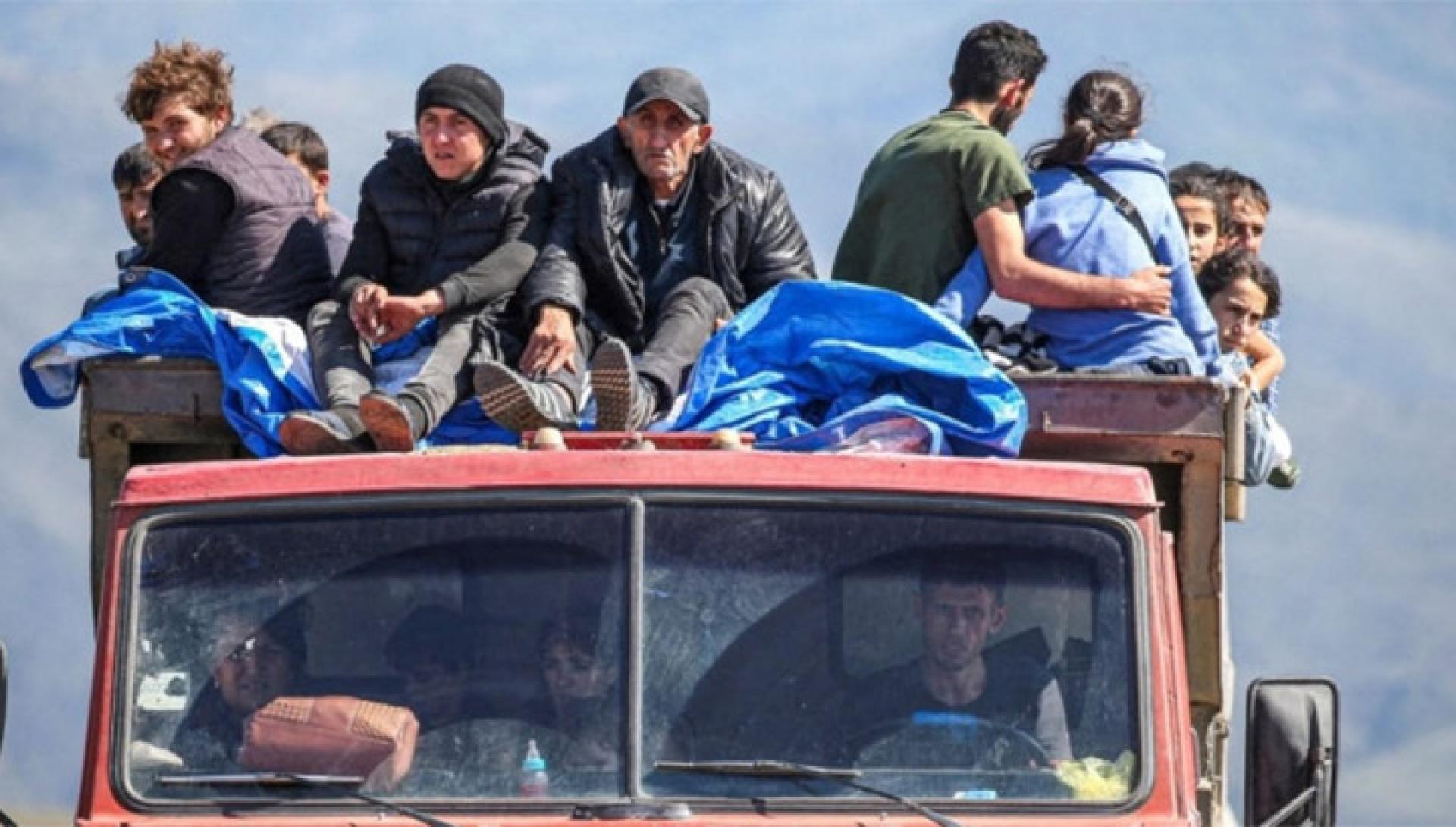
The OSCE described the move as a “historic development” and a “powerful testament to the impact of diplomacy.” But Armenians who were forced to flee Nagorno-Karabakh, losing their homes and homeland, have questioned the legitimacy of the decision. They stress, however, that “the liquidation of the Minsk Group does not mean the liquidation of the rights of the people of Artsakh.”
Political analyst Robert Gevondyan called the group’s dissolution “an important step towards taking Armenia out of the Karabakh conflict with Azerbaijan.”
“Finally, the problem has been solved whereby Armenia was considered a ‘party’ to the conflict,” he wrote. “For this, it was necessary to close the structure created to settle the Karabakh issue – the Minsk Group – in which everyone, apart from the people of Armenia, meant Armenia and Azerbaijan when they spoke of the ‘parties’.”
- “US backs both Armenia and Azerbaijan”: view from Yerevan
- “Trump Route” will create conditions for new investment in Armenia – economist
- “Peace treaty would mean Baku dropping its ‘Western Azerbaijan’ claim” – opinion from Yerevan
- Text of peace agreement between Azerbaijan and Armenia published
Dissolution of the Minsk Group agreed in Washington
At a meeting held on 8 August in the White House, Donald Trump, Nikol Pashinyan and Ilham Aliyev signed a declaration, the second point of which addressed the OSCE Minsk Group.
“We also witnessed the signing of the joint appeal to the Organization for Security and Cooperation in Europe (OSCE) on the closure of OSCE’s Minsk Process and related structures by the Ministers of Foreign Affairs of the Republic of Armenia and the Republic of Azerbaijan. We call on all OSCE participating States to adopt this decision”, the declaration said.
The joint appeal was submitted to the OSCE on 11 August. It was also backed by the other two co-chair countries, France and Russia.
The dissolution of the Minsk Group had been one of Azerbaijan’s preconditions for signing a peace treaty with Armenia.
Yerevan did not refuse to meet this demand, but insisted that the group should be wound up only after the treaty was signed.
“When peace becomes a reality, the continued existence of this format may indeed raise questions. The issue is one of timing. We should not put the cart before the horse,” prime minister Nikol Pashinyan said at the time.
Although a peace treaty was not signed in the US but only initialled, the two sides nevertheless reached agreement on the Minsk Group’s dissolution. As observers in Armenia note, Baku got what it wanted while Yerevan stepped back from its earlier position.
‘A historic development’ – OSCE secretary general
The OSCE secretary general, Feridun Sinirlioğlu, welcomed the ministerial council’s decision:
“I congratulate Armenia and Azerbaijan on this real step towards peace and stability in the region, which is a powerful testament to the impact of diplomacy.”
He added that it was “a historic development that underscores what diplomacy can achieve even after decades of conflict and mistrust.”
The OSCE chair-in-office, Finland’s foreign minister, Elina Valtonen, also congratulated Armenia and Azerbaijan “on the historic agreements on peace and the normalisation of relations.”
‘The page of Artsakh is closed – but how?’
Artak Beglaryan, a Nagorno-Karabakh resident who previously served as ombudsman, chief of staff to the president and state minister of the former Nagorno-Karabakh Republic, questioned the legality of dissolving the Minsk Group. He argued that the group was created at a Budapest summit and could only be disbanded by a summit decision:
“The ministerial council has a lower status than the summit. And the OSCE charter clearly states that a decision taken by a higher body cannot be overturned by a lower one. Dissolving the Minsk Group shows that the page of Artsakh is closed. But how can it be closed if questions of status, security and the right of return remain unresolved? The dissolution of the OSCE Minsk Group means legitimising an international crime – the genocide and ethnic cleansing committed by Azerbaijan,” the rights activist said.
When and how the Minsk Group emerged
With the Minsk Group now dissolved, Armenian media have been publishing retrospectives on its history. One such article drew on various books. Caucasus expert Thomas de Waal wrote in his book Black Garden that the OSCE Minsk Group came about “almost by accident.”
De Waal recounts that on 31 January 1992, during a CSCE meeting in Prague (the organisation was then called the CSCE), the session was nearing its end when the British delegate pointed out that two new members – Armenia and Azerbaijan – were at war. He suggested the CSCE should take action:
“It was decided to send a mission to the region to study the situation on the ground. At the next meeting, on 24 March, it was agreed to convene a peace conference on Nagorno-Karabakh. The Belarusian representative unexpectedly proposed holding it in Minsk. Nobody objected.”
According to De Waal, this is how the idea of a Minsk conference was born. The peace process was then taken up by the Minsk Group. The planned meeting in Belarus never took place because of the escalation of fighting in Nagorno-Karabakh. The group held its first session in Rome from 1–5 June 1992.
Russian diplomat Vladimir Kazimirov, in his book Peace to Karabakh, wrote that there had been disputes within the CSCE over which states should join the Minsk Group. After lengthy negotiations, it included Armenia, Azerbaijan, the US, France, Russia, Belarus, Germany, Italy, Turkey, Sweden and Czechoslovakia, which was later replaced by Finland.
Kazimirov stressed that the mandate was given to the co-chairing countries, but not to the Minsk Group as an institution.
During negotiations in the 1990s, representatives of Nagorno-Karabakh also took part as a third side.
“In 1992 we were losing the war, losing territory, and were taken less seriously. In 1993, when the initiative on the battlefield shifted to us, a security zone was being created. And Azerbaijan moved to bilateral negotiations. The military and negotiating processes ran in parallel, but one influenced the other,” said Masis Mayilyan, the former foreign minister of the now defunct Nagorno-Karabakh Republic, in an interview with journalist Tatul Hakobyan. The excerpt is included in Hakobyan’s book Karabakh Diary: Green and Black.
According to the accounts cited in these books, the Minsk Group carried out most of its practical work after the ceasefire was established in May 1994. Mediators at the time drafted proposals for a settlement and discussed them with the parties to the conflict.
These proposals included “package” and “step-by-step” options for resolving the conflict, as well as the idea of a “common state.”
Thomas de Waal writes that from spring 1999, bilateral talks took place between the presidents of Armenia and Azerbaijan, Robert Kocharyan and Heydar Aliyev, without Minsk Group representatives. Another bilateral meeting followed in 2001 in Key West, Florida. After that, the group’s co-chairs refrained from presenting any substantive documents, limiting their role to arranging discussion meetings between the Armenian and Azerbaijani leaders.
It was only in November 2007 in Madrid that the mediators handed over a new working paper. This was not a formal agreement but a set of principles, just a page and a half long, intended to form the basis of a peace deal. Under the document, Nagorno-Karabakh’s status was to be determined in the future by referendum.
The last meeting of the group’s co-chairs took place during the 44-day war, on 30 October 2020 in Geneva.
According to official information, the Armenian and Azerbaijani foreign ministers and the co-chair countries discussed a ceasefire, the resumption of negotiations and humanitarian issues.
Dissolution of the OSCE Minsk Group
Categories