
bp Azerbaijan has announced that the crude oil quality issues at the Ceyhan terminal have been fully resolved, Azernews reports, citing the company.
Day: September 2, 2025
Eight protesters were sentenced to 2–2.5 years in prison after a court found them guilty of organizing and participating in a group activity “disturbing public order,” following a last-minute reclassification of the original, more serious organized group violence charges.
Tbilisi City Court Judge Tamar Mchedlishvili announced the verdict against eight defendants on September 2, sentencing three of them – Zviad Tsetskhladze, Vepkhia Kasradze, and Vasil Kadzelashvili – to two years and six months in jail each, and the others – Giorgi Gorgadze, Irakli Miminoshvili, Insaf Aliev, Tornike Goshadze, and Nikoloz Javakhishvili – to two years in prison each.
The case of the so-called “smiling boys” – a group in which half of the defendants were under 21 – has drawn widespread attention and is one of two high-profile protest-related organized group violence trials.
Tsetskhladze, Kasradze, and Kedzelashvili were initially charged with organizing group violence, while the remaining defendants faced charges of participating in group violence, all under Article 225 of the Georgian Criminal Code, carrying a penalty of 4 to 6 years in prison. The judge, however, reduced the charges on September 2 to “organisation of group activity disrupting public order or active involvement in it” under Article 226 of the Criminal Code, punishable by a fine or community service or corrective labour, or by house arrest for a term of six months to two years or imprisonment for a term of up to three years.
Prosecutors had alleged that Tsetskhladze, Kasradze, and Kadzelashvili organized and led group violence, while the remaining defendants took part by assaulting riot police during the November–December protests. The defense rejected the charges, arguing there was no evidence the group knew each other, had coordinated any attacks, or acted as a group during the rallies, and further challenged the evidence against individual defendants as either insufficient or edited.
“The charges were incomprehensible to me, and I met these boys in the court boxes,” Giorgi Gorgadze, 21, told the court in his closing remarks on August 27, according to the written records made by RFE/RL Georgian Service. “I didn’t even know that we were prosecuted in the same case […] I expect a guilty verdict […] Justice has been lost in this country.”
Seven of the eight defendants were arrested on December 4, 2024. Javakhishvili was detained earlier, on November 30, during the first days of demonstrations that erupted after Georgian Dream announced halting the EU integration process. All were charged under Article 225 of Georgia’s Criminal Code, which carries four to six years in prison for organizing, leading, or participating in group violence.
The defense argued that the charges and detention were politically motivated. Alleging multiple inconsistencies in the claims of prosecutors and police witness testimonies, lawyers said video footage did not show the defendants acting as a group, no messages or social media ties proved coordination, and no evidence showed they harmed police officers.
Individual Circumstances
Zviad Tsetskhladze, 20, a law student leading activist group Dafioni that was at the forefront of youth-led spring protests, was charged with organizing group violence and detained on December 4, 2024. Prosecutors alleged he organized protests on November 28-30, planned and led the violence, and had disclosed his plans on November 30. Lawyers say he was in Adjara on November 27–29 due to his grandfather’s death and did not attend protests. The prosecution’s evidence rests on three videos. One shows Tsetskhladze explaining how to use a shield for defensive purposes. A second is an interview he gave to Mtavari TV. The third, published by the activist group Dafioni, is a 14-minute video from November 30 in which Tsetskhladze, beaten by special forces, describes and discusses methods of resisting police. That video, however, had no sound. The defense has argued the video is insufficient and fails to support a conviction.
Vepkhia Kasradze, 54, a member of the opposition Lelo for Georgia party, and Vasil Kadzelashvili, 51, were charged with organizing and leading group violence and detained on December 4, 2024. Prosecutors cited as evidence a video that appears to capture a casual exchange between Kasradze and Kadzelashvili during the rally, allegedly discussing attacks on properties owned by Georgian Dream officials and their families. The defense disputes the recording’s authenticity, questions the legality of how it was obtained, and challenges its relevance in proving that the two men led other defendants into violence.
Giorgi Gorgadze, 21, was charged with participation in group violence and detained on December 4, 2024, at his home. Prosecutors allege he took part in violent acts during the pro-EU protests, while the lawyer argued the case has legal and logical flaws, stressing the absence of any evidence of organized group violence, that Gorgadze received or gave instructions, or that he injured anyone. The main evidence is a video showing a masked man in grey pants and a black top throwing an unidentified object; at one point, the man briefly removes his mask, which prosecutors say enabled Gorgadze’s identification. The defense argues it is impossible to determine what was thrown, at whom, or whether anyone was injured. According to the defense, while police reports and medical records of injured officers are included, none link the injuries directly to Gorgadze.
Irakli Miminoshvili, 19, was charged with participation in group violence and detained on December 4, 2024, at his home. Prosecutors allege he threw a stone at police officers during the pro-EU protests as part of the group violence. The prosecution’s main evidence is a video clip showing a masked man in black clothing throwing objects twice, with other protesters visible in the background. However, the defense presented findings from the Samkharauli Bureau, a key public forensics agency, which concluded that the video had been edited, including by inserting scenes with police, to suggest what lawyers argue is an unverified impact of Miminoshvili’s actions on law enforcement.
Tornike Goshadze, 26, was charged with participation in group violence and detained on December 4, 2024. The prosecutor alleged he threw a stone at the police officer. The lawyers argued that the prosecution failed to present any conclusive evidence proving violence, property damage, or injury caused by Goshadze. As in Miminoshvili’s case, the Samkharauli Bureau forensics report cited by the defense and accepted by the prosecution found that the video evidence had been edited by compiling separate episodes. The lawyers emphasized that no witness testified to seeing Goshadze harm police or damage property, and even the alleged victims pointed to locations different from where Goshadze and Miminoshvili were supposedly present.
Insaf Aliev, 34, was charged with participation in group violence and detained on December 4, 2024. Prosecutors allege he threw a stone at police while taking part in the pro-EU protests. His lawyers argue the charge is baseless, stressing that Aliev, an ethnic Azerbaijani who has difficulty speaking and understanding Georgian, could not have coordinated with other protesters and was on Rustaveli Avenue “by accident” after being sprayed with water [riot police were using water cannons during the dispersals]. Aliev’s lawyers said the prosecution failed to present evidence proving Aliev’s organized participation or any prior coordination with others, adding that the videos show him acting alone and spontaneously. The main evidence is a video recording of a man in a black hoodie, whom prosecutors identify as Aliev, throwing an object and briefly hiding behind barricades.
Nikoloz Javakhishvili, 20, was charged with participation in group violence and detained on November 30, 2024. Prosecutors allege he threw a pyrotechnic device at police officers during the pro-EU protests. His lawyer argued that the video used as evidence is edited, with repeated and spliced clips from different days, and does not show group violence or coordination. The defense also noted that the footage does not match the inspection protocols prepared by investigators, and that the suspect shown in the video appears to launch the firework into the air rather than toward the police.
23 persons in total detained in the context of the pro-EU and anti-Georgian Dream protests since last November have faced jail sentences, including: Zviad Tsetskhladze, Vepkhia Kasradze, Vasil Kadzelashvili, Giorgi Gorgadze, Irakli Miminoshvili, Insaf Aliev, Tornike Goshadze, Nikoloz Javakhishvili, Anton Chechin, Archil Museliantsi, Davit Khomeriki, Anatoli Gigauri, Temur Zasokhashvili, Davit Lomidze, Mzia Amaghlobeli, Anri Kakabadze, Anri Kvaratskhelia, Saba Jikia, Giorgi Mindadze, Mate Devidze, Denis Kulanin, Daniel Mumladze and Guram Khutashvili.
Seven more remain in prison after being convicted over their involvement in the spring 2024 protests against the foreign agents law, including Omar Okribelashvili, Saba Meparishvili, Pridon Bubuteishvili, Davit Koldari, Giorgi Kuchuashvili, Giorgi Okmelashvili, and Irakli Megvinetukhutsesi. Two more persons – Ucha Abashidze and Mariam Iashvili, were arrested in a similar context but convicted for illegally obtaining and storing secrets of private life.
Eight individuals, including six active opposition politicians, were recently sentenced to prison terms of several months for defying the Georgian Dream investigative commission.
Two persons- Tedo Abramovi and Giorgi Akhobadze – have been acquitted of serious drug charges linked to the protests and activism.
Politpatimrebi.ge, a civic platform documenting the cases of detainees, currently lists over 60 persons who were jailed in 2024-2025 and are considered political prisoners.
The verdicts come as no police officer has been held accountable despite numerous documented abuses during dispersals. Dozens of protesters remain in pre-trial custody, awaiting their rulings on similar or other protest-related charges.
Treatment in a Yerevan salt mine
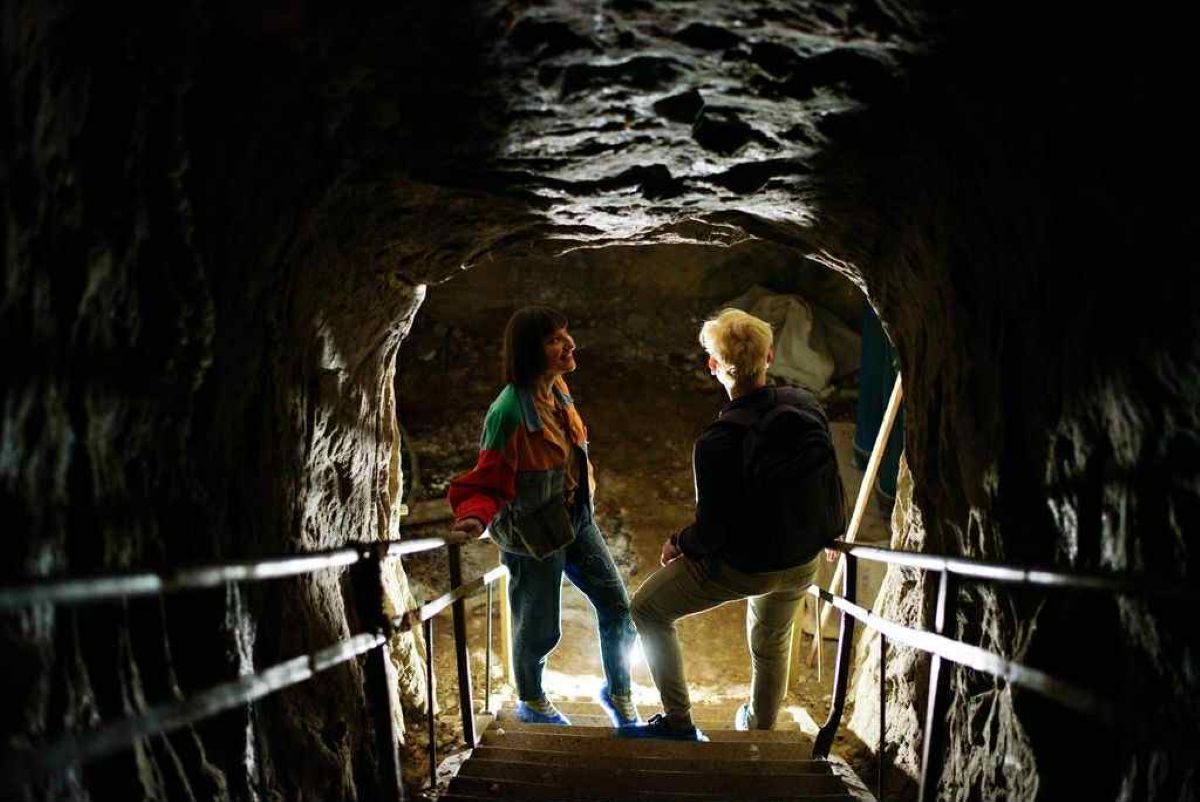
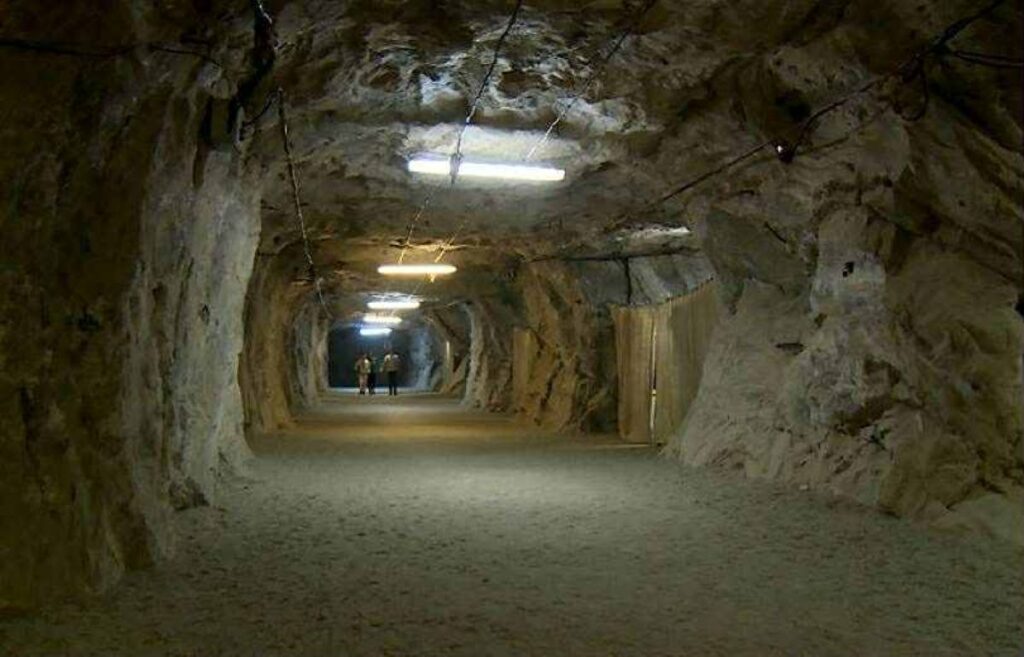
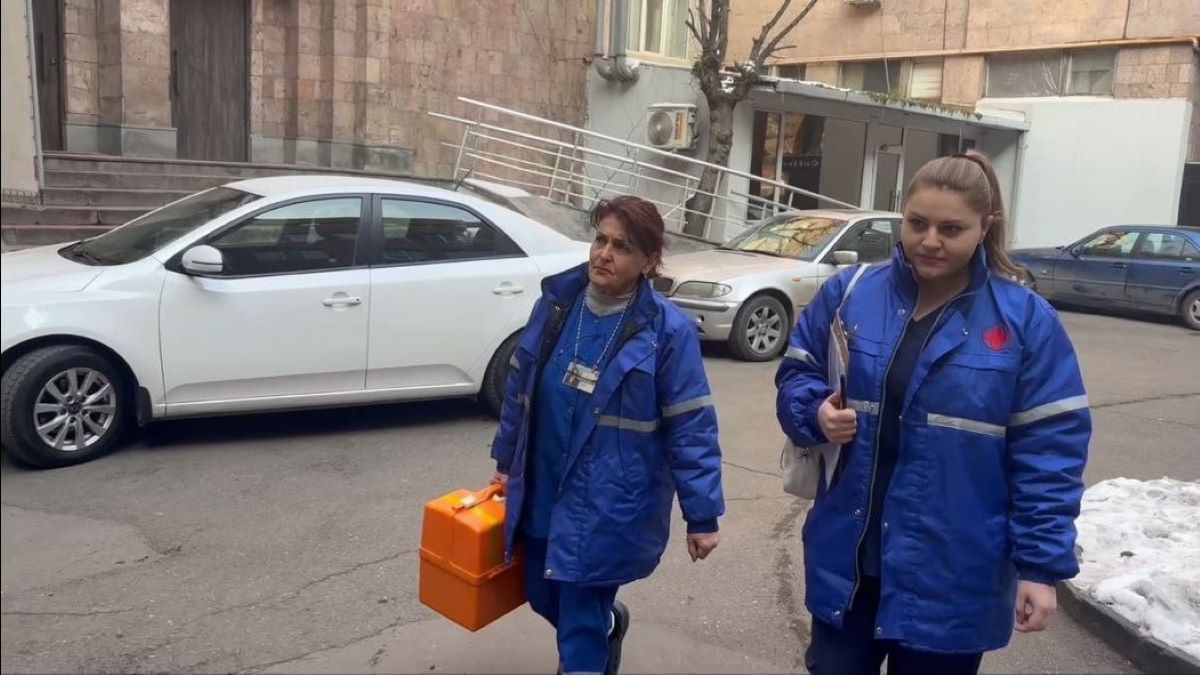
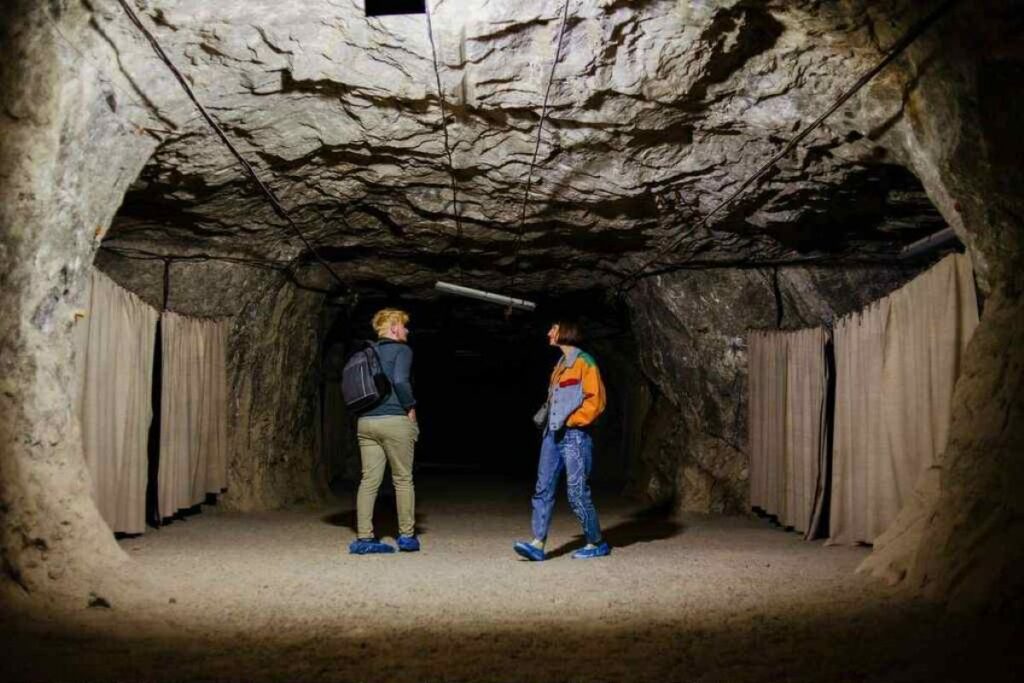
In Yerevan, 235 metres underground, lies the Republican Centre of Speleotherapy, established in 1987. The centre was allocated 4,000 square metres inside the Avan salt mine. People come here to treat asthma, bronchitis, allergies and other respiratory conditions. Inside the mine, there are rest areas, sleeping rooms, walking paths and spaces for exercise.
We look at the challenges the speleotherapy centre has faced since losing state support, and what prospects it has to survive and continue its work.
- Armenia gradually approaching compulsory medical insurance
- Obstetric violence in Armenia: No data, no complaints – no problem?
- Armenian diaspora doctors propose changes to healthcare system in Armenia
- ‘Blacklist’ of Armenian doctors: medical errors and possible consequences
Treatment requires 20 days without breaks, five hours each day
The salt cave has a unique microclimate. Air composition, humidity and temperature remain constant, unaffected by the weather or outside factors. The temperature stays at 20C all year round. There are no magnetic or radioactive waves here, no dust. According to the centre’s doctors, “patients breathe air enriched only with sodium chloride ions.” They say the air is close to sea air, which strengthens the immune system and helps treat or ease illnesses.
“Patients stay here for five hours a day. The course lasts 20 days and must be completed without interruption to be effective. Speleotherapy works especially well for children, who often fall ill and suffer from a lingering cough. Thanks to the salty air, their immunity is strengthened. If you look at the walls and floor, you can see even with the naked eye that it’s not pure salt, there are impurities. The salt also contains various trace elements, which enrich the air and have a therapeutic effect on patients,” says the centre’s head doctor, Anush Voskanyan.
She stresses that speleotherapy does not replace medicine. For conditions such as asthma, prescribed drugs cannot be abandoned, and patients continue taking them during therapy.
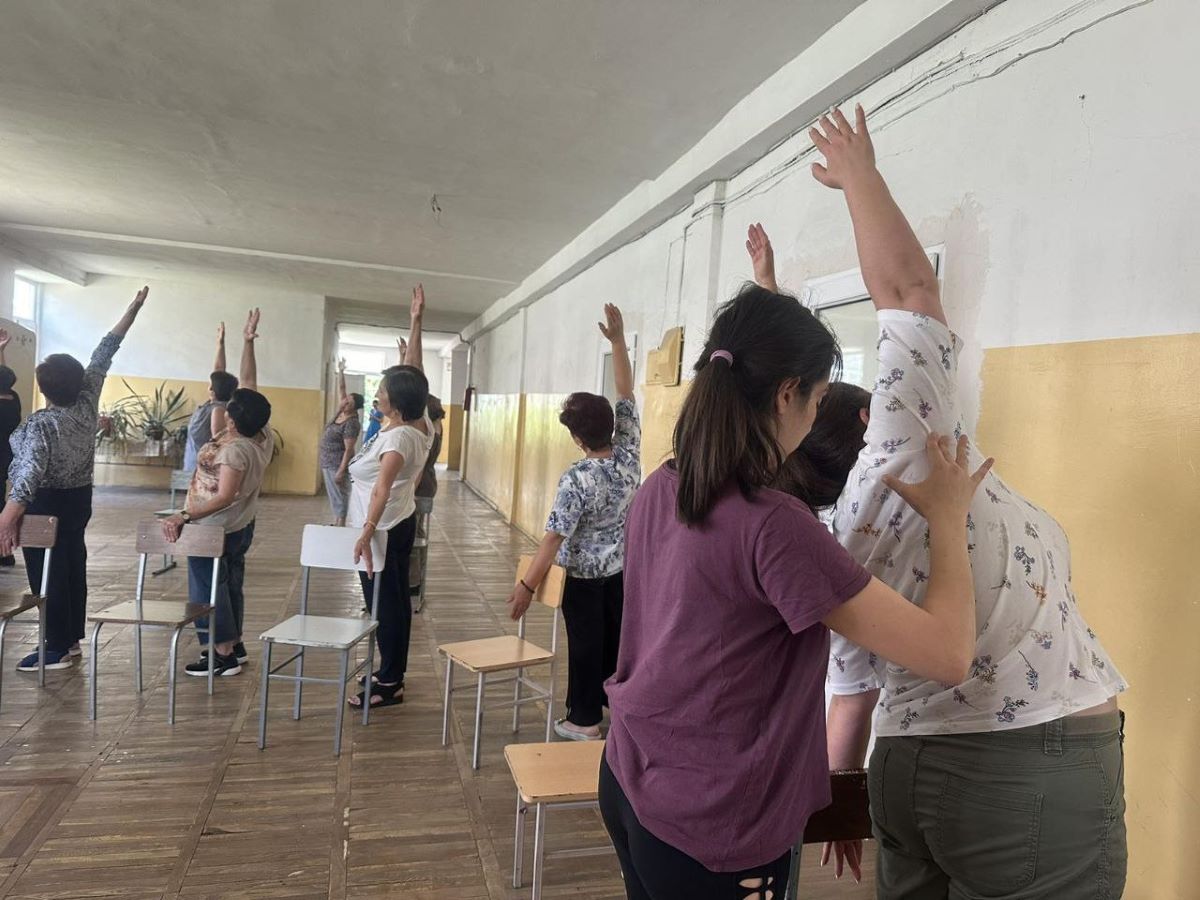
“After the course, however, the number of pills is often reduced depending on the patient’s progress. And many children aged seven to eight show full recovery, which is rare with these diseases. Patients spend time walking, doing gymnastics, breathing exercises; young people play tennis or billiards. We’ve tried to create conditions so that people don’t get bored,” Voskanyan adds.
Treatment at the centre became paid after losing state support
The Ministry of Health stopped funding the centre in 2020. Since then, it has no longer offered free treatment under the state healthcare programme, as it once did.
Acting director Gurgen Akopyan says he has appealed several times to reverse the decision but has repeatedly been told the same thing: the centre provides alternative treatment, not evidence-based medicine, which is what the state finances.
In Armenia and abroad, speleotherapy is considered part of a comprehensive approach to disease prevention and treatment — a form of rehabilitation. It is usually offered in multidisciplinary medical institutions as part of a patient’s treatment. But state orders do not cover such single-profile clinics.
Akopyan argues that this is the only speleotherapy centre in the region and that people should not be deprived of the chance to improve their health:
“This is a national treasure. But right now, we are effectively bankrupt. We once had 16 employees. After cuts, four now work on civil contracts and only two remain on staff. Unsurprisingly, patient numbers have also fallen. The centre used to treat around 300 people a year. State support amounted to 28 million drams ($73,490) annually, while commercial income from paying patients was about 4 million drams ($10,490).
That was enough to cover all our expenses and pay staff salaries. Now, with no state support, our only income comes from patients’ fees. But this barely covers wages for six employees and the cost of running the lift.”
According to him, “asthma is a disease of the poor,” caused by harsh living conditions — when people cannot heat their homes, lack warm clothes or do not eat properly.
He explains that such patients cannot afford to pay 10,000 drams ($26) for each visit. As an alternative, doctors suggest they buy salt lamps made by the centre for the same price. The lamps are placed in bedrooms to create an atmosphere similar to that of the salt mine.
The speleotherapy centre can only be reached by the salt mine’s lift, which also transports chunks of salt extracted from underground. Each month, the centre pays the mine for its patients’ use of the lift. But in months when too few patients come, it struggles to cover the fee and falls into debt.
Akopyan says the lift needs at least five patients a day to cover the cost. Yet even when there are only two or three, they still run it.
What’s more, since the centre was founded the beds for patients have never been replaced. Nor have the billiard and table tennis tables, which keep patients entertained during the five-hour treatment sessions.
Little chance of being recognised as evidence-based medicine
Pulmonologist Viktoria Ghazaryan says that over the years she has repeatedly seen speleotherapy’s effectiveness. But to have it recognised as evidence-based medicine, large-scale studies would be needed — and none are being carried out. She adds that there are also methodological problems: there is no clear data on who was treated, their condition before and after, or what medication they were taking alongside the therapy.
“It is very difficult to measure the effect. A patient’s condition may not improve immediately after the course. The result may only become clear months later, when they notice they no longer fall ill or that their illness has eased. Some patients also continue to take medication, which makes it hard to say whether the improvement comes from the drugs or the therapy. That’s why speleotherapy is considered an alternative, supplementary method. It is highly valued in eastern medicine. If it had no positive effect, it would not be so popular there,” she says.
According to the pulmonologist, many speleotherapy treatment rooms have now opened in Yerevan. Some of them attempt to artificially recreate the natural climate of the cave. Ghazaryan believes that even these artificial rooms have a positive impact on patients.
Armenia has potential to develop medical tourism
Tourism specialist Sona Agbalyan believes the region’s only speleotherapy centre could become one of Armenia’s calling cards in medical tourism. But in this field, the country lags behind its neighbours, Turkiye and Georgia.
“Turkiye is now considered the regional leader in medical tourism. Years ago, people travelled to Israel or Germany for treatment, but now they go to Turkiye. In recent years Georgia has also taken very aggressive — and very successful — steps in this niche. Unfortunately, we are falling behind, even though the country clearly has potential. Medical tourism has several directions, one of them being specialised clinics — dentistry, cosmetology, plastic surgery. Our clinics lose out because they are more expensive than in Turkiye and Georgia. Another possible direction is sanatoriums, but that is also not being promoted,” Agbalyan says.
According to her, Armenian sanatoriums are little known abroad and are in demand only inside the country:
“There is a gap in the tourism strategy. We promote Armenia, particularly Yerevan, as a tourist destination. But individual towns are not promoted as destinations in their own right. For example, Jermuk as a spa town or Tsaghkadzor as a sports town are not marketed. We don’t advertise the fact that asthma can be treated in a natural salt cave in Armenia. Yet this could be a very effective move. To explain my point, I’ll use the example of Dubai chocolate. It was marketed so well that people now travel to Dubai not for the sights but to try Dubai chocolate. In the same way, people could come to Armenia for the salt cave, for helicopter rides and many other local experiences.”
Agbalyan says such targeted advertising should be included in the new strategy being developed by the Tourism Committee.
Yerevan salt mine
https://t.co/LfkCLvI1lM#India Blocks #Azerbaijan’s #SCO Membership but Fails to Undermine Its Growing Influence in #Eurasia #Pakistan #Geopolitics #SouthCaucasus #InternationalRelations
— Today.Az (@TodayAz97) September 2, 2025
The Azerbaijani Parliament’s Commission on Foreign Interference and Hybrid Threats has issued an official statement condemning a large-scale information campaign allegedly launched from Russia following President Ilham Aliyev’s recent interview with Saudi Arabia’s Al Arabiya television channel, Azernews reports, citing the statement.