
The 4th Salam International Youth Film Festival is underway in Baku, Azernews reports. The festival is organized by Narimanfilm studio with the support of the Azerbaijan Culture Ministry and the Azerbaijan Film Agency (ARKA), and the general sponsorship of PASHA Holding.
Day: August 28, 2025
Authority follows the judge as she enters the courtroom, and that’s only the first lie. More will be told. The room of fifty people rises, perhaps not everyone feels like standing up, but this is the rule, and you don’t want to make the hearing about yourself. The judge takes her seat against the dark backdrop, between the pale statue of Lady Justice and the national flag. Where there is a judge, there must be justice somewhere, too. The room sits. The judge makes her first inaudible remarks, and where there is language, there must be humans; where there are humans, there must be empathy. She then makes her first small, procedural decisions, and where there are decisions, there must be choices, and anything can be a choice. Defendants are locked in a glass dock. The judge is wearing black attire. Where there is attire, there must be authority. Where there is authority, there must be power. Where there is power, there is corruption. The hearing begins.
Here is Nini and the Dispatch newsletter, recounting days that come with lifetime consequences.
1. The visitors
Tbilisi City Court stands in a large building near a busy highway, some ten kilometers from the parliament. During the day, it’s in those corridors that you can find many of the Rustaveli Avenue protesters before they head downtown for a rally later. The summer months have been busy here, with judges scheduling hearings at a frantic pace. Exhausted defense lawyers have attributed the frenzy to the desperation of party-loyal judiciary to deliver verdicts in protest trials before the nine-month limit on pre-trial detention runs out. After that, they might have to let the defendants walk free until the ruling, and it will be emotionally more draining to drag them back into the cells soon after. Most likely, they’ll have to return.
Most protesters were detained early last December, so time is running out. On August 19, too, visitors slowly fill the empty corridor of the courthouse. Familiar faces, protest symbols on the outfits, and worn-out shoes all suggest they’ll be heading to the parliament rally later. A group of foreigners is also there. As more people arrive and line up, chatter grows. Many have been to many other hearings of many other defendants before. They know the patterns, and they know the judges. The press stands at the front, ready to claim the front seats once inside: they must stay extra-focused, now that cameras are barred from the courtroom, typing out every word they hear for a live blog.
It is a hot summer day, but women have brought warm clothes: the day before, some were not allowed into the courtroom for wearing summer tops, and nobody wants to take chances now. One woman is even wearing a scarf to highlight the irony. “Soon, they’ll be asking us to cover our heads as well.” Laughter. The visitors hope there is enough space in the courtroom for everyone. Who’s the judge, some ask. There’s a sense of doom once they hear the name.
2. The judge
Nino Galustashvili, 33, joined the Tbilisi City Court’s criminal justice chamber in December 2024, at the height of protest-related arrests. She was appointed for a three-year trial term after years of assistant jobs in courts, and she has been working hard since. There are already eight protest- and opposition-related jail sentences on her record. Five protesters were sent to prison on assault-on-police charges, four of them for an oddly specific term of four-and-a-half years, and she also sentenced three opposition figures to months in jail for boycotting the Georgian Dream parliamentary commission. The number might grow, as she is yet to hand down a verdict in an organized group violence case involving 11 protesters, and a protest-linked drug case against two Russian citizens.
The verdicts catapulted Galustashvili into the spotlight of infamy. Her pictures are everywhere. She is the most talked-about and most photographed judge, even in a judiciary that hardly remembers any period of fairness or independence. When photos were banned, her image reappeared in sketches. Her name has landed on various sanctions lists. Some social media posts compared her earlier photos with more recent trial shots, where she appears rather frail. Look, doing evil makes you age faster, critics gloated. But seeing her in person, the story is the opposite: she looks perfectly fine, nothing like a fast-aging villain. Those still weighing whether to be good or evil may need stronger arguments.
Galustashvili has long, well-styled hair, dyed blonde and fading into darker shadows. Her face is lean and bony, and the large rings in her ears make it seem leaner. Rouge sharpens her cheekbones, and the lines under her eyes and around her red-painted lips add humanness rather than age to her face. Her eyes are somewhat large, made more expressive by makeup. She often rolls them, sometimes left, sometimes right, not in irony, but as if weighing the arguments she hears. To the noise in the courtroom, she answers with a piercing gaze. Her manners are lively and articulate, her voice calm and feminine. Frequent movements of the muscles around her mouth and brows give her face a concerned look. Villains aren’t supposed to look or act like that.
3. The defendants
Being tried by Galustashvili is just one of many misfortunes the Russian couple, Anastasia Zinovkina, 31, and Artem Gribul, 24, encountered after arriving in Tbilisi. They say they came from Armenia to prepare travel documents for their cats before heading to Brazil. They’ve been to protests in Moscow, and they’ve been to rallies in Tbilisi, something they believe led to their arrest in December on charges of possessing a large quantity of drugs. They insist they had none, and they are not alone: the couple is among six people detained on drug charges since December, all claiming the substances were planted, all cases without video evidence of the personal searches.
The absence of such evidence was cited, directly and indirectly, when two of the six were acquitted in recent weeks, producing the only two not-guilty verdicts so far in dozens of protest-related trials. The remaining four await verdicts, but the Russian couple might not be so lucky: prosecutors point to the police-affiliated translators present at their detention as “neutral” witnesses, even if the defense disputes their neutrality. Fearing the judge may side with the prosecution, in a country where those most likely to protest are the wariest of Russian newcomers, activists in Tbilisi have called for more open support. More Georgian protesters have flocked to their hearings since.
Today it’s Gribul who’s testifying, but Zinovkina is also there, with long, loose, reddish hair, looking exhausted by everything she’s gone through. Her ordeal includes the detention where a police officer allegedly made rape threats, her unaddressed health issues that leave her in sharp physical pain, and her visiting mother being barred from entry to the country at the border. Gribul, wearing a flower-printed shirt and long blonde knotted hair, tries to stay cheerful, recounting his detention with occasional jokes. Laughters. Piercing gaze from the judge.
One glimmer of hope: the day before, Georgian media reported that the police officer involved in their detention, the one who allegedly made rape threats and then also testified against the couple, was himself being tried on separate criminal charges. He had been arrested and later released on bail after allegedly firing from a moving car into oncoming traffic, and was forced to leave the police over the incident. Later in the hearing, the judge agrees to attach the reports to the case files.
4. The men behind
Half-hope appears, fades, and reappears as Galustashvili’s restless face occasionally pulls into a half-smile. And every time, it makes you want to see her on your side, want her to make some sudden move that would grant her some sort of redemption. Like the men before and behind her did – being redeemed over and over again, even without ever asking for it. After all, the judge you see is but a tip of an iceberg called “a clan”, a group of influential, party-loyal judges that emerged during the United National Movement rule and only became stronger under the Georgian Dream government, ready to serve whoever was in power.
As protest trials drag on, many believe the men running the clan have chosen to lie low, leaving fresh-faced, aspiring judges like Galustashvili to take all the dirt. Why seek the spotlight when you can ruin lives from behind the scenes and still hope to look decent again someday? Why get yourself openly hated and condemned when you know full well that if you ruin the country steadily enough, carefully enough, and for long enough, someone worse will eventually appear, someone so much worse that it will make you look like a savior. You may live to see that your victims of today will shame each other for despising you tomorrow. That’s how it has been here; those are our good practices. Until then, there’s always someone with longer, brighter hair, redder lips, and a more articulate face, someone new and more intriguing to look at, to take all the spotlight and take all the blame.
There has been theorizing that Georgian Dream authorities deliberately choose women, whether in courts or ministries, to deliver the harshest repression. It makes the ordeal look milder, some argue. But here, too, the real story may be the opposite, and all the more brutal.
4.5. The halves
There are few things more cruel than an autocracy that still pretends to be a democracy, and where every doom comes in halves. Where there are still institutions, but not independence; where there are still judges, but no justice; where there are elections, but no choice. A state of half-certainty, where loss is only half-felt and half-understood. Where half-smiling lips keep giving you half-hope, only to take it away half by half, back and forth, until your ability to trust breaks beyond repair. Where verdicts of four-and-a-half are delivered with half-empathetic faces, leaving you guessing whether she was cruel, or whether she could have been crueller still.
But there are limits to how long one can remain in a state of halves. There won’t be a four-and-a-half-year sentence for Zinovkina and Gribul. The drug charges carry a harsh penalty of eight years to life. There is no room for reclassification or softening. Judge Galustashvili will have to choose between her most lenient protest ruling so far – an acquittal – or her harshest one, should she find them guilty.
The verdict will be delivered in the coming weeks.
Ilham Aliyev receives EU Special Representative for South Caucasushttps://t.co/NzPWtAhGeU#Report #ReportAz #ReportNewsAz #Azerbaycan #Prezident #IlhamAliyev #EU #SouthCaucasus pic.twitter.com/7xsHsYjeNX
— Report News Agency (@reportaznews) August 28, 2025
Industrial production in Azerbaijan’s Garabagh and Eastern Zangazur economic regions experienced remarkable growth last year, marking a significant step in the economic revival of the liberated territories, Azernews reports.
According to the official report, in 2024, enterprises and individual entrepreneurs in the two regions produced a total of…
According to the official report, in 2024, enterprises and individual entrepreneurs in the two regions produced a total of…
TRIPP and new opportunities for Armenia: opinion
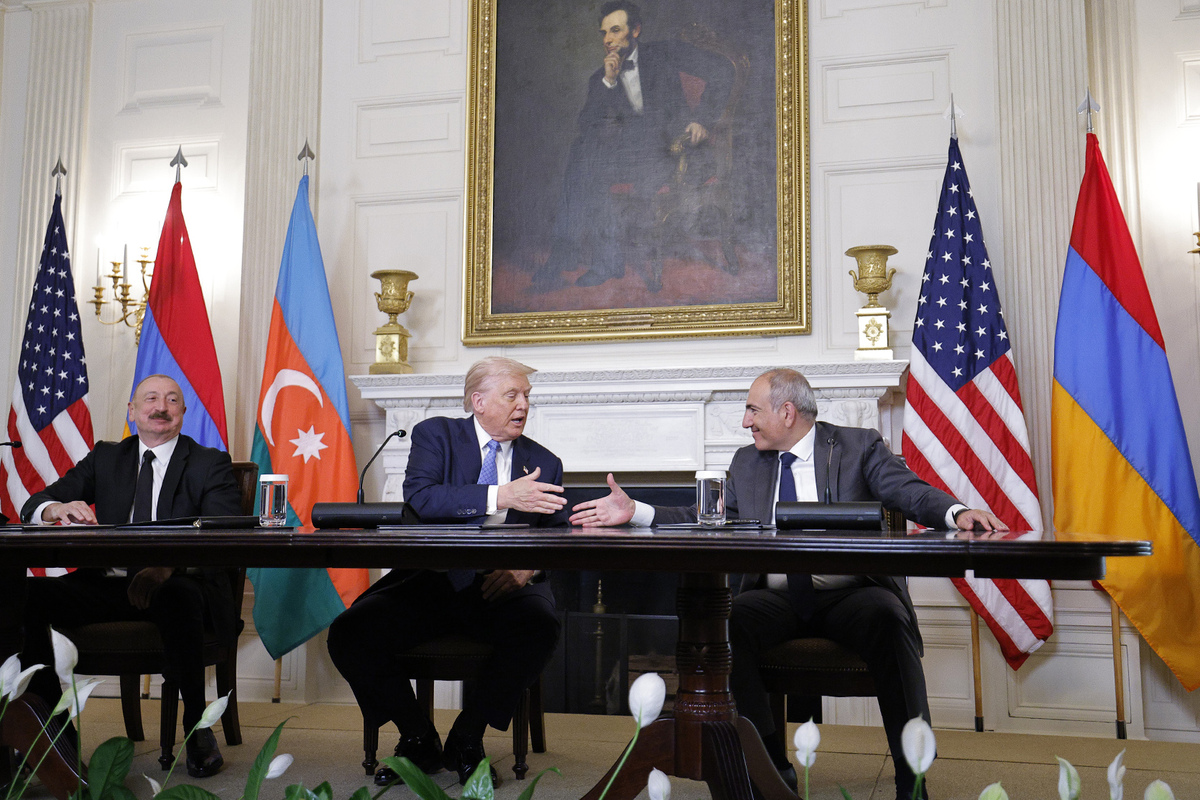
The Washington agreements on unblocking regional communications, reached by Armenia and Azerbaijan on 8 August, will create conditions for new investment in Armenia, economist Armen Ktoyan has said.
The “Trump Route for International Peace and Prosperity” (TRIPP) is a road linking mainland Azerbaijan with its exclave Nakhchivan.
Armenia and Azerbaijan agreed to reopen it with the mediation of the US president, with business operations to be managed through an American consortium.
Before the Washington meeting, the project was referred to in Azerbaijan as the “Zangezur corridor.” The term “corridor” implied Armenia losing control over its own territory. But the trilateral document signed by the leaders of Armenia, the US and Azerbaijan explicitly affirms the principle of “respect for sovereignty, territorial integrity and the jurisdiction of states.”
“According to World Bank estimates, our investment efficiency with the US and EU member states is only 20% of our potential. The rest is unrealised because of the lack of communications,” Ktoyan said.
The economist believes that sustained effort is needed to attract investment, a process that could take up to ten years. The “Trump Route” is an important factor, he said, but a comprehensive approach is required.
“If we do not address the institutional problems within our economy, then whatever communications are established, we will remain a poorly modernised or non-modernised economy, a country exporting mining products or foodstuffs,” he stressed.
Ktoyan argued that the blockade imposed on Armenia by Azerbaijan and Türkiye has caused significant economic losses, including because logistics costs in Armenia are 40% higher than in neighbouring countries. He claimed that with open communications, Armenia’s exports to different countries would be 35% higher than they are today.
- ‘Armenian-Iranian relations are not a bargaining chip’: Yerevan reassures Tehran
- A Tbilisi perspective on the historic Aliyev–Pashinyan meeting
- ‘No third-party control’ – Armenian foreign minister on the “Trump Route” programme
- Pashinyan believes “Trump Route” will become a new component of Armenia’s security
- ‘Historic summit’: Armenia and Azerbaijan sign documents with Trump’s mediation
Comment by economist Armen Ktoyan
“Trump Route” and Armenia’s economic growth
According to the economist, Armenia’s investment climate has never been particularly favourable. He explained that until now there had been convenient opportunities, such as the Zangezur copper-molybdenum plant, or unoccupied niches like telecommunications. These, he said, had been filled by different players over the years.
“These opportunities are exhausted. For this reason, since 2009 the ratio of foreign direct investment to GDP in Armenia has been steadily declining and has now reached a very low level,” Ktoyan said.
In his view, investors in Armenia may now be interested in introducing technologies into unused or inefficiently used resources, producing goods or services, and then selling them — mostly in the form of exports, since the domestic market is small. At the same time, he pointed to the factors that hinder exports:
- closed borders and lack of communications
- underdeveloped institutions
- cronyism in business
- the quality of the workforce, particularly education and qualifications
- the need for technological modernisation
- risks threatening the country’s security
“A project that an investor would accept in a European country with an annual return of 10% would require 25% in Armenia. The risks are high,” Ktoyan said.
The economist argued that the ongoing peace process and the reduction of security risks could lead investors to agree to fund lower-yield projects. He estimated Armenia’s growth potential at around 5%, but said that with significant investment it could rise to 7%.
“What will the ‘Trump Route’ bring? Various opportunities. One of them is the chance to become an important regional player. For Armenia, the potential benefits are both improving the efficiency of its own economy and gaining the status of a transit route,” he said.
Ktoyan gave several examples of where Armenia could benefit economically from unblocked communications:
- trade between Azerbaijan and Nakhchivan, amounting to 1m tonnes, currently goes through Iran
- Central Asian countries face serious challenges in diversifying their logistics chains and securing access via the Middle Corridor to the Black Sea
- Türkiye intends to expand trade with Central Asian states
He said all of these factors fall within the framework of the “Trump Route” project.
Institutional changes needed for EU membership
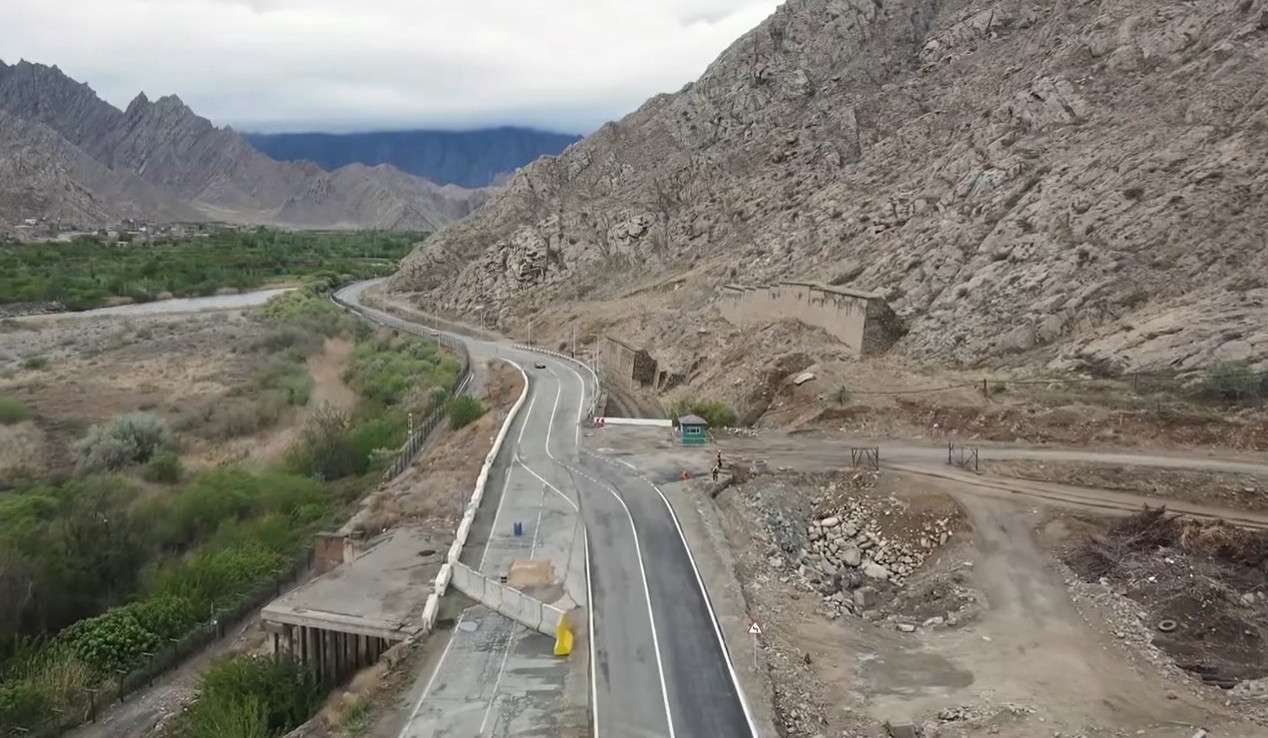
On the prospects of Armenia’s European integration, Ktoyan noted that joining the EU requires change from within.
“It’s about the standards of how both public life and business are organised. There are producers whose manufacturing processes are 70–80% out of line with European standards. It will take years of work to address these issues. Additional investment is needed. Institutions must be developed, donors engaged. A lot has to change.
It’s not that today you decide and tomorrow, or even in 10 years, you’re an EU member. Those 10 years are needed to transform your institutions, production processes, behaviour and more. It’s a long process. But it is the only path that can ensure sustainable development,” the expert said.
At the same time, he pointed out that exporting goods to Russia and the Eurasian Economic Union, led by Moscow, is simpler and more convenient.
“Business takes the path of least resistance. If you can avoid modernising production, avoid licensing, and get into that market with some fake paperwork, why not take advantage? You won’t make huge investments, you won’t waste time on modernisation and so on,” he explained.
Ktoyan cited the problems with exporting Armenian brandy. He stressed that Armenia exports twice as much brandy as it is capable of producing, which means quality is not guaranteed. The same, he added, applies to other products that fail to meet standards.
“In this regard, the rules of the game need to be clearly set. Even if it means job losses or business closures, the state must enforce these rules. Only then can order be established. And only then can we deprive our partner of the stick they periodically hold over us [referring to Russia’s restrictions on Armenian goods],” he said.
Damage from EAEU membership outweighs the benefits
The economist argued that Armenia has effectively become a donor country for the Eurasian Economic Union (EAEU).
“For imported goods, we collect customs duties, which are then transferred to the EAEU’s common budget, where Armenia’s share is set at 1.22%,” he explained.
As a result, Ktoyan said, Armenia pays more into the EAEU budget than it receives back, creating “an additional burden” on the state budget.
In June, economy minister Gevorg Papoyan reported that in 2024 Armenia paid $323m into the EAEU’s common customs budget, while receiving $189m in return. “So we are giving more customs duties to the EAEU than we get back. The negative balance is $135m,” the minister said.
Asked what the benefits of membership were, Ktoyan replied that the only real advantage is access to energy resources at internal or reduced prices.
But he argued that membership has brought more harm than good.
“Before joining the EAEU, the customs duty on Armenian goods exported to the EU was 3%. After accession, it tripled. Our producers now pay roughly three times more in customs duties when exporting to the EU, simply because the country is a member of the EAEU. Compared to Turkish or Georgian goods, Armenian products are uncompetitive from the outset,” he said.
Summing up the data from 2014 to 2024, Ktoyan noted that Armenian exports to Russia increased tenfold, while exports to the EU rose by only 50%.
Armenia signed the accession treaty to the EAEU on 10 October 2014, and it came into force on 2 January 2015.
TRIPP and new opportunities for Armenia: opinion