
Day: August 22, 2025
Amid the ongoing crackdown on independent media in Azerbaijan, Reporters Without Borders (RSF) and Azerbaijani media outlets operating in exile Free Voices Collective, Meydan TV, Toplum TV and Qazetci have launched a postcard campaign titled “Flood them with fans” to support imprisoned journalist Sevinc Vagifgizi.
The goal is to draw attention to the fact that Sevinc Vagifgizi, editor-in-chief of Abzas Media, who has been held in the Baku Pretrial Detention Center for several months, has been denied access to a fan and to protest this situation.
Vagifgizi’s mother, Ofeliya Maharramova, told Meydan TV that her daughter asked for a fan two months ago. She brought one, but the head of the detention center, Elnur Ismayilov, did not allow it to be delivered:
“To avoid problems, I bought a plastic fan, not a metal one. When I brought it, I noticed that others had bought metal fans, and all of those were allowed inside. For two months now, I’ve been bringing the fan with me to the detention center and taking it back. The warden, Elnur Ismayilov, is acting on principle against Sevinj. He says, ‘Because you got writings out from here [the detention center], we won’t allow the fan in. Delete those articles from the website, and I’ll let the fan in.’ Sevinj says, ‘The articles will not be deleted, and the fan will go in.’ The last time I brought it was two weeks ago. They still didn’t allow it.”
RSF and its partner organizations are inviting the international public to write letters of solidarity to Sevinj Vagifgizi and other imprisoned journalists. The messages will be translated and printed on postcards with a symbolic image of a fan and delivered directly to the prison.
RSF and its media partners are calling on the international community to increase pressure on the Azerbaijani government.
The statement calls for the release of all journalists imprisoned on politically motivated charges, access to medical care and humane conditions for detainees, and an end to repression against all independent media outlets in Azerbaijan.
“We want to show that even prison walls cannot silence their voices. The Azerbaijani authorities must stop punishing journalists for their professional work and must ensure access to basic necessities,” said Anja Osterhaus, Executive Director of RSF Germany.
“This campaign is not just about a fan. It’s about dignity, justice, and international solidarity. We call on all journalists, activists, and citizens to support Sevinj and other journalists,” said Orkhan Mammad, editor of Meydan TV.
Sevinj Vagifgizi was arrested in November 2023.
She was initially charged under Article 206.3.2 of the Criminal Code (smuggling by a group in prior collusion).
Later, seven additional charges were brought against her, making the case more severe.
On June 20, at the Baku Serious Crimes Court, Vagifgizi was sentenced to nine years in prison in the so-called “Abzas Media case.”
She denies all charges and does not consider herself guilty.
The post “Flood them with fans!” A new support campaign from independent media appeared first on MEYDAN.TV.
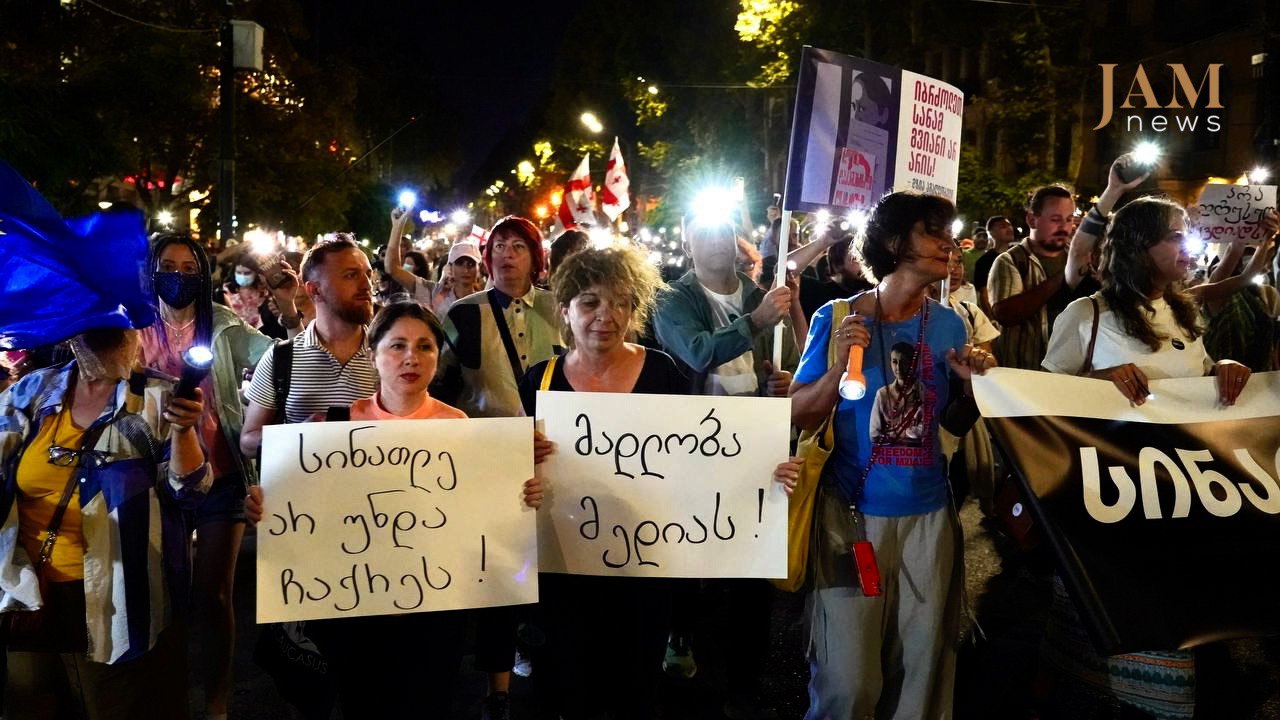
March in support of media in Tbilisi
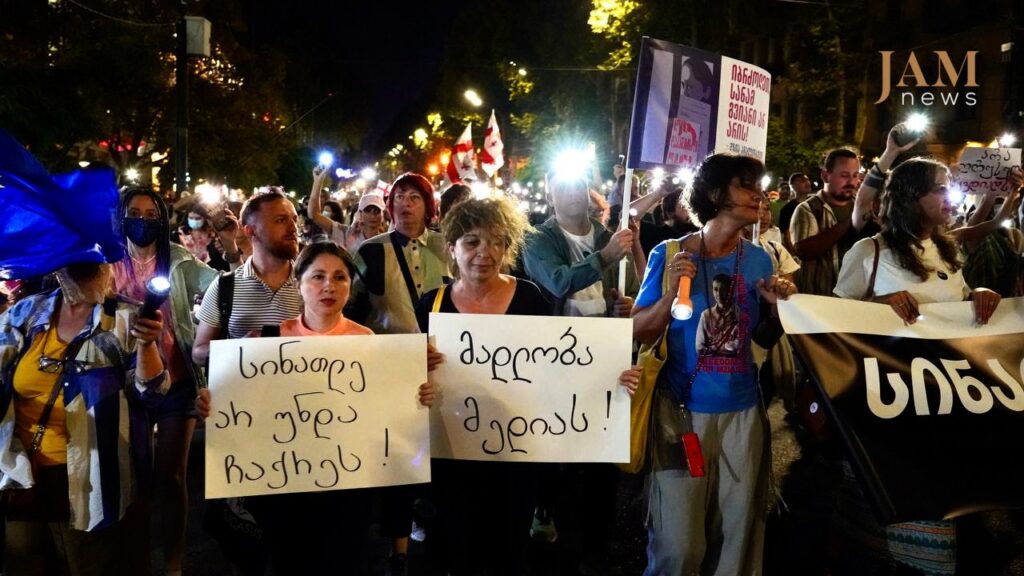
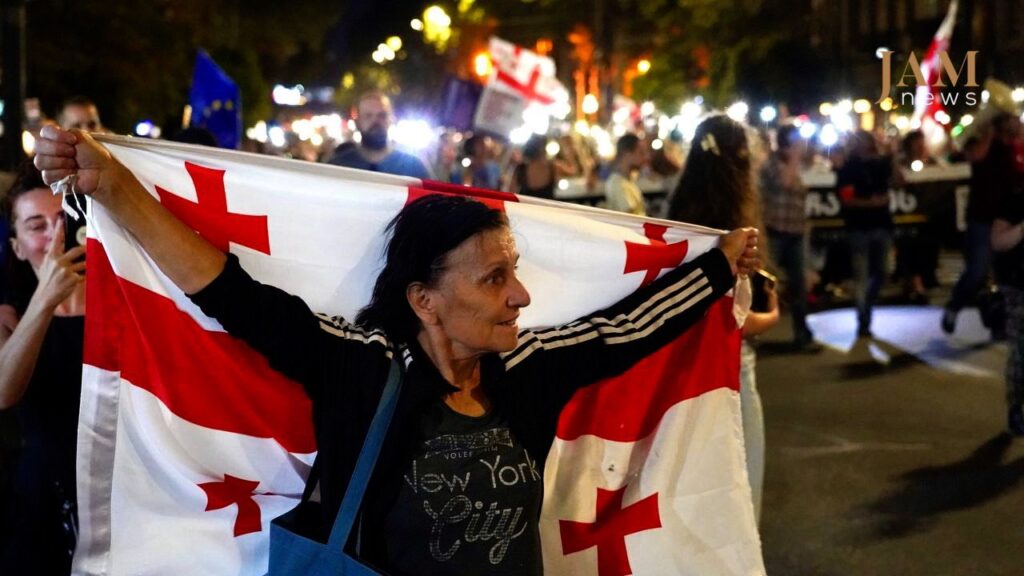
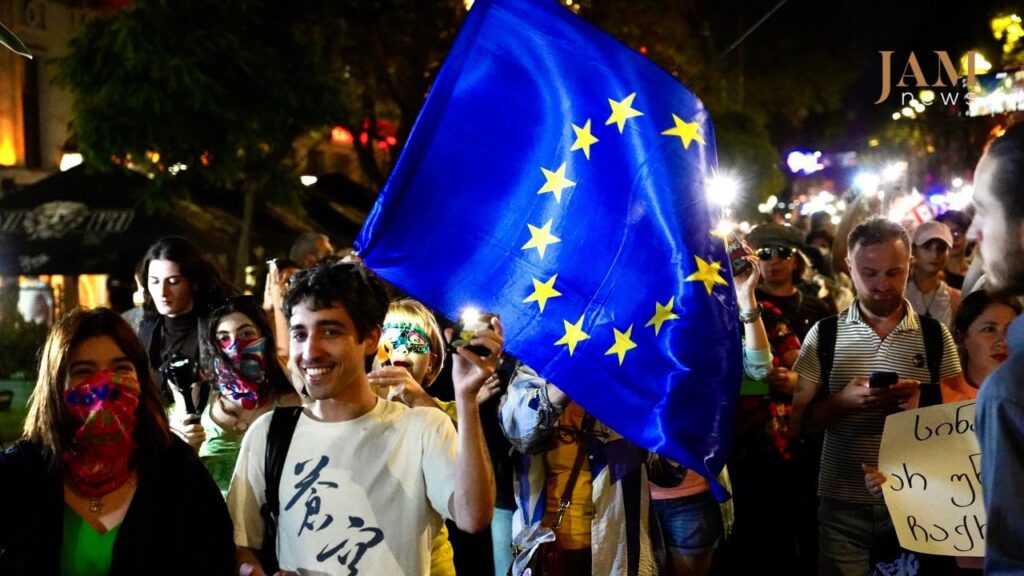
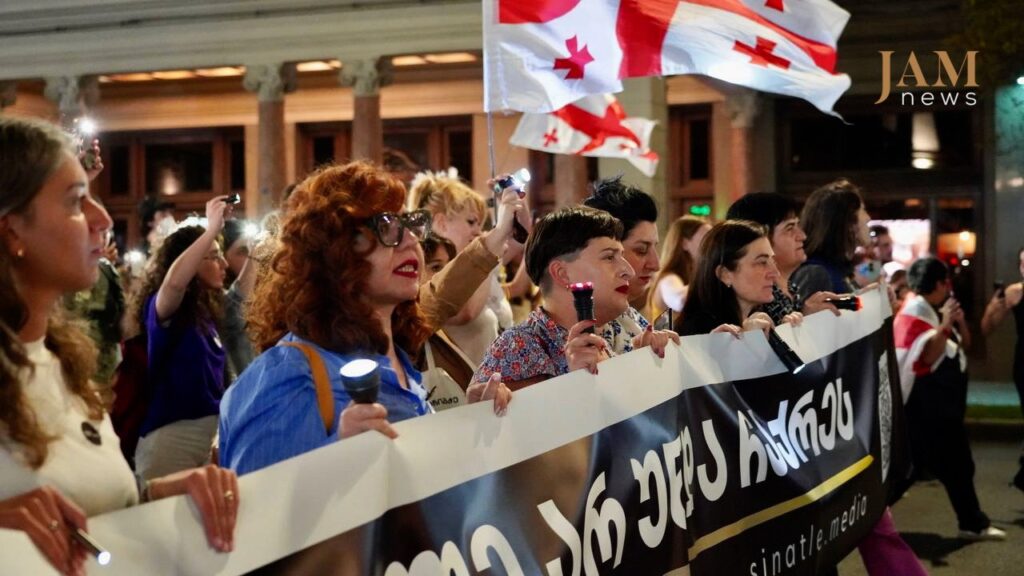
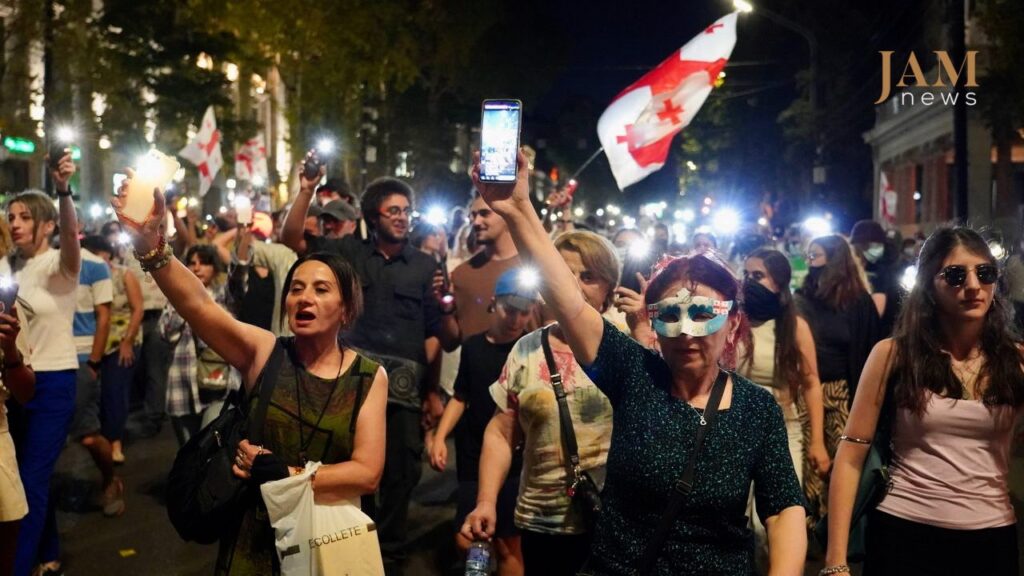
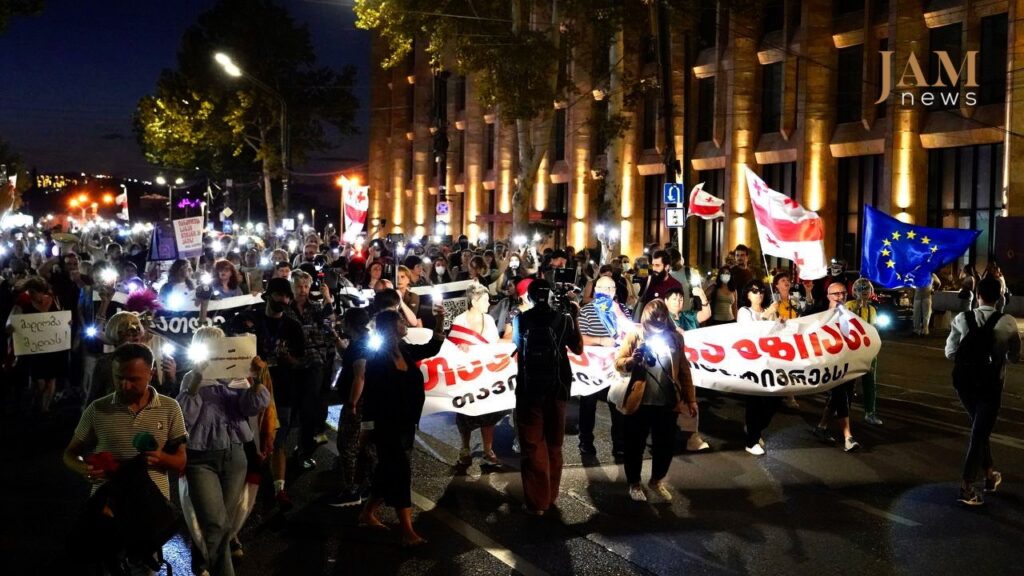
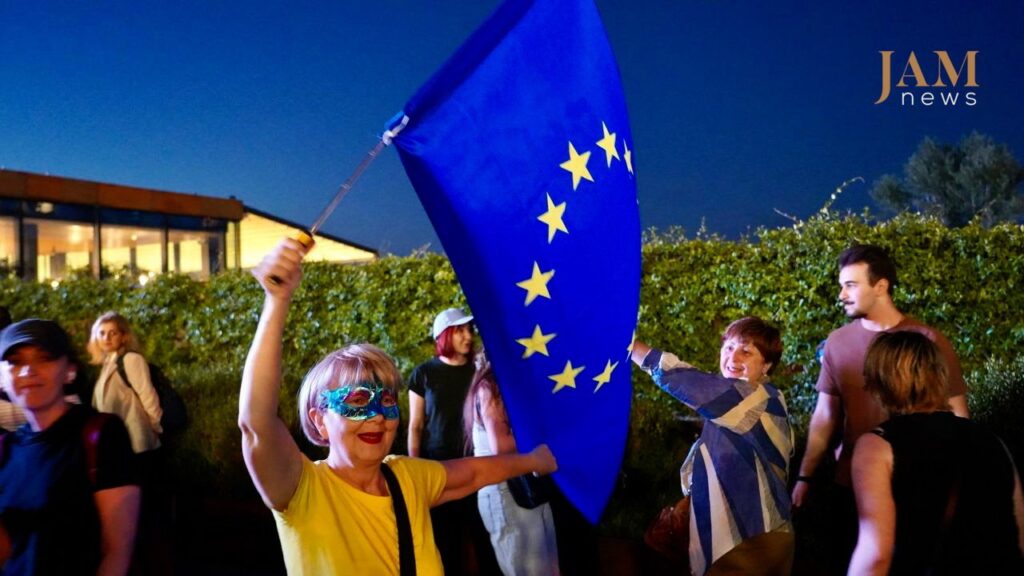
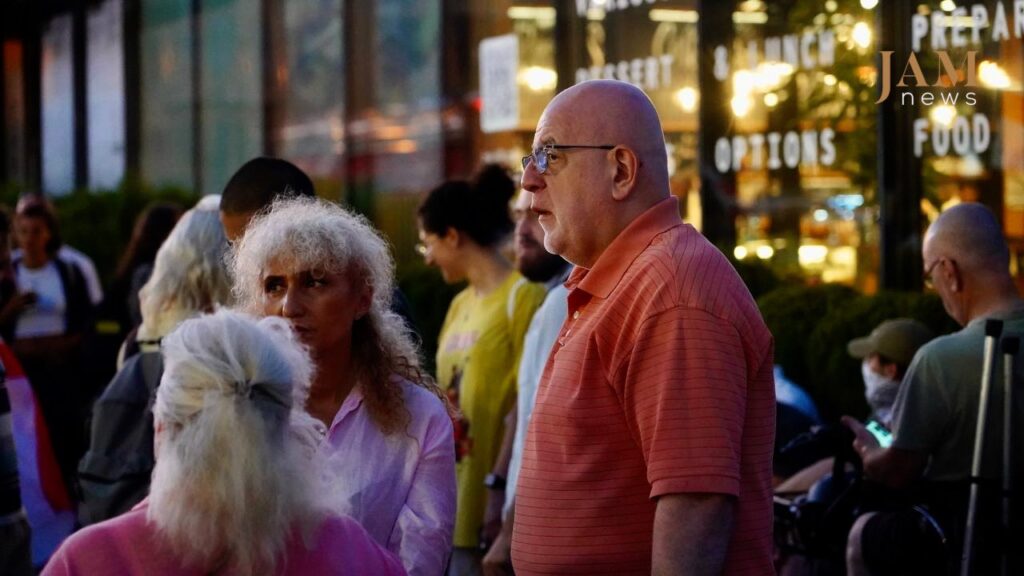
A march in support of independent media was held in Tbilisi.
Georgia’s fifth president, Salome Zourabichvili, joined the demonstration, which took place under the slogan “The light must not be extinguished.”
“Media freedom is vital. Where there are no free media, there is no freedom, no democracy, no free society. Without information we are nothing and no one — and we all understand this. That understanding is especially clear today, as more and more people come out to defend the media,” Zourabichvili said.
Participants marched with lit flashlights from Republic Square to Rustaveli Avenue before joining a rally outside parliament.
Lia Chakhunashvili, executive director of the Georgian Charter of Journalistic Ethics, said the media environment in Georgia has sharply deteriorated, with journalists facing increasing verbal and physical attacks. She added that the situation is being worsened by financial difficulties [a reference to the “foreign agents” and “grants” laws — JAMnews].
“I know many journalists have been working for almost three months with little or no pay, and there are no signs that Georgian Dream will back down. We decided to appeal to the public for support so that online outlets can survive and continue their work, which they carry out with great dedication, sacrifice and commitment,” Chakhunashvili told Euronews Georgia.
Two weeks ago, 22 Georgian online outlets united under the slogan “The light must not be extinguished” to hold a march under the same name with their supporters on 21 August.
“After various legislative changes and amendments, blackmail, threats and bans on activity, many media outlets — especially regional ones — have been shut down. Now we are in a situation where the Georgian people’s struggle must end in victory.
The loudspeaker I’m holding now is not something I’m used to in my journalistic work. On the contrary, I prefer to stay behind the scenes, covering events and telling people the truth. But we had to come together and remind society that without light our struggle cannot succeed — and by light we mean information, which is an indispensable tool for people today,” journalist Zura Vardiashvili said.

Categories
Moscow Calling – August 22
TASS: By attacking the Druzhba oil pipeline, Kiev is trying to drag Hungary into war
Hungarian Foreign Minister Péter Szijjártó has announced a new attack by the Ukrainian Armed Forces on the Druzhba oil pipeline on the Russian-Belarusian border, resulting in oil supplies to Hungary being halted again, TASS reports. According to Szijjártó, this is the third attack in a short period of time, and he sees Kiev’s actions as an attempt to drag Budapest into the war. Szijjártó stressed that Hungary will continue to defend its national interests and support peace efforts despite the provocations. Earlier this week, drone attacks had already led to supply disruptions, after which Hungary threatened to stop exporting electricity to Ukraine. (TASS)
Intended effect: The propaganda agency is shaping the image of Ukraine as an aggressor threatening the energy security of the European Union and of Hungary in particular. Through Budapest’s position, Russian media emphasize that Kiev’s actions not only damage infrastructure but also threaten European allies, thereby reinforcing the narrative of Ukraine’s conflict with Europe, not just with Russia. Another tried-and-tested narrative of Ukraine (or other “aggressive” Western powers/actors) dragging third countries into war with Russia is weaved in.
Trump and the “Ukrainian buffer”: the return of an old idea in a new form
Russian political commentator Alexander Nosovich, in his article on RIA Novosti, claims that Donald Trump is not offering anything fundamentally new in US foreign policy, but is merely reviving the classic “Anglo-Saxon doctrine” of the “cordon sanitaire.” At the heart of this concept, he says, is the transformation of Ukraine into a buffer zone between Russia and Western Europe, as previously proposed by British strategists and even Margaret Thatcher. The author emphasizes that under Biden, Ukraine ceased to be a buffer and turned into a NATO springboard for pressure on Russia, while the policy of “containment” itself was transformed into a “hybrid war.” At the same time, as Nosovich notes, the current US leadership is “losing control over its allies in Eastern Europe”, with Trump is trying to bring them back into the former protectorate. For Russia, such a reorientation by Washington appears advantageous, since Moscow itself may now need a buffer in the form of Ukraine and other countries to protect itself from a militarized Europe, the author emphasizes. (ria.ru)
Intended effect: Heaving close to some “realist” thinkers, the article floats the idea of “Ukrainian buffer” being advantageous to both Russia and the U.S.. At the same time, it creates an imaginary victory – from Biden’s “NATO springboard” Ukraine supposedly “goes back” to traditional “buffer” – a narrative that contradicts Russia’s propaganda reasoning for the war of aggression and the talk of “eliminating the root causes” of conflict (i.e. independent Ukrainian statehood). At the same time, the impression is created that Moscow and Washington’s interests may coincide in limiting the influence of the European Union, which is consistent with Kremlin’s portrayal of Europe as the main provocateur of the conflict.
Aliyev: Azerbaijan wants peace, but must be ready for war
TASS reports that Azerbaijani President Ilham Aliyev, at a meeting with residents of the Kelbajar district, stressed that the country is striving for peace but must remain combat-ready, according to TASS. He stated that in the context of unpredictable global processes, it is impossible to predict the future, so Azerbaijan must be vigilant and rely on its own strength. According to Aliyev, the state, the people, and the armed forces are the guarantors of the republic’s security. (TASS)
Intended effect: The Kremlin coverage seems to purposefully contradict the talk of U.S.-inspired peace between Armenia and Azerbaijan, emphasizing the potential for escalation. Left out of the peace process, and recently bitterly at odds with Baku, Russia may also be trying to stoke fears among its Armenian diaspora.
RIA: Global energy security is impossible without Russia, Venezuela, and Iran
The RIA-Analytics report “The New Face of Global Energy” emphasizes the key role of Russia, Venezuela, and Iran in the global energy market. The publication notes that these countries account for one-third of the world’s liquid hydrocarbon reserves and about 15% of production, and that without their resources, the transition to a new technological order is impossible. The authors of the report believe that the new economy will be energy-intensive due to robotization, the development of artificial intelligence, and cryptocurrencies. The article states that Russia’s share of global hydrocarbon exports is about 15%, and that despite sanctions, the Russian economy has strengthened its stability. In the future, the global energy landscape will evolve, combining traditional and alternative sources, with national strategies becoming decisive, the authors emphasize. (ria.ru)
Intended effect: Through this report, the Russian media is shaping the image of Russia as an indispensable player in the global energy market. The strategic importance of the country and its resource independence are emphasized, which strengthens the internal and external perception of stability of Russia’s influence on the international arena.