
Consumer prices in the United Kingdom rose by 3.8% in July compared to the same period last year, Azernews reports, citing the BBC.
Day: August 22, 2025
@SouthCaucasus @MartinSauerbrey @dubowy_alex @ThomasLeurs1 @MaBialecki https://t.co/J9v6XkusSM
— Disfosgen (@Disfosgen) August 22, 2025
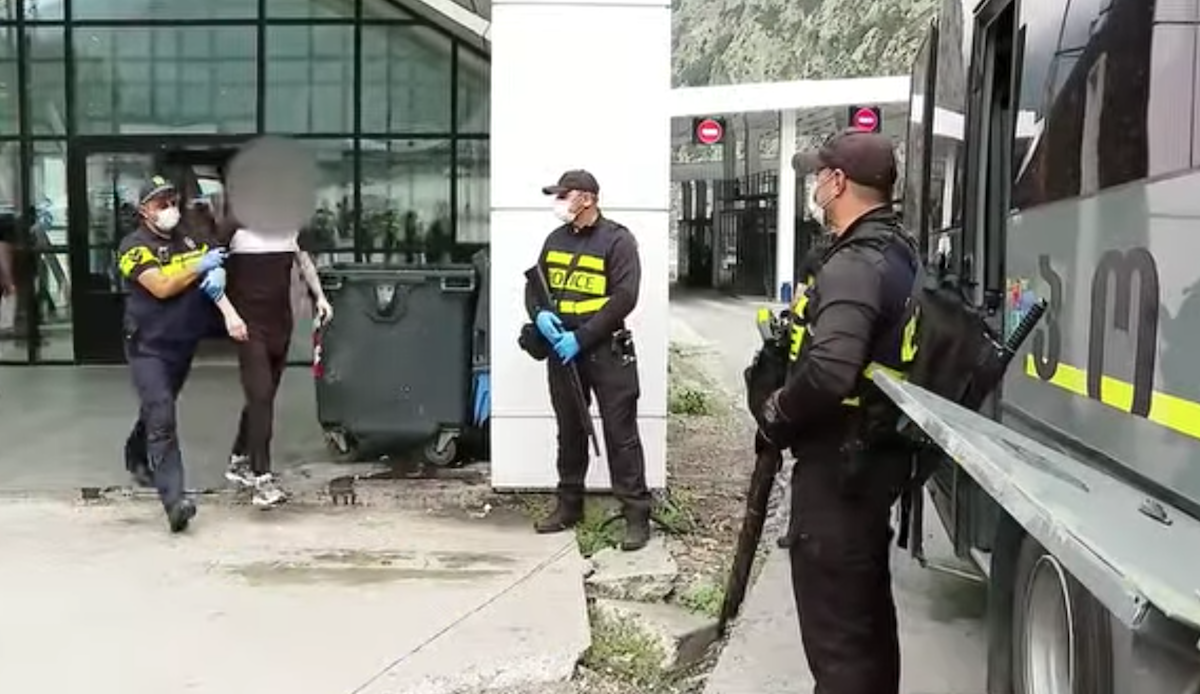
Ukrainians from Verkhny Lars return home
According to Georgia’s Interior Ministry, 65 Ukrainian citizens stranded at the Dariali checkpoint on the Russian-Georgian border have voluntarily returned to Ukraine on a charter flight via a third country. The ministry said several Ukrainians remain in the neutral zone at the border, and efforts are under way to arrange their return home.

Russia has been transferring Ukrainian citizens convicted in the occupied territories of Ukraine to the Georgian border. In most cases, the prisoners had been moved against their will from occupied areas to Russian penal colonies.
On 20 July, Georgia’s interior ministry issued a statement about the Ukrainians at the Russian-Georgian border, saying that about 80 people were seeking to cross into Georgia using “invalid documents.” The ministry stressed that these individuals had “committed serious crimes in the past” and that, “in the interests of state security, they were denied entry to the country.”
On 5 August, several Ukrainians at the Dariali checkpoint went on hunger strike in protest, later joined by others.
What Georgia’s interior ministry says
“The Ministry of Internal Affairs of Georgia ensured the transfer of Ukrainian citizens from the Dariali checkpoint to Tbilisi International Airport, where they were handed over to representatives of Ukrainian law enforcement. The ministry also arranged their boarding and accompanied them during the charter flight.
A number of Ukrainian citizens remain at Georgia’s state border. For their organised, safe and voluntary return home, the Georgian side continues intensive negotiations with Ukraine and international organisations. We hope the process for those still at the border will not be further delayed, and that they will be able to return home soon.
As the public knows, 87 citizens of the Russian Federation were in the so-called neutral zone of the Dariali checkpoint, seeking to cross the Georgian border with invalid documents while posing as Ukrainian nationals. In the interest of state security, they were denied entry, as all of them had serious criminal records and had been repeatedly convicted of grave and especially grave crimes. They also lacked the valid documents required to cross the border and did not meet the legal criteria for entry into Georgia.
In recent months, the Georgian side has held a series of working meetings with the Ukrainian embassy in Georgia and with international organisations. The issue was also addressed through the network of police attachés, involving coordination between Georgia’s police attaché in Ukraine and the Ukrainian interior ministry.
Together with the foreign ministry and other relevant state bodies, the interior ministry is taking all necessary measures both to ensure the security of Georgia’s population and to facilitate the timely return of those remaining in the so-called neutral zone to their homeland,” the statement said.
Reaction from Ukraine’s foreign ministry
Ukraine’s foreign minister, Andrii Sybiha, commented on the return of the citizens:
“We have brought back 65 Ukrainians who were in the buffer zone on the Russian-Georgian border. Among them are 10 women and eight seriously ill people.
The humanitarian crisis at the Russian-Georgian border began in the second half of June, after Russia deliberately started sharply increasing the number of Ukrainians deported through this checkpoint.
In previous months, 44 citizens had already been returned to Ukraine.”
Ukrainians from Verkhny Lars return home
Georgian civil society organizations that received inspection notices from the country’s Anti-Corruption Bureau under Georgian Dream’s version of the U.S. Foreign Agents Registration Act (FARA) say they will not register in the FARA portal, arguing the law does not apply to them.
“Neither the American FARA nor its Georgian counterpart applies to civil society organizations,” Transparency International Georgia, the country’s leading corruption watchdog, said on August 22, noting that although Georgian Dream authorities claim to have copy-pasted the American law into Georgia’s legislation, the organization’s U.S. branch is not registered under FARA.
Seven organizations, including TI-Georgia, received FARA inspection notices from the Anti-Corruption Bureau in the past weeks, warning of criminal liability if they fail to register as an “agent of a foreign principal” under the GD-adopted FARA. Alleging that their work “could constitute political activity,” the Bureau asked the organizations to explain why they had not registered on time, giving them 10 days to submit a response.
FARA, which took effect in May, is the second foreign agents law adopted by Georgian Dream. The ambiguous law, which Georgian Dream claims to have copied from the 1938 American FARA, requires foreign-funded individuals and entities engaged in political activities on behalf of a foreign principal to register in the FARA registry, with non-compliance punishable by fines, prison terms of up to five years, or both. The August inspection marked the first instance of strict enforcement of such laws, as the previous version, though still formally in force, was effectively shelved.
Social Justice Center (SJC), another group under inspection, argues that the U.S. FARA, just like its Georgian analogue, establishes that the “mere fact that an organization’s activities may be related to political issues does not in itself constitute grounds for designating it as an agent of a foreign principal.”
In a letter to the bureau, SJC argues that its activities are “determined internally” and that funds are only a “tool” to carry them out. The group stresses that during project implementation, its correspondence with donors is limited to financial accountability and information exchange, saying this “does not affect the substance of organizational activities.” It adds that “grant-related activities are not connected to the support or lobbying of foreign political parties.”
The organization said it would not fall under FARA if the law were interpreted in a “reasonable and good-faith” manner. It noted that in the bureau’s warning letter, the grounds for its alleged “political activity” were its public statement, but those were not substantiated. One of the statements cited was SJC’s saying that the “Ivanishvili government is fully responsible for creating risks to visa-free travel.”
The Media Development Foundation, another inspected CSO, also responded with a letter to the bureau’s request, outlining its track record. That includes, among other efforts, media literacy programs that have trained thousands of Georgians, especially school and university students and teachers, as well as educational resources it has developed and its work combating disinformation, particularly from Russia.
“MDF’s activities – for which the organization receives funding from the EU, the governments of the EU member states and other Western donors – are transparent and serve only the interests of the Georgian people, in line with the Georgian government’s declared goals outlined in legislation and policy documents,” the organization said in the letter.
All seven organizations now ordered to register under FARA had earlier, in June, been approached by the bureau for separate inspections – that time, though, under different laws. Those earlier inspection requests, which they also defied, demanded extensive information about their activities, including sensitive details about their beneficiaries.
The organizations deem the Anti-Corruption Bureau’s inspections unlawful and say Georgian Dream is cracking down on them. Key watchdogs have vowed not to register also citing the local stigma associated with the term “agent,” which is often understood as “spy” or “traitor.” Leaders of Georgian Dream have repeatedly labeled their critics as “foreign agents.”
Also Read: