
On the occasion of World Humanitarian Day, the Embassy of Ukraine in Azerbaijan expressed deep appreciation for the assistance provided by Baku since the beginning of the war, Azernews reports.
Day: August 19, 2025
#SouthCaucasus #EuropeanIntegration #Russia
The European Integration as the regional strategy for the South Caucasus vs Russia https://t.co/7jDf9j7idY pic.twitter.com/mtnXF4Edw3— Michael Novakhov (@mikenov) August 19, 2025
https://t.co/q4lnVPMn3K
The South Caucasus News Review https://t.co/KYGCUA0Nwy https://t.co/68VWXDt66g#SouthCaucasus #SouthCaucasusNews#Armenia #Azerbaijan #Georgia
Armenia Azerbaijan Georgia
–https://t.co/DO5LG3PY4Thttps://t.co/O0SIgLVWzM— Michael Novakhov (@mikenov) August 19, 2025
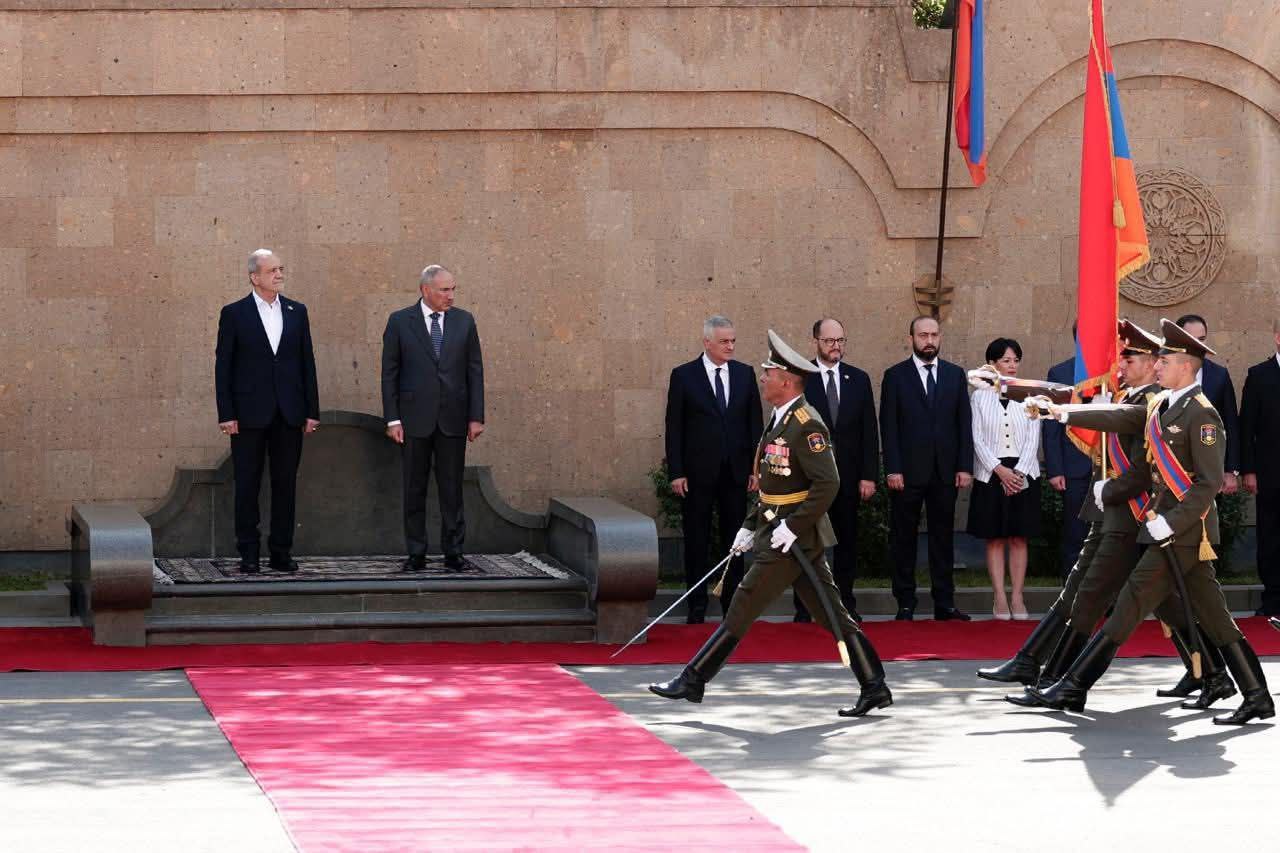
Iran president visits Armenia
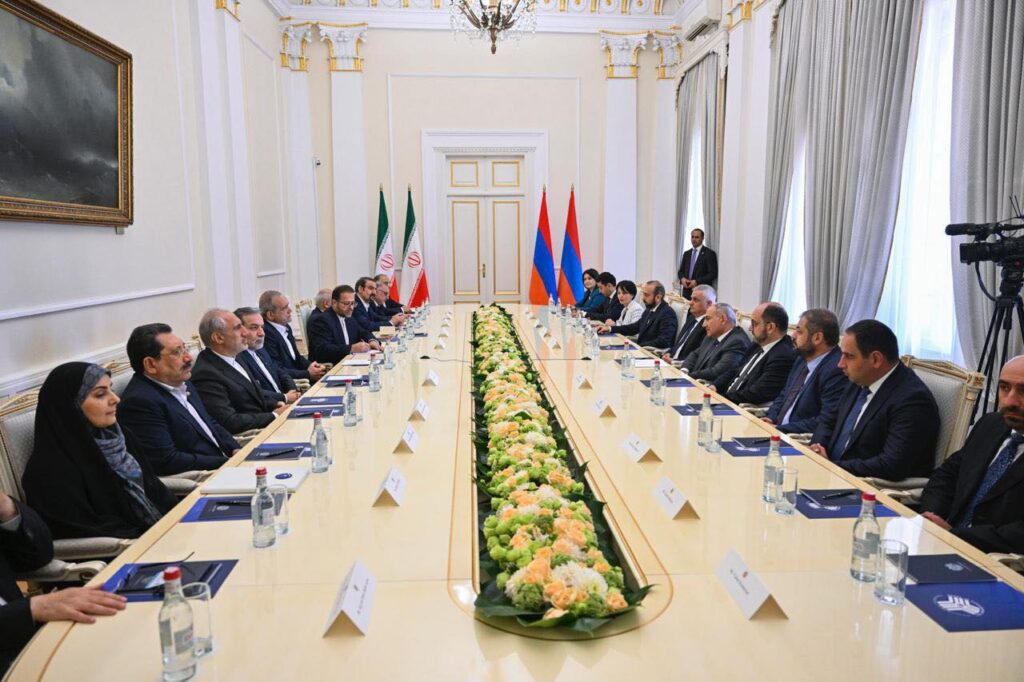
Iran’s president arrived in Yerevan on 18 August for an official visit, though no meetings with Armenia’s leadership were scheduled for that day. Formal talks began the next morning. Masoud Pezeshkian met prime minister Nikol Pashinyan for nearly an hour and a half, followed by broader negotiations. Numerous documents were signed, including a joint statement by the two leaders, though details have not yet been disclosed.
Here is what is already known from the talks, the statements by Pashinyan and Pezeshkian afterwards, and what the Iranian president intended to discuss with Armenia’s prime minister.
- ‘Iran and Armenia share identical position’: Iran’s ambassador to Armenia
- Op-ed: “Russia wouldn’t view withdrawal from the Armenia-Iran border crossing as a red line”
- Opinion: Can Chabahar port help Armenia overcome its lack of access to sea?
Tehran and Yerevan sign 10 memorandums of understanding
Following their talks, Armenia’s prime minister and Iran’s president signed a joint statement, though no details of the document were released at the time of publication. In addition, the two sides signed 10 memorandums of understanding.
The foreign ministers agreed a memorandum on political consultations for 2025–2027. Other memorandums, signed by the relevant ministries and agencies of Armenia and Iran, covered:
- standardisation, verification, compliance assessment, cooperation in metrology and technical regulation
- tourism
- vocational education for 2025–2029
- urban planning and road construction
- medical production
- cooperation between museums, libraries and the national archives of Armenia and Iran
- exchange of film productions.
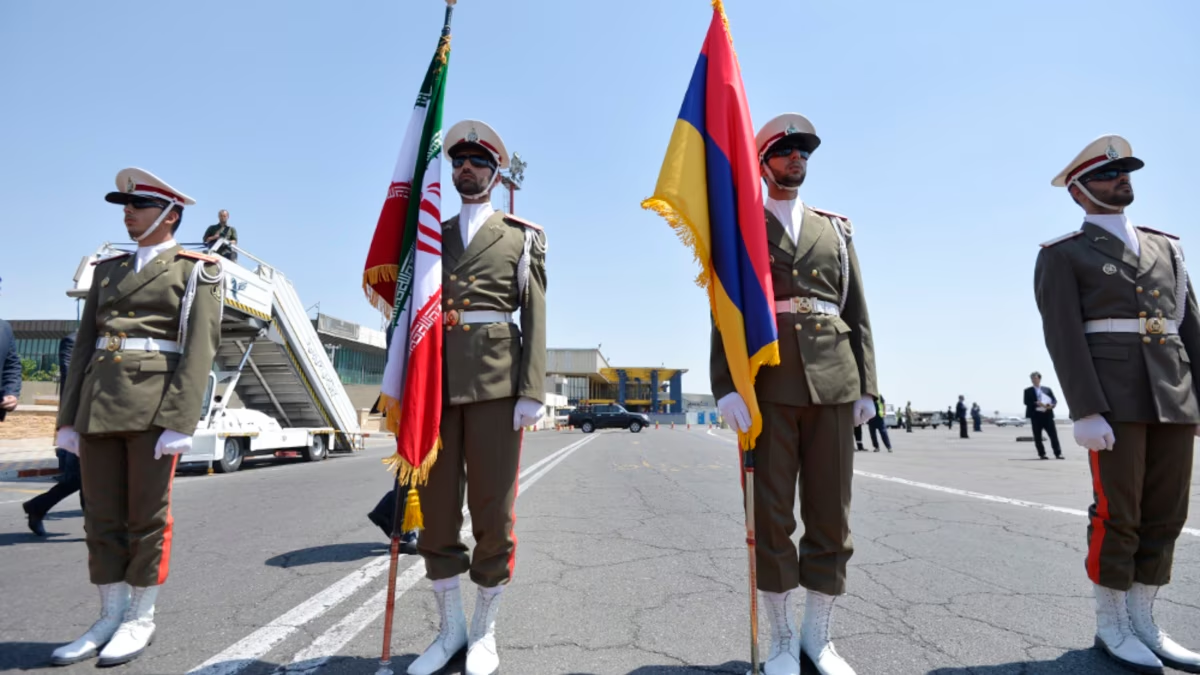
Statements by Pashinyan and Pezeshkian
After the talks and the signing of documents, Armenia’s prime minister and Iran’s president made public statements.
Nikol Pashinyan said he and the Iranian president agreed that the time had come to raise relations between the two countries to the level of a strategic partnership. They discussed in detail establishing peace in the region and unblocking economic infrastructure. The prime minister stressed that Armenia’s vision on this is set out in the “Crossroads of Peace” project, which he noted has been repeatedly welcomed by senior Iranian officials.
Since both Armenia and Iran attach importance to the inviolability of international borders and uninterrupted connectivity with each other, Pashinyan said he presented Pezeshkian with details of the joint declaration signed on 8 August, as well as the initialled peace agreement with Azerbaijan. He again underlined that regional communications would be reopened with full respect for sovereignty and jurisdiction.
“I want to stress once again that the routes passing through Armenia will be under Armenia’s sole jurisdiction. Their security will be ensured by Armenia, not by any third country,” Pashinyan said.
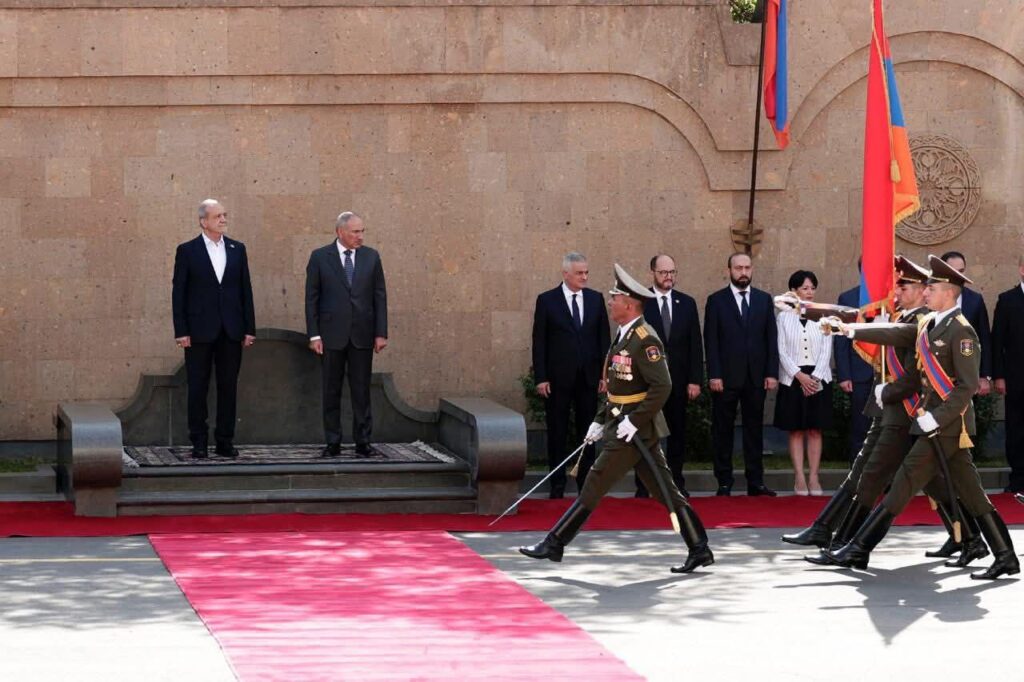
The Iranian president again stressed that “peace in the Caucasus is of strategic importance for Iran, and Iran supports the establishment of peace between Armenia and Azerbaijan.” He added that Tehran’s position is that borders in the Caucasus must remain unchanged and not become a subject of geopolitical rivalry.
“On the issue of activating the Persian Gulf–Black Sea corridor, and developing transit routes by rail, land and sea, Iran and Armenia share common interests. Making use of our countries’ potential, developing cross-border markets, expanding trade and creating free economic zones are areas of cooperation on which we held constructive discussions,” Masoud Pezeshkian said.

Pashinyan–Pezeshkian talks could not avoid the issue of “American presence”
From the outset, it was clear that one of the main topics of the visit would be the unblocking of a road through Armenia linking Azerbaijan with its exclave of Nakhchivan. The project raised concerns in Iran because Yerevan and Baku had agreed to involve the United States. Armenian authorities have since provided their Iranian counterparts with details of the plan, which largely eased Tehran’s worries. They stressed that the project would be carried out with full respect for the sovereignty and jurisdiction of the parties and “does not mean a US security presence in the region.”
However, before departing for Yerevan, Masoud Pezeshkian repeated his concerns:
“There are fears over the presence of American companies in the region, since they represent the interests of one company and could in future engage in other activities. We will discuss these issues with Armenian officials. On other matters – including technical, engineering, construction, mining, cultural, social and tourism – excellent documents have been prepared and are due to be signed.”
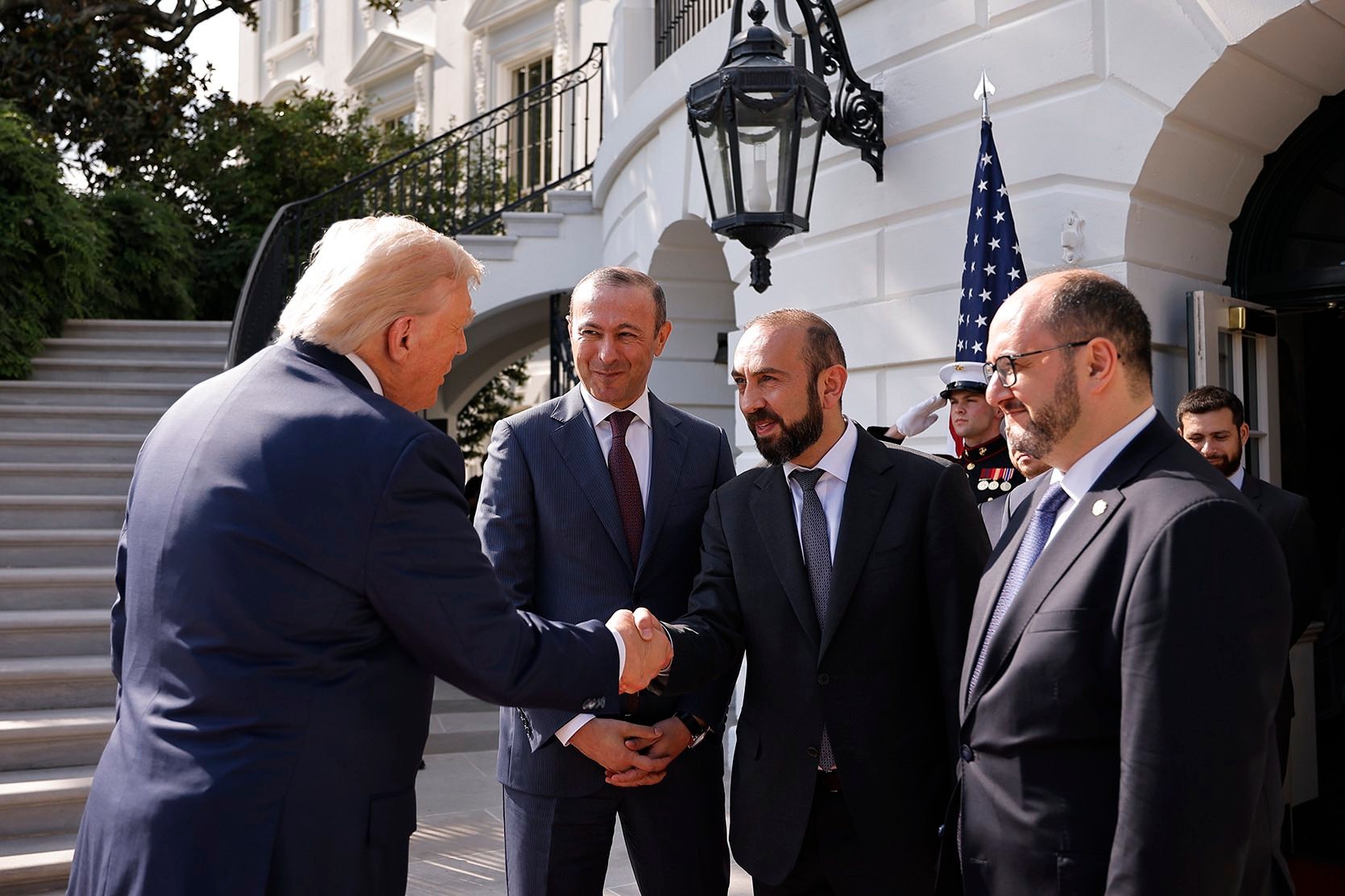
Armenia and Iran set new targets for economic cooperation
Armenia and Iran have long declared their intention to raise bilateral trade first to $1bn and later to $3bn, Armenia’s prime minister recalled at a joint press conference with Iran’s president.
“We can state that we have practically reached the $1bn mark. Now we are working steadily towards the next goal. In this regard, the free trade agreement between the member states of the Eurasian Economic Union [a bloc led by Russia] and Iran, which has now entered into force, opens new opportunities for entrepreneurs in both countries,” Nikol Pashinyan said.
Most detail given on joint road and transport projects
Armenia’s minister of territorial administration and infrastructures, David Khudatyan, and Iran’s minister of roads and urban development, Farzaneh Sadeghi, discussed joint road construction, in particular a 32km stretch of the North–South transport corridor between Kajaran and Agarak. Khudatyan said the pace of work was satisfactory and that Armenia “highly values the efforts of the Iranian construction company.”
The two ministers also looked at the possibility of revising transit freight tariffs and agreed to set up a working group to resolve the issue quickly.
They also touched on cooperation in aviation, including expanding regular flights to various Iranian cities.
The sides agreed to push ahead with new projects in road, rail and port infrastructure. After the talks, the Iranian minister said they had preliminarily agreed on:
- construction of another bridge at Norduz
- renovation of the existing bridge
- upgrades to border terminals
She said special attention was given to railway projects, stressing the strategic importance of the line connecting the Persian Gulf with the Black Sea.
“In Iran, the railway already reaches Julfa, and the Julfa–Yerevan direction has been approved. This line can play a key role in transit between Iran, Armenia, Azerbaijan and Europe. Given Armenia’s lack of access to the sea, cooperation on port infrastructure was also included on the agenda. For this, we plan to use the logistics potential of Iran’s southern ports on the Persian Gulf and the Gulf of Oman,” Farzaneh Sadeghi said.
Meeting with Iranologists and evening prayer at the Blue Mosque
On the previous evening, Masoud Pezeshkian met Armenian Iranologists, telling them:
“I am convinced that your warm and friendly outlook on the Iranian people, and vice versa, can help expand our relations so that together we bring more peace, calm, stability, friendship and progress to our two nations.”
He then visited the Blue Mosque in Yerevan, a cultural centre for Armenia’s Iranian community, where the Iranian delegation joined the president in evening prayers.