
Day: August 18, 2025
Geographical and historical treatment of Georgia, including maps and a survey of its people, economy, and government. By the early 21st century, Georgia’s prosperity was based mainly in the service sector and largely in and around Atlanta, on account of that city’s superior rail and air connections.
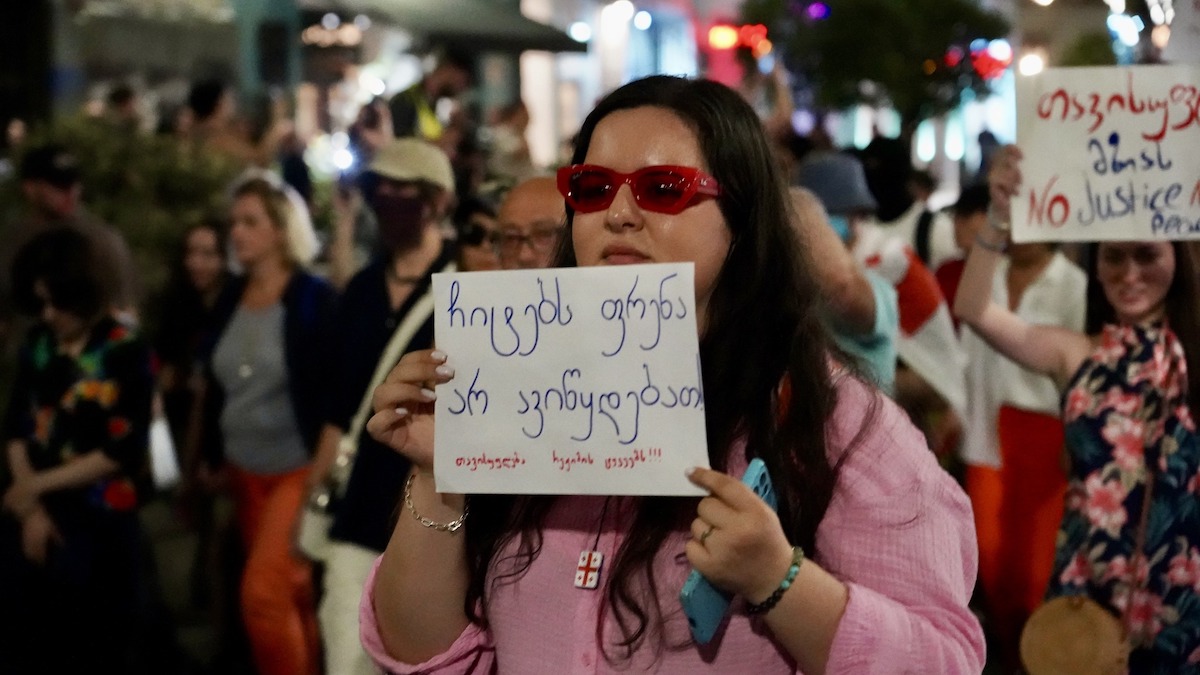
Cases of Georgian activists
On 15 August, Tbilisi City Court judge Tamar Mchedlishvili acquitted 22-year-old activist Tedo Abramov and ordered his release from the courtroom.
Abramov had been charged with drug possession, an offence that carries between 8 and 20 years in prison or even a life sentence. From the day of his arrest, Abramov and his lawyers insisted the case was fabricated and that the real reason behind his detention was his anti-government activity.
He was among more than 60 people detained during pro-European rallies. Many in society, along with independent lawyers and civil society groups, consider them political prisoners.
Other activists arrested at the same rallies are still awaiting verdicts, with most of their cases now in the final stages. Some have already been sentenced to prison.
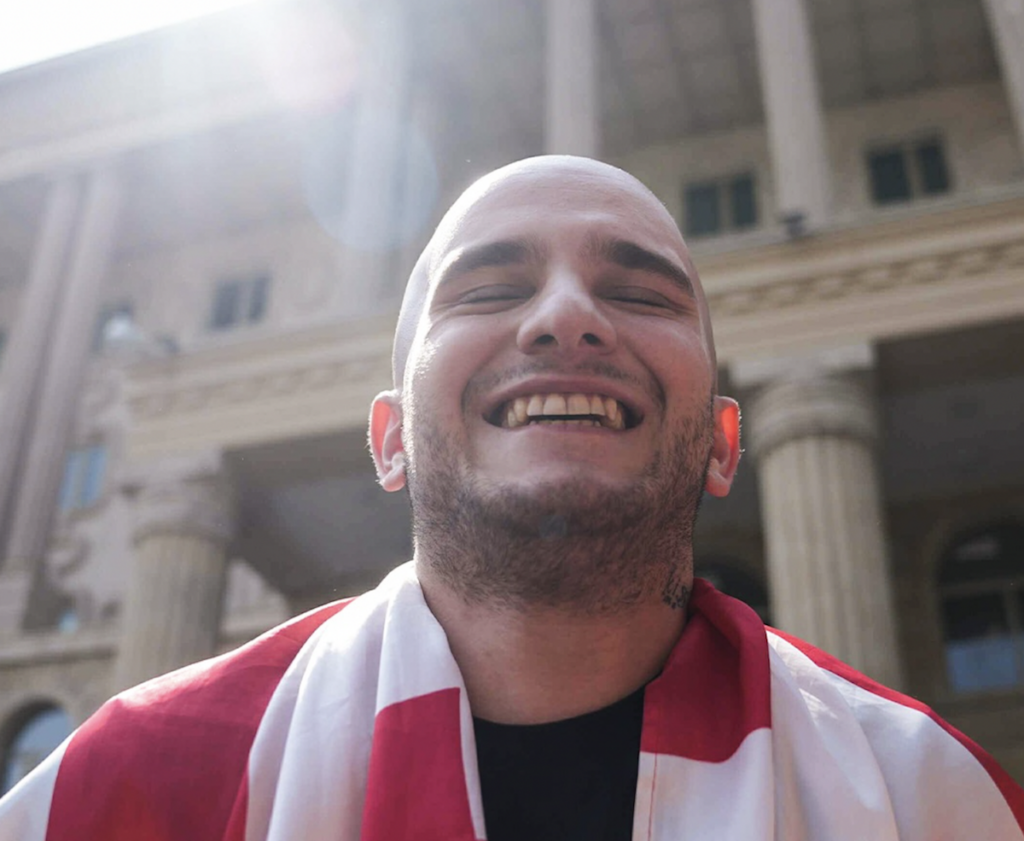
After eight months in custody, Abramov has been released. It is the second recent case in which a court has acquitted an activist accused of drug offences. Earlier, judge Romeo Tkeshelashvili cleared pro-European protester Giorgi Akhobadze.
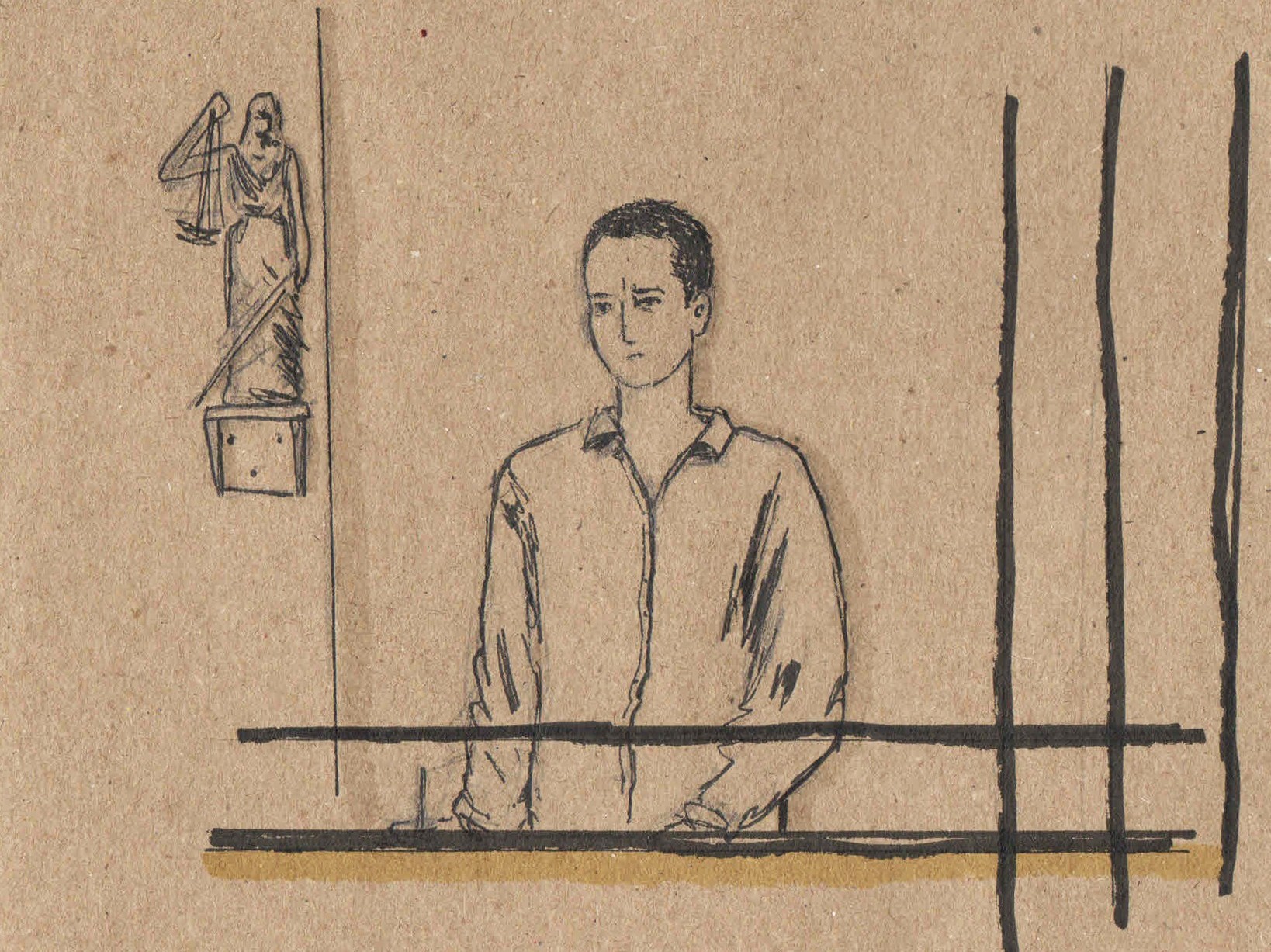
Although none of the protesters doubted the innocence of Tedo Abramov and Giorgi Akhobadze, their release still came as a surprise to government critics. In a country where hopes for fair trials in politically motivated cases are all but lost, acquittals remain a rare exception.
At the same time, other activists arrested in similar politically motivated cases continue to receive prison sentences. In many instances, the verdicts are based on fabricated evidence and false witness testimony.
What is the ruling Georgian Dream party trying to show by issuing acquittals in some political cases? And how do the cases of Akhobadze and Abramov differ from those of other activists who remain behind bars?
The cases of Giorgi Akhobadze and Tedo Abramov
Akhobadze and Abramov were both arrested on the same day, 7 December 2024.
Akhobadze was detained at dawn while returning home from a rally. His car was stopped on Queen Tamar Avenue, and police searched and arrested him. Prosecutors charged him with possession of more than three grams of the drug alpha-PVP.
That same day, just a few hours earlier, Tedo Abramov was arrested near his home. It was evening, and he was heading to a rally. According to the indictment, police claimed to have found 4.4 grams of MDMA in the front pocket of his jacket during a search.
Both cases were investigated under Article 260 of Georgia’s criminal code – large-scale possession of drugs. Giorgi and Tedo faced between 8 and 20 years in prison, or even a life sentence.
They each spent eight months in unlawful detention.
Other activists charged with drug possession and the familiar pattern in their cases
Aside from the strikingly similar methods used by law enforcement, Giorgi’s and Tedo’s cases have nothing in common — they did not even know each other, and their prosecutions were unrelated.
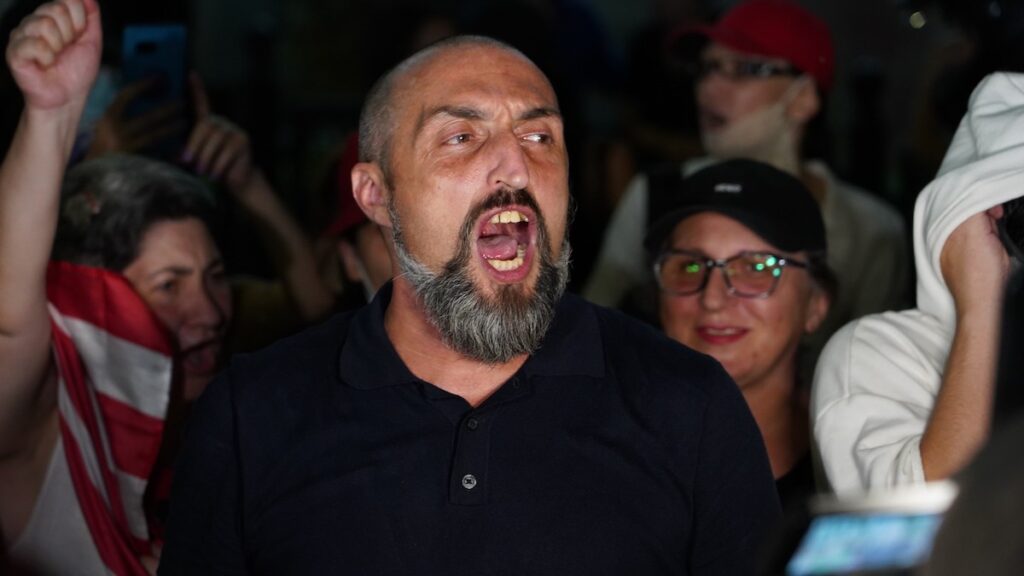
Alongside Giorgi and Tedo, four other activists have been arrested on drug possession charges: Nika Katsia, Anton Chechin, Anastasia Zinovkina and Artem Gribul. Anastasia and Artem, a couple, were detained together and are being tried in the same case.
In total, five separate cases against activists accused of drug possession have gone to court (two have already resulted in verdicts). The only thing uniting these people is their activism and active participation in pro-European rallies. They were detained either on their way to a protest or shortly after returning from one.
Nika (Nikusha) Katsia, 42, is a former journalist. He was arrested near his home on the evening of 7 December as he headed to a rally. Police searched him on the street but found nothing. They then put him in a car and drove him away. He is accused of acquiring and possessing 14 grams of cocaine — the largest amount among those arrested on drug charges.
In three of the five cases, the same prosecutor, Nugzar Chitadze, is leading the prosecution. In the other two — those of Giorgi Akhobadze and Anton Chechin — the prosecutor is Shmagi Gobejishvili.
Anton Chechin, a Russian citizen from the Siberian city of Barnaul, moved to Georgia in April 2022. He had taken part in anti-Putin rallies in Russia and had been arrested multiple times. He also won a case against Russia at the European Court of Human Rights. Chechin was arrested on the morning of 3 December in the courtyard of his own home. He is accused of acquiring and possessing four grams of alpha-PVP.
Chechin has health problems — a cyst on his head, which doctors suspect is a tumour and which requires constant monitoring.
All five cases are strikingly similar.
In every case, the arrests were based on “intelligence information,” meaning police claimed to have received reports that the suspects were storing drugs. This meant officers knew in advance who they were targeting and why. Yet for some reason, in none of the cases were police able to record the arrests or searches on video — there is no neutral video evidence whatsoever. Arrest reports state that the suspects resisted, and that this was why filming was not carried out.
Anastasia Zinovkina and Artem Gribul are also Russian citizens. Anastasia, 31, is a civic activist. Since 2012 she had taken part in anti-Putin protests in Russia, where she was repeatedly arrested. She was also an active supporter of Alexei Navalny. She arrived in Georgia in 2022, later moving to Armenia.
Artem, 24, fled Russia to avoid mobilisation for the war in Ukraine. He initially went to Armenia, where he worked remotely in IT. It was there that he met Anastasia, and the couple later travelled to Georgia at the end of 2024, two months before their arrest.
In Tbilisi, Anastasia and Artem handed out coffee and tea to protesters. They were arrested on 17 December. The couple had planned to move from Georgia to Europe, get married and start a family. They had already bought plane tickets.
In three of the five cases, there was also no neutral witness present during the searches — such witnesses can be any passerby observing the arrest. Prosecutors argued it was impossible to stop someone on the street at the moment of the search.
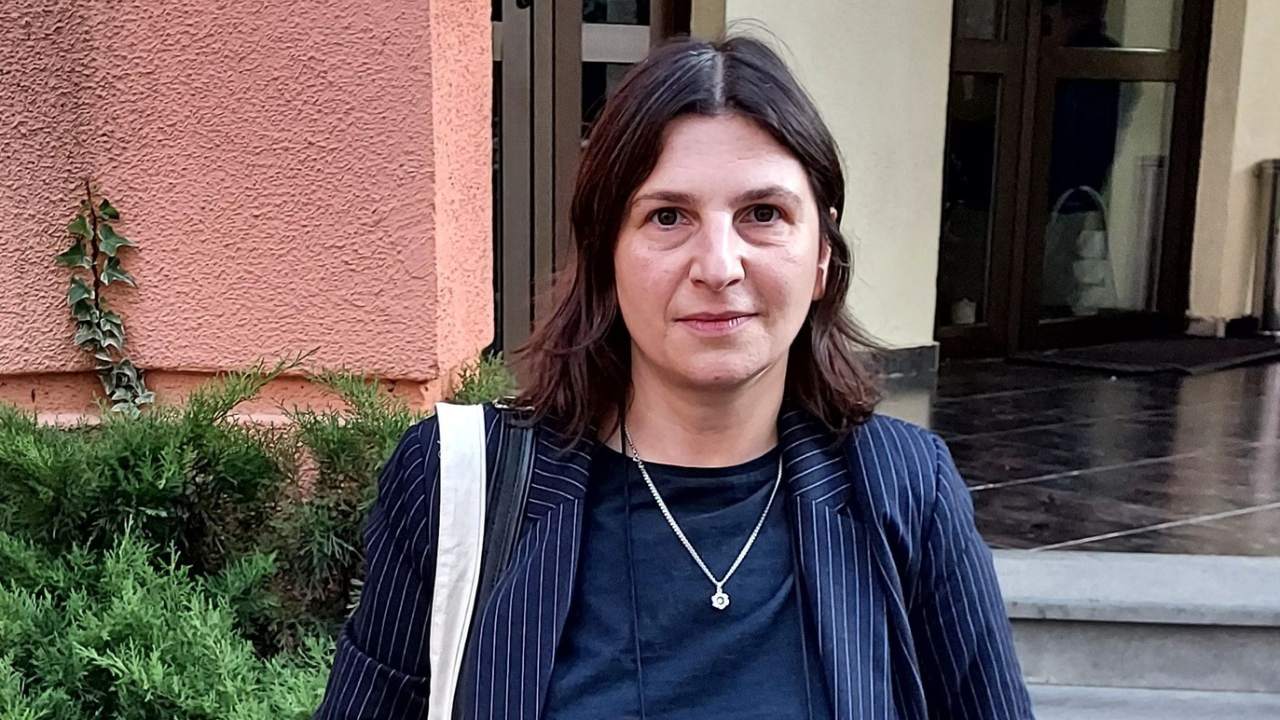
In two of the cases — those of Anton Chechin and the Russian couple — the “neutral witness” was the interpreter who translated police statements to the defendants during their arrest. The interpreter works for Intellect Market LLC, a translation bureau that has long collaborated with Georgia’s interior ministry. Since 2017, the company has provided translation services to the ministry and received more than 1 million lari from the state budget.
None of the activists charged with drug possession have pleaded guilty. They all insist the drugs were planted by police and say their arrests were linked to the protests.
Announcing the acquittals of Giorgi Akhobadze and Tedo Abramov, the judge said there was “insufficient evidence” in both cases.
“The court delivered an acquittal due to the absence of evidence of proper quality,” Tbilisi City Court wrote in its identical rulings on the cases of Akhobadze and Abramov.
What is the status of the remaining three cases?
One of the latest hearings in the case of Nika (Nikusha) Katsia took place on 15 August — the same day judge Tamar Mchedlishvili acquitted Tedo Abramov. Mchedlishvili is also presiding over Kacia’s trial, taking it on after finishing the Abramov case.
On 15 August, prosecutors delivered their closing statement against Katsia. Next will come the closing arguments from the defence and the defendant himself, after which Mchedlishvili is expected to announce the verdict. The next hearing is scheduled for 26 August.
The trial of Anastasia Zinovkina and Artem Gribul is also nearing its end. The judge in the case is Nino Galustashvili, known for handing down guilty verdicts. The examination of evidence has been completed, and the case has now moved to the stage of closing arguments.
The most recent hearing in Anton Chechin’s case was held on 8 August, when prosecutor Shmagi Gobejishvili delivered his closing statement. At the next hearing, scheduled for 25 August, the defence will present its closing arguments. After that, procedurally, only the verdict remains. The case is being heard by judge Jvebe Nachkebia.
What questions do the acquittals raise?
Two acquittals in a case involving more than 60 people — over 20 of whom have already been convicted — may seem like a drop in the ocean. Under the Georgian Dream government, however, they raise more questions than hope.
From spring 2024 until the end of the year, 64 activists were arrested during protests.
Ten were detained during the spring rallies. All of their cases have now been closed.
Seven remain in prison:
- Fridon Bubuteishvili
- Giorgi Kuchashvili
- Davit Koldari
- Saba Meparishvili
- Omar Okribelashvili
- Giorgi Okmelashvili
- Irakli Megvinetukhutsesi
Three have been released:
- Giorgi Shanidze (Shano) — pardoned by president Salome Zourabichvili;
- Andrei Rautberg — freed after signing a plea deal and paying a fine;
- Vazha Durglishvili — also freed under a plea deal with a suspended sentence.
“The regime is collapsing,” “there’s a rebellion inside the courts,” “they’re trying to hide something,” “they’re creating the illusion of judicial independence” — these and similar comments spread across social media after the acquittals.
In the autumn, a second wave of arrests followed. Those cases are now in their final stages, with some verdicts already delivered.
So far, prison sentences have been handed down to:
- Davit Khomeriki — 4 years and 6 months (15 August, judge Nino Galustashvili);
- Anatoli Gigaouri — 2 years (12 August, judge Jvabe Nachkebia);
- Davit Lomidze and Temur Zasokhashvili — 4 years and 6 months (8 August, judge Nino Galustashvili);
- Mzia Amaghlobeli — 2 years (6 August, judge Nino Nameshvili);
- Giorgi Mindadze — 5 years (3 July, judge Nino Galustashvili);
- Mate Devidze — 4 years and 6 months (12 June, judge Nino Galustashvili);
- Daniel Mumladze and Guram Khutashvili — 3 years (2 June, judge Lili Mskhiladze).
On the same day Tedo Abramov was acquitted, another prisoner of conscience, Davit Khomeriki, who had been sentenced to 4 years and 6 months, was released. His case too contained multiple violations and a lack of “high-quality evidence.” And on the day Giorgi Akhobadze was acquitted, just hours earlier, journalist Mzia Amaghlobeli had been sentenced to prison.
Because courts continue to hand down guilty verdicts to innocent people, few believe that the acquittals of activists accused of drug offences are the result of fair trials alone.
“So far they’ve been acquitting those accused of drug crimes one after another. That means they admit that groundless arrests are routine for police. They admit police officers are criminals,” wrote philosopher Levan Gambashidze on social media after Abramov’s acquittal.
By law, an investigation should be opened into the police officers involved in the cases of the wrongfully accused Akhobadze and Abramov. No information has yet been made public on whether such an investigation has begun.
News and events in Georgia
Categories