
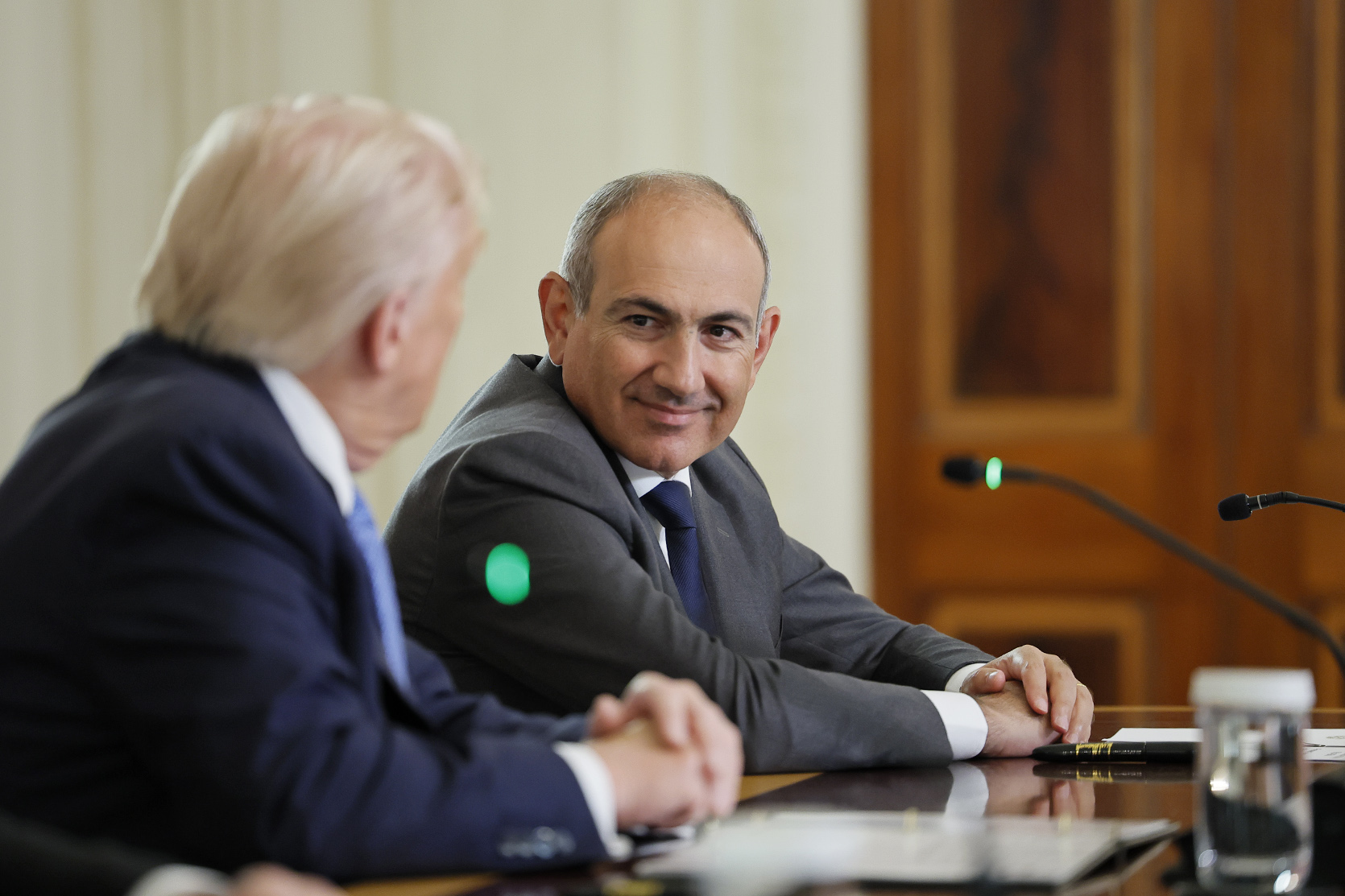
Pashinyan’s press conference from Washington
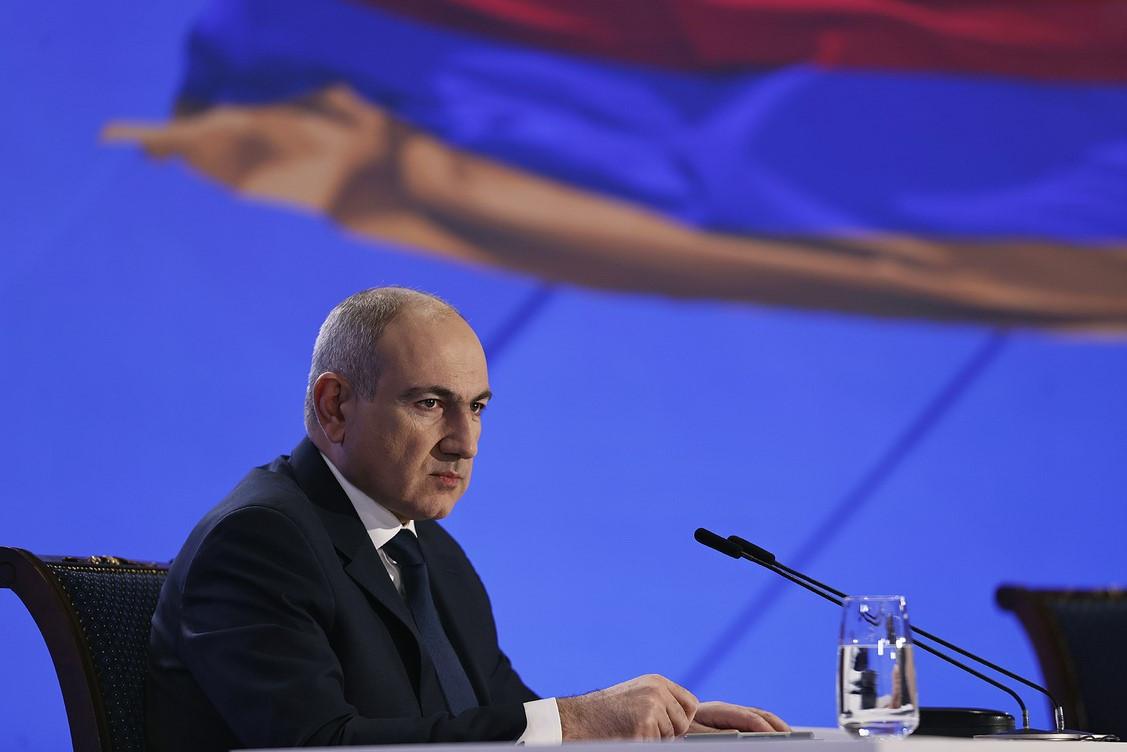
“This is a historic event – Armenia is opening up. We are talking about a landmark agreement, the rejection of which would benefit none of the parties,” Prime Minister Nikol Pashinyan said, answering questions from Armenian journalists from Washington. The press conference took place at midnight local time, 8 a.m. in Yerevan, and lasted about an hour. The press secretary noted that questions had also been received from foreign colleagues. In the coming days, the prime minister may respond to them as well.
Most of the questions from Armenian media concerned the programme for unblocking regional communications, known as the Trump Route (TRIPP). Under this project, Armenia, according to Pashinyan, will gain railway links with the entire world. Gas pipelines, oil pipelines, power transmission lines, and goods will pass through the country.
“This will bring billions to Armenia. They will be invested in our children’s education, healthcare, and in ensuring the happiness and well-being of our citizens. And it will create new layers, tools, and formulas for security.”
The prime minister considers TRIPP to be a new component of Armenia’s security. He is confident that the name of the President of the United States, as a brand, will inspire strong trust among potential investors. At the same time, Armenia’s rating will rise.
Speaking about the initialling of the peace agreement with Azerbaijan, Pashinyan stressed the need to continue working to ensure that the established peace becomes institutional. He suggested that the people of Armenia will support the government’s peace agenda.
After lengthy negotiations, Armenia and Azerbaijan initialled a peace agreement. The foreign ministers of the two countries signed the document on 8 August in Washington. One of the main achievements of the trilateral talks mediated by Trump was the agreement to unblock communications. Due to irreconcilable differences, Yerevan and Baku had excluded this issue from the peace treaty text in August 2024.
The unblocked road will be called the Trump Route — TRIPP (Trump Route for International Peace and Prosperity). Trump said the programme could last 99 years and might even be extended.
Main points of the Armenian prime minister’s press conference.
- “Armenia breaks out of isolation”: the significance of the Trump–Pashinyan–Aliyev talks
- ‘A chance to curb Aliyev’s ambitions’: what Armenia expects from Trump-mediated talks
- “Baku’s goal is to subjugate Armenia to Azerbaijan”: views from Yerevan
- “If only the Azerbaijan–Nakhichevan route opens, Armenia’s blockade will deepen” — Opinion
‘Armenia’s sovereignty will not be infringed’
According to Pashinyan, the implementation of the TRIPP programme will:
- unblock Armenia;
- enable railway links with its southern Syunik province through mainland Azerbaijan and Nakhichevan;
- provide access to the international railway network towards Russia, Iran, Central Asia, and China;
- give Azerbaijan a reliable connection to Nakhichevan through Armenian territory.
“At the same time, our instruments of sovereignty cannot be infringed. This is obvious. This applies to passport control and customs as well. These functions must be carried out by our state institutions,” he assured.
For now, the sides have only signed a declaration of intent, with details yet to be agreed:
“Whatever decisions are reached in the negotiations, they must fit within the principles of sovereignty, territorial integrity, and jurisdiction, and operate on the basis of reciprocity.”
The prime minister stressed that there will be no privileged conditions for Baku, though Yerevan is ready to simplify procedures:
“One of the memorandums signed with the United States concerns strengthening the capacity of our border and customs services. They have advanced technologies they use themselves. If we gain access to them, we will simplify procedures as much as possible.”
He noted certain differences: Armenia aims to attract foreign investors and is interested in their business management models, while Azerbaijan is not. He explained this by pointing to Azerbaijan’s lack of financial constraints, its existing railway, and its experience in managing gas and oil pipelines. Meanwhile, the United States and potential TRIPP partners could help Armenia address these issues.
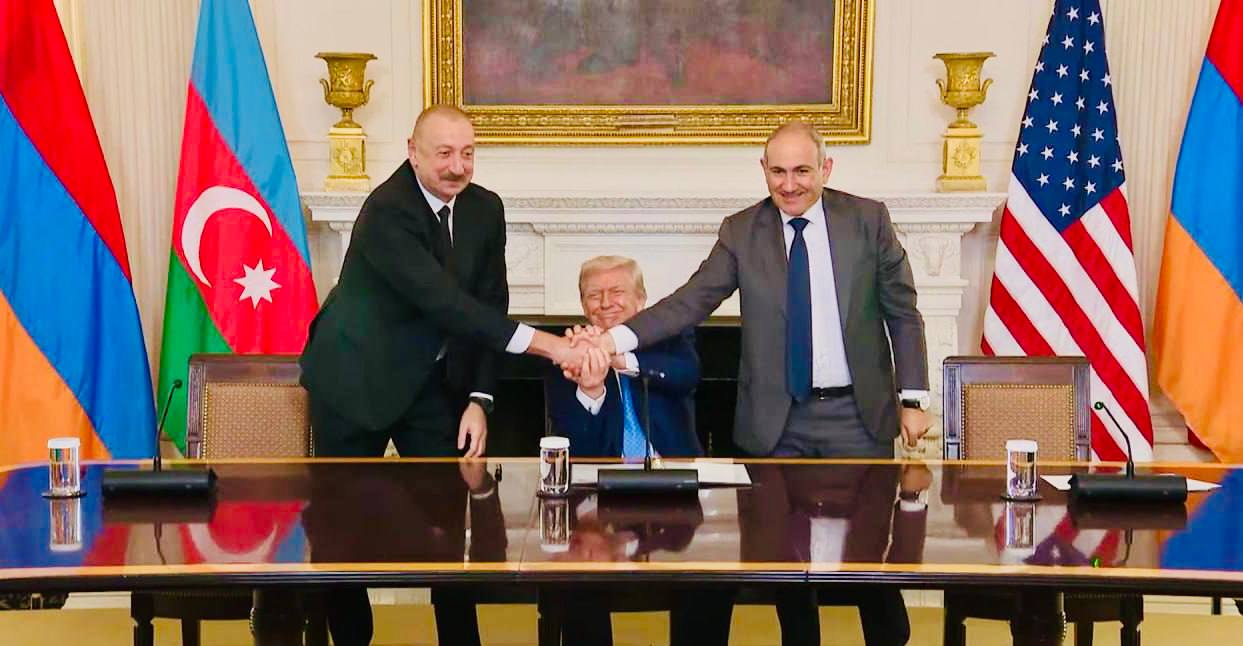
Security of the road will be ensured by Armenia
Responding to a question about who would provide security for the “Trump Route,” I said:
“Who ensures security within the framework of jurisdiction, sovereignty, and territorial integrity? In Armenia, security is ensured by Armenia; in Azerbaijan, by Azerbaijan.”
I stressed that only Armenia’s laws operate—and will continue to operate—throughout the entire territory of Armenia.
At the same time, investment companies may have their own security or guard services, but this “in no way limits the powers and activities of the Armenian police, the National Security Service, or the judicial and legal system.”
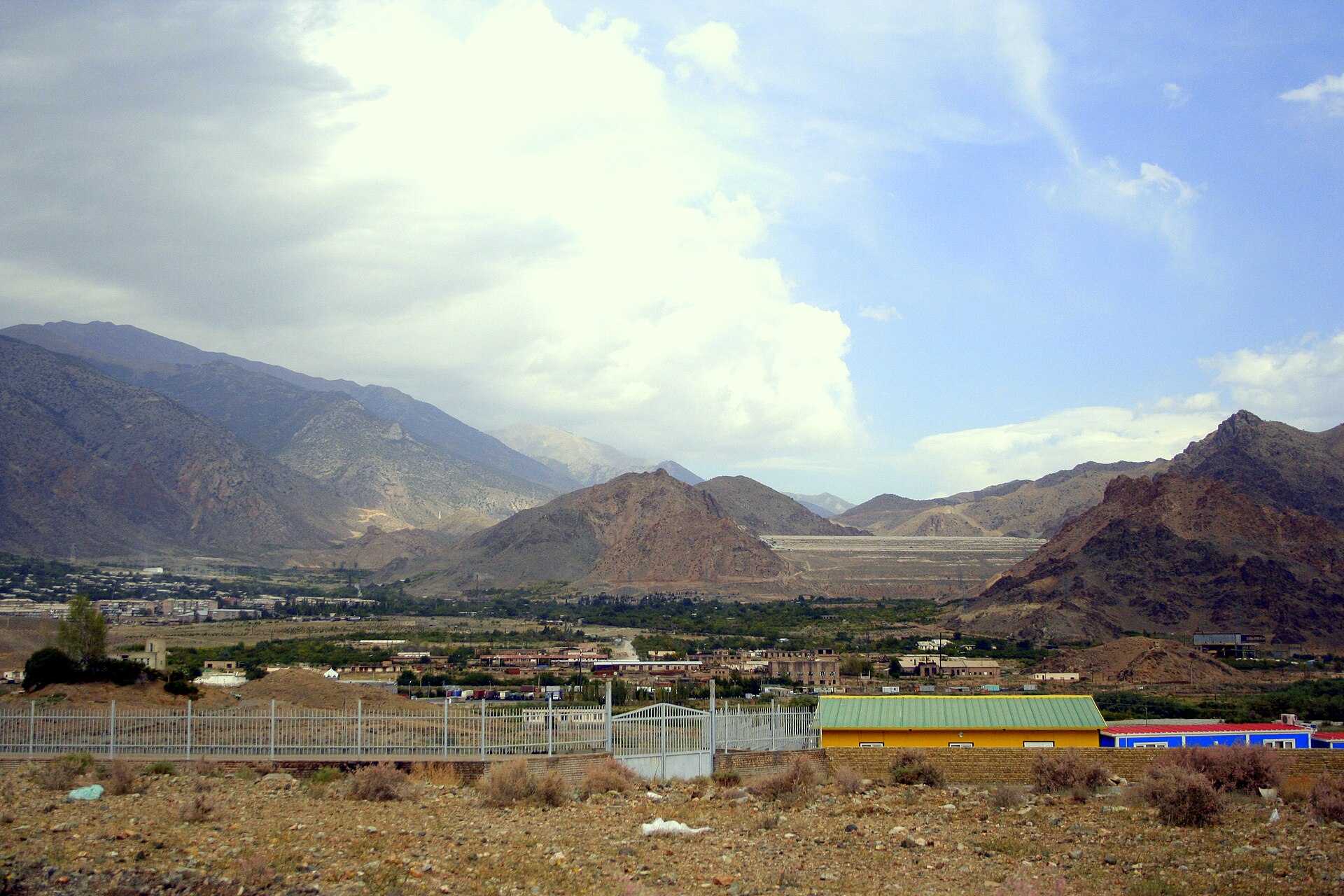
Will the “Trump Route” harm trade interests of Iran and Russia?
According to Pashinyan, the key is the perspective from which the issue is discussed:
“TRIPP can create an opportunity for an unexpected but positive partnership. This project could become a good chance for economic cooperation between Iran and the United States, and between Russia and the United States.”
He recalled that a part of the construction of the North–South highway in Southern Armenia (Syunik province) is being carried out by an Iranian company. He did not rule out that, in the future, once railway construction begins, this could also become a chance for cooperation.
The prime minister explained that as a result of unblocking, Armenia would gain railway connections with both Iran and Russia. He added that Russia, which manages Armenia’s railways, might be interested in restoring, for example, the Ijevan–Ghazakh railway line — but in that case, Azerbaijan’s consent would also be required.
Why was it Washington that achieved success?
Nikol Pashinyan said that the Armenian government’s project for regional unblocking — the Crossroads of Peace — had been presented to all partners. Yerevan had offered investment opportunities in the project to anyone who might be interested.
“We have proposed participation to Russia and to other partners as well. The reason we are now in Washington is the United States’ active engagement,” he said.
According to the Armenian leader, the Trump administration had shown interest in the programme from the very start of its time in office. The discussions had involved the US president personally, along with his team.
“From the United States, we saw great activity and understanding of the principles we had outlined, which are the fundamental provisions of the project: territorial integrity, sovereignty, jurisdiction, and reciprocity. For this key reason, it was this direction that became more active and achieved success,” he stressed.
Pashinyan noted that at the core of the Washington talks was the US interest in investing in the Crossroads of Peace project.
Meeting in Washington does not mean an end to bilateral Yerevan–Baku talks
According to the prime minister, the Armenian–Azerbaijani agenda includes many issues, and the sides will continue discussing them in a bilateral format even after the talks in the United States.
“The meeting in Washington does not mean the cessation of work in the bilateral format or the transformation of the bilateral format. In essence, today’s event was one of the manifestations of bilateral work,” Pashinyan said.
He expects that after the Washington summit, the level of trust will increase and the actual peace treaty will be signed.
“The peace agreement has been initialled. This means that the sides have officially and in written format confirmed that this document is acceptable to them and is no longer subject to change. Now we must work on the next stage — the signing,” he noted.
‘Historic progress will also lead to a solution to humanitarian issues’
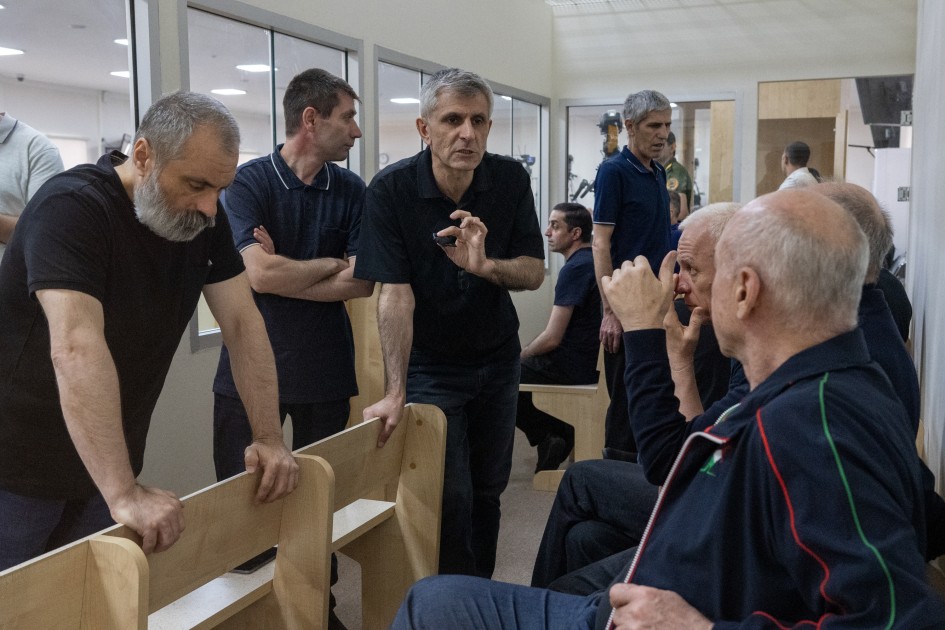
Journalists asked Pashinyan about Armenians held in Azerbaijani prisons and whether he had raised this issue during his meeting with Donald Trump.
“The issue of our compatriots imprisoned in Baku was discussed and raised at the highest level,” he replied.
The prime minister, however, did not provide further details. In his words, “individual humanitarian issues have no separate solution — their resolution will come through the historic progress that has been achieved.”
He expressed regret that so far, “for various reasons, issues related to captives have been resolved only partially.” He assured that this problem remains at the centre of the Armenian government’s attention.
Follow us – Twitter | Facebook | Instagram
Pashinyan’s press conference from Washington