
Suivez les résultats de football en direct sur votre téléphone mobile! Vérifiez le football en direct.
Day: July 3, 2025
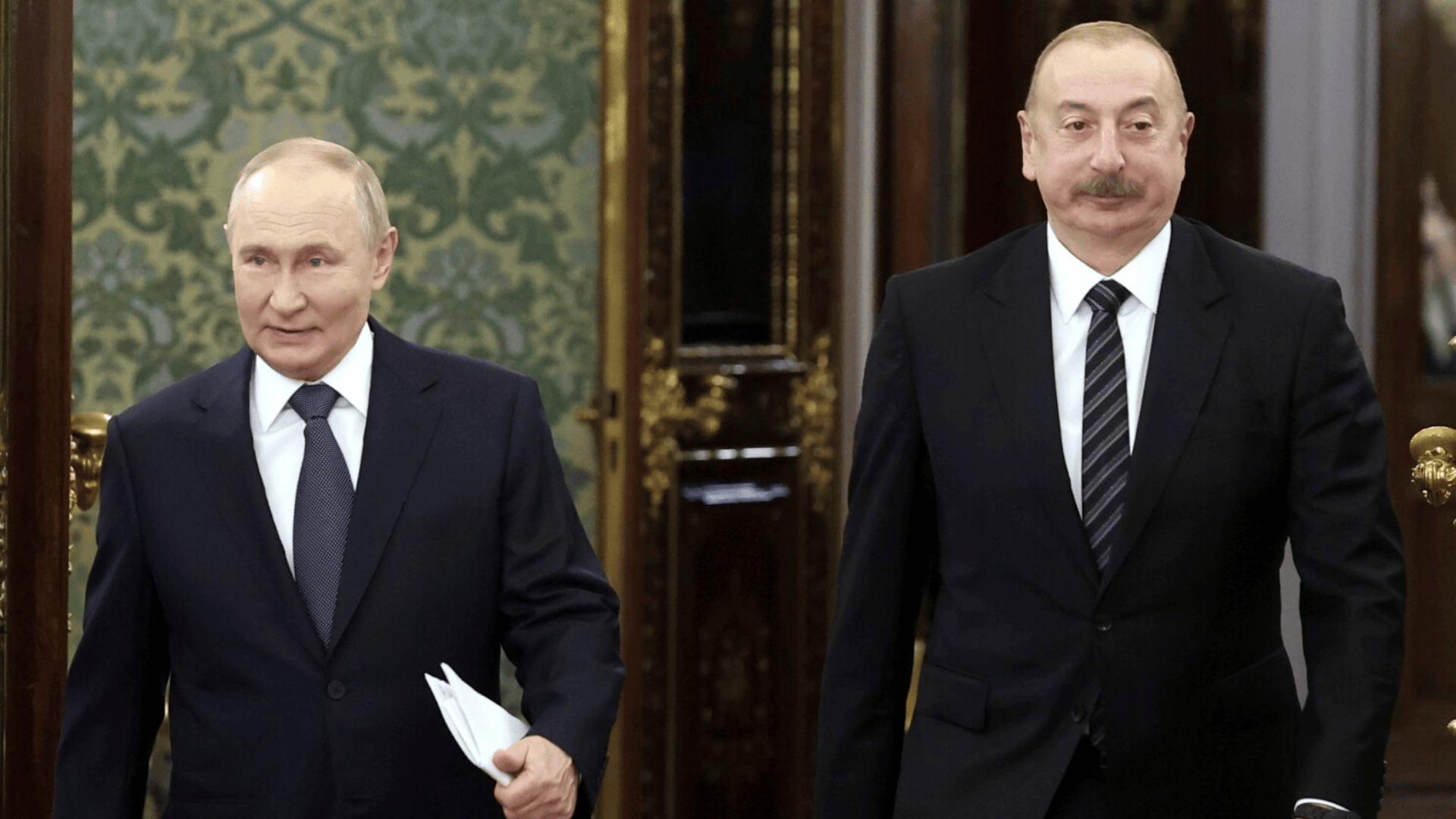
US and Zangezur Corridor management
Several online outlets have published a sensational report claiming that the United States is ready to take over the administration of the Zangezur Corridor, potentially resolving one of the most contentious disputes between Azerbaijan and Armenia.
The corridor in question refers to a proposed land route that would connect Azerbaijan with its exclave, Nakhchivan, via Armenian territory. Yerevan insists it will retain control over the section of the road that passes through its territory, while Azerbaijan argues the route should be fully extraterritorial.
Russia has long kept a close eye on this issue, with its security service, the FSB, previously viewed as the likely external authority to manage the corridor.
If confirmed, the new U.S. proposal would shift the entire discussion to a different level. Many analysts believe it is no coincidence that this topic has resurfaced now – amid unprecedented tensions between Azerbaijan and Russia.
The killing of two ethnic Azerbaijanis by Russian special forces in Yekaterinburg, the harsh arrest of several others, and reports of torture have sparked outrage in Baku.
A new phase in bilateral relations has effectively begun. Azerbaijan has canceled all planned state-level contacts with Russia. Authorities in Baku have arrested a group of Russian citizens, including editors from the state-owned media giant Sputnik. All concerts and cultural events featuring Russian performers have also been canceled.
Are the events in Yekaterinburg connected to the renewed focus on the Zangezur Corridor? And what role could the reported U.S. initiative play in the already deeply strained relationship between Azerbaijan and Russia?
We take a closer look at the context with expert insight.
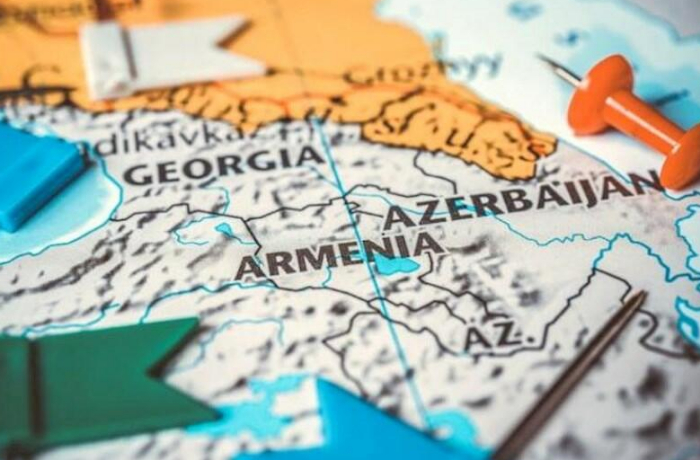
What is the Zangezur Corridor and why does it matter?
The Zangezur Corridor is a proposed transport route intended to connect mainland Azerbaijan with its Nakhchivan Autonomous Republic by passing through Armenia’s Syunik province.
For Azerbaijan, the corridor is strategically significant as it strengthens internal territorial connectivity and creates a direct land link with Turkey. This would deepen economic and political integration among Turkic states.
Many experts also view the corridor as a crucial part of the East–West transport route. It could facilitate trade and transit between Europe and Asia, speeding up and simplifying cargo movement from Central Asia, the Caspian region, and Turkey to Europe. This would boost the region’s transit potential.
Another common argument in favor of the Zangezur Corridor is that it could enable the development of energy pipelines, telecommunications networks, and other infrastructure projects—contributing to the region’s energy security and economic development.
At the same time, the corridor intersects with the interests of regional powers such as Russia, Iran, and others, making it even more strategically significant.
The road is mentioned in the November 10, 2020 ceasefire agreement signed by Azerbaijan, Armenia, and Russia, which ended the Second Karabakh War. That agreement calls for the opening of a transit route, but the status of the road and the question of who will control the Armenian section remain unresolved.
Azerbaijan insists that the corridor must function with “free and unimpeded movement from one part of Azerbaijan to another,” without customs or border checks.
Regarding security, Elman Nasirov, a member of Azerbaijan’s ruling New Azerbaijan Party, recently told JAMnews: “For Azerbaijan, the involvement of Armenian police or security forces in the Zangezur Corridor is unacceptable. Security must be provided by Russia.”
Armenia’s proposal: “With customs control, but in a simplified automatic mode”

In October 2024, following a meeting between Prime Minister Nikol Pashinyan and President Ilham Aliyev in Kazan (Russian Federation), the Armenian government presented its conceptual proposals regarding the corridor.
The proposals were made public during the international conference “Yerevan Dialogue.”
The system was to be based on the model already used at Armenia’s borders with Georgia and Iran.
Chairman of Armenia’s State Revenue Committee, Eduard Hakobyan, stated: “If Yerevan and Baku agree to open communications, cargo from Azerbaijan crossing Armenian territory will undergo customs control.”
The plan proposed classifying cargo into “green,” “yellow,” and “red” routes, with the launch of an automated clearance system.
Pashinyan called the proposal the “Crossroads of Peace” and emphasized its strategic importance in connecting East–West and North–South supply chains.
Where did the U.S. plan come from, and what does it change?
The well-regarded page CaucasusWarReport on X reported that the United States has developed a plan for the Zangezur Corridor. According to the post, the plan began to take shape during the administration of Donald Trump and pursues two goals: providing security guarantees to Baku and preserving Armenia’s sovereignty.
However, analysts claim that the plan was in fact actively developed under the previous U.S. president, Joe Biden. According to these reports,
the plan entirely excludes Russia from the process and proposes handing over the management of the corridor to an American commercial logistics company.
An article published by civilnet.am, a site close to the Armenian government, cites Olesya Vartanyan of the Carnegie Endowment for International Peace. She says the proposed model is based on international monitoring mechanisms previously designed for Georgia’s separatist regions.
In Vartanyan’s view, the new model both meets Baku’s demand for a “security guarantor” and is seen as acceptable to Armenia.

In Armenia, the potential ‘U.S. plan’ is neither confirmed nor denied
Armenia’s Foreign Ministry has neither officially confirmed nor denied the existence of such a plan.
Foreign Ministry spokesperson Ani Badalyan stated that “discussions with international partners are ongoing, and various ideas are regularly being proposed.” This suggests that the plan may indeed be on the agenda and under consideration.
Why has the Zangezur Corridor issue returned to active discussion now?
Although the plan was published in 2023, it was never implemented.
Analysts point to the deterioration of relations between the Biden administration and Azerbaijan as one reason the plan failed to gain political traction.
However, with Donald Trump’s return as a presidential candidate in the 2024 election, the idea has regained relevance.
In the current context, it’s especially notable that renewed discussion of the plan coincides with rising tensions between Azerbaijan and Russia.
What is happening in Azerbaijan–Russia relations?
In June–July 2025, several high-profile incidents strained relations between Azerbaijan and Russia:
- In Yekaterinburg, two Azerbaijani citizens, brothers Ziyaddin and Huseyn Safarov, were detained by Russian law enforcement and later tortured to death, sparking outrage across Azerbaijani society.
- Azerbaijan canceled all cultural events involving Russian performers – a move Russian media described as an open challenge from Baku to Moscow.
- A raid was carried out at the Baku office of the Russian state news agency Sputnik Azerbaijan. In response to Moscow’s protest, Azerbaijani authorities stated the operation was legal.
- Azerbaijan’s Prosecutor General’s Office officially opened a criminal case against the Russian law enforcement officers involved.
These events mark a sharp escalation in tensions between the two countries.
How is all of this connected to the Zangezur Corridor?
The overlap between the current tensions and the renewed discussion of the Zangezur Corridor is a significant signal, for several reasons:
- Russia has long sought to be involved in the corridor project, particularly in a supervisory role, as a way to preserve its influence in the region.
- Azerbaijan, on the other hand, has preferred that control be exercised by a third, neutral party—a position that previously aligned with Russia’s interests.
- However, publications by Carnegie and civilnet.am claim that this element would be excluded under the U.S. proposal.
- In the American model, control of the corridor would be handed not to Russia, but to a Western logistics company – something that could seriously weaken Moscow’s position in the South Caucasus.

What alternative plan does Russia have?
Russia is simultaneously pursuing its own alternative project – the North–South Transport Corridor. According to analysis published in 2023:
- The corridor aims to integrate the transport networks of Russia, Azerbaijan, Iran, and India.
- Russia seeks to use this route to gain access to the Indian Ocean via Iran.
- The project centers around the construction of the Rasht–Astara railway line, connecting northern Iran to the Azerbaijani border.
- Due to Iran’s financial difficulties, Russia was forced to allocate a €1.3 billion loan to support the project.
- Azerbaijan plays a transit role in this corridor, yet this does not prevent it from developing a competing route through the Zangezur Corridor.
This dynamic intensifies indirect competition between Azerbaijan and Russia for transport and economic dominance in the region.
Conclusion: A quiet but deep rivalry over the Zangezur Corridor
The Zangezur Corridor should now be seen as more than just a regional logistics project. It has become a key element of the South Caucasus’s geopolitical landscape.
The U.S. plan, the revival of this initiative under the Trump administration, and Armenia’s lack of an official denial all indicate that negotiations over the corridor are entering a new phase.
Rising diplomatic tensions between Azerbaijan and Russia further demonstrate that this issue goes beyond transport and is part of a broader struggle for influence in the region.
News in Azerbaijan
Alice is known as a great supporter of natural winemaking and also advocates for Georgian small wineries and natural winemaking.
The interview was recorded by Keto Ninidze, founder of Oda and wine writer 10, 2024, Tbilisi.— Notes from Georgia/South Caucasus (Hälbig, Ralph) (@SouthCaucasus) July 3, 2025
Among them, Georgian readers are particularly familiar with “The Naked Wine,” translated into Georgian as “Perfect Wine,” and “For the Love of Wine,” which explores the experience and modernity of Georgian viticulture and winemaking.
3/4
— Notes from Georgia/South Caucasus (Hälbig, Ralph) (@SouthCaucasus) July 3, 2025
She also maintains her own blog, The Feiring Line, where she has been writing about wine for many years. Alice is the author of six books about wine.
2/4
— Notes from Georgia/South Caucasus (Hälbig, Ralph) (@SouthCaucasus) July 3, 2025
Interview with Alice Feiring @alicefeiring about #GeorgianWine.
Journalist and author Alice Feiring, who writes about wine and travel for influential media outlets such as the New York Times and Forbes.
1/4
— Notes from Georgia/South Caucasus (Hälbig, Ralph) (@SouthCaucasus) July 3, 2025
The OSCE Parliamentary Assembly adopted a Resolution on Supporting Democracy and OSCE Values in Georgia. It urges the Georgian Dream government to de-escalate political tensions, restore public trust in democracy by engaging in dialogue, respect freedoms of assembly and expression, refrain from using force against peaceful protesters, and return to the path of European integration.
The resolution, passed on July 3 during the Assembly’s 32nd annual session held in Porto, Portugal, reiterated its support for Georgian civil society and their aspirations for EU membership. It also reaffirmed its backing of Georgia’s sovereignty and territorial integrity within its internationally recognized borders.
“The OSCE Parliamentary Assembly confirms its support for Georgia’s territorial integrity and sovereignty within its internationally recognized borders,” the resolution states. It further calls on the Russian Federation to reverse its recognition of occupied Abkhazia and South Ossetia as independent states, implement the EU-brokered 2008 ceasefire agreement, halt its military presence in the occupied regions, and cease attempts to forcibly separate them from Georgia.
The resolution follows increasing concerns about the GD government’s repressive actions, including its turn away from the EU path, the arrest and physical assaults of peaceful demonstrators during protests in November and December 2024, raids on opposition offices, the passage of controversial laws, and the imprisonment of political opponents and journalists.
In this context, the Assembly expressed deep concern over Georgia’s 2024 parliamentary elections, citing widespread violations documented by the OSCE/ODIHR and what it called “an unprecedented use of administrative resources” that “undermines the principles of freedom, equality, and the legitimacy of the election results.”
The resolution strongly condemned the “disproportionate use of force against peaceful protesters, who are standing firm for the European and democratic future of Georgia,” and said it was disturbed by politically motivated prosecutions of journalists, activists, and opposition figures.
It also voiced disappointment over newly adopted laws on “foreign agents,” “radio and television,” and “grants,” saying the authorities “are using all means possible to consolidate power.”
The Assembly expressed deep concern about rising anti-EU rhetoric and growing ties with Russia and China, calling these developments “completely unacceptable” and inconsistent with Georgia’s stated goal of EU integration.
Expression of tensions
Ahead of the Porto session, on May 15, U.S. Representative Joe Wilson, co-chair of the Helsinki Commission, joined by other American and European lawmakers, called on Portugal to deny visas to Georgian officials attending the meeting, citing the Georgian Dream government’s “anti-democratic” policies.
Nikoloz Samkharadze, chair of the GD Parliament’s Foreign Relations Committee, was present at the session and addressed the Assembly, denouncing Wilson’s statement as a “shameful act” that contradicts the OSCE’s principles. He also criticized the amendments to the resolution, claiming the accusations against Georgia were unfounded.
“If today the content of election observation reports can be distorted, lies can be spread, and attackers armed with fireworks and Molotov cocktails can be labeled as peaceful citizens, then tomorrow we may be called elephants — and if the majority likes the term, such absurdity might make it into a resolution,” Samkharadze said, according to a statement released by the Georgian Parliament.
Also Read: