
¿Te gusta correr y competir? Entonces debes conocer los tipos de carreras de atletismo para que empieces a entrenar en alguno y seas todo un deportista profesional. Seguro habrás visto en las olimpiadas que hay carreras de velocidad, de fondo, de obstáculos, relevos y más.
Day: July 3, 2025
The Economic Cooperation Organization (ECO) Business Forum, currently underway in the historic city of Shusha as part of the inaugural “ECO Week,” marks a pivotal moment for economic cooperation among member states. Jointly organized by Azerbaijan’s Ministry of Economy, the Azerbaijan Export and Investment Promotion Agency (AZPROMO), the ECO Secretariat, and the ECO Confederation of Chambers of Commerce and Industry, the forum underscores Azerbaijan’s rising prominence as a regional economic hub.
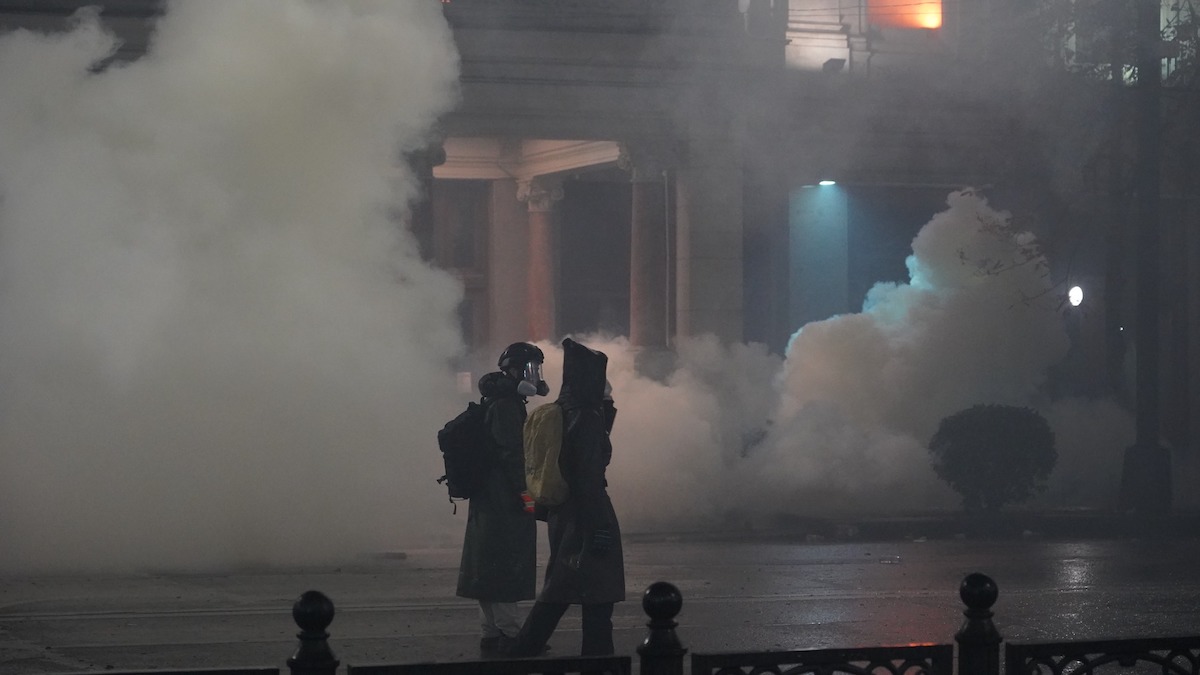
Amnesty International: punish Georgian police for brutality
The international human rights organization Amnesty International has launched a global campaign urging the Georgian authorities to hold those responsible for violence against protesters accountable.
Mass pro-European demonstrations have been ongoing in Georgia since November 28, 2024, after Prime Minister Irakli Kobakhidze of the Georgian Dream party announced the suspension of EU accession talks until 2028.
The main demands of the protesters are to hold new, fair parliamentary elections as a legal way to change power in the country, and to release detained demonstrators.
Amnesty says that the office of the Georgian Ombudsperson has recorded at least 240 cases of torture and ill-treatment, though the actual number is likely higher.
The statement notes that the failure to hold police officers accountable for violence fosters impunity and violates Georgia’s constitution as well as its international obligations.
Denis Krivosheev, Amnesty International’s Deputy Director for Eastern Europe and Central Asia, said that “Georgian authorities must stop dispersing and beating protesters and end the selective use of criminal law against them.“
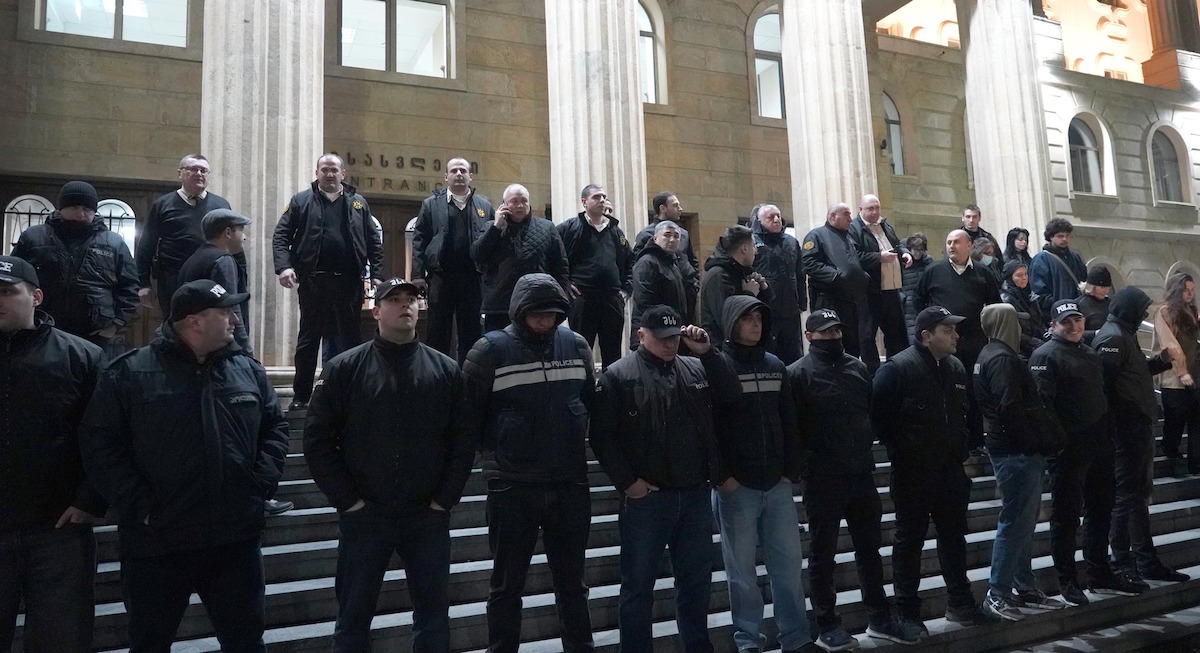
What does Amnesty International say?
“Since 29 November 2024, people in Georgia have been continuously protesting repressive laws and the government’s move to pause the EU accession process. The authorities have violently suppressed these protests, with reports of torture and ill-treatment of hundreds of protesters.
The Georgian government must investigate these human rights violations, hold police officers accountable for their actions, and prevent future abuses.
While the global media coverage of the Georgian protests has largely disappeared, the authorities have intensified their crackdown on protesters, resorting to the use of disproportionate force, exaggerated charges, torture and other ill-treatment, and gender-based violence.
Although the Public Defender’s Office documented over 240 instances of torture and ill-treatment of protesters, with 85 of those being officially granted victim status, the numbers are most likely higher.
Defying state repression, women protesters have become symbols of courage – but also the target of humiliation, abuse and psychological violence, including from law enforcement.
Yet to date not a single police officer has been brought to account.
Failure to hold law enforcement accountable for these violations encourages impunity and is in breach of Georgia’s Constitutional and international human rights commitments.
People in Georgia have been using various avenues to make the authorities act. The international community must stand in solidarity and help protect the right to protest! ”
Since Irakli Kobakhidze’s announcement on November 28, 2024, that Georgia is suspending the launch of EU accession talks, large-scale protests have taken place in Tbilisi and other major cities. There are also many smaller pockets of resistance and protest.
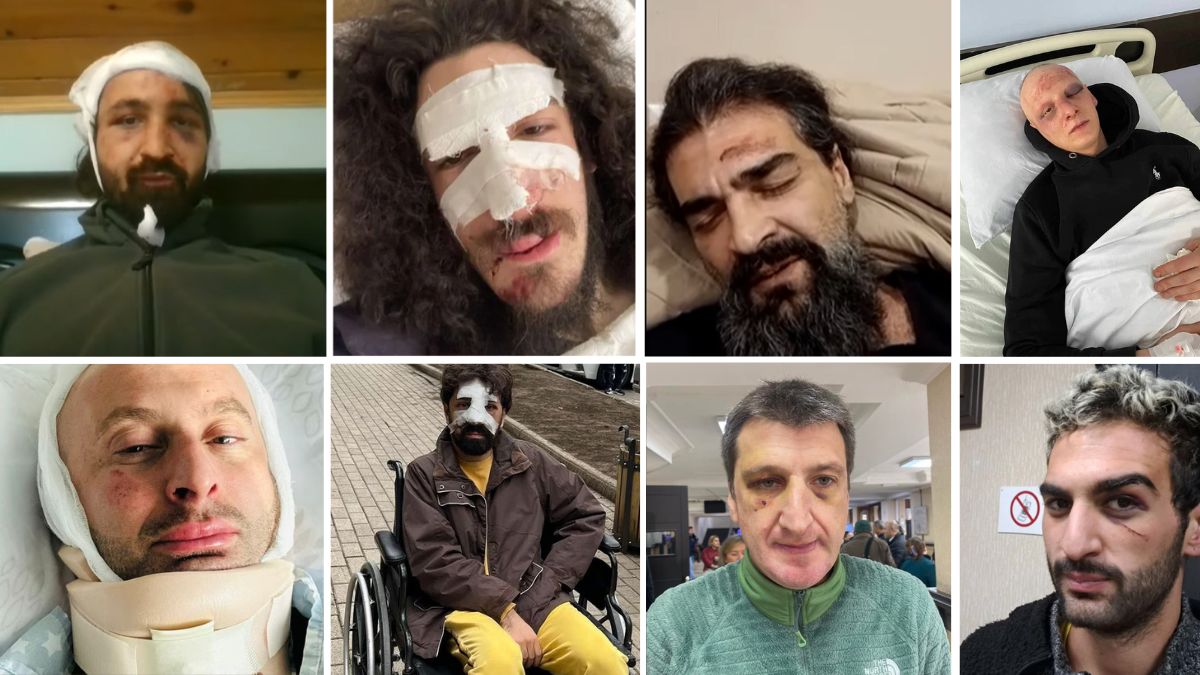
According to the Georgian Young Lawyers’ Association (GYLA), 319 protesters were beaten by special forces during dispersals, many of whom required medical assistance and even surgery. One person required emergency resuscitation.
To date, not a single case has been opened over violence against demonstrators.
The main injuries were not caused by water cannons or other special equipment, but by beatings at the hands of special forces officers. Most of the victims suffered concussions. Facial bone fractures, broken noses, injuries to the eye sockets, and multiple bruises are among the most common injuries.
The violence by law enforcement officers has been reported by detainees themselves as well as by lawyers providing them with free legal aid.
During the first days of the protests, law enforcement officers also brutally assaulted journalists covering the demonstrations. Since the protests began, more than 140 journalists have been affected, over 70 of them injured. Some required serious medical treatment.
Accounts from injured journalists, as well as video footage from the scene, indicate that law enforcement officers deliberately targeted them.
News in Georgia
La page des scores de football en direct sur Flashscore.fr offre tous les derniers résultats de football avec la Coupe du monde des clubs 2025 ainsi que pour plus de 1000 championnats de football dans le monde entier, y compris Premier League, LaLiga, Serie A, Bundesliga, Ligue des Champions et plus encore.
U.S. Ambassador Robin Dunnigan used her final Independence Day address in Georgia to deliver a pointed message about the state of democracy, warning against the imprisonment of political opponents and praising the enduring friendship between the American and Georgian people.
Speaking at a July 2 reception in Tbilisi, Dunnigan described democracy as relying on “promise, duty, and optimism.”
“There are many others who are paying a price today for defending democracy,” she said, adding in what appeared to be a reference to the Georgian Dream government’s recent actions and rhetoric: “There are citizens who are jailed because they are political opponents of the government. There are civil society representatives who are being targeted for their work to promote the rule of law, free media, and free and fair elections. And there are ordinary citizens who are being labeled ‘radical’ because their views differ from government officials.”
Dunnigan also invoked a Munich quote from U.S. Vice President JD Vance, stating that democratic mandates “cannot be achieved by censoring or imprisoning opponents.” The Ambassador’s remarks come just as several opposition politicians were sentenced for failure to fully cooperate with the Tsulukiani Commission.
Fraying partnership
The ambassador’s speech comes amid heightened tensions between Washington and Tbilisi over concerns about democratic backsliding, repression of civil society, and increasingly anti-Western rhetoric by ruling party officials. In May, the U.S. House of Representatives passed the MEGOBARI Act, a bipartisan bill calling for targeted sanctions on GD officials accused of undermining democratic norms.
In response, Prime Minister Irakli Kobakhidze sent an open letter to President Donald Trump and Senator J.D. Vance, dismissing the bill as “absurd” and “hostile” toward the Georgian people and their “democratically elected” government. The letter voiced frustration over what the ruling party views as a lack of recognition for its attempts to “reset” ties with the United States.
Amid this political backdrop, Dunnigan used her final official speech as ambassador to reiterate the strength of the U.S.-Georgia partnership, which she said is built on shared democratic values and decades of cooperation.
“I have heard some say that the U.S.-Georgian partnership is a partnership in name only. I think we all know this is not true,” she said. “Americans and Georgians have been true partners in our quest for democracy for over three decades.”
In her closing remarks, she expressed deep appreciation for the Georgian people and confidence in the country’s democratic future.
“I am optimistic because I know the vast majority of Americans and Georgians believe in the promise of our democracy and our duty to defend it,” she said. “I will leave a piece of my heart behind when I depart. And I will never stop believing in and supporting the future of democracy in Georgia.”
Dunnigan announced her retirement on June 5, describing it as a personal decision after more than 33 years of diplomatic service.
Also Read:
- 16/06/2025 – GD Foreign Minister Meets State Department’s Senior Advisor
- 21/05/2025 – U.S. Secretary of State Rubio Calls Georgian Dream an “Anti-American Government”, Warns of Consequences
- 28/05/2025 – U.S. Embassy: Ivanishvili Refused to Meet Ambassador Dunnigan Over Trump Administration Message
- 4/03/2025 – GD’s Foreign Minister Meets with US Ambassador Dunnigan