
President of the Republic of Azerbaijan Ilham Aliyev has sent a congratulatory letter to Rwandan President Paul Kagame on the occasion of the nation’s national holiday.
Day: July 1, 2025

Abkhazia: electricity from Russia at a low price
Although Abkhazia traditionally faces electricity shortages starting in October, it will begin buying electricity from Russia in August to save on costs.
“Normally, electricity problems begin around October 1, so we’ve ordered a schedule for electricity inflow from Russia. To avoid scrambling for funds at year-end, we’ll start purchases in August using weekend and nighttime tariffs, which are half the price compared to November and December,” said Abkhaz president Badra Gunba.
He added that the government is working on measures to reduce seasonal shortages, which began in 2020 when electricity consumption spiked from 2 to 3 billion kWh due to cryptocurrency mining. Since then, the deficit has hovered around 30%. Last winter was especially harsh in Abkhazia – many homes were without electricity for most of the day.
- Energy crisis in Abkhazia: Daytime power cuts loom
- Energy crisis in Abkhazia: the role of crypto-mining
- Camel blanket and home circus – how Abkhazians are experiencing “dark times”
The main cause of the energy shortage remains unresolved and likely won’t be fixed – the government appears to have failed in its fight against illegal crypto mining.
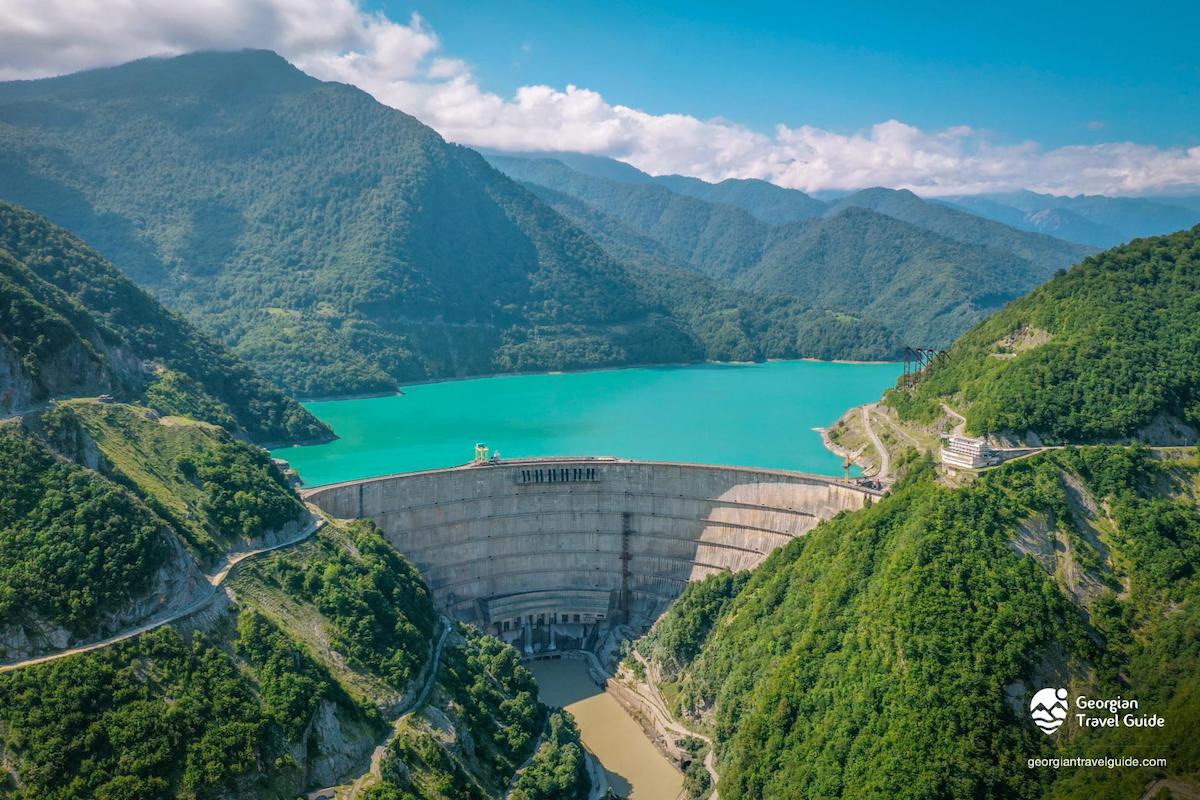
Abkhazia’s only source of domestic electricity, the Inguri HPP, can no longer meet the country’s growing demand.
Previously, part of the shortage was covered by “humanitarian aid” from Russia – free electricity transfers during the autumn-winter season. The rest was purchased from Russia at discounted rates.
However, due to chronic budget shortfalls, even these discounted purchases have become unaffordable. As a result, rolling blackouts are used during shortages, with power cuts lasting 4–6 hours a day.
Terms, place names, opinions and ideas suggested by the author of the publication are their own and do not necessarily coincide with the opinions and ideas of JAMnews or its individual employees. JAMnews reserves the right to remove comments on posts that are deemed offensive, threatening, violent or otherwise ethically unacceptable.
News in Abkhazia
The British Foreign Office summoned the Georgian chargé d’affaires on June 30 to protest what it called the Georgian Dream government’s crackdown on civil society, independent media, and political opposition, warning of potential further action if democratic standards are not upheld.
George Saganelidze is currently serving as chargé d’affaires, according to Georgia’s Foreign Ministry.
During the meeting, “a senior official made clear the UK’s firm position to their country’s increasingly harmful trajectory and strongly objected to false claims and public attacks launched by Georgian Dream against the UK and international partners,” the UK’s Foreign, Commonwealth and Development Office said in a statement.
“The imprisonment of prominent opposition leaders is the latest attempt by the Georgian government to crack down on freedoms and stifle dissent,” a Foreign Office spokesperson said. “The detention of election rivals is incompatible with any remaining Euro-Atlantic aspirations held by Georgian Dream as well as their own constitutional commitments,” the spokesperson added.
The spokesperson further warned that the British government “will not hesitate to consider further action should Georgia not return to respecting and upholding democracy, freedoms, and human rights.”
Five opposition leaders in Georgia have recently been sentenced to months in prison over their refusal to appear before an investigative commission in the Georgian Dream-led parliament, which they do not recognize as legitimate. Another opposition leader, currently in pre-trial custody on similar charges, is awaiting a ruling today, July 1.
Since December 2024, the United Kingdom has sanctioned senior Interior Ministry officials — including now-former GD Minister Vakhtang Gomelauri — amid violent crackdowns on protests; senior judges over “serious corruption” allegations; and other high-level officials, including Prosecutor General Giorgi Gabitashvili, who also recently left his post.
The report of summoning the Georgian chargé d’affaires comes days after the meeting between Georgian Dream Foreign Minister Maka Bochorishvili and Gareth Ward, UK Ambassador to Georgia. Georgian MFA reported that during the meeting, Bochorishvili brought up recent statements and actions by the British executive and legislative branches, including sanctions, which she pointed out “cast a shadow over the strategic partnership and friendship” between the two countries.
Also Read:
Tbilisi City Court Judge Jvebe Nachkebia on July 1 sentenced Nika Gvaramia, leader of the opposition Ahali party, to eight months in prison for refusing to appear before the Tsulukiani Commission – the Georgian Dream parliament’s temporary investigative body, chaired by GD veteran Tea Tsulukiani and tasked with probing the alleged crimes committed by former officials.
Nika Gvaramia has thus become the seventh person – and sixth opposition figure – sentenced to prison for defying the GD commission’s summonses, following Nika Melia, Givi Targamadze, Giorgi Vashadze, Mamuka Khazaradze, Badri Japaradze, and Zurab Japaridze. Former Defense Minister Irakli Okruashvili remains in pretrial detention, anticipating a similar verdict.
All who have received prison sentences have also had their right to hold office stripped for two years.
Gvaramia, who has been in pretrial detention since June 16 after refusing to pay court-imposed bail, did not attend today’s ruling, following others’ examples from recent weeks.
The ruling was delivered without media coverage, as new legislative changes passed last week by the GD parliament – banning journalists from filming, photographing, or live broadcasting from court premises without prior consent – have come into force.
Nika Gvaramia served as Deputy Prosecutor General, Justice Minister, and Education Minister between 2007 and 2009 under the UNM government. From 2012 to 2019, he was director of the opposition-leaning Rustavi 2 channel. In 2022, Gvaramia was imprisoned after being found guilty of abuse of power related to Rustavi 2 management, but in June 2023, President Salome Zurabishvili pardoned him.
After his release, Gvaramia entered politics in early 2024, co-founding the Ahali party with Nika Melia. The Ahali-led Coalition for Change won the majority of opposition votes in the 2024 parliamentary elections, which the opposition claims were rigged. The coalition then revoked their mandates, has boycotted the GD parliament since, and now strongly opposes participating in the local elections scheduled for October 2025.
Tsulukiani Commission
The Georgian Dream parliament’s temporary investigative commission, chaired by GD veteran and former Justice and Culture Minister Tea Tsulukiani, was initially formed to probe alleged misconduct under the UNM government. Over time, however, it extended its scope to the present day, summoning GD critics, including some who had never been with the UNM.
The opposition has refused to appear before the commission, refusing to cooperate with the one-party parliament they consider illegitimate.
Former GD Interior Minister and Prime Minister Giorgi Gakharia, now the leader of the opposition For Georgia party, was the only exception who agreed to testify, while maintaining that his appearance did not amount to legitimizing the rump parliament, which his party has also been boycotting.
Giorgi Gakharia has been resummoned by the commission over the Chorchana episode, which the Prosecutor’s Office is investigating as “sabotage.” Currently in Germany, Gakharia offered to testify remotely, to which the Tsulukiani Commission ultimately agreed. The session is scheduled for July 2. Gakharia’s party member said his return to Georgia remains undecided due to “many factors.”
Alongside Gakharia, other opposition figures – Nika Gvaramia, Mamuka Khazaradze, and Giorgi Vashadze – were also summoned again, with their testimonies meant to be heard online from prison on June 30. However, they again defied the summonses and did not appear. The commission asked the Prosecutor’s Office to open investigations into their renewed defiance.
Non-compliance with the Georgian Parliament’s temporary investigative commission is a criminal offense, punishable by a fine or up to one year in prison, alongside a ban on holding public office for up to three years. However, the court has not fined anyone and opted for prison sentences.
The commission has addressed topics such as alleged human rights abuses, including in prisons and the alleged business racketeering under the UNM rule, as well as the August 2008 war, which it blames on the former administration and imprisoned ex-President Mikheil Saakashvili. It is also looking into activities from 2012 to 2025 that it claims undermined Georgia’s foreign policy interests.
On June 25, the GD parliament once again extended the commission’s mandate until August 5. Tsulukiani, addressing the GD MPs at the plenary session, said the final report of the commission will be “the gravest” in its assessments.
Georgian Dream says that the commission’s final report will be submitted to the country’s Constitutional Court to ban the UNM and its “successor parties.”
Also Read: