
On June 25, the first meeting of the Joint Working Group established to integrate the “Social Protection and Welfare” sector into the results-based budgeting (RBB) mechanism was held, with the participation of representatives from the Ministry of Finance and the Ministry of Labor and Social Protection of the Population, Azernews reports.
Day: June 26, 2025
The Asian Development Bank (ADB) has announced its intention to transform the Middle Corridor into a full-fledged economic corridor, Azernews reports, citing a statement made by Eugene Zhukov, Director General of ADB’s Central and West Asia Department, during a panel discussion at the annual meeting of the Asian Infrastructure Investment Bank held in Beijing.
The life insurance sector in Azerbaijan has demonstrated strong performance during the first five months of 2025, with premium collections and payouts both registering significant year-on-year growth, Azernews reports, citing the Central Bank of Azerbaijan (CBA).
CBA noted that insurance companies collected a total of…
CBA noted that insurance companies collected a total of…
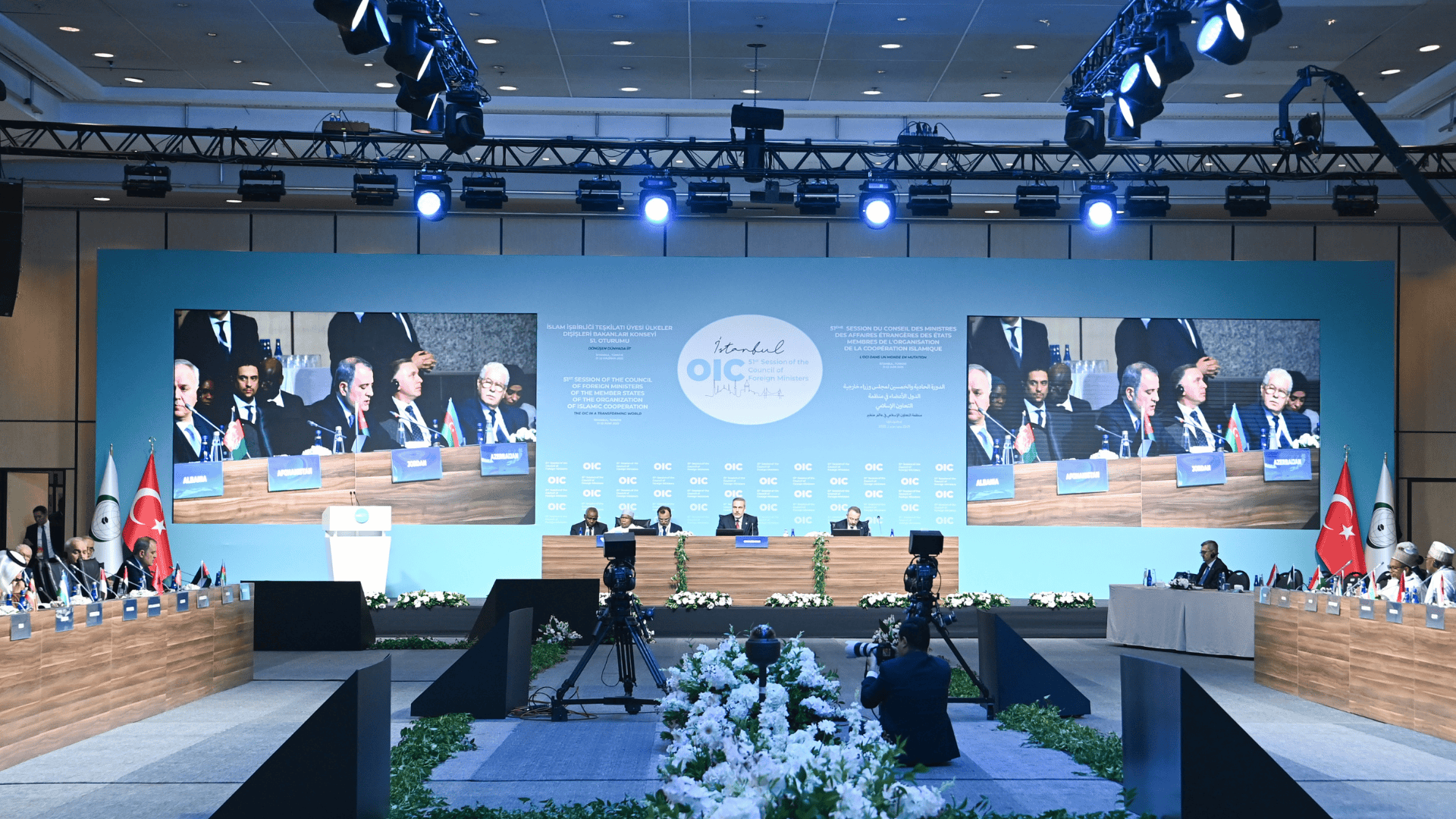
Karabakh and Western Azerbaijan
Several politically significant issues for Azerbaijan came into the spotlight following the adoption of key resolutions at the 23 June meeting of the Council of Foreign Ministers of the Organisation of Islamic Cooperation (OIC) in Istanbul. The resolutions included:
- The right of Azerbaijanis forcibly and systematically displaced from Western Azerbaijan to return;
- Solidarity with the victims of the Khojaly massacre;
- Eliminating the consequences of Armenia’s aggression against Azerbaijan;
- Destruction and desecration of Islamic historical and cultural monuments;
- Economic support for Azerbaijan.
The narrative of “Western Azerbaijan” refers to areas on present-day Armenian territory that were historically inhabited by ethnic Azerbaijanis, who were displaced during the first Karabakh war. This concept is actively promoted by Azerbaijani officials, who are demanding the creation of conditions for Azerbaijanis to return to their ancestral homes. In Armenia, this narrative is strongly criticised.
JAMnews spoke with Zahid Oruj, Chair of the Human Rights Committee of Azerbaijan’s Milli Majlis (parliament) and head of the Centre for Social Research, to comment on the adopted resolutions.
Specifically, Oruj responded to the following questions:
- What does international recognition of the right of Azerbaijanis to return to Western Azerbaijan mean?
- What is the legal significance of the resolution on the Khojaly tragedy?
- Could the “Economic support for Azerbaijan” resolution lead to tangible projects?
- Is it reasonable for Azerbaijan to expect financial and technical assistance from OIC member states?
- How do these resolutions align with Azerbaijan–Armenia relations and the current regional dynamics, particularly in light of the agreed draft peace agreement?
During the interview, Zahid Oruj also commented on the moral and political aspects of refugees’ right to return to their native lands.
- Arif Yunus: “‘Western Azerbaijan’ narrative is a political tool and a repetition of Armenia’s mistakes”
- Armenia’s foreign ministry hits back at resolutions from Organisation of Islamic Cooperation
- Khojaly – how it happened
“No one is questioning Armenia’s sovereignty — the issue is solely about the return of displaced people to their native lands”
●How does the Azerbaijani government define the “right of return” for Azerbaijanis forcibly displaced from the territory of present-day Armenia? What specific steps are planned, and how will Azerbaijan respond if Armenia refuses to engage in dialogue on this issue?
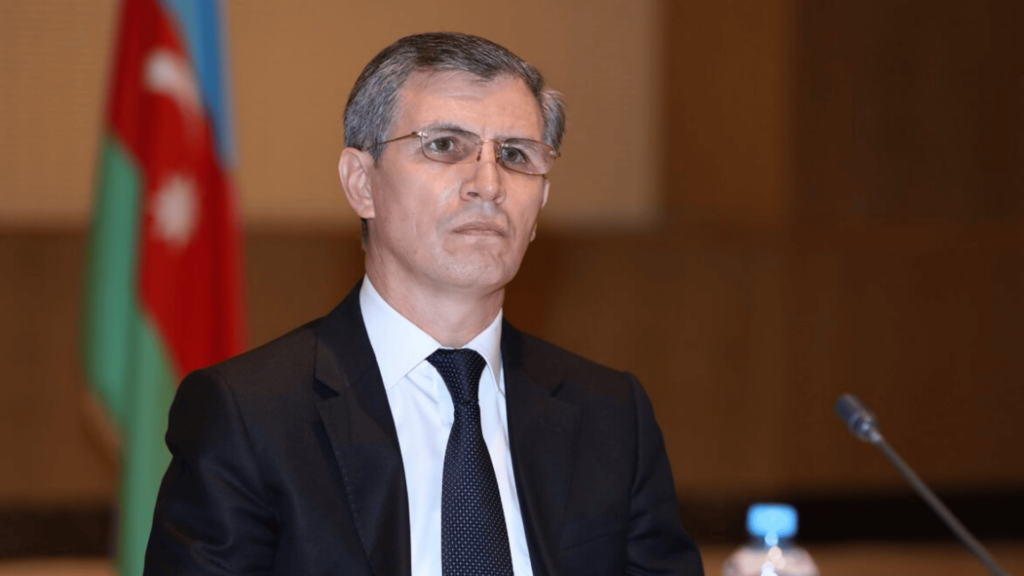
Zahid Oruj: In response to your question, I would like to quote the President of Azerbaijan:
“If large-scale, targeted actions on Karabakh had been undertaken earlier, it would have been like a premature shot.”
This phrase reflects the government’s strategic line of implementing the country’s constitution step by step.
We succeeded in restoring our territorial integrity [as a result of the Second Karabakh War in autumn 2020]. Had this not happened, the existential threat posed by Armenia’s expansionist policy, established in the 1990s, would have persisted.
Now is the time to bring the issue of the Western Azerbaijan community to the forefront of state policy.
If we look back at history, the root of the Karabakh conflict originates in Armenia. The mass displacement and deportation of Azerbaijanis from that country has been ongoing for centuries. The last wave of deportations began in 1988 and continued until 1991, by which time not a single Azerbaijani remained in Armenia.
According to revised statistics, around 300,000 Azerbaijanis were forced to leave Armenia.
If we include the children born to these people after their displacement, the figure is significantly higher.
The “right of return” is recognised in many regions of the world and is one of the established principles of international law. In accordance with this principle, the Western Azerbaijan community is becoming increasingly organised and is striving to make the voice of tens of thousands of people heard globally.
They are documenting ancestral heritage, recounting their tragedies and injustices, and demanding legal recognition.
What is important is that these demands do not contradict Armenia’s legal framework and contain no revanchist or violent intent.
This is an approach that seeks only to ensure people’s dignified and peaceful return to their ancestral homes. Azerbaijan is actively inviting Armenia to engage in negotiations on this matter.
No one is trying to deny Armenia’s sovereignty or reject Armenian identity. Although some attempt to portray this initiative that way, it simply does not reflect reality.
The resolution on the Western Azerbaijan community adopted by the Organisation of Islamic Cooperation triggered a harsh reaction among some Armenian political commentators and politicians. However, the context of this document takes into account a historical model of coexistence. After all, there were times in our shared history when Azerbaijanis and Armenians lived side by side.
By raising these issues on international platforms, Azerbaijan is seeking support for its just position.
The resolution of the Karabakh issue helped advance progress in the Armenia-Azerbaijan conflict. But it can only be fully resolved when the Azerbaijanis who were expelled from Armenia return to their homes.
This is not merely a tribute to history. It is a means of establishing justice in the Caucasus and ensuring lasting peace.вления справедливости на Кавказе и обеспечения долгосрочного мира.
- Tango without partner: why Azerbaijan holds back on peace deal with Armenia
- “Yerevan’s proposals on unblocking dispel Baku’s concerns,” Armenian officials believe
● In Armenia, the concept of Western Azerbaijan is presented as a territorial claim. Is there any basis for such accusations?
Zahid Oruj: Many nations have experienced migration and displacement throughout history. But in this case, we are talking about a very recent past. Particularly in the 20th century, waves of deportation reached their peak. These people still hold vivid memories of the places where they were born and raised.
Let me give you a personal example. My mother is 86 years old. She is originally from Armenia and still hasn’t forgotten the pain of forced displacement. She asks me: “Our lands have been liberated — but when will I see Gecha, my village?”
This is not a rhetorical question or a poetic expression of longing. It is a sincere, heartfelt wish from an ordinary person far removed from politics.
And it’s not just nostalgia — it’s a human rights issue.
We are not saying we want to seize homes, property, or infrastructure in Armenia. We have no intention of demanding compensation. The only thing we are asking for is the peaceful and safe return of people to their homes.
If the Armenian leadership were to accept a small group of Azerbaijanis and initiate dialogue on these issues, it could help de-escalate hostile rhetoric. To overcome the enemy image, phobias, and the language of hatred entrenched in Armenian society, dialogue is essential.
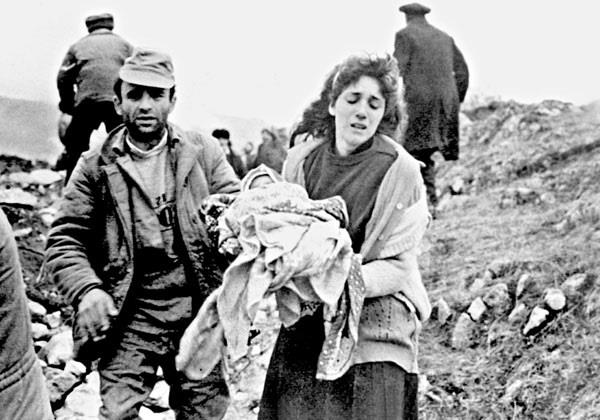
On Khojaly Tragedy
● What steps is the Azerbaijani government taking to achieve international recognition of the Khojaly genocide of the early 1990s? What impact could such recognition have on peace talks with Armenia?
Zahid Oruj: A nation that has won a war must go on to build its ideology and culture in the spirit of victory, entering a new political era.
However, the tragedy of Khojaly is an exception. It is one of the most painful episodes in our history. Just as the world does not forget the Holocaust, the tragedy of Khatyn, and other such events, Khojaly, too, must remain in eternal memory.
Khojaly is now a symbol of our national mobilisation. That is why the recognition granted by the Organisation of Islamic Cooperation deserves the highest praise.
- Return of Azerbaijanis to Karabakh: numbers rise, questions remain
- Azerbaijan reopens border with Iran after five years for its citizens and foreign refugees
- Peace talks over coffee: Pashinyan and Aliyev meet in Tirana
“Azerbaijan needs support — and not only from the Organisation of Islamic Cooperation but also from NATO member states”
● What areas does the resolution on economic support for Azerbaijan focus on?
Zahid Oruj: The aim of this resolution is not just the allocation of funds. Its core message is that nations should not be threats to one another, but pillars of support. It’s part of a broader cooperative mission to ensure sustainable peace and global security in the future.
Azerbaijan is deserving of this solidarity. We’ve participated in peacekeeping missions from Kosovo to Afghanistan, contributed to humanitarian projects, and provided international aid during the pandemic. Today, it’s our turn to receive help.
Even modest contributions from countries with no direct interests in Azerbaijan could play a vital role in restoring liberated Karabakh and other regions. Some neighbouring states that looked down on us in the 1990s now find themselves in the midst of wars and instability. They are beginning to understand the trials the Azerbaijani people endured and how they fought through them.
The economic potential of the Organisation of Turkic States is significant — around $1.2 trillion, with a population nearing 300 million.
If each of these countries allocated just $1–2 million, it would be enough to rebuild a town or village. And if each of the 56 member states of the Organisation of Islamic Cooperation took responsibility for building a single school, mosque, clinic, or small settlement, it would serve not only as tangible support for Azerbaijan but as a true expression of our unity.
Support must go beyond diplomatic statements. If unity remains just words on paper, it loses its real value and credibility. We would like to see these documents result in concrete action and practical implementation.
And if NATO member states made a joint decision to establish an aid programme for Azerbaijan, it would not only be a major contribution to us — it would significantly boost their credibility and influence in the region.
The price of Azerbaijan’s flagship crude oil, Azeri Light, has seen a modest increase across key international ports. At Italy’s Augusta port, the CIF-based price for Azeri Light rose by $0.37 or 0.51% compared to the previous figure, reaching $72.49 per barrel, Azernews reports.
In Turkiye’s Ceyhan port, the FOB-based price for Azeri Light also experienced a similar uptick, increasing by…
In Turkiye’s Ceyhan port, the FOB-based price for Azeri Light also experienced a similar uptick, increasing by…