
Day: June 23, 2025
Georgia jails three more opposition leaders
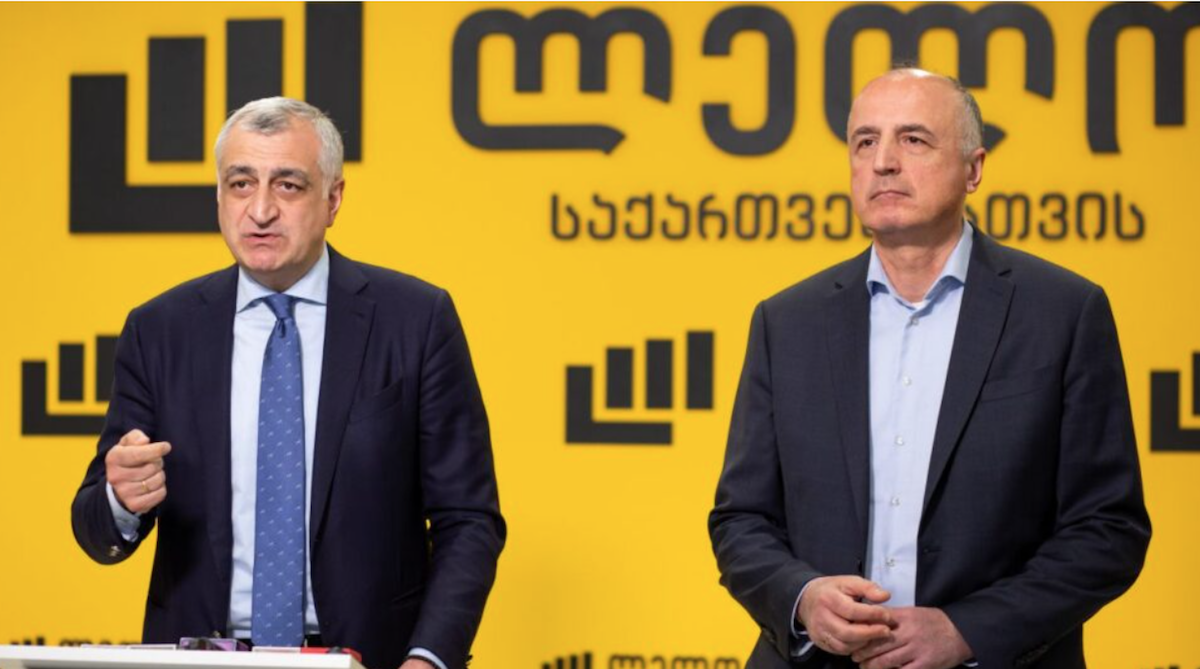
On 23 June, a Georgian court sentenced three opposition leaders to prison: Mamuka Khazaradze and Badri Japaridze of Lelo – Strong Georgia, and Zurab “Girchi” Japaridze of the Coalition for Change.
Japaridze had already been in pre-trial detention for two months, while Khazaradze and Japaridze are to be taken into custody today. All three were convicted for failing to appear before a parliamentary investigative commission chaired by former Justice Minister Thea Tsulukiani.
More opposition figures are expected to be sentenced in the coming days, including former prime minister Giorgi Gakharia.
As a result, nearly all major opposition parties in Georgia have now been left without leadership — at least until the end of the year.
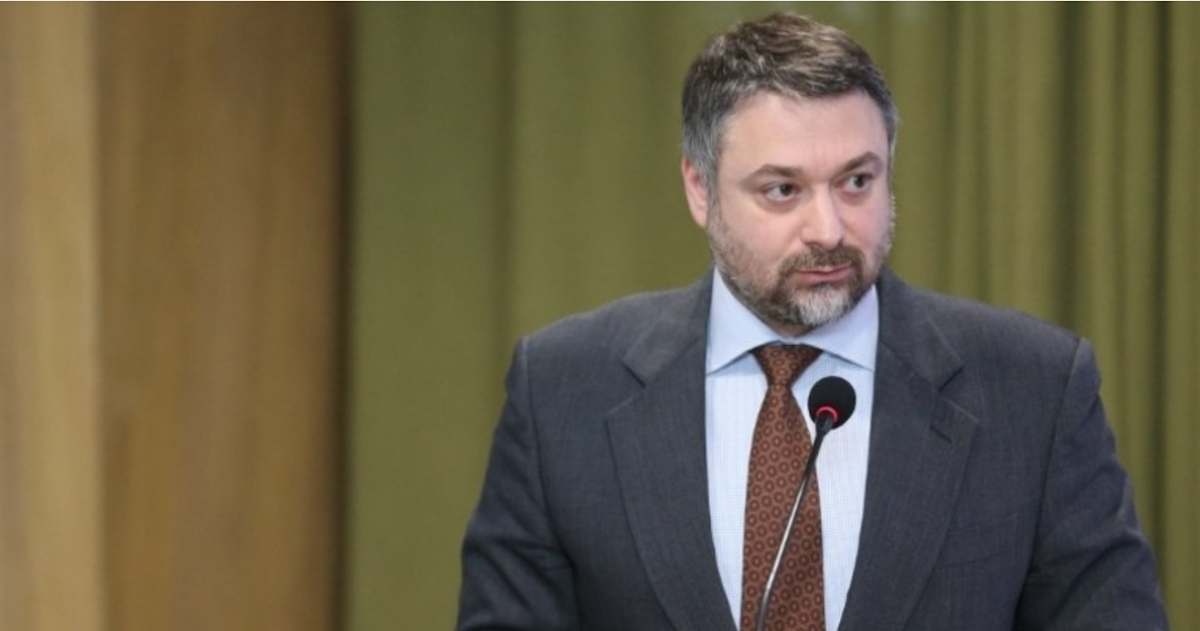
On 5 February, the ruling Georgian Dream party established a parliamentary commission to investigate the activities of the former United National Movement (UNM) government. Officially titled the “Temporary Parliamentary Investigative Commission on the Activities of the Regime and Its Political Figures, 2003–2012,” the body is tasked with reviewing the UNM’s time in power..
The commission was first announced on 9 January 2025. According to Mamuka Mdinaradze, head of the Georgian Dream parliamentary faction, it will operate for six months and present its findings for parliamentary debate and approval during the first week of the autumn session in September.
What sentences were handed down?
● Zurab Japaridze, a leader of the Coalition for Change, was sentenced to seven months in prison. He has also been banned from holding public office for the next two years.
The court found Japaridze guilty of defying a summons from the parliamentary commission chaired by former Justice Minister Tea Tsulukiani. On 16 April, he was ordered to pay 20,000 lari in bail for failing to appear before the commission — a sum he refused to pay. He was arrested in the courtroom and held in pre-trial detention for two months. His final sentence was handed down today.
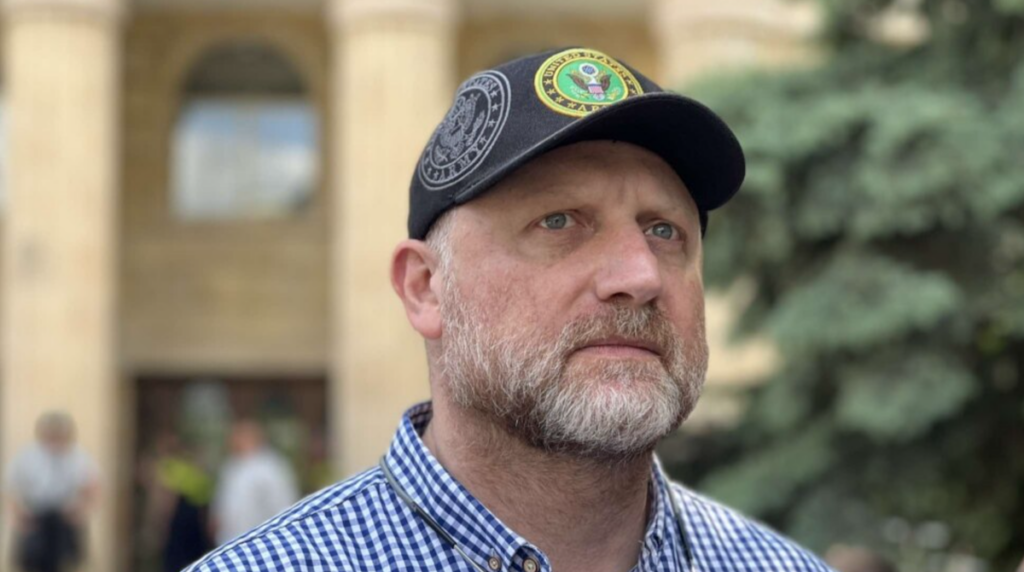
For the same reason — failing to appear before the Tsulukiani commission — Mamuka Khazaradze, leader of Lelo – Strong Georgia, was sentenced to eight months in prison. The opposition leader did not attend the hearing. He had previously posted bail in the amount of 50,000 lari.
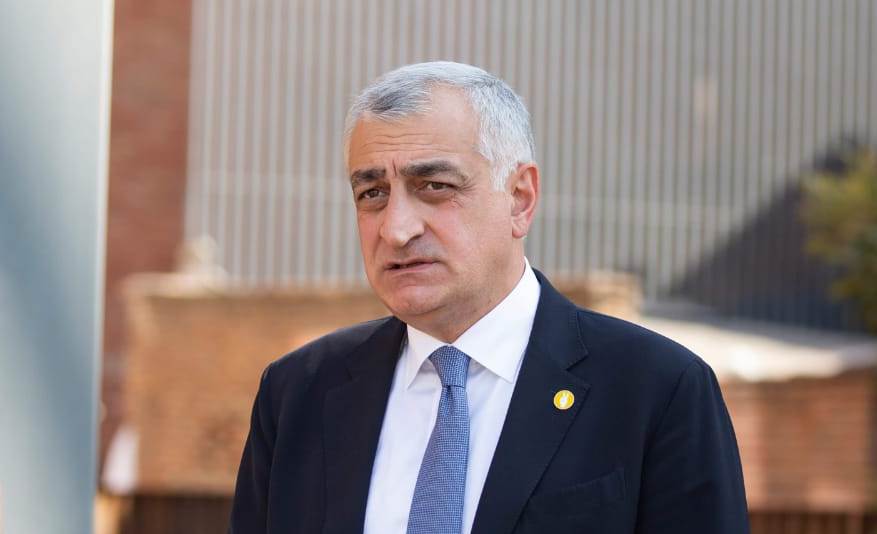
Badri Japaridze, also a leader of Lelo – Strong Georgia, was sentenced to eight months in prison and banned from holding public office for two years. He did not attend the sentencing hearing and was not given the opportunity to deliver a closing statement.
Japaridze had been released on bail set at 50,000 lari, which he paid within the legal deadline.
Opposition politicians and leaders of the Akhali coalition — Nika Melia, Zurab “Girchi” Japaridze, and Nika Gvaramia of the Coalition for Change — as well as former Defence Minister Irakli Okruashvili, are already in prison for defying summonses from the investigative commission.
Expert commentary
Iago Kachkachishvili, sociologist:
“The authoritarian machine in Georgia no longer operates mechanically, but automatically. It no longer requires forecasts or assumptions — it is now a given that virtually the entire opposition political class and representatives of other institutions will end up in prison, today or tomorrow.”
According to Kachkachishvili, automatic authoritarianism means the establishment of a system in which compromise, dialogue, negotiation, retreat, and other intermediate political tools are no longer in use.
“This situation is marginal in the sense that it will result either in consolidated authoritarianism — that is, a dictatorship — or in the beginning of its dismantling, under internal and external pressure.”
“In my view, the era of dual coding — authoritarianism and democracy coexisting — is coming to an end. We are entering an either/or phase of governance.”
Vakhtang Menabde, constitutional law expert:
“Leaders of political parties have become political prisoners. Nearly all are either already behind bars or facing imminent imprisonment.”
“This development has clarified the picture. It no longer matters what strategy one chooses — whether you pay bail or not, comply with a summons or not, boycott elections or not, plead guilty or not.”
“The only calculation that matters now is this: what will inflict the greatest long-term damage on the regime?”
“‘I’ll choose the lesser option and buy some time’ — that is a miscalculation. That ‘lesser’ option will be seen as weakness, and no time will be gained.”
Categories
Moscow Calling – June 23
Propagandist: U.S. struck Iran, but not ready war
Operation Midnight Hammer, carried out by the U.S. against Iranian nuclear facilities, was the largest air strike in decades involving more than 120 aircraft, including seven B-2s, as well as submarines armed with Tomahawk missiles, David Narmania, a military commentator, writes in an article on RIA Novosti. The unique 14-ton GBU-57 bomb was used in combat for the first time. However, according to the author, despite the technical complexity, the strike raised doubts: damage estimates vary, and Iran’s nuclear program may only have been delayed. According to Narmania, Washington has sharply changed its rhetoric to a more conciliatory tone, declaring that it will not launch new attacks and calling for negotiations. But, he says, the U.S. is afraid of being dragged into a war for which it is not ready, either economically or politically (ria.ru).
Khodaryonok: Iran in no hurry to respond to U.S. and Israel
In his article Mikhail M. Khodaryonok, a military commentator for Gazeta.ru, emphasizes Iran’s restraint in response to Israel’s strikes, despite lengthy preparations for a possible war. He pays particular attention to the fact that Iran is likely refraining from an immediate strike not only against Israel but also against U.S. bases in the region, presumably to save missiles. Khodaryonok sees this behavior as a sign of caution and awareness of the balance of power: open confrontation with the U.S. could have serious consequences for Iran. The author points out that the U.S. is actively stepping up its assistance to Israel, including the emergency transfer of missile defense systems, while Iran, under constant bombardment, is losing the ability to replenish its arsenal. In these circumstances, he says, Iran can’t count on escalation, but rather on a gradual easing of the conflict to avoid a direct clash with the U.S., which it is not ready for (Gazeta.ru).
Russia to present report on alleged Ukrainian army “crimes” in Kherson region to UN and OSCE
Russia will prepare a special report on crimes committed by the Ukrainian Armed Forces against civilians in the Kherson region. According to Rodion Miroshnik, Ambassador-at-Large of the Russian Foreign Ministry, the materials will be presented at meetings of the UN Security Council, the OSCE, and other international forums. The report will include data on civilian casualties and the destruction of schools and hospitals, accompanied by photographic and video evidence. The documents will be translated into foreign languages and forwarded to foreign partners. According to Miroshnik, the actions of the Armed Forces of Ukraine are a deliberate strategy, and Western countries are allegedly helping to cover up these crimes. He noted that the military dictatorship in Kyiv is ignoring international norms and must be held accountable (TASS).
Ministry of Digital Development wants a database of all cellphones
Izvestia reported that the Russian Ministry of Digital Development has drafted amendments to the Communications Law that would ban changing the International Mobile Equipment Identity (IMEI) and create a unified database of all phones. According to the draft, if signs of IMEI forgery or illegal activities are detected, the information will be sent to a special state system for combating offences. It is also proposed to introduce “blacklists” of devices used by fraudsters. At the same time, the law does not specify specific penalties for changing IMEI numbers. Earlier, as part of communications regulation reform, Russia tightened rules for registering SIM cards, and from April 2025, citizens will be able to check them through the Gosuslugi public services portal (TASS).
Azarov: Ukraine is a “bankrupt state” living off Western aid
Former Ukrainian Prime Minister Mykola Azarov said that Ukraine is effectively bankrupt, despite appearances of financial stability. He wrote this on his Telegram channel on June 23, commenting on criticism of his statements. According to him, Kyiv cannot pay pensions and salaries on its own — all social obligations are covered by external aid in the form of loans, grants, and subsidies from Western countries. Azarov emphasized that Ukraine is also unable to service its external debt. In his opinion, only constant cash injections from abroad are preventing the country from officially declaring default. He suggested imagining what would happen if this aid were to stop for even six months (EADaily).
Badri Japaridze of Lelo for Georgia became the third opposition politician to receive a prison sentence in a single day for defying summonses from the Georgian Dream parliamentary investigative commission, which is tasked with probing alleged crimes by the former UNM government and other officials.
Badri Japaridze was sentenced to eight months in prison, hours after his party colleague Mamuka Khazaradze was handed down the same sentence on similar charges. Earlier in the day, Zurab Girchi Japaridze of Girchi-More Freedom was sentenced to seven months in prison, weeks after he was sent to pretrial detention after refusing to pay the court-imposed bail.
“They will not break us,” said Badri Japaridze in the party office after his verdict was announced. “There is no time for hopelessness. Instead, it’s time to unite. It’s time for everyone to gear up,” he added.
All three were stripped of their right to hold public office for two years.
None of the convicted opposition leaders attended court hearings on June 23 to hear their sentences. Mamuka Khazaradze and Badri Japaridze followed the rulings, delivered by Judge Zviad Sharadze, from their party office, where they were arrested later in the evening. Members of other opposition parties had gathered at the Lelo office in solidarity. President Salome Zurabishvili was also present at the scene.
None of the opposition leaders sentenced to prison today held official positions under the previous UNM government. The GD commission is widely seen as a tool to prosecute opposition politicians.
Of the eight individuals summoned by the Georgian Dream commission who refused to comply, final verdicts have been delivered in three cases, while the rest are awaiting their rulings. Two of them – Nika Melia and Nika Gvaramia of the Ahali party – remain in pretrial detention after refusing to pay court-imposed bail, as did Zurab Japaridze. Two more – Giorgi Vashadze of Strategy Aghmashenebeli and Givi Targamadze of the UNM – are currently free on bail. Former Defense Minister Irakli Okruashvili also remains behind bars after rejecting bail and is awaiting his verdict.
Non-compliance with Parliament’s temporary investigative commission is a criminal offense, punishable by up to one year in prison or a fine, along with a ban on holding public office for up to three years. So far, however, the courts have opted for prison sentences and have not issued any fines.
Commenting to journalists after the announcement of today’s first prison sentence, GD Prime Minister Irakli Kobakhidze implied that anyone defying the parliament would be imprisoned. “They do not recognize [the parliament] — they will go to jail,” he said, making no mention of fines as an alternative penalty.
“Pro-Russian, pro-Iranian Ivanishvili regime deepens repression: Four political leaders in jail, four awaiting sentences while PM Kobakhidze publicly warns the opponents: ‘all in jail!’” President Salome Zurabishvili wrote on X, addressing the EU officials.
Controversial Commission
The Georgian Dream parliament’s temporary investigative commission, chaired by GD veteran and former justice and culture minister Tea Tsulukiani, is tasked with probing alleged crimes committed by officials from the United National Movement (UNM). The commission has summoned both alleged victims and former officials, including current opposition leaders, most of whom have refused to appear, considering the one-party parliament illegitimate.
Former Georgian Dream Interior Minister and Prime Minister, now opposition For Georgia party leader Giorgi Gakharia, is the only exception who agreed to testify before the commission. He maintained that his compliance did not amount to recognizing the Georgian Dream parliament, which his party continues to boycott.
Gakharia was recently summoned again over the Chorchana episode, which the prosecutors are investigating under “sabotage” charges. Gakharia offered to appear online, citing a visit abroad. The GD commission declined a remote hearing and scheduled an in-person session for July 2, but Gakharia’s party says he will still be abroad on that date.
The commission is addressing topics including alleged torture, business racketeering, and the August 2008 war, which it blames on the former UNM government and ex-President Mikheil Saakashvili.
Georgian Dream says the commission’s final report will be submitted to the country’s Constitutional Court to ban the UNM and its “successor parties.” GD says it plans to ban the opposition by the end of the year.
Also Read: