Categories
South Caucasus News

Abuse Allegations as Man Dies After Police Custody


A man died after being hospitalized from police custody, amid allegations that the fatal outcome was caused by a beating at the police station. The Special Investigative Service launched an investigation, while police officials have denied any mistreatment.

Alan Kakitashvili, a 37-year-old employee of Tbilisi City Hall’s cleaning service, was hospitalized at dawn on June 7 after spending time in police custody, where he was taken following a late-night brawl near a restaurant in Tbilisi on June 6. Kakitashvili died in the hospital on June 9.

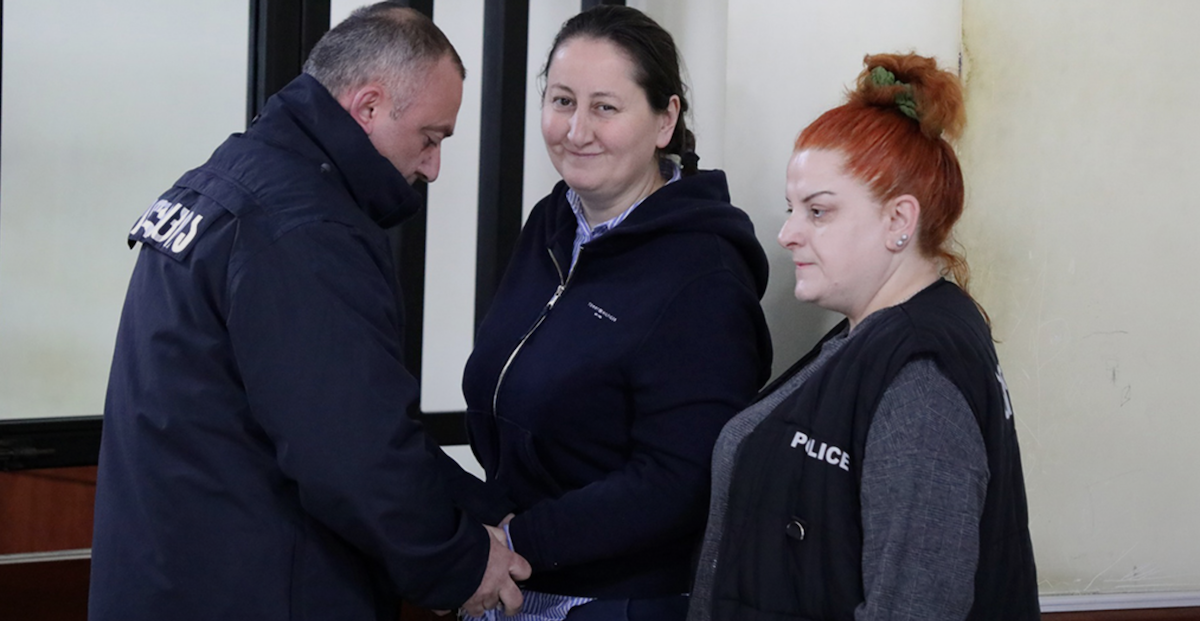
His colleague, Irakli Tatunashvili, who was also involved in the brawl and was detained together with Kakitashvili, said in a June 10 court hearing that he heard his friend scream “desperately” while held separately at the police station. He said the emergency services arrived twenty minutes after the scream stopped. Tatunashvili said he, too, was “brutally” treated by several police officers at the police station, allegedly to force a confession from him.

“I have never gotten that many hits in my life,” Tatunashvili said in his testimony. “They hit me everywhere.”

TV Pirveli’s journalistic investigation showed CCTV footage from the brawl. The channel’s journalists point in the footage at Kakitashvili reportedly being hit several times during the altercation, and Kakitashvili himself injuring another man. But the investigative journalists, who spoke with lawyers and individuals who saw Kakitashvili after the brawl but before his detention, argue that Kakitashvili did not sustain any significant injuries during the fight and was able to leave the scene independently, together with Tatunashvili. Tatunashvili argued the same as he testified during the court hearing, which was reviewing the brawl incident.

“Alan was bald, and he had no sign [of injury] on his head. There was no sign of a hit, bruise, or anything,” Irakli Tatunashvili told the court.

After leaving the scene, Kakitashvili and Tatunashvili reportedly took a taxi to Kakitashvili’s hometown of Gori, about 80 kilometers from Tbilisi, where police later traced them and brought them back to the capital for questioning. The police detained the two following a report from a man whom Kakitashvili allegedly stabbed with an unidentified object during the altercation, TV Pirveli reported.

Kakitashvili was admitted to Tbilisi’s First University Hospital around 6 a.m. on June 7. According to the hospital’s clinical director, Lali Turdzeladze, he was unconscious upon arrival, though the cause of his condition was unclear. Turdzeladze confirmed that Kakitashvili underwent surgery.

Medical records cited by TV Pirveli quote emergency doctors as saying the patient was under the influence of alcohol during police interrogation when he suddenly experienced nausea and lost consciousness. However, Tatunashvili’s lawyer claims there was no interrogation at all, alleging that police immediately began beating Kakitashvili and Tatunashvili.

TV Pirveli Investigation claims police refused to share CCTV footage from the police station.

Officials have denied any allegations of police abuse. Deputy Georgian Dream Interior Minister Aleksandre Darakhvelidze said on June 11 that Kakitashvili “turned unwell” and “lost consciousness” while in custody, without providing reasons, and claimed the injuries, including head trauma, had been sustained during the brawl.

Three individuals involved in the brawl have been detained and were charged with violence, the Prosecutor’s Office said on June 11. It also confirmed that the Special Investigative Service – a body responsible for probing official misconduct and currently being merged into the Prosecutor’s Office – has launched a criminal investigation into alleged abuse of power involving violence or the use of a weapon, under Article 33 of the Criminal Code.

Also Read:


Categories
South Caucasus News

Tehran will be bombed, Dictator Khamenei will end up like Saddam Hussein – Katz warns


Categories
South Caucasus News

Глобальная революция: G20 ломает старую систему


Categories
South Caucasus News

how can i find my files stored on onedrive? – Microsoft Community


Hi ,Walter My name is Marc, thanks for participating in the Microsoft Community, I’m an Independent Advisor and I’ll be glad to help you today.

Categories
South Caucasus News

Statement: “Independent journalism in Georgia cannot survive without international pressure on government”


Statement in support of Georgian media

Statement in support of Georgian media

23 international organisations working on press freedom and journalists’ rights have issued a joint statement, calling on the international community to increase pressure on the Georgian government.

In their statement, the organisations highlight the serious threat facing Georgian media due to repressive laws and legislative amendments. The statement also outlines the various methods the Georgian Dream regime is using to silence independent media and journalists.

According to the authors, independent journalism in Georgia cannot survive without sustained international pressure on the regime. The organisations called on Georgian Dream to end its attacks on the media, repeal repressive laws, and immediately release journalist Mzia Amaglobeli.

What does the statement say?

“Amid growing attempts by the Georgian government to consolidate authoritarian rule, independent media have come under unprecedented pressure and now stand on the brink of survival. Journalists are increasingly facing arrests, physical attacks, arbitrary fines, censorship, and both financial and institutional repression.

IPI [International Press Institute] joins international organisations defending media freedom, journalism, and human rights in once again urging the international community — especially the European Union — to apply effective pressure on the ruling Georgian Dream party to end its persecution of independent journalism and uphold democratic principles and media freedom. We reiterate our full solidarity with Georgian journalists who, despite mounting pressure, refuse to remain silent.

In recent months, Georgian Dream has passed several repressive laws, including a new law on the registration of foreign agents and amendments to laws on grants and broadcasting.

Media outlets and civil society leaders now face the risk of criminal prosecution if the state claims they are acting on behalf of ‘foreign principals’. Moreover, NGOs and media are required to obtain ‘the consent of the Georgian government or an authorised person/body appointed by the government’ before accepting any foreign funding. Even free training provided to journalists by international organisations is expected to be considered a violation of the law.

Independent media in Georgia may have only a few months left before they are forced to shut down, depriving the public of access to independent information.

Taking advantage of new amendments to the Law on Broadcasting, the authorities have already filed complaints with the Georgian National Communications Commission (GNCC) against Formula and Pirveli TV channels.

The complaints were filed over terms used by the broadcasters, including: ‘illegitimate parliament’, ‘illegitimate government’, ‘oligarchic regime’, and ‘regime prisoners’. Formula and Pirveli now face the threat of possible sanctions, demands for content corrections, fines, or even revocation of broadcasting licences. This is a clear attempt by the Georgian Dream party to impose strict censorship and silence independent media.

In recent months, journalists covering protests have also faced heavy fines. According to the Media Freedom Map, since 28 November 2024, 28 journalists have been fined 5,000 lari (about €1,600) each for ‘blocking roads’ during coverage of pro-European rallies in Tbilisi. Some journalists were fined multiple times.

The Georgian Public Broadcaster (GPB) has long served as a tool of Georgian Dream, obstructing journalists’ efforts to work free from political control. Recently, GPB management dismissed journalists Vasil Ivane Chikovani and Nino Zautashvili after they spoke out against political interference in the broadcaster’s operations, and later cancelled Zautashvili’s talk show Real Space.

Meanwhile, Mzia Amaglobeli — a veteran Georgian journalist and the founder and director of two of the country’s most prominent independent media organisations — has been unjustly held in pre-trial detention since her arrest in early January.

According to the Media Freedom Map, since 28 November 2024, at least 13 journalists have been detained or arrested on various charges. Since that date, 246 journalists have faced attacks, including physical assaults, smear campaigns, interference with professional activities, legal harassment, or fines.

These actions against media freedom are taking place amid a rapid and systematic erosion of the rule of law and democratic liberties.

Without sustained international pressure on senior officials in Georgian Dream and the heads of institutions responsible for media repression, independent journalism in Georgia will not survive.

The assault on media freedom, democratic liberties, and journalists’ rights in Georgia — amid rising authoritarianism and a shift in the country’s geopolitical orientation — carries broader consequences for democracy in the region. We urge the international community to apply effective pressure on Georgia and to support the country’s independent journalism. We call on the ruling Georgian Dream party to end attacks on the media, repeal repressive laws, and immediately release Mzia Amaglobeli.”

The statement was signed by:

  • International Press Institute (IPI)
  • European Federation of Journalists (EFJ)
  • European Centre for Press and Media Freedom (ECPMF)
  • Osservatorio Balcani Caucaso Transeuropa
  • Index on Censorship
  • Organized Crime and Corruption Reporting Project (OCCRP)
  • Society of Journalists (Warsaw)
  • South East Europe Media Organisation (SEEMO)
  • Media Diversity Institute
  • Media Diversity Institute Global
  • Justice for Journalists Foundation
  • RNW Media
  • Ossigeno.info
  • Reporters Without Borders (RSF)
  • IFEX
  • Association of European Journalists in Belgium (AEJ Belgium)
  • IMS (International Media Support)
  • Global Forum for Media Development (GFMD)
  • Democracy Reporting International (DRI)
  • Institute for Reporters’ Freedom and Safety (IRFS)
  • PEN International
  • Public Media Alliance (PMA)
  • Committee to Protect Journalists (CPJ)

Categories
South Caucasus News

Armenia Condemns Israeli Strikes on Iran – The Armenian Mirror-Spectator


Armenia Condemns Israeli Strikes on Iran  The Armenian Mirror-Spectator

Categories
South Caucasus News

OpenAI wins $200M US Defence Pentagon deal


ChatGPT maker OpenAI has secured a $200 million contract to provide the U.S. Department of Defense with advanced artificial intelligence capabilities, the Pentagon announced Monday, Azernews reports.

Categories
South Caucasus News

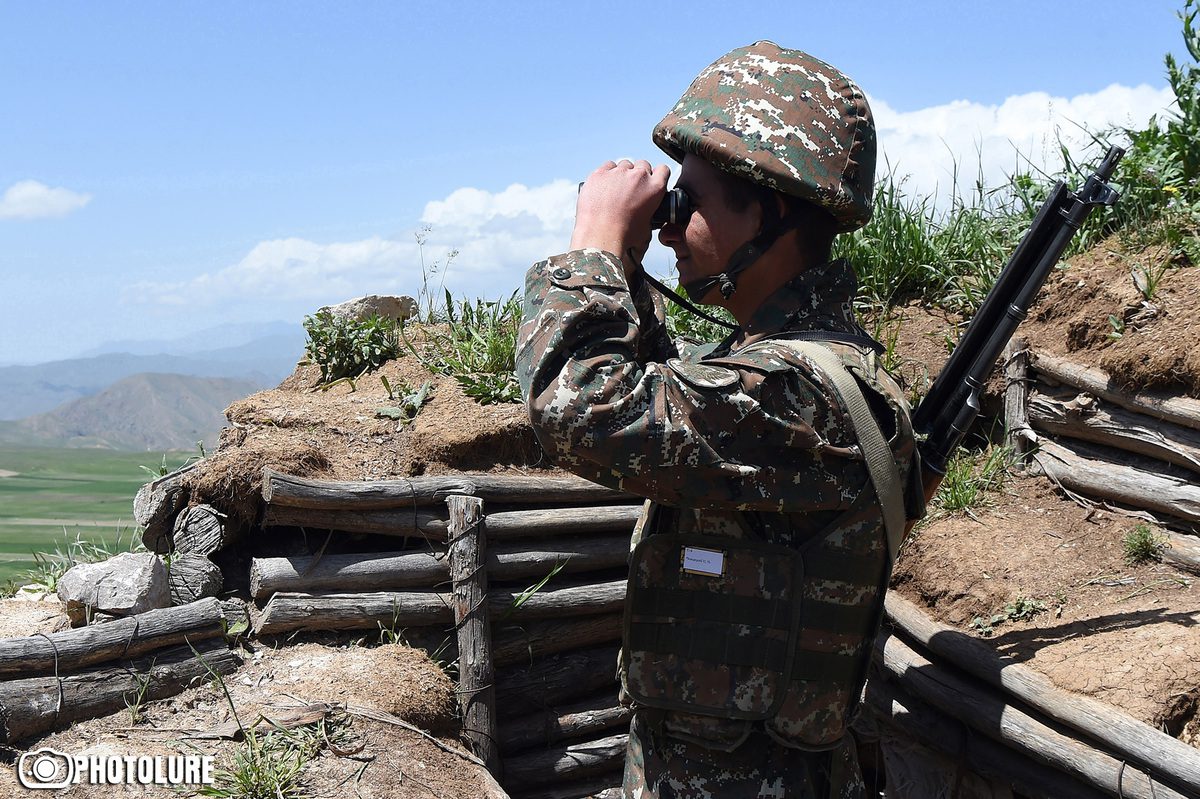
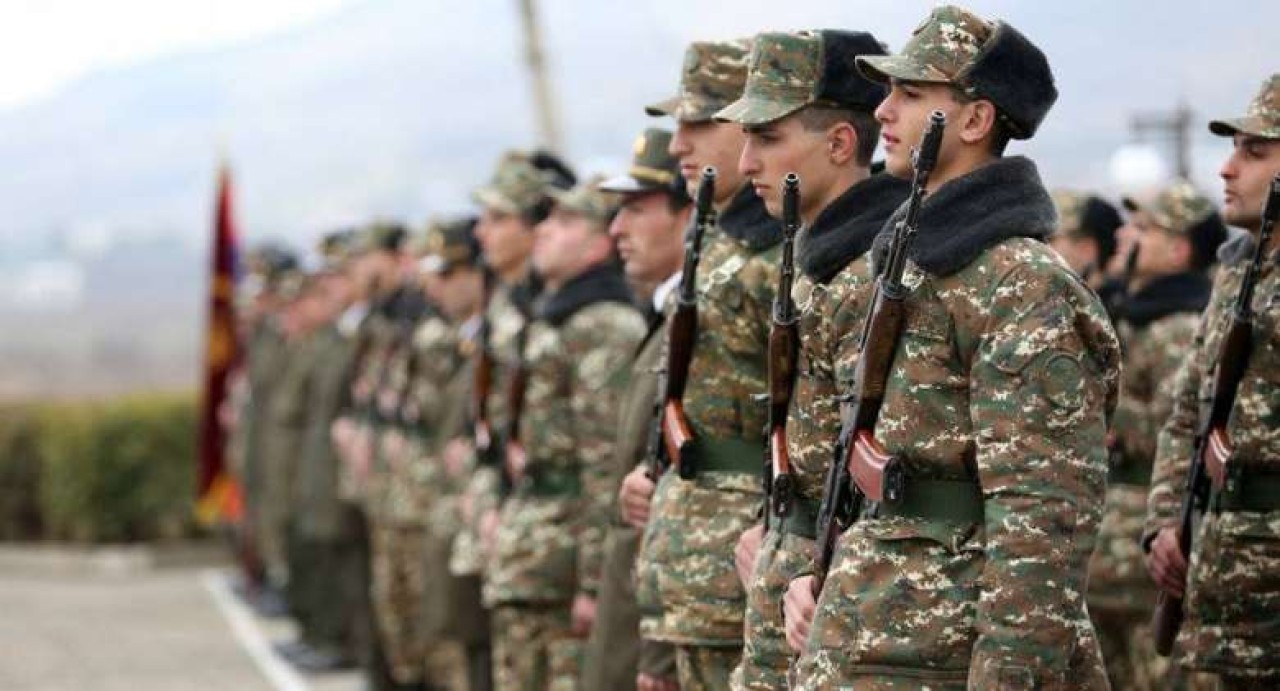
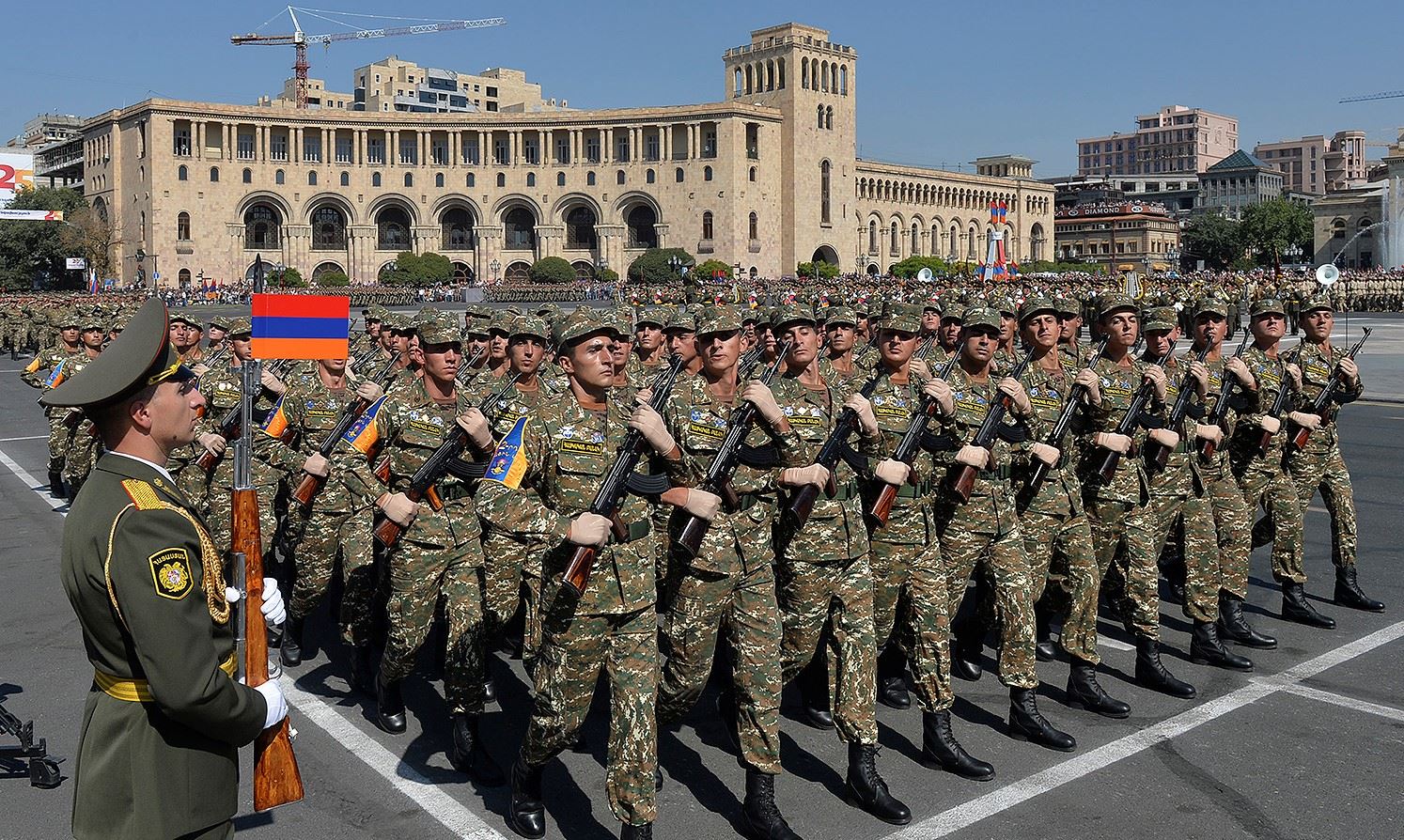
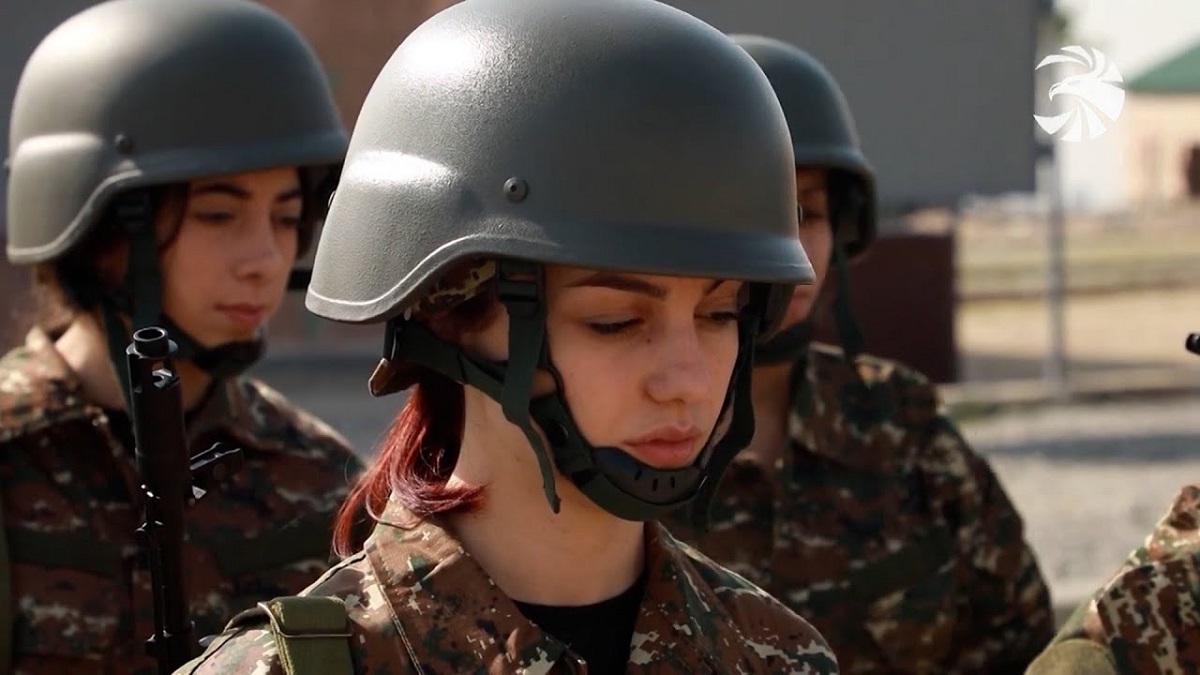
Armenian parliament rejects bill to shorten military service in exchange for payment to state budget


Bill to shorten military service in Armenia

Bill to shorten military service in Armenia

The Armenian parliament has rejected a draft law that would have allowed conscripts to pay the state budget in exchange for a shorter term of military service. The proposal came from ruling party MP Hayk Sargsyan, who suggested that young men could pay 20 million drams (nearly $52,000) and serve only one month instead of the standard two years.

MPs from both the opposition and the ruling party voted against including the bill in the session’s agenda.

Hayk Konjoryan, head of the ruling Civil Contract faction, said the bill did outline possible solutions that “align with the government’s goals for army reform.” However, he added that certain provisions and wording made it impossible to adopt at this stage.

The legislative initiative sparked widespread debate in Armenia. Both the Human Rights Defender and civil society representatives criticised the proposal, arguing that it could “further deepen social polarisation.”

Sargsyan, however, countered that inequality already exists — and that the bill would actually help “combat the practice of buying exemptions from military service.”


What the bill proposes: details of the initiative

MP Hayk Sargsyan proposed giving Armenian citizens over the age of 18 the following options for fulfilling their mandatory military service:

  • 24 months of service with a high level of financial support from the state,
  • 6 months of service in exchange for a payment of 15 million drams (around $39,000) to the state budget,
  • 1 month of service with a payment of 20 million drams (approximately $52,000).

He also proposed raising the upper age limit for compulsory military service from the current 27 to 37 years.

In addition, the bill suggested introducing a base fee of 15 million drams ($39,000) for males under the age of 18 if they chose to renounce Armenian citizenship.

Bill’s author votes against his own initiative

Hayk Sargsyan voted against his own draft bill. Here’s how he explained his decision:

“Following the Prime Minister’s instructions, I will continue working with our colleagues to implement reforms as soon as possible and to achieve the goals set out by the Prime Minister and included in the government’s programme.”

Yet only the night before, he confidently stated that the proposal would be added to the agenda without delay.

“We must pursue institutional reforms, take decisive action, and minimise the potential for abuse. The majority supports the bill.”

The government approved the bill, authored by Sargsyan, on 22 May — which may explain his earlier confidence in majority support.

Bill would undermine human rights protection in the armed forces”

More than a dozen NGOs opposed the bill, agreeing that paying for shorter service would hinder efforts to safeguard human rights in the army.

“The provisions proposed in the bill contradict the principles of universal equality before the law and the prohibition of discrimination, as set out in the Constitution of the Republic of Armenia,” civil society representatives stated.

In their joint statement, they stressed that fulfilling a constitutional duty — national defence and military service — should not depend on one’s social or financial status. If passed, the bill would undermine the perception of national defence as a collective responsibility and instead frame it as a burden carried only by the less privileged.

The NGOs urged the government to focus on reducing corruption risks within the armed forces rather than on “legalising existing corruption and deepening social injustice.”

Human rights defender also opposes the bill

Human Rights Defender Anahit Manasyan believes that letting wealthy citizens shorten their service could deepen social stratification:

“From the standpoint of social justice, this approach cannot be considered acceptable. Military personnel must not be subjected to discrimination on any grounds relating to human rights and freedoms.”

She noted that protecting human rights in the army is difficult without strict discipline. According to Manasyan, the draft bill poses serious risks in terms of maintaining order and discipline. In this context, she addressed the following questions to the bill’s author:

“Were the risks assessed regarding how strict and consistent discipline would be maintained among service members, some of whom would be granted privileges simply for paying and serving a shorter term than others? Could this not lead to internal tensions, conflicts, and a deepening of informal power structures within the military?”


Categories
South Caucasus News

@IvicaBocevski @Vass_Agneska @Matt_Boyse @RusifHuseynov2 .@RusifHuseynov2:  In the #SouthCaucasus, #Azerbaijan is one of the few countries which have maintained #multipolarity in their foreign policy history. Today, a growing number of the region’s countries are pursuing a multi-vector foreign policy. #BudapestGlobalDialogue https://t.co/lZ674SKiFs


Categories
South Caucasus News

@IvicaBocevski @Vass_Agneska @Matt_Boyse @RusifHuseynov2 .@RusifHuseynov2:  In the #SouthCaucasus, #Azerbaijan is one of the few countries which have maintained #multipolarity in their foreign policy history. Today, a growing number of the region’s countries are pursuing a multi-vector foreign policy. #BudapestGlobalDialogue https://t.co/oct6F3YcuO