Azerbaijan’s Muslim Leader Attacks Armenian Church as Pashinyan Ramps Up Campaign Against Catholicos Asbarez
Day: June 11, 2025
Polish Prime Minister Donald Tusk said his government is working to garner support within the European Union for suspending or restricting visa-free travel for Georgia, citing democratic backsliding and migration concerns.
“I have already spoken out, intervened, and we are now working to build the necessary majority to limit or suspend visa-free travel for Georgia, along with other countries,” Tusk said. “Yes, this is my intention while being fully aware that one-third of Georgians genuinely wish to share our values. But we know where the real problem lies,” he added.
Tusk made the comments during the Parliament hearing that was to pass the confidence vote after the candidate from Tusk’s opponent, PiS, was elected president.
“This is not just about Georgia,” Tusk noted while addressing broader migration concerns. “I apologize to those Georgians who may feel offended, but more broadly, I strongly support restricting visa-free travel from countries, like Georgia, that no longer uphold basic democratic standards and from which migration presents a direct threat to legal and public order in our country and in Europe,” he said.
Tusk also said that 50 Georgian citizens were recently deported from Poland for “committing various crimes.”
The EU is considering a range of measures in response to the Georgian Dream government’s anti-democratic and anti-European shift. Georgia has enjoyed visa-free travel to the EU since 2017.
Tbilisi has accused Brussels of using the visa-free issue as what it claims to be a tool of “pressure” and “blackmail” against Georgian Dream.
Earlier this year, the EU suspended visa-free travel for Georgian diplomatic passport holders.
In a broader context, the EU is preparing to simplify the visa-free suspension mechanism later this year. Under the proposed changes, the bloc could trigger a suspension in cases of serious human rights violations and abuses or grave breaches of international law.
Unlike most EU decisions, suspending visa-free travel does not require unanimous agreement among all 27 member states.
Also Read:

Birth rate in Armenia
“The infertility rate in Armenia stands at 18.2%, including 2.7% primary infertility and 15.5% secondary (preventable) infertility,” reads a report by the United Nations Population Fund (UNFPA).
The study, titled The State of World Population 2025, addresses the global birth rate crisis. Its authors found that one in five people worldwide believes they will be unable to have as many children as they would like.
Respondents cited key reasons such as a lack of financial resources for raising children, unstable income, limited access to housing, anxiety about the future of the world, and not having a suitable partner. If these barriers were removed, most participants said they would prefer to have two or more children.
“A huge number of people are unable to create the families they want. The issue is not a lack of desire, but a lack of choice — and that has serious consequences for individuals and society as a whole. This is the real fertility crisis,” said UNFPA Executive Director Natalia Kanem.
The fund conducted the study across 14 countries, representing roughly 37% of the world’s population. It found that the main barriers to having the desired number of children include health issues, economic difficulties (such as money, housing, and employment), as well as war, epidemics, and political instability.
- Divorce rates rise in Armenia as traditions fail to keep marriages together
- “Looking for a nanny”: Women in Armenia strive to return to work after maternity leave
- ‘They need me’: the story of a father who was left alone to raise two toddlers after his wife’s death
“Having more children ensures family stability” and other reasons for wanting larger families
The majority of couples in Armenia said they would like to have three children. Participants in a survey conducted by the United Nations Population Fund (UNFPA) explained their reasoning as follows:
- having many children ensures family stability (27.3%),
- it allows for more effective child-rearing (15.7%),
- it is customary in Armenian society (12.0%),
- it is the modern reality (9.7%),
- it was the belief in my parents’ family, and I want to continue the tradition (6.0%).
The survey was conducted on the streets of Yerevan. Respondents also named several reasons why they hesitate to have more children, including:
- health problems,
- social issues,
- insufficient financial support from the state.
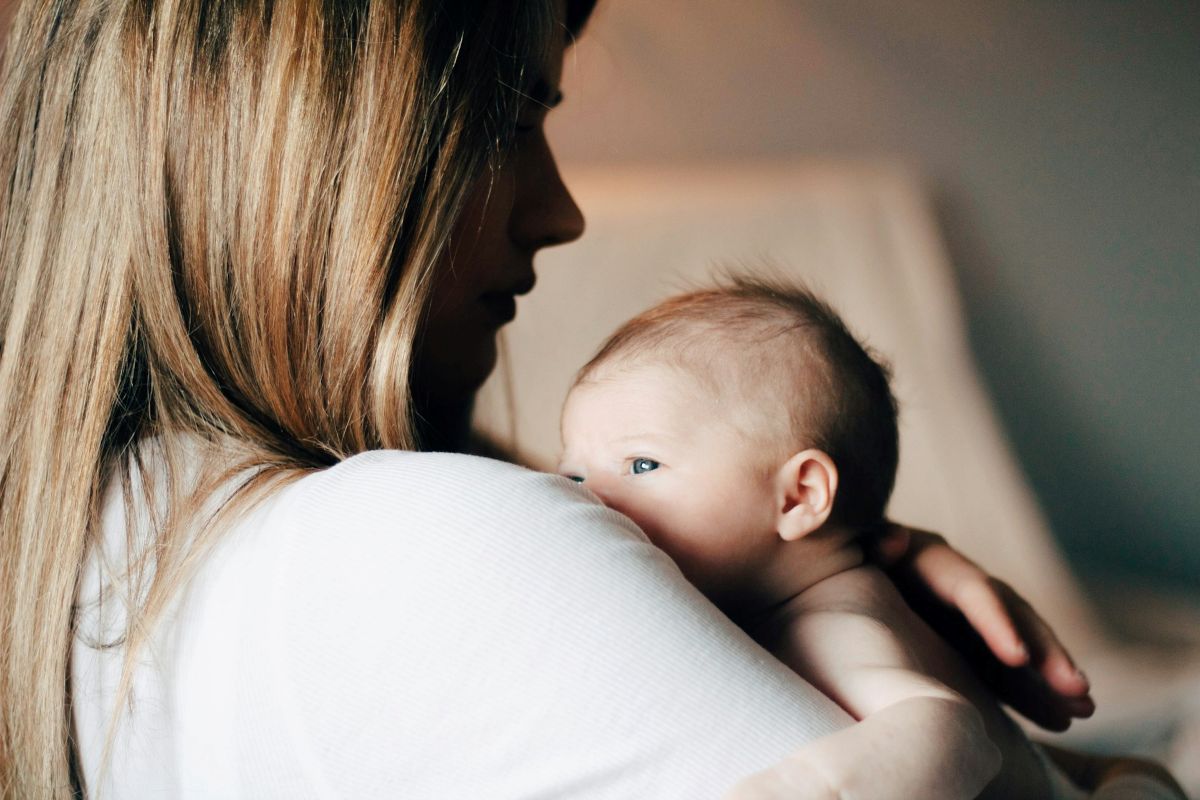
“More than 60% of households have no children”
According to Armenia’s Statistical Committee, the average age at first marriage has increased for both men and women.
“More than 60% of households in Armenia have no children. Around 16% have two children, about 15% have one child, and approximately 7% have three or more children,” the committee reported.
Nevertheless, between 2018 and 2023, Armenia’s total fertility rate — the average number of children born per woman — has slightly increased. Previously at around 1.6, it has now reached 1.9. However, a fertility rate of approximately 2.1 is required to maintain a stable population size.