
Russia is determined to test the resolve of the NATO alliance, including by extending its confrontation with the West beyond the borders of Ukraine, the Germany’s foreign intelligence chief told the Table Media news organization, Azernews reports, citing Arab News.
Day: June 10, 2025
21 new names added to the list of political prisoners
The Union for the Freedom for Political Prisoners of Azerbaijan has published a new list of political prisoners in the country. The list includes the names of 375 people.
This is 21 more people than the list the union presented on February 12, 2025. The previous list contained 357 names.
The new list includes the names of journalist Ulviyya Ali, social activist Ahmad Mammadli, civil society members Bashir Suleymanli, Mammad Alpay, religious figures, members of The Azerbaijani Popular Front Party, and other recently arrested political and social activists.
The new list of political prisoners was compiled by Leyla Yunus, director of the Institute for Peace and Democracy, and Elshan Hasanov, head of the Political Prisoners Monitoring Center.
The Updated List by Categories:
- Journalists and Bloggers: 29 people
- Human Rights Defenders: 6 people
- Opposition Party and Civil Society Members: 39 people
- National Minority Activists: 5 people
- Anti-War Activists: 2 people
- Soyudlu Village Case: 2 people
- Deported Political Refugees from Germany: 5 people
- Religious Believers: 241 people
- Tartar Case Convicts: 8 people
- Ganja Case Convicts: 13 people
- Life Imprisonment Sentences: 12 people
- Imishli Case Detainees: 13 people
The authors stated that the list was compiled based on the criteria for defining the concept of “political prisoner” set out in the relevant resolution No. 1900 adopted at the session of the Parliamentary Assembly of the Council of Europe (PACE) in October 2012.
The Azerbaijani authorities unequivocally deny that there are political prisoners in the country, stating that no one is arrested for their different opinions or political positions, but rather for specific criminal acts.
The post Number of Political Prisoners in Azerbaijan is updated: 375 people appeared first on MEYDAN.TV.
Categories
Apple unveils new softwares
On Monday, Apple made a major announcement at its annual Worldwide Developers Conference (WWDC), revealing that it will open the underlying technology behind Apple Intelligence. This move represents a significant shift for the company, signaling its deeper involvement in AI and machine learning, particularly as it pertains to third-party developers, Azernews reports.
Georgia tightens grants law
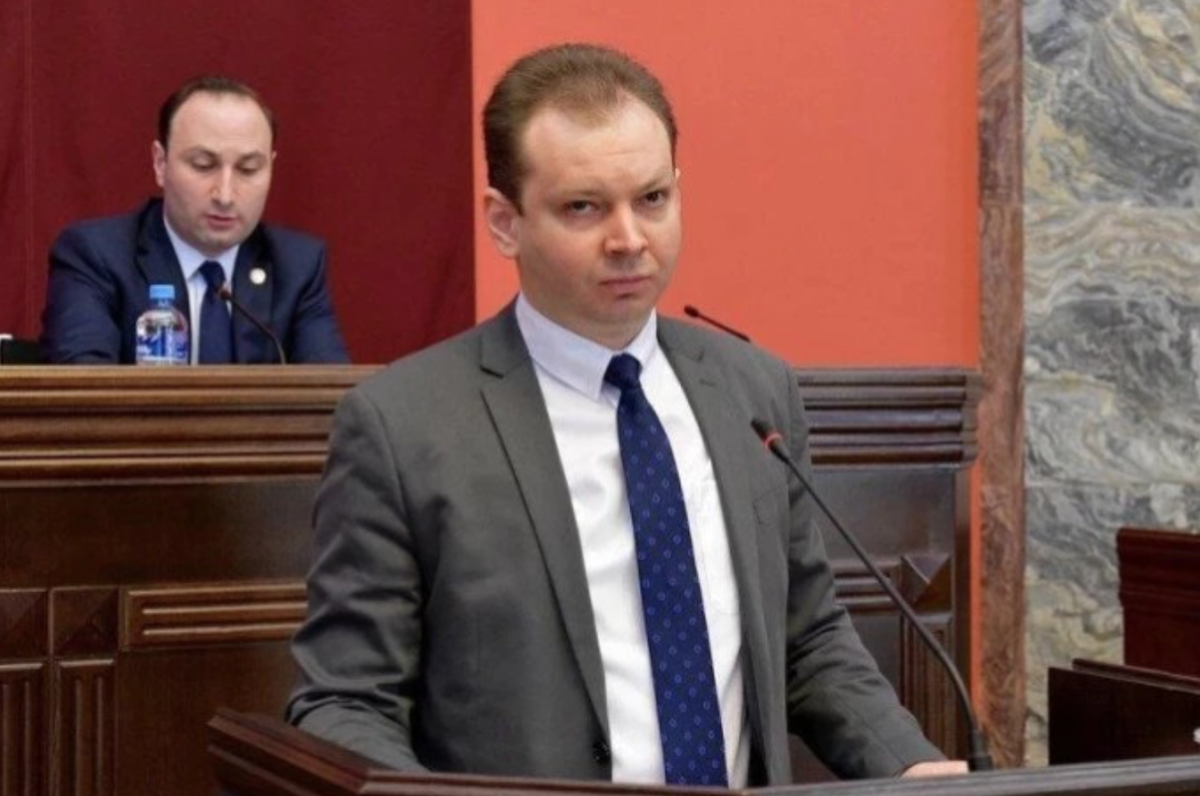
On 15 April 2025, the Georgian Dream-led parliament passed a law on grants, banning the receipt of foreign grants without government approval. A new amendment will now require government consent for receiving technical and expert assistance, as well as for knowledge exchange.
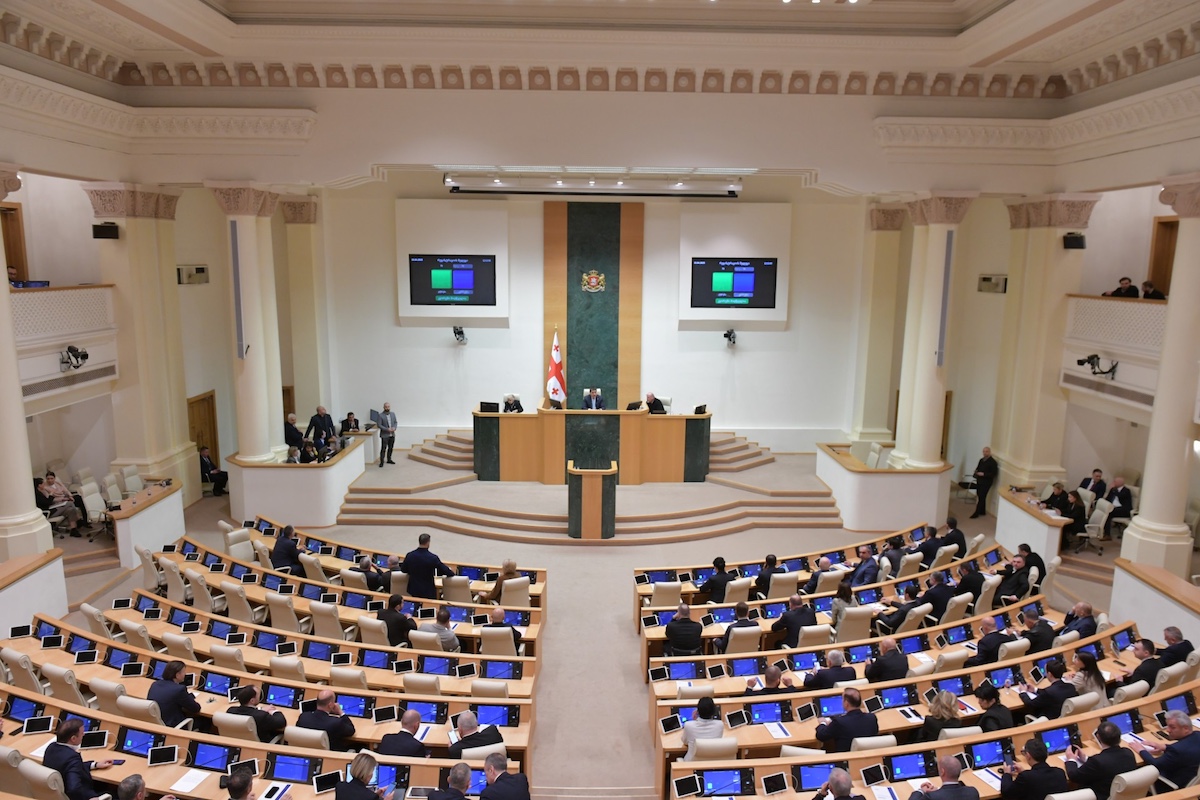
“Additional issues requiring clarification have arisen in practice… Therefore, the bill will further specify the grants law, with an amendment stating that, among other things, technical or expert assistance, knowledge exchange, and other similar contributions will also be classified as grants,” said Georgian Dream MP Tornike Cheishvili.
According to him, the law will allow the government to consider any financial resources provided by international organisations as grants.
“There are also technical clarifications regarding the purposes for which grant funds may be used. These include areas related to the humanitarian sector, defence, and security. The list of entities issuing grants has also been specified — it now clearly states that funds provided by any international organisation may be considered grants,” Cheishvili added.
He further explained that there are several programmes which “by their nature pose the least risk to state sovereignty,” and therefore may not require the Georgian Dream government’s approval for implementation.

In April 2024, Georgia’s parliament fast-tracked a law banning the issuance of foreign grants without government approval. This means that if a foundation or organisation — for instance, the EU or the UN — wishes to support a Georgian NGO, it must first obtain official permission from Irakli Kobakhidze’s government.
The changes directly affect organisations working in the fields of human rights, anti-corruption, service provision, and government accountability. For many, continuing their work will become virtually impossible.
Experts believe the changes to the grants law are not an isolated initiative but part of a coordinated trend, already reflected in the “foreign agents” law and other repressive measures adopted by Georgian Dream in 2024.
Read more about the law here.
The Media Development Agency of Azerbaijan, in collaboration with the State Committee for Work with Diaspora, has organized a specialized training session titled “The Power of Journalism in the Fight against Fake News and Disinformation.” The event brought together international experts and local English-speaking media representatives to explore effective strategies against the growing challenge of misinformation, Azernews reports.
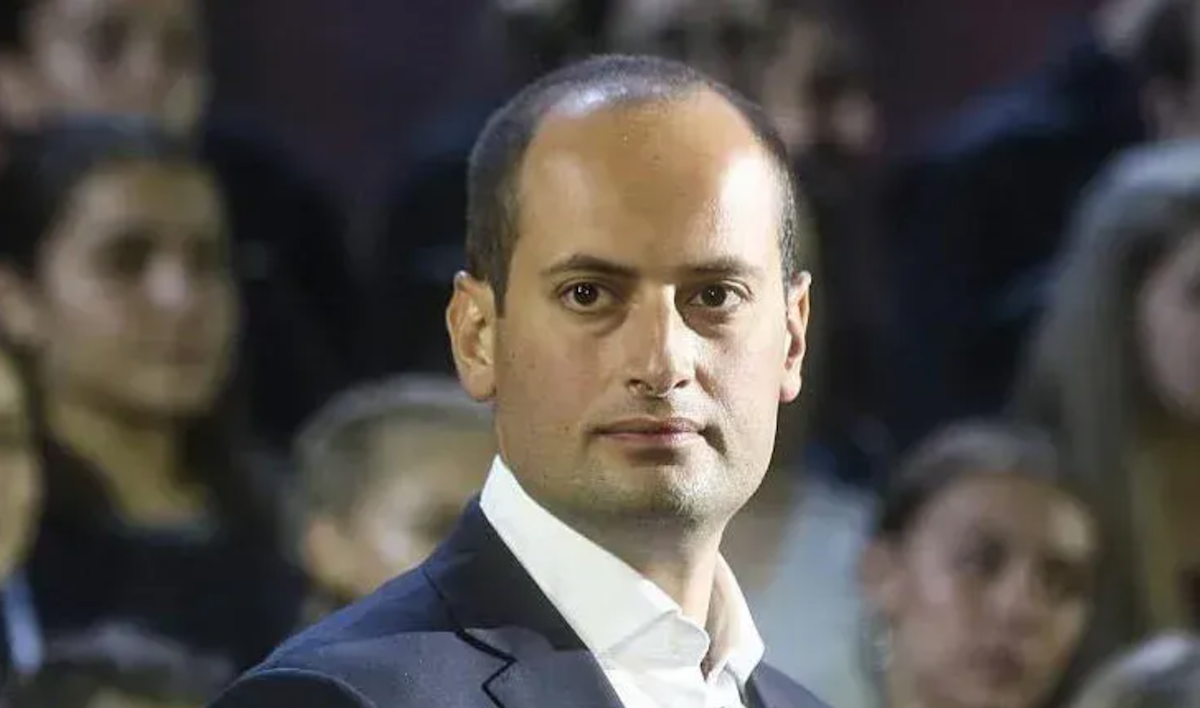
The Georgian Dream is making further changes to the Law on Grants to exempt certain foreign educational grants from needing prior government approval, while also expanding the requirement for official consent to include “technical assistance” and “knowledge-sharing.”
The amendments, fast-tracked in first reading today, June 10, in the Georgian Dream’s one-party legislature, follow earlier changes that introduced the requirement for donors to seek approval from authorities before distributing grants. The new grant laws, alongside Georgia’s two foreign agents laws and recent amendments to the Law on Broadcasting, are seen as key instruments in Georgian Dream’s growing legislative crackdown on civil society and media organizations.
According to the proposed amendments, “a grant shall also be deemed to include […] technical assistance provided to the grant recipient in the form of technology, specialized knowledge, skills, expertise sharing and/or other forms of support.”
The proposed changes will, on the other hand, exempt certain European educational grants from the need of prior approval from the government, including the grants issued under the EU’s research and innovation program Horizon Europe, Erasmus+, the German Academic Exchange Service (DAAD), and the Creative Europe program implemented between Georgia and the EU.
Tornike Cheishvili, GD’s first deputy chair of the Legal Issues Committee, said the move is intended to improve the efficiency and flexibility of the approval process.
“In practice, certain issues have emerged that require further clarification,” he said. “Several programs have been identified whose grants pose minimal risk to state sovereignty and security […] current regulations already allow for such exceptions in fields like education and science.”
Also Read:
- 31/05/2025 – Georgian Dream’s FARA Takes Effect
- 17/04/2025 – International Reactions to GD-Approved Law Requiring Executive Approval for Foreign Grants
- 16/04/2025 – GD Rubber Stamps Legislation Forcing Donors to Seek Its Approval for Grant Awards
- 15/04/2025 – Transparency International: Grant Law Amendments a Threat to Civil Society